

Bhadli Vakya: Gujarat's Monsoon Sayings, Examined Honestly
A thousand-year-old body of weather couplets that Gujarati farmers still use. Some of it is careful observation with a real mechanism. Some of it is not. Both deserve to be said out loud.
Quick answer
Bhadli Vakya are weather couplets attributed to a figure from around the tenth or eleventh century, still widely known among farmers in Gujarat and Rajasthan. They record observations of wind direction, cloud type, thunder timing and animal behaviour. The short-range observations have a genuine physical basis; the long-range seasonal predictions and the planetary material do not.
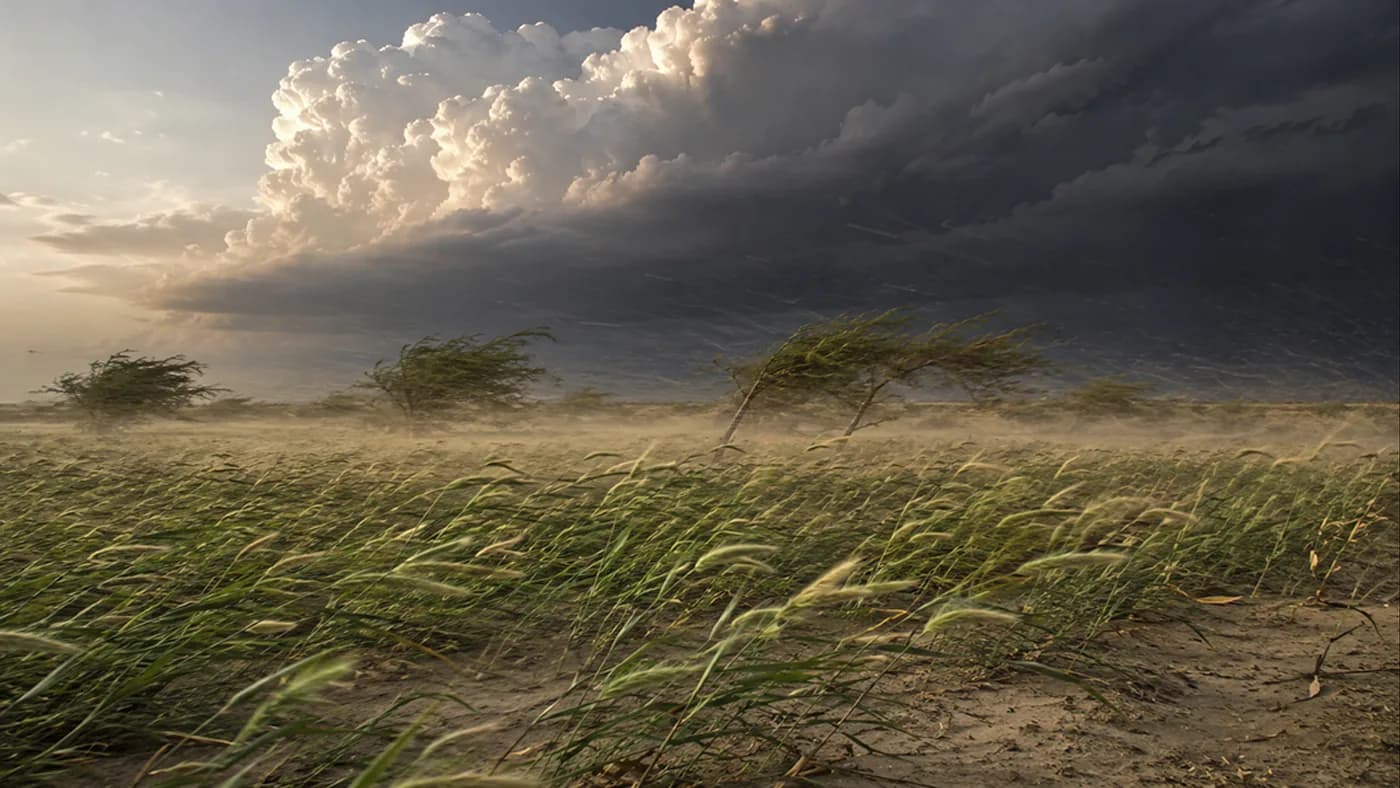
Ask an older farmer in north Gujarat what the monsoon will do and you may get a couplet rather than an opinion. Bhadli Vakya are among the most durable pieces of folk knowledge in western India — roughly a thousand years old, transmitted orally, and by most accounts still consulted by a majority of Gujarati farmers alongside whatever the phone says. That survival is worth taking seriously rather than dismissing. It is also worth examining, because the collection is not one thing: it mixes sharp observation with material that cannot be tested at all, and a farmer is better served by knowing which is which.
Who Bhadli was, and why the couplets lasted
Bhadli is described in the surviving accounts as a figure from roughly the tenth or eleventh century — sources differ on the details, including on gender — who composed songs and couplets about the weather. The verses spread across north and western India and took deepest root in Gujarat and Rajasthan, where they are still known by name today.
They lasted for a practical reason rather than a sentimental one. They are short, rhythmic and memorable, which is the correct design for knowledge that has to survive without writing. And they were the only forecasting available for most of the intervening thousand years.
What is more surprising is that they are still used now. Reporting on traditional forecasting in Gujarat has put the share of farmers who still rely on Bhadli couplets at somewhere around half. That is not nostalgia among a few elders; it is a live practice, and the reason is worth understanding.
Why farmers still consult them
The honest explanation is not that the couplets outperform meteorology. It is that they answer a question meteorology does not. An official forecast is issued for a district. Bhadli couplets are read against what a farmer can see from their own field — the wind on a particular morning, the shape of the cloud over that hill, whether the thunder came from the north or the west.
That is a field-level instrument, and the Indian monsoon is famously field-level in its behaviour. Rain that soaks one village and skips the next is ordinary, not exceptional, and a district bulletin cannot resolve it. So a farmer using both is not being irrational — they are using the only two instruments available, at the two scales that matter.
The tradition also covers ranges that official products handle unevenly: a saying about what tomorrow will do, a saying about the coming fortnight, and a saying about the season. Modern forecasting is genuinely strong at the first, moderate at the second, and limited to totals and odds at the third.
What the couplets observe, and what stands up
The verses themselves vary by district and by who is reciting them, so it is more useful to look at the categories of observation than to quote particular lines. Four categories cover most of the collection, and they do not score equally.
| What is observed | Physical basis | Verdict |
|---|---|---|
| Cloud type and appearance | Cloud form genuinely indicates what the atmosphere is doing — high thin cloud ahead of a system, towering cloud meaning a storm is building | Sound, for the next hours to a day |
| Wind direction, day to day | Wind carries the moisture; a shift to the south-west is the monsoon current itself | Sound as a current observation |
| Wind direction on one named day, read for the whole season | A single day's wind is weather, not the season's setup. The broader pre-monsoon pattern does carry some signal; one morning's reading does not | Not reliable |
| Thunder timing, and thunder in a particular month predicting the season | Thunder tells you a storm is present now; there is no mechanism linking it to rainfall months later | Useful now, not as a seasonal forecast |
| Animal and bird behaviour | Insects and birds respond to humidity and falling pressure, which do precede rain | Sound, short-range only |
| Planetary positions | No physical mechanism connects planetary positions to Indian rainfall | No |
The two honest problems
The first is testability. A couplet that says the monsoon will be good if a certain condition holds, without saying how good or when, cannot be checked against what happened. Both a wet year and a dry one can be read as consistent with it afterwards. That is not a flaw in Bhadli specifically — it is true of most oral prediction traditions everywhere — but it does mean confidence in the tradition is not evidence for it.
The second is calendar drift, and it is the more interesting problem. Many of these sayings are keyed to dates in the traditional calendar, and that calendar is sidereal — it tracks the stars rather than the seasons. Because the Earth's axis precesses, the two slowly separate, by roughly a day every seventy years. Over the thousand years since these verses were composed, the named days have shifted by around two weeks relative to the season they were calibrated against.
So a couplet tied to a particular festival day is now pointing at a slightly different part of the season than its author meant. The observation may have been sound; the date has moved underneath it. That mechanism is set out in more detail in the nakshatra calendar without the astrology, and it applies to any traditional agricultural date, not only to Bhadli.
How to use them now
- Keep the cloud and wind observations. They are real meteorology expressed in verse, and they work at a scale no forecast reaches.
- Treat single-day seasonal omens as unproven. If the whole season's plan rests on which way the wind blew one morning, that is a large bet on a thin signal.
- Set aside the planetary material. There is no mechanism, and a farmer's money deserves better than that.
- Adjust for drift when a saying names a festival date. Roughly two weeks later than the season the verse was built for is the right correction to have in mind.
- Write down the couplet you acted on and what actually happened. A few seasons of that turns inherited belief into your own tested knowledge — which is exactly how the tradition was built in the first place.
- Use both instruments. Which traditional signs hold up covers the wider set, and why the monsoon comes in bursts explains the part no tradition predicted well.
Where Khetiyaar fits
We are not going to tell you your grandmother was wrong, and we are not going to tell you the couplets are science. Both would be dishonest. What an app can genuinely add is the record: noting which saying you followed, what you did, and what the season actually did. Over several years that is the only thing that can settle the question for your own land, and nobody else can do it for you.
The hyperlocal weather in the app is the modern version of the same instinct the couplets came from — a reading over your own field rather than a district average. Soil temperature and moisture are the parts Bhadli had no way to measure, and they are often the parts that decide a sowing.
What we cannot do is predict the season. Neither can the couplets, and neither can the IMD beyond totals and probabilities. Anyone offering more certainty than that — in verse or in an app — is selling something.
Frequently asked
What is Bhadli Vakya?+
A body of weather couplets attributed to Bhadli, a figure from roughly the tenth or eleventh century, transmitted orally across north and western India and best known in Gujarat and Rajasthan. The verses record observations of wind, cloud, thunder and animal behaviour, and are still widely consulted by farmers.
Do Bhadli's monsoon predictions actually work?+
Partly. The short-range observations — cloud type, wind direction, animal behaviour before rain — have a genuine physical basis and work at a field scale no district forecast reaches. The long-range seasonal predictions from a single day's omen, and anything based on planetary positions, have no mechanism and are not reliable.
Why do Gujarati farmers still use traditional forecasting?+
Because it answers a question the official forecast does not. An IMD bulletin covers a district; Bhadli couplets are read against what you can see from your own field, and monsoon rain genuinely varies from one village to the next. Using both is rational — they work at different scales.
Why are traditional weather dates slightly off now?+
Because the traditional calendar is sidereal — it follows the stars rather than the seasons — and the Earth's axis precesses. The two drift apart by roughly a day every seventy years, so over the thousand years since these verses were composed, a named festival date now falls around two weeks later relative to the season it was originally calibrated against.
Where to go next
Want this as daily tasks for your farm?
Khetiyaar turns guides like this into a day-by-day plan — in your language, free to start.

Related guides
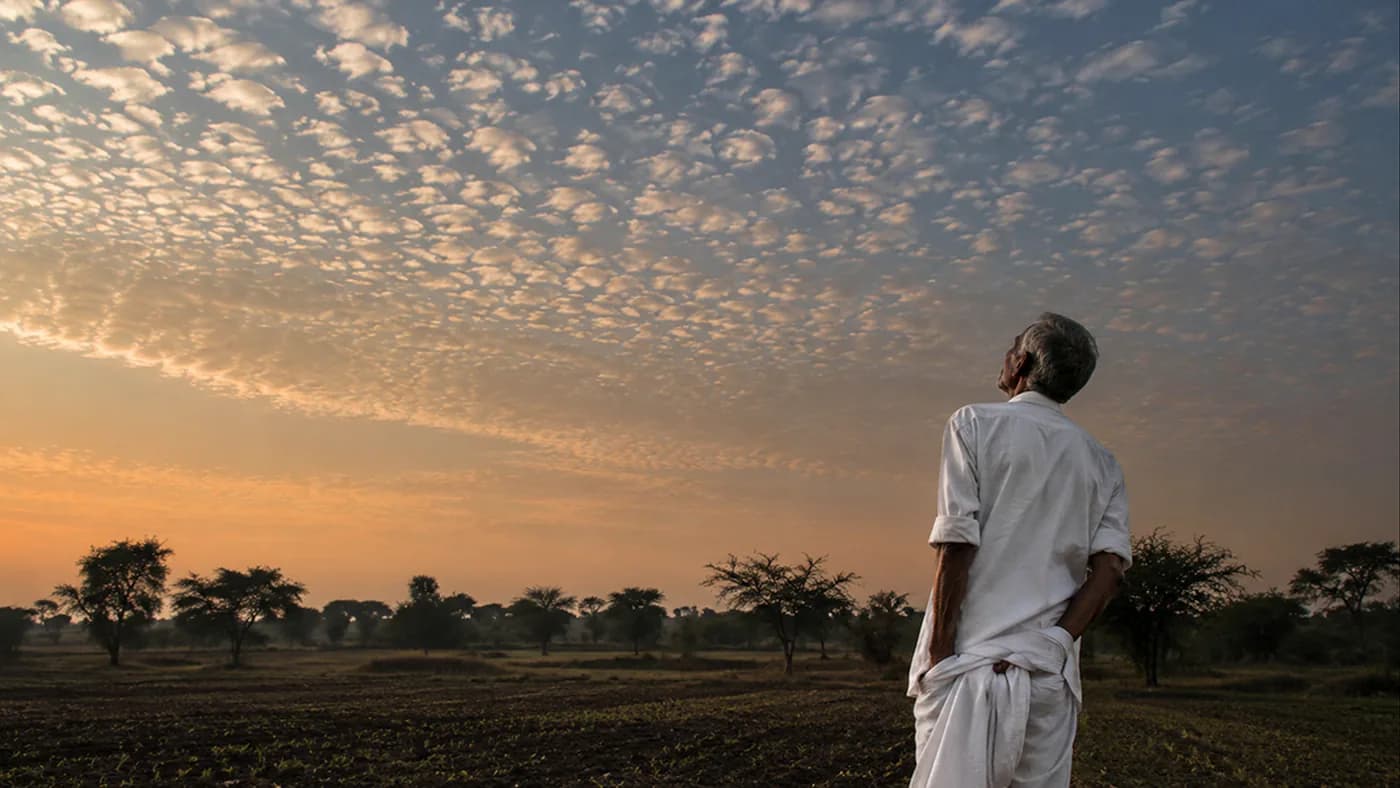
Reading the Weather the Old Way: Which Signs Actually Hold Up
Farmers read the sky, the wind, the birds and the trees long before there were forecasts. Some of those signs have a real physical mechanism behind them. Some do not. Here is the honest separation.
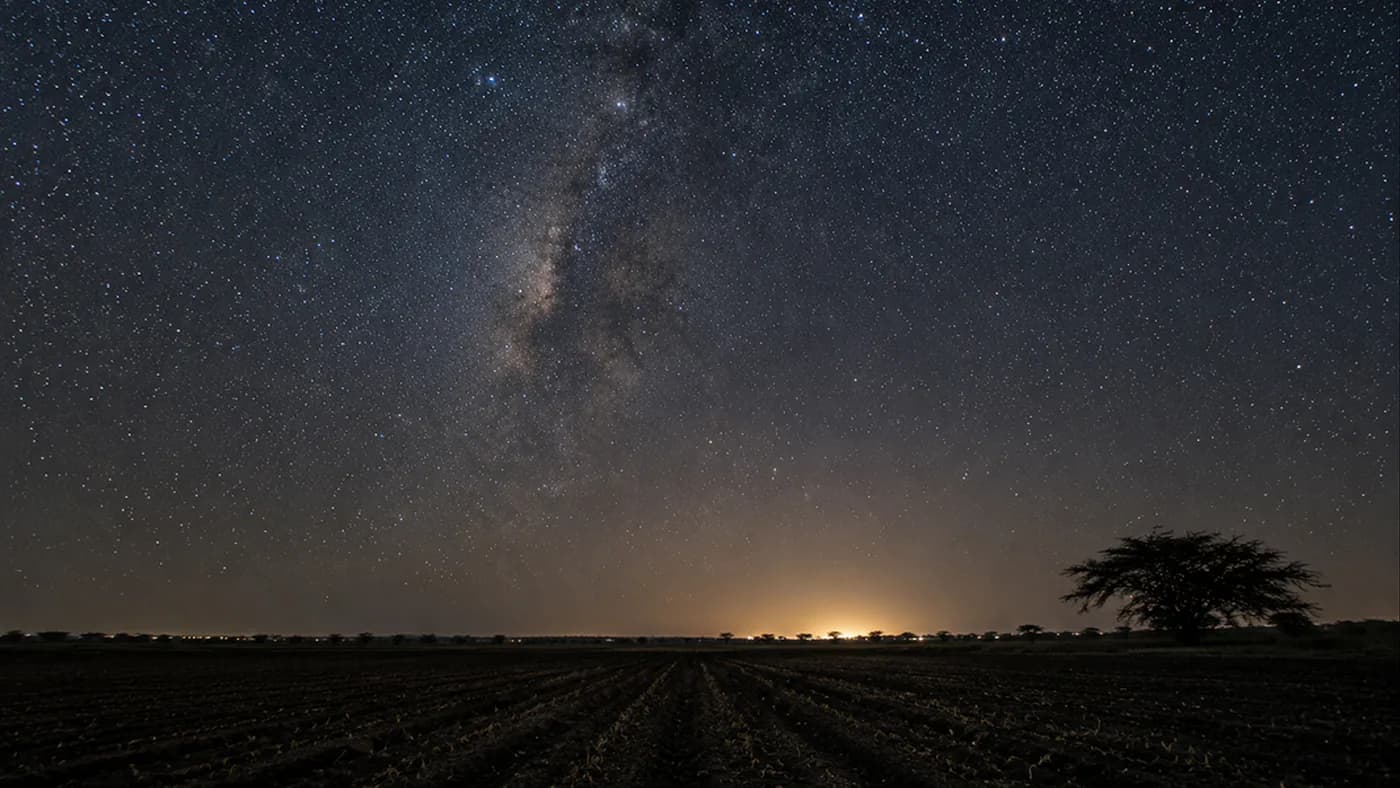
The Nakshatra Sowing Calendar, Without the Astrology
The nakshatra system is a solar calendar, which is why it tracks the seasons well. It has also drifted about three weeks from the seasons it was calibrated against — and you can verify that yourself.
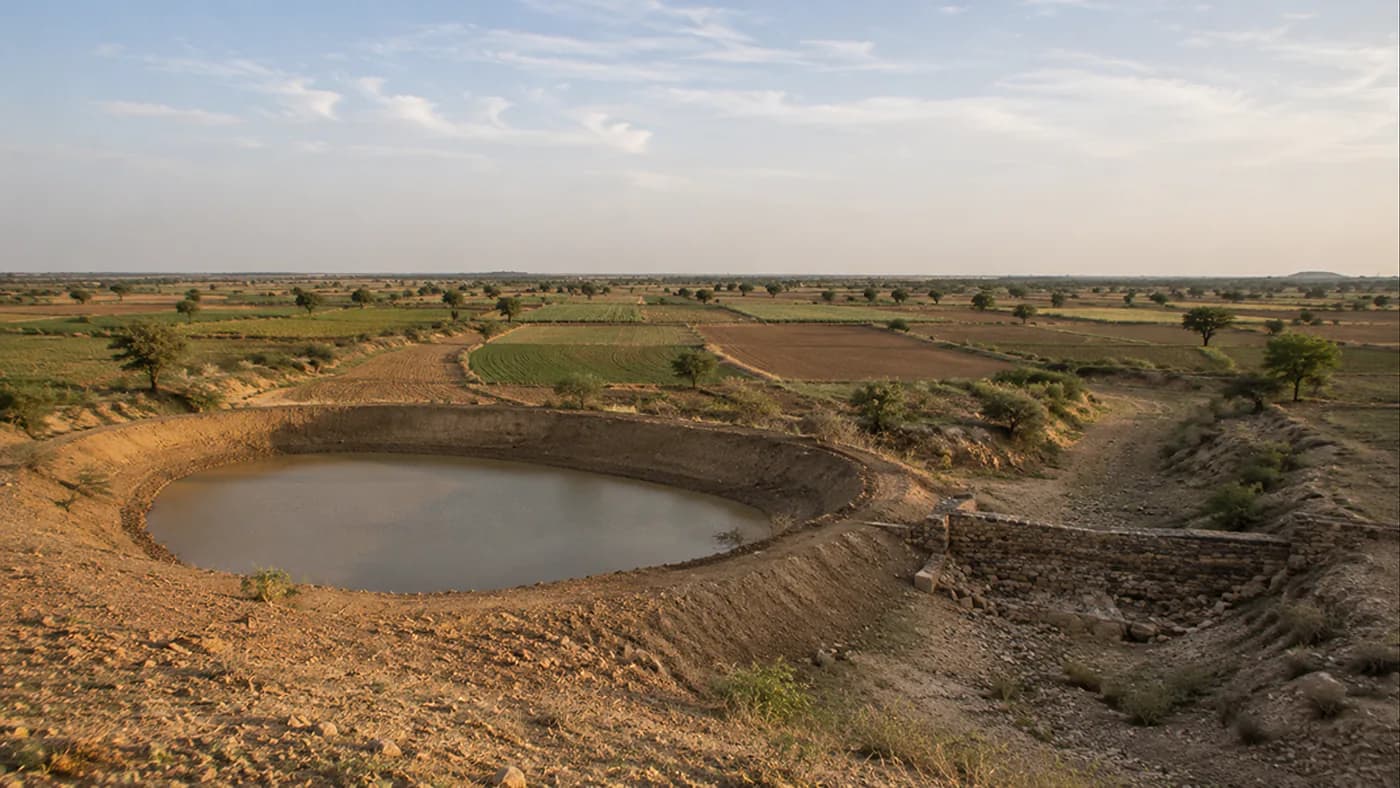
The Same Monsoon, Different Problems: Rainfall Risk by Region
Advice written for Punjab is close to useless in Marathwada. The monsoon is one system but it fails differently in each part of India, and the coping strategy has to match the failure.