

Heavy Rain Early, Then Nothing: Managing the Worst Monsoon Pattern
A wet fortnight at sowing followed by a month of nothing is the pattern that destroys most kharif crops. The reason is not just the drought — it is what the early rain did to your crop's roots.
Quick answer
The damage comes in two parts. Heavy early rain rots seed, crusts the surface and leaches nitrogen below the root zone. It also encourages shallow rooting, because water is abundant near the surface — so when the dry spell arrives the crop has no deep roots to fall back on. Manage drainage first, delay nitrogen until the soil drains, then protect the crop's critical stage.
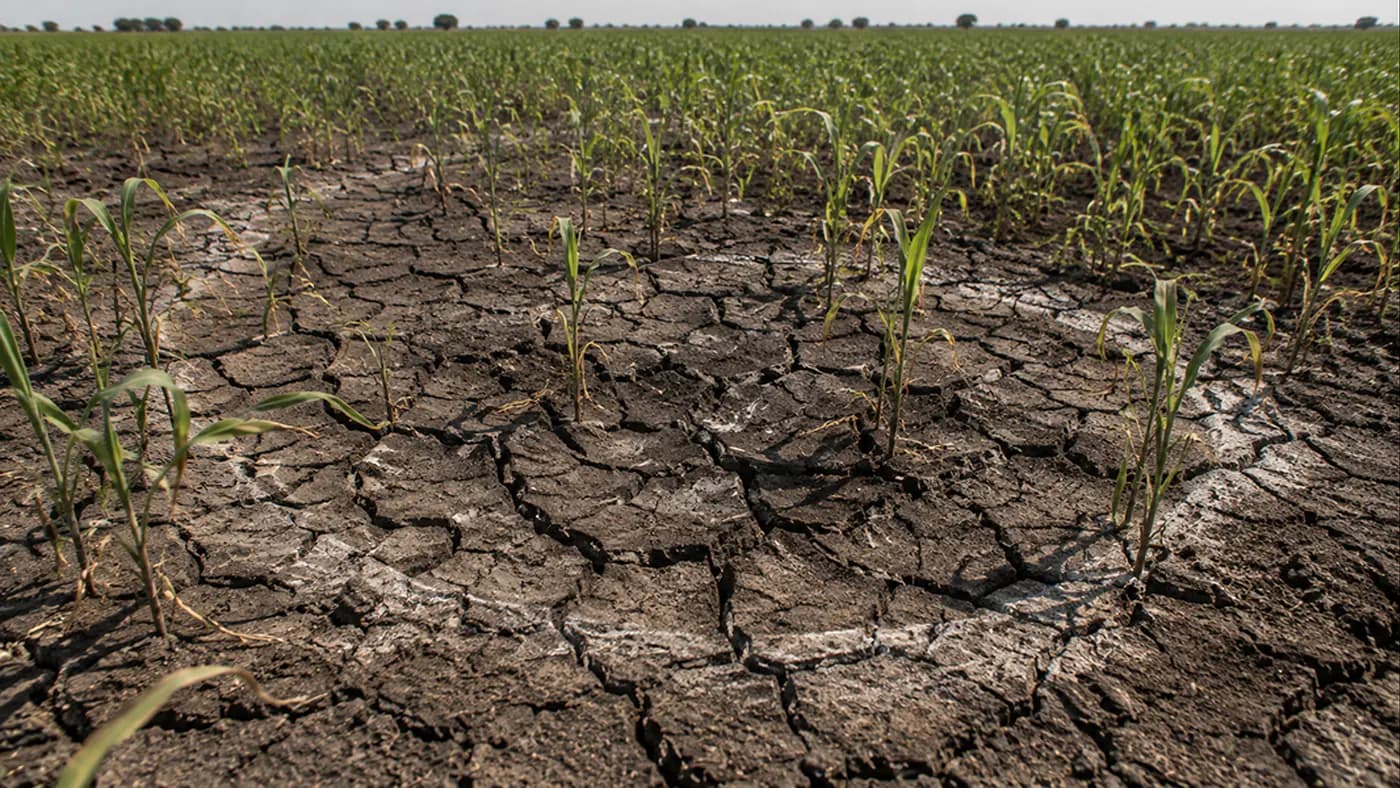
Ask farmers across central and western India which season hurt most and many will not describe a drought. They will describe a season that started well — heavy rain in the first fortnight, everything germinating, a good stand — and then stopped for four or five weeks. That combination does more damage than a straightforwardly dry year, and the reason is worth understanding, because it is not simply that there was less water. The early rain actively made the crop less able to survive what followed.
Why this pattern is worse than a dry year
In a season that is dry from the start, a crop either does not establish or establishes knowing it must find water. Roots go down. The plant is small, its demand is modest, and it is built for what is coming.
In a wet start followed by a break, the opposite happens. Water sits near the surface for the first few weeks, so roots have no reason to go deep — they proliferate where the moisture is, in the top layer of soil. The plant grows fast and lush on abundant early water, which raises its water demand. Then the rain stops, the surface layer dries within days, and you have a large plant with a shallow root system and nothing below it to draw on.
Why the rain stops at all is a separate question with its own answer — the active and break cycle covers it. That is the mechanism most advice skips. The crop is not just short of water; it has been shaped by the early rain into exactly the wrong plant for a dry spell. Understanding this changes what you do in the first fortnight, which is the only point at which you have real influence.
What the heavy rain is doing while it falls
Three things happen during an excessively wet start, and only one of them is obvious.
The visible problem is water standing in low patches — seed rots, seedlings die, and you get gaps. The second problem is surface crusting: heavy rain on a fine seedbed seals the top layer as it dries, and emerging seedlings cannot break through. The third and least visible is nitrogen leaching. Nitrate moves with water, and heavy rain carries it below the root zone where the crop cannot reach it. So a wet start often means the crop is short of nitrogen precisely when it is growing fastest.
That third point drives a decision. Applying nitrogen into saturated soil largely wastes it — it leaches or is lost to the air. Waiting until the soil has drained and then applying is more effective. But if you wait too long and the break arrives, there is no moisture to carry the fertiliser into the root zone at all, and the application is wasted differently. Split applications exist precisely for this problem, and a wet start is the season they earn their keep.
| Stage | What is happening | Do | Do not |
|---|---|---|---|
| Heavy rain, first 1-2 weeks | Standing water, crusting, nitrogen leaching below the root zone | Open drainage channels; keep machinery off wet soil | Do not top-dress nitrogen into saturated soil — it leaches away |
| Rain eases, soil drains | Short window with moisture still present | Apply nitrogen now; gap-fill or resow if the stand is poor | Do not delay — this window closes when the break starts |
| Break begins | Shallow-rooted crop, surface layer drying fast | Remove weeds; they take the water the crop needs. Mulch or keep residue on the surface | Do not apply fertiliser — there is no water to move it to the roots |
| Break continues into a critical stage | Flowering or grain and pod filling under stress | If you have any water at all, save it for this stage only | Do not spread limited irrigation thinly across the whole farm |
The first fortnight is where you have leverage
- Get water off the field. Drainage channels and opening furrows sound obvious and are routinely left too late. Standing water for even a couple of days in the seedling stage kills plants outright.
- Stay off wet soil. Working or driving on saturated ground compacts it, and a compaction layer is the last thing a crop needs before a dry spell — it is a physical barrier to the deep rooting that would save it.
- Break surface crust gently if seedlings cannot emerge. A light hoeing across the row can rescue a stand that would otherwise fail.
- Decide about gap-filling quickly. Gap-filling works only while the rest of the crop is young enough that the new plants can catch up. Left two weeks, the gaps are permanent.
- Hold nitrogen until the soil drains, then apply promptly. Into saturated soil it leaches; after the break starts there is no moisture to carry it. The window between is short.
Once the break has started
The first thing to accept is that you cannot make it rain, and most of what is sold as a solution at this point does not work. What you can do is reduce competition for whatever water remains, and concentrate any water you control on the stage where it matters most.
Weeds are the biggest controllable loss. During a dry spell they are drawing on exactly the same shrinking pool of moisture as the crop, and removing them is the single most effective thing available to a farmer with no irrigation. Keeping residue or a mulch layer on the surface is the second — it cuts evaporation from the soil surface, and during a break the difference is measured in days of survival.
If you have limited irrigation, the discipline is to spend it on one stage rather than spread it. For most crops flowering and grain or pod filling are the stages where stress converts directly into lost yield; the same water applied during vegetative growth buys much less. And if a crop is genuinely beyond saving, cutting it for fodder while it still has feed value is a real recovery of part of the cost, not an admission of defeat.
When to stop rescuing and start replanning
There is a point at which the honest decision is to stop spending on a crop that will not repay it. That decision is easier if you know it exists in advance rather than meeting it in week five.
Every district in India has an Agriculture Contingency Plan prepared by ICAR in association with the state agricultural university. These set out, for your specific district, what to do if the monsoon is delayed by two weeks, four weeks or six, which shorter-duration varieties to switch to, and which alternative crops are viable at each point. They are held by the State Department of Agriculture and your KVK, and the short-duration seed they name is meant to be available through that channel.
That is the document worth asking for by name, and it is worth asking before the season rather than during it. A farmer who already knows their district's contingency options can make the switch decision in a day; a farmer discovering the concept in August has usually already lost the window.
Where Khetiyaar helps, and where it does not
Soil-level weather is genuinely more useful in this pattern than a rainfall forecast, because both halves of the problem are about the soil rather than the sky — whether it has drained enough to apply nitrogen, and how much moisture is left in the root zone once the break begins. Recording sowing dates per plot is what lets you know which field reaches its critical stage first, which is the whole basis of deciding where limited water goes.
The cost and profit calculator is worth using at the point of deciding whether to keep spending. Working out what has already gone in against what a reduced crop can realistically return is what turns a difficult decision into an arithmetic one.
What we cannot do is tell you when the break will end, or whether to resow — that depends on your district's contingency plan, your seed availability and your own risk position. And the honest note: no app changes the weather. What it can do is make sure the decisions you take during it are based on your field rather than on hope.
Frequently asked
Why is heavy rain at sowing followed by a dry spell so damaging?+
Because the early rain shapes the crop badly for what follows. Abundant surface water means roots stay shallow, and lush early growth raises the plant's water demand. Heavy rain also leaches nitrogen below the root zone. When the break arrives you have a large, shallow-rooted, nitrogen-short crop and a dry surface layer — worse than a crop that grew up expecting drought.
Should I apply fertiliser during a dry spell?+
No. Nitrogen needs moisture to move into the root zone, so applying it during a break largely wastes it. Apply during the short window after the soil has drained but before the rain stops. If the break has already started, wait for rain before applying.
What is the most useful thing to do during a monsoon break if I have no irrigation?+
Remove weeds, and keep residue or mulch on the soil surface. Weeds draw on the same shrinking moisture as your crop, so removing them directly extends how long the crop lasts. Surface cover cuts evaporation, and during a break that difference is measured in days of survival.
When should I resow or switch crops after a failed start?+
Check your district's Agriculture Contingency Plan, prepared by ICAR with the state agricultural university and held by the State Department of Agriculture and your KVK. It sets out what to do for delays of two, four and six weeks, which short-duration varieties to switch to, and which alternative crops remain viable. Ask for it before the season starts.
Is cutting a failing crop for fodder worth it?+
Often yes. If a crop will not reach a harvestable yield, cutting it while it still has feed value recovers part of the cost — particularly if you keep animals or can sell fodder locally. It is a commercial decision rather than an admission of failure, and it is better taken early while feed quality is still reasonable.
Where to go next
Want this as daily tasks for your farm?
Khetiyaar turns guides like this into a day-by-day plan — in your language, free to start.

Related guides
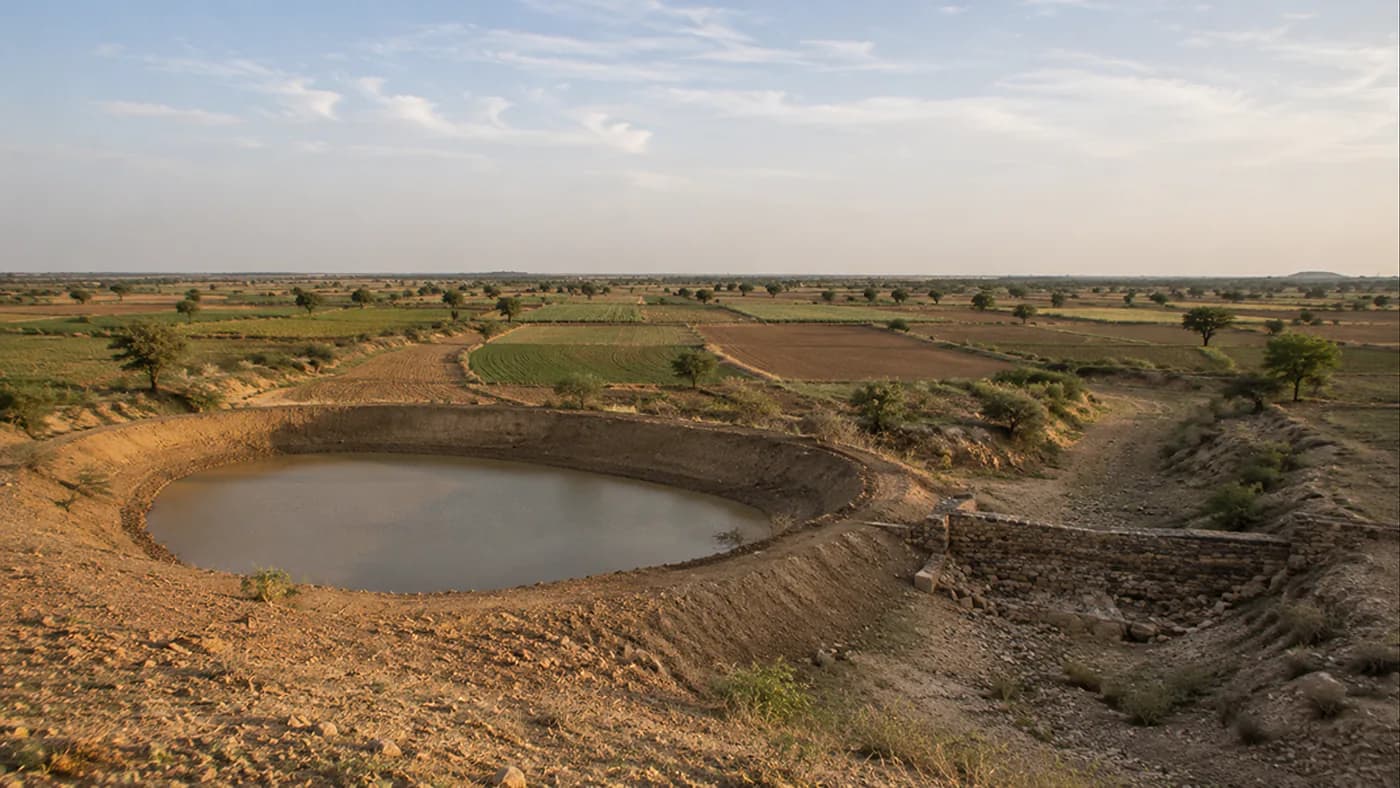
The Same Monsoon, Different Problems: Rainfall Risk by Region
Advice written for Punjab is close to useless in Marathwada. The monsoon is one system but it fails differently in each part of India, and the coping strategy has to match the failure.
The Nakshatra Sowing Calendar, Without the Astrology
The nakshatra system is a solar calendar, which is why it tracks the seasons well. It has also drifted about three weeks from the seasons it was calibrated against — and you can verify that yourself.
Bhadli Vakya: Gujarat's Monsoon Sayings, Examined Honestly
A thousand-year-old body of weather couplets that Gujarati farmers still use. Some of it is careful observation with a real mechanism. Some of it is not. Both deserve to be said out loud.