

Managing Soil Under Fruit Trees for Better Yields
A mowed, bare-earth ring under a fruit tree is a missed opportunity, not tidy farming. Mulch and a few companion plants turn that space into a pest-fighting, moisture-holding, self-feeding system.
Quick answer
The soil under a fruit tree is not dead space to be mowed and forgotten — it's the foundation of yield. Sheet-mulch out to the drip line, keep mulch clear of the trunk, add a few supporting plants, and let fungal-rich soil biology and resident beneficial insects do the work that chemical inputs alone can't. It takes a season or two to establish, but the payoff is steadier water, fewer pests, and better fruit.
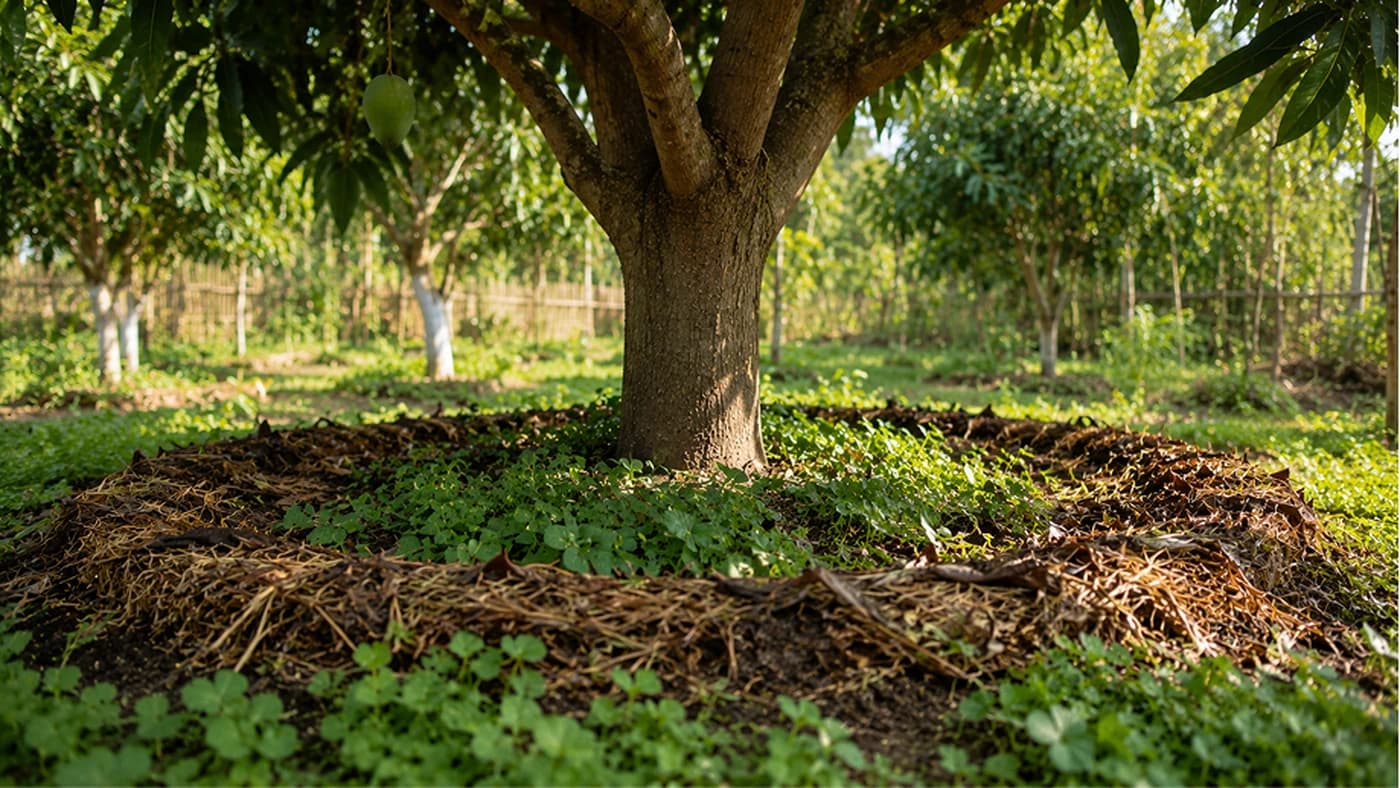
Most orchard growers focus entirely on the canopy and the fruit, ignoring the ground beneath — often kept as bare, weeded earth or mowed grass. That bare-earth habit works against the tree. Fruit trees evolved in fungal-dominated forest-edge soils, not the bacteria-dominated soil of a mowed lawn, and forcing them to compete with grass for water and nitrogen adds stress, invites disease, and caps fruit quality and yield. Rebuilding that ground into a mulched, planted zone brings real, measurable benefits.
Why bare or grassed soil holds trees back
Grass creates a tight, compacted, bacteria-dominated surface that competes aggressively with tree roots for water and nitrogen. Fruit trees, by contrast, thrive with a healthy population of mycorrhizal fungi — networks that act as an extension of the root system, reaching further into the soil to pull phosphorus, zinc and other micronutrients the tree can't access alone, in exchange for sugars from the tree. In a thriving orchard, soil biology should lean heavily fungal over bacterial — roughly a 10:1 ratio in favour of fungi is considered ideal for fruit trees. A mowed, bare-earth ring works against this balance every season.
Setting up a mulched zone under the tree
Extend the treated zone out to at least the drip line — the edge of the tree's canopy. Rather than digging out existing grass (which damages shallow feeder roots), sheet-mulch: lay plain brown cardboard or several overlapping layers of wet newspaper directly over the grass. Cover this with 10 to 15 cm of organic mulch — arborist wood chips (a mix of wood, bark and leaves) are ideal since they feed a diverse range of soil fungi; avoid dyed or finely shredded mulch, which mats down and blocks oxygen. Keep mulch at least 15 cm away from the trunk itself to prevent rot and rodent damage. Once in place, plant a supporting mix of pollinator-attracting, pest-repelling, or nutrient-accumulating species through the cardboard, letting them grow into a living groundcover.
What this earns you
Water conservation is the most measurable benefit — mulch and groundcover hold moisture far longer than bare or grassed soil, reducing stress-driven fruit drop during hot, dry stretches. Pest management improves because ground beetles, spiders and other beneficial insects that live on the soil surface become the frontline defence against pests that must drop to the ground to complete their life cycle, such as fruit flies and certain weevils — a mowed lawn gives these pests an easy landing; a mulched, planted zone makes them run a gauntlet of predators. Nutrient cycling improves too, as mulch and leaf litter break down slowly and deep-rooted companion plants like comfrey pull minerals up from the subsoil, depositing them on the surface each time they're cut back.
Mistakes that undo the benefit
The most common error is piling mulch directly against the trunk (a 'mulch volcano'), which traps moisture against the bark and invites crown rot and boring pests — always keep the root flare, where trunk meets roots, visible and clear. Thick mulch can also shelter rodents that chew bark in winter; a tree guard around young trunks and a small bare zone right at the base help keep this in check. If a wild-looking planted zone draws complaints in a tidy neighbourhood, a deliberate border of stones, bricks, or a mowed edge signals intentional design rather than neglect.
When to adjust the approach
In very wet, high-rainfall regions, heavy mulching can keep soil too saturated for trees prone to root rot (such as peach); use a lighter mulch like straw, or lean on living groundcovers that draw off excess moisture through transpiration. In a small urban plot with limited soil area, skip the full companion-planting guild and focus on a good fungal-rich compost topped with wood chips. If your area gets heavy pre-monsoon or monsoon rain, wait until the soil has warmed and partly dried before laying a thick mulch, to avoid sealing in cold, waterlogged conditions.
Bare lawn vs. a mulched, planted zone
Bare or mowed ground: bacteria-dominant soil with weak fungal life, higher pest pressure with few natural predators, high maintenance from constant mowing and watering, and high water demand as grass competes for moisture. Mulched, planted zone: fungal-rich soil with strong mycorrhizal networks, lower pest pressure thanks to resident predator insects, low maintenance limited to seasonal pruning and topping up mulch, and lower water demand as the soil stays cool and retains moisture.
Practical tips and going further
Start with one or two trees if the idea feels like a big undertaking, and observe how local insects and self-seeded plants respond before scaling up. Use the chop-and-drop method — when companion plants grow tall or finish flowering, cut them and leave the material right on the ground rather than removing it, adding organic matter continuously. Experienced growers sometimes mix biochar charged with compost tea into the soil before mulching to boost long-term fertility, and watch for white fungal threads (mycelium) appearing under the mulch as a sign the system is working — if the soil stays hard with no fungal growth after a year, a fungal inoculant or aerated compost tea drench can help establish it.
Frequently asked
How far should mulch extend under a fruit tree?+
Out to at least the drip line — the outer edge of the tree's canopy — with mulch kept at least 15 cm away from the trunk itself.
What is a mulch volcano and why is it bad?+
It's mulch piled directly against the trunk. It traps moisture against the bark, leading to crown rot and giving borers and pests a hidden path into the tree — always keep the base of the trunk clear.
Why do fruit trees prefer fungal-dominant soil over grass?+
Fruit trees evolved with mycorrhizal fungi that extend their root system and pull in extra nutrients. Grass creates a bacteria-dominant, compacted soil that competes with tree roots for water and nitrogen instead.
What should I plant under a fruit tree?+
A mix of pollinator-attracting, pest-confusing (like garlic or aromatic herbs), and nutrient-accumulating deep-rooted plants (like comfrey), planted through a sheet-mulched base.
Can heavy mulching under fruit trees cause problems?+
In very wet climates or for rot-prone trees like peach, heavy mulch can keep soil too saturated. Use a lighter mulch like straw or rely more on living groundcover in these conditions.
Where to go next
Want this as daily tasks for your farm?
Khetiyaar turns guides like this into a day-by-day plan — in your language, free to start.

Related guides
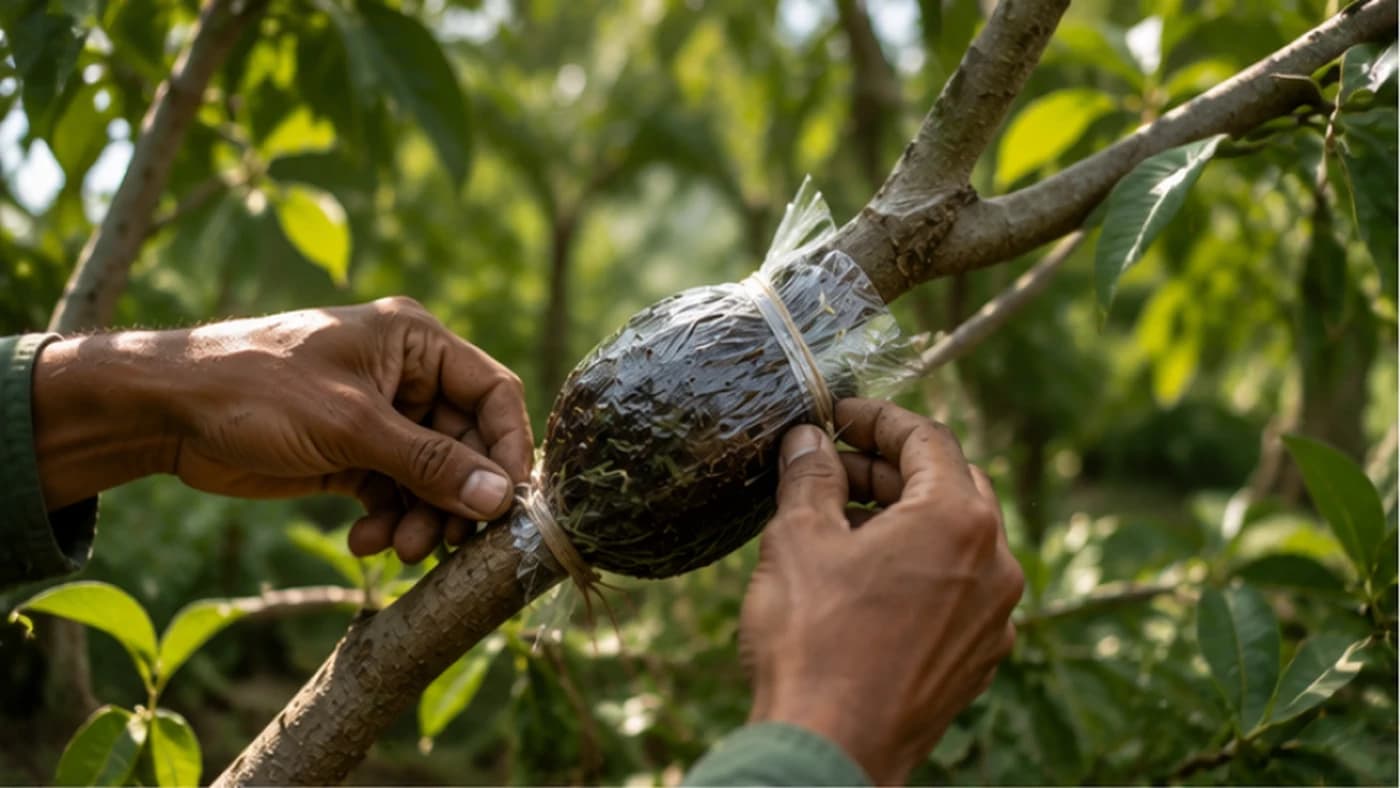
How to Multiply Fruit Trees for Free: Cuttings, Gootee and Grafting
One healthy branch and a bit of soil is often all it takes to turn a single fig, pomegranate or guava tree into an entire orchard — no nursery bill required. Here's how cuttings, air-layering (gootee) and grafting actually work.
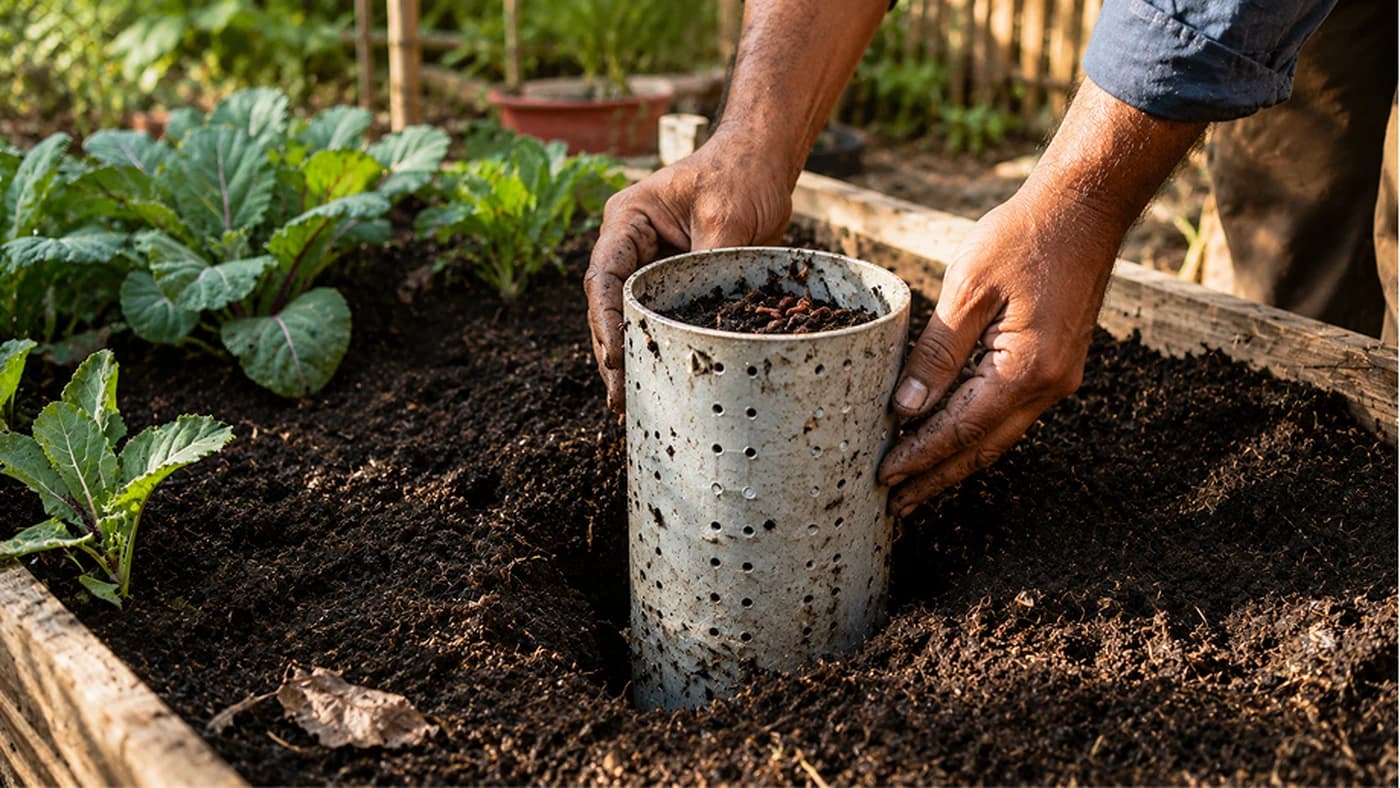
How to Build a Garden Worm Tower for Free, In-Bed Composting
Stop hauling kitchen scraps to a distant bin and hauling compost back months later. A buried worm tower lets worms process waste right where your plants are growing.
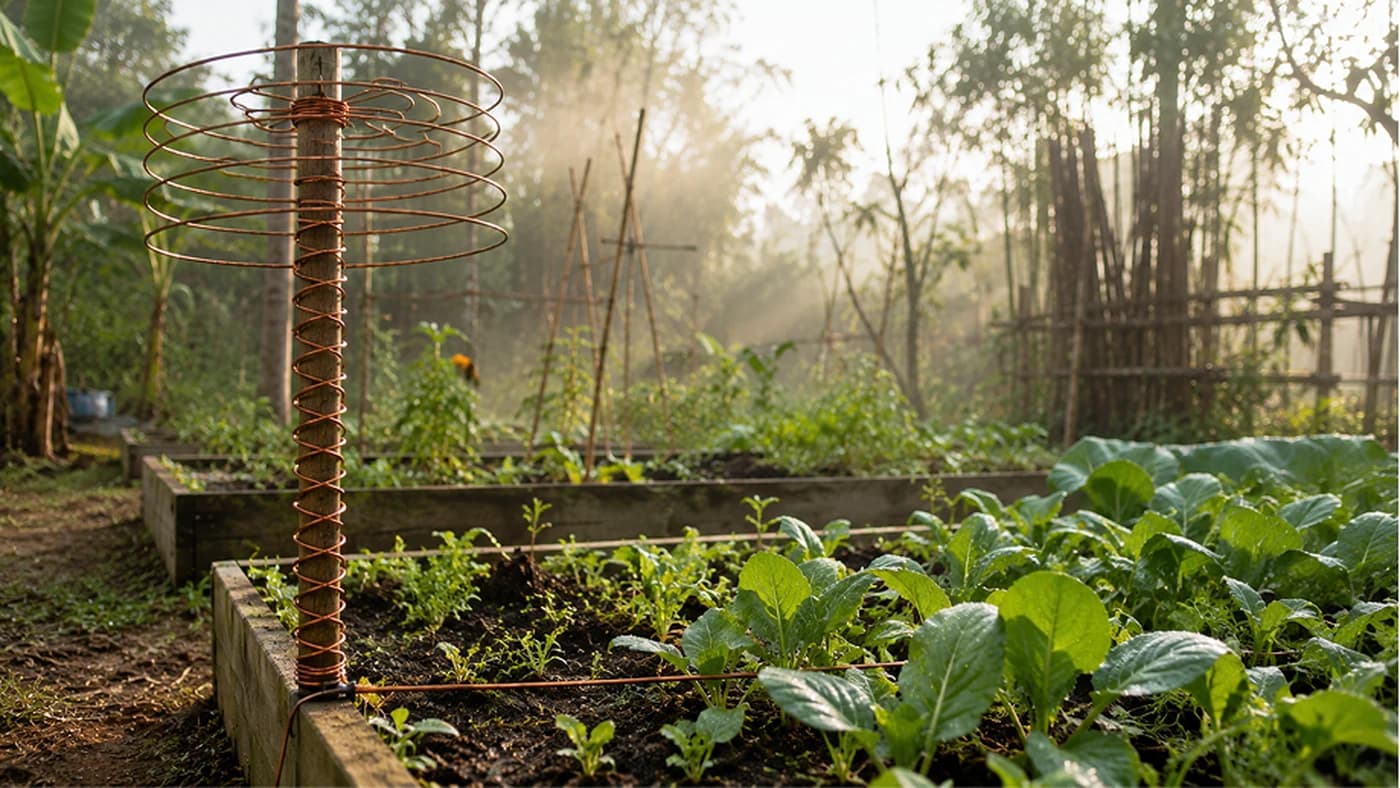
Electroculture Gardening: What It Is, and What the Evidence Actually Says
Copper antenna gardening promises faster growth and lower water use for almost no cost. It's a genuinely old folk technique — but the claims run well ahead of the science. Here's what it involves and how to think about it honestly.