

How to Multiply Fruit Trees for Free: Cuttings, Gootee and Grafting
One healthy branch and a bit of soil is often all it takes to turn a single fig, pomegranate or guava tree into an entire orchard — no nursery bill required. Here's how cuttings, air-layering (gootee) and grafting actually work.
Quick answer
Multiplying your own fruit trees turns one good tree into an orchard at almost no cost — a cutting, a gootee wrap, or a graft, timed to the dormant season and kept properly moist, will root reliably for most fruit trees within a few weeks to a few months. Match the method to the fruit — cuttings for fig, mulberry and pomegranate; air layering for citrus and guava; grafting for apple, pear and mango — mark which end is up, keep humidity steady, and use clean tools. Start with one or two attempts this season; even a single success gives you a tree, and a skill, for free.
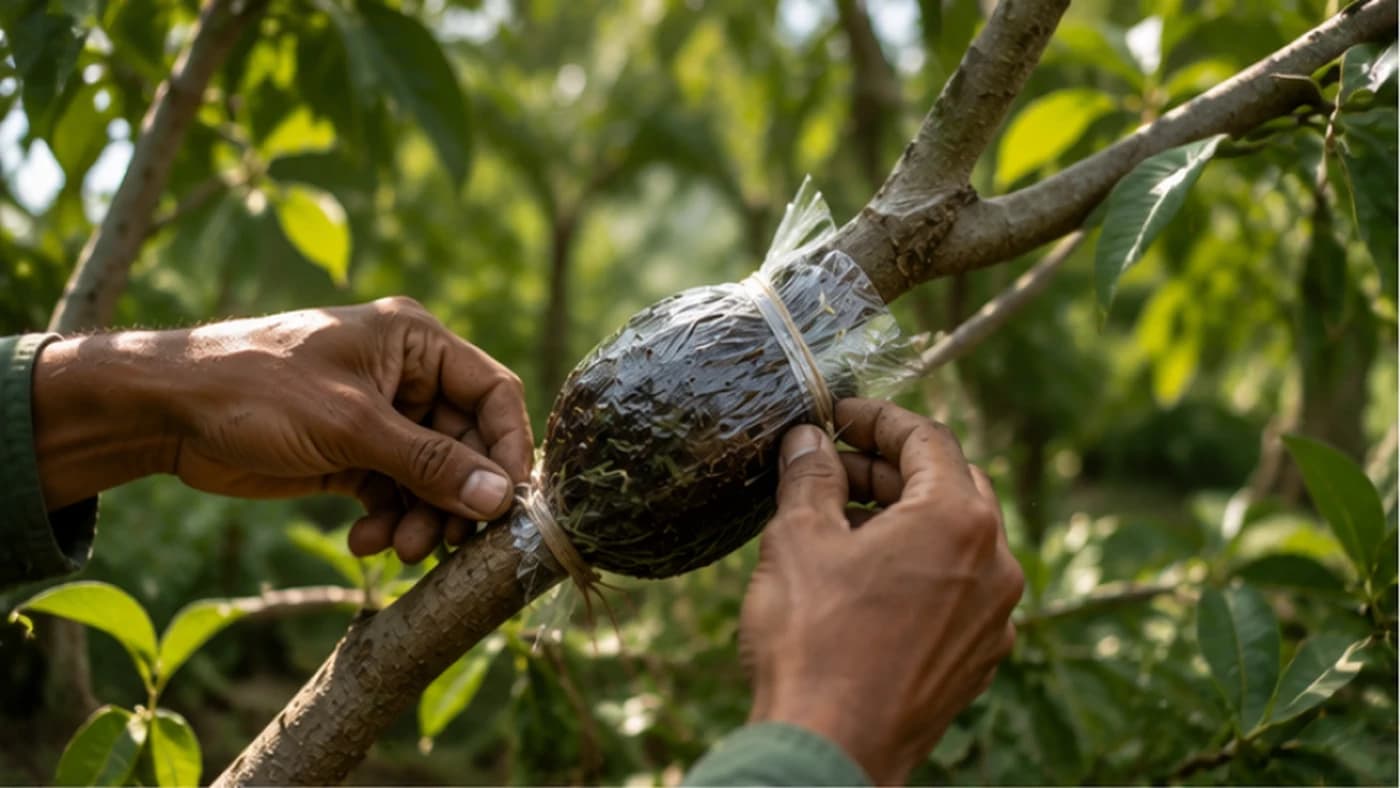
A mother tree that's already thriving in your soil and climate is a far better source of new trees than anything bought from a nursery — it's proven it can survive your local heat, your local pests and your local water. Propagation is simply the skill of turning one tree into many: a cutting, a rooted branch, or a graft, at essentially zero cost beyond a bit of time and patience. Indian growers already use versions of this every day — gootee (air layering) is exactly how most of the pomegranate, guava, lemon and other grafted or layered saplings sold in local nurseries are actually produced. Learning to do it yourself means free trees, rare varieties preserved, and stock that is already adapted to your exact patch of land.
Why propagate your own trees, and how it actually works
Grow a seed from a fruit you ate and the tree you get is a genetic lottery — most fruit trees don't come true from seed, so a mango seed or a grocery-store apple seed usually produces something smaller, more sour, and years slower to fruit than the parent. Vegetative propagation sidesteps this entirely: instead of a seed, you take an actual piece of the mother tree — a cutting or a rooted branch — and it grows into a genetic clone, identical in fruit quality, disease resistance and habit. The secret in every method is the cambium — the thin, green, actively-dividing layer of tissue just under the bark — which is where new roots and grafted unions actually form.
Cuttings: the simplest starting point
Some trees will root from a plain stick pushed into damp soil — fig and mulberry are two of the easiest, along with pomegranate. Others, like apple, pear and most stone fruit, essentially never root this way and need grafting instead (more on that below). Hardwood cuttings are taken when the tree is fully dormant — in most of India that's the cooler months, roughly December to February, before the buds start to swell; choose pencil-thick wood from the previous year's growth, cut 15-25 cm lengths, cut the bottom straight just below a bud and the top on a slant just above a bud so you always know which end is up. Softwood cuttings, taken from new, flexible spring growth, root faster — in as little as 3-4 weeks — but dry out easily and need a humidity dome or a clear plastic bag over the pot until roots form.
Air layering (gootee) — the technique already trusted in India
Air layering is the method behind most of the grafted-looking pomegranate, guava, lemon and other citrus saplings already sold at local nurseries, and it's especially reliable for trees that are hard to root from a plain cutting, including citrus and pomegranate. The process: choose a healthy, pencil-to-finger-thick branch, remove a ring of bark about 2-3 cm wide (girdling) to expose the cambium, wrap the wound in moist coco peat or sphagnum moss, and seal it tightly in plastic or polythene so moisture stays in. The branch stays attached to the mother tree the whole time, so it keeps getting water and nutrients while it grows its own roots inside that wrapped ball — usually within 8-12 weeks. Once you see roots filling the wrap, cut the branch off just below the new root ball and pot it up, keeping it in shade until it's established.
Natural rooting hormone: willow water
Commercial rooting powders use a synthetic hormone (IBA), but willow branches — which grow well in the Kashmir valley and other cooler hill regions — contain natural rooting compounds of their own. To make willow water: cut young green willow twigs into 2-3 cm pieces, soak them in water for 48-72 hours, then use that water to soak your cuttings before planting; it measurably improves rooting success. Where willow isn't available, simple kitchen staples do useful work too: raw honey dabbed on a fresh cut acts as a natural antiseptic against soil-borne rot, aloe vera gel reduces stress on the cutting, and a light dusting of cinnamon on the cut tip works as a mild natural fungicide.
What you actually gain from propagating your own trees
The most obvious saving is cost — a single good mother tree can, over a few seasons, produce dozens of new trees for the price of nothing but your labour, where nursery saplings can add up fast at scale. Just as valuable is local adaptation: a cutting or layer taken from a tree that has already survived your area's droughts, heat and pests carries that resilience forward, while nursery stock is often raised in ideal, sheltered conditions that don't reflect your actual field. And propagation lets you preserve varieties worth keeping — an old, unnamed mango or guava tree on a family plot with genuinely excellent fruit that isn't sold anywhere can be kept going indefinitely through cuttings, layering or grafting, long after the original tree is gone.
Common mistakes to avoid
Planting a cutting upside down is the single most common failure — the plant's internal plumbing only moves water and sugars one way, so always mark and remember which end faced the sky. Drying out is the second big killer: a cutting has no roots yet to draw water, but its leaves and stem still lose moisture, so keep softwood and semi-hardwood cuttings under a humidity dome, clear bag, or in constant shade until roots form. Poor hygiene causes rot: always use a sharp, clean blade rather than a ragged cut, which crushes the cambium and invites infection, and wipe your blade with alcohol or a flame between different mother plants to avoid spreading disease.
When propagation is genuinely difficult
Not every tree cooperates with a simple cutting — apples, pears and most temperate stone fruit essentially never root reliably this way, and grafting onto a rootstock is the real solution rather than a workaround. Time is a real factor too: a rooted cutting or a successful graft from a mature tree can fruit within 2-3 years, while a tree grown from seed can take anywhere from 7 to 15 years to bear — so if speed matters, always propagate vegetatively rather than sowing seed. And in a hot, dry climate, propagation outdoors without some way to hold humidity (a misting setup, a shaded corner, or simply a plastic-covered tray) is genuinely difficult — most successful home propagation happens in a sheltered, part-shaded spot where moisture can be controlled.
Which method for which fruit
- Hardwood cuttings — best for fig, mulberry and pomegranate: easy, roots in 2-4 months.
- Air layering (gootee) — best for citrus, guava and pomegranate: moderate difficulty, roots in 8-12 weeks, and the technique most nurseries actually use for these.
- Grafting — needed for apple, pear, mango and most stone fruit: advanced, union forms in 3-6 weeks, but is the only reliable route for these species.
Practical tips
A simple propagation box — a plastic tub with a few centimetres of coarse sand, or a 50:50 mix of coco peat and perlite — keeps the two things new roots need most: steady humidity and stable temperature. Label everything immediately; a dormant peach branch and a dormant plum branch look nearly identical, so a permanent marker on a plastic tag saves real confusion later. And watch the buds, not the calendar: harvest hardwood cuttings while the tree is still fully dormant and the sap is down, because once buds swell and turn green, the plant's energy has already shifted upward and your success rate drops sharply.
Grafting and rootstocks, a step further
Once basic cuttings and layering feel comfortable, grafting opens up more — it's the marriage of two plants, where the rootstock provides the root system (and often controls the tree's eventual size) and the scion (the piece you graft on) provides the fruit variety. A dwarfing rootstock can turn a tree that would naturally grow 8-9 metres tall into one that tops out at 2-2.5 metres, letting you fit several varieties in the space of one, and some growers even graft multiple varieties onto a single trunk. The one rule that matters most: stay within the same botanical family for a graft to actually take and last — you can graft one citrus onto another, but not a citrus onto an unrelated tree, no matter how compatible the wood looks.
A worked example: layering a fig from a neighbour's tree
Say a neighbour has a fig tree that fruits reliably every year and you want that exact tree, not a seedling gamble. In late winter, ask for a 20-25 cm branch of last year's growth — grey-brown and firm — wrap it in a damp cloth, and take it home. Prepare a pot with a mix of coarse sand and potting soil, dip the cut end in a little raw honey, and push it about 15 cm deep into the soil with at least two bud nodes below the surface and two above, then keep it in a bright, sheltered spot out of harsh direct sun. Buds opening in spring don't mean roots have formed yet — the cutting is running on stored energy at first — so be patient; by early summer, roots should be visible through the drainage holes, and only then is it ready to be hardened off and planted out.
Terms explained in this guide
Frequently asked
Which fruit trees are easiest to propagate from a simple cutting?+
Fig, mulberry and pomegranate root readily from hardwood cuttings taken during the dormant season. Apple, pear and most stone fruit generally do not, and need grafting onto a rootstock instead.
What is gootee and why is it used so widely in India?+
Gootee (air layering) roots a branch while it's still attached to the mother tree by wrapping a girdled section in moist medium and plastic. It's reliable for citrus, guava and pomegranate, which is why most nursery saplings of these fruits are produced this way.
When is the best time to take hardwood cuttings?+
During the tree's dormant season, before buds swell — roughly December to February in most of India — using wood from the previous year's growth about pencil-thick.
How can I improve my rooting success without buying rooting hormone?+
Willow water (from soaking young willow twigs) works as a natural rooting stimulant. Raw honey on the cut end fights rot, and a light dusting of cinnamon acts as a mild natural fungicide.
How long before a propagated tree actually fruits?+
A cutting, layer or graft from a mature, fruiting tree typically bears within 2-3 years, compared with 7-15 years for a tree grown from seed.
Where to go next
Want this as daily tasks for your farm?
Khetiyaar turns guides like this into a day-by-day plan — in your language, free to start.

Related guides
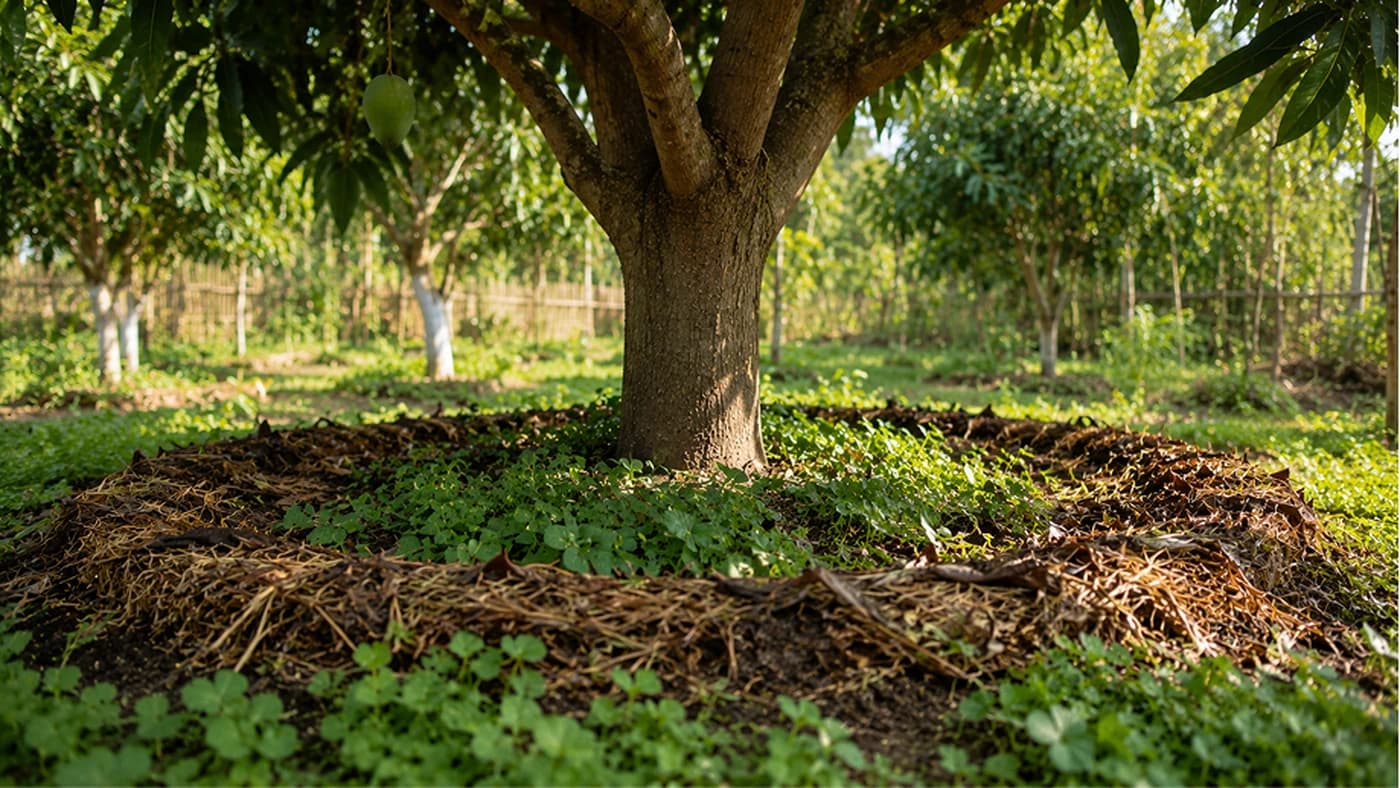
Managing Soil Under Fruit Trees for Better Yields
A mowed, bare-earth ring under a fruit tree is a missed opportunity, not tidy farming. Mulch and a few companion plants turn that space into a pest-fighting, moisture-holding, self-feeding system.
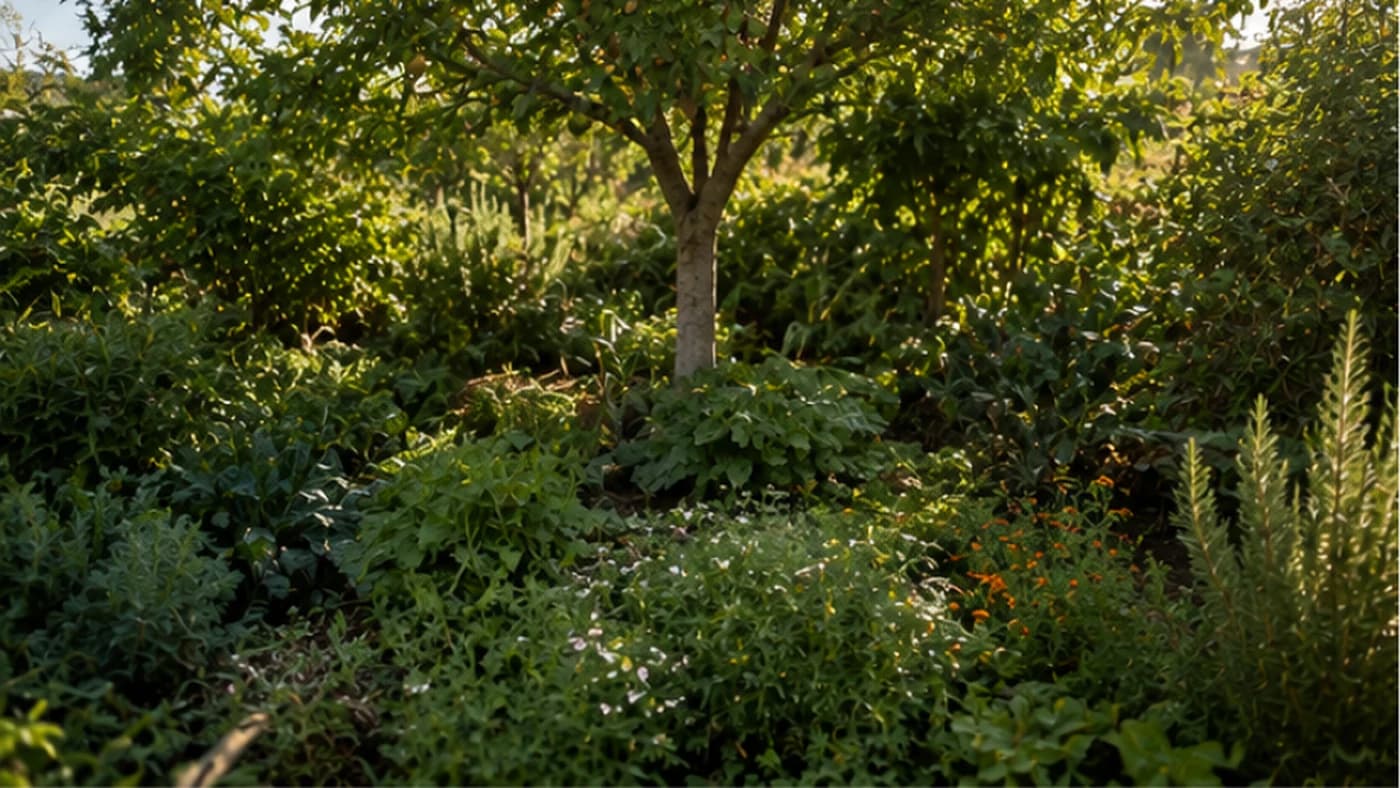
Multi-Layer Food Forest Design: Growing Seven Crops in the Space of One
A natural forest needs no fertiliser or hose, because every layer of it — from tall trees to root crops — fills a different niche. Stacking those same layers in your backyard or farm boundary can multiply what one plot of land produces.
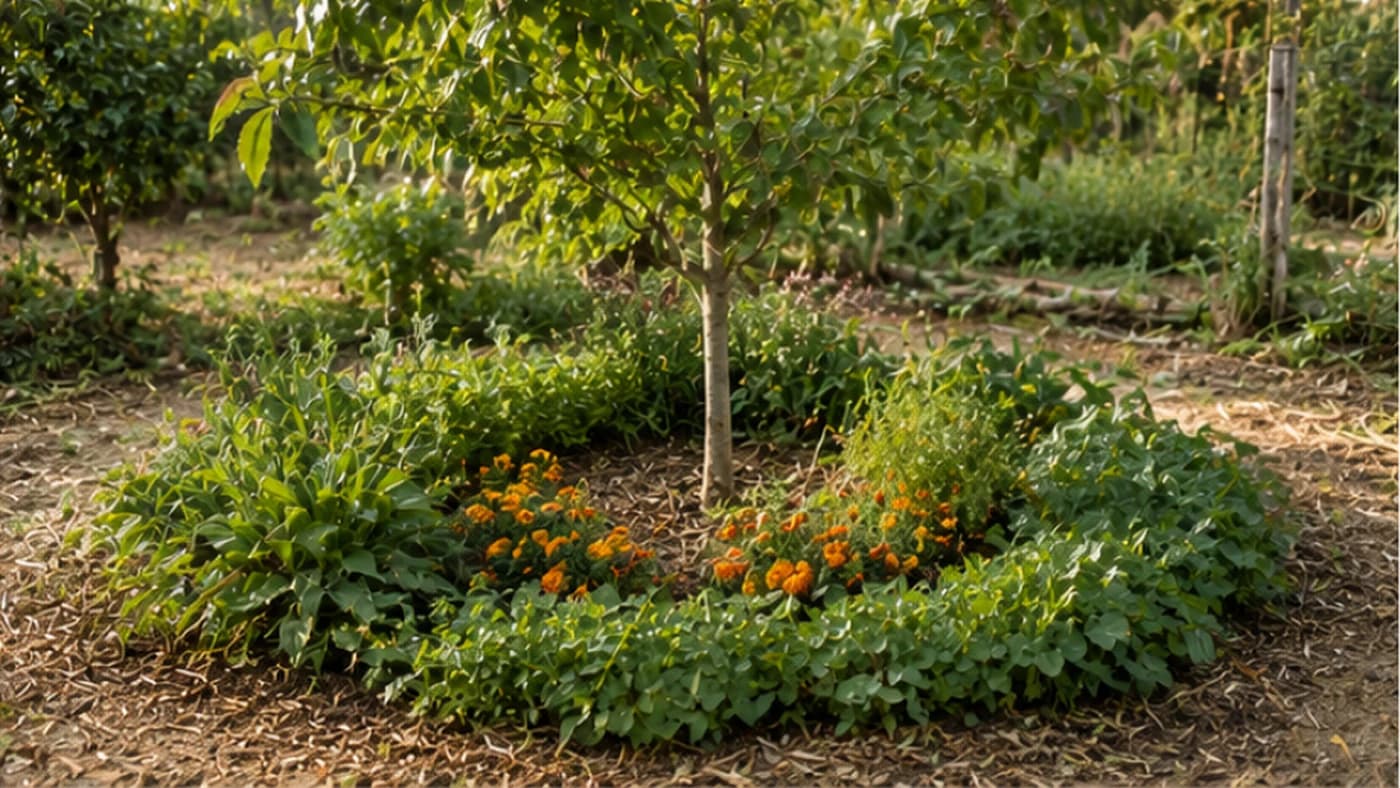
Fruit Tree Guild Design for Beginners: Give Your Tree a Support Crew
A lone fruit tree surrounded by bare soil or lawn spends its whole life fighting for water and nutrients. Surround it instead with a small team of companion plants — each with its own job — and the tree largely takes care of itself.