

Living Willow Fences: A Boundary That Grows Stronger Every Year
Plant a fence instead of buying one. Willow rods pushed into moist soil and woven into a diamond lattice root, thicken, and graft into a living windbreak that gets stronger with age instead of rotting away.
Quick answer
Where willow genuinely grows well — the Himalayan foothills, Kashmir, and similar cool, moist hill regions — a living willow fence trades a few seasons of establishment care for a boundary that gets stronger, not weaker, every year: a real windbreak, an early pollinator food source, and a structure with no plastic or chemical footprint at all. Get the site moist and sunny, plant while dormant, and don't let the soil dry out in year one.
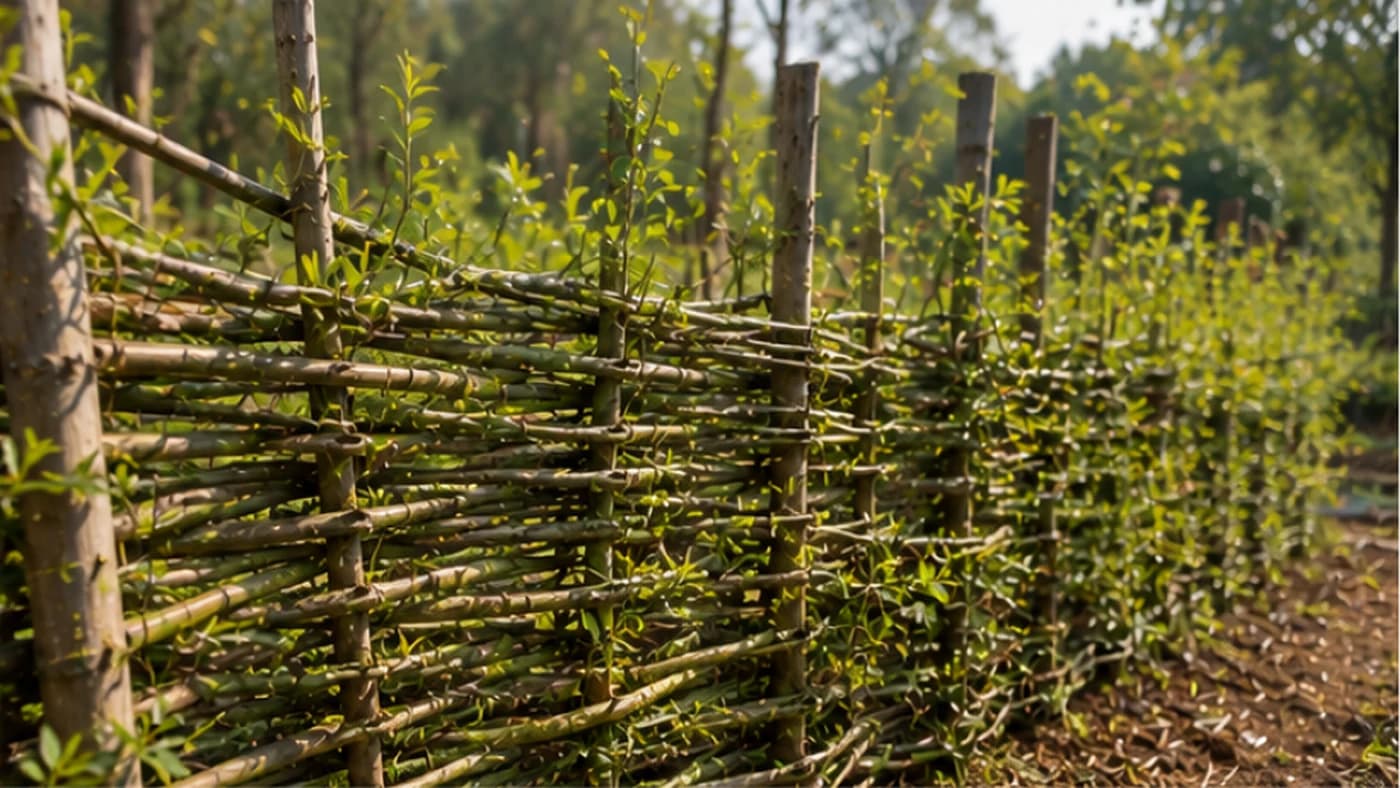
A wood or bamboo fence starts decaying the day it goes up. A living willow fence does the opposite — planted as simple dormant rods, it roots, thickens, and grafts itself into a single, self-repairing structure that gets stronger every year instead of weaker. This is well suited to the wetter, cooler parts of India — Kashmir and the Himalayan foothills, where willow already grows widely (including the willow used for cricket bats), and other cool, moist hill regions. In hot, dry plains willow won't establish well, and a living fence of a locally suited species — vetiver, bamboo, or gliricidia, for example — is the better choice for the same purpose.
What a living willow fence actually is
A living willow fence (sometimes called a 'fedge' — part fence, part hedge) is built by planting dormant willow rods directly into the ground and weaving them into a lattice pattern, usually a diamond or 'harlequin' weave: rods planted in pairs, one angled left and one right at roughly 45 degrees, crossing their neighbours down the line. Where two rods touch and are tied together, they often undergo pressure grafting over a couple of growing seasons — the bark grows together and the two stems literally fuse into one, giving the structure strength no nail or wire connection can match.
Where and when to plant
Willow needs full sun and consistently moist soil, though it tolerates a wide range of soil types including heavy clay — which is exactly why it suits water-retentive hill soils and streamside land in willow-growing regions. Plant during the dormant season, when the plant's energy is stored in the stems rather than active growth — typically the cooler months in willow-growing regions, well before new leaf buds appear.
Clear a strip of ground at least 30 cm wide along your planned fence line, removing all grass and perennial weeds so young willow isn't competing for water and nutrients in its critical first year.
Sourcing and planting the rods
Willow rods must be freshly cut, living material — dried basketry willow will not root or grow. Use one-year-old rods ('whips') for the flexible weaving sections, and thicker two-year rods for the main structural uprights. Push each rod at least 25–30 cm into the ground (up to 40 cm in drier soil, to protect the base from drying out), using a metal dibber or rod to make a pilot hole first so the bark isn't damaged as you push it in.
Space paired rods roughly 15–25 cm apart along the fence line for the diamond weave, angling one rod of each pair left and the other right at about 45 degrees so they cross their neighbours in a front-to-back alternating pattern, similar to basket-weaving. Tie the crossing points with biodegradable jute twine or a flexible rubber tie — never wire or thin plastic, which cuts into the bark as the stems thicken.
Why a living fence is worth the wait
A mature willow fedge is a permeable barrier, letting roughly 30–50% of wind pass through rather than blocking it outright — this breaks the force of wind without creating the turbulent gusts a solid wall causes on its downwind side, making it a genuinely effective windbreak for a vegetable patch or young orchard. Willow flowers early in the year, providing one of the first nectar sources for bees coming out of the cold season, and a dense, woven fedge gives small birds and beneficial insects real nesting habitat — something a plastic mesh fence never will.
There's also a real, measurable carbon and durability case: fast-growing willow can store several tonnes of carbon per hectare annually in its above-ground growth alone, with its root system storing more below ground, and unlike treated wood — which often contains preservative chemicals — a living fence introduces nothing toxic into the surrounding soil.
Common mistakes to avoid
Planting too late, once leaf buds have already opened, is the most common failure — the plant then diverts energy into leaves instead of roots, and the top growth withers within weeks because the root system can't yet support it. Letting the soil dry out in the first growing season is the second — mulch heavily with straw, wood chips, or a biodegradable weed mat immediately after planting to hold moisture, since a living cutting that dries out simply dies. And once established, a living fence needs regular trimming — left unmanaged, vigorous vertical shoots can grow two metres in a single season, and the extra weight will sag or distort the woven pattern.
Where a living willow fence isn't the right choice
Willow roots are aggressively thirsty and will seek out any water source, so never plant one within about 10 metres of a house foundation, septic tank, or underground pipe — roots can work into small cracks and cause real damage over time. It's a poor choice for deep shade under mature trees or buildings, since it needs at least half a day of full sun to stay vigorous, and it struggles in genuinely arid regions without reliable irrigation.
Living fence vs. conventional alternatives
Living willow: low or free initial cost if self-sourced, 30+ years of life, needs annual pruning and re-weaving, stores carbon rather than releasing it, and repairs itself as it grows. Treated wood fencing: moderate to high cost, 10–15 years of life, needs regular staining and repair, and has a real carbon footprint from manufacturing. Plastic or wire mesh: moderate cost, 5–10 years of life, replacement is the only real 'maintenance', and carries a high carbon footprint from petrochemical production. The willow costs more effort up front but far less over its lifetime.
Care through establishment
Soak the cut ends of your rods in about 10 cm of water for 24–48 hours before planting — this triggers root-growth hormones and gives the rods a head start. Trim the base of each rod with a clean, sharp cut just before planting to remove dried tissue. Water thoroughly once a week through the first growing season if there's no rain; by the second year, once roots are established, the fence becomes largely self-sufficient.
Advanced shaping and other uses
The same weaving technique scales up into living domes, arches, or even tunnels for a play area, and experienced growers graft willow into living benches and chairs by encouraging pressure-grafting at deliberate points. Trimmings from annual maintenance aren't waste — cut rods can be woven into baskets, or in livestock regions, fed to goats and sheep as a high-protein browse that also has some natural deworming properties from its salicylic acid content.
Frequently asked
Does willow grow well across India, or only in certain regions?+
Willow (Salix) is well suited to the Himalayan foothills, Kashmir, and other cool, consistently moist hill regions — it doesn't establish well in hot, dry plains, where a locally suited living-fence species like vetiver, bamboo, or gliricidia works better.
When should I plant willow rods?+
During the dormant season, before new leaf buds break — planting after leafing-out is the most common cause of failure, since the plant diverts energy to leaves instead of roots.
How far should a living willow fence be from my house?+
At least 10 metres from foundations, septic tanks, or underground pipes — willow roots actively seek out water and can work into small cracks over time.
How much wind does a living willow fence actually block?+
Roughly 50–70% — it's a permeable barrier by design, which is what makes it an effective windbreak without the turbulent gusts a solid wall creates.
Does a living willow fence need much care once established?+
Mainly annual trimming to keep the woven pattern intact and stop vigorous vertical shoots from sagging the structure. Watering is only critical during the first growing season.
Where to go next
Want this as daily tasks for your farm?
Khetiyaar turns guides like this into a day-by-day plan — in your language, free to start.

Related guides
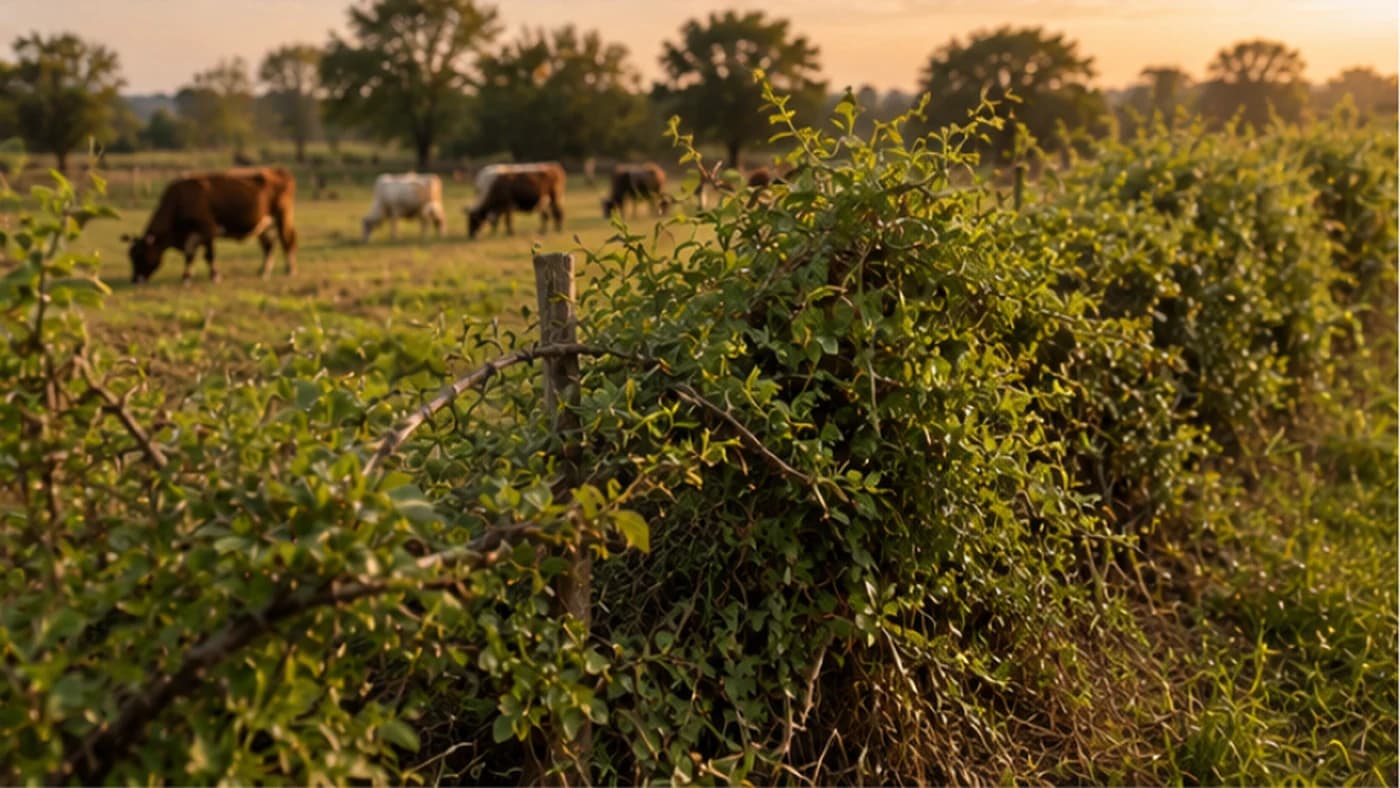
Living Fences for Livestock: Grow a Boundary That Never Needs Replacing
A wire fence rusts and sags within 20–30 years. A well-managed living fence of thorny trees and shrubs gets stronger every winter, blocks wind, feeds your animals, and can outlast the farm itself.
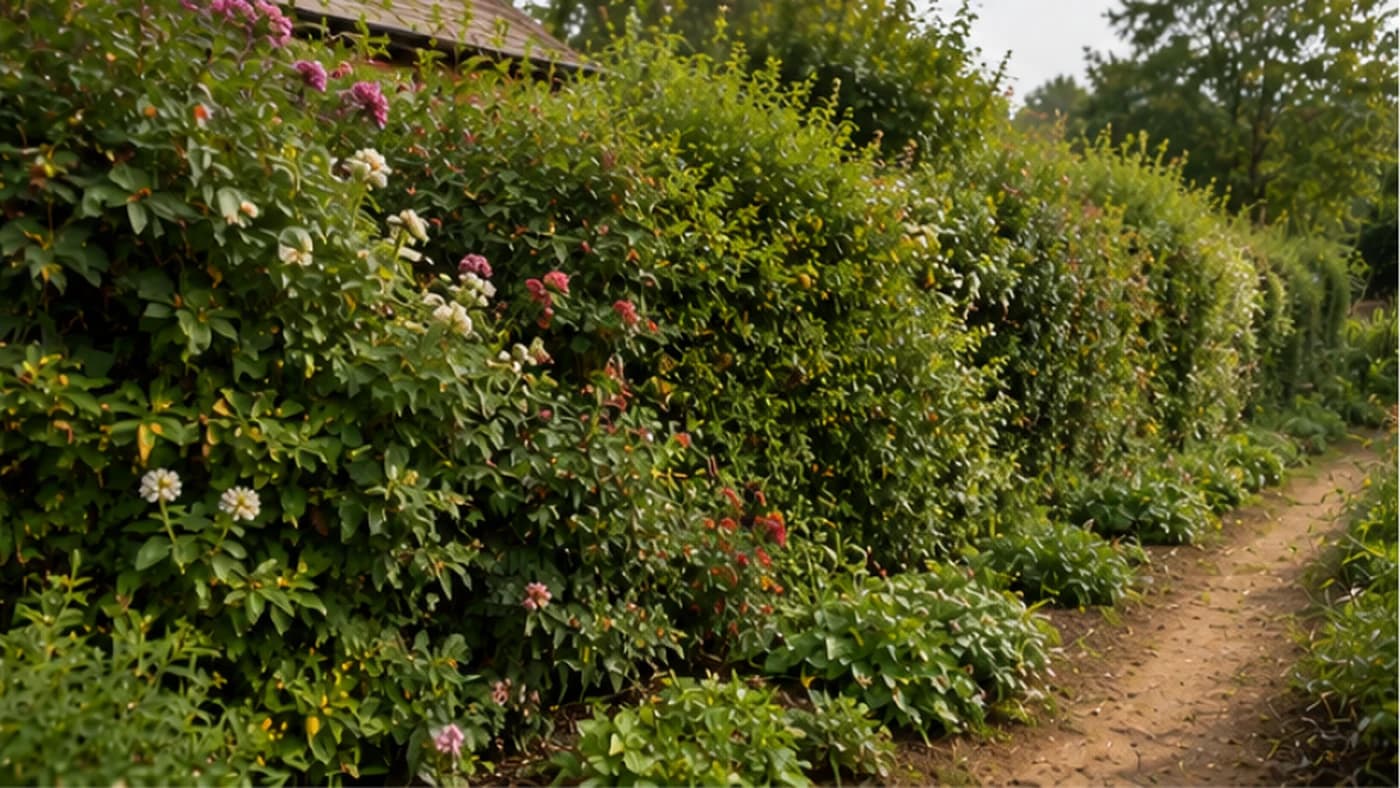
Living Fences: Grow a Boundary That Feeds Your Family Too
A living fence of thorny, fruiting shrubs gives you privacy, wind protection and a harvest — all from a boundary you'd otherwise spend money maintaining forever.
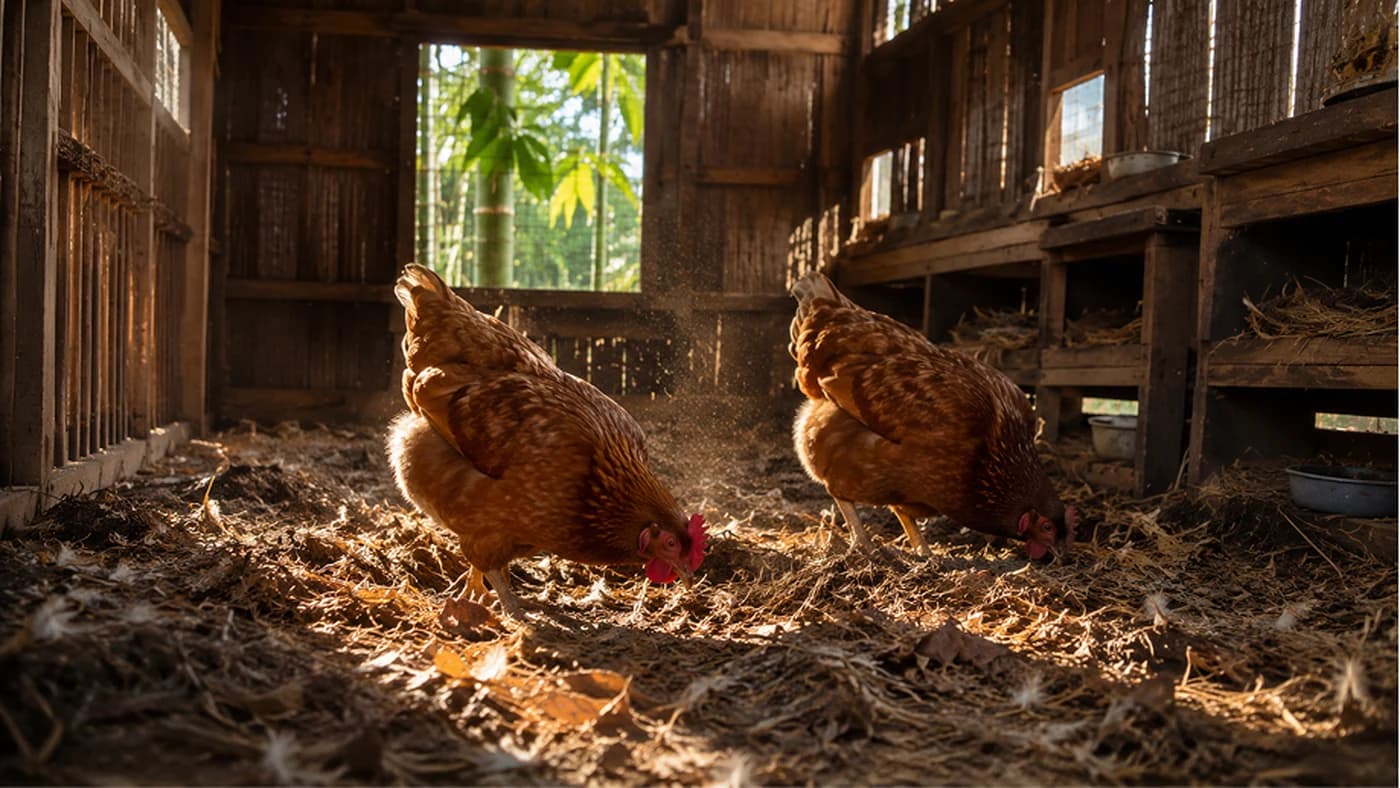
Deep Litter Method: Turn Your Chicken Coop Into a Living Compost System
A scrubbed, bare coop floor is a wasted opportunity. Let a thick carbon bed and billions of microbes do the composting for you — less labour, healthier birds, and free fertiliser for the field.