

Living Fences: Grow a Boundary That Feeds Your Family Too
A living fence of thorny, fruiting shrubs gives you privacy, wind protection and a harvest — all from a boundary you'd otherwise spend money maintaining forever.
Quick answer
A living fence takes patience — three to seven years to become fully functional — but it repays that patience with privacy, wind protection, and an actual harvest, all from land you'd otherwise spend money fencing with wire or wood. Choose species suited to your region and purpose, give it real width and spacing, keep the base dense with pruning or hedgelaying, and mulch and water it like the crop it is.
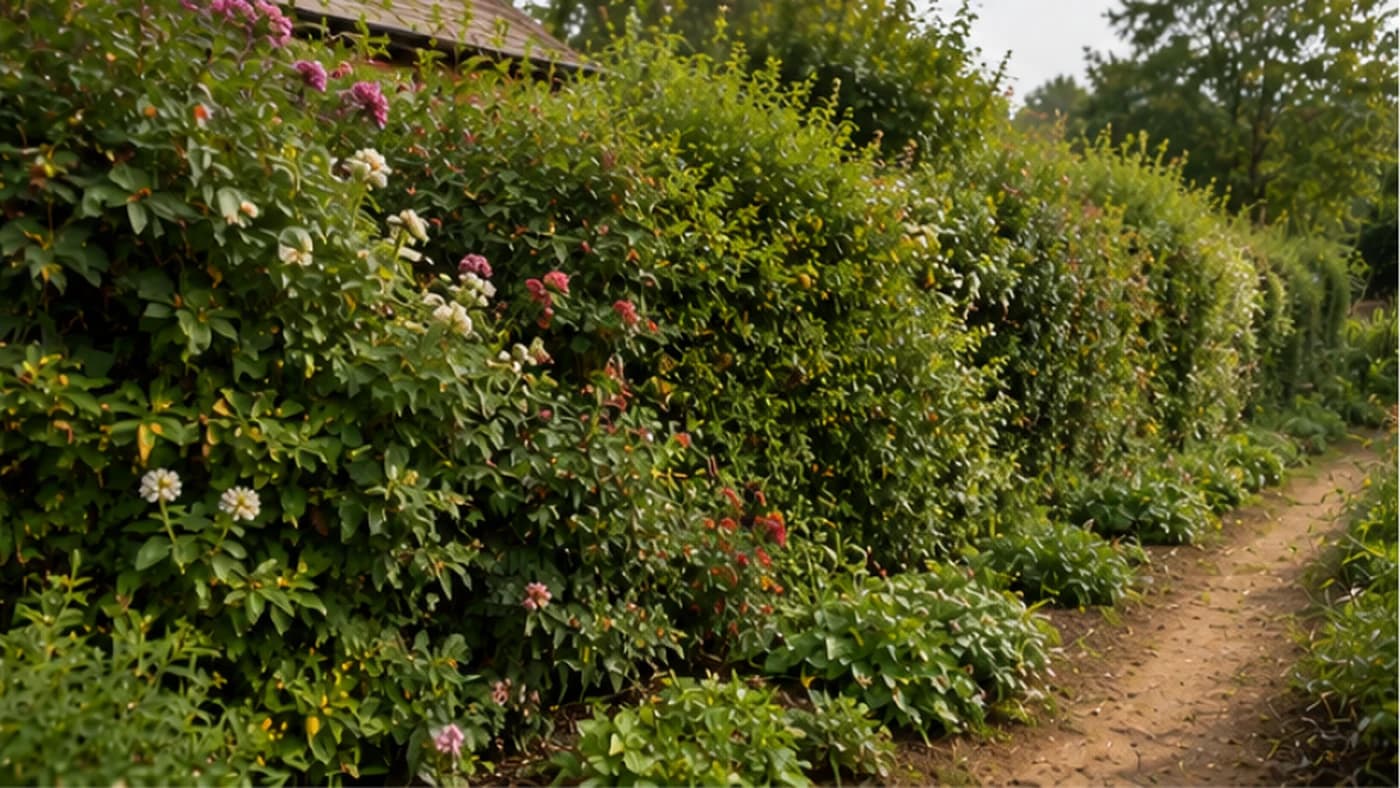
Your farm or home boundary could be feeding your family instead of just marking a line. A wooden or wire fence starts decaying the day it's installed and gives nothing back, while a living fence of the right shrubs and trees provides privacy, blocks wind, shelters pollinators, and produces fruit, fodder or firewood — the same land doing several jobs at once. Farmers across India have used living hedges of thorny, hardy plants for exactly this reason for generations; this guide brings that tradition together with a few useful modern techniques.
Why a living fence beats a dead one
A wooden or wire fence needs staining, repair and eventual full replacement, and it never gives anything back for the money spent. A living fence, by contrast, is a self-repairing asset that gets thicker, stronger and more valuable every year. Choose edible or useful species and you turn a non-productive boundary into a genuine harvest line — karonda (Carissa carandas) alone can give you kilograms of tart fruit for pickles and jam every year, while moringa gives you leaves and pods, and gliricidia or subabul give you fodder and firewood.
A living fence also does real climate work a solid wall cannot. Wind hitting a completely solid barrier tumbles over the top and creates rough turbulence on the far side; a hedge with some gaps in its foliage filters and slows the wind instead, creating a calmer, several-degrees-warmer microclimate on the sheltered side — useful for young vegetable beds nearby.
Choosing the right species for your region
Match the plant to your climate and purpose rather than what looks fashionable. For a fast, thorny, low-cost security hedge across most of India, karonda, bougainvillea or duranta are widely used and easy to establish. In dry western and central India (Gujarat, Rajasthan, Maharashtra), euphorbia (locally known in many areas simply as 'kanta' hedging) and agave have been used as farm-boundary fencing for generations because they thrive with almost no water once established. Gliricidia and subabul are excellent where you also want fodder and green-manure leaves from the same hedge, and bamboo makes a fast, dense, multi-purpose screen wherever you have a little more moisture.
In cooler hill regions — Himachal Pradesh, Uttarakhand, Kashmir — you can train fruit trees like apple, pear or peach flat against a wire frame (a technique called espalier) as a living, fruit-producing wall in a very narrow footprint. In the plains, the same trellis-training idea works well with pomegranate, guava or grapes instead.
Planning, spacing and planting
Before planting, clear a strip at least one metre wide of grass and weeds so young plants aren't fighting for water and nutrients from day one, and work in a layer of well-rotted farmyard manure or compost to give them a strong start. Spacing depends on your technique: for a woven or wattle-style fence, main uprights can go roughly every 60 centimetres; for a thick hedgerow, a staggered double row gives a denser base and closes gaps faster as the plants mature.
Plant during the dormant or cooler season for your region so roots can establish without the stress of peak heat or heavy new leaf growth. Dig a hole at least twice as wide as the root ball, spread the roots out, firm the soil to remove air pockets, and water deeply right after planting to settle the earth around the roots.
Techniques for a dense, stock-proof structure
Left alone, hedge plants grow tall and bare at the bottom, leaving gaps that animals and stray dogs can slip through. Hedgelaying is the traditional fix: partially cut through young stems and lean them over at an angle, weaving them together while they're still alive (the inner wood stays connected, so the plant survives and pushes new vertical shoots up from the bent stems). This creates a thick, thorny, genuinely impenetrable weave that has historically been used to hold livestock — a technique well worth reviving on Indian farms using species like karonda or babul.
Where you want a tall, narrow, flat screen rather than a wide hedge, pleaching (weaving branches of adjacent trees together into a flat wall) works well in a tight space, and espalier-style training of fruit trees against a simple wire frame gives you both a clear boundary and a large fruit harvest from a very small footprint.
Common mistakes
The most frequent mistake is impatience — planting too close together to get instant privacy, which leads to plants competing for water and light and dying back in patches within a few years. Respect the mature width of whatever you plant.
The second is neglecting the base: if you let plants grow straight up without pruning or hedgelaying, you get bare trunks at ground level that give no real privacy and let animals through easily — regular topping or laying is what keeps a hedge dense from the ground up. Third, match species to your actual conditions: a moisture-loving plant in dry, sandy soil will constantly struggle, and a species known to be invasive in your region can quickly become more of a headache than the wooden fence it replaced, so check local advice before planting anything unfamiliar. Finally, don't skip yearly maintenance — a hedge left unpruned for several years becomes a much harder job requiring heavy tools rather than simple hand shears.
When a dead fence is still the better choice
A living fence is not instant — it typically takes three to seven years to become a fully functional barrier, so if you need an immediate legal boundary or to contain a dangerous animal today, a wire or wood fence is your only real option in the short term. It also needs real width — a productive hedge generally wants at least a metre or more to thrive — so on a very tight urban plot, a thin panel fence may be the only way to mark your line without giving up your whole yard.
On rented land, a living fence is a poor fit since it's a long-term investment you can't take with you. And it does need yearly attention: if you travel often or can't manage regular pruning, a hedge can become overgrown and unruly — if you want a set-and-forget boundary, a dead fence is the honest answer.
Practical tips for faster, healthier growth
Use a string line when planting so your row stays straight — a crooked line is harder to maintain and can create boundary disputes with neighbours later. Mulch heavily around the base of young plants with straw, dried leaves or wood chips; this suppresses weeds, holds soil moisture, and can roughly double growth rate in the first few years by keeping roots cool and moist. Water deeply but infrequently rather than a light daily sprinkle, so roots are encouraged to grow deep where they can find moisture during dry spells — a simple drip line along the hedge for the first two summers makes a real difference to establishment. Keep your cutting tools sharp: clean cuts heal fast, while crushed cuts from a dull blade invite disease and die-back.
Getting more from the same hedge
Stack functions where you can — the same hedge line can give you human food (karonda, mulberry, guava), animal fodder (gliricidia, subabul leaves) and useful material (bamboo or hazel-type rods for stakes and light building) all at once. For larger farms, a multi-species shelterbelt-style hedge along field boundaries protects entire fields and livestock from wind, combining a tall canopy layer, a mid-story of nitrogen-fixing shrubs like gliricidia, and a low thorny layer for security.
For example: a farmer wanting to secure a 30-metre boundary could plant a staggered double row of karonda and gliricidia cuttings for a fraction of the cost of a wire fence. With mulching and regular watering in the first two years, by year three the gliricidia gives a usable screen and green fodder, and by year five the karonda is filling gaps and producing several kilograms of fruit a season — the fence effectively paying for itself in food and fodder value alone.
Frequently asked
Which plants make a good living fence in India?+
Karonda, bougainvillea and duranta for a fast thorny hedge almost anywhere; euphorbia and agave for dry western and central regions; gliricidia and subabul where you also want fodder and firewood; and bamboo for a fast, dense multi-purpose screen wherever moisture allows.
How long before a living fence actually works as a barrier?+
Typically three to seven years to become fully dense and stock-proof, depending on species and how well it's maintained in the early years. It is not a fast solution if you need an immediate boundary.
How do I stop the bottom of my hedge from staying bare?+
Prune or 'lay' the hedge regularly — partially cutting and weaving stems horizontally (hedgelaying) forces new growth to fill in near the ground, rather than letting all the growth shoot straight upward.
How much space does a living fence need?+
A productive hedge generally needs at least a metre or more in width to thrive. On very tight urban plots, this may not be practical, and a conventional fence may be the better fit.
Can a living fence actually produce food, not just privacy?+
Yes — species like karonda, moringa, mulberry, guava and gliricidia give fruit, leaves or fodder alongside the screening and wind protection, effectively turning a boundary into a productive strip of land.
Where to go next
Want this as daily tasks for your farm?
Khetiyaar turns guides like this into a day-by-day plan — in your language, free to start.

Related guides
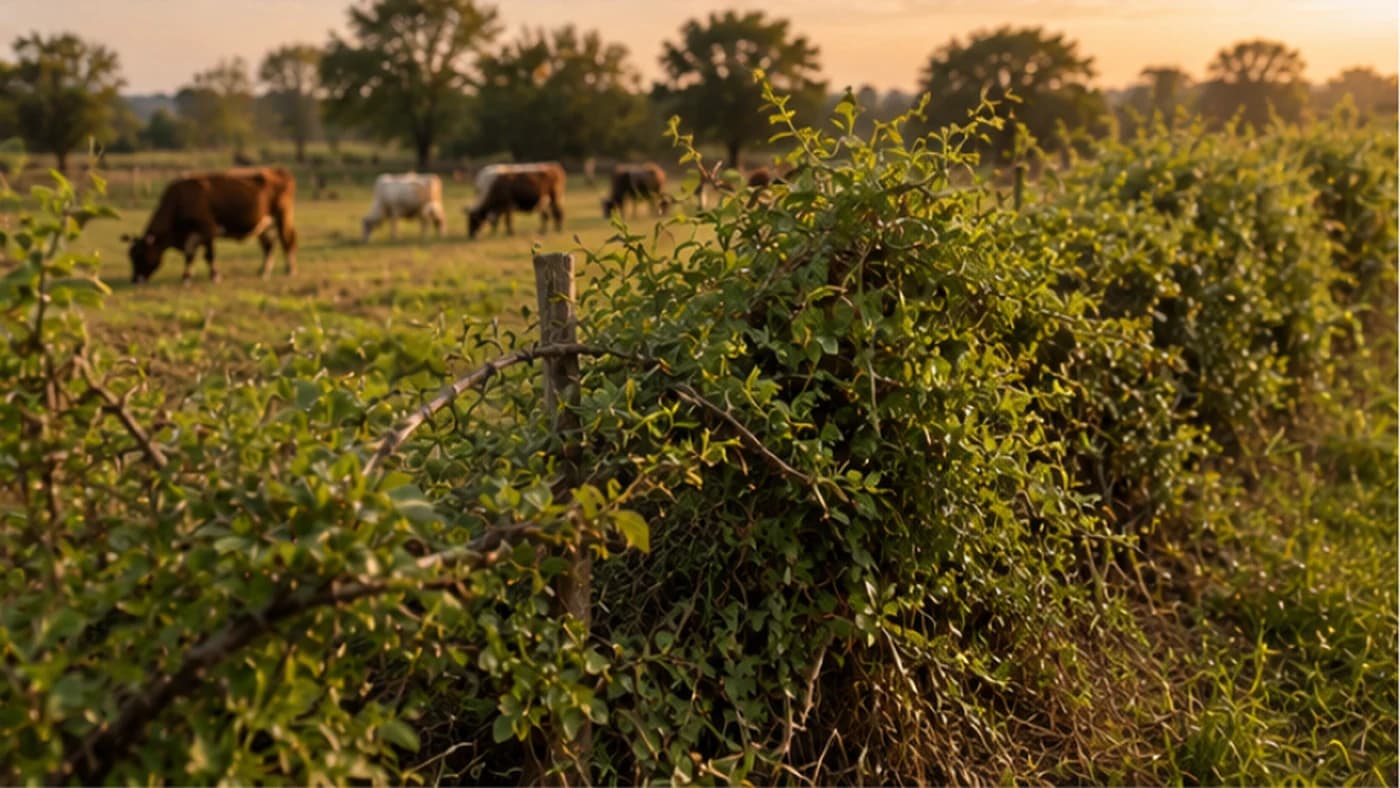
Living Fences for Livestock: Grow a Boundary That Never Needs Replacing
A wire fence rusts and sags within 20–30 years. A well-managed living fence of thorny trees and shrubs gets stronger every winter, blocks wind, feeds your animals, and can outlast the farm itself.
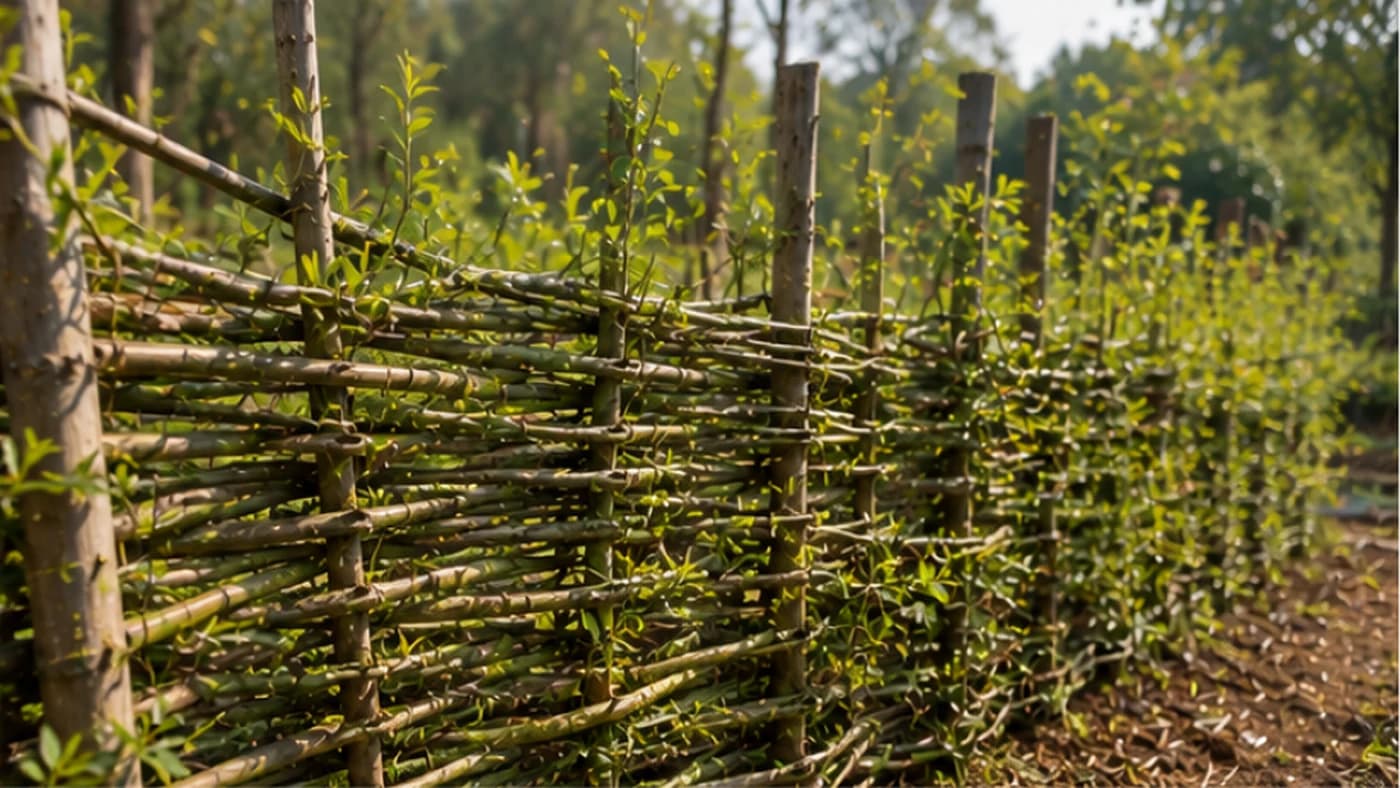
Living Willow Fences: A Boundary That Grows Stronger Every Year
Plant a fence instead of buying one. Willow rods pushed into moist soil and woven into a diamond lattice root, thicken, and graft into a living windbreak that gets stronger with age instead of rotting away.
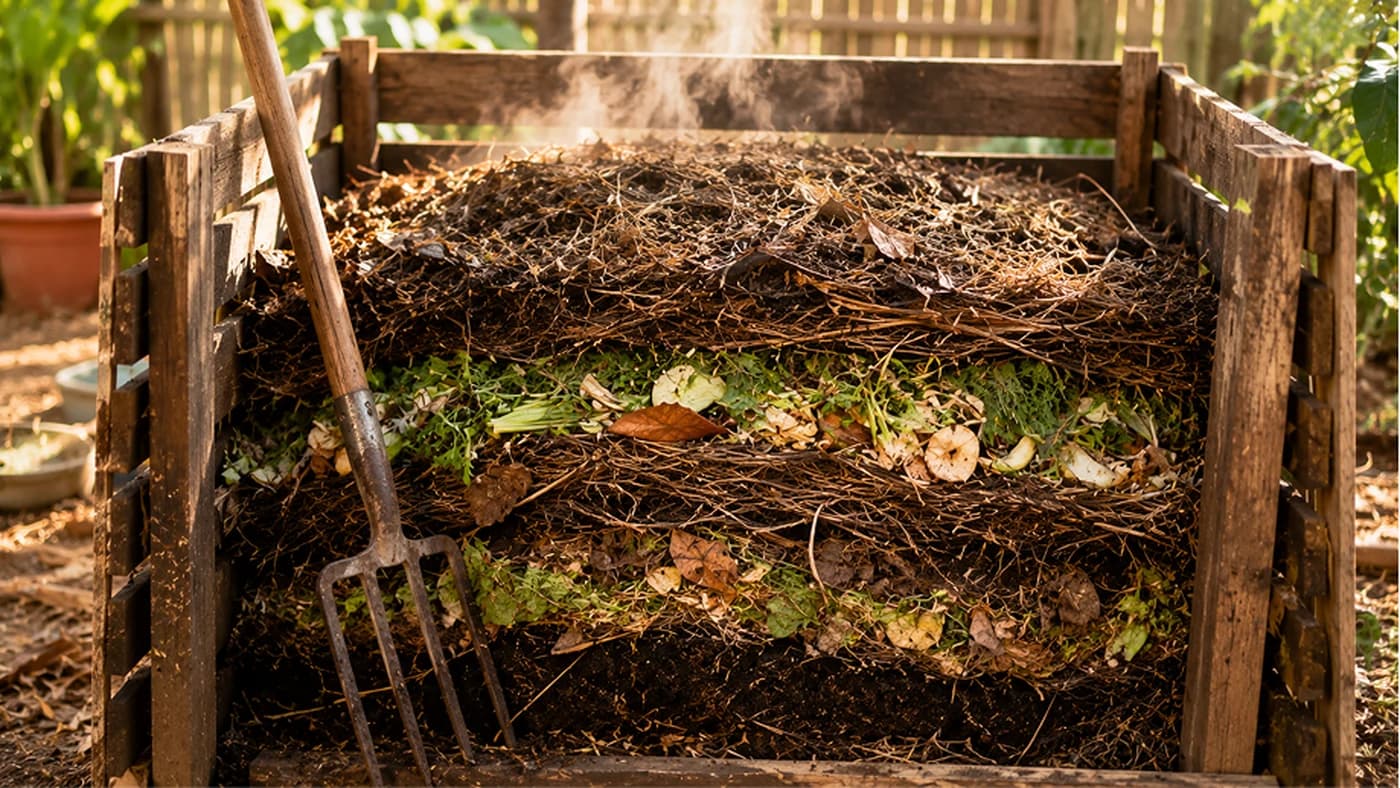
How Do I Balance Carbon and Nitrogen in Compost?
A smelly, slow compost heap almost always comes down to one thing: the wrong balance of browns and greens. Get the ratio right and microbes do the rest.