

Living Fences for Livestock: Grow a Boundary That Never Needs Replacing
A wire fence rusts and sags within 20–30 years. A well-managed living fence of thorny trees and shrubs gets stronger every winter, blocks wind, feeds your animals, and can outlast the farm itself.
Quick answer
A living fence trades a fast, one-time wire installation for a multi-year investment that keeps paying back for generations: choose thorny, hardy species suited to your climate, plant them dense in a staggered double row, protect them with a temporary fence while they establish, and master hedgelaying once they're a few years old. The result is a boundary that gets stronger every year instead of rusting away, and gives you fodder, shelter and soil protection along the way.
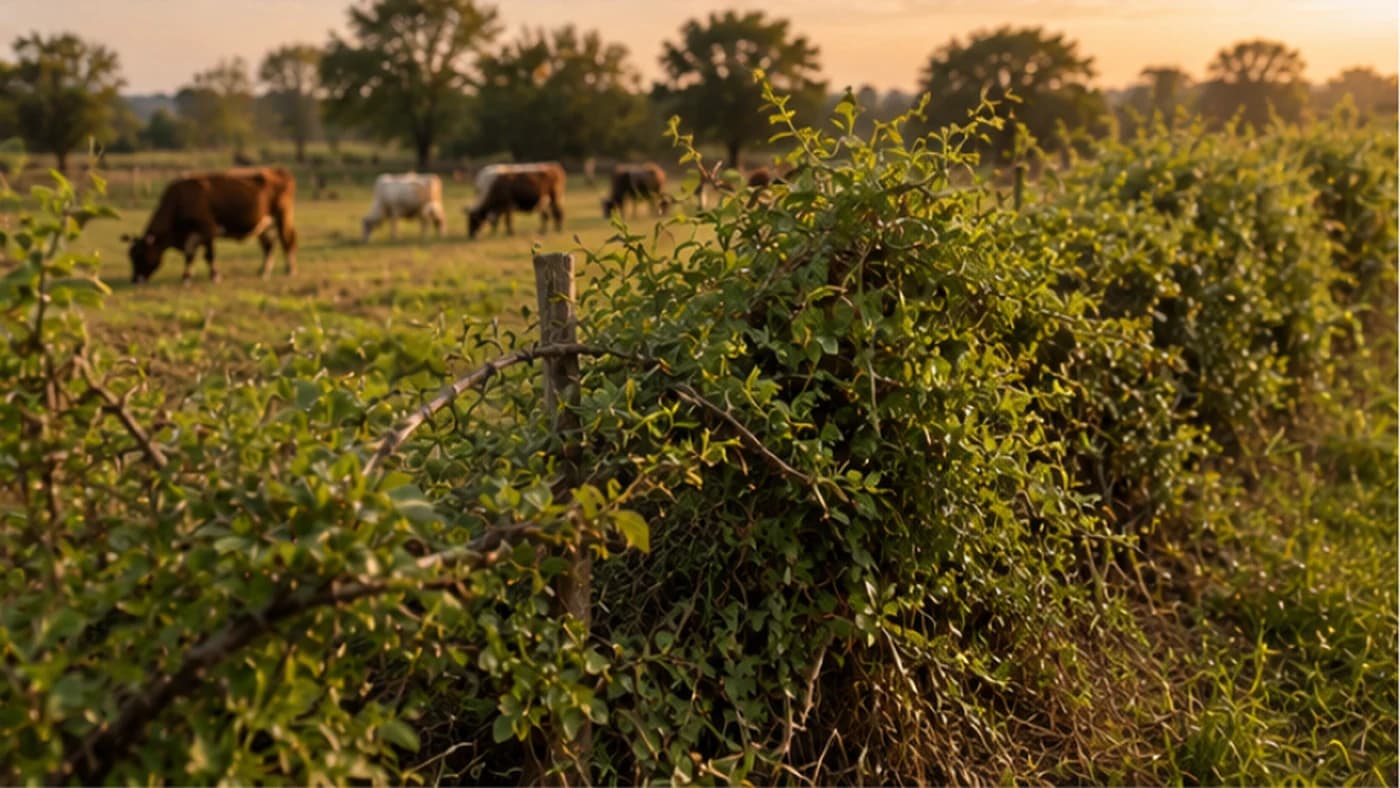
A steel fence post rusts. Galvanised wire eventually sags under its own weight. A living fence — a carefully managed line of thorny trees and shrubs — does the opposite: it grows stronger and more impenetrable with every passing year, while also cutting wind, providing fodder in a lean month, and building soil along the boundary. It takes real patience to establish, usually three to seven years before it's genuinely stock-proof, but once it's there it keeps paying back for decades with almost no material cost.
What a living fence actually needs to do
A living fence for livestock is a different challenge from an ornamental hedge — it has to withstand the weight of cattle or buffalo leaning on it, and the persistent curiosity of goats and sheep looking for gaps. Cattle mainly need height and thickness so they can't push through; sheep need density right down at ground level so they can't wriggle underneath; goats are the hardest of all, needing a genuine combination of thorns and density to stop them climbing or forcing a way in. The reliable method for all three is a double-staggered row planted in a tight zig-zag, so the mature hedge has no straight gaps to exploit.
How it works biologically
Most deciduous trees and thorny shrubs respond to hard cutting or pruning with a burst of new shoots from the base and trunk. Managed correctly — through regular pruning or the traditional technique of hedgelaying — that regrowth is forced sideways instead of upward, so neighbouring plants knit together into a dense, woven barrier rather than a thin row of individual trees.
Start by clearing a strip roughly 60 cm wide along the fence line to remove grass competition, and work in well-rotted farmyard manure or compost so young plants establish a deep root system quickly. Planting density needs to be much higher than an ornamental hedge — aim for four to six plants per metre of fence line, spaced roughly 20–30 cm apart in a staggered double row. That tight spacing forces the plants to compete for light and grow upward fast, while regular pruning encourages the lateral branching that closes gaps at the base.
A mature hedge also creates a real microclimate: it can cut wind speed for a distance up to thirty times its own height, so even a modest 1.8-metre hedge can create a noticeably warmer, more sheltered zone on its lee side — genuinely useful for reducing cold stress on animals during winter nights and cutting how much extra feed they need to stay warm.
Species that work well in Indian conditions
The classic hedging species described in Western hedgerow traditions — hawthorn, blackthorn, Osage orange, honey locust — are temperate species that aren't established or readily available across most of India, so they're not a practical choice here even though the underlying technique is the same. For Indian conditions, proven thorny, hardy options include Acacia nilotica (babul), a tough, thorny tree long used for field boundaries; Prosopis cineraria (khejri), valuable in arid and semi-arid zones and useful as fodder; Gliricidia sepium, a fast-growing, easily propagated live-fence species already widely used across India as both a fodder and boundary plant; and Subabul (Leucaena leucocephala), fast-growing and high in protein as fodder, though it should be fed in moderation alongside other feed due to mimosine content.
Willow-type fast growers that root easily from cuttings, similar to the willow used in Western hedgerows, can be approximated in Indian conditions with locally available fast-rooting species suited to your region — check with your local Krishi Vigyan Kendra or state forestry department for what's recommended and available near you. Avoid Euphorbia (milk hedge/thor) and other latex-bearing species as browse — while sometimes used purely as a boundary marker, their sap is toxic and irritant to both people and animals, so they should never be relied on as fodder and need careful handling even as a barrier plant.
Hedgelaying: the technique that turns a row of trees into a wall
Simply planting a row of saplings isn't enough — left alone, trees grow tall and thin with large gaps at the bottom that sheep and goats can walk straight through. Hedgelaying solves this: you partially cut through the base of a sapling, just enough to let it bend without killing it, and lay it over at an angle of roughly 30–45 degrees. Sap keeps flowing through the remaining bark and wood on the underside, so the tree survives, and the laid stem then sends up new vertical shoots all along its length — creating a dense, woven wall from the ground up rather than a line of bare trunks.
This work is best done in the dormant season, when sap is low and the structure of the hedge is easy to see. Clear away weeds and dead wood from the base first so you can see what you're cutting. Make a long, sloping cut into the trunk about 5–10 cm above the ground, leaving a hinge of wood and bark intact. Bend the stem gently over into the line of the hedge, deepening the cut slightly if it resists. Drive stakes into the ground roughly every 50 cm to hold the shape, and weave flexible young branches along the top of the stakes to lock everything in place against wind.
What you get for the effort
The material cost is negligible if you propagate your own cuttings or raise saplings locally, and once established, the hedge largely maintains and regenerates itself, with surrounding growth filling any gaps that appear. Longevity is the real payoff: a well-maintained thorny hedge can live and function for generations, compared with a modern wire fence that typically needs replacing within 20–30 years. Beyond the boundary itself, living fences support pollinators and pest-eating birds, sequester carbon in their woody growth and root systems, and — planted along a slope — meaningfully cut soil erosion by slowing the force of surface runoff.
Where people go wrong
The biggest risk is during establishment — for three to seven years the fence isn't yet stock-proof, and if cattle or goats are allowed to browse the leading shoots of young plants, growth stalls badly. Protect new plantings with a simple temporary fence (even a basic electric wire a short distance away) until the hedge can defend itself. Neglecting weed control in the first two years is another common mistake, since grass competes hard for moisture and nutrients — a heavy mulch of straw, dry leaves or woodchips around the base suppresses weeds and keeps roots cool. And many people under-prune young plants out of caution, when the real secret to a stock-proof fence is thickness at the base, not height — a hedge that's tall but leggy near the ground does nothing to stop a determined goat.
Realistic limitations
A mature, genuinely stock-proof hedge can end up 2–3 metres wide, which is a real cost in land on a very small holding where every square metre of grazing counts. Most hedging species need a good six hours of direct sun, so in heavy shade under larger trees they grow thin and fail to thicken properly, and in very arid regions establishing a long hedge can need a meaningful amount of water in the first couple of years unless you choose genuinely drought-hardy species. The labour trade-off is also real: a wire fence takes a lot of work once and then very little for two decades, while a living fence needs some pruning and management every single year, indefinitely — if that ongoing attention isn't realistic for your situation, a living fence will slowly turn into a gappy, unmanaged line of trees rather than a working barrier.
Wire fence vs living fence
A wire and post fence has a high upfront material cost, is usable immediately, needs periodic repair, and typically lasts 20–30 years with zero shelter value and no additional yield beyond containment. A living fence has a low material cost, takes three to seven years to become fully stock-proof, needs annual pruning (plus a full relay roughly every 10–15 years), can last for generations with basic management, creates a genuinely warmer sheltered microclimate, and produces real extra value in the form of fodder, fruit or fuelwood along the way. The choice usually comes down to how much land you can dedicate to the boundary and how much ongoing labour you're able to put in every year.
A seasonal rhythm to follow
In the cooler, dormant part of the year, do your hedgelaying and any major structural pruning, and plant new saplings while they're dormant. Through the growing season, check on new plantings, replace any that didn't establish, and mulch to lock in moisture before peak heat. In summer, a light trim of soft new growth helps the hedge thicken and hold its shape while young plants get regular watering through dry spells. Later in the season, once other grazing has thinned out, you can prune sections of the hedge deliberately and let animals browse the cut branches as a genuine fodder top-up.
As one worked example: for a 100-metre boundary on an exposed, windy field being fenced for a flock of sheep, a farmer plants a double-staggered row of a hardy thorny species like babul at roughly 25 cm spacing, tilling a 60 cm strip and mulching the base with straw or woodchips. For the first two to three years, a cheap temporary electric wire set a short distance off keeps the flock from browsing the new growth while the hedge reaches a reasonable height, if still thin. In year four, the first hedgelaying pass — partially cutting and bending the stems over, staking and binding them — triggers a burst of basal growth, and by year five or six the hedge is dense enough from the ground up that the temporary wire comes down for good, leaving a permanent windbreak that also gives the flock shelter to huddle in during winter storms.
Terms explained in this guide
Frequently asked
How long does a living fence take to become stock-proof?+
Usually three to seven years, depending on species and climate. Young plants need protection from browsing by a temporary fence during this establishment period.
Which species work best for a living fence in India?+
Hardy, thorny options like Acacia nilotica (babul) and Prosopis cineraria (khejri) for drier zones, and fast-growing Gliricidia sepium or Subabul for fodder-producing boundaries — check with your local Krishi Vigyan Kendra for what's best suited to your region.
What is hedgelaying?+
A technique where you partially cut through the base of a sapling and lay it over at an angle without killing it, so it sends up dense new growth along its length — turning a thin row of trees into a woven, stock-proof wall.
How much space does a living fence need?+
A mature, genuinely stock-proof hedge can be 2–3 metres wide, which is worth factoring in on smaller holdings where every metre of grazing land matters.
Is a living fence less work than a wire fence long-term?+
It needs less material cost but more ongoing attention — annual pruning and a full hedgelaying pass roughly every 10–15 years, indefinitely — compared with a wire fence's occasional repairs over a 20–30 year lifespan.
Where to go next
- AI farming chatbotAsk any farming question in Gujarati, Hindi or English and get an answer in seconds.
- Kheti app for Indian farmersCrop plans, disease diagnosis, weather and mandi rates in one app.
- Agri Bazar marketplaceBuy and sell animals, crops, equipment and dairy near you — and see what buyers want today.
Want this as daily tasks for your farm?
Khetiyaar turns guides like this into a day-by-day plan — in your language, free to start.

Related guides
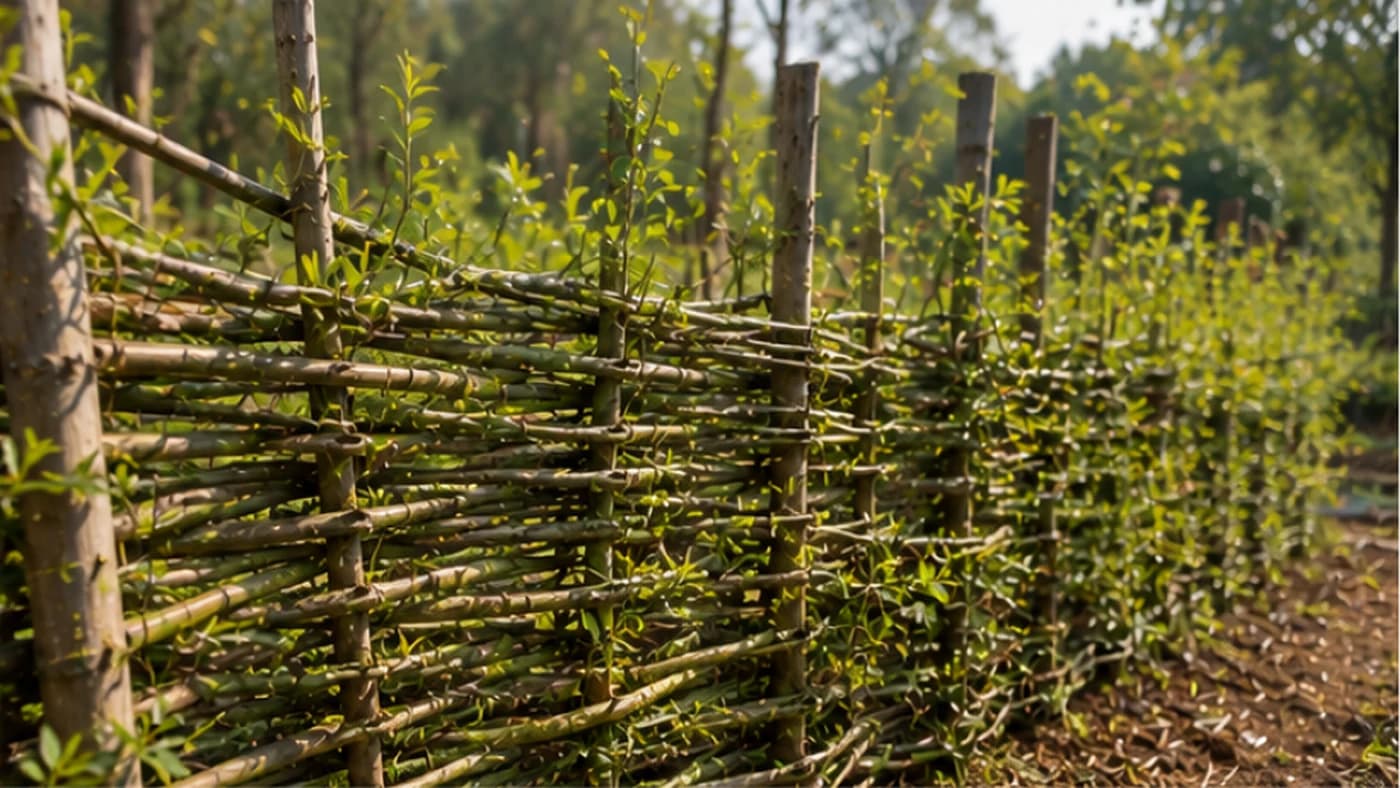
Living Willow Fences: A Boundary That Grows Stronger Every Year
Plant a fence instead of buying one. Willow rods pushed into moist soil and woven into a diamond lattice root, thicken, and graft into a living windbreak that gets stronger with age instead of rotting away.
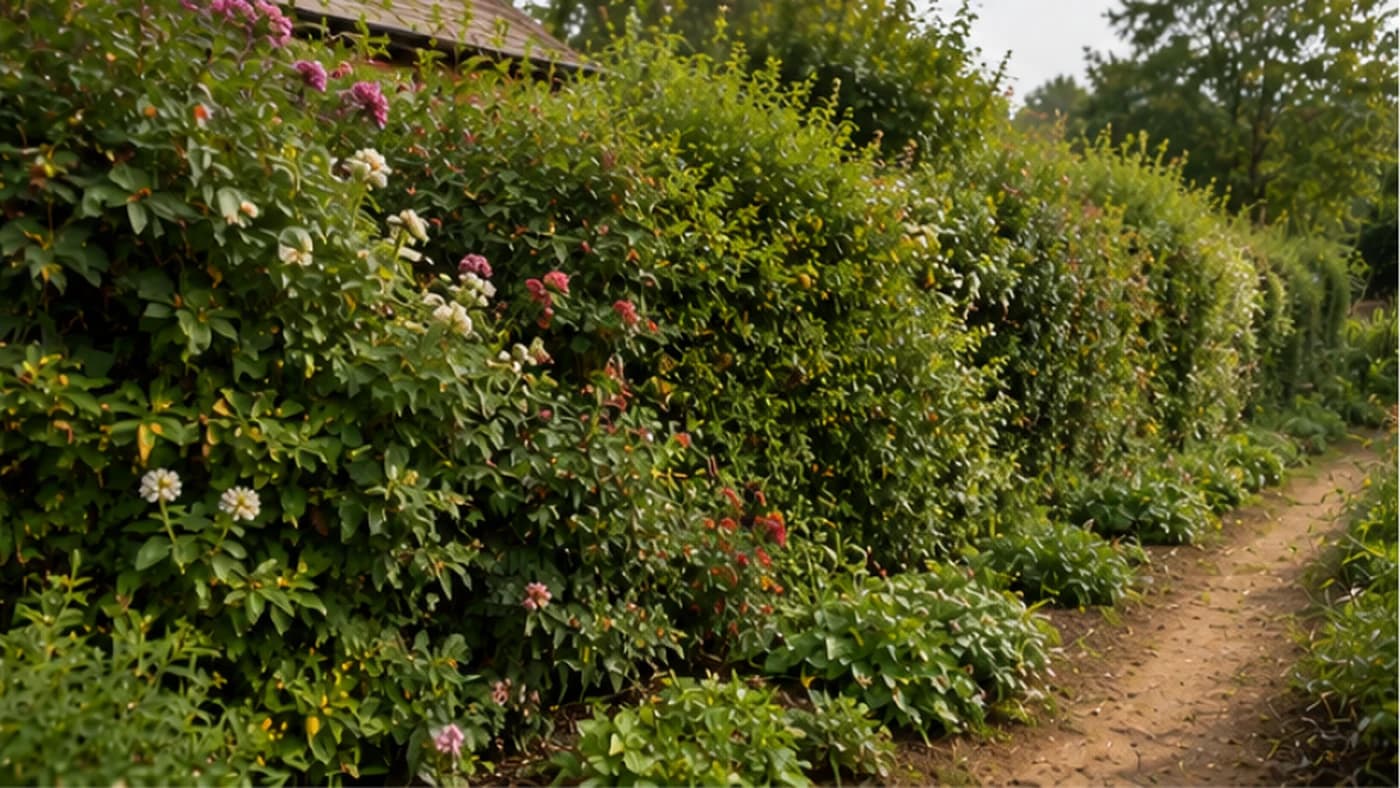
Living Fences: Grow a Boundary That Feeds Your Family Too
A living fence of thorny, fruiting shrubs gives you privacy, wind protection and a harvest — all from a boundary you'd otherwise spend money maintaining forever.
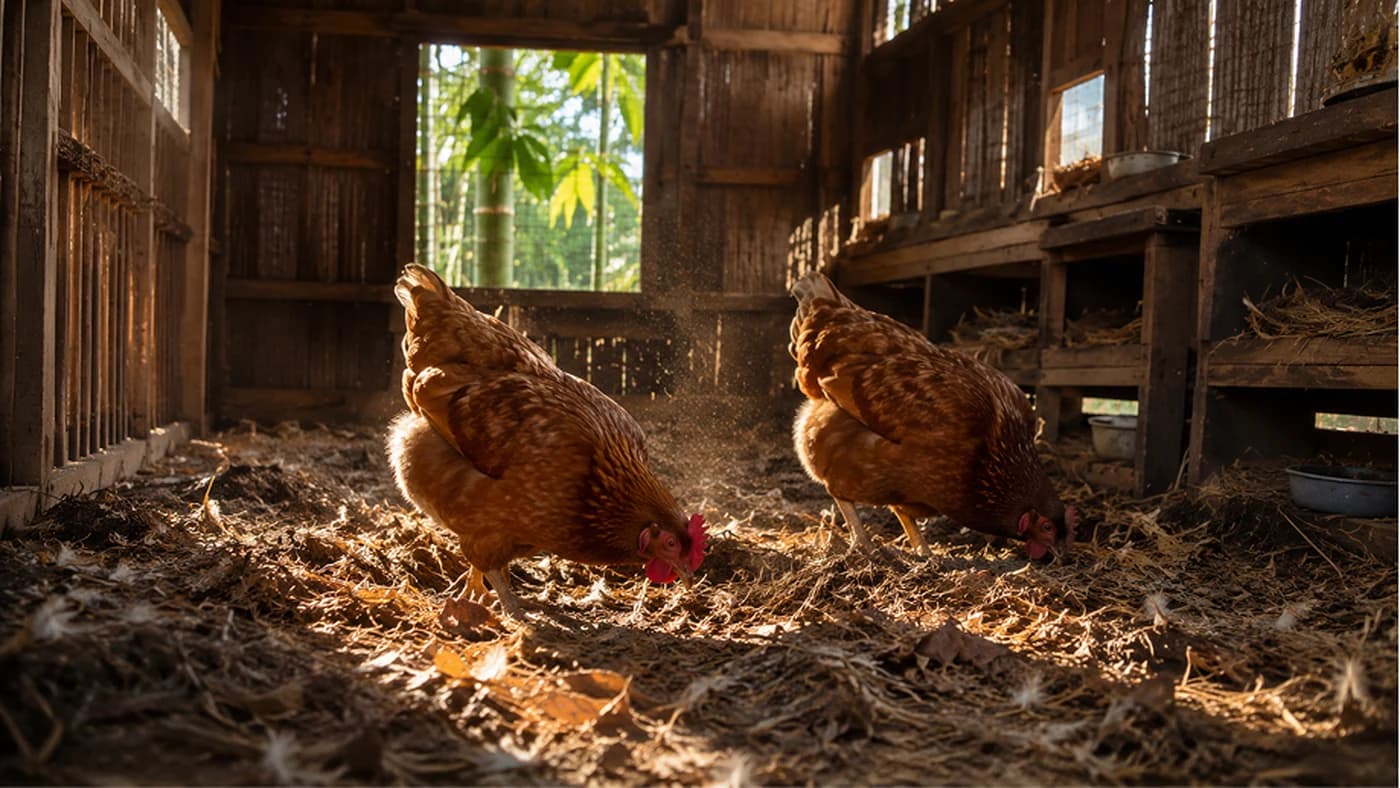
Deep Litter Method: Turn Your Chicken Coop Into a Living Compost System
A scrubbed, bare coop floor is a wasted opportunity. Let a thick carbon bed and billions of microbes do the composting for you — less labour, healthier birds, and free fertiliser for the field.