

Living Mulch for Garden Paths: Grow Your Walkways Instead of Paving Them
Bare soil between your beds is an open invitation to weeds — you can spend 40 hours a year pulling them, or 30 minutes seeding a living mulch that builds soil and feeds pollinators while you watch from the porch.
Quick answer
A living mulch path trades a recurring chore for a one-time planting: clear the ground properly, pick a cover suited to your climate — clover or thyme in the hills, doob grass or Centella on the plains — establish it carefully through the first two months, and you get a path that feeds your soil, your pollinators and your fruit trees instead of just sitting there waiting to be weeded.
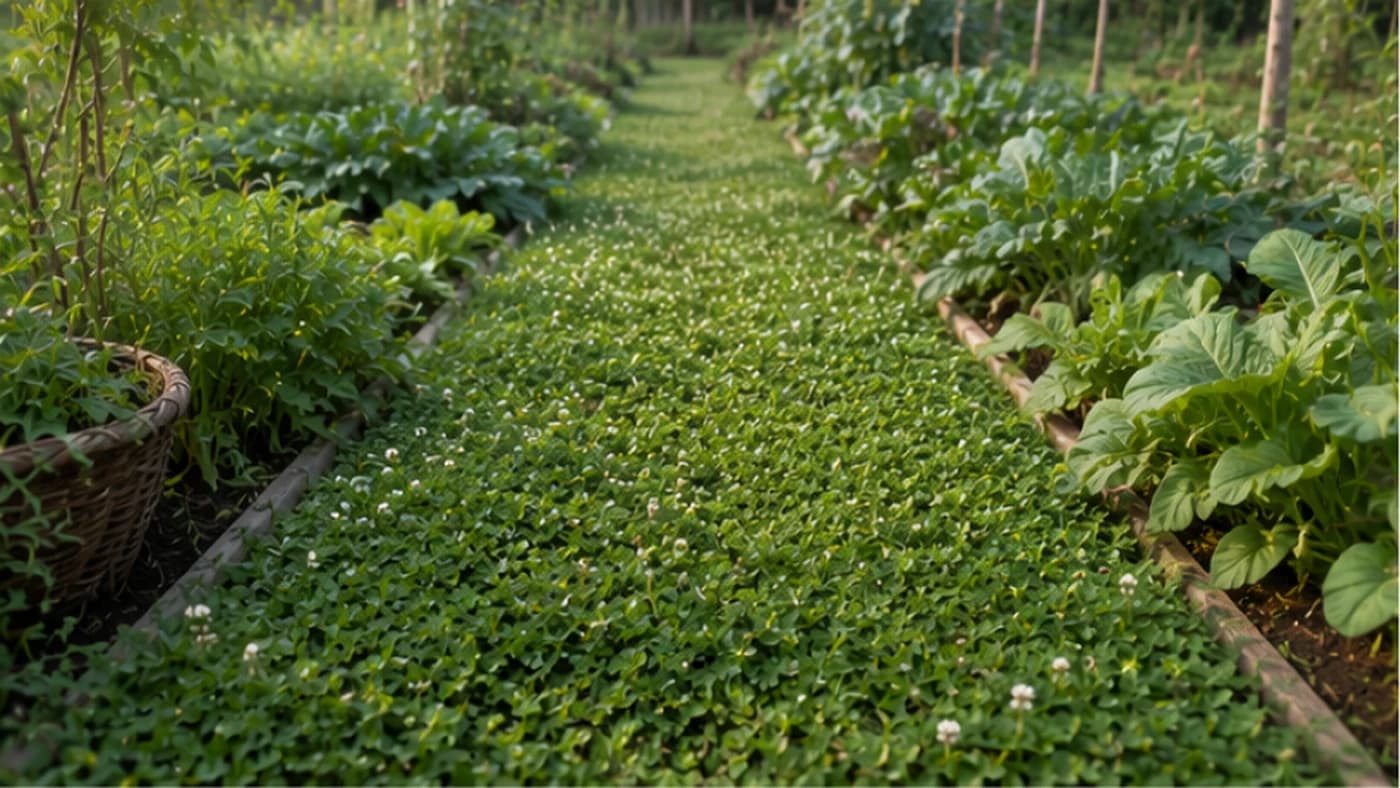
Most gardeners treat the paths between their beds as a chore — a strip to be weeded, graveled, or covered in wood chips that need topping up every season. A living mulch takes the opposite approach: instead of suppressing what grows underfoot, you choose a low, tough ground cover that thrives on foot traffic, chokes out weeds on its own, and quietly feeds the soil around it. A path made of wood chips or bare earth needs constant upkeep and often turns into a nursery for the very weeds you're trying to avoid. A living path, once established, becomes an active part of your garden's health rather than a maintenance burden.
What a living mulch path actually is
A living mulch for garden paths is a low-growing, durable ground cover chosen to protect the soil while standing up to regular footfall. Unlike dead mulch such as bark or straw, it's a living community of plants that spreads sideways, stays close to the ground, and often gives something back — fixing nitrogen or feeding pollinators. In practice these green paths work like the arteries of the garden: a stable, mud-free surface for wheelbarrows and boots even in the rainiest weeks, and a biological armour for the soil that stops erosion and topsoil loss the way a forest floor is rarely left bare.
In cooler Indian climates — the hills of Himachal, Uttarakhand, the Nilgiris, or Kashmir — classic options like Dutch White Clover (Trifolium repens) and Creeping Thyme (Thymus serpyllum) will grow well and behave much as described here. Across the hot plains, these species usually struggle, so the better local choices are Bermuda/doob grass (Cynodon dactylon), Centella asiatica (mandukaparni), or dwarf trailing Alternanthera and Phyla nodiflora (the same genus behind the modern Kurapia cultivar) — all tough, low, spreading covers already used as lawn or bund cover in Indian conditions.
How to establish it, step by step
Start by clearing existing vegetation properly — this is the step people skip and pay for later. If you're starting from grass, mow it down to about 2.5 cm, then smother it with heavy cardboard or several layers of wet newspaper. If you have more time, solarise the bed instead: cover the soil with clear or black plastic through the hottest weeks so the sun's heat kills weed seeds and pathogens in the top few centimetres.
For seed-sown covers like clover, broadcast at roughly 60–120 grams per 93 square metres, mixed with sand or fine compost for even spread, then rake lightly and firm it down. Spreading covers like thyme, Kurapia or Centella establish faster from rooted plugs set 15–30 cm apart in a staggered grid so they knit together quickly. The first six to eight weeks decide everything: keep the soil consistently moist until germination, then taper watering back, and for clover give it a light mow once it reaches 10–15 cm to push it to spread sideways rather than up.
What it does for your garden
Clovers and other legume covers fix nitrogen from the air through bacteria in their root nodules, and as roots die back or get trimmed, that nitrogen becomes available to the beds and fruit trees next door — a self-feeding system that cuts down on external fertiliser. Flowering covers like thyme or clover also feed bees and butterflies, which pays back in better fruit set on your vegetables, and their dense foliage shelters predatory insects that keep pest numbers down.
There's also a temperature effect: bare soil or gravel gets brutally hot in the sun and radiates that heat into your beds, while a living mulch acts as a cooling blanket, keeping soil temperature down and cutting evaporation — genuinely useful during the pre-monsoon heat that stresses most Indian gardens.
Mistakes that ruin a new planting
The single biggest mistake is inadequate clearing before planting. Perennial weeds and aggressive grasses left in the soil will out-compete your new cover every time — it's far cheaper to spend two weeks clearing ground properly than two years pulling grass out of an established clover patch.
The second mistake is picking the wrong plant for the spot: a shade-loving cover in full sun, or a sun-loving one in deep shade, both end up patchy and weak. And resist the urge to fertilise heavily — most living mulches, especially legumes, do best in average-to-poor soil, and extra nitrogen mostly just helps aggressive grass invade the patch. Let the plant build the soil rather than forcing it with chemicals.
Where it doesn't work well
Living mulch handles moderate foot traffic and the occasional wheelbarrow, but not dozens of passes a day from heavy equipment or animals — for high-traffic paths, set stepping stones or permeable pavers into the planting rather than relying on the cover alone. Seasonal dieback also matters: in cold winters, temperate covers can brown off and leave the path muddy through the early spring thaw, and heat-adapted covers like Kurapia lose their green colour below freezing — plan for a rougher-looking shoulder season rather than year-round lushness.
Living mulch vs wood chips
Living mulch (clover or similar): low cost from seed, moderate from plugs; needs occasional mowing and edging; actively builds soil fertility and life; high value for pollinators; effectively permanent and self-seeding. Wood chips or bark: low to high cost depending on source; needs annual topping up; adds organic matter slowly; little pollinator value; temporary, since it simply decomposes away.
Practical tips
If sowing clover, use seed that's inoculated with the right Rhizobium bacteria so it can start fixing nitrogen immediately — many Indian seed suppliers sell pre-inoculated legume seed for exactly this reason. Set stepping stones anywhere you stand often, like in front of a potting bench or gate, so you're not compressing the same crown of plants every day. Mow clover to about 5–7 cm to keep it tidy and cut down on flowers (and the bees they attract) without losing the foliage. And edge the path with a spade or edging tool so the cover doesn't creep into your vegetable beds and start competing with your main crop.
For the more serious gardener
If you want a tighter, lawn-like look with fewer flowers (and fewer bees underfoot), microclover cultivars behave like a scaled-down clover with smaller leaves and a lower habit — though the seed costs more and needs more frequent topping up. Living paths also tend to build a more biologically active soil than wood chips do: the continuous living roots support mycorrhizal fungi that can extend from the path into your beds, sharing nutrients underground in a way that dead mulch simply can't.
Picture a small home orchard of six fruit trees where the space between them was previously grass needing weekly mowing and competing with the trees for water. Replacing that grass with clover and thyme along a 1.2-metre path connecting the trees means that by the second year, the clover has fixed enough nitrogen to visibly improve the trees' vigour, and the orchard needs only an occasional trim instead of a weekly mow.
Terms explained in this guide
Frequently asked
What is a living mulch path?+
A low, spreading ground cover planted along garden paths instead of gravel or wood chips — it withstands foot traffic while fixing nitrogen, feeding pollinators, and protecting the soil underneath.
Which plants work as living mulch in India?+
Dutch white clover and creeping thyme suit cooler hill climates. On the hot plains, doob/Bermuda grass, Centella asiatica, or trailing Alternanthera are tougher, locally available choices.
How do I start a living mulch path?+
Clear existing grass and weeds thoroughly (mowing plus cardboard, or solarising with plastic sheet), then either broadcast inoculated seed or plant rooted plugs 15–30 cm apart, keeping the soil moist for the first six to eight weeks.
Will a living mulch survive heavy foot traffic?+
It handles moderate traffic and an occasional wheelbarrow well, but for paths used many times a day, set stepping stones into the planting so the crowns aren't constantly crushed.
Does a living mulch path need fertiliser?+
Usually not — most living mulches, especially clover, do best in average soil, and heavy fertilising just helps aggressive grasses invade the patch instead of the cover you planted.
Where to go next
Want this as daily tasks for your farm?
Khetiyaar turns guides like this into a day-by-day plan — in your language, free to start.

Related guides
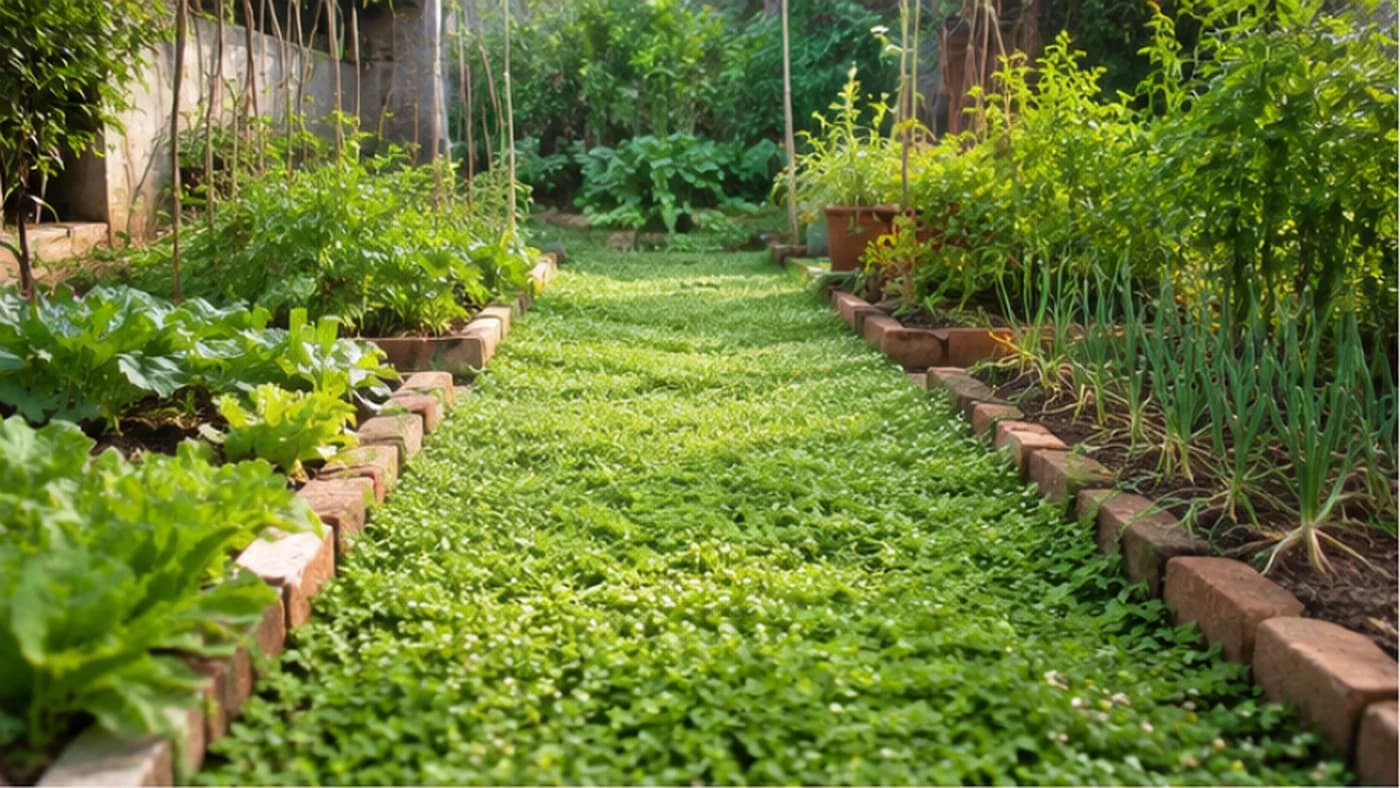
Living Garden Paths: Groundcover Walkways That Feed Your Beds Instead of Baking Them
Bare dirt or concrete paths turn into heat islands that bake nearby roots. A living groundcover path — clover, dwarf peanut, or creeping herbs — stays far cooler, feeds the soil with nitrogen, and heals itself when you walk on it.
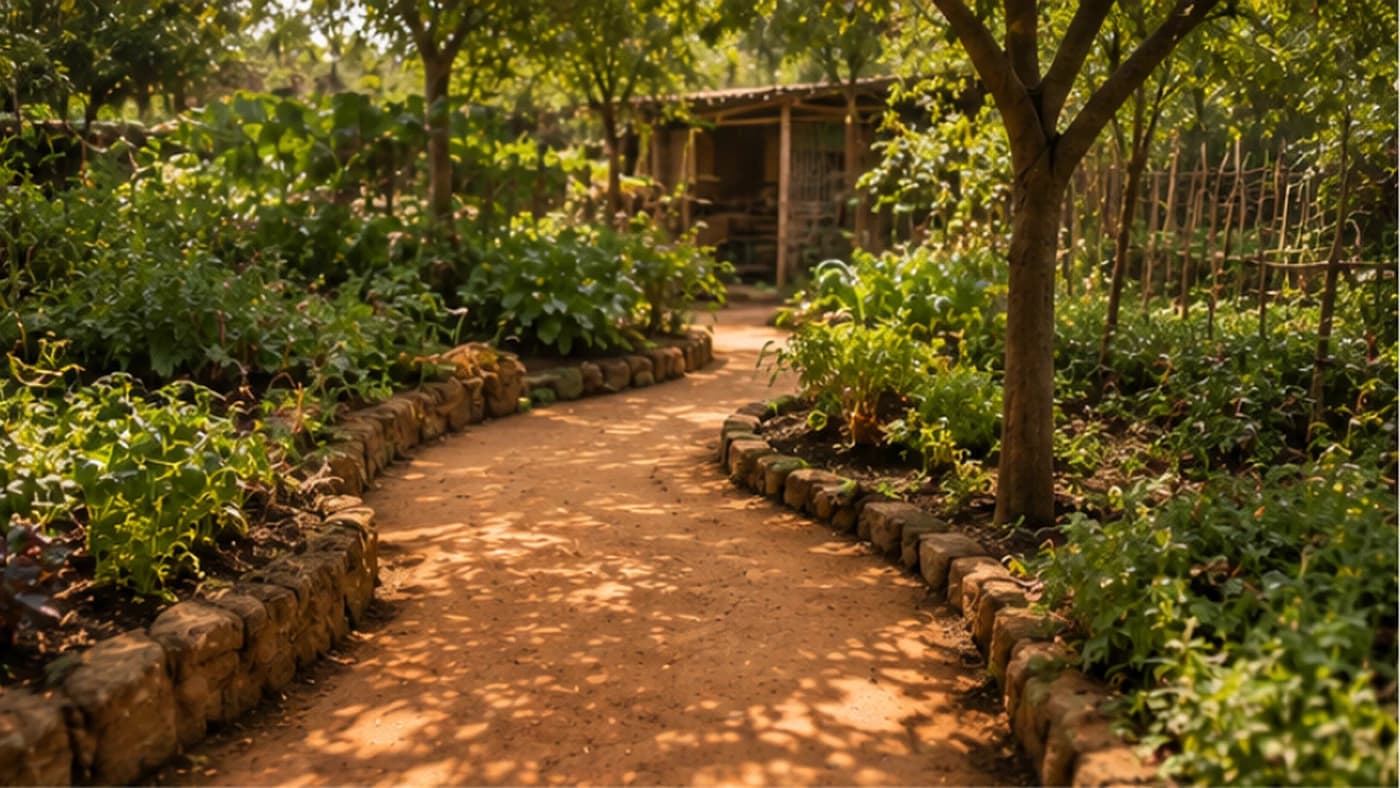
DIY Cob Garden Paths: Free Walkways From the Soil Under Your Feet
Concrete costs money and a huge carbon footprint. Cob — clay-rich subsoil, sand and straw — builds a durable, walkable garden path for almost nothing, using the very soil you dug out for a pond or pit.
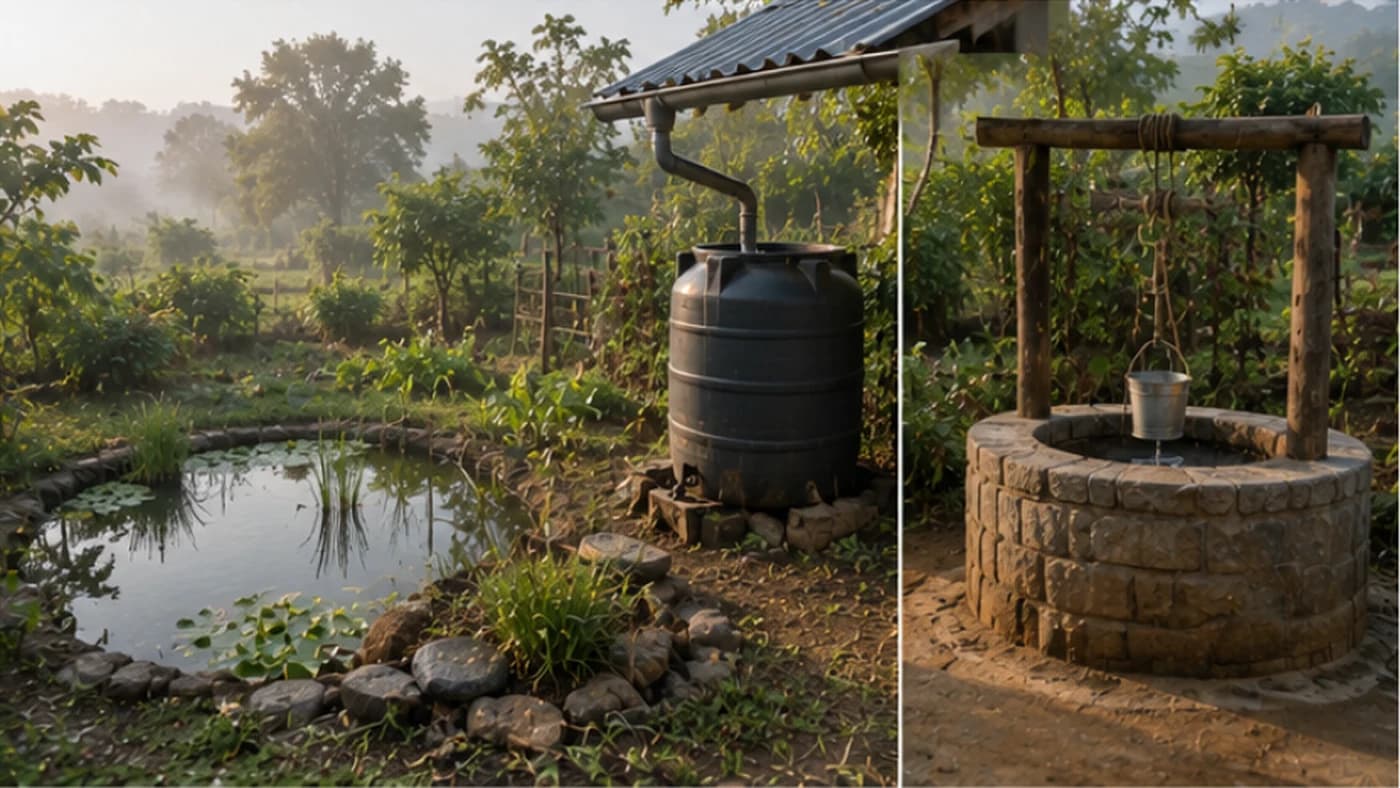
Best Water Sources for Your Farm: Why 'Living Water' Beats Tap Water
Borewell and tap water is treated to be sterile — safe for people, but nearly dead for soil biology. Rainwater, pond water and treated greywater carry warmth, nutrients and microbes your soil actually wants.