

How Do I Balance Carbon and Nitrogen in Compost?
A smelly, slow compost heap almost always comes down to one thing: the wrong balance of browns and greens. Get the ratio right and microbes do the rest.
Quick answer
The secret to fast, sweet-smelling compost is a roughly 30:1 mix of browns to greens, kept as damp as a wrung-out cloth and turned weekly for air. If your pile smells bad, add more dry brown material; if it's dry and slow, add more green waste and water. Watch, adjust, and let the microbes do the rest.
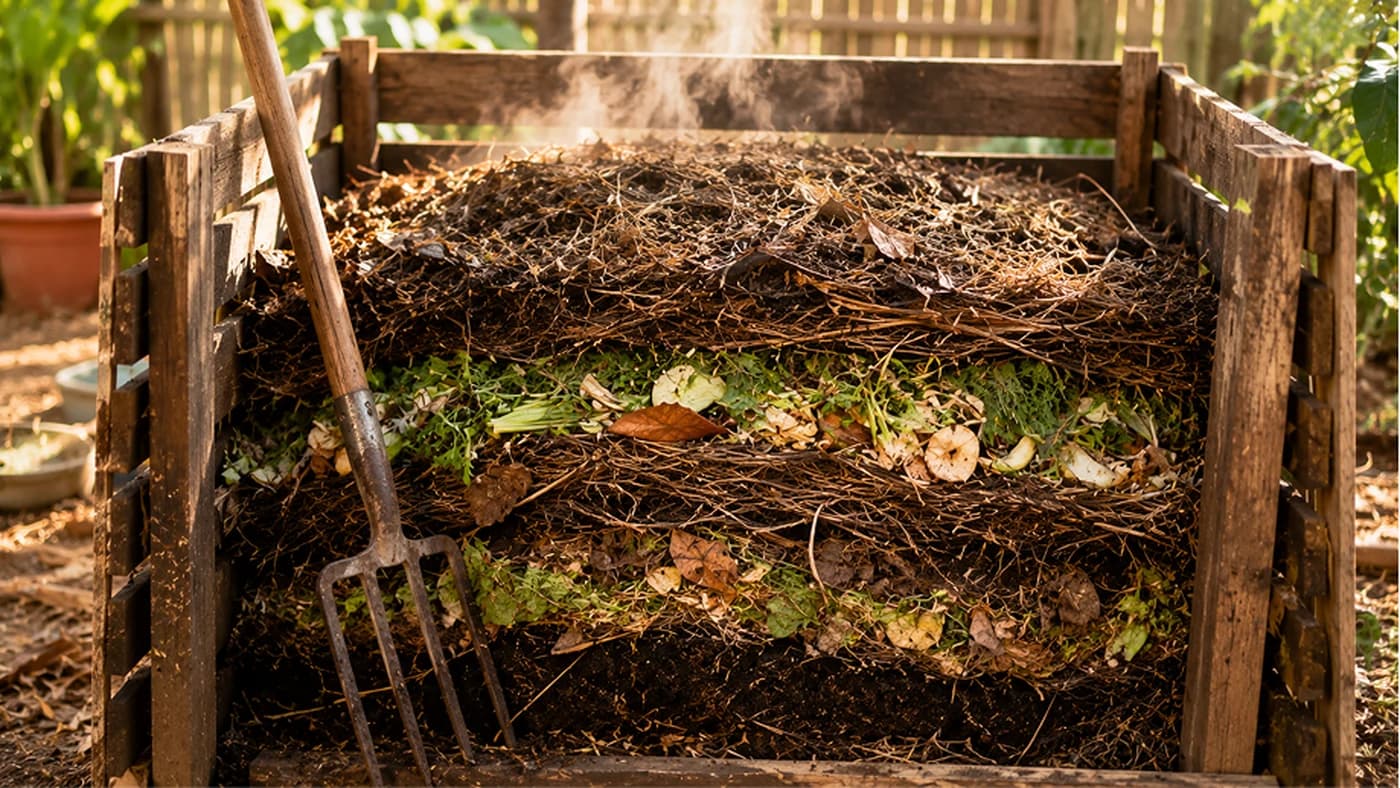
Good compost comes down to one balance: carbon-rich 'browns' and nitrogen-rich 'greens'. Carbon feeds the microorganisms doing the breaking-down as their energy source, while nitrogen helps them build proteins and multiply. Get this balance right and your pile heats up, breaks down efficiently, and produces the dark, crumbly compost every garden needs. Get it wrong and you get a smelly, slow, soggy mess.
The ideal ratio and common materials
The target carbon-to-nitrogen ratio for a compost pile is roughly 30 parts carbon to 1 part nitrogen (30:1). Typical browns and their approximate C:N ratios: dry leaves around 50:1, straw or dry stalks around 50-80:1, cardboard and dry paper around 350-400:1, sawdust around 300-500:1. Typical greens: fresh grass clippings around 20:1, kitchen vegetable and fruit scraps around 15-20:1, and fresh green plant prunings around 25-30:1. In an Indian kitchen garden, dry leaves, crop residue, rice husk, sugarcane trash, and dried stalks all work as reliable brown material, while kitchen peels, vegetable waste, and fresh grass clippings supply the greens.
How to build the balance
Use a simple layering method: start with a brown layer about 15 cm thick, add a green layer 5 to 8 cm thick, and keep alternating until the pile reaches about 1 to 1.5 metres in height. If the pile smells bad and feels wet, you have too much nitrogen — mix in more dry leaves, straw, or shredded cardboard. If it's dry and breaking down slowly, it needs more nitrogen and moisture — add kitchen scraps, fresh grass clippings, or a manure source, and water it. Turn the pile with a fork once a week; this adds oxygen, spreads moisture evenly, and speeds up decomposition considerably.
Good sources of carbon and nitrogen
Carbon (browns): dry leaves (easy to find in most gardens), wood chips (slow to break down but good for structure), straw and crop residue, shredded paper and cardboard (free of tape and glossy coatings), and sawdust used sparingly since it compacts easily. Nitrogen (greens): kitchen scraps like vegetable and fruit peels, coffee grounds and eggshells, fresh grass clippings used in moderation since they mat down, well-rotted manure from cows, buffalo, goats or poultry (avoid dog or cat waste, which can carry harmful pathogens), green garden prunings and spent flowers, and seaweed for those near the coast.
Terms explained in this guide
Frequently asked
What is the ideal carbon-to-nitrogen ratio for compost?+
Roughly 30 parts carbon (browns) to 1 part nitrogen (greens), written as 30:1.
Why does my compost pile smell bad?+
A bad smell usually means too much nitrogen or excess moisture. Mix in more dry brown material like leaves, straw, or shredded cardboard and turn the pile to add air.
What if my compost is dry and not breaking down?+
It likely needs more nitrogen and moisture — add kitchen scraps or fresh grass clippings and water it so it feels like a wrung-out sponge, not dry or soggy.
How often should I turn my compost pile?+
About once a week with a fork, to introduce oxygen and spread moisture and materials evenly for faster decomposition.
Can I add cow dung or goat manure to compost?+
Yes — well-rotted manure from herbivores like cows, buffalo, or goats is an excellent nitrogen source. Avoid dog, cat or other pet waste since it can carry harmful pathogens.
Where to go next
Want this as daily tasks for your farm?
Khetiyaar turns guides like this into a day-by-day plan — in your language, free to start.

Related guides
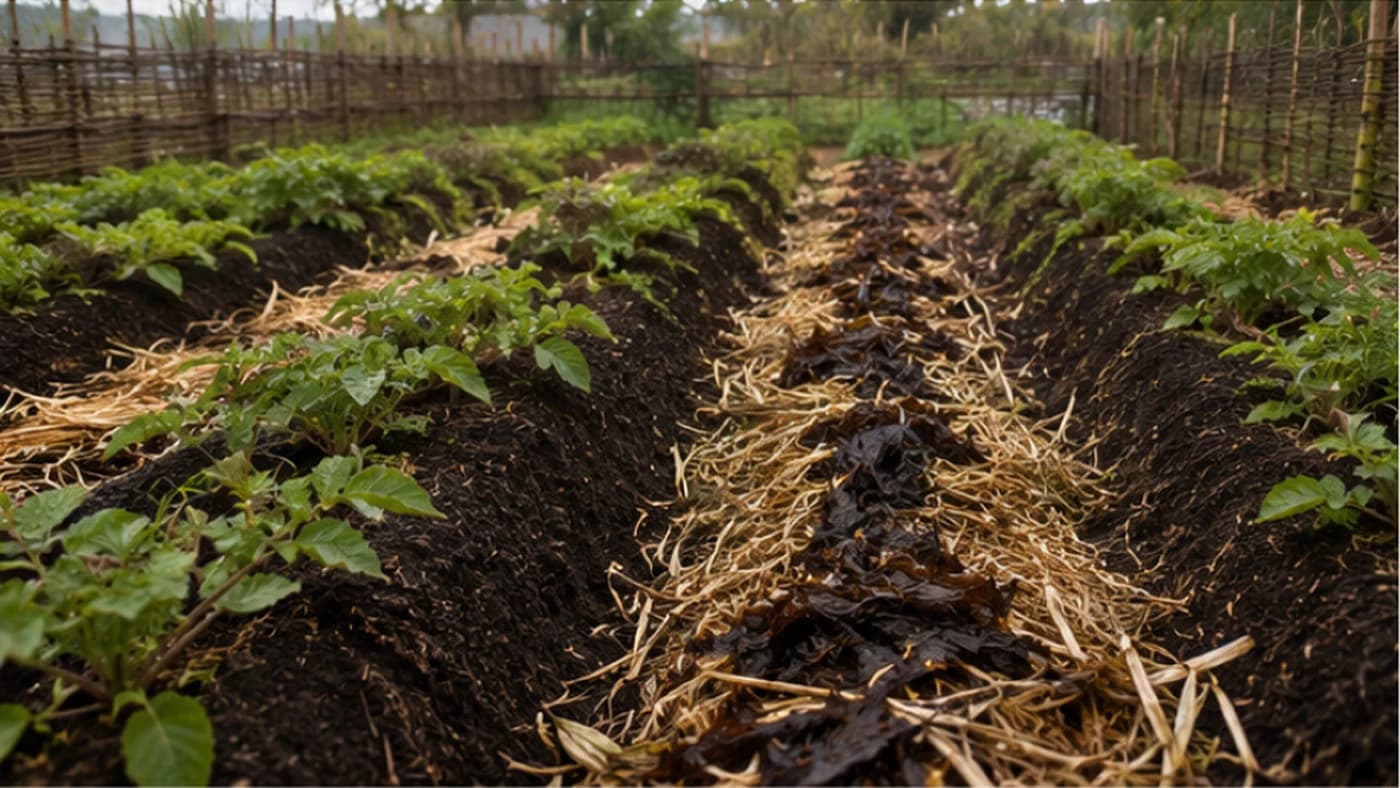
The Lazy Bed Technique: An Ancient Ridge Method for Waterlogged Soil
Centuries before raised beds became fashionable, farmers on Europe's wettest, rockiest land built self-draining ridges from flipped turf alone. It still solves clay and waterlogging problems today — no tools but a spade.
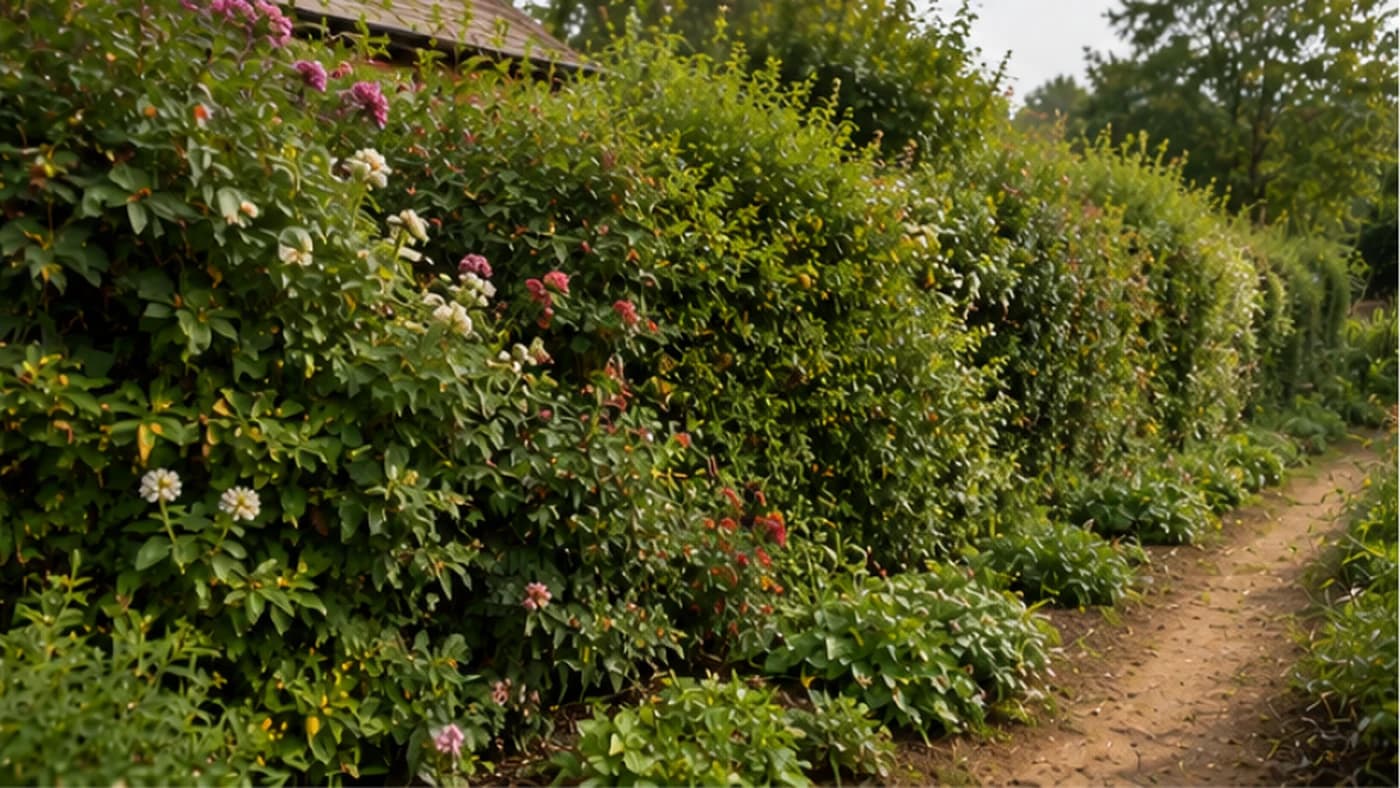
Living Fences: Grow a Boundary That Feeds Your Family Too
A living fence of thorny, fruiting shrubs gives you privacy, wind protection and a harvest — all from a boundary you'd otherwise spend money maintaining forever.
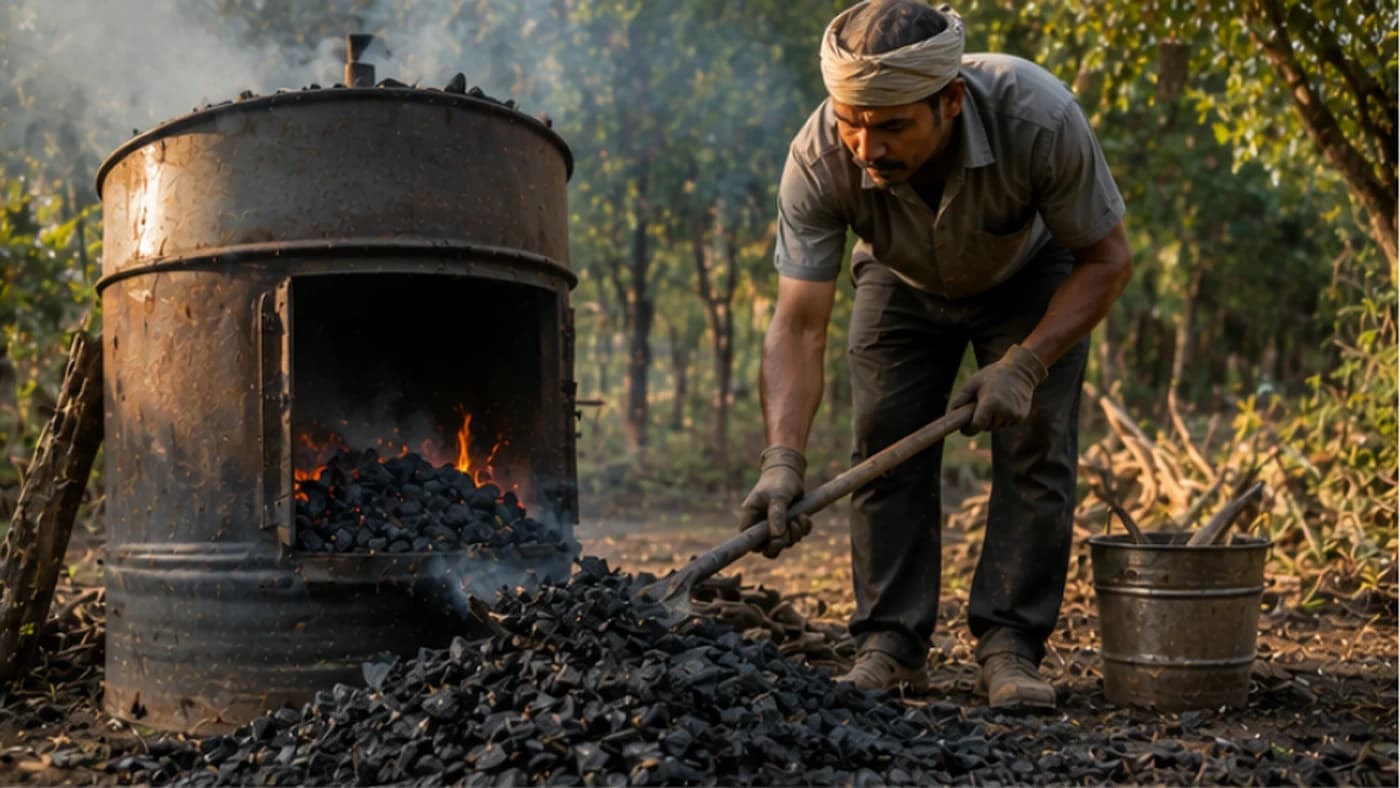
How to Make Biochar for Soil: A Permanent Upgrade for Your Farm
Burning crop waste releases its carbon into the air. Turning it into biochar locks that carbon into your soil instead — building fertility that can last for centuries, not seasons.