

Isabgol Farming: Growing Psyllium for the Husk, Not the Seed
North Gujarat supplies much of the world's psyllium husk from light land and almost no water. The crop is easy until harvest — and at harvest one shower can take the value out of it.
Quick answer
Isabgol is a short-duration rabi crop grown on light, well-drained soil with very little water. The seed is extremely fine, so sowing must be shallow and into a well-prepared surface. What you are selling is the husk milled off the seed, and husk quality is decided by harvest weather — rain or heavy dew at maturity causes shattering and downgrades the produce.
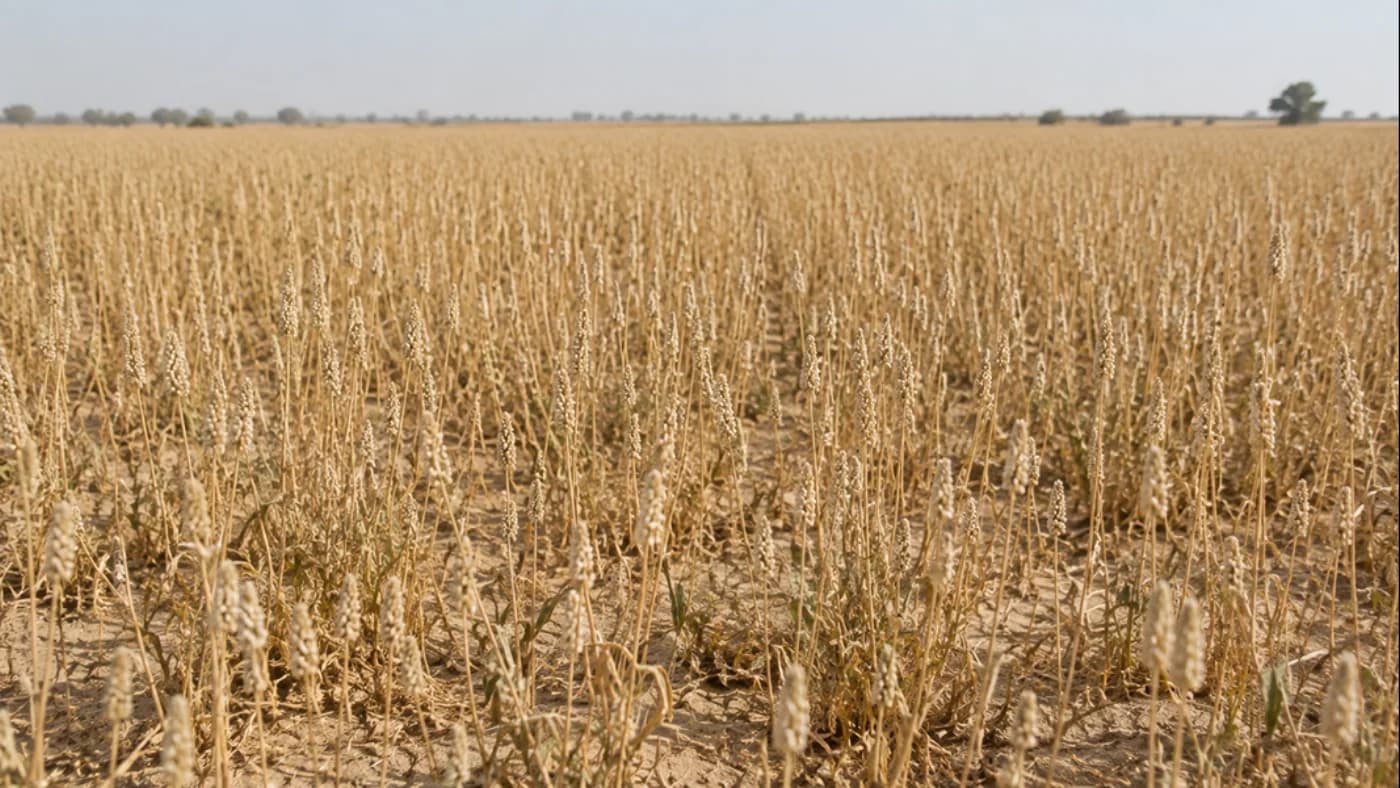
Isabgol is one of the few crops where an Indian farmer supplies a global market almost by default. North Gujarat and neighbouring Rajasthan produce the bulk of the world's psyllium husk, and they do it on light sandy land with a fraction of the water a wheat crop takes. The agronomy is genuinely undemanding for most of the season. The catch is at the end: this is a crop where the last two weeks decide what the previous four months were worth.
A crop that suits light land and almost no water
Isabgol wants light, well-drained sandy loam, cool dry weather, and very little irrigation — a few light waterings across the season rather than a regular schedule. It is short-duration, so it fits comfortably in a rabi slot after a kharif crop, and it asks very little of soil fertility compared with the cereals it sits alongside.
That combination is why the north Gujarat belt grows it. On land where wheat would be marginal and paddy impossible, isabgol produces an export-grade product. It is also a sensible fit in a rotation for the same reason chana is: it uses a slot and a moisture level that would otherwise go unused.
What it will not tolerate is heavy or poorly drained soil, or generous irrigation. Excess water encourages disease and soft growth, and on this crop soft growth is a liability at harvest.
The seed is tiny — sowing is the skill
- Prepare a fine, level seedbed. Isabgol seed is very small, and a rough or cloddy surface gives an uneven, patchy stand that never recovers.
- Sow shallow. This is the mistake that costs most new growers a crop: a seed this fine has almost no reserves, and buried too deep it simply never emerges.
- Mixing the seed with dry sand or sieved soil to bulk it out makes even distribution far easier by hand. It is a small trick and it materially improves the stand.
- Sow in the rabi window your district uses, broadly from November into early December, so that maturity lands in reliably dry weather.
- Irrigate lightly immediately after sowing if the surface is dry — but lightly. A heavy first irrigation moves fine seed and washes the stand into patches.
- Take seed rate and spacing from your state package of practices or your KVK rather than from an article.
Through the season
Isabgol is not a demanding crop to carry. Keep the early weeks weed-free, because the seedlings are small and slow and lose badly to competition, and after that the crop largely looks after itself. Irrigation stays light throughout; the commonest management error on this crop is watering it as though it were wheat.
Downy mildew is the disease to watch, and it follows humidity like every disease in this rotation does. Open stands, restrained irrigation and good drainage do most of the preventive work. Aphids can appear and are worth monitoring, but they are rarely the thing that decides the crop.
Keep nitrogen modest. Lush, soft growth lodges more easily and, on a crop harvested for a husk that must stay clean, lodging into the soil is an expensive outcome.
Harvest is where the money is made or lost
This is the part of isabgol worth reading twice. The crop must mature and be harvested in dry weather. Rain at maturity, or even a heavy dew, causes seed to shed from the spike and damages the husk that is the whole commercial point of the crop. A field that looked excellent a week before harvest can be reduced to a fraction of its value by one unseasonal shower.
That is why the sowing date matters more here than the yield-chasing instinct suggests: you are aiming to land maturity in a dry window, not simply to maximise growing days. It is also why harvesting is traditionally done after the dew has dried rather than at first light — handling a damp crop causes shattering losses in the field.
Handle the harvested crop gently and thresh clean. Isabgol is bought on husk recovery and purity, so foreign matter and careless handling both come straight off the price. Storage must be dry; there is no recovering husk quality once it has been damaged by moisture.
You are selling husk, not seed
Worth being clear about, because it explains the entire market. The commercial product is the husk milled off the outside of the seed, sold as dietary fibre and as a bulk laxative, largely to export buyers in North America and Europe. The seed left after milling has its own uses, but the husk is where the value sits.
That has two practical consequences. First, quality is measured in husk recovery and purity rather than simply in weight — which is why harvest weather and clean handling matter so much. Second, the price you receive is driven by international demand, buyer inventories and the currency far more than by anything happening in your district. A strong year for Indian production meeting soft export demand can produce a disappointing price despite a good crop.
So plan conservatively. Do not size your planted area on last season's peak, and check what buyers are actually paying this season rather than what the market did a year ago. Our free cost and profit calculator will let you test isabgol against the alternative crop for that land at a price you consider realistic. It needs no account.
Where Khetiyaar helps, and where it does not
The genuinely useful thing an app offers on this crop is weather in the harvest window. Knowing that a wet spell is likely as the crop matures is what lets you plan the cut rather than be caught by it, and on isabgol that single decision can be worth more than everything else you do in the season. As always, a forecast is a probability, not a promise.
Recording sowing dates and costs per plot is the other. Isabgol rewards hitting a dry maturity window, and you cannot tune your sowing date across seasons if you never wrote down what you did last year — keeping a farm record covers the habit.
What we cannot give you is seed rate, dose or variety, which come from your state package of practices or your KVK. And we cannot tell you what husk recovery your crop will achieve — that is decided by the season, the harvest weather and the miller, not by any app.
Frequently asked
When should isabgol be sown?+
In the rabi window, broadly from November into early December across the north Gujarat and Rajasthan belt. The date is chosen so that maturity falls in reliably dry weather, because harvest-time rain is the crop's main risk. Confirm the window for your district with your KVK.
How deep should isabgol seed be sown?+
Shallow. Isabgol seed is extremely fine and has almost no reserves, so seed buried too deep never emerges. Prepare a fine, level seedbed, and mixing the seed with dry sand or sieved soil makes even distribution much easier by hand.
What happens if it rains when isabgol is ready to harvest?+
It is the worst thing that can happen to the crop. Rain or heavy dew at maturity causes seed to shed from the spike and damages the husk, which is the commercially valuable part. A field that looked excellent a week earlier can lose most of its value. This is why harvesting is done after the dew has dried and why the sowing date is chosen to land maturity in a dry window.
How much water does isabgol need?+
Very little — a few light irrigations across the season rather than a regular schedule. Over-watering is actively harmful: it encourages downy mildew and soft growth that lodges, and lodging into the soil damages the husk you are selling.
Why do isabgol prices change so much?+
Because the market is an export market. Most of the world's psyllium husk comes from this belt, and the price is set by international demand, buyer inventories and the currency rather than by local consumption. A good Indian crop meeting soft export demand can still return a disappointing price, so plan on last season's peak being history rather than a forecast.
Where to go next
Want this as daily tasks for your farm?
Khetiyaar turns guides like this into a day-by-day plan — in your language, free to start.

Related guides
Cumin Farming: Growing Jeera When the Weather Decides Everything
Cumin is among the highest-value crops a Gujarat farmer can grow and among the easiest to lose. Two cloudy weeks at flowering can take the whole field. Here is how to give it the best odds.
Chana Farming: Growing Chickpea on Residual Moisture
India's biggest pulse crop is also the one most often ruined by kindness — too much water, too much nitrogen. What chana actually needs, how to beat wilt and pod borer, and desi versus kabuli.
Wheat Farming Guide: Sowing to Harvest for Higher Yield
Wheat rewards timing more than anything else — sow in the right window, never skip the crown-root irrigation, and control weeds in the first month.