

Cumin Farming: Growing Jeera When the Weather Decides Everything
Cumin is among the highest-value crops a Gujarat farmer can grow and among the easiest to lose. Two cloudy weeks at flowering can take the whole field. Here is how to give it the best odds.
Quick answer
Cumin is a short-duration rabi crop needing light, well-drained soil, cool dry weather and very little water. Its defining risk is weather, not management: cloudy, humid or unseasonably wet conditions around flowering allow Alternaria blight to destroy a crop within days. Wilt is the second threat and is answered only by a long rotation and treated seed.
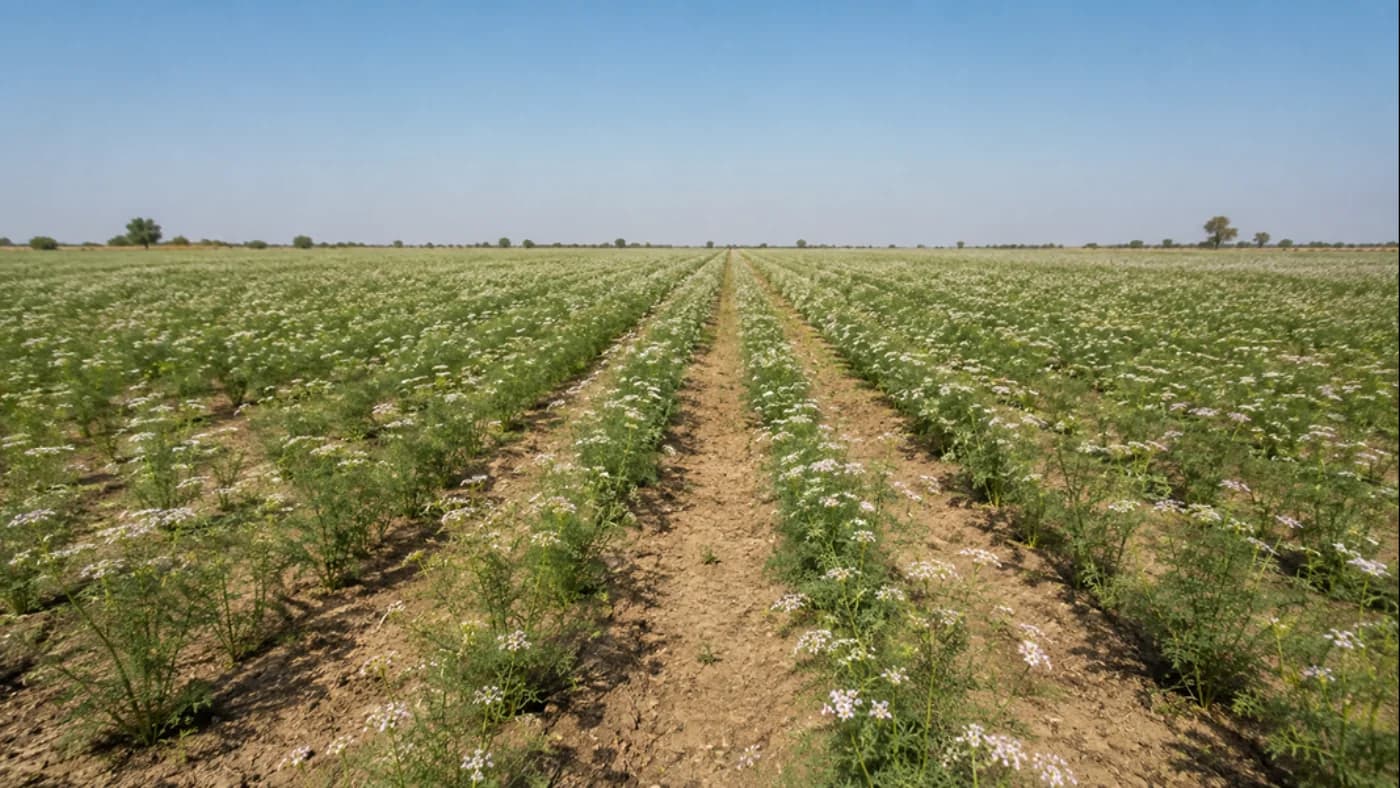
Cumin is the crop Gujarat farmers talk about with both enthusiasm and dread, and they are right on both counts. Per acre it can return more than almost anything else in a rabi rotation, on light land, with very little water. It can also fail almost completely because of a fortnight of cloudy weather nobody could control. Understanding cumin means understanding that its agronomy is easy and its risk is high, and that most of what a farmer can control is decided before and at sowing rather than after.
What cumin needs, and what it cannot tolerate
Cumin wants light, well-drained sandy loam, cool dry weather through its growth, and dry weather at maturity. It is short-duration, so it fits neatly into a rabi slot, and its water requirement is genuinely low — a few light irrigations rather than the schedule a wheat crop expects. On the light soils of north Gujarat and the Rajasthan border, that combination is why cumin exists as a commercial crop at all.
What it cannot tolerate is humidity. Cloudy weather, heavy dew, fog or unseasonal rain — particularly around flowering — create exactly the conditions Alternaria blight needs, and cumin has very little natural resistance. This is not a management failure when it happens; it is the crop's fundamental risk, and any farmer growing cumin should size the area planted against how much of that risk they can afford in a bad year.
Heavy irrigation makes the same problem worse by raising humidity within the canopy. With cumin, the instinct to water generously is the wrong instinct.
Sowing decisions that matter
- Sow in the rabi window your district uses, broadly through November. Too early and warm soil gives poor germination and a longer exposure to disease weather; too late and the cool period the crop needs is cut short.
- Choose land with genuinely good drainage and open airflow. Avoid low patches and fields hemmed in by tall boundaries — still, humid air inside the crop is what blight thrives in.
- Treat the seed against wilt and seed-borne disease. Trichoderma is the usual biological option and suits an organic system.
- Do not sow thick. A dense stand traps humidity in the canopy and turns a marginal weather spell into a blight outbreak. Space to let air move.
- Keep nitrogen modest. Lush growth is more susceptible, not more productive.
- Take seed rate, spacing and dose from your state package of practices or your KVK. They vary by variety and district, and cumin is not a crop to improvise on.
Blight and wilt — the two that end crops
Alternaria blight is the one that takes whole fields. It arrives with humid, cloudy weather, and it moves fast: a crop that looked healthy at the start of a damp week can be beyond saving by the end of it. The realistic strategy is preventive rather than curative — open spacing, restrained irrigation, and watching the weather forecast during flowering as closely as you watch the field. Once blight is established in a humid spell, spraying often cannot outrun it.
Fusarium wilt is the slower, more permanent one. It is soil-borne, survives for years, and is the reason cumin must not be grown repeatedly on the same land. Growers who plant cumin in the same field year after year because it paid well eventually find that field cannot grow cumin at all. Keep a long rotation with unrelated crops between plantings — crop rotation explains the family logic, and cumin is a strong argument for it.
Powdery mildew is the third, generally less devastating but worth monitoring in warmer late-season spells.
Harvest and drying
Cumin is harvested when the crop dries down and the seed has hardened. Timing matters in both directions: harvest too early and seed quality and weight suffer, leave it too long and shattering losses begin.
Dry the harvested crop thoroughly and thresh clean. Cumin is bought on appearance and cleanliness as much as on weight — colour, uniformity and the absence of foreign matter all affect what a trader will pay. Careless drying or a dusty threshing floor costs real money at the point of sale, and it is entirely within your control unlike the weather.
The market, honestly
Cumin has one of the most volatile price histories of any Indian crop, and the reason is structural. Production is concentrated in a small area of Gujarat and Rajasthan, a large share is exported, and it stores well — so a good year floods a small market and a bad year empties it. Prices can double or halve between seasons on that basis alone.
Unjha in Gujarat is the reference market for cumin in Asia, and its rates set the tone for the wider trade. That makes price discovery unusually good for a spice crop; it does not make the price predictable. The practical discipline is to treat last year's high as history rather than as a plan, and to decide your planted area on what you can afford to lose rather than on what you hope to make.
Because cumin stores well, you have more selling flexibility than with a perishable crop — but storage costs money and carries its own risk, so plan it deliberately rather than defaulting into it. Our free cost and profit calculator will let you test cumin against the alternative on that land at a price you consider realistic, not the one being talked about. It needs no account.
Where Khetiyaar helps
Weather is the whole game with cumin, and hyperlocal weather with humidity and soil-level data is genuinely more useful here than on almost any other crop. Knowing a humid, cloudy spell is coming during flowering is what buys you time to act rather than react. That said, a forecast is a probability and not a promise — it shifts your odds, it does not remove the risk.
Mandi prices let you see what nearby markets have actually paid rather than what the village says they paid, which matters more in cumin than in most crops precisely because the swings are so large.
What we cannot do is tell you a spray, a dose or a variety. Those come from your state package of practices or your KVK. And we cannot tell you whether to plant cumin this year — that is a risk decision about your own farm, and anyone confident about it from outside your field should be treated with suspicion.
Frequently asked
When should cumin be sown?+
In the rabi window, broadly through November across the Gujarat and Rajasthan cumin belt. Sowing too early exposes the crop to warm soil and a longer period of disease-prone weather; sowing too late shortens the cool period the crop needs. Confirm the exact window for your district with your KVK.
How do I prevent blight in cumin?+
Mostly before it arrives. Alternaria blight needs humidity, so the defences are open spacing so air moves through the canopy, restrained irrigation, well-drained land with good airflow, and close attention to the forecast during flowering. Once blight is established during a damp spell it moves very fast and spraying often cannot outrun it.
How much water does cumin need?+
Very little — a few light irrigations rather than a wheat-style schedule. Over-watering is actively harmful because it raises humidity inside the canopy, which is exactly what blight needs. On cumin, the instinct to irrigate generously is the wrong one.
Can I grow cumin in the same field every year?+
No. Fusarium wilt is soil-borne and builds up over repeated plantings until the field can no longer grow cumin at all. Keep several unrelated crops between cumin plantings. This is the single most common way growers lose a good cumin field.
Why do cumin prices move so much?+
Production is concentrated in a small area of Gujarat and Rajasthan, a large share is exported, and the seed stores well. A good year therefore floods a small market and a poor year empties it, so prices can move sharply between seasons. Unjha is the reference market, which makes price discovery good — but not the price predictable.
Where to go next
Want this as daily tasks for your farm?
Khetiyaar turns guides like this into a day-by-day plan — in your language, free to start.

Related guides
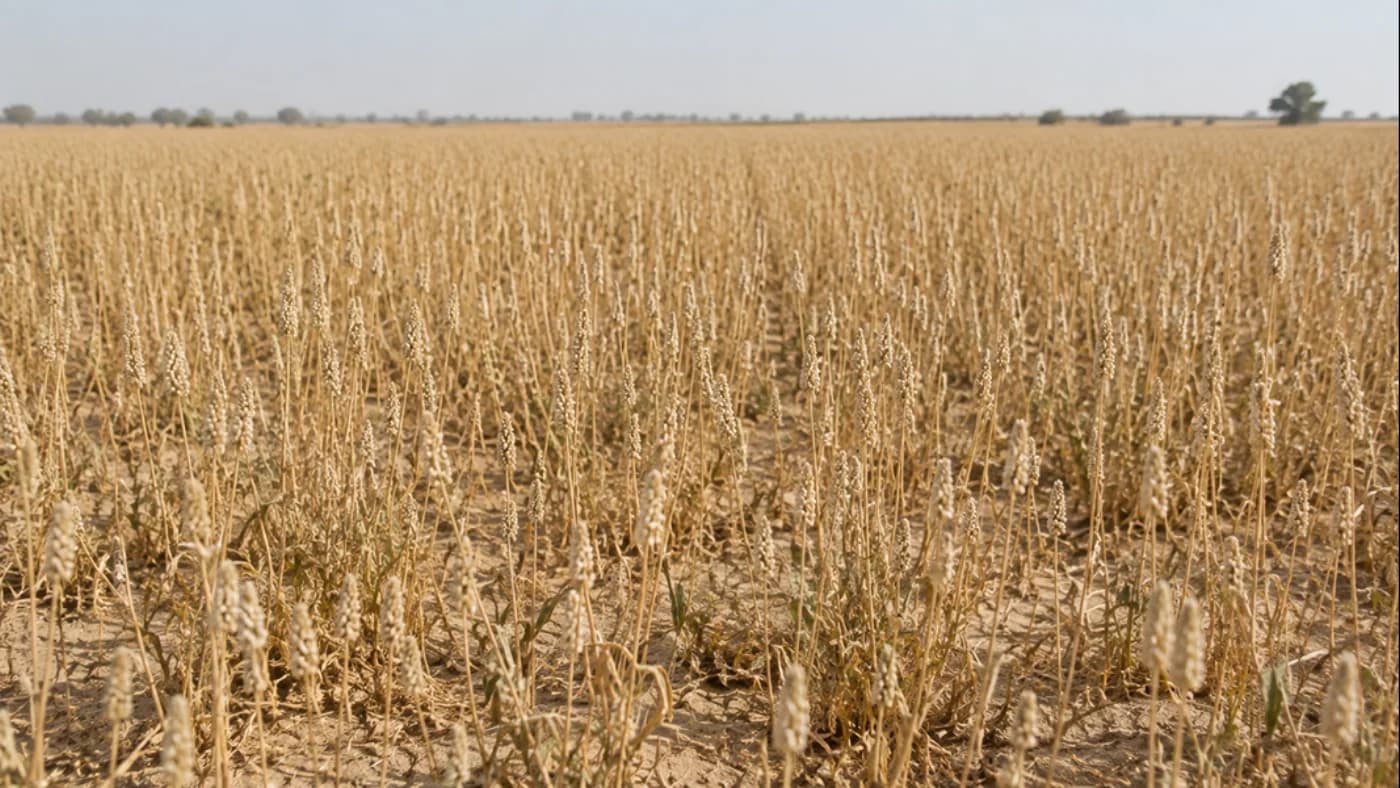
Isabgol Farming: Growing Psyllium for the Husk, Not the Seed
North Gujarat supplies much of the world's psyllium husk from light land and almost no water. The crop is easy until harvest — and at harvest one shower can take the value out of it.
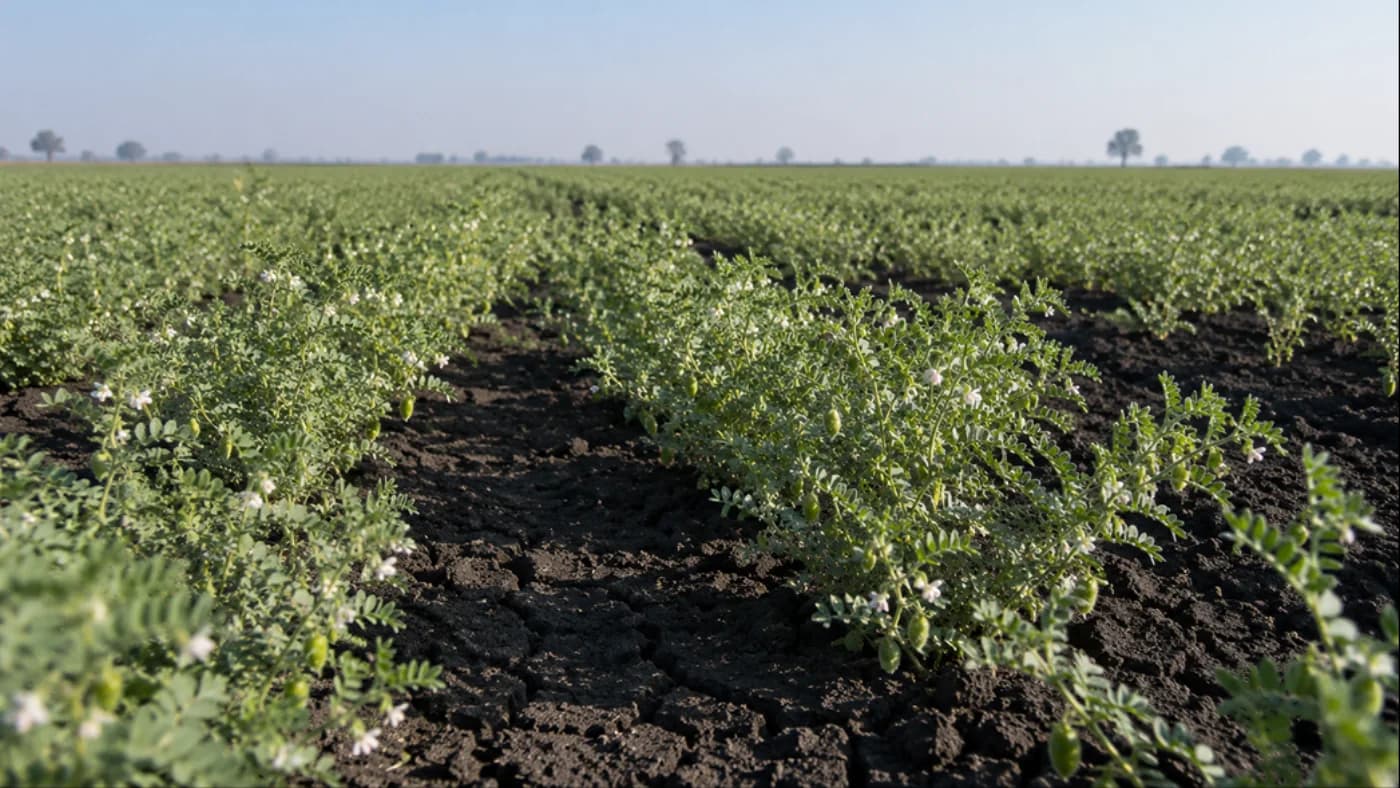
Chana Farming: Growing Chickpea on Residual Moisture
India's biggest pulse crop is also the one most often ruined by kindness — too much water, too much nitrogen. What chana actually needs, how to beat wilt and pod borer, and desi versus kabuli.
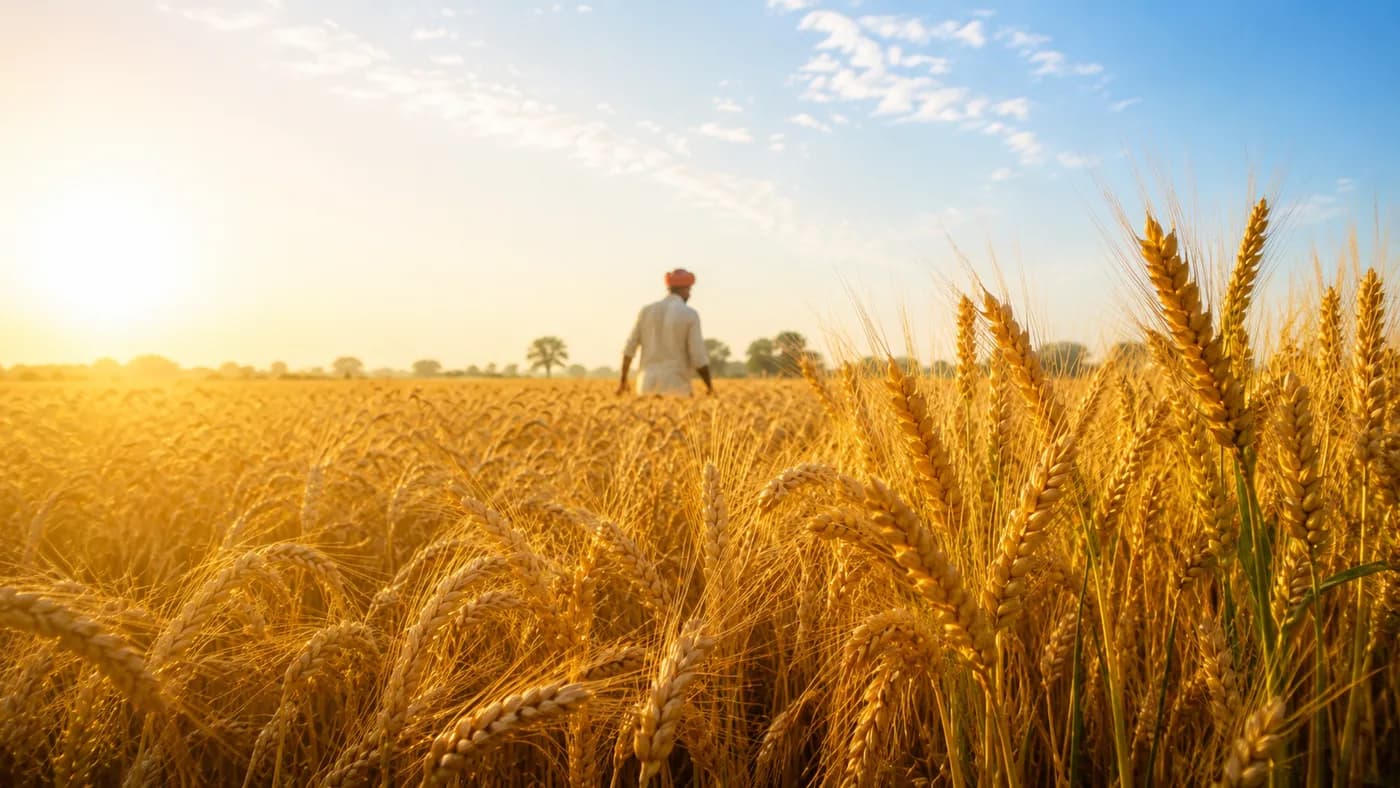
Wheat Farming Guide: Sowing to Harvest for Higher Yield
Wheat rewards timing more than anything else — sow in the right window, never skip the crown-root irrigation, and control weeds in the first month.