

Integrating Chickens and Bees for Better Yields
Small hive beetle and wax moth larvae drop into the soil to pupate — right into the path of a hungry hen. Keeping hives inside a chicken run turns hive pests into eggs and keeps bees healthier.
Quick answer
Chickens and bees have shared farmyards for centuries because their needs complement each other: the birds get a steady trickle of high-protein larvae, and the bees get a drier, cleaner, pest-suppressed yard. Get the hive height and water separation right, keep an eye on manure buildup and winter slowdowns, and this simple pairing can meaningfully cut hive losses without a single chemical treatment.
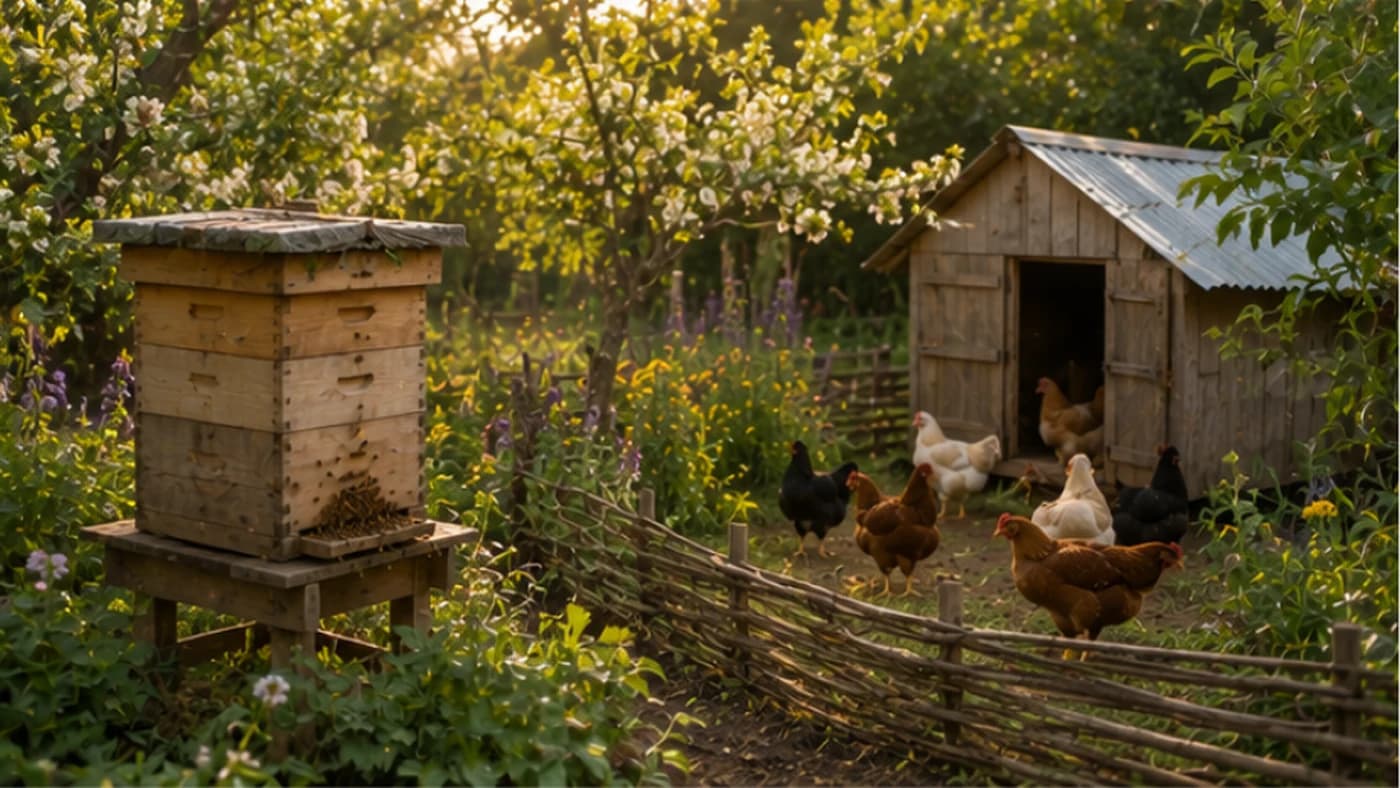
Small hive beetles and varroa-infested drone larvae often fall out of the hive and into the soil to complete their life cycle — directly into the path of the most efficient pest hunters on the farm. Keeping beehives inside a chicken run turns this weakness into a strength: the birds' constant scratching finds and eats the pests before they can re-establish, while the bees get a drier, cleaner, better-ventilated yard in return. It's an old barnyard pairing, not a new invention, and it works because it uses each animal's natural behaviour rather than fighting it.
Why the pairing works
Small hive beetle larvae tunnel through comb, eating honey and pollen and leaving a slime that ferments the honey, before crawling out of the hive at night and burrowing 2.5-10 cm into the soil within about a metre of the hive to pupate. Chickens' instinct to scratch and peck catches almost every larva at this vulnerable stage, acting as a biological filter. Wax moth larvae (Galleria mellonella) get the same treatment if they fall from the hive.
Varroa mites benefit indirectly too: many beekeepers cull drone brood frames to reduce mite numbers (mites prefer the larger drone cells), and those culled frames can be handed straight to the chickens, which pick every larva — and the mites riding on them — out of the wax, leaving clean comb the bees can reuse.
Setting up the shared yard
Place the hive in a corner or along a fence line with low foot traffic, with the entrance facing away from the coop door or wherever you scatter grain — bees leave the hive rising in a shallow curve, so an entrance 1-1.5 metres from a fence lets them fly up and over the birds' heads rather than through them.
Hive height matters more than anything else: a standard 30 cm stand is too low, since a curious hen can pluck bees straight off the landing board. Raise the entrance to 45-60 cm on a sturdy stand of rot-resistant timber — a full hive during a strong honey flow can weigh well over 90 kg, so build it to hold that weight without wobbling.
What you gain
The chief benefit is near-total suppression of ground-pupating pests without any chemical soil drench. A quieter benefit is vegetation control: tall grass and weeds near a hive entrance block the flight path and trap moisture, which leads to mould inside the hive and rot in the bottom boards, but chickens keep the ground scratched bare and dry, which matters most in hot months when the colony is already working to cool the hive.
Where it goes wrong
The most common mistake is placing the hive too close to the chickens' water source — bees are opportunistic foragers that will use a reliable waterer for its minerals, and hundreds of bees floating in the water makes chickens hesitant to drink or prone to snapping and getting stung. A large rooster or heavy hen can also knock over a poorly secured hive while trying to roost on top, so strap the covers down. Avoid unusually defensive ('hot') colonies in a chicken run — a hive prone to chasing intruders will eventually target the birds.
Real limits to know
Very small runs concentrate chicken-manure nitrogen into ammonia that can irritate a bee colony's sensitive respiratory system, so keep the floor well carboned with wood chips or straw. In long, cold winters the birds spend far more time in the coop and scratch far less soil, so the pest-control benefit essentially pauses for the season. And if you must treat a colony with a harsh miticide, confirm it's poultry-safe before letting chickens eat any larvae exposed to it.
Practical tips
Give the bees their own water — a shallow pan filled with pebbles, placed at least 6 metres from the coop — so they never need to compete with the chickens' waterer. Fit a mouse-guard or reduced entrance in winter so bored, hungry chickens can't poke into the hive. Watch the interaction during a heavy nectar flow: if chickens are actively hunting live bees at the entrance, raise the stand another 15 cm. Skip strong-smelling cleaners in the coop — plain water or white vinegar won't agitate the colony — and in hot climates, give the hive some afternoon shade, which the birds will use too.
Scaling it further
Plant bee-friendly forage such as borage, clover or comfrey along the outside of the run fence — bees work the flowers while chickens eat any leaves that poke through the wire, adding a layer of productivity to the same footprint. An integrated yard also gives you better situational awareness than an isolated hive out in a distant field: visiting twice a day to collect eggs means you'll notice a problem with the bees far sooner.
This same principle applies well to Indian smallholdings running mixed livestock — a desi hen breed alongside an Apis cerana indica (Indian hive bee) box, or a colony kept under a beekeeping scheme run through the state horticulture department or KVIC, benefits just as much from a hen's scratching as an imported Apis mellifera colony does.
Example: the beetle-free yard
A keeper in a humid, temperate area was losing two out of five hives a year to small hive beetle slime because the larvae pupated easily in soft garden soil. After moving the hives into an 18.5 square-metre chicken run with six hens, the beetle larvae emerging from the hive at night found the soil scratched into fine, dry dust with no cover, and the few that escaped notice were unearthed at dawn during the birds' morning forage. Within a year, the beetle population in that apiary had dropped by an estimated 80% — with no chemical spray involved, simply by removing the nursery the next generation depended on.
Frequently asked
How high should a beehive be if it shares a run with chickens?+
45-60 cm off the ground on a sturdy stand — low enough for normal beekeeping access, but high enough that hens can't reach the landing board and pluck bees off it.
Will chickens and bees actually fight?+
Rarely, if the setup is right. Most conflict comes from a shared water source (bees crowding the chickens' waterer) or an unusually defensive bee colony — give bees their own water and avoid 'hot' colonies in a shared yard.
Does this work with Indian honeybee species?+
Yes — the principle (chickens eating ground-pupating pests, keeping the apiary dry) applies whether the colony is Apis mellifera or the native Apis cerana indica kept in a traditional or scheme-supported box hive.
What pests do chickens actually control near a hive?+
Mainly small hive beetle larvae and wax moth larvae that fall to the soil to pupate, plus drone brood culled for varroa control, which chickens will happily pick clean.
Does winter stop this benefit?+
Largely, yes — chickens spend more time in the coop and scratch far less ground in cold winters, so the pest-suppression effect is mostly a warm-season benefit.
Where to go next
- AI farming chatbotAsk any farming question in Gujarati, Hindi or English and get an answer in seconds.
- Kheti app for Indian farmersCrop plans, disease diagnosis, weather and mandi rates in one app.
- Agri Bazar marketplaceBuy and sell animals, crops, equipment and dairy near you — and see what buyers want today.
Want this as daily tasks for your farm?
Khetiyaar turns guides like this into a day-by-day plan — in your language, free to start.

Related guides
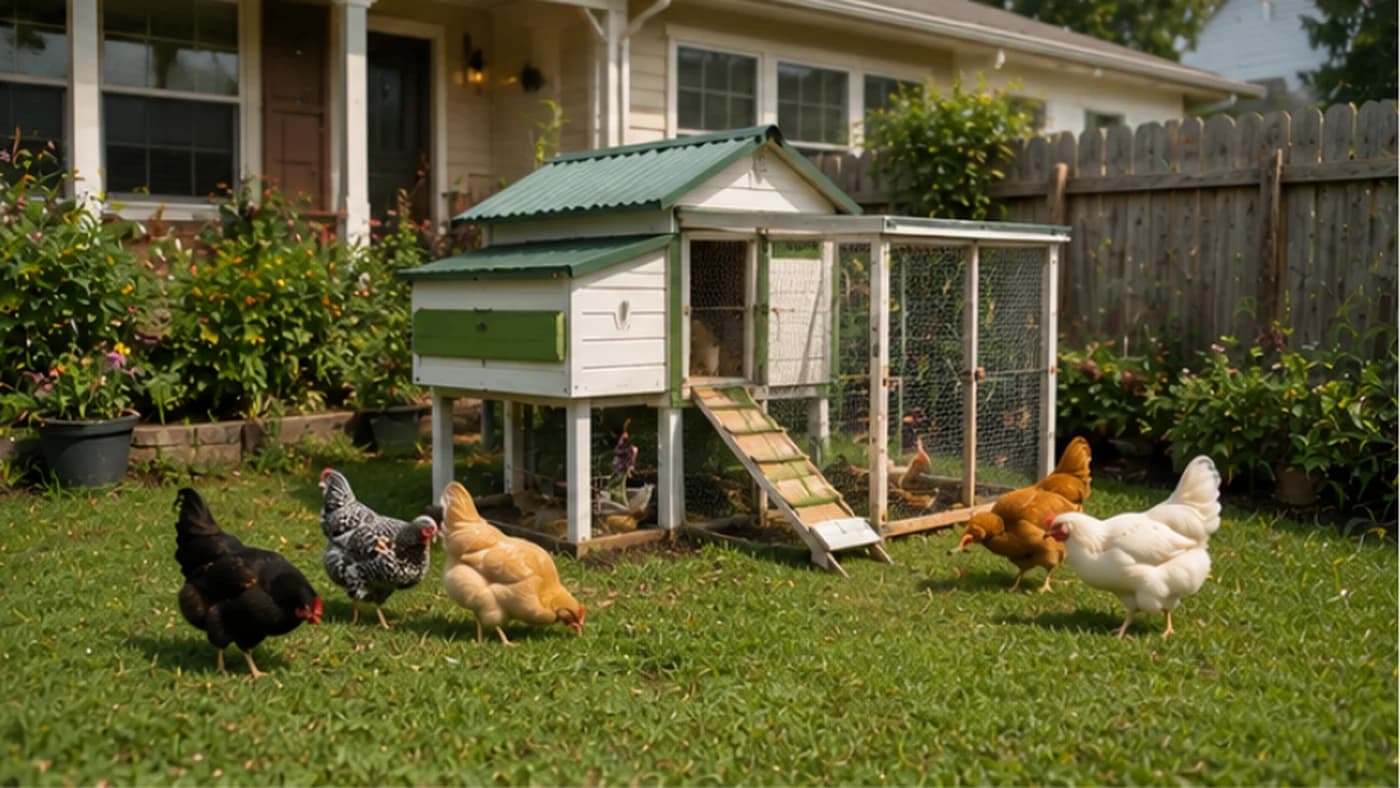
Raising Chickens on a Small Backyard Lawn: Turn Grass Into Free, High-Protein Feed
A mowed, chemical-fed lawn is close to a biological desert for a chicken. Rotate a small flock across it instead, and that same patch of grass becomes a source of free protein, richer eggs, and a healthier, greener yard.
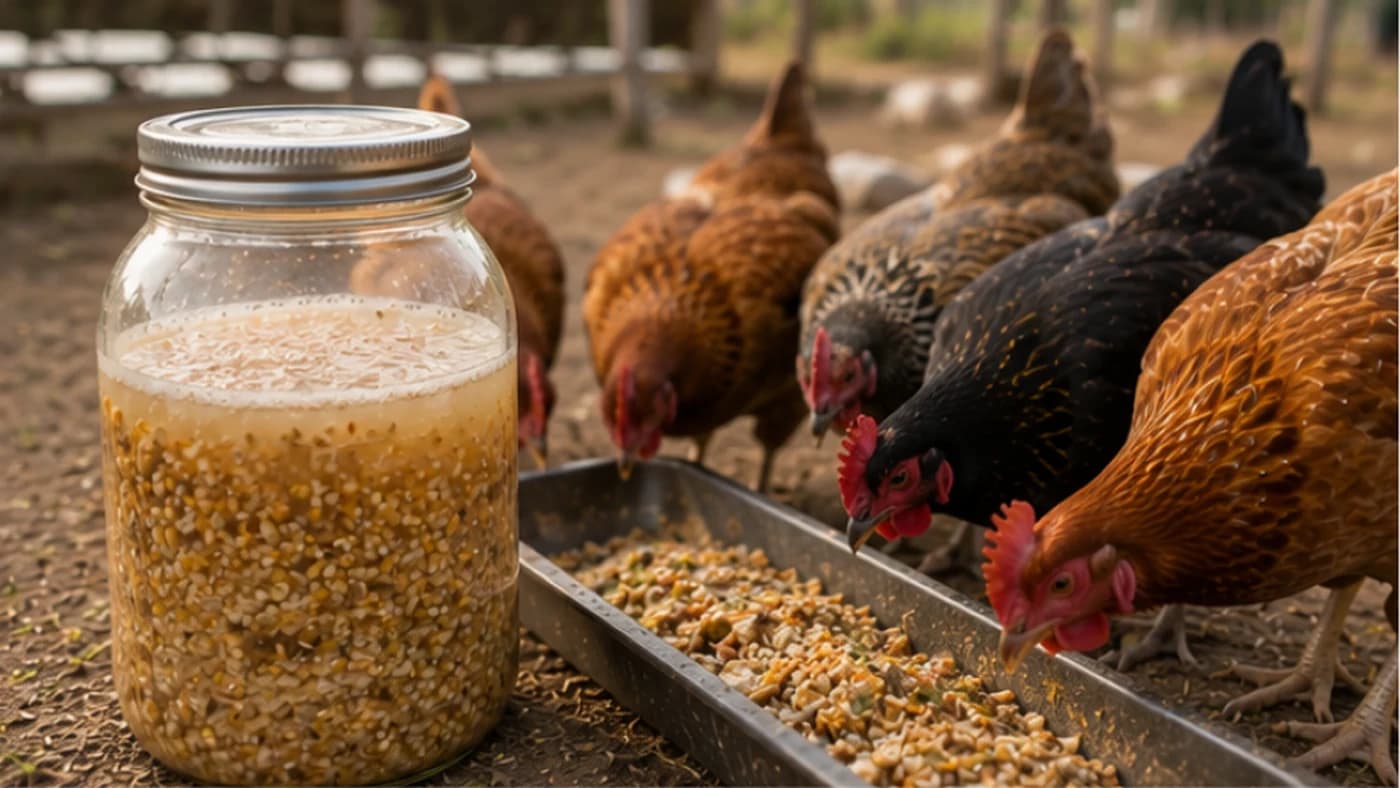
How to Ferment Chicken Feed for Better Egg Production
Dry pellets are convenient, but a lot of their nutrition passes straight through a bird undigested. Soaking and fermenting the same feed for a few days unlocks far more of it — better shells, richer yolks, and often less feed used overall.
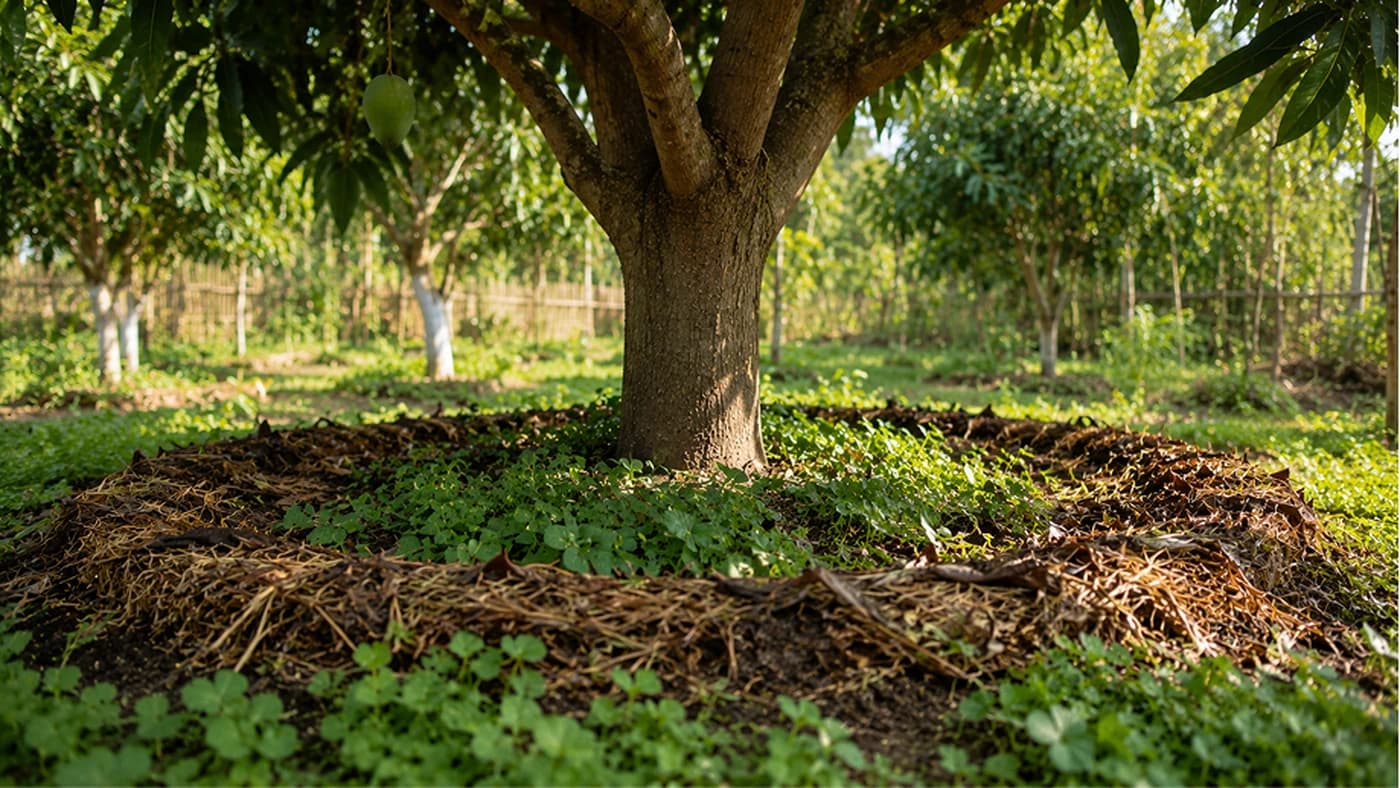
Managing Soil Under Fruit Trees for Better Yields
A mowed, bare-earth ring under a fruit tree is a missed opportunity, not tidy farming. Mulch and a few companion plants turn that space into a pest-fighting, moisture-holding, self-feeding system.