

Raising Chickens on a Small Backyard Lawn: Turn Grass Into Free, High-Protein Feed
A mowed, chemical-fed lawn is close to a biological desert for a chicken. Rotate a small flock across it instead, and that same patch of grass becomes a source of free protein, richer eggs, and a healthier, greener yard.
Quick answer
A backyard lawn is not just decoration — managed as a rotating pasture, it can supply a meaningful share of a small flock's diet for free, while actually improving the health of the grass instead of wearing it down. Start small: stop the chemical lawn treatments, oversow a patch with clover, move your birds every day or two, and give each patch at least two weeks to recover before you return. The path to a more self-reliant backyard doesn't need acres — it starts with the few hundred square metres you already have.
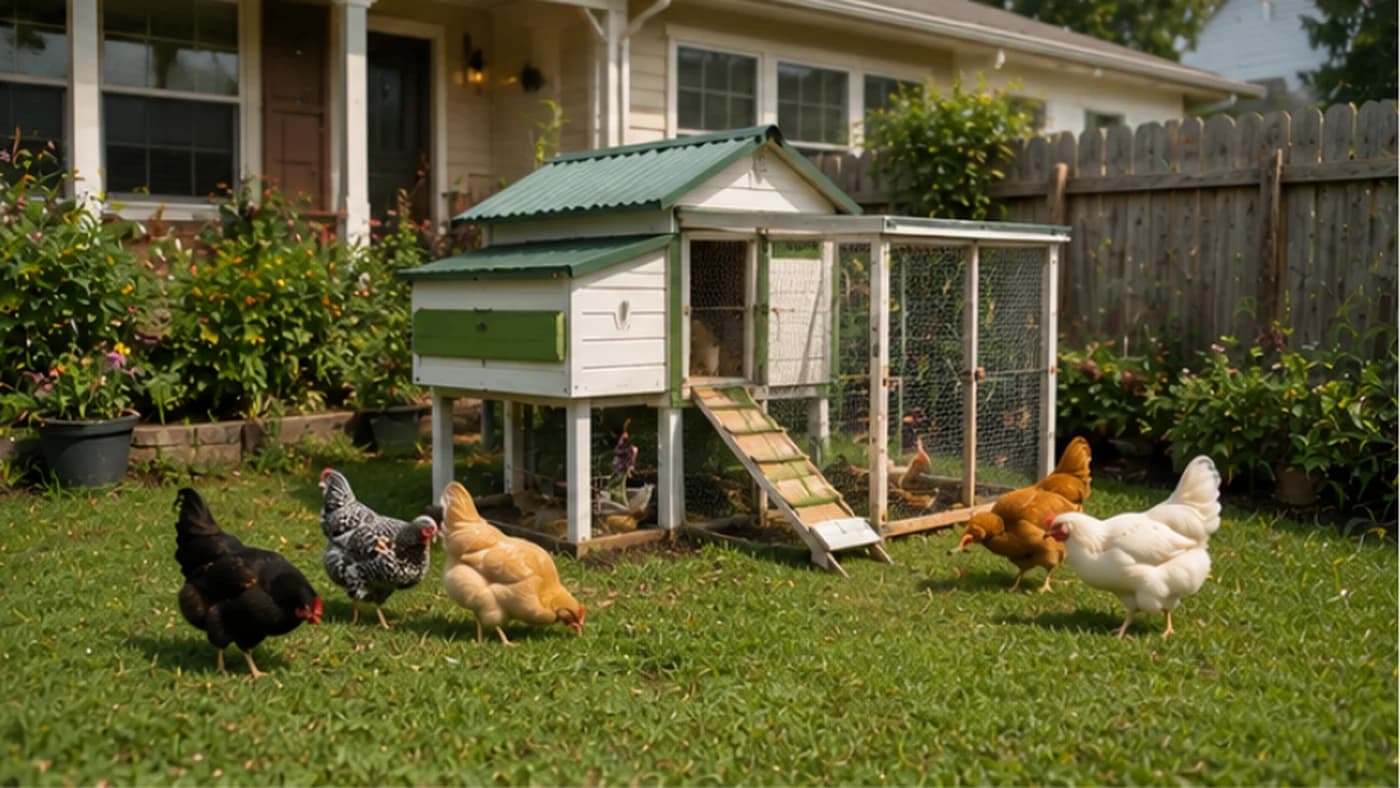
A neat, uniformly mowed lawn kept short with fertiliser and regular cutting is, from a chicken's point of view, close to a biological desert — technically green, but almost nothing in it to eat. Shift your thinking, though, and that same patch of ground becomes a high-yield pasture. Raising chickens on a small backyard lawn means managing a tiny flock intensively — moving birds across the yard every day or two rather than free-ranging them over open acres — so a modern homesteader with just a few hundred square metres of usable outdoor space can still turn grass, weeds and insects into free, high-quality feed and noticeably better eggs.
Why a static run fails and rotation works
A chicken kept in one small, dirt-floored run quickly turns that ground into a bare, muddy sacrifice zone — vegetation gone, odour rising, flies breeding. A rotational forage system replaces that static run with a mobile one, using a chicken tractor (a movable, bottomless coop) or portable electric netting to shift the flock to fresh grass every one or two days. This prevents the birds from over-scratching any one spot down to bare soil, gives the vegetation time to recover, and delivers a dose of fresh manure to a new patch of lawn each time you move — so instead of a permanently trashed corner of yard, you get a lawn that, if anything, grows back thicker than it did under a mower.
Transitioning your lawn to a forage base
The first step is simply to stop using chemical weed-and-feed treatments, which are toxic to chickens and to the very soil life you now want to encourage. From there, oversow your lawn with legumes — white clover is an excellent choice, since it stays low, tolerates foot and bird traffic well, and fixes nitrogen into the soil as it grows; local clover, lucerne (alfalfa) or berseem can work similarly depending on your region, though they may need more frequent mowing to stay accessible to the birds.
Chickens themselves are excellent tillers: confine a small group to one patch for three or four days and they will scratch through the thatch and expose bare soil, at which point you broadcast a diverse seed mix and water it in — the birds have effectively done your tilling and starter fertilising in one pass. And stop treating common lawn weeds as the enemy: many, including varieties of amaranth (chaulai) and lamb's quarter (bathua), are high-protein greens that rival expensive commercial feed, while deep-rooted weeds pull minerals up from the subsoil where shallow-rooted grass can't reach.
The high-protein harvest: plants and insects
White clover can run 20–25% crude protein and is highly palatable, and it also draws in beneficial insects. Lucerne (alfalfa) is very high in both protein and calcium, though it needs well-drained soil to establish well. Deep-rooted perennials bring up trace minerals from lower in the soil profile, and quick-growing greens like amaranth and mustard add both protein and, in mustard's case, a peppery compound that stimulates digestion.
Insects matter just as much as plants: a biologically active lawn is full of earthworms, crickets and beetles, which supply amino acids and fats that plant matter alone can't provide. Composting a small pile near the rotation area also encourages black soldier fly larvae, which run roughly 40% protein and 30% fat — an excellent supplementary feed. Birds with regular access to this mix of plants and insects tend to lay eggs with noticeably richer, more deeply coloured yolks than birds fed only commercial grain.
What you actually gain
The most direct benefit is a lower feed bill: while chickens can't live on forage alone (they lack the multi-chambered stomach needed to digest cellulose efficiently), good forage can realistically replace 5–20% of daily intake, which adds up to real savings across a year for even a small flock. Bird health improves too — foraging birds stay active and engaged, are less prone to feather-pecking and egg-eating, and the exercise supports better circulation and body condition.
The land benefits as well: chicken manure is rich in nitrogen, phosphorus and potassium, and because a rotational system moves the birds frequently, that manure gets spread thinly rather than piling up in one spot and burning the grass. Over two or three seasons, most keepers notice their lawn holding its green colour longer through dry spells and coming back more vigorously each season.
Common mistakes in a small yard
The most frequent error is the dirt-patch mistake: leaving a small flock on one spot too long. Even four birds can turn a lush patch into bare, compacted dirt within just a few days, and once that happens it can take weeks or months to recover — so be disciplined about your rotation schedule, and move the flock the moment the grass starts looking stressed rather than waiting until it's gone.
Predator pressure is often underestimated in a residential setting — stray dogs, cats, birds of prey and the occasional jackal or mongoose are all real threats, so any mobile housing needs solid welded wire mesh rather than flimsy chicken wire, since a determined predator can tear through the lighter mesh in minutes. And be honest about noise and smell with your neighbours — a well-managed, frequently moved flock is close to odourless, but a badly managed one is the fastest way to turn a good idea into a dispute.
How much space you actually need
A useful rule of thumb is roughly 0.7–1 square metre of outdoor space per bird to avoid stripping the vegetation bare — a small flock of four to six birds can be comfortably supported on a few hundred square metres of rotated lawn, but you cannot keep dozens of birds on a small residential plot and expect the grass to survive. Before investing in equipment, also check local rules on keeping poultry in your area, including any limits on numbers or distance from neighbouring houses, since these vary by municipality.
Static run vs. rotational forage, compared
Static run: low dietary diversity (mostly grain and scraps); low labour (clean once a week); poor soil health from compaction; can smell strongly if not cleaned regularly; average egg nutrition. Rotational forage: high dietary diversity from plants, seeds and insects; moderate labour from moving the flock every one to two days; soil health actively improves through light, frequent manuring; very low odour since waste is spread thin; noticeably richer egg nutrition and yolk colour.
Practical tips and integrating with the garden
Keep grass at roughly 5–10 cm before moving birds in — much taller and short-necked chickens struggle to reach the tender growth and the insects at the base. Never return a flock to the same patch until it has had at least two weeks to recover; this both breaks the parasite cycle and lets the plants regrow properly. Give the birds a designated dust-bath area (a mix of sand and dry soil works well), since without one they will dig their own right in the middle of your lawn. Line the base of any mobile housing with fine mesh to keep out rodents and digging predators.
For gardeners, a classic extension of this method is letting chickens clean up a vegetable bed at the end of the season — they'll eat spent plants, hunt down pests like caterpillars, and consume weed seed before it can spread, effectively prepping the bed for the next planting while adding fertility at the same time.
A real space-and-savings example
Picture a plot with about 400 square metres of usable lawn once the house, paths and beds are accounted for. A flock of four to five hens kept in a small movable coop covering about 3 square metres, moved once a day, will take roughly 130 days to cover that entire lawn once — giving every patch of grass well over four months to recover, more than enough time even for the more delicate legumes to bounce back fully. Across that rotation the flock gets a fresh buffet daily, feed consumption drops noticeably, and the eggs — judged by yolk colour and shell strength — compare well with birds raised on premium commercial pasture feed, at a fraction of the cost.
Frequently asked
Can chickens survive on lawn forage alone?+
No — they lack the digestive system to process cellulose efficiently. Good forage can realistically replace 5–20% of daily feed, not all of it.
How often should I move a chicken tractor?+
Every one to two days for a small flock on a small lawn, and never return to the same patch until it has had at least two weeks to recover.
How much outdoor space does a small backyard flock need?+
Roughly 0.7–1 square metre per bird when rotated regularly, so the vegetation isn't stripped bare faster than it can regrow.
Which plants make the best chicken forage?+
White clover, lucerne (alfalfa) or berseem, and common protein-rich weeds like amaranth and lamb's quarter — plus insects like earthworms, which supply amino acids plants can't.
What is the biggest risk of backyard chicken-keeping?+
Predators and over-grazing. Use solid welded wire mesh, not flimsy chicken wire, and move the flock before any one patch is stripped bare.
Where to go next
- AI farming chatbotAsk any farming question in Gujarati, Hindi or English and get an answer in seconds.
- Kheti app for Indian farmersCrop plans, disease diagnosis, weather and mandi rates in one app.
- Agri Bazar marketplaceBuy and sell animals, crops, equipment and dairy near you — and see what buyers want today.
Want this as daily tasks for your farm?
Khetiyaar turns guides like this into a day-by-day plan — in your language, free to start.

Related guides
Integrating Chickens and Bees for Better Yields
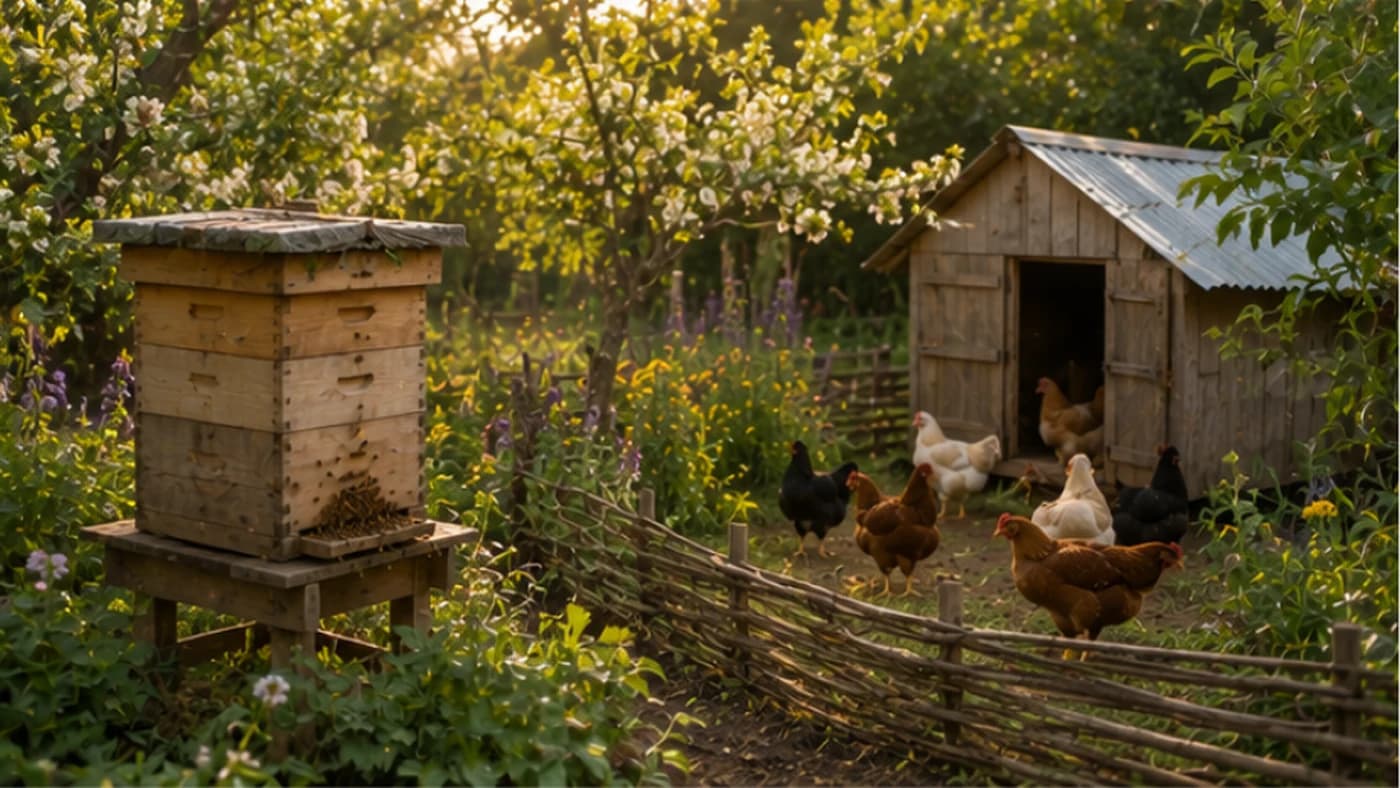
Small hive beetle and wax moth larvae drop into the soil to pupate — right into the path of a hungry hen. Keeping hives inside a chicken run turns hive pests into eggs and keeps bees healthier.
Deep Litter Method: Turn Your Chicken Coop Into a Living Compost System
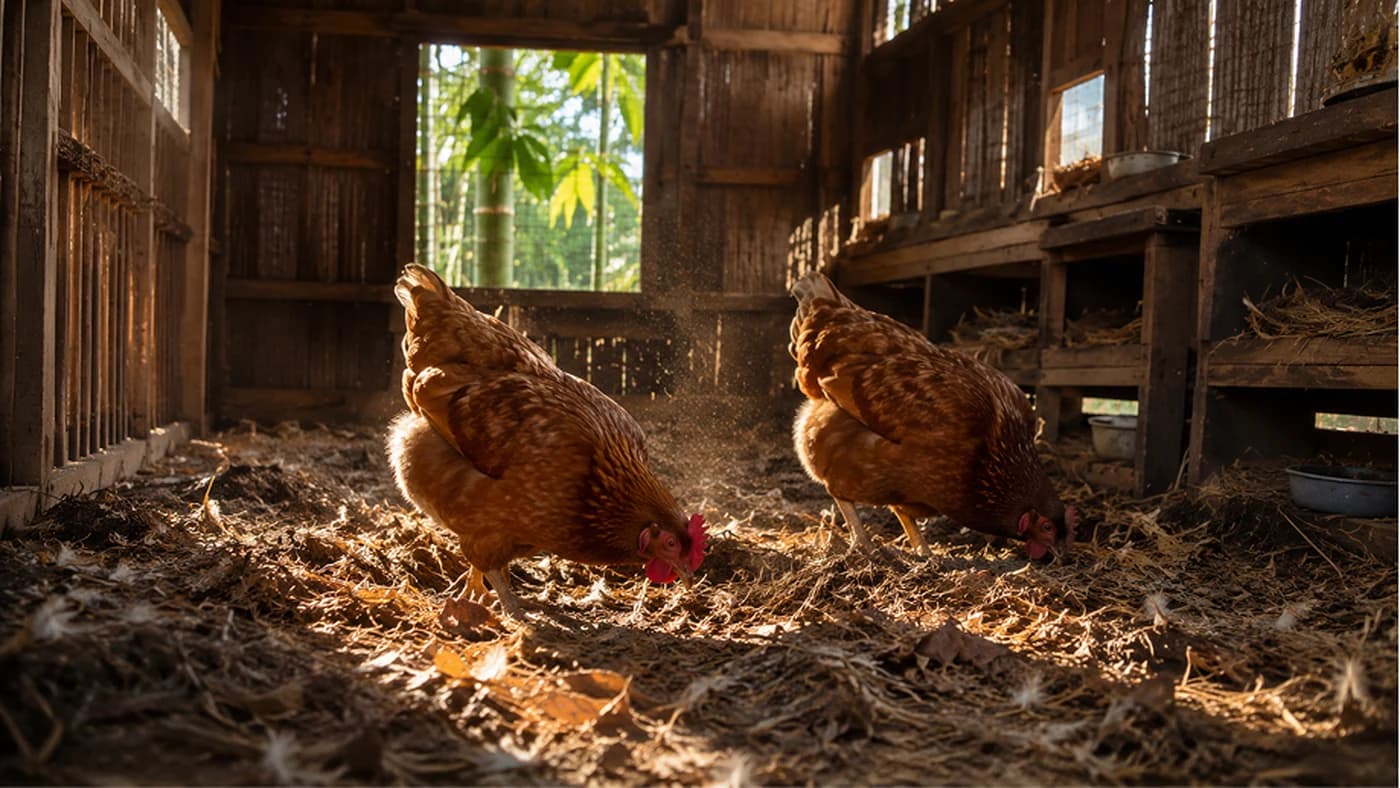
A scrubbed, bare coop floor is a wasted opportunity. Let a thick carbon bed and billions of microbes do the composting for you — less labour, healthier birds, and free fertiliser for the field.
How to Attract Dung Beetles to Your Pasture (and Why Your Dewormer Might Be Killing Them)
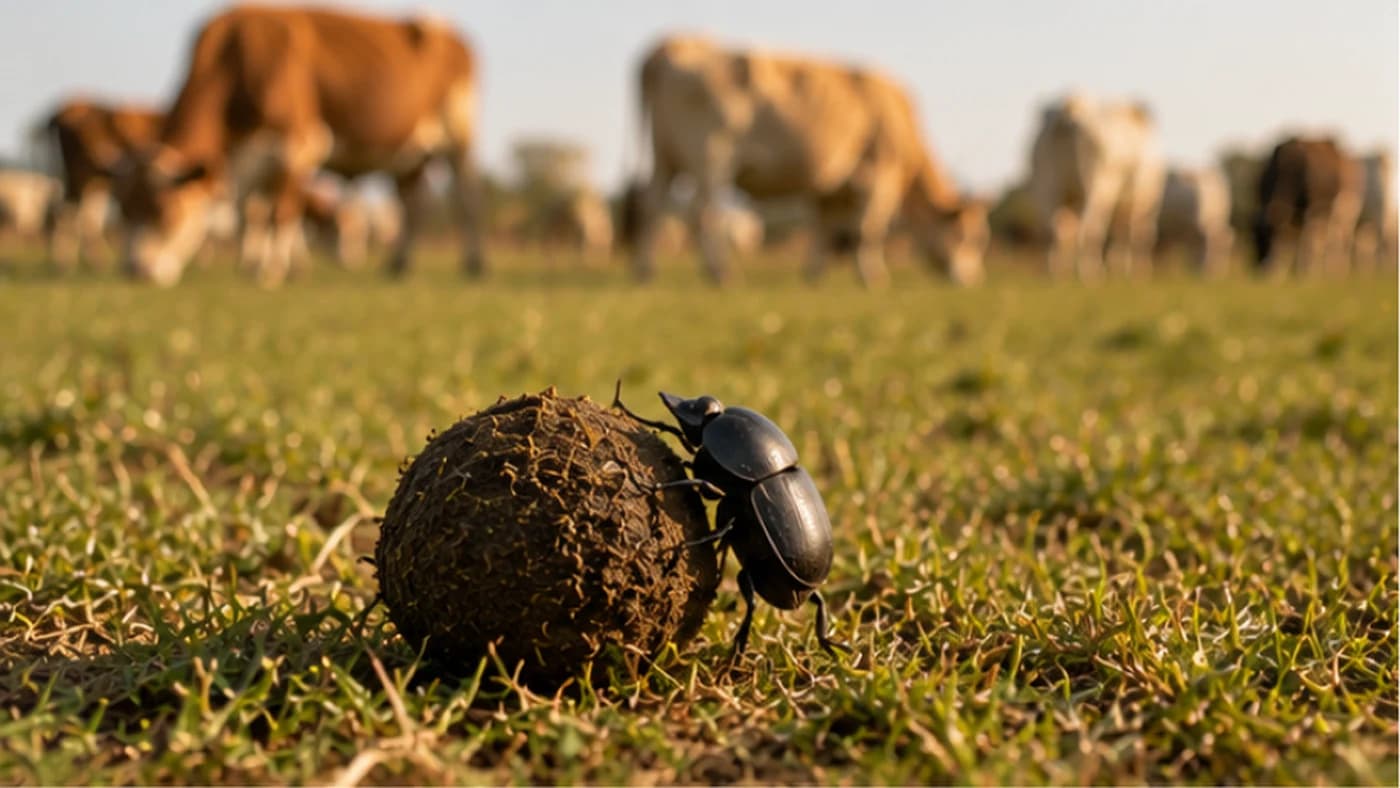
Most farmers see a manure pat as a chore. The smart ones see a biological engine — dung beetles that bury parasites, aerate the soil, and cut fly populations, for free, if you stop poisoning them with routine deworming.