

How to Ferment Chicken Feed for Better Egg Production
Dry pellets are convenient, but a lot of their nutrition passes straight through a bird undigested. Soaking and fermenting the same feed for a few days unlocks far more of it — better shells, richer yolks, and often less feed used overall.
Quick answer
Fermenting chicken feed costs almost nothing beyond a container, some water and a few days of patience, and in return most keepers see less feed used, sturdier shells, richer yolks and a healthier gut in their flock. Start with one small batch, learn to tell healthy sour smell from spoilage, and once the routine is running it adds only a few minutes to your daily chores for a real improvement in what your birds — and your breakfast — get out of the same bag of grain.
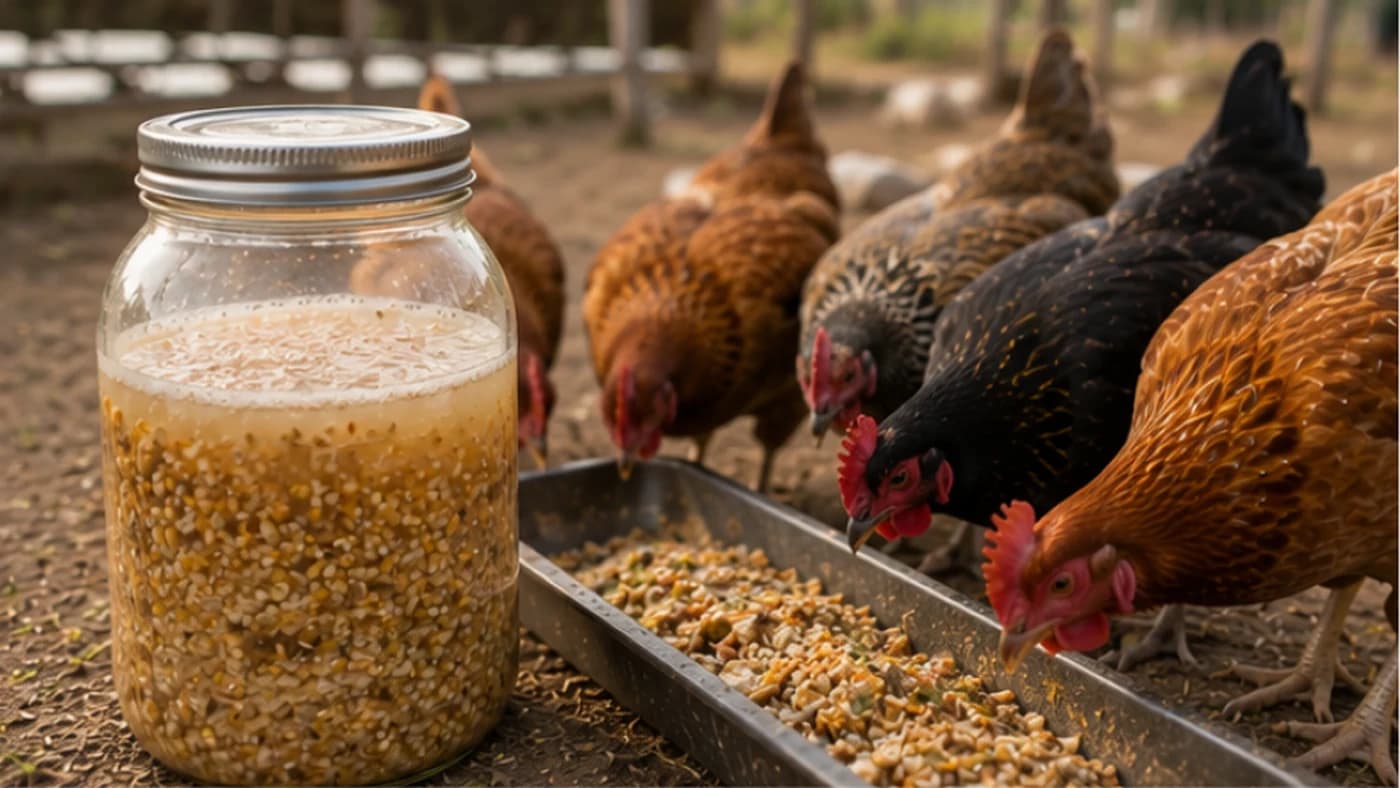
Feeding dry pellets or grain straight from the bag is simple, but it asks a chicken's gut to do all the work of breaking down starches and neutralising natural anti-nutrients like phytic acid on its own. Lacto-fermentation — the same family of process behind curd, pickles and sourdough — does some of that digestive work in advance. Soak the feed in water for a few days and naturally occurring bacteria convert its sugars and starches into lactic acid, softening the grain, unlocking minerals that would otherwise pass through largely unused, and loading it with probiotics before it ever reaches the bird. It costs nothing but water, a container and a few days of patience, and many small keepers who switch report noticeably better shells, richer yolks and a lower feed bill.
What fermentation actually does
Grains and legumes naturally contain protective compounds, the most significant being phytic acid, which binds to minerals like phosphorus, calcium and magnesium and prevents a bird from absorbing them fully. Fermentation neutralises much of this, so the hen can use far more of the nutrition already present in her feed rather than passing a good share of it through unused. In practice this is the same principle as soaking dried beans before cooking — the time spent in a slightly acidic, moist environment signals the grain to soften, become more palatable, and release more of its stored nutrition.
The three-day process
In the first 24 hours, the grain simply absorbs water and begins to soften — you may notice the water turning slightly cloudy, an early sign that nutrients are already being released. By the second day, small bubbles start rising as bacteria actively feed on the starches, and the mixture's pH drops from roughly neutral toward a more acidic 4.2–4.5, which is exactly what makes the environment inhospitable to harmful bacteria like Salmonella and E. coli.
By the third day the mixture should smell pleasantly sour — like a mild vinegar or fresh curd — which is the point of peak probiotic activity and the best time to feed it. Feed at this stage delivers a strong dose of beneficial gut flora that supports the bird's immune system from the inside.
Setting up your first batch
Use a container made of glass, food-grade plastic or lead-free ceramic — avoid reactive metals like aluminium, since the acid produced during fermentation can leach into the feed. A wide plastic bucket suits a small backyard flock, while a large glass jar works well for just a few birds.
Water quality matters, since chlorine in most piped municipal water is there specifically to kill bacteria — the opposite of what you want here. If you're using tap water, let it stand in an open container for about 24 hours so the chlorine dissipates, or use filtered or well water instead. Submerge the grain completely, with at least 5 cm of water above its surface, since grain exposed to air is the single biggest cause of spoiled batches.
Many keepers run a rolling three-container system — starting one batch each day so that by the fourth day the first is perfectly fermented and ready to feed, then washing that container and starting it again, keeping a continuous supply going indefinitely.
The measurable benefits
Because fermented feed is already hydrated and its nutrients are more bioavailable, birds commonly eat 20–30% less by volume than they do on dry pellets, which adds up to a real saving on feed cost over a year. Egg quality often improves too — thicker shells, better egg weight, and yolks with a noticeably deeper, richer colour reflecting improved absorption of fat-soluble vitamins and carotenoids.
Gut health may be the most significant hidden benefit: the beneficial bacteria colonising a bird's digestive tract build a stronger microbiome, which tends to show up as drier, less-smelly droppings and a flock more resistant to common digestive problems.
Common mistakes and pitfalls
The most frequent beginner error is letting grain sit exposed above the waterline — fermentation is meant to happen without much air, and grain left uncovered can grow fuzzy white, green or black mould, which means the whole batch should be discarded and restarted. Don't confuse this with Kahm yeast, a thin, white, non-fuzzy film that can form harmlessly on the surface — it can simply be stirred back in. As a rule of thumb: if the batch smells like bread, curd or mild vinegar, it's healthy; if it smells of rot or sewage, throw it out.
Adding unnecessary extras is another common mistake — the grain already carries the natural bacteria it needs, so extra yeast or a large amount of vinegar can push the batch toward alcoholic fermentation instead of the lacto-fermentation you actually want. A small splash of raw, unfiltered vinegar can help lower the initial pH if you like, but it isn't required.
When this may not be worth the effort
Wet mash clogs standard gravity feeders, so you'll need open troughs or shallow dishes, cleaned daily to stop old feed from spoiling in the heat — this is a genuine, ongoing chore, not a one-time setup. Temperature matters too: in peak summer heat, fermentation can run too fast and become over-acidic, while very cold weather can stall it almost completely, so keeping your containers somewhere with reasonably stable temperature helps in both seasons. And if someone else is looking after your birds while you travel, explaining a rolling fermentation routine may be more than you want to ask of them — switching back to dry feed temporarily is a perfectly reasonable option, with only a small, short-lived dip in egg quality.
Dry pellets vs. fermented grain, compared
Dry pellets: more feed lost to dust and spillage; harder for the bird to digest fully; standard shell strength; passive immune support; very low daily labour (fill and go); birds need more separate drinking water. Fermented grain: little feed wasted since the wet mash stays in the trough; better digestibility since it's partly pre-digested by bacteria; stronger shells from improved mineral absorption; active immune support from probiotic-rich gut flora; some daily labour for stirring and rotation; less separate drinking water needed since the feed itself is hydrated.
Practical tips and advanced use
The back-slop method speeds things up: leave about an inch of liquid and grain from a successful batch in the container as a starter for the next one, which inoculates the new batch with an already-established population of beneficial bacteria. Stir at least once a day to keep the grain evenly submerged and release trapped gas bubbles, since floating grain above the waterline is the most common path to mould. Serve only what the flock will finish in about 30 minutes, in a shallow trough that lets every bird reach the feed, rather than leaving wet mash sitting out to spoil.
More advanced keepers often mix their own whole-grain rations — wheat, barley or broken maize ferment more cleanly than processed pellets, which can turn to paste — and use simple pH strips to confirm a healthy ferment sits around 3.8–4.5. In cooler weather, slightly warm water can help jumpstart the bacteria; in peak heat, moving containers to a cooler, shaded spot slows the process back down to a manageable pace.
Frequently asked
How long does it take to ferment chicken feed?+
About three days from start to peak probiotic activity, though the grain begins softening and releasing nutrients within the first 24 hours.
How do I know if my batch has gone bad?+
A healthy ferment smells like bread, curd or mild vinegar. If it smells like rot or sewage, or shows fuzzy white, green or black mould, discard it and start again.
What is Kahm yeast, and is it dangerous?+
It's a thin, white, non-fuzzy film that can form on the surface of a ferment. It's harmless and can simply be stirred back into the batch — it's not the same as mould.
Does fermenting feed actually save money?+
Yes, generally — birds tend to eat 20–30% less by volume of fermented feed than dry pellets, since it's already hydrated and its nutrients are more available.
Can I use tap water to ferment feed?+
Let it stand uncovered for about 24 hours first so the chlorine dissipates, or use filtered or well water instead — chlorine is added specifically to kill the bacteria you're trying to encourage.
Where to go next
- AI farming chatbotAsk any farming question in Gujarati, Hindi or English and get an answer in seconds.
- Kheti app for Indian farmersCrop plans, disease diagnosis, weather and mandi rates in one app.
- Agri Bazar marketplaceBuy and sell animals, crops, equipment and dairy near you — and see what buyers want today.
Want this as daily tasks for your farm?
Khetiyaar turns guides like this into a day-by-day plan — in your language, free to start.

Related guides
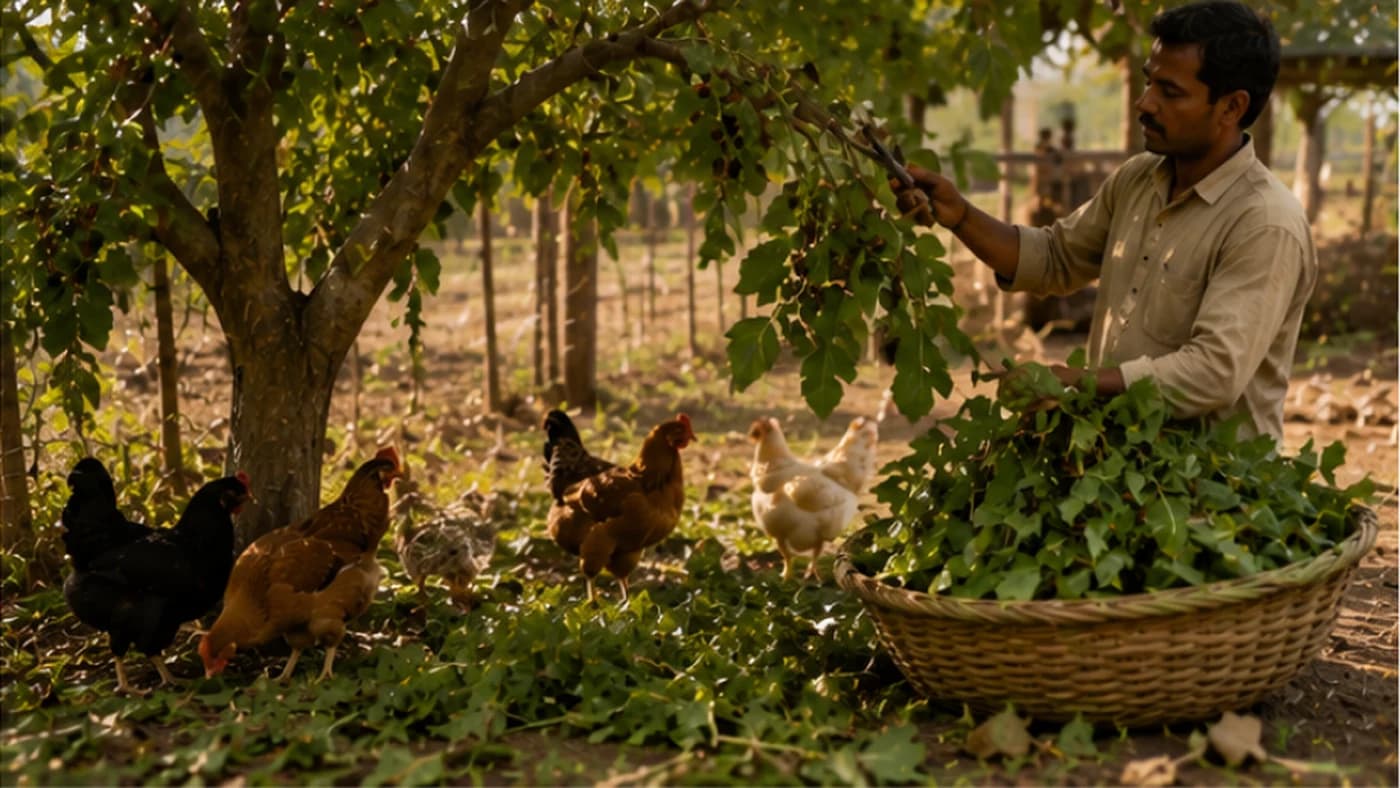
Chicken Fodder From Mulberry Trees: India's Sericulture Trick for Free Protein
Mulberry leaves are as protein-rich as alfalfa, but the real value shows up once silkworms process them — a trick Indian sericulture regions have used for generations, and one any backyard flock keeper can borrow.
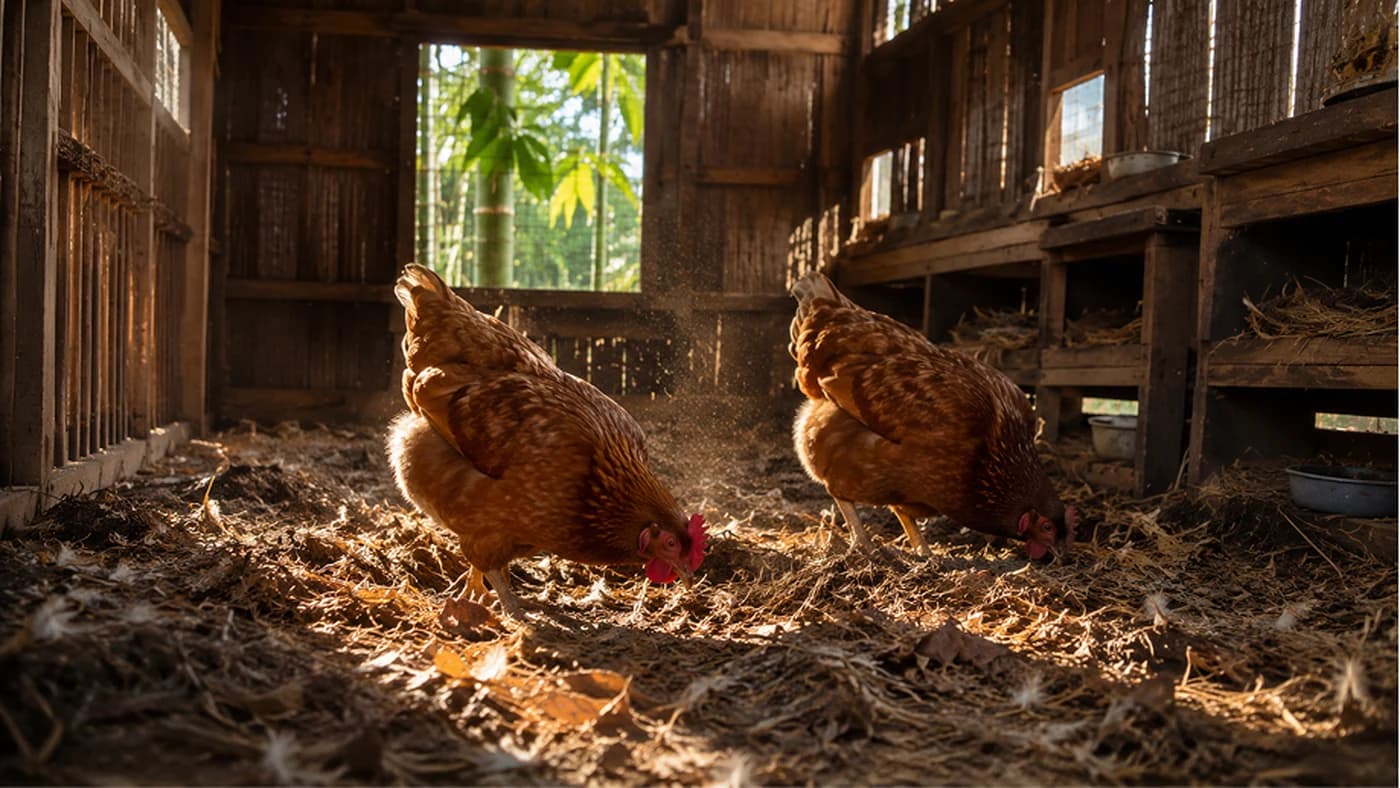
Deep Litter Method: Turn Your Chicken Coop Into a Living Compost System
A scrubbed, bare coop floor is a wasted opportunity. Let a thick carbon bed and billions of microbes do the composting for you — less labour, healthier birds, and free fertiliser for the field.
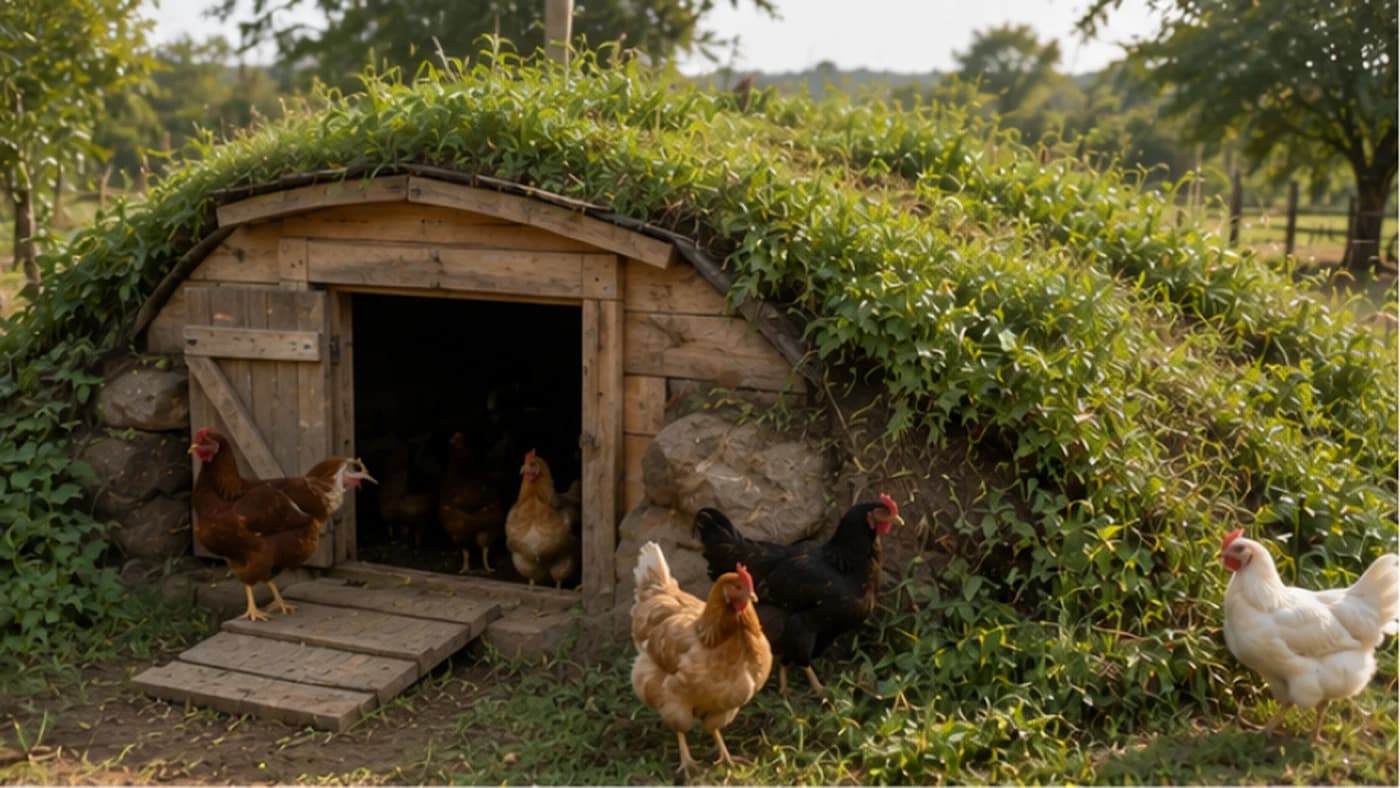
Earth-Sheltered Chicken Coop: Using the Ground to Keep Birds Cool in Summer and Warm in Winter
A coop built partly into the ground barely changes temperature between a 45°C afternoon and a cold winter night. Here's how earth-sheltering works and how to build one for your flock.