

Chicken Forest Design: Cut Your Feed Bill by Letting Birds Forage a Food Forest
A bare chicken run is a nutrient waste site you pay to feed. A layered food forest built around your flock turns droppings into fertiliser and fallen leaves into free protein — cutting grain costs by 30-50%.
Quick answer
An integrated chicken forest takes more planning up front and more patience than a bag of feed and a bare run — but a properly guarded, gradually rotated food forest can cut grain costs by a third to a half, improve egg and meat quality, and turn manure into an asset instead of a waste problem. Start small, protect young trees for their first few years, rotate rather than overstock, and let the system mature.
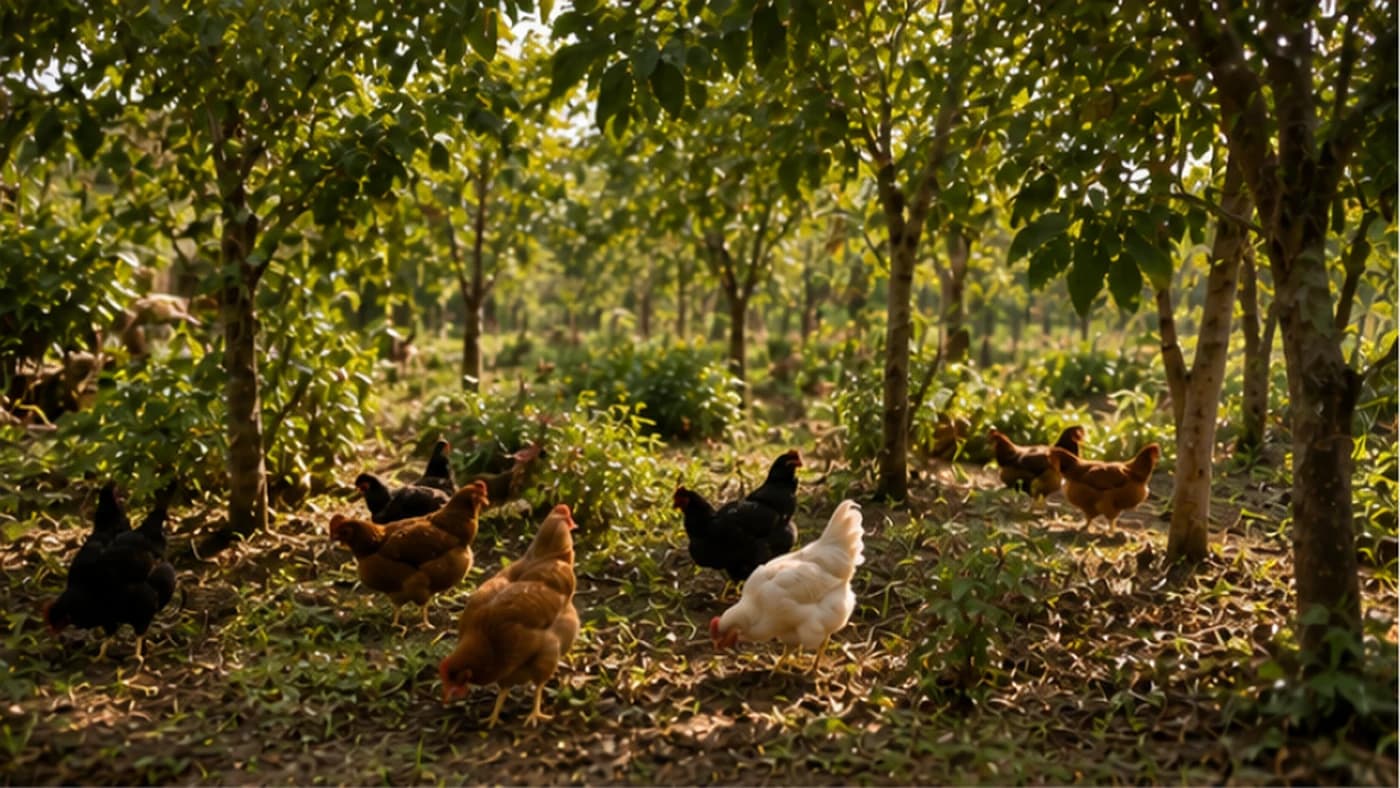
A chicken shut in a bare, dusty run is a bird you pay to feed twice over — once for the grain, and once again in vet bills and stress-related problems, because you've taken a forest-floor forager and put it in a desert. An integrated chicken forest flips that: instead of a coop that produces only waste, you build a small, layered food forest around your flock, so every dropping becomes fertiliser for a tree, every fallen leaf becomes habitat for the insects your birds crave, and the whole system slowly feeds itself instead of draining your feed budget every week.
The idea: every plant does at least three jobs
In a chicken forest, nothing is single-purpose. A mulberry tree gives the birds shade, drops fruit they eat directly, and sheds leaves that build soil carbon; the chickens in turn control pests by eating insect larvae and fertilise the tree's roots with nitrogen-rich droppings. This is really silvopasture — the deliberate mixing of trees, forage and livestock — applied at chicken scale rather than cattle scale, turning what is normally a manure disposal problem into the engine of a productive small orchard.
The seven forage layers
Canopy: large trees (in India, think tamarind, neem or jackfruit rather than the walnut and oak used abroad) give overhead cover from hawks and the odd seasonal fruit or mast, and birds are noticeably calmer with cover above them. Understory: smaller fruiting trees like mulberry are 'chicken candy' — birds gorge on the fallen fruit, cutting grain needs sharply during fruiting season. Shrub layer: berries and nitrogen-fixing shrubs — a local pigeon-pea or similar legume shrub works well here, giving the birds high-protein seed straight off the ground. Herbaceous layer: deep-rooted, mineral-accumulating plants (comfrey where it grows, or local equivalents) plus self-medicating herbs like oregano-family plants that act as natural dewormers. Ground cover: clover, lucerne (alfalfa) or a mixed grass-legume sward — the daily bread of the system, high in protein and full of insects. Root layer: tubers you harvest for yourself, leaving the scraps and skins for the birds. Vertical layer: fences carrying climbers like grapes or passionfruit, turning a plain boundary into extra forage.
Building it step by step
Start with your perimeter: bury heavy fencing at least 15 cm into the ground to stop digging predators, and consider a thorny living hedge for extra defence. Next, manage water with swales or shallow contour trenches so rain stays on-site, and site the coop at the highest point so nutrient-laden runoff drains downhill onto your trees rather than away from them. Plant in guilds — a central fruit tree surrounded by a nitrogen-fixing shrub and a ground-cover legume is a simple, effective starting guild. Finally, rotate: divide the forest into paddocks with movable electric netting so no single patch is scratched down to bare dirt, giving each section rest time that also breaks parasite cycles.
What you actually save and gain
Once established, many practitioners report cutting their grain bill by 30-50%, though a 100% self-sufficient flock is rare. Eggs and meat noticeably improve too — deep orange yolks, thicker whites and more flavourful meat, reflecting a diet of greens, fruit and insects rather than grain and soy alone. Birds also show fewer stress behaviours like feather-pecking, since they can express natural foraging instincts, and the land itself benefits: instead of ammonia-heavy runoff from a bare run, the forest absorbs nitrogen and stores carbon in soil and wood, building value in the land every year the trees grow.
Mistakes that kill young trees
The single biggest beginner mistake is letting birds onto young saplings too early — a flock can kill a young tree in an afternoon by scratching up its roots and pecking bark, so protect trees with a simple wire cage for the first 3-5 years until they're established. Overstocking is the second failure: cramming too many birds into too small an area outpaces what the forest can regenerate, leaving a dirt patch with dying trees, so start with fewer birds than you think you need and expand slowly. And because birds in a forest system have more contact with wild birds and rodents, biosecurity still matters — keep the coop clean and watch flock health even in a 'natural' setup.
Where this system doesn't fit
Space is the hard limit — a genuine chicken forest with room for rotation generally needs at least a quarter-acre (roughly 1,000 sq. m) to show its full benefit; a small city terrace or tiny backyard won't have room for true plant stacking and paddock rotation. Climate also shapes what will grow and forage — in a region with a long, harsh dry season, the forest 'buffet' effectively closes for months and you'll still lean heavily on stored feed. And the upfront cost and patience required — planting trees, fencing properly — is real; if you need to cut your feed bill this month, a forest system will frustrate you with how slowly it develops, since young trees typically take 3-5 years before full integration.
Practical tips for getting started
Don't try to plant the whole area at once — start with the zone closest to the coop, establishing ground cover and a couple of fast-fruiting trees like mulberry first. Mulch heavily: a thick layer of wood chips suppresses weeds, holds soil moisture, and shelters the insects your birds are after. Choose active, hardy foraging breeds over heavy commercial hybrids that are often too sedentary to forage well — desi or other hardy local breeds tend to do this job far better. And plant a small first-aid patch of garlic, tulsi and similar herbs, since birds will often self-select what they need for parasites and general health if the variety is available.
A realistic example
Picture a homesteader with a quarter-acre (about 1,000 sq. m) set aside for 25 laying hens. They plant 10 mulberry trees and 5 mango or guava saplings in a rough grid, with strips of lucerne and clover between them and a dense hedge of thorny, fruiting shrubs along the boundary, moving the birds through paddocks with a simple mobile coop shifted every couple of weeks. In year one, young trees stay caged off in a small run; by year three the birds get limited access; by year five, the canopy has closed enough that during peak fruiting the birds barely need supplemental grain at all — the manure has fuelled a genuine harvest of fruit alongside healthy, active birds, turning what used to be a feed cost into a productive small orchard.
Frequently asked
How much can an integrated chicken forest actually save on feed?+
Many practitioners report reducing their grain bill by roughly 30-50% once the forest matures, though achieving a fully self-sufficient flock is rare — most systems still need some supplemental feed, especially outside fruiting season.
How do I stop chickens from killing young trees?+
Protect saplings with a simple wire cage or fencing for their first 3-5 years, and only allow the flock full access once the trees are well established with tough bark and deep roots.
How much space does a chicken forest need?+
A quarter-acre (roughly 1,000 sq. m) is usually the minimum to see real benefits from plant stacking and paddock rotation; smaller spaces can still add some forage plants but won't support a full rotational system.
What should I plant first in a chicken forest?+
Start with the zone nearest the coop: a ground cover of clover or lucerne plus one or two fast-fruiting trees like mulberry, before expanding outward with more tree and shrub layers.
Do I still need to buy chicken feed with this system?+
Usually yes, at least partially — the forest reduces feed costs significantly, especially during fruiting season, but very few systems eliminate purchased feed entirely, particularly during the dry season.
Where to go next
Want this as daily tasks for your farm?
Khetiyaar turns guides like this into a day-by-day plan — in your language, free to start.

Related guides
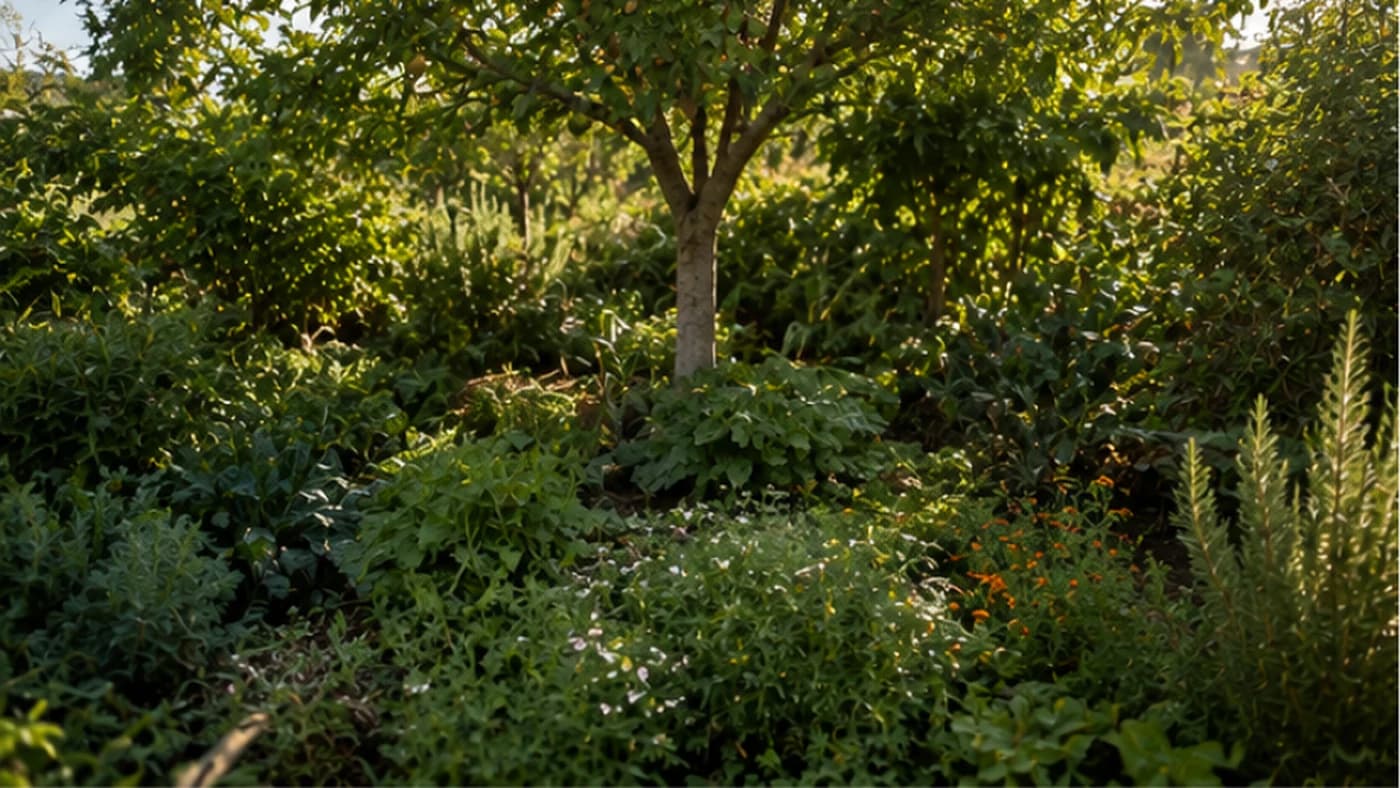
Multi-Layer Food Forest Design: Growing Seven Crops in the Space of One
A natural forest needs no fertiliser or hose, because every layer of it — from tall trees to root crops — fills a different niche. Stacking those same layers in your backyard or farm boundary can multiply what one plot of land produces.
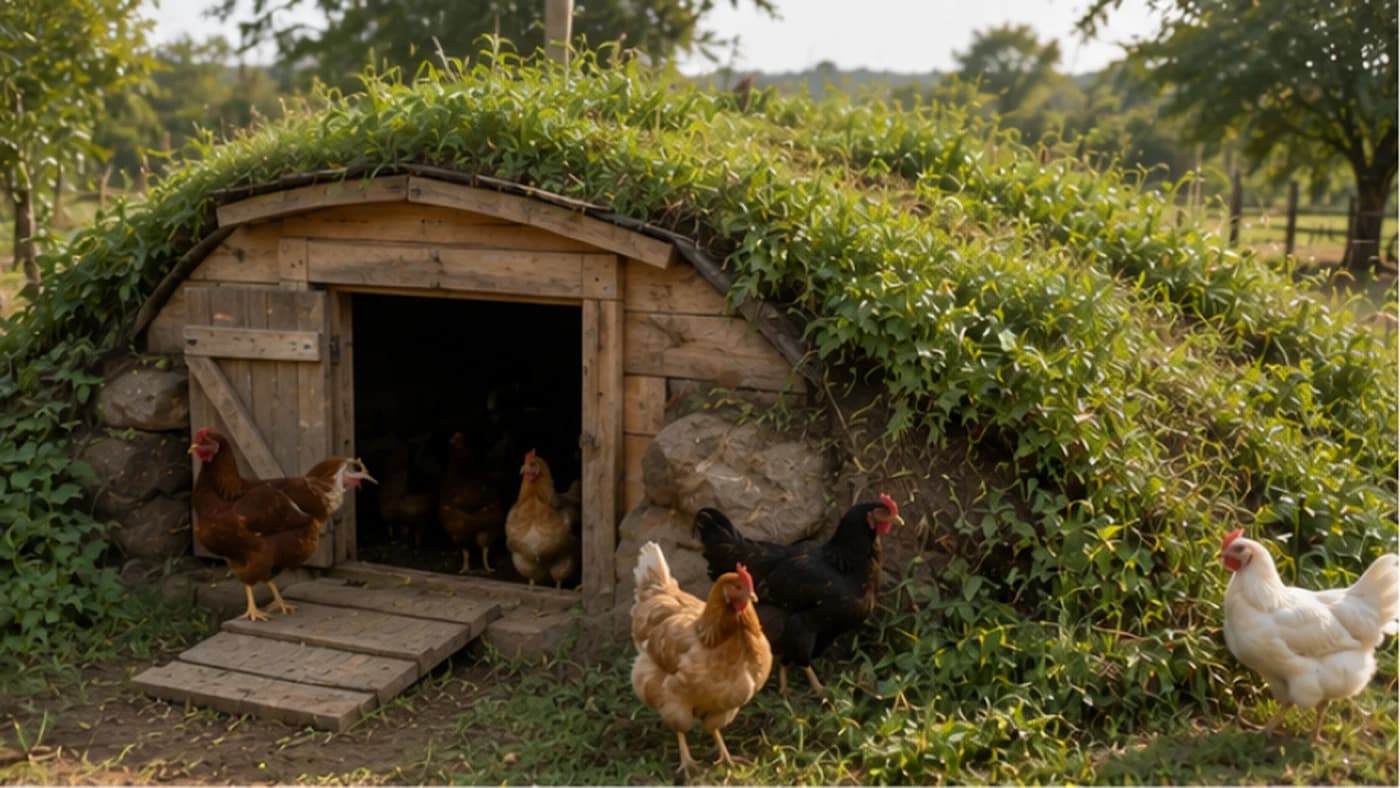
Earth-Sheltered Chicken Coop: Using the Ground to Keep Birds Cool in Summer and Warm in Winter
A coop built partly into the ground barely changes temperature between a 45°C afternoon and a cold winter night. Here's how earth-sheltering works and how to build one for your flock.
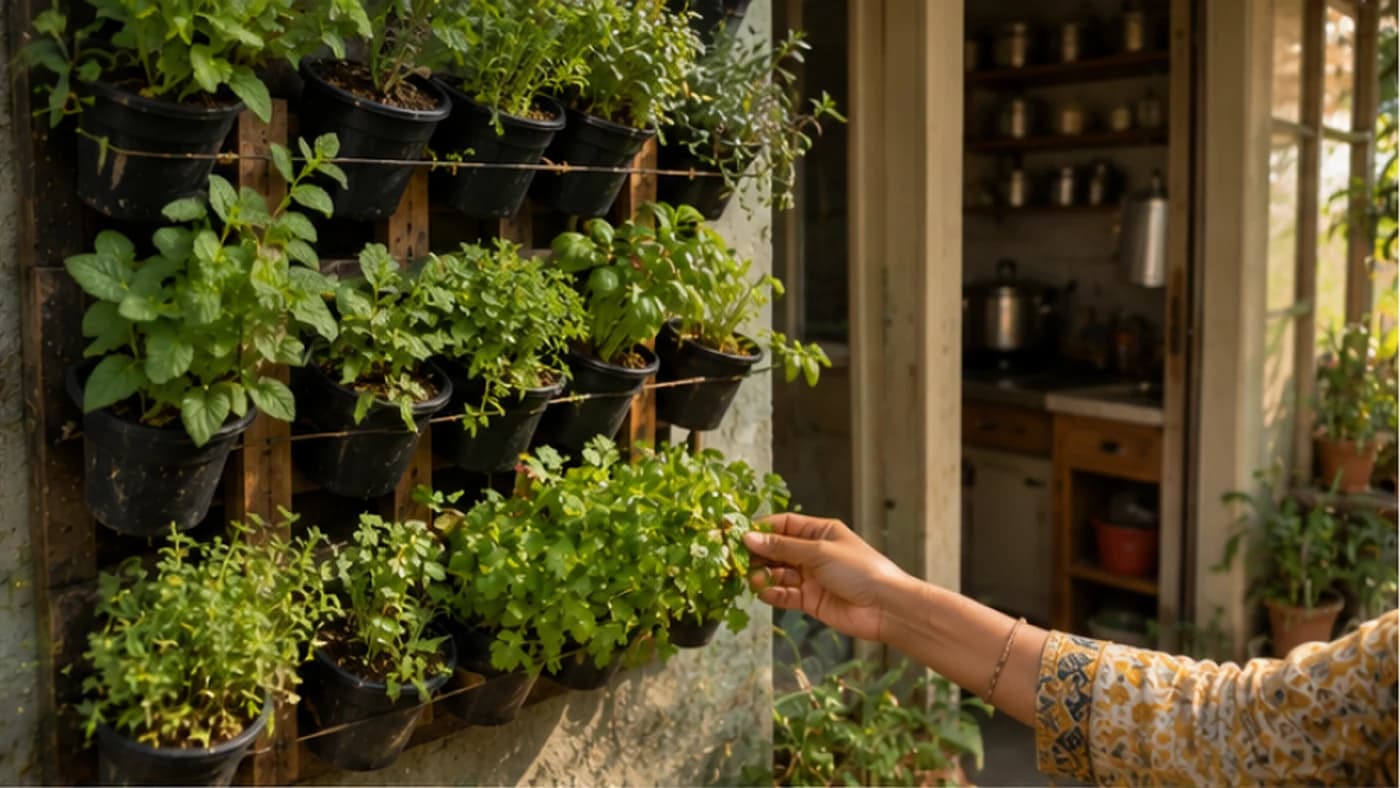
Build a Kitchen Herb Wall: A Living System That Beats Lonely Pots
A row of herbs in separate plastic pots on a windowsill usually struggles and dies within weeks. A connected vertical herb wall — sharing humidity, water, and light — keeps coriander, mint, tulsi, and curry leaf thriving in far less space, with far less daily effort.