

Multi-Layer Food Forest Design: Growing Seven Crops in the Space of One
A natural forest needs no fertiliser or hose, because every layer of it — from tall trees to root crops — fills a different niche. Stacking those same layers in your backyard or farm boundary can multiply what one plot of land produces.
Quick answer
A food forest is not a faster way to grow food — it's a way to grow far more from the same land with far less ongoing input once it's established. Start with one tree and its immediate support plants rather than trying to plant every layer across your whole plot on day one; once that first guild is thriving, expanding it becomes far easier because you already know what works on your soil.
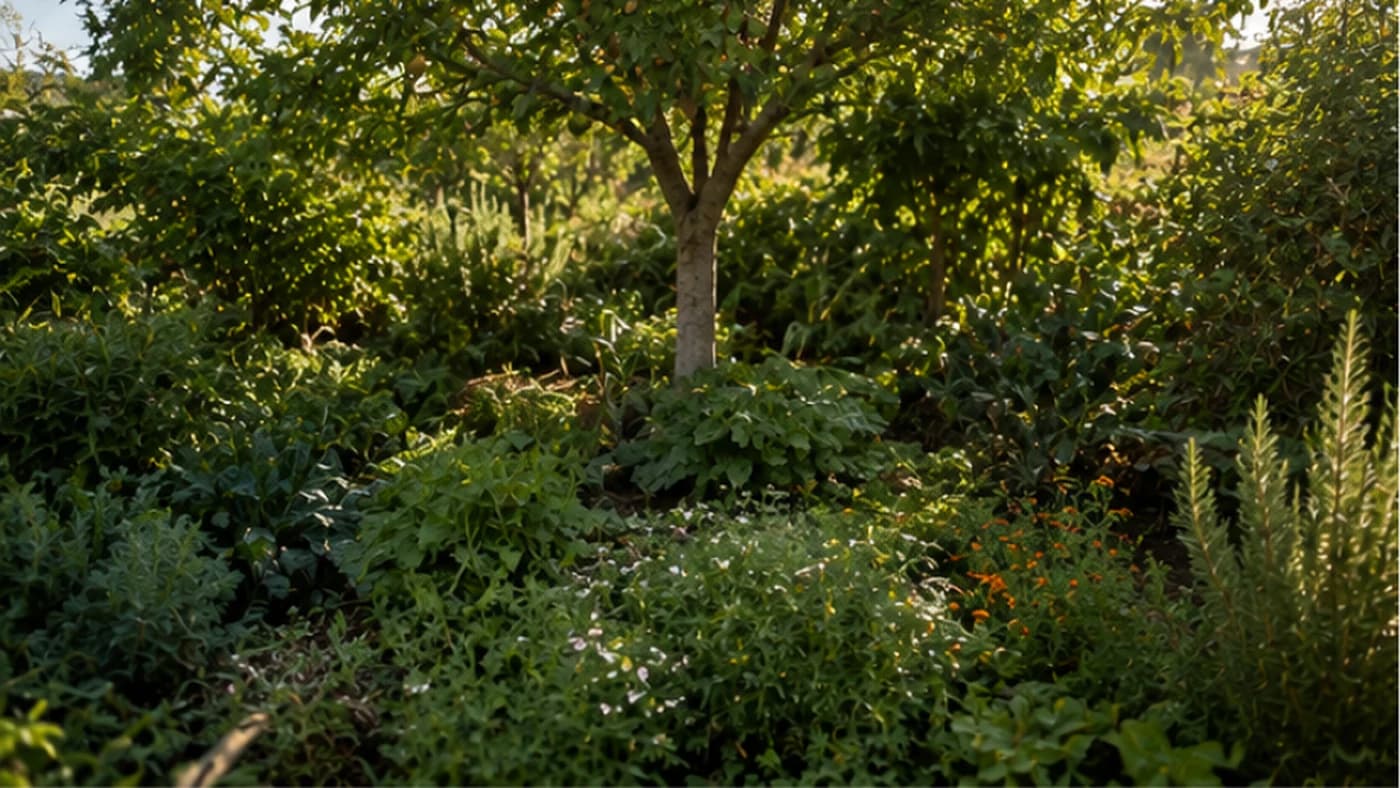
Most farming and gardening still thinks in one layer — a single row of one crop across flat ground. A natural forest is never built that way, yet it grows lush and abundant with no one adding fertiliser or dragging a hose across it, because every available niche is filled: tall trees capture the high sunlight, smaller trees and shrubs use the filtered light beneath them, and groundcover protects the soil at the bottom. A food forest applies this same layering to edible plants, so a single patch of land — even a backyard corner or a farm boundary — can produce fruit, nuts, herbs, vegetables and roots all from the same footprint, at a fraction of the ongoing work a normal garden demands.
The seven layers, and what goes in each one
The canopy is the tallest layer — full-sized fruit or nut trees such as mango, jackfruit, tamarind or a large mature guava, providing overall structure, shade and wind protection. Below it sits the understory: smaller trees that tolerate filtered light and are often the most productive for fruit, such as dwarf mango, papaya, guava, or mulberry, generally growing 3–9 metres tall.
The shrub layer holds woody perennials 1–4.5 metres tall — curry leaf, hibiscus, pomegranate, or berry bushes — often giving the highest yield of fruit per square metre of any layer. The herbaceous layer is non-woody plants that die back seasonally, such as fenugreek, coriander, or comfrey-type dynamic accumulators that mine minerals from deep soil. Groundcover — low, spreading plants like sweet potato vine or creeping thyme — acts as a living mulch that suppresses weeds and holds moisture. The rhizosphere, or root layer, includes turmeric, ginger, garlic and elephant foot yam, which loosen compacted soil while providing a hidden harvest underground. Finally, the vine layer — grapes, passionfruit, or climbing beans — uses the trunks of trees as trellises, producing food without taking any extra ground space.
How to design and plant one, step by step
Start by observing your plot for a full season before digging — note where water pools after rain, where the sun falls at peak summer, and where at least 6 hours of direct light reaches, since most fruit trees need that much sun. Avoid tilling, which destroys the fungal networks fruit trees depend on; instead, sheet-mulch by laying cardboard over the area to smother existing grass, then piling 15–30 cm of organic matter — straw, dry leaves, compost — on top.
Plant the canopy and understory trees first, since each one becomes the centre of a guild — a cluster of supporting plants around it. Pair every fruit tree with at least two nitrogen-fixing plants (such as a legume ground cover) and one dynamic accumulator (a deep-rooted mineral-miner) planted around its base. Fill in the shrub and herbaceous layers next — plant everything together if your budget allows, or start with groundcover if it doesn't, since bare soil invites weeds. As nitrogen-fixing shrubs or mineral-mining herbs grow large, cut them back and leave the cuttings on the ground to decompose — this is essentially growing your own fertiliser in place.
Why layering pays off
The biggest benefit is resilience: a diverse system rarely fails completely, so if one crop has a bad year, another layer is still producing. Stacking plants vertically can produce three to five times more food per square metre than a single-crop row planted across the same ground — the only realistic way to raise output on a small plot without buying more land.
The dense layering and thick mulch also create a sponge effect that keeps soil moist and cool even through dry spells, cutting your watering needs substantially. And a food forest actively confuses pests — aromatic herbs mask the scent that fruit-eating insects use to find trees, while the flowers of the herb layer draw in predatory insects that keep pest numbers down without spraying.
Mistakes that set a food forest back
Overplanting is the most common error — a young nursery tree looks small enough to tempt planting several close together, but you must design for its mature spread, since even a modest fruit tree can spread 6 metres across; planting too close causes shading, poor airflow and fungal disease later.
The first three to five years can look like an overgrown patch of weeds rather than a garden, which puts many people off — adding a defined path, a stone border, or a clear edge signals that the growth is intentional rather than neglected. Leave paths wide enough for a wheelbarrow — at least 1 metre for main paths — or access becomes a permanent headache.
What a food forest can't do
This is a multi-year investment, not a quick win: a vegetable bed gives a harvest in under 60 days, but a food forest typically takes 3–7 years to reach significant yield, so it is the wrong strategy if you don't control the land for that long. Deep, permanent shade from a large neighbouring tree or structure will rule out sun-loving fruit trees, limiting you to shade-tolerant crops instead. And harvesting is spread out rather than concentrated — things ripen at different times through the year, which suits a household that eats as it harvests far better than one hoping to sell a single large lot at once.
How a food forest compares to a traditional orchard
A traditional orchard grows 1–3 species with medium setup cost, needs continual mowing, spraying and fertilising, gives a high yield per plant on that one crop, but has low resilience — one pest or one bad season for that crop hits the whole orchard. A food forest grows 30 or more species, costs more to set up initially because more plants are needed, but needs far less ongoing maintenance once established, gives a lower yield per individual plant but a much higher total yield across all layers combined, and is far more resilient because no single failure wipes out the whole system.
Practical tips and a realistic example
For every fruit tree, plant a nitrogen-fixing shrub nearby — a fast-growing legume works well — to pump nitrogen into the soil as a slow, permanent fertiliser. As canopy trees mature, prune the lower branches so light still reaches the shrub and herb layers below; without this, the lower layers die back into bare, unproductive ground. Use vertical space early — a fence or wall with a grapevine or passionfruit vine trained along it produces real food from zero extra floor space.
As a working example: in a 6m x 6m backyard corner, one semi-dwarf mango or guava as the canopy, two dwarf citrus or papaya as understory, three curry-leaf or pomegranate shrubs plus one nitrogen-fixing legume shrub, a ring of coriander and fenugreek with a comfrey-type accumulator around the main tree's drip line, a thick carpet of sweet potato vine as groundcover, turmeric and garlic tucked along the boundary as the root layer, and a passionfruit vine climbing a boundary fence as the vertical layer. That single 36 m² patch produces fruit, greens, spices and roots that would otherwise need several separate garden beds.
Terms explained in this guide
Frequently asked
How much space do I need to start a food forest?+
You can start with a single tree and its guild in a 3m x 3m corner. The seven-layer model scales down easily — you don't need an orchard's worth of land to benefit from it.
How long before a food forest produces a real harvest?+
Fast layers like groundcover and herbs produce within months. Fruit trees typically take 3–7 years to reach significant yield, so plan for this as a multi-year project.
Do I need to till the soil first?+
No — tilling destroys the fungal networks fruit trees rely on. Sheet mulching (cardboard plus 15–30 cm of organic matter on top) is the recommended way to prepare a new area.
What is a 'guild' in this context?+
A guild is the cluster of supporting plants — a nitrogen fixer, a mineral-mining herb, pest-repelling companions — planted around one central fruit or nut tree so it needs less feeding, weeding and spraying from you.
Can this work if part of my land is shaded?+
Sun-loving fruit trees need at least 6 hours of direct light, so deeply shaded areas won't suit them — but you can still use those spots for shade-tolerant herbs, roots, and greens as part of the same system.
Where to go next
Want this as daily tasks for your farm?
Khetiyaar turns guides like this into a day-by-day plan — in your language, free to start.

Related guides
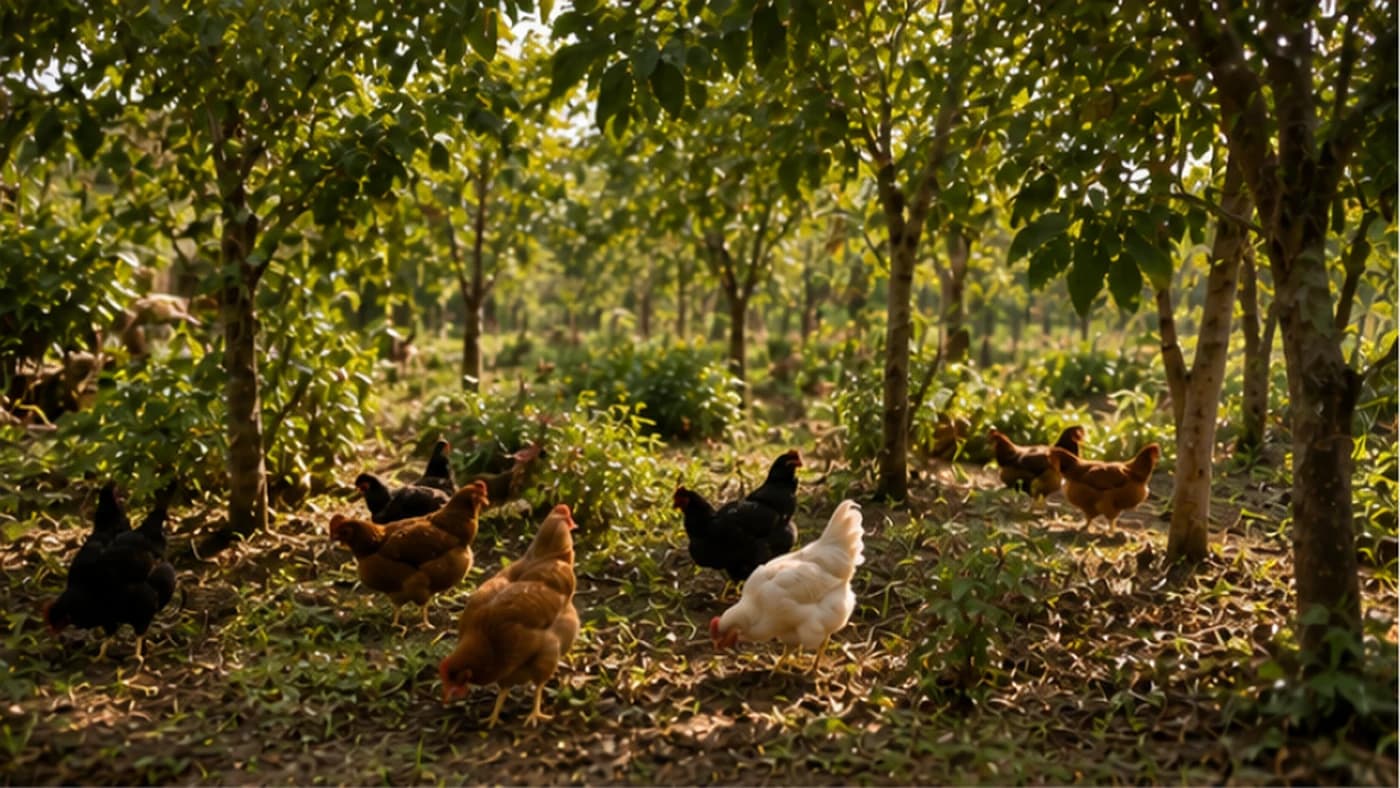
Chicken Forest Design: Cut Your Feed Bill by Letting Birds Forage a Food Forest
A bare chicken run is a nutrient waste site you pay to feed. A layered food forest built around your flock turns droppings into fertiliser and fallen leaves into free protein — cutting grain costs by 30-50%.
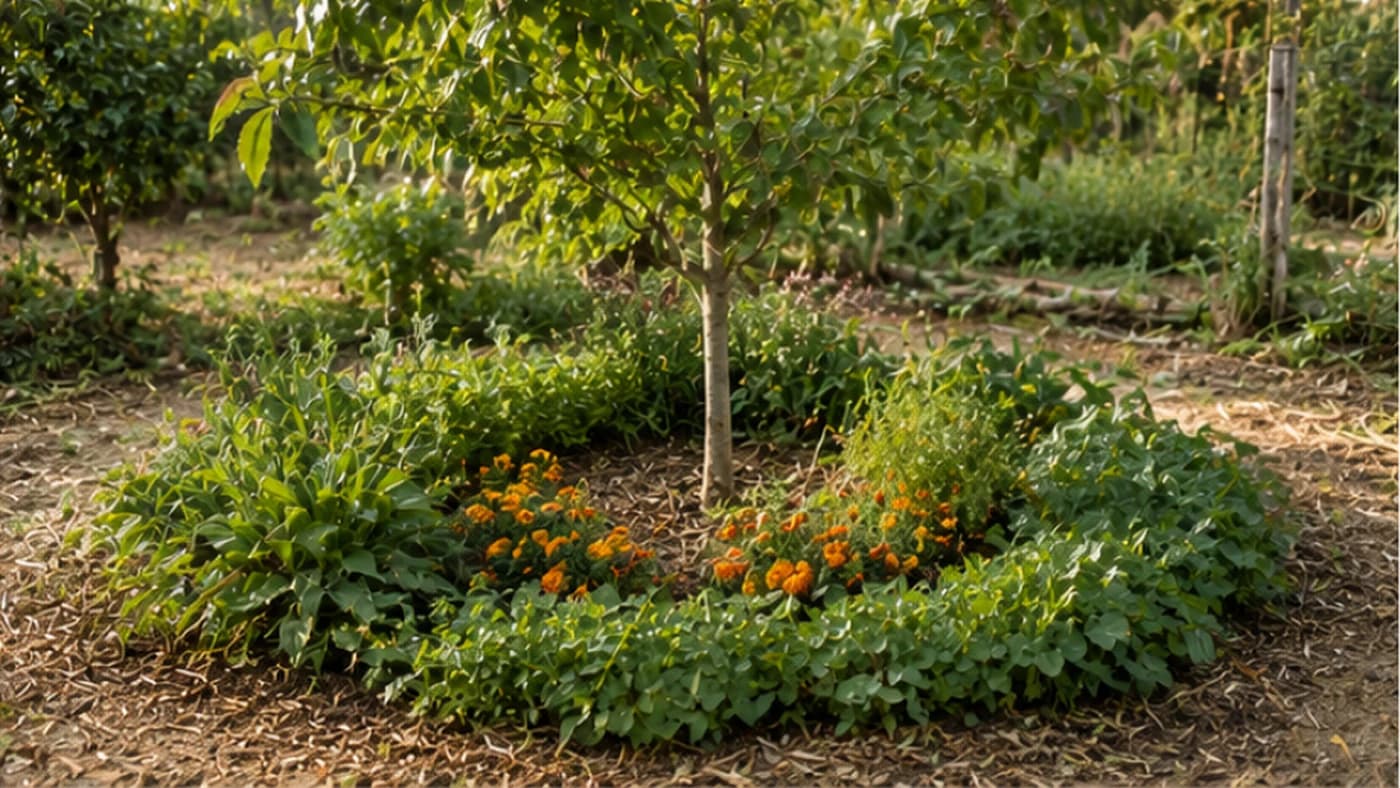
Fruit Tree Guild Design for Beginners: Give Your Tree a Support Crew
A lone fruit tree surrounded by bare soil or lawn spends its whole life fighting for water and nutrients. Surround it instead with a small team of companion plants — each with its own job — and the tree largely takes care of itself.
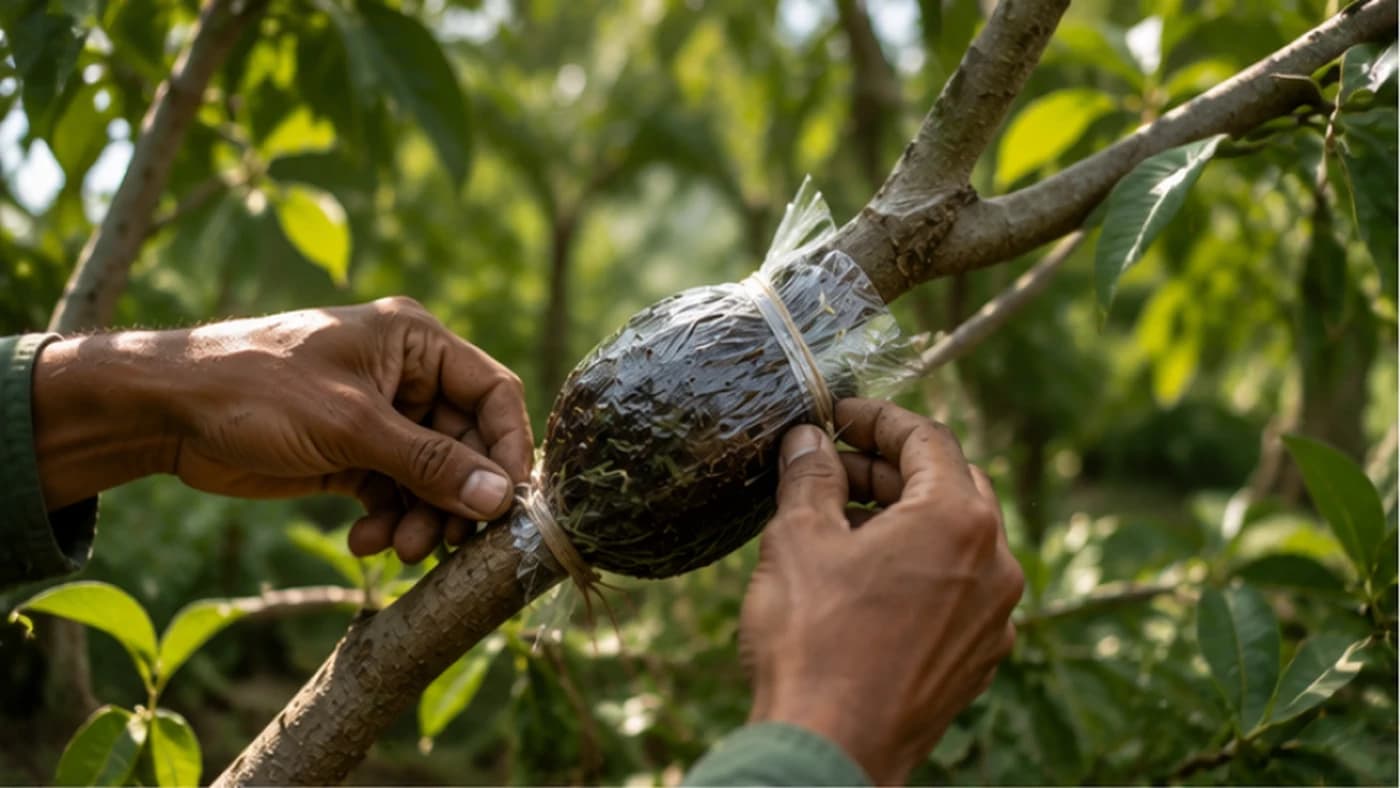
How to Multiply Fruit Trees for Free: Cuttings, Gootee and Grafting
One healthy branch and a bit of soil is often all it takes to turn a single fig, pomegranate or guava tree into an entire orchard — no nursery bill required. Here's how cuttings, air-layering (gootee) and grafting actually work.