

Indigenous Microorganisms (IMO): Turn Your Own Land Into Living Soil
Store-bought soil is often biologically dead and needs constant chemical feeding. Indigenous Microorganisms — the same idea behind Korean Natural Farming and India's own Zero Budget Natural Farming — let you capture your local forest's microbes and turn any field or garden bed into a self-sustaining biological engine.
Quick answer
Reclaiming the biology in your soil is one of the most powerful, lowest-cost moves a farmer or gardener can make — a shift from constantly buying fertility to growing it on your own land. It takes patience to work at biology's speed rather than chemistry's, but the payoff — stronger roots, steadier yields, and near-zero dependence on bagged inputs — is exactly the promise that has made ZBNF-style natural farming spread so fast across India. Start with a small batch, watch closely, and don't worry about a failed first attempt: the forest has been perfecting this process for millions of years, and your land is ready to wake up.
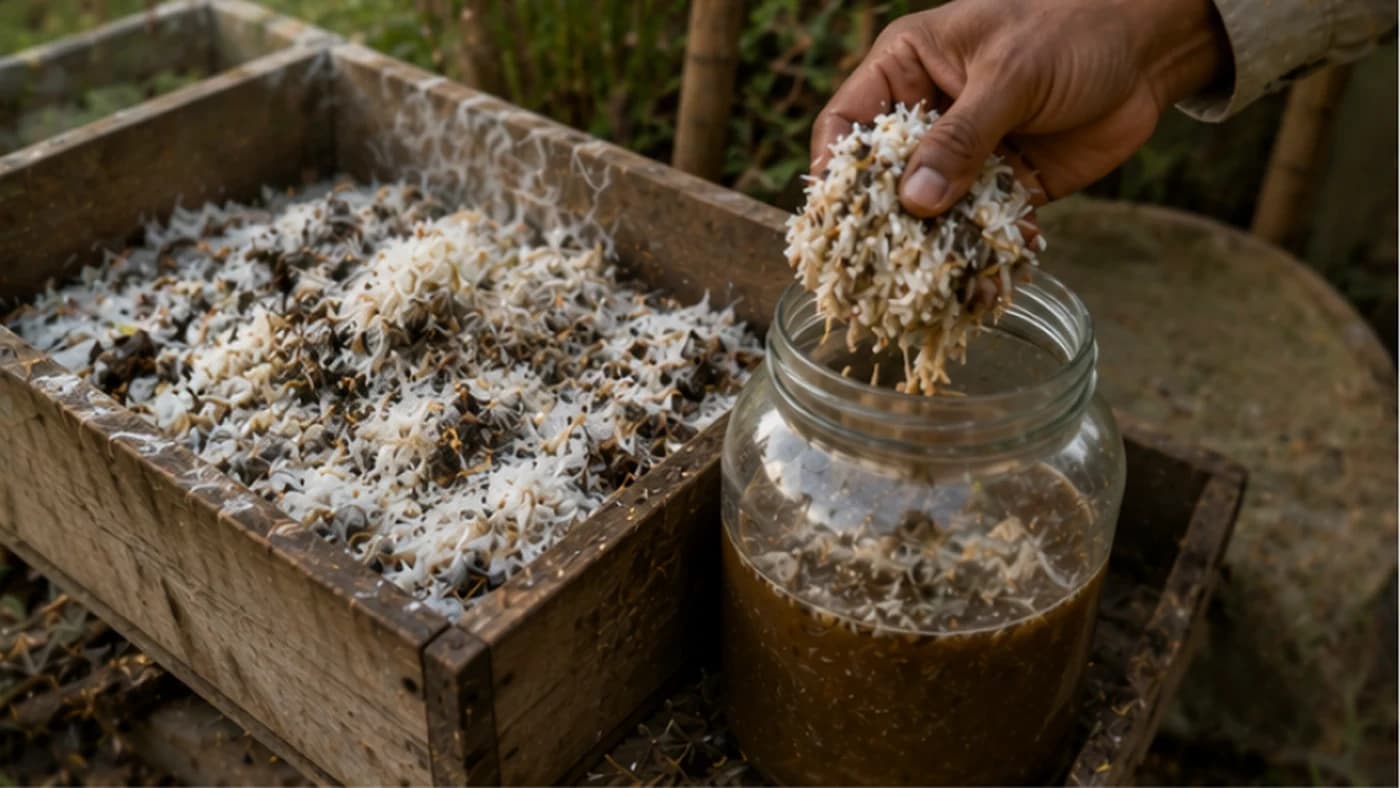
Ask whether your field is running on a chemical drip or on its own biology, and most farms answer honestly: chemical drip. Store-bought fertiliser and treated potting soil are largely biologically dead — every season needs a fresh dose to force growth. Indigenous Microorganisms (IMOs) are the opposite approach: instead of buying life in a bottle, you capture the local fungi, bacteria and yeasts that have spent generations adapting to your own soil, rainfall and native trees, and multiply them until they can rebuild your land from within. This is the backbone of Korean Natural Farming (KNF), and the underlying idea is already familiar to many Indian farmers through the Zero Budget Natural Farming (ZBNF) movement's jeevamrut and beejamrut preparations — different recipe, same principle: your own land already has the microbial workforce it needs, if you know how to collect and feed it.
What Indigenous Microorganisms actually are
IMOs are the local microbial community native to your specific patch of land — not a lab-grown strain from a packet, but the fungi, bacteria, yeasts and actinomycetes that have survived and adapted to your region's climate and native vegetation for generations. In a healthy ecosystem, these organisms are the primary decomposers: they break down organic matter into forms roots can actually absorb. Without them, soil is just inert mineral particles waiting for a chemical push. With them, soil becomes a living structure that builds its own fertility and resists disease on its own.
Korean Natural Farming's method is to trap these microbes at their most vigorous — usually from an undisturbed forest floor — and multiply them in stages until there's enough to reintroduce into cultivated land. It's the same logic behind jeevamrut and beejamrut in Zero Budget Natural Farming: capture living biology from a healthy source (in ZBNF's case, desi cow dung and urine) and use it to seed fertility back into the field, rather than buying it as a synthetic product.
How to collect and multiply IMOs, step by step
IMO 1 — Collection: Cook plain white or brown rice until just firm (not mushy). Once cooled, pack it two-thirds full into a wooden box so air can still move, cover the top with a breathable cotton cloth or paper tied down, and bury the box in the leaf litter of an undisturbed, shaded forest patch where the soil feels cool and moist — a grove of bamboo is ideal, since bamboo roots release sugars that attract especially vigorous microbes. Cover with more leaf litter to protect from sun and rain, and leave for 3–7 days. Success looks like a thick white, fuzzy mycelium mat over the rice. If you see black or slimy growth instead, conditions were too wet — discard and start again.
IMO 2 — Preservation: Weigh your colonised rice and mix it with an equal weight of raw brown sugar or jaggery. The sugar pulls water out of the microbes through osmosis, putting them into dormant storage. Pack this into a glass jar with a breathable lid and keep it in a cool, dark place — it will hold for months until you're ready to build soil with it.
IMO 3 — Multiplication: Mix your IMO 2 syrup with a carbon source such as wheat bran or rice bran, adding water until the mix holds its shape when squeezed but doesn't drip (roughly 65% moisture). Pile it up, cover with straw, and monitor: as the microbes wake and feed on the bran, the pile heats up. Turn it to keep the temperature between about 43°C and 54°C (110–130°F) — if it crosses roughly 60°C (140°F) you'll kill the fungi you worked to collect and be left with only heat-tolerant bacteria. After 5–7 days the pile should be covered in white fungal growth and smell like a clean forest floor.
IMO 4 — Final adaptation: Mix your finished IMO 3 with an equal amount of your own garden or field soil. This introduces the forest microbes to your land's specific minerals and conditions. After another week of fermentation, you have a concentrated, locally-adapted starter ready to apply.
What living soil actually does for your crop
IMOs solubilise nutrients like phosphorus and potassium that are otherwise locked in the soil, making them available to roots without synthetic fertiliser. A diverse microbial population also crowds out disease-causing fungi like fusarium and pythium simply by occupying every available niche. Fungal threads glue soil particles into aggregates, improving structure, water infiltration and air movement, while mycorrhizal fungi extend a plant's effective root reach, pulling water from deeper in the soil profile — real drought resilience. Once you can collect your own IMOs, your dependence on bagged amendments and bottled nutrients drops sharply.
Common mistakes and how to avoid them
Moisture is the single biggest cause of failure — rice that's too wet in IMO 1 turns into a stinking grey mess instead of white mycelium, and an over-wet IMO 3 pile ferments badly and can harbour pathogens. Aim for a damp-sponge feel, never soaked. Watch temperature closely during IMO 3 — a compost thermometer is worth owning, since overheating kills the fungi you're trying to build. And always collect from a clean, undisturbed patch — a forest edge near a chemically-treated lawn or busy roadside can introduce unwanted contaminants into your culture.
Where this approach has real limits
This is not an instant fix. In heavily urbanised areas without nearby undisturbed forest, the microbial diversity you can capture may be lower, and it can take several seasons of steady application before your soil's biology fully wakes up. In very dry or very cold climates, the window for collecting and fermenting IMOs shrinks — time your collection to the shoulder seasons, when soil biology is naturally most active. And the method is genuinely labour-intensive: turning piles and checking temperature takes real observation time, more than simply applying a bagged product.
IMO-built soil versus bagged peat or potting mix
Bagged peat-based potting soil is largely sterile with very low biological activity, has close to no usable nutrient content on its own, tends to be naturally acidic, and is slow to renew since it's mined from ancient bogs — a resource many gardening products still rely on. Soil rebuilt with IMOs, by contrast, carries billions of diverse, active microbes, a genuinely useful supply of trace minerals and cycling nutrients, a pH already balanced for your local conditions, and — because you made it from your own land — it renews itself season after season.
Practical tips for a stronger culture
Collect near bamboo if you have access to a grove — the sugar-rich root zone attracts especially vigorous microbes. Trust your nose: a healthy IMO collection smells like sweet earth or fresh mushrooms; if it smells like vinegar, rotten eggs or ammonia, discard it and check your moisture. Time your collection for when local wildflowers are blooming — that's when forest soil biology is most active, typically around the start or end of the monsoon depending on your region. And once you apply finished IMO 4 to a bed, always cover it with mulch or straw — bare soil exposes the microbes to UV and starves them of the steady organic matter they need to keep working.
Tuning fungal versus bacterial dominance
Different crops prefer different microbial balances. Tree crops, perennials and orchards generally do best with fungal-dominant soil — collect your IMOs from deep, old-growth-style forest patches and use more woody material in your multiplication piles. Annual vegetables and grains tend to prefer a more bacteria-dominant soil — collect from healthy grassland edges and use greener material instead. Once you understand this, you can build slightly different IMO batches for your orchard versus your vegetable beds.
A real scenario: reviving a dead, compacted bed
Take a raised bed or plot that's been cropped hard for five years — hard, dusty, and producing poorly without heavy fertiliser. Collect and carry your IMOs through to IMO 4, mixed with some of that same tired soil, and apply a roughly 2.5cm layer over the bed. Instead of tilling it in, cover with a thick layer of good compost and then straw or dry leaf mulch. Within weeks the microbes migrate downward, breaking up compaction and restarting the nutrient cycle. By the next season, the soil is visibly looser, needs noticeably less water, and requires far less external fertiliser — the biological engine has restarted.
Terms explained in this guide
Frequently asked
What is an Indigenous Microorganism (IMO)?+
It's the local, wild population of fungi, bacteria, yeasts and actinomycetes native to your specific area — captured from an undisturbed forest patch and multiplied in stages until there's enough to apply to your own field or garden.
How is this different from Zero Budget Natural Farming (ZBNF)?+
The underlying idea is the same — build fertility from living local biology instead of buying it. ZBNF's jeevamrut and beejamrut capture that biology from desi cow dung and urine; Korean Natural Farming's IMO method captures it from forest leaf litter using rice as a lure. Both aim at the same living-soil outcome.
How long does it take to build a usable IMO batch?+
Roughly three to four weeks in total across all four stages — a few days each for collection, preservation, multiplication and final adaptation to your own soil — though timing varies with temperature and season.
What's the biggest mistake beginners make?+
Getting the moisture wrong. Rice or piles that are too wet turn anaerobic and smelly instead of developing the white fungal mat you want — aim for a damp-sponge feel, never soaked.
Is this suitable for a small kitchen garden, not just a farm?+
Yes. The scale is easily adjusted — a single wooden box of rice and a small multiplication pile can produce enough IMO 4 for a few raised beds or a kitchen garden.
Where to go next
Want this as daily tasks for your farm?
Khetiyaar turns guides like this into a day-by-day plan — in your language, free to start.

Related guides
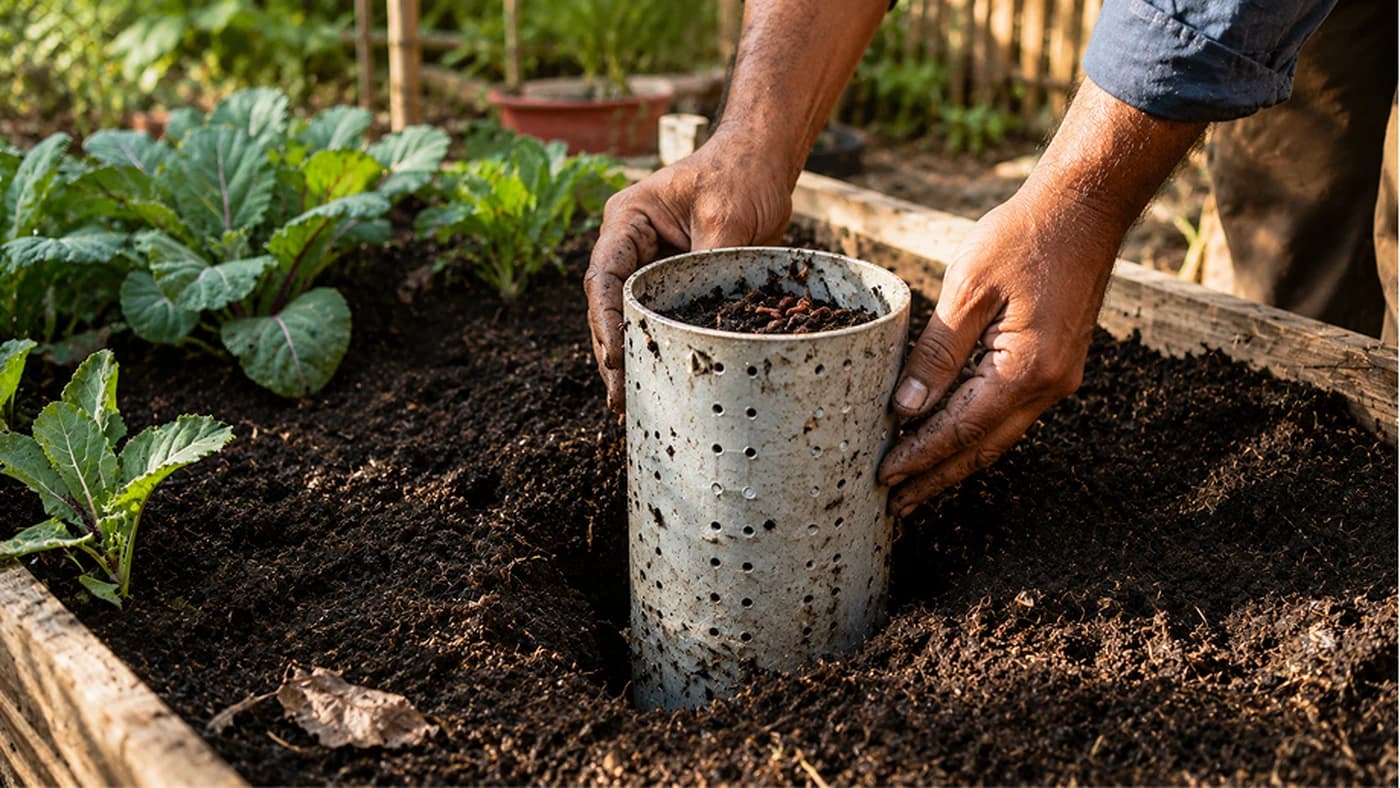
How to Build a Garden Worm Tower for Free, In-Bed Composting
Stop hauling kitchen scraps to a distant bin and hauling compost back months later. A buried worm tower lets worms process waste right where your plants are growing.
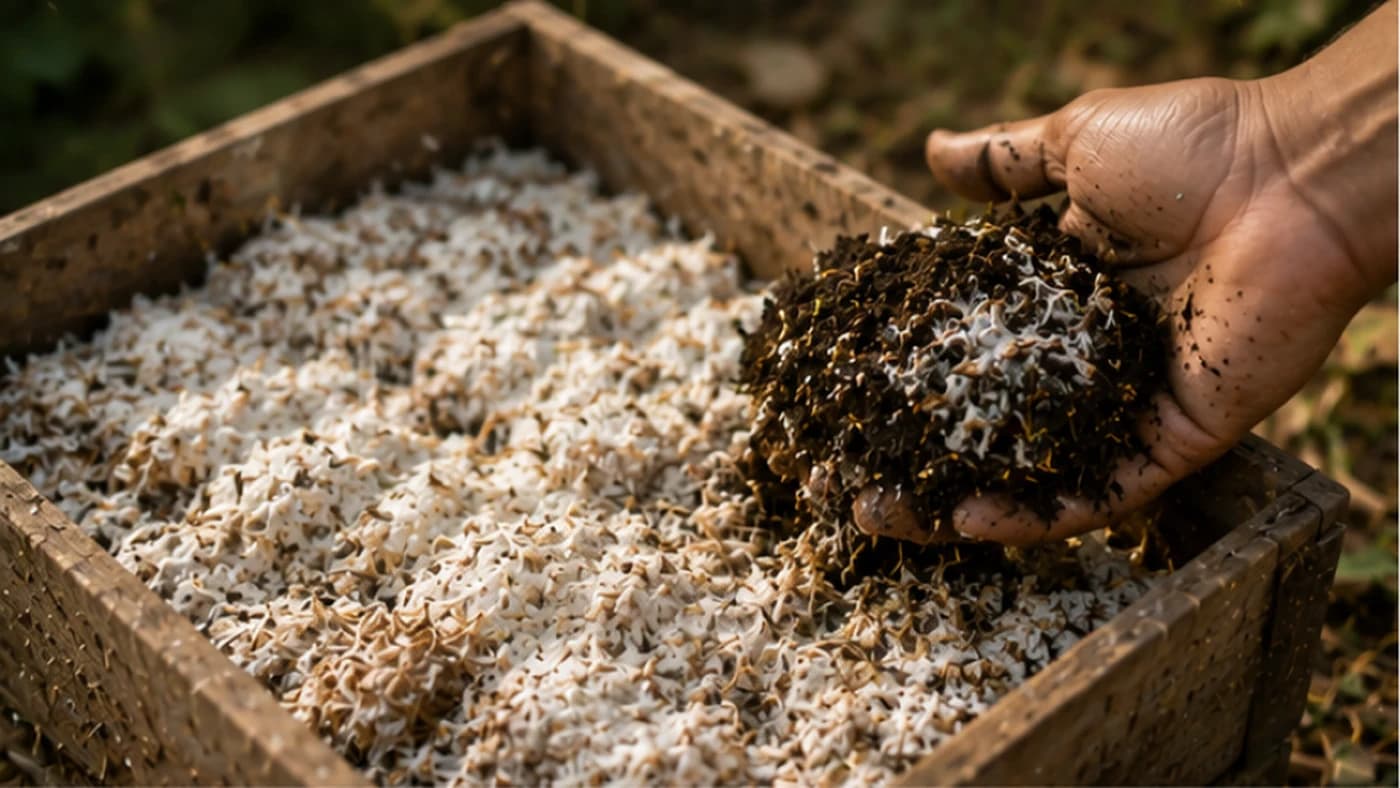
Native Microbial Soil Inoculation: Growing Your Own Living Fertiliser From Forest Soil
A healthy forest has never seen a bag of fertiliser, yet it out-produces most farms. Learn how to capture wild, local microbes from a nearby forest and turn them into a near-free biological fertiliser for your field or garden.
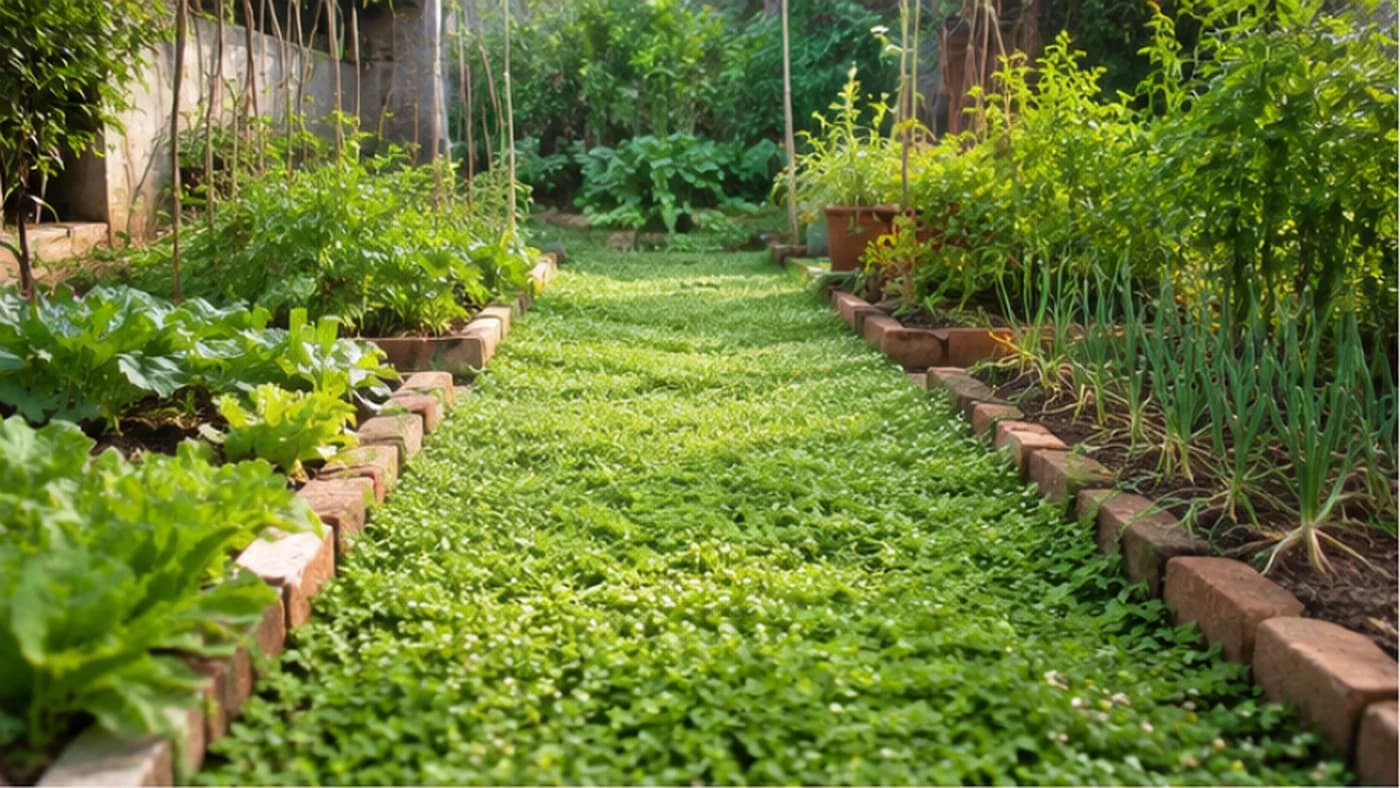
Living Garden Paths: Groundcover Walkways That Feed Your Beds Instead of Baking Them
Bare dirt or concrete paths turn into heat islands that bake nearby roots. A living groundcover path — clover, dwarf peanut, or creeping herbs — stays far cooler, feeds the soil with nitrogen, and heals itself when you walk on it.