

Free High-Protein Duck Feed: Turn Garden Pests Into Eggs
Slugs, snails and beetles are richer in protein than soyabean meal. Learn how duck keepers turn garden pests into free, high-quality feed — and where this trick runs into its limits.
Quick answer
Garden pests are not waste to be poisoned — they are free, high-protein duck feed that often beats bought soya on paper. A few damp boards, a rotating run, and basic hygiene against parasites can meaningfully cut your feed bill while keeping your garden cleaner. It won't replace grain year-round, especially in winter or dry spells, but as a supplement it turns a nuisance into one of the best-value inputs on the farm.
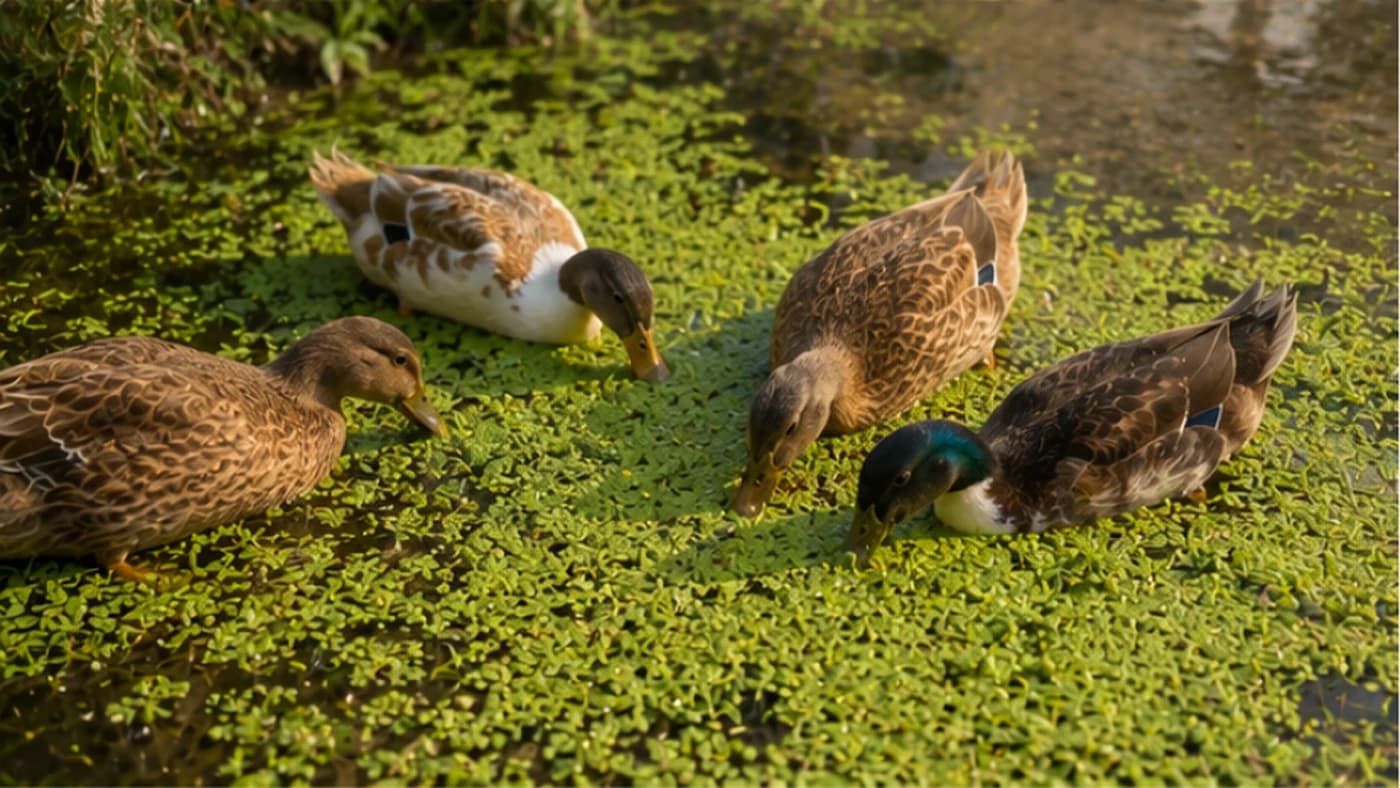
Every rupee spent on duck feed is money that could stay in your pocket, and much of what your ducks need is already crawling through your garden mulch. Slugs, snails, beetles and grubs are a concentrated, high-protein food that duck keepers across the world have relied on for generations before bagged feed existed. A duck's natural diet in the wild is roughly 15-20% protein, most of it foraged, and their broad, sensitive bills are built to root through damp soil for exactly this kind of food. Once you start treating garden pests as feed instead of a nuisance to poison, the whole economics of keeping ducks changes.
Why garden pests beat bought feed
Dried snail meat can run 53-83% crude protein, compared with 44-48% for soyabean meal — the base of most commercial poultry feed. Soya is a plant protein and usually needs synthetic amino acids added to meet a bird's needs for lysine and methionine, while wild invertebrates come with these amino acids built in, along with bioavailable calcium and magnesium. In side-by-side nutrition terms: lysine runs about 4.2-9.0% in snail meal against 2.8-3.2% in soyabean meal, and calcium runs 3.5-6.0% against just 0.3-0.5%. Ducks fed fresh invertebrates regularly show better egg production, better feed conversion, and deeper, richer yolk colour from the natural carotenoids in their diet.
How to harvest the harvest
There are two main approaches: letting the ducks forage directly, and active trapping for areas where ducks might trample young seedlings. The damp board method is the simplest — lay scrap plywood, old roofing sheets or damp cardboard between garden rows. Slugs and snails gather underneath during the heat of the day, and every morning you flip the board to find dozens waiting, either for a supervised duck feeding or to scrape into a bucket yourself.
A rotating duck run (a bottomless, portable coop moved daily) clears large areas of beetles and grasshoppers efficiently, and works especially well in late autumn or early spring to clean up overwintering pests before sowing. For nocturnal pests, a torch and a jar after dark lets you hand-pick the worst offenders, or set a shallow beer trap (or a cheaper mix of water, sugar and yeast) to lure slugs from a wide area overnight.
The real cost saving
Feed can account for up to 70% of the total cost of raising poultry, so every gram of foraged protein directly cuts your grain bill. Beyond cost, this creates a closed loop on the farm: pests eat weeds and a few sacrificial plants, ducks eat the pests, and duck manure fertilises the beds — with no synthetic pesticide needed that would otherwise harm the same soil microbes a healthy garden depends on.
The health risks you must manage
Slugs, snails and earthworms can carry gapeworm (Syngamus trachea), a parasitic roundworm that lodges in a duck's windpipe and causes gaping and stretched-neck breathing. Keep ducklings away from heavy slug areas until they are fully feathered, and deworm periodically as a precaution.
Hard exoskeletons from beetles can cause crop impaction if birds don't have enough grit to grind them down, so always keep a bowl of insoluble grit available. And never let ducks forage in a garden that has been sprayed with chemicals — even 'organic' iron-phosphate slug baits can harm a duck in quantity, so stop all chemical sprays once you switch to duck-based pest control.
Where this trick runs out
Foraging is seasonal. In cold winters the ground freezes and insects go dormant, so your ducks fall back almost entirely on grain. In a dry spell, slug and snail populations — which need moisture to survive — crash, so watch your pest levels and top up the ration rather than letting production drop.
A single duck can eat hundreds of slugs and beetles a week, so a small urban plot may run out of pests within days. If your space is limited, cultured mealworms or black soldier fly larvae are a good year-round supplement instead of relying on the garden alone.
Practical tips for success
Always keep water near the foraging area, not just at the coop — ducks need water to swallow and rinse sticky slugs off their bills. For a bad infestation, hand-collect pests at night into a bucket of water and tip the mix out for the ducks in the morning, instead of letting them roam the beds and trample seedlings. Train your flock to a whistle or call so they associate you with a feeding, and leave one corner of the garden under thick, damp straw as a deliberate 'slug nursery' you harvest regularly, rather than fighting slugs across the whole plot.
Scaling it up
Experienced keepers manage pest life cycles rather than just collecting what they find — leaving part of the property in tall grass or brush as an insect sanctuary, then rotating ducks through it one week in four so populations can recover between visits. Snail and slug numbers usually peak in early spring and late autumn, so drying or freezing surplus catch (frozen beetles keep well for months) gives you a protein reserve for leaner months.
This same principle already works well in Indian duck-rearing systems — in states like Kerala, West Bengal, Assam and Tamil Nadu, ducks are traditionally run through paddy fields and fish ponds after harvest, picking up snails, insects and leftover grain while manuring the field, almost exactly the same loop described here.
Frequently asked
Is it safe to feed ducks slugs and snails from the garden?+
Generally yes, but avoid pests from any garden treated with chemical sprays or baits, keep young ducklings away from heavy slug areas until fully feathered, and deworm periodically since slugs and earthworms can carry gapeworm.
How much of a duck's diet can garden pests replace?+
It varies by season and how much pest biomass your land produces — some setups get close to 40% of daily protein from foraged pests during peak season, but grain is still needed, especially in winter.
What is the damp board method?+
Laying scrap plywood, roofing sheets or damp cardboard between garden rows gives slugs and snails a cool daytime refuge; flipping the boards each morning reveals a fresh, easy harvest.
Do ducks need grit if they eat a lot of beetles?+
Yes — hard beetle exoskeletons are difficult to break down, and without insoluble grit available at all times, birds risk crop impaction.
Does this work with Indian duck breeds like Indian Runners?+
Yes, Indian Runner ducks are especially strong, efficient foragers and are widely used in exactly this kind of integrated pest-control and feed system, including in traditional paddy-field duck rearing across eastern and southern India.
Where to go next
- AI farming chatbotAsk any farming question in Gujarati, Hindi or English and get an answer in seconds.
- Kheti app for Indian farmersCrop plans, disease diagnosis, weather and mandi rates in one app.
- Agri Bazar marketplaceBuy and sell animals, crops, equipment and dairy near you — and see what buyers want today.
Want this as daily tasks for your farm?
Khetiyaar turns guides like this into a day-by-day plan — in your language, free to start.

Related guides
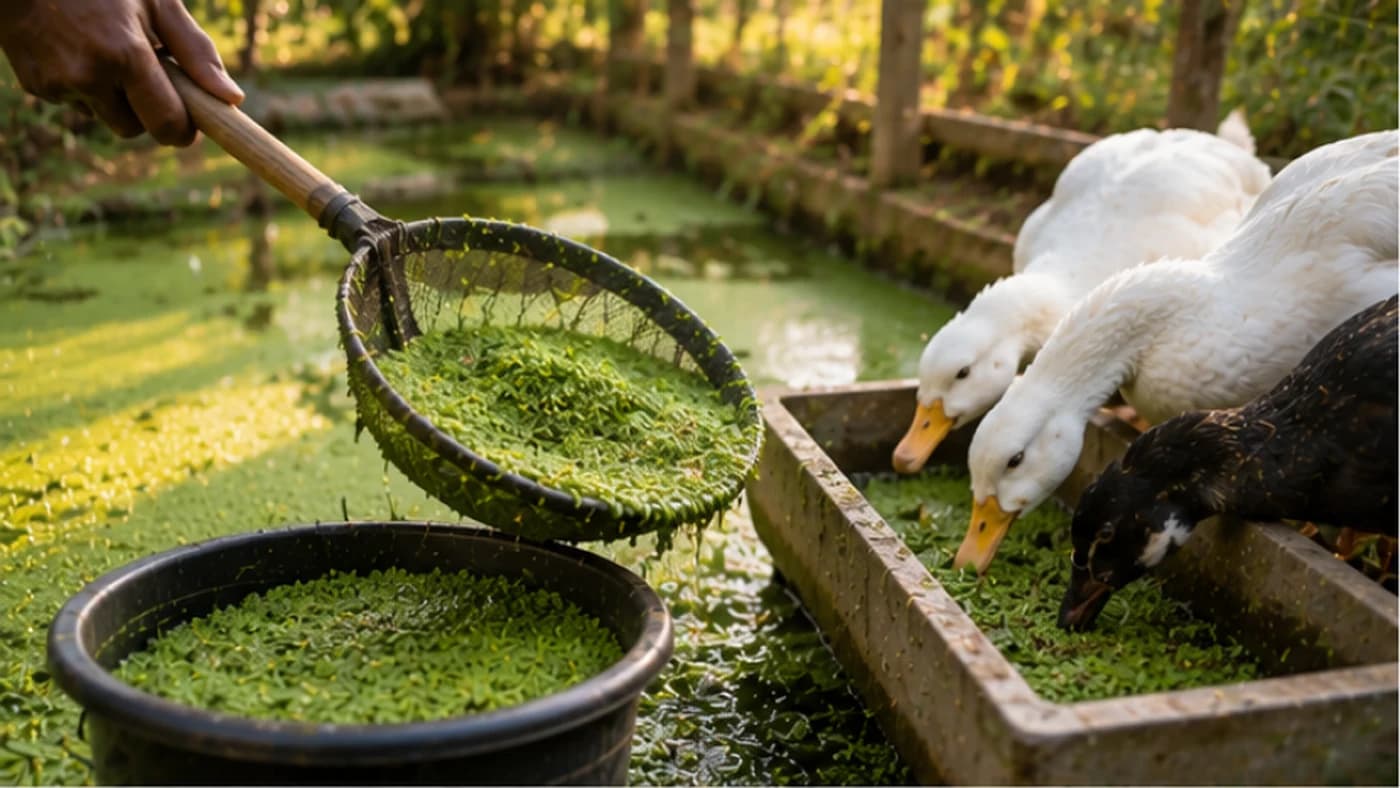
Duckweed as Livestock and Poultry Feed: Free Protein Growing on Your Pond
The green mat covering your farm pond isn't a nuisance — it's up to 40% protein, doubles its own weight in a couple of days, and can replace a real share of your soybean or feed bill for ducks, chickens, fish and even goats.
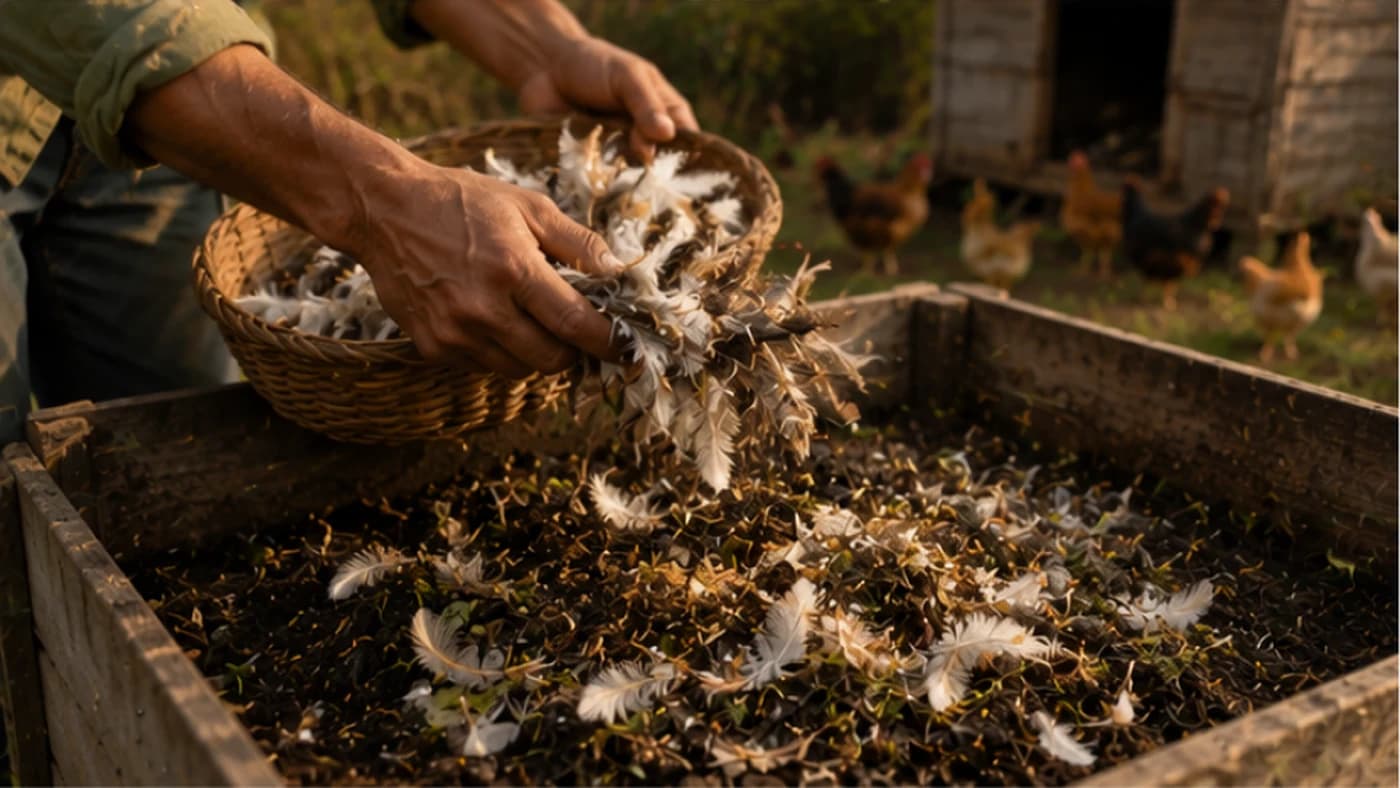
Turn Poultry Feathers into High-Nitrogen Liquid Fertiliser (For Free)
Feathers are nearly pure nitrogen, but they take years to break down in a normal compost heap. Ferment them instead, and in a matter of weeks you get a high-nitrogen liquid fertiliser stronger than most store-bought organic feeds.
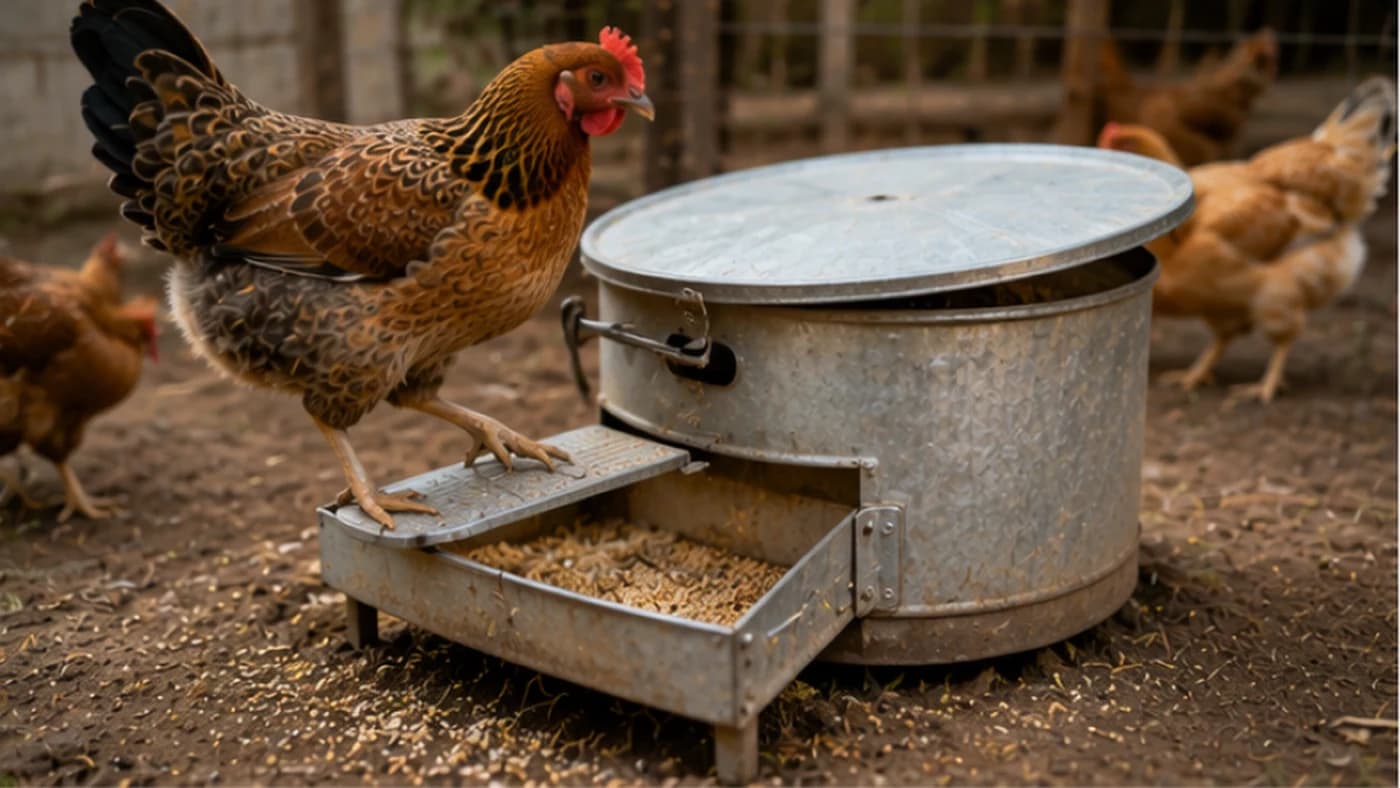
How to Stop Poultry Feed Waste (and Cut Your Feed Bill by 20-40%)
An open feeder loses feed to billing-out, rats and rain. A treadle feeder that only opens under a bird's weight can cut waste by 20-40% — here's how to set one up without starving your flock during training.