

Fruit Tree Guild Design for Beginners: Give Your Tree a Support Crew
A lone fruit tree surrounded by bare soil or lawn spends its whole life fighting for water and nutrients. Surround it instead with a small team of companion plants — each with its own job — and the tree largely takes care of itself.
Quick answer
A fruit tree guild is a small, one-time design decision that pays off every season after: instead of you supplying every input the tree needs, a handful of well-chosen companion plants do the fertilising, pest control and soil-building for you. Start with just one tree and three or four companions, watch how they interact over a season, and use what you learn before expanding to the rest of your plot.
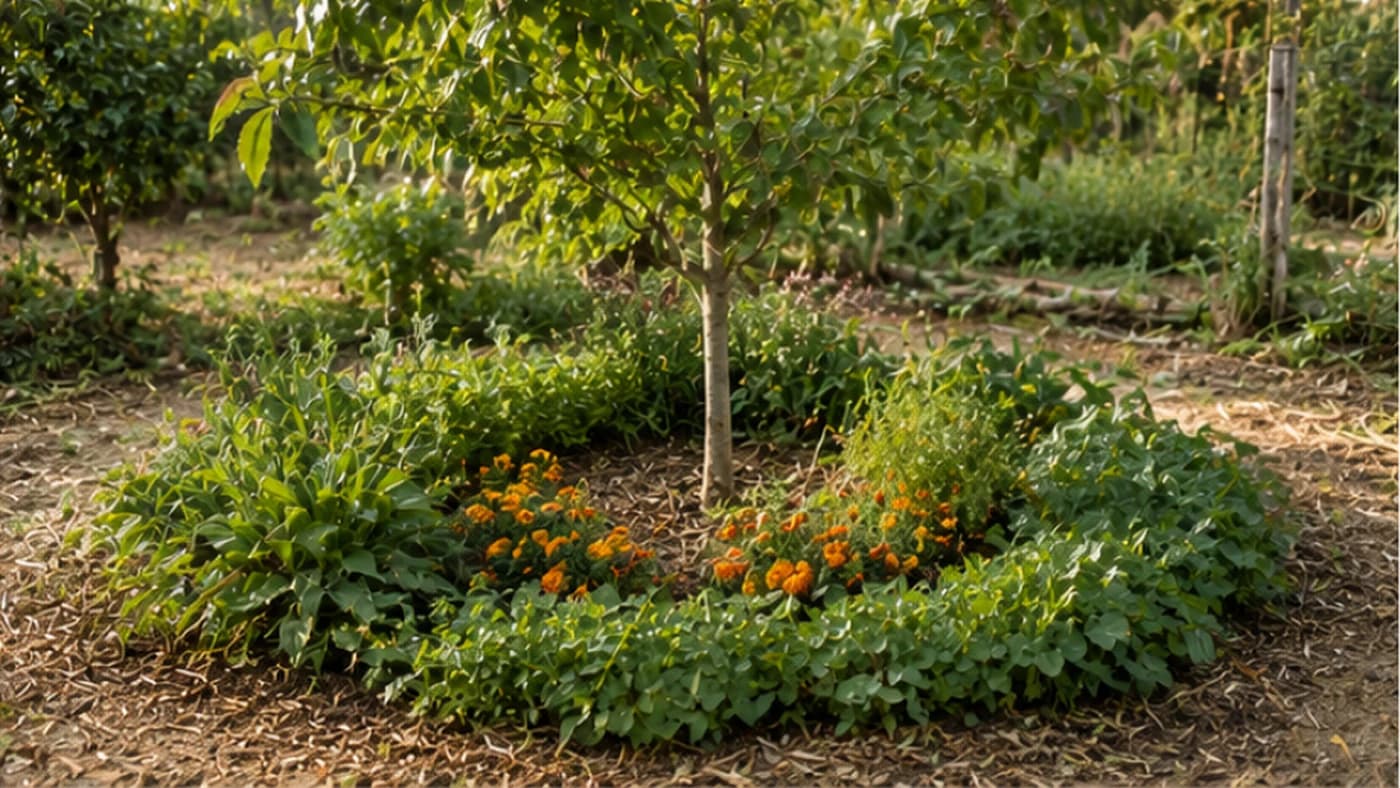
A fruit tree planted alone in bare ground or lawn is forced to compete for every drop of water and every gram of nitrogen — the opposite of how it would grow in the wild, surrounded by shrubs, herbs and fungi that all support each other. A fruit tree guild recreates that natural partnership on purpose: a handful of companion plants clustered around a central tree, each doing a specific job — fixing nitrogen, mining minerals, repelling pests, or drawing in pollinators — so that instead of you doing all the feeding, weeding and spraying, the plants around the tree do much of it for you.
The jobs each guild member does
Nitrogen fixers pull nitrogen from the air via bacteria living in nodules on their roots and feed it to the soil — common examples are cowpea, moong, other legumes, and shrubs like pigeon pea planted at the tree's drip line.
Dynamic accumulators are the miners: deep-taprooted plants such as comfrey (where available) or local equivalents send roots into the subsoil and pull up potassium, calcium and magnesium, storing it in their leaves. Cutting the plant back and laying the leaves on the ground (chop and drop) releases those minerals right where the tree can use them.
Pest-repelling and confusion plants work by scent — garlic, onion, chives, or marigold planted close to the trunk mask the smell that fruit pests use to find the tree. Pollinator and predator attractors — dill, fennel, and other umbrella-flowered herbs — draw in parasitic wasps and other beneficial insects that hunt caterpillars and aphids without harming people.
Building your first guild, step by step
Start with the tree itself: choose a variety suited to your climate and soil, and for a small backyard, a dwarf or semi-dwarf variety is usually easier to manage. Prepare the ground with sheet mulching rather than tilling — lay plain cardboard over the area, wet it thoroughly, then cover with 10–15 cm of good compost topped with straw or wood chips, which smothers competing grass while feeding earthworms.
Plant in rings: the tree at the centre, an inner ring of pest-repelling herbs like garlic or chives close to the trunk, a middle ring of dynamic accumulators for easy cutting and mulching, and a drip-line ring of nitrogen-fixing legumes and pest-confusing flowers. In the first year, water consistently and check the guild every few weeks for stress or pests — give it a few days to see if natural predators show up before reaching for any spray.
What a well-built guild gives you
Dense plantings act as a living mulch, keeping the soil cooler and holding moisture for weeks after rain — real drought resilience with no extra irrigation. Nutrients are released slowly as leaves decompose rather than in the boom-and-bust cycle of chemical fertiliser, giving the tree a steady, mineral-rich diet that shows up in sweeter, more consistent fruit.
The guild also needs less work over time — once established, the plants fill in and leave little room for weeds, so your main job shifts from constant maintenance to harvesting and occasional pruning.
Mistakes beginners make
Overcrowding is the most common one — a fast-growing companion planted too close to a young tree can outgrow and shade it, so always check a plant's mature width and give the central tree room to stay dominant. Some popular guild plants are invasive in certain regions, so check with your local agriculture extension office before introducing an unfamiliar species.
Aggressive spreaders like mint planted directly at the base of a young tree will compete hard for water in the tree's most vulnerable early years — keep the area immediately around the trunk clear of anything that spreads by runners until the tree is well established.
When a guild isn't the right fit
In a very small courtyard — a couple of metres square — a full multi-ring guild may be more than the space can support; a few companion herbs in pots around the tree may be more realistic. In regions with high humidity and fungal pressure, a guild that grows too lush can trap moisture around the trunk and cause root rot or scab, so prune the understory harder to keep air moving through the system.
Best practices that make a real difference
Choose sterile or well-behaved cultivars of aggressive accumulators where possible, so they don't spread uncontrollably through your garden. Favour species native to your region for nitrogen fixers and flowering plants — they cope better with local weather and attract local beneficial insects more effectively than exotic imports.
Chop and drop your accumulator plants two or three times a year before they get too woody, laying the cuttings directly under the tree. Label your plants, especially in the first year or two, so a fast-growing beneficial herb doesn't get mistaken for a weed and pulled out by accident.
The hidden network: soil fungi
The real power of a guild lies underground, in mycorrhizal fungi that attach to the tree's roots and extend its effective reach many times over, trading water and minerals for sugars the tree makes through photosynthesis. A diverse guild feeds a diverse range of these fungi, since different plants release different root secretions that feed different microbes — creating a kind of biological insurance, so if one microbial partner struggles in a dry spell, another can take over. Avoiding tilling and synthetic chemicals near the tree protects this underground network, which is easily damaged and slow to rebuild.
A simple guild you can copy
For a standard fruit tree in a home garden: the tree at the centre; a nitrogen-fixing legume ground cover spread around it; a deep-rooted dynamic accumulator planted about a metre from the trunk; garlic or chives in a ring roughly 30 cm from the trunk as a pest deterrent; marigold or a similar barrier flower at the drip line; and dill or fennel scattered on the sunniest side to draw in predatory insects. In this setup, the garlic helps deter borers, the accumulator supplies potassium for fruiting, the ground cover keeps the soil cool and nitrogen-rich, and the dill brings in the wasps that keep caterpillars in check — so you spend more time picking fruit and less time spraying.
Terms explained in this guide
Frequently asked
What is a fruit tree guild?+
A cluster of companion plants — nitrogen fixers, mineral-mining accumulators, pest-repelling herbs, and pollinator attractors — planted around a central fruit tree so it needs less fertiliser, weeding and spraying.
How close should companion plants be to the trunk?+
Pest-repelling herbs like garlic or chives usually sit closest, around 30 cm from the trunk; dynamic accumulators about a metre out; nitrogen fixers and barrier flowers near the outer drip line.
Will companion plants compete with my tree for water?+
They can if planted too close or if you use aggressive spreaders like mint near a young tree. Give the tree's root zone room, especially in its first year or two, and choose companions that don't compete hard for the same resources.
How often should I cut back accumulator plants?+
Two to three times a year, before they become too woody, laying the cut foliage directly under the tree as a mulch and slow-release fertiliser.
Is a guild worth it for just one backyard tree?+
Yes — the guild concept scales down easily. Even three or four well-chosen companions around a single tree noticeably reduce the fertilising, weeding and pest problems you'd otherwise have to manage yourself.
Where to go next
Want this as daily tasks for your farm?
Khetiyaar turns guides like this into a day-by-day plan — in your language, free to start.

Related guides
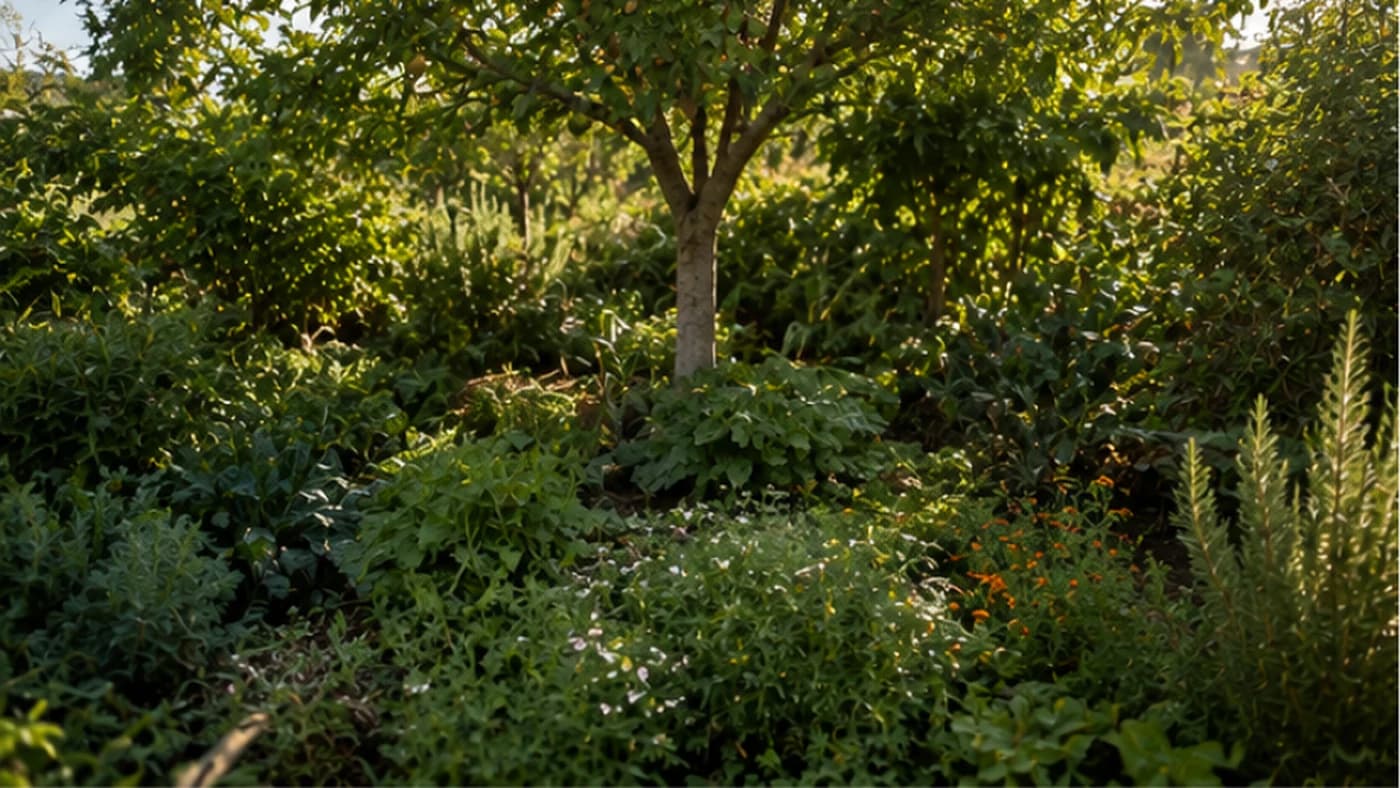
Multi-Layer Food Forest Design: Growing Seven Crops in the Space of One
A natural forest needs no fertiliser or hose, because every layer of it — from tall trees to root crops — fills a different niche. Stacking those same layers in your backyard or farm boundary can multiply what one plot of land produces.
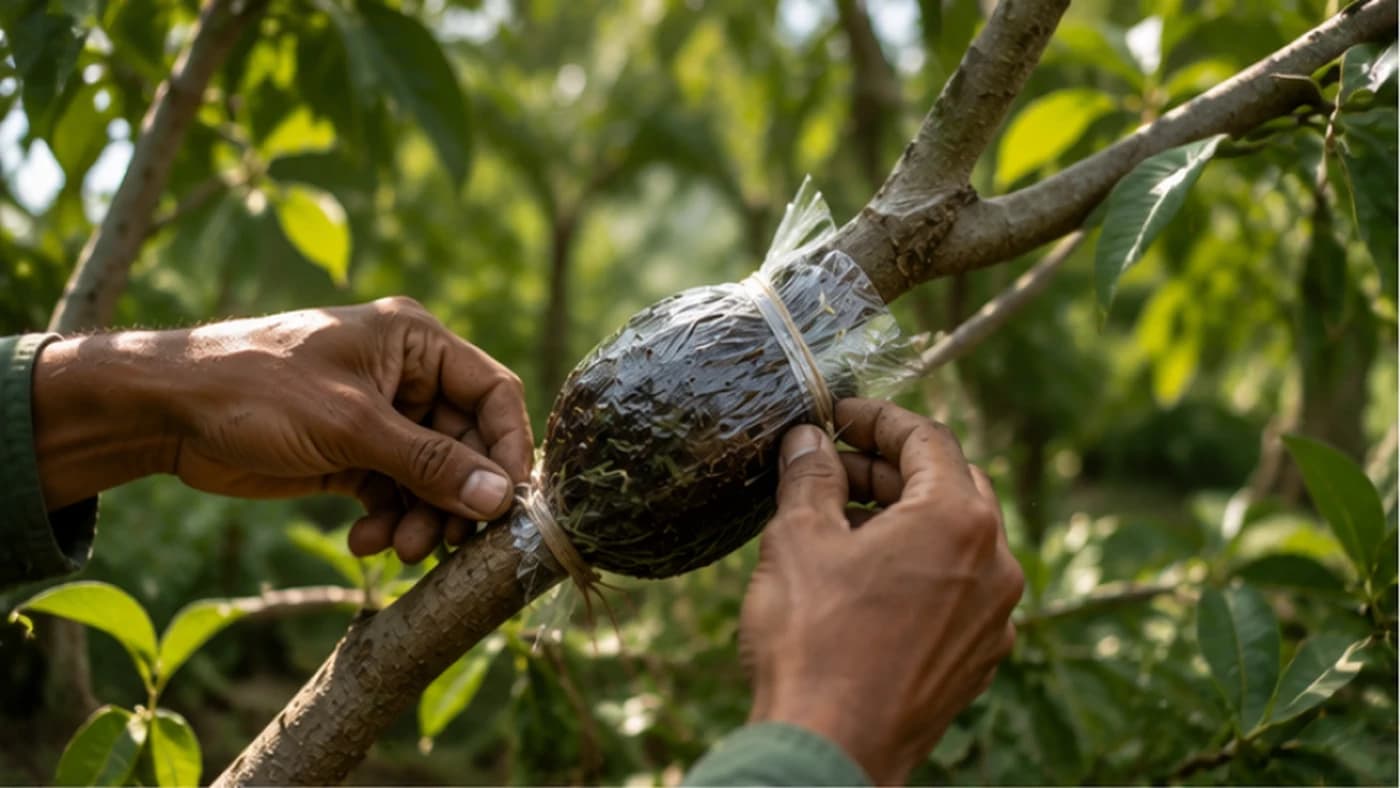
How to Multiply Fruit Trees for Free: Cuttings, Gootee and Grafting
One healthy branch and a bit of soil is often all it takes to turn a single fig, pomegranate or guava tree into an entire orchard — no nursery bill required. Here's how cuttings, air-layering (gootee) and grafting actually work.
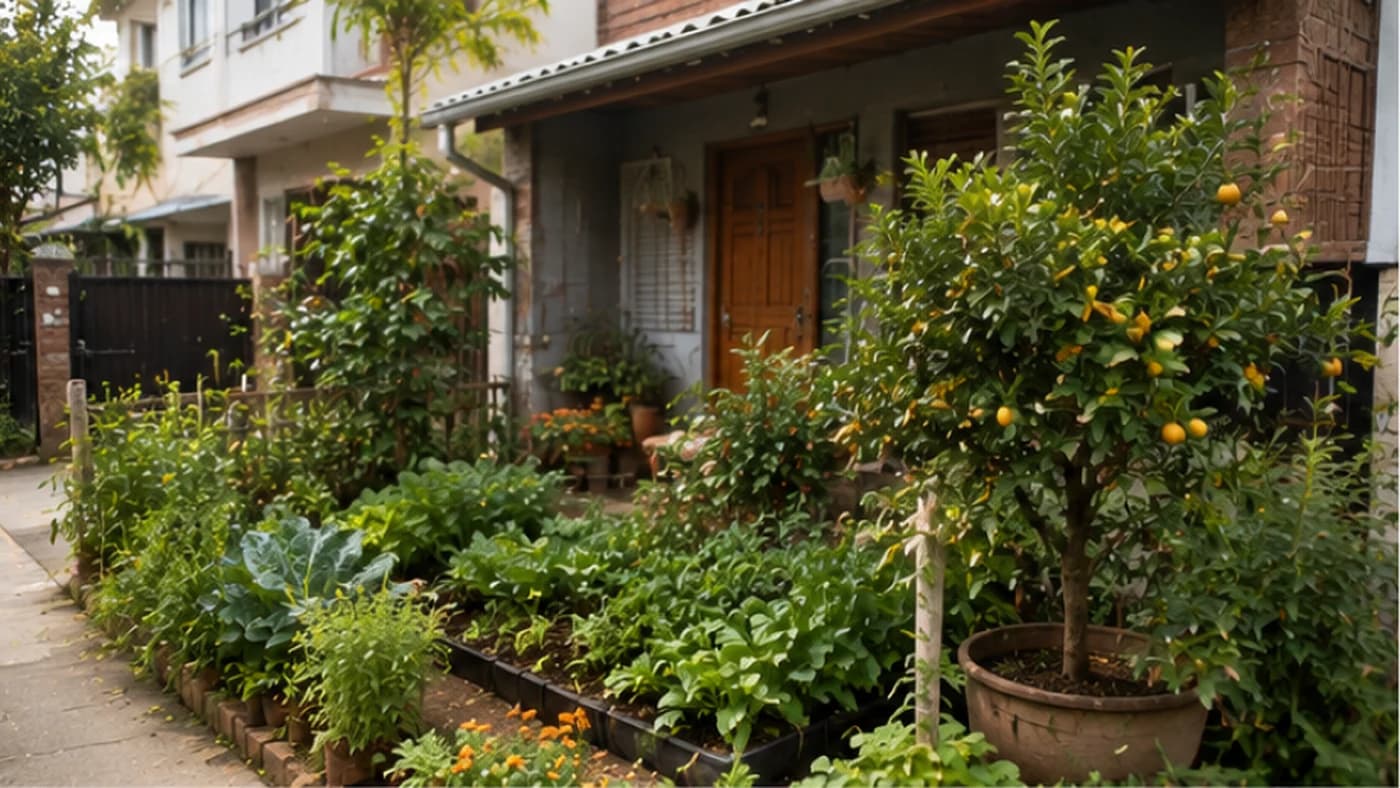
Urban Edible Landscaping: Turn a Terrace, Balcony or Yard Into Food
A city plot doesn't have to choose between looking nice and feeding you. Layered fruit trees, herbs and vegetables can turn a small terrace, balcony or front yard into a steady, low-maintenance source of food.