

Chicken Fodder From Mulberry Trees: India's Sericulture Trick for Free Protein
Mulberry leaves are as protein-rich as alfalfa, but the real value shows up once silkworms process them — a trick Indian sericulture regions have used for generations, and one any backyard flock keeper can borrow.
Quick answer
Mulberry trees turn sunlight and soil into a fast, renewable supply of leaf that most people see as a pruning chore. Run that leaf through silkworms instead of composting it, and you get a home-grown protein supplement that beats soyabean meal on paper, closes the loop with frass fertiliser, and — in India's silk-growing states — already has decades of local practice behind it.
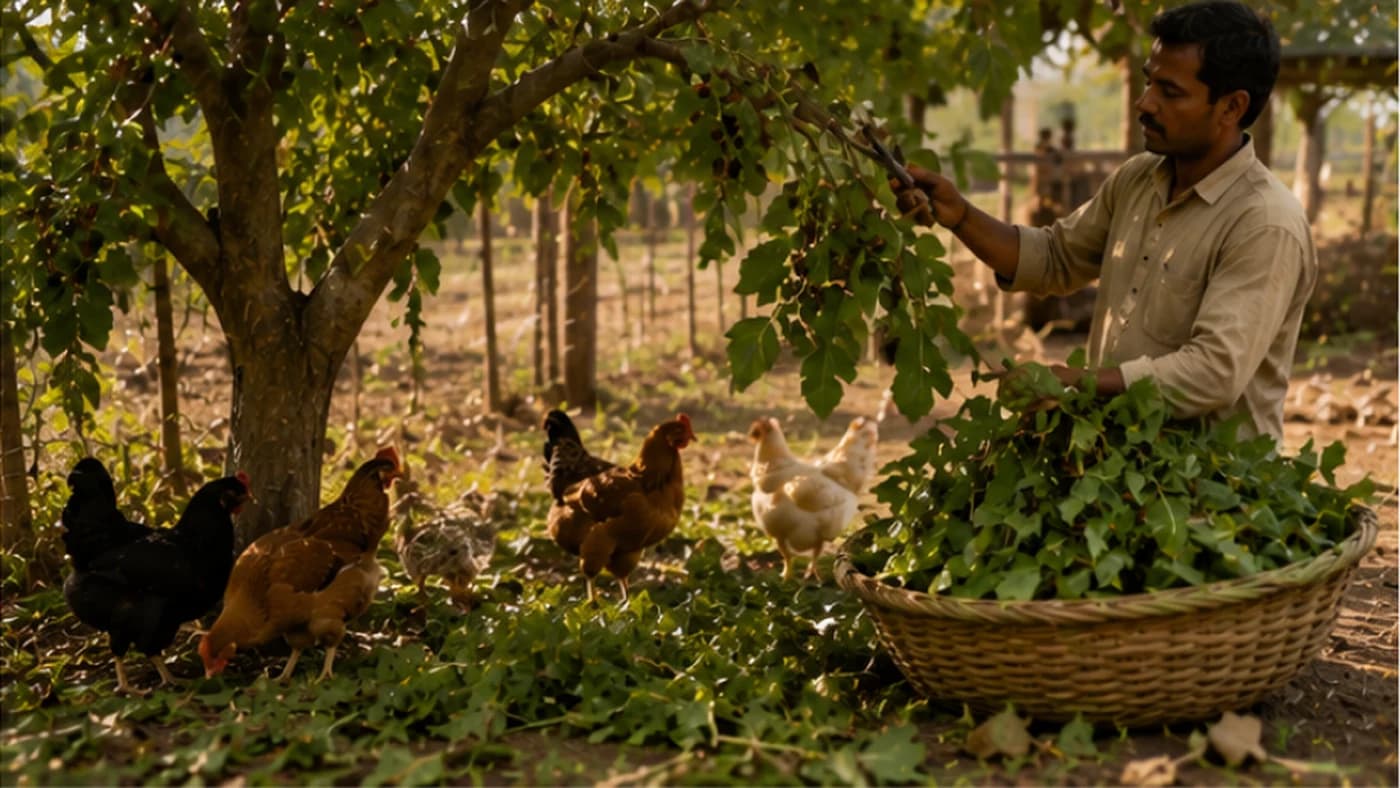
Mulberry trees grow so fast that most people treat the constant pruning as a chore, but that biomass is close to a protein goldmine. Mulberry leaves run 15-35% crude protein on a dry basis — more like a legume such as alfalfa than a typical tree — and India's silk-growing regions have spent centuries perfecting the way to unlock that value: feeding the leaves to silkworms (Bombyx mori) and passing the resulting protein on to poultry, since most chickens struggle to digest large amounts of raw leaf fibre directly.
Why silkworms are the missing link
A healthy white mulberry (Morus alba) can produce a couple of kilograms of fresh leaf in a backyard setting each year, with intensive plantations yielding far more per acre. Silkworms eat nothing but mulberry leaves and grow roughly 10,000 times their hatching weight in about 25-30 days, concentrating the tree's carbohydrates and protein into insect fat and muscle. Because they're clean feeders on fresh leaf only, they avoid the pathogens or heavy metals sometimes found in insects raised on compost or waste, which makes them a genuinely safe protein source for the flock.
The nutrition, side by side
Dried silkworm pupae typically run 55-75% crude protein against soyabean meal's 44-48%, and 20-30% crude fat against soya's 1-2%. Lysine sits at 4.5-6.0% versus roughly 2.8%, and methionine at 1.5-2.5% versus about 0.6% — both amino acids are frequently the limiting factor in poultry growth and egg production. The fats in silkworms are also rich in linoleic and alpha-linolenic acids, often lacking in low-quality commercial grain. Keepers commonly see glossier feathers, harder eggshells, and deeper, richer yolk colour once this supplement enters the diet.
Managing the tree for maximum leaf
To get the most biomass, mulberry needs to be managed specifically for leaf, not fruit — using pollarding or coppicing, cutting the tree back hard in its dormant season to force a flush of tender, high-protein growth in spring. Coppicing cuts the tree near ground level so the roots send up multiple straight shoots at working height, good for a mulberry hedge cut with shears. Pollarding cuts branches back to a trunk at shoulder height instead, keeping new growth out of reach of browsing animals. Regular harvesting during the growing season actually encourages more growth, since stripping a branch signals the tree to push new buds — but stop cutting at least six weeks before the first frost or cold snap so the tree can store energy.
Setting up the system, step by step
Start with a reliable source of fresh leaves — white mulberry in well-drained soil with a pH around 6.2-6.8 is the standard choice for leaf production. Silkworm eggs are typically bought and kept refrigerated until the trees leaf out, then hatch in 7-10 days once brought to a steady 24-29°C. For the first few days, finely chop the youngest, most tender leaves for the hatchlings; as they grow through their later instars, whole leaves and small twigs work, fed 2-4 times a day with trays kept clean.
You can feed the large caterpillars directly at their final instar, or let them spin cocoons and harvest the pupae after about three days of spinning — fed fresh, or dried and ground into a meal mixed into the regular grain ration.
What this changes on the farm
The core benefit is cost: with feed typically 60-80% of the total cost of raising poultry, replacing part of a commercial soya-based ration with home-grown silkworms can meaningfully cut monthly overhead. It's also close to zero-waste — pruning branches you'd otherwise discard become worm feed, and the leftover frass (silkworm droppings) is a nitrogen-rich fertiliser you can return straight to the base of the same trees, closing the nutrient loop. Chickens also get to express natural insect-hunting behaviour, which tends to reduce stress in the flock.
Where it goes wrong
Silkworms have very little disease resistance, so the most common mistake is letting old leaves and frass build up in the rearing trays — the resulting damp, mouldy environment can wipe out a colony within days, which is why mesh-bottomed trays that let frass fall through matter. Silkworms are also extremely sensitive to pesticide drift, even from a neighbouring plot, so always test a new tree by feeding a few leaves to a small group and waiting 24 hours before scaling up. Aim for a steady temperature around 25-26°C and roughly 70% humidity — too cold slows their metabolism and stops feeding, too dry disrupts moulting.
The real limits
This is a seasonal, warm-weather system — silkworms need fresh green leaf, so fresh protein production stops once the trees go dormant, though dried pupae can be stored for winter use. It's also genuinely labour-intensive, with daily leaf harvesting, feeding and tray cleaning taking 30-60 minutes depending on scale, and it's a supplement rather than a full diet — chickens still need grain for energy and grit for digestion, and overfeeding fatty pupae can lead to loose stools or overweight birds.
Practical tips
Stagger your batches — hatching a few hundred eggs a week instead of a thousand at once spreads the leaf-demand and avoids being overwhelmed during the worms' final growth spurt, when they eat the most. Store harvested branches upright in a bucket of water in a cool, shaded spot for up to two days, or strip and refrigerate the leaves in a sealed bag for longer storage. Boil and sun-dry surplus cocoons to store the pupae as a shelf-stable protein treat for leaner months, and always return the frass to the garden or the base of the mulberry trees — it's a genuinely active fertiliser, not waste.
Why this fits Indian sericulture regions especially well
This isn't an imported idea for most of India — mulberry-silkworm systems are the backbone of sericulture across Karnataka, Andhra Pradesh, Tamil Nadu, West Bengal and parts of Jammu & Kashmir, and reject silkworm pupae from silk production are already a known, locally available poultry feed in several of these regions. A backyard keeper near any mulberry-growing area can often source surplus pupae or leaves directly, rather than starting a silkworm colony from scratch — while those in other regions can still grow a few pollarded mulberry trees purely for this loop.
Frequently asked
How much protein do silkworm pupae actually provide compared to soyabean meal?+
Dried silkworm pupae typically run 55-75% crude protein against 44-48% for soyabean meal, with notably higher lysine and methionine, the amino acids most often limiting in poultry growth.
Can I feed mulberry leaves directly to chickens instead of using silkworms?+
Chickens struggle to digest large amounts of raw leaf fibre efficiently, so processing the leaves through silkworms first concentrates the nutrition into a form birds can use far more effectively.
How do I get the most leaf from a mulberry tree?+
Manage it for leaf, not fruit, using pollarding or coppicing — cutting the tree back hard in its dormant season forces a flush of tender, high-protein regrowth, and regular harvesting during the season encourages even more.
Is this practice already used in India?+
Yes — it's close to native practice in India's sericulture belts (Karnataka, Andhra Pradesh, Tamil Nadu, West Bengal, parts of J&K), where mulberry-silkworm systems already exist at scale and reject pupae are a known poultry feed.
What's the biggest risk when raising silkworms for feed?+
Poor hygiene — old leaves and droppings left in rearing trays create damp, mouldy conditions that can wipe out a colony in days, and pesticide residue on leaves (even from a neighbour's spraying) can be fatal to the worms.
Where to go next
Want this as daily tasks for your farm?
Khetiyaar turns guides like this into a day-by-day plan — in your language, free to start.

Related guides
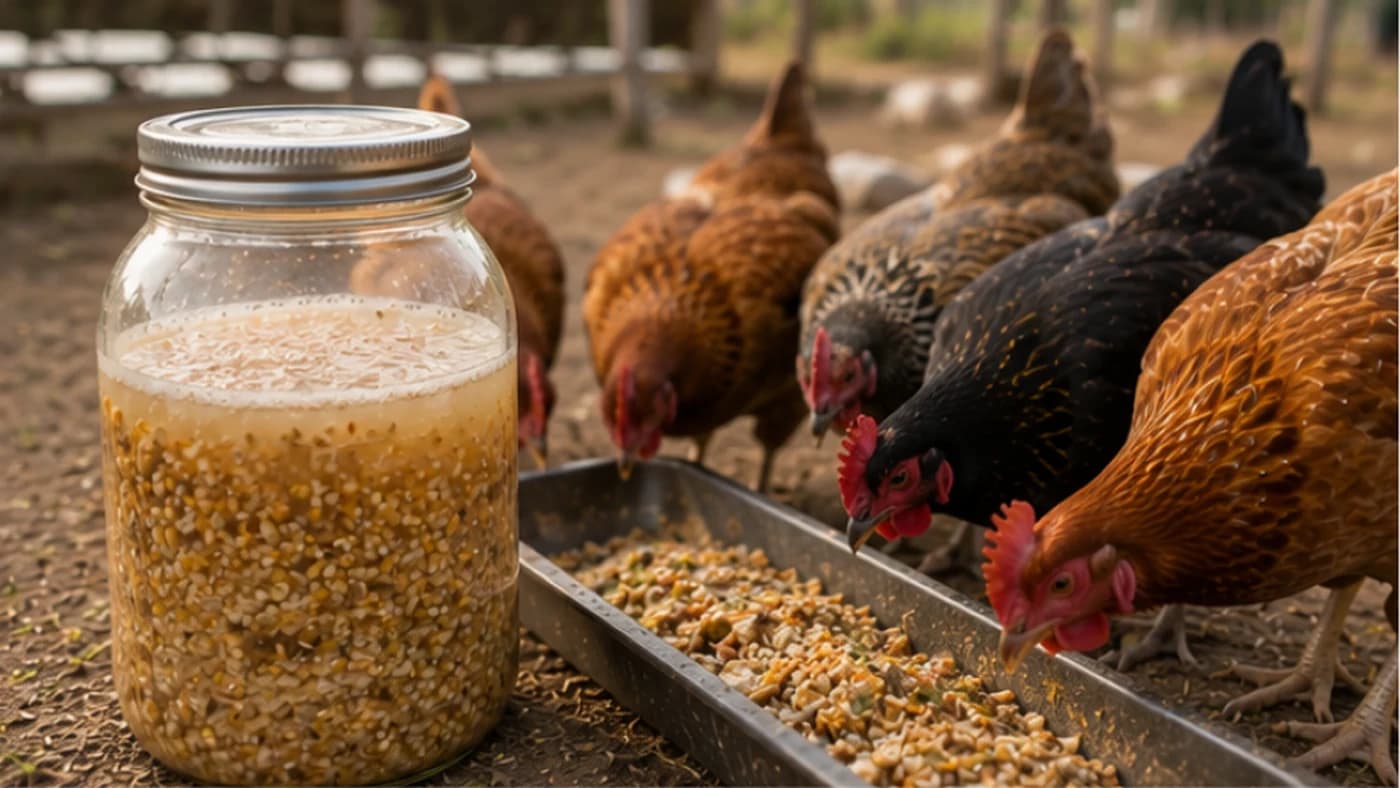
How to Ferment Chicken Feed for Better Egg Production
Dry pellets are convenient, but a lot of their nutrition passes straight through a bird undigested. Soaking and fermenting the same feed for a few days unlocks far more of it — better shells, richer yolks, and often less feed used overall.
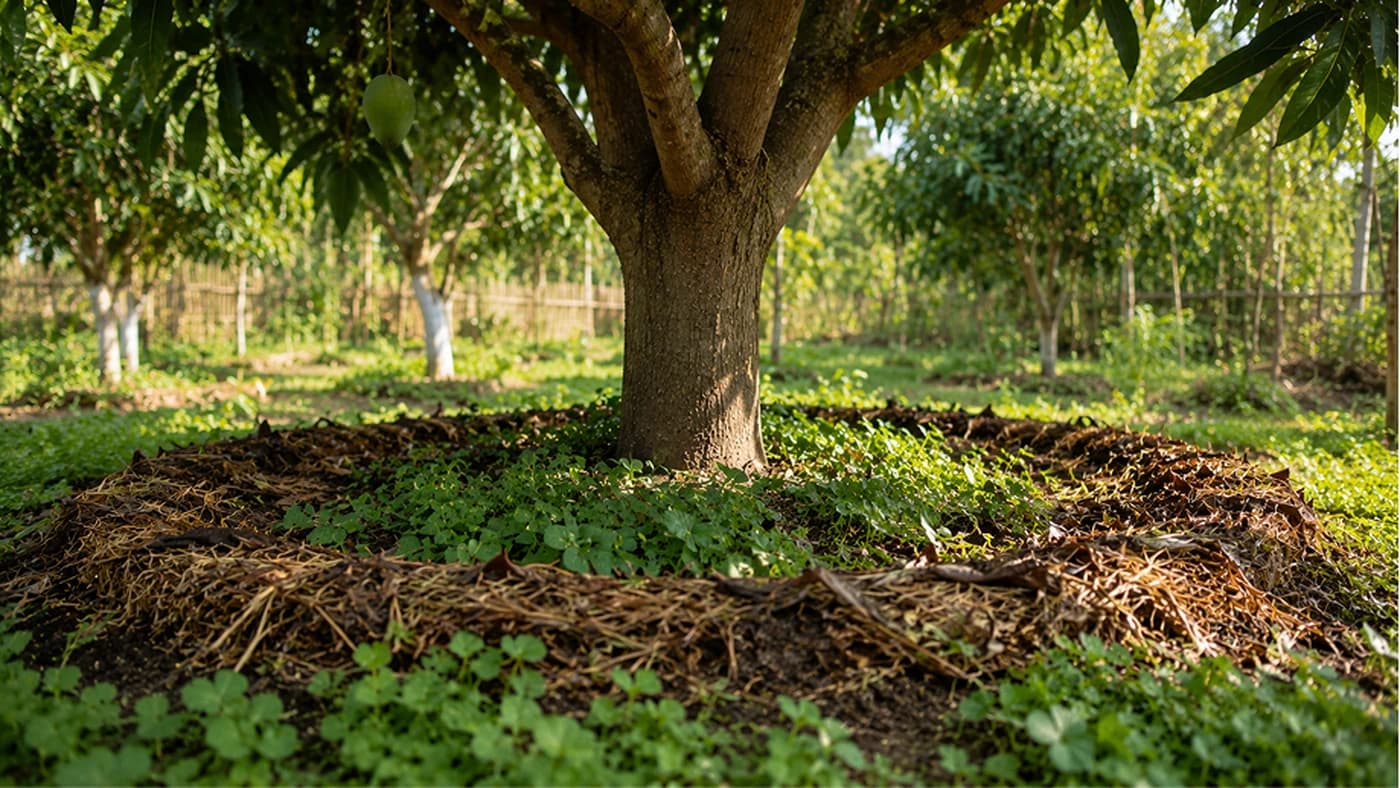
Managing Soil Under Fruit Trees for Better Yields
A mowed, bare-earth ring under a fruit tree is a missed opportunity, not tidy farming. Mulch and a few companion plants turn that space into a pest-fighting, moisture-holding, self-feeding system.
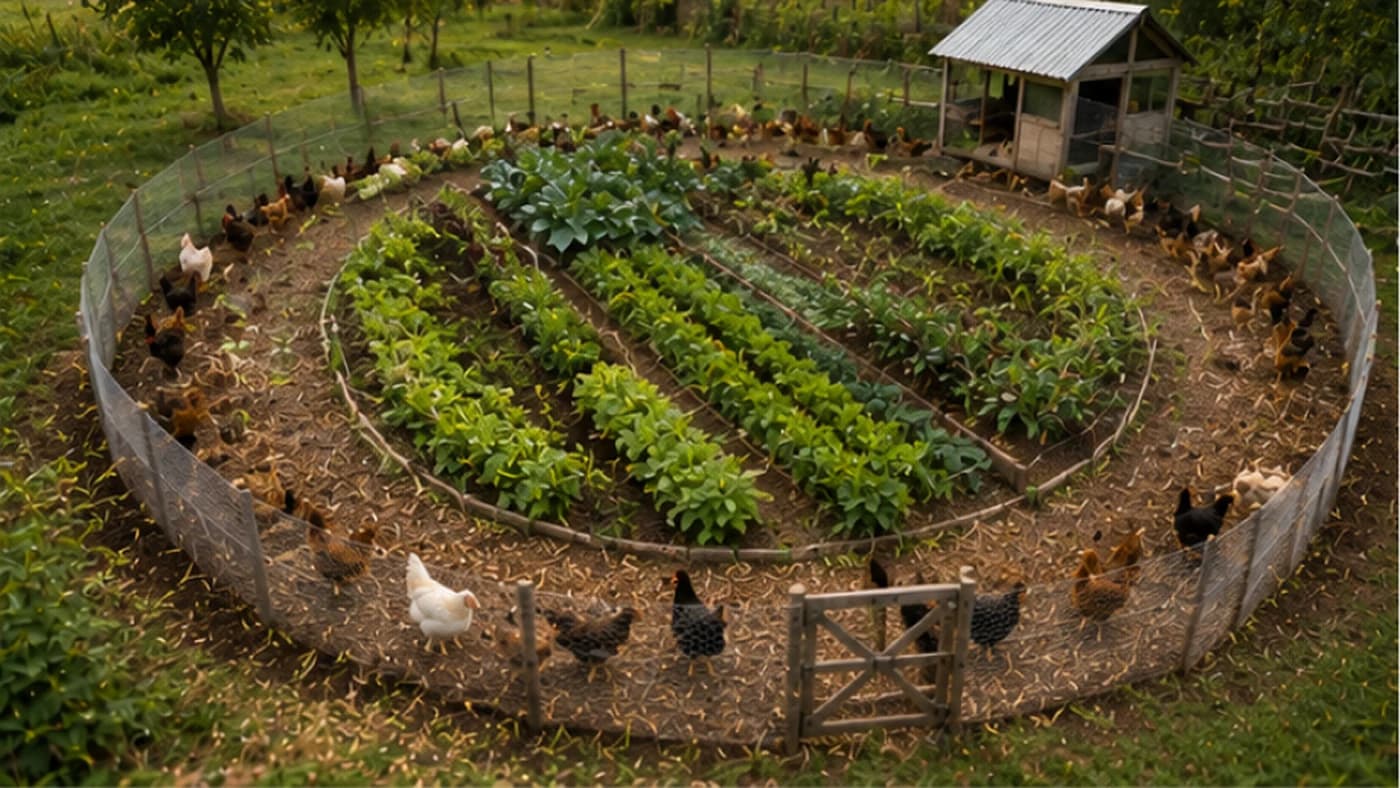
The Chicken Moat: A Double Fence That Hunts Pests for You, 24/7
A normal fence just stands there while insects walk straight through. A chicken moat — a double-fenced ring around your garden — turns your birds into round-the-clock pest patrol, fertiliser spreaders and weed control, all at once.