

Attracting Native Solitary Bees to Your Orchard for Better Pollination
Honeybees stay home on cold, overcast mornings — exactly when many fruit trees bloom. Native solitary bees fly in weather honeybees won't, and a simple mud-and-nest-box setup can bring them to your orchard for free.
Quick answer
Fruit trees don't get a second chance at pollination if the weather turns cold during bloom — which is exactly when honeybees stay home and native solitary bees keep working. Provide food, damp mud, and a well-built, well-maintained nest box facing the morning sun, and you give your orchard a free, low-maintenance pollination workforce that doesn't need protective suits, sugar syrup, or a single rupee of upkeep beyond a little seasonal care.
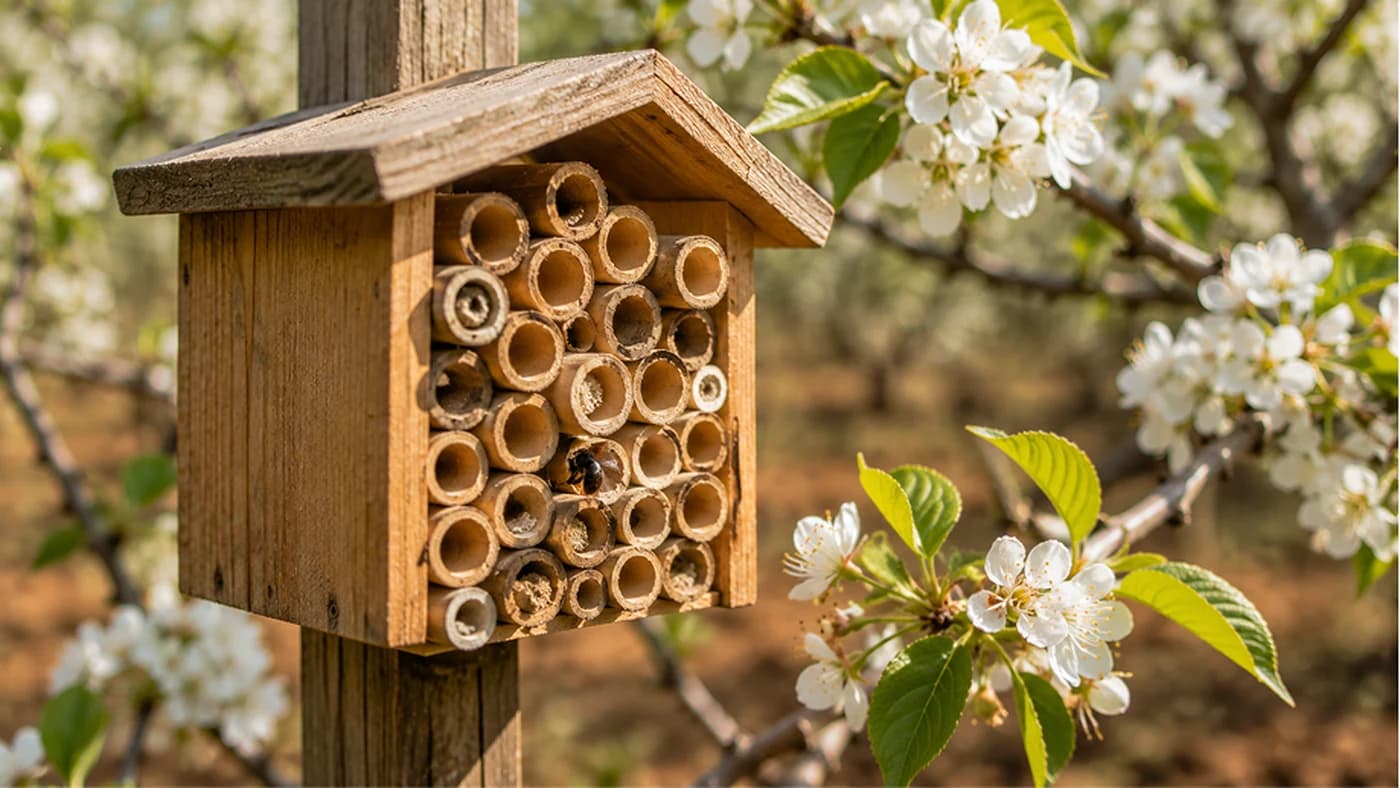
A fruit tree can bloom beautifully and still deliver a disappointing harvest if the weather turns cold or overcast during flowering, because honeybees are fair-weather workers that largely stay inside the hive once temperatures drop below about 13°C. Native solitary bees are built differently: they don't live in a hive, don't serve a queen, and don't make honey — their entire short life is spent building a nest and gathering pollen for their offspring, and several native solitary species fly and pollinate in conditions that ground a honeybee colony.
Why solitary bees can out-pollinate honeybees
The best-studied example is the Blue Orchard Bee (Osmia lignaria), native to North America, where research has recorded a single female pollinating as many flowers in a day as roughly 100 honeybees. The reason comes down to technique: honeybees use saliva to stick pollen neatly to their hind legs so it doesn't fall off, while Osmia species carry loose, dry pollen on a brush of hairs under their abdomen, spilling it messily from flower to flower — resulting in pollination rates far higher per visit than a honeybee's tidier pollen-carrying gives. Native solitary bees are also active at lower temperatures than honeybees, meaning that on a cold, damp morning during bloom — exactly the moment fruit trees are most vulnerable to poor pollination — they may be the only pollinators working at all.
India has its own native wild and solitary pollinators (including native carpenter bees and regional Osmia species found in the fruit-growing hill belts of Himachal Pradesh, Uttarakhand and Jammu & Kashmir), which face this same early-bloom, cold-snap problem every spring in apple and stone-fruit orchards. The general principles below — food, mud and housing — apply to attracting these native solitary bees just as they do to Osmia lignaria; you are working with whichever wild solitary bee is native to your area, not necessarily importing a foreign species.
The three things solitary bees need
Food: solitary bees emerge in early spring alongside the first fruit-tree blossoms. Keeping a succession of early flowers nearby — native wildflowers, mustard, or flowering shrubs — helps hold them in the area once the main bloom finishes. Because solitary bees generally forage within about 90 metres of their nest, food and housing need to be close together, not scattered across a large farm.
Mud: these bees are called 'mason' bees because females use damp, clay-rich mud to build partition walls between egg cells. If your soil is too sandy, the walls crumble and the bee abandons the site — digging a small pit and keeping it damp through the nesting season is one of the most effective ways to keep them nesting nearby. A simple test: moisten a handful of soil and squeeze it; if it holds its shape and leaves a ribbon when pressed between your fingers, it has enough clay.
Housing: in the wild, solitary bees nest in existing holes in dead wood or hollow stems. A simple nest box — a bundle of paper-lined tubes or a stackable wooden tray system — concentrates the population where you need pollination. Mount it facing a sunny, south to south-east direction at about 1.5–2 metres off the ground, so the morning sun helps the bees warm their flight muscles quickly, and away from ground-level predators.
Getting the nest hole dimensions right
Hole diameter and depth genuinely matter. For Osmia species, roughly 8mm diameter and at least 15cm depth is the commonly cited ideal — narrow enough to keep out larger predators, wide enough for the female to enter easily. Tunnel depth affects the sex ratio of the next generation: females typically lay female eggs at the back of a tunnel and male eggs near the front, so a tunnel that's too short produces mostly males — and males don't contribute much pollination. Avoid drilling holes directly into solid wood or bamboo that can't be opened; blocks that can't be cleaned out become breeding grounds for mites and fungal spores. Stackable trays or removable paper liners that can be opened and cleaned each year are far better for long-term bee health.
Why this matters beyond pollination
Managing native solitary bees is close to zero-cost compared with keeping honeybee colonies, which need protective equipment and regular treatment against parasites and disease. Solitary bees are also solitary by nature — there's no hive to defend, so they are extremely gentle and almost never sting, making them safe around children and farm animals. Better pollination coverage also improves fruit quality directly: a poorly pollinated flower often produces smaller, lopsided fruit, while a flower visited thoroughly by an efficient pollinator tends to set larger, more symmetrical fruit with a fuller seed count.
Common mistakes and how to avoid them
Putting up a nest box and forgetting about it is the most common failure — without occasional maintenance, populations tend to decline rather than grow. Birds, especially woodpeckers, will happily raid tubes for the protein-rich larvae inside, so a layer of wire mesh set about 2.5cm in front of the tube openings protects against this. A nest box exposed to driving rain will develop mould, and fungal disease can wipe out an entire generation of larvae — a roof overhang of at least 7cm keeps the nest dry. And a box mounted in deep shade or facing north stays too cold for bees to warm up and fly, since solitary bees are essentially solar-powered and need direct morning sun.
Where solitary bees can't help
Most spring-active solitary bees are only on the wing for about 6–8 weeks, so they're of no use for crops that flower later in summer, like gourds, tomatoes or chillies — those need different pollinators such as bumblebees or other native bee species active later in the season. They're also highly sensitive to systemic pesticides, particularly neonicotinoids, so a chemical-heavy spray programme in or near the orchard will undermine any effort to attract them. And in very sandy or extremely dry areas with no accessible clay, they may struggle to find the mud they need to nest, however good the housing is.
Practical tips for keeping a healthy population
If you buy or are given cocoons to release, don't release them all on the same day — releasing about a third at first bloom and the rest roughly two weeks later protects against a late frost wiping out your entire active population at once. Each autumn, harvest tubes or trays and gently clean the cocoons, checking for mites or debris, before storing them somewhere cool and predator-free over winter (a well-ventilated container in a cool shed works). Avoid spraying insecticides — even organic options like neem oil — while bees are actively flying and foraging.
Terms explained in this guide
Frequently asked
Are mason bees the same as honeybees?+
No. Mason bees are solitary — they don't live in hives, don't have a queen, and don't make honey. Each female builds and provisions her own nest, but they are often far more efficient pollinators per visit than honeybees.
Can I get Osmia lignaria (Blue Orchard Bee) in India?+
That specific species is native to North America and not something to import. The same attraction principles — food, mud, and a well-built nest box — work for whichever native solitary bee is found in your region.
What size should the nest holes be?+
Around 8mm diameter and at least 15cm deep is the commonly recommended size for Osmia-type solitary bees — deep enough to encourage a healthy ratio of female to male offspring.
Do solitary bees sting?+
Rarely, and even a forced sting is mild — since they have no hive to defend, they have little reason to be defensive, making them safe around children and animals.
Will solitary bees pollinate my summer vegetables too?+
Most are only active for 6–8 weeks in spring, so they help spring-blooming fruit trees but won't cover summer crops like gourds or chillies, which need other pollinators active later in the season.
Where to go next
Want this as daily tasks for your farm?
Khetiyaar turns guides like this into a day-by-day plan — in your language, free to start.

Related guides
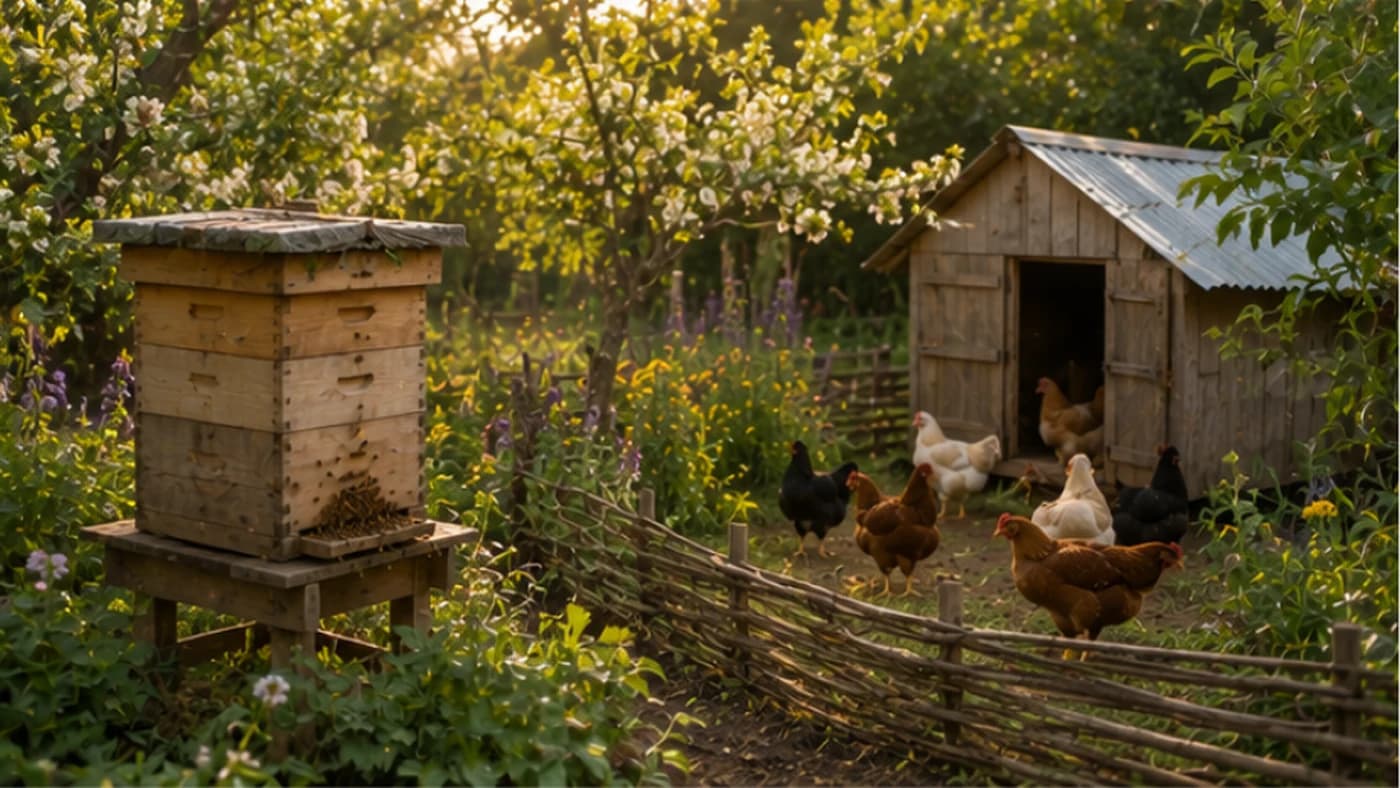
Integrating Chickens and Bees for Better Yields
Small hive beetle and wax moth larvae drop into the soil to pupate — right into the path of a hungry hen. Keeping hives inside a chicken run turns hive pests into eggs and keeps bees healthier.
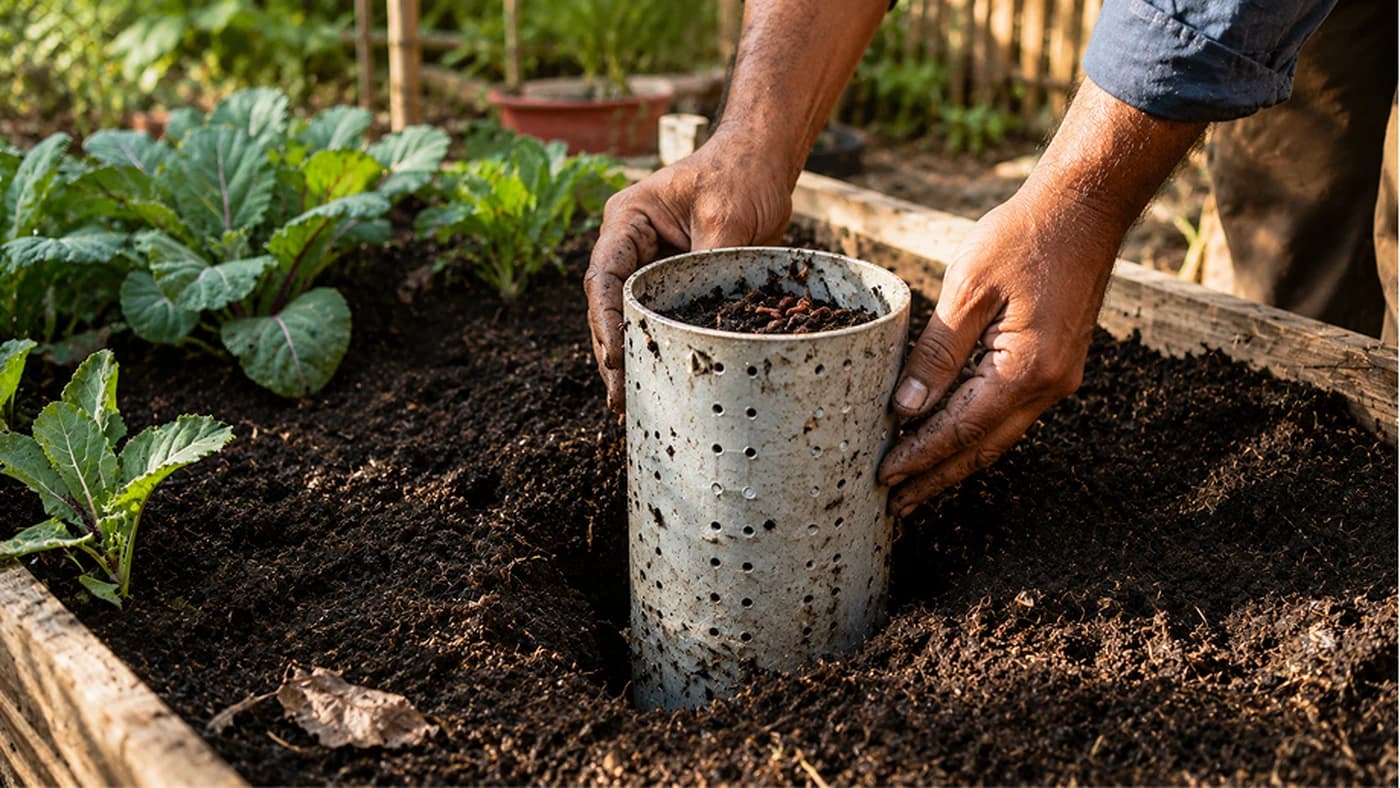
How to Build a Garden Worm Tower for Free, In-Bed Composting
Stop hauling kitchen scraps to a distant bin and hauling compost back months later. A buried worm tower lets worms process waste right where your plants are growing.
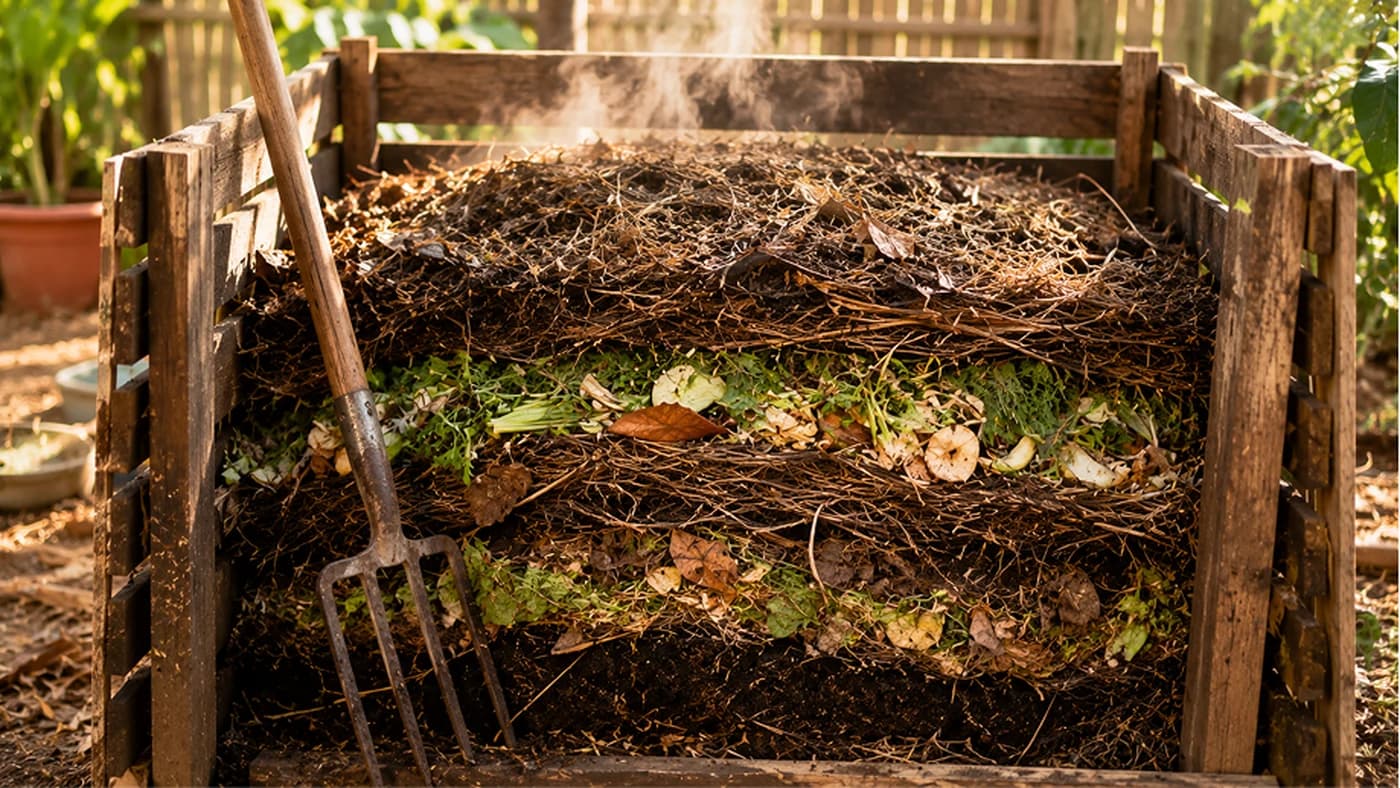
How Do I Balance Carbon and Nitrogen in Compost?
A smelly, slow compost heap almost always comes down to one thing: the wrong balance of browns and greens. Get the ratio right and microbes do the rest.