

The Lazy Bed Technique: An Ancient Ridge Method for Waterlogged Soil
Centuries before raised beds became fashionable, farmers on Europe's wettest, rockiest land built self-draining ridges from flipped turf alone. It still solves clay and waterlogging problems today — no tools but a spade.
Quick answer
The lazy bed is a genuinely practical answer to a problem many Indian farmers and kitchen gardeners already have — a patch of heavy clay or low ground that waterlogs every monsoon. Using nothing but a spade, turf and manure you already have, you build a raised, self-draining, faster-warming bed that out-produces flat, waterlogged ground, with no lumber, bricks or purchased inputs. It takes real labour to build in year one, but from year two onward it's simply maintained with compost and a bit of trenching.
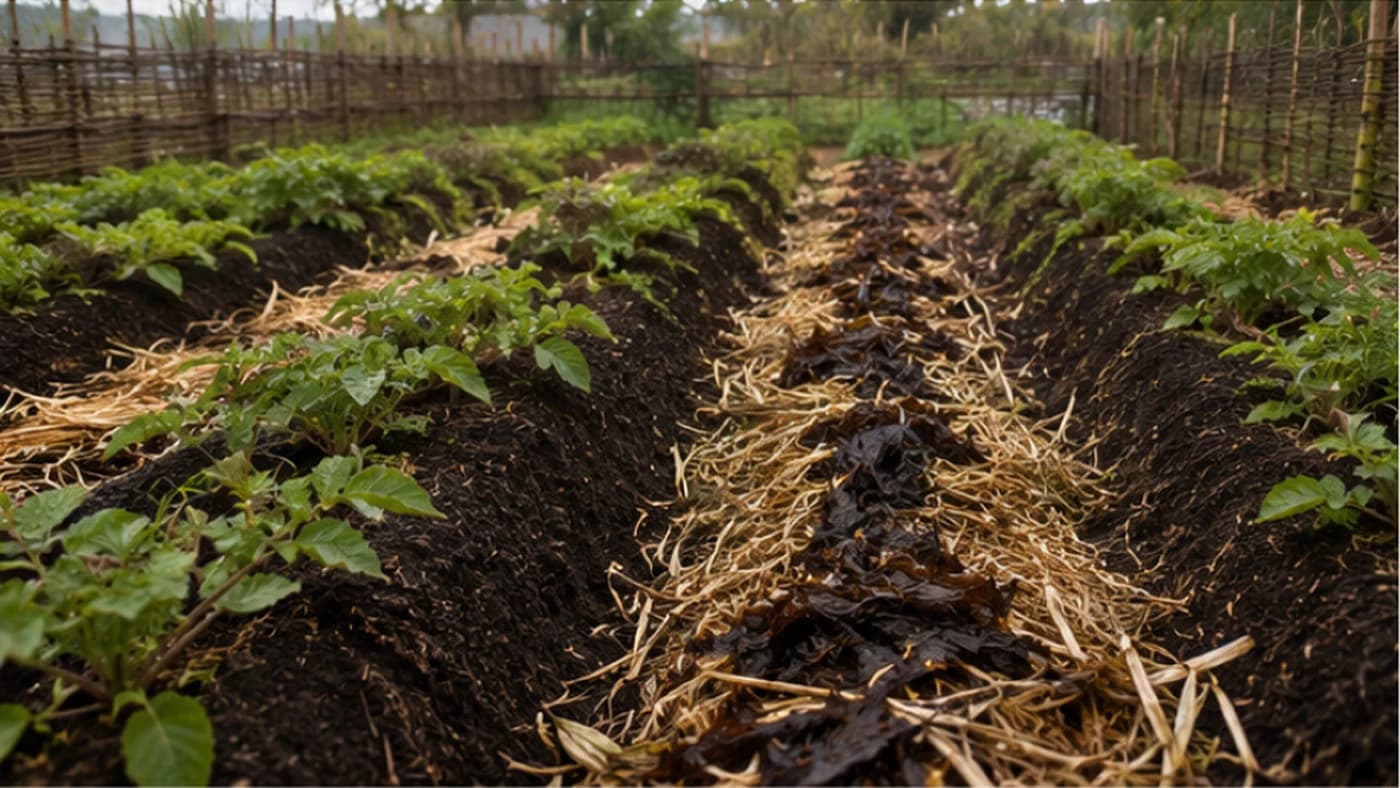
Many Indian farmers know this problem well: a patch of heavy clay or low-lying land that turns into a waterlogged mess every monsoon and stays cold and slow to dry even after the rain stops. Centuries ago, farmers in Ireland and Scotland's wettest hill country faced exactly this problem on rocky, boggy ground where a plough could not even be used — and solved it with nothing but a spade. The method, called the 'lazy bed' (feannagan in Gaelic), is really the opposite of lazy: it uses turf itself as a biological engine to build raised, self-draining ridges. It is one of the original no-dig, no-till systems, and it remains a genuinely useful trick for waterlogged clay patches, kitchen gardens, and monsoon-affected plots today.
The basic idea: ridge and furrow
A lazy bed is a long, raised ridge of soil built by flipping strips of turf from a furrow on either side onto a central bed. The ridge is where crops grow; the furrows on both sides serve as permanent drainage channels and walking paths — you never step on the growing surface, which keeps the soil loose and uncompacted.
A traditional bed is about 90–120 cm wide, narrow enough to reach the centre from either side without stepping on it. On sloped ground, run the beds up and down the slope (not across it) so water drains out of the furrows quickly during heavy rain instead of pooling.
How to build one
Mark out your plot and mow or slash the grass/weeds as short as possible. Before flipping any turf, spread your fertility layer directly onto the short grass — well-rotted farmyard manure, composted crop residue, or dried water-hyacinth/pond weed where available. This becomes a buried fertility sandwich under the flipped sod.
Using a spade, cut turf from the furrow areas on either side in strips about 30 cm wide, and flip each strip grass-side down onto the bed, keeping the sod in one piece. Lay the strips tightly together like roof tiles — any gaps and the smothered grass will find its way back to light. This buries the grass and weeds, and as they decompose they feed the bed from below.
Why it works better than it sounds
Because the ridge is raised, it catches the sun at a better angle and warms up faster in the growing season than flat ground — useful for an early nursery bed. Drainage is the biggest win: in heavy clay or waterlogged plots, the furrows act like mini-canals pulling excess water away from the root zone, letting root crops and vegetables grow where flat ground would drown them.
There's also a frost-protection effect: cold air is heavier than warm air and sinks, so on a cold night it drains off the raised ridges and settles in the furrows — often sparing young plants on the ridge from a light frost that would damage them on flat ground. And because you're only rearranging soil, turf and manure you already have, it needs no lumber, no bricks, and no purchased raised-bed materials.
Common mistakes to avoid
The most frequent error is leaving gaps when flipping the sod — lay pieces tightly together or grass will regrow through the cracks. Building when soil is too dry makes the sods crumble apart; build when soil is moist (not waterlogged) so the turf holds together. The first-year subsoil brought up from the furrows is often nutrient-poor, so be generous with manure or compost in that first fertility layer. Expect slugs and pests to like the damp furrows initially — this settles down as the bed matures.
Where this method does NOT work well
This is a wet-climate, heavy-soil solution — it was built for damp, cool ground, not for hot, dry, sandy plains. In very sandy soil, ridges slump back into the furrows after the first heavy rain because there's no clay or root mass to bind them. And it's a hand-and-spade system, not suited to large mechanised fields — it's built for kitchen gardens, homestead plots, and small waterlogged corners of a farm, not for tractor-scale cultivation.
Choosing what to plant, and maintaining the bed
Root crops with vigorous foliage — potatoes are the traditional first crop — are ideal pioneers: their roots break down the buried sod and their leaves smother regrowing grass, leaving crumbly, improved soil behind by harvest time. In later seasons, simply add a fresh layer of compost or mulch on top each year, and periodically clear soil that's washed into the furrows back onto the ridge to keep drainage working.
Terms explained in this guide
Frequently asked
What is a lazy bed and why is it called that?+
It's a raised ridge bed built by flipping turf from side furrows onto a central bed, historically used in Ireland and Scotland on wet, rocky land. It's called 'lazy' as an old (unfair) insult — the technique itself is labour-intensive but very effective, doing drainage and fertilising work automatically once built.
Does the lazy bed technique help with waterlogged soil?+
Yes — this is its main benefit. The furrows on either side of the raised ridge act as drainage channels, pulling excess water away from plant roots, which is exactly the problem many clay and low-lying plots face during heavy rain.
How wide should a lazy bed be?+
About 90–120 cm, narrow enough that you can reach the centre from either furrow without ever stepping on the growing bed, which would compact the soil.
What should I plant first in a new lazy bed?+
A vigorous root crop like potatoes works best as a first crop — the root system and leaf cover help break down the buried turf and suppress regrowing grass.
Does this method work on sandy soil or in dry regions?+
Not well. It was developed for damp, cool, heavy-soil conditions. In sandy soil the ridges collapse after rain with nothing to bind them, and in hot, dry regions the exposed ridges dry out too fast — a sunken bed or mulched flat bed usually works better there.
Where to go next
Want this as daily tasks for your farm?
Khetiyaar turns guides like this into a day-by-day plan — in your language, free to start.

Related guides
How Do I Balance Carbon and Nitrogen in Compost?
A smelly, slow compost heap almost always comes down to one thing: the wrong balance of browns and greens. Get the ratio right and microbes do the rest.

The Ancient Dovecote: Turning Pigeons Into a Free Fertiliser Factory
Old Persian and Indian havelis alike built towers just to house pigeons — not for meat, but for one of the most potent organic fertilisers known. Here's how the system works, and how to build a small version safely.
Living Fences: Grow a Boundary That Feeds Your Family Too
A living fence of thorny, fruiting shrubs gives you privacy, wind protection and a harvest — all from a boundary you'd otherwise spend money maintaining forever.