

DIY Under-Sink Worm Composter: Turn Kitchen Wastewater Into Fertiliser
Instead of sending fats, food particles and nutrients straight to the drain, an under-sink worm filter turns your daily dishwater into a steady drip of liquid fertiliser for the garden.
Quick answer
An under-sink worm composter turns your daily dishwater from a wasted resource into a steady source of liquid fertiliser, using nothing but gravity, layered media and a colony of red wiggler worms. Keep grease and harsh chemicals out, check local greywater rules before installing, size the bins to your household's daily water use, and do a little monthly maintenance — and the system will quietly feed your garden for years.
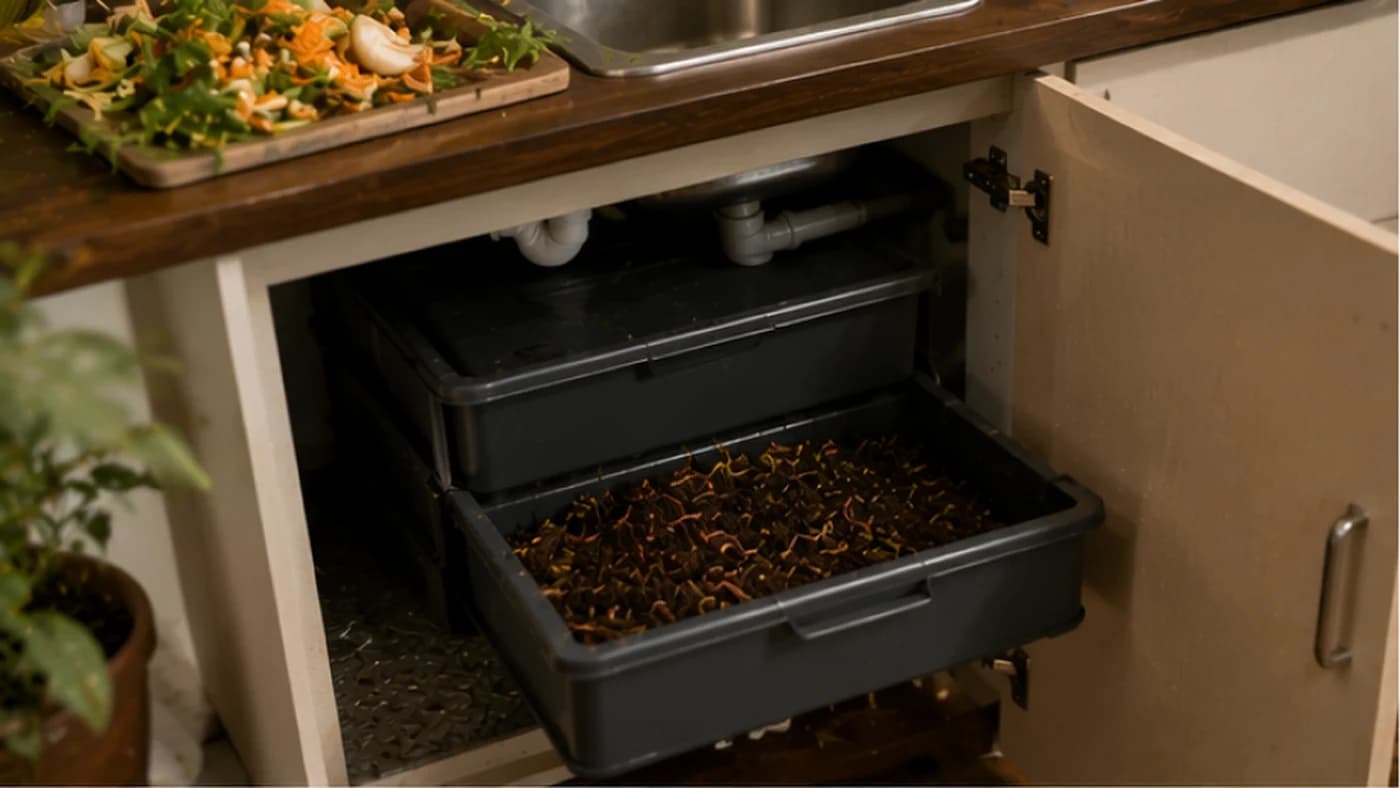
Every time you wash dishes, real nutrients go straight down the drain and out of your reach — fats, food particles, nitrogen and carbon that could be feeding your garden instead. An under-sink worm composter, more precisely called a vermifilter, sits between your sink drain and its final outlet and uses a community of composting worms and bacteria to treat that water at the source, so what leaves the system is cleaner and enriched with worm-based nutrients. Large-scale versions of this same idea are already used to treat entire village sewage streams in countries including India, so a kitchen-scale version is simply the same proven biology applied under your own counter.
What it is and why it works
A vermifilter is a biological trickling filter: as water flows down through layers of coarse organic media, worms (usually the red wiggler, Eisenia fetida) and aerobic bacteria digest the fats, oils and fine food particles that would otherwise clog a normal irrigation line or overload a septic tank. Unlike a standard outdoor worm bin that only takes solid scraps, this system is plumbed directly into your sink line, so it treats the water itself, not just kitchen scraps you carry to it.
Gravity does the work. Water enters the top of a ventilated container, first meeting a coarse layer of wood chips or coconut husk that slows it down and catches larger solids. Worms living in this layer graze on the trapped solids and the microbial film that builds up on the wood chips, and their constant burrowing keeps the whole system aerated — which is exactly what prevents the foul, stagnant smell of an anaerobic (oxygen-starved) system. Beneath this, a layer of gravel or coarse sand gives beneficial bacteria a huge surface area to colonise, and these microbes do the finer chemical work of breaking down dissolved organic matter before the water exits, noticeably cleaner and carrying worm-tea nutrients.
Building it: bins, media and plumbing
You need two sturdy plastic bins that fit under your sink, a bulkhead fitting, some basic PVC connectors, and about half a kilogram of red wiggler worms. The top bin holds the media and worms; drill roughly 6mm holes across its base so water drains through. The bottom bin acts as a surge tank for the treated water, with a bulkhead fitting installed at its lowest point as the final outlet.
Layer the media in the top bin from the bottom up: about 8 cm of large river stones first (to keep the drainage holes clear), then roughly 10 cm of pea gravel, and finally 20–25 cm of a mix of coarse wood chips, shredded coconut coir and a little finished compost to seed the system with microbes right from the start. Install a simple three-way diverter valve in your existing sink drain line — this lets you send water to the worm bin during normal use, or divert it straight to the drain when you need to use a harsh cleaning chemical. Connect the diverter's worm-side outlet to the top of the bin with a short length of pipe, leaving a small air gap so the system stays oxygenated and water can't siphon backward. Add the worms to the top layer, then cover the whole surface with damp cloth or a thick layer of shredded cardboard — this keeps the worms near the surface where the food is, and helps keep flies away.
What you get from it
Every time you wash dishes, the water leaving the system carries dissolved worm-casting nutrients, effectively a slow, steady drip-feed of liquid fertiliser for nearby trees, ornamental beds or a mulch basin. Households on a septic system often notice their tank fills up far more slowly once solids are being digested biologically rather than flushed whole, which reduces how often you need an expensive pump-out. And since the system runs on gravity with no motor, it costs nothing to operate once it's built.
Mistakes that will kill your worm colony
Grease is the single biggest enemy: fat coats a worm's skin and stops it breathing, and it can seal up the pores in your filter media entirely, so scrape plates properly with a spatula or wipe them with a used paper towel before washing rather than rinsing grease straight into the system. Harsh chemicals are the second killer — bleach, ammonia and high-salt detergents will kill worms almost instantly, so switch to a plant-safe, biodegradable soap free of heavy salts and chlorine, which protects both the worms and whatever soil the water eventually reaches.
Temperature matters too: red wigglers thrive roughly between 13°C and 27°C, so a large pot of just-boiled water tipped straight down the drain can scald the whole colony — let very hot water cool a little, or dilute it with cold water first, before it enters the system.
Space and legal limitations
An effective under-sink vermifilter needs roughly 55–75 litres of volume to handle a typical household's daily flow, and many kitchen cabinets are simply too cramped to fit the necessary bins and plumbing changes. Before you build one, check your local municipal or panchayat plumbing and greywater rules — regulations for reusing kitchen wastewater vary significantly across Indian states and cities, and some may treat kitchen sink water more strictly than bathroom greywater because of its higher organic load. It's also worth knowing that the system removes solids very effectively but doesn't fully strip dissolved nitrogen, so where groundwater is shallow or sensitive, be cautious about where the treated water is finally discharged.
Practical tips for a trouble-free system
Fit a simple sink strainer — catching large food chunks at the sink is far easier than fishing them out of the bin later. Add a handful of shredded cardboard or dry leaves to the top of the bin about once a week to balance the nitrogen-heavy liquid diet and cut down on odour. Sprinkle a tablespoon of crushed eggshells or a little agricultural lime onto the media once a month to help buffer the pH, since kitchen wastewater tends to turn acidic over time. And check for 'bridging' every few weeks — sometimes the wood chips mat together and cause water to pool on top — a light stir with a hand fork keeps the water spreading evenly through the media.
Taking it further
If you want to push the system harder, you can link its outflow into a small outdoor reed bed or a hydroponic trough for a second treatment stage — sequential treatment like this can bring water to a much higher quality, suitable for a wider range of irrigation uses. In a multi-storey house, a kitchen on an upper floor can drain into a vermifilter on the ground floor, which then overflows into an outdoor gravel bed below — using the natural drop in height to run two treatment stages for free. Some advanced setups also fit a small bell siphon at the outlet, which releases the treated water in periodic pulses rather than a constant trickle, helping it reach the far end of an irrigation line evenly instead of pooling near the outlet.
A working example
A small off-grid home might plumb one sink permanently into a 75-litre vermifilter kept under the counter or in a nearby crawlspace, processing roughly 35–40 litres of water a day. The worms thrive on starch from rice or pasta water and fine food particles left after rinsing, and the treated water flows out into a mulch basin around a few fruit trees. Run well, a setup like this can mean years without ever needing to empty a septic tank or buy fertiliser for that patch of the garden — with the fed trees visibly outgrowing others nearby.
Frequently asked
What worms should I use in an under-sink composter?+
Red wiggler worms (Eisenia fetida) are standard — the same species used in outdoor compost bins. They thrive in the 13–27°C range typical of most Indian kitchens.
Will grease and soap kill the worms?+
Grease can coat their skin and seal the filter media, and harsh chemicals like bleach, ammonia or high-salt detergents will kill them quickly. Scrape plates before washing and switch to a plant-safe, biodegradable soap.
How much space does this system actually need?+
Roughly 55–75 litres of bin volume to handle a typical household's daily kitchen water flow — check that your under-sink cabinet can fit two bins of that combined size plus the plumbing.
Is it legal to reuse kitchen sink water like this?+
Rules vary by state and municipality in India, and kitchen water is sometimes treated more strictly than bathroom greywater because of its higher organic load. Check your local plumbing or panchayat rules before installing.
What do I do with the treated water that comes out?+
Direct it to a mulch basin around fruit trees, ornamental beds, or non-edible garden areas — it's rich in worm-based nutrients and works well as a slow, steady liquid feed.
Where to go next
Want this as daily tasks for your farm?
Khetiyaar turns guides like this into a day-by-day plan — in your language, free to start.

Related guides
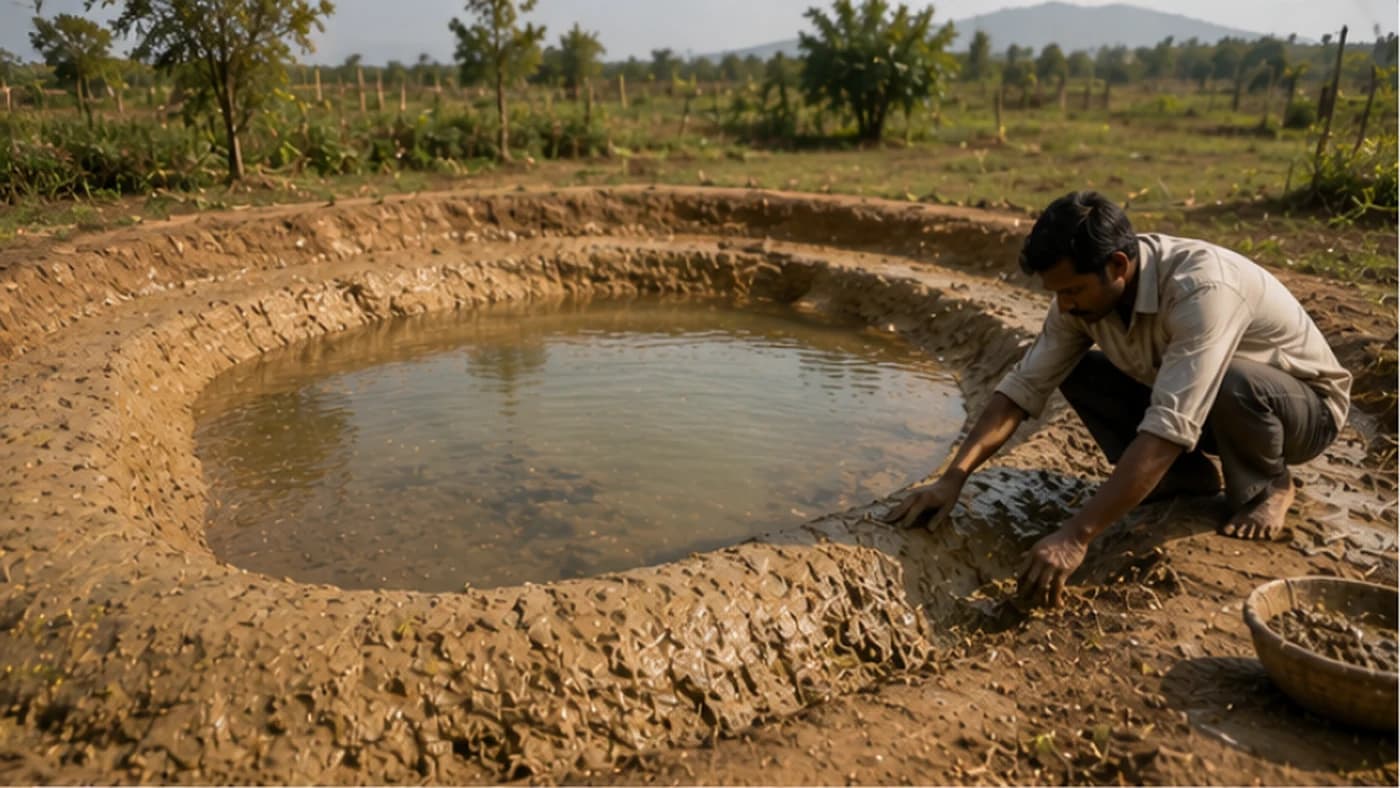
How to Build a Natural Clay Pond That Seals Itself for Decades
Plastic pond liners crack, leach and land in the bin within a couple of decades. A pond sealed with bentonite clay — mined right here in Gujarat and Rajasthan — heals its own cracks and lasts for generations.
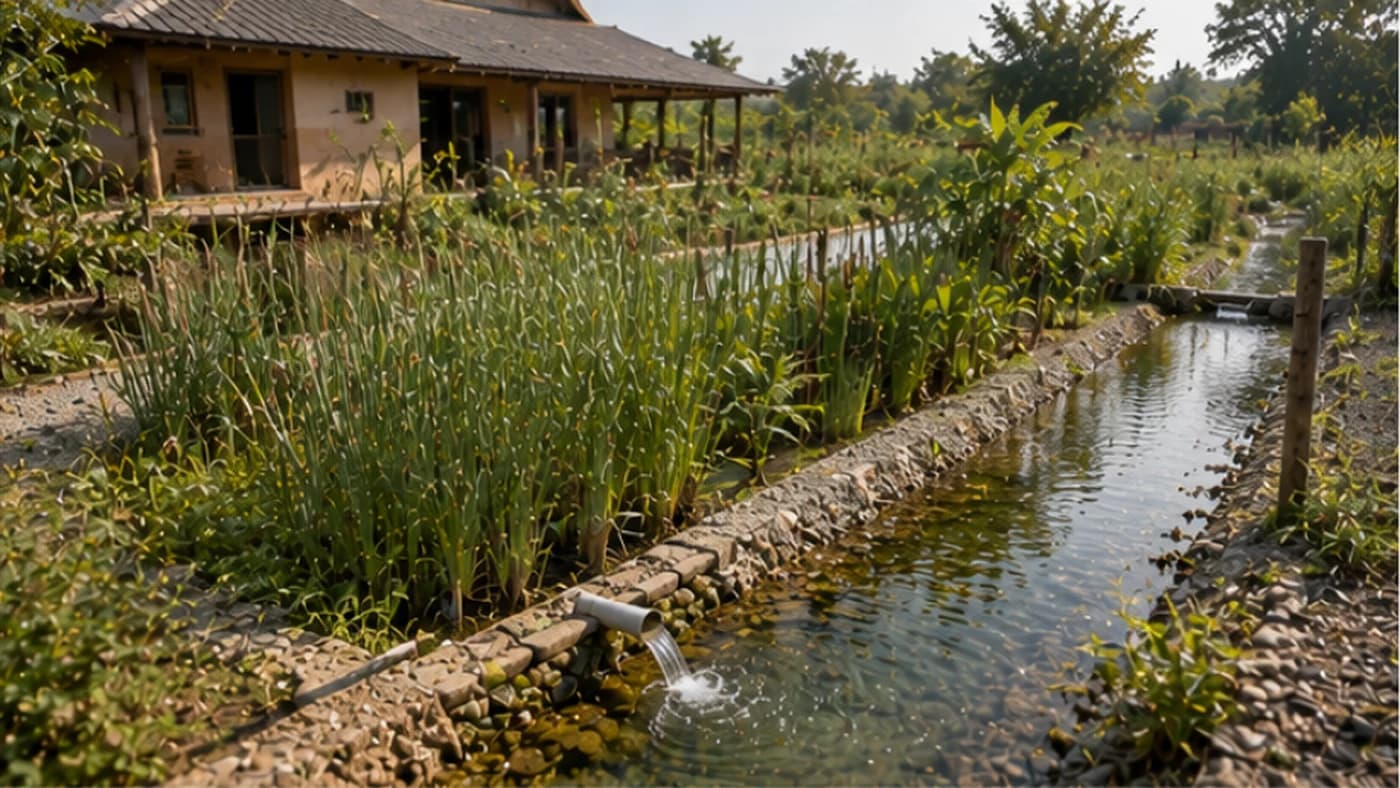
Building a Reed Bed: Natural Greywater Filtration for Your Home
A constructed reed bed cleans sink, shower and laundry water using nothing but gravel, plant roots and bacteria — and gets more effective every year instead of needing a new filter cartridge.
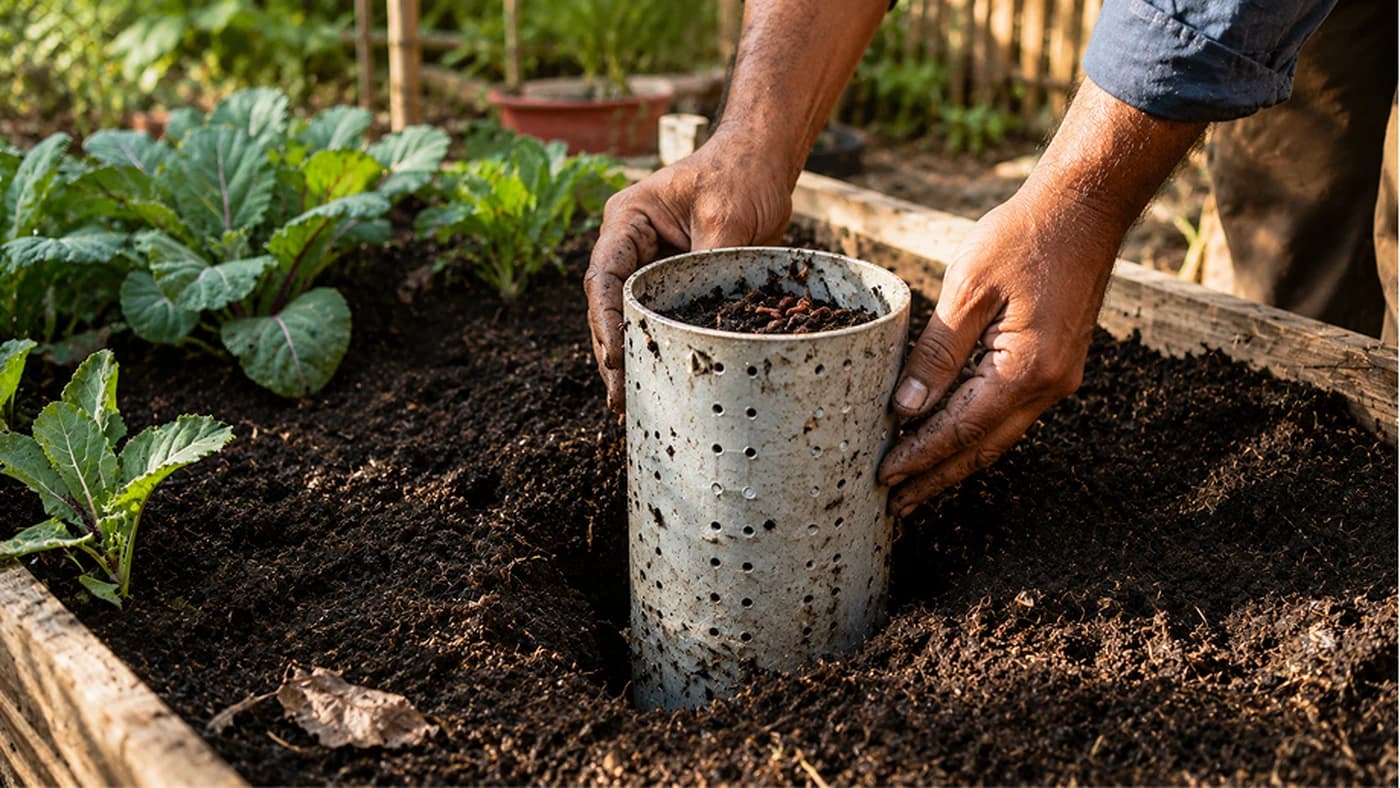
How to Build a Garden Worm Tower for Free, In-Bed Composting
Stop hauling kitchen scraps to a distant bin and hauling compost back months later. A buried worm tower lets worms process waste right where your plants are growing.