

Turn Your Rabbit Hutch Into a Vermicompost Factory
Rabbit droppings are already one of the few manures safe to use fresh. Add a worm bed underneath the hutch, and you turn a daily cleaning chore into a steady supply of premium vermicompost — with far less smell and far fewer flies.
Quick answer
A rabbit hutch already gives you one of the best manures available — adding a simple worm bed underneath turns it into a low-smell, low-fly system that produces premium vermicompost as a byproduct of cages you're already maintaining. Start with one hutch, get the carbon-to-nitrogen balance right, and you'll have a steady, near-free source of high-quality soil amendment within a season.
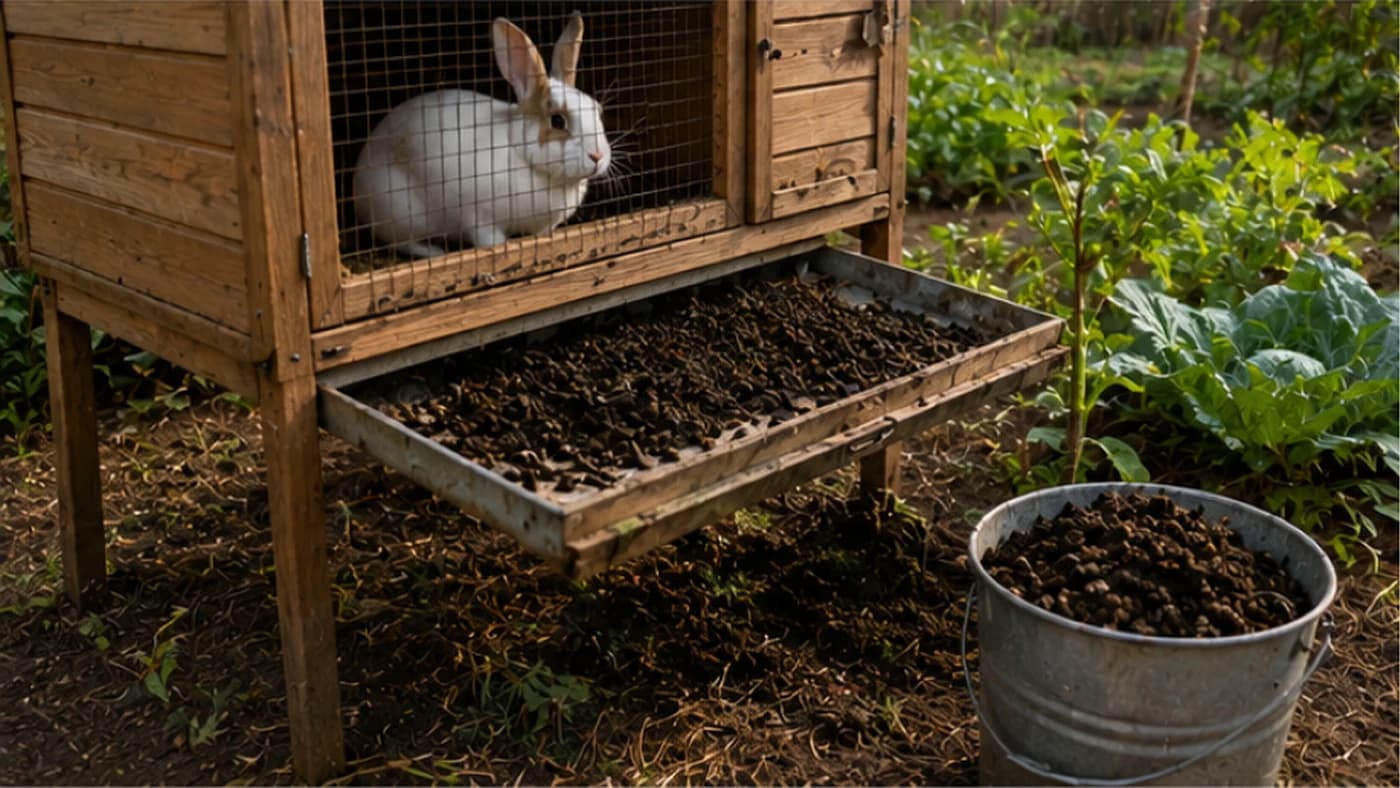
Vermicompost is already well established in Indian organic farming — most growers know Eisenia fetida (red wiggler) worms as the standard species for turning kitchen and farm waste into castings. Fewer realise you can run that same system directly under a rabbit hutch: gravity does the feeding for you, the worms process the manure as it falls, and what would otherwise be a smelly, fly-attracting pile becomes one of the best soil amendments you can produce on a small plot.
Why rabbit manure is different
Rabbit droppings are often called "cold manure" — unlike chicken, cow or horse manure, they don't need a long ageing period before touching your plants, so a handful of fresh pellets can go straight into a planting hole without burning roots. The nutrient content is unusually high for a manure: typically an NPK ratio of roughly 2.4-1.4-0.6, more than double the nitrogen of chicken manure and about four times that of cow or horse manure, with especially strong phosphorus — useful if your plants are producing plenty of leaf but little flower or fruit.
Because the pellets are small and fibrous, they break down slowly over weeks, giving a steady release of nutrients rather than one sharp spike — ideal for heavy feeders like tomato, maize and pumpkin. It also improves the structure of both heavy clay and sandy soils.
Setting up the worm-integrated system
Suspend the rabbit cage 75-90 cm above the ground — high enough for airflow and to leave room for a proper worm bed underneath. Cages set too low restrict airflow and let ammonia build up, which irritates the rabbits' airways. Build a bed roughly 30 cm deep, extending about 15 cm beyond the hutch's edges on every side, so stray pellets don't spill past the bed. A simple frame from untreated wood works fine, with a screen (not solid) bottom that lets excess liquid drain away while keeping the worms in.
As the rabbits drop pellets and spilled hay through the wire floor, it falls straight into the worm bed. Red wiggler worms — the same species used in most Indian vermicompost setups — migrate up to the fresh material and digest it into castings, which carry more beneficial bacteria and humic acid than raw manure.
What the worms add
Odour drops sharply once a healthy worm population is established — instead of raw manure fermenting and building up ammonia smell, the worms and their associated bacteria process the nitrogen-rich waste before it turns anaerobic. Fly populations fall too, since flies need stagnant, undisturbed waste to breed, and a constantly turned, aerated bed is far less hospitable to them.
You also get a second product: a healthy bed regularly produces surplus worms, useful as high-protein feed for poultry or to sell to other growers. And you're using the same footprint to produce two things at once — meat or fibre from the rabbits, and premium fertiliser from the worms.
The mistakes that cause the most trouble
Ammonia buildup is the most dangerous: rabbit urine is high in nitrogen, and if it doesn't drain quickly through the bedding it creates hot spots that kill worms and release toxic fumes. Make sure your bedding has enough carbon — shredded cardboard or straw — to soak up the liquid and balance the nitrogen.
Moisture needs regular checking: worms breathe through their skin and need dampness similar to a wrung-out sponge. Squeeze a handful of bedding — if water drips out, it's too wet; if it feels dusty, it's too dry. Overfeeding is the third common error: if manure piles up faster than the worms can process it, the pile can heat up like a compost pile (well past 49°C), which is great for composting but will cook your worms — spread it out or add more carbon-rich bedding if you see it starting to steam or feel hot.
Climate and other limitations
In regions with genuinely cold winters, worm beds can freeze solid, since red wigglers die if bedding temperatures stay below freezing for long. Bank the sides with straw bales, or move the system into a sheltered space during the coldest months. Predators — rats and other scavengers — are drawn to spilled feed and moisture, so line the bottom of the system with fine hardware cloth (roughly 6 mm mesh) to keep them from tunnelling in. And if you're in a dense residential area, a large open-air bed may draw complaints, in which case a more contained bin system under the hutch keeps things tidy without losing the benefit.
Getting it right from the start
Before introducing any rabbits, fill the worm bed with 15-20 cm of shredded cardboard, coconut coir or aged dry leaves — this carbon-rich base buffers the high-nitrogen waste and keeps the system from turning anaerobic in its first weeks. Add worms only after the rabbits have deposited a first thin layer of pellets and hay, since worms placed into a bed with no food available will simply leave.
Mist the bed gently each morning in hot weather to keep moisture up without drowning the worms or washing away the nutrient-rich "worm tea" that collects at the bottom. Harvest the bottom layer of finished castings roughly every six months to keep bed height manageable, and use a garden fork rather than a spade when turning it, to avoid injuring the worm population.
Scaling up and getting more from it
A single breeding doe and her litters can produce over a tonne of manure and waste in a year, so plan on roughly 1-1.5 kg of worms per hutch to keep pace — split your population into a second bed if manure starts accumulating faster than it's being processed. Adding rock dust or azomite to the bed gives the worms fine minerals to grind the fibrous waste in their gizzards, and those minerals become more plant-available in the process.
For the most advanced setup, build the bed on a slight slope with a liner and a drain at the low point, so you can collect leachate — the nutrient-rich liquid that filters through — and dilute it to the colour of weak tea for use as a foliar spray.
What a small rabbitry actually produces
Two breeding does and one buck typically produce 7-9 kg of manure and waste hay a week — roughly 360-450 kg a year without a worm system, meaning hours a month spent shovelling, hauling and managing smell. With a worm bed of around 5,000-10,000 red wigglers processing that same waste, you get roughly 180 kg of finished, high-grade castings a year — turning a chore into a genuine harvest you can use on garlic beds, heavy-feeding vegetables, or anywhere your soil needs a lift.
Frequently asked
Do I need a special worm species?+
Red wiggler (Eisenia fetida) worms — the same species used in most Indian vermicompost setups — are the standard choice, since they thrive on manure and kitchen waste rather than needing garden soil.
How do I know if the bed is too wet or too dry?+
Squeeze a handful of bedding: if water drips out, it's too wet (add dry carbon material like shredded cardboard); if it feels dusty and won't hold together, mist it lightly.
Will the setup smell bad?+
Less than a standard manure pile, if it's balanced correctly. A healthy worm population processes the waste aerobically before it can ferment into ammonia — most of the smell comes from an imbalanced or overfed bed.
How often should I harvest the castings?+
Roughly every six months, taking the finished material from the bottom of the bed while leaving the upper, less-processed layers for the worms to continue working.
Can rats or other pests get into the worm bed?+
They can if the bottom is unprotected. Line the base with fine hardware cloth (roughly 6 mm mesh) to stop rodents tunnelling in to reach spilled feed or the worms themselves.
Where to go next
Want this as daily tasks for your farm?
Khetiyaar turns guides like this into a day-by-day plan — in your language, free to start.

Related guides
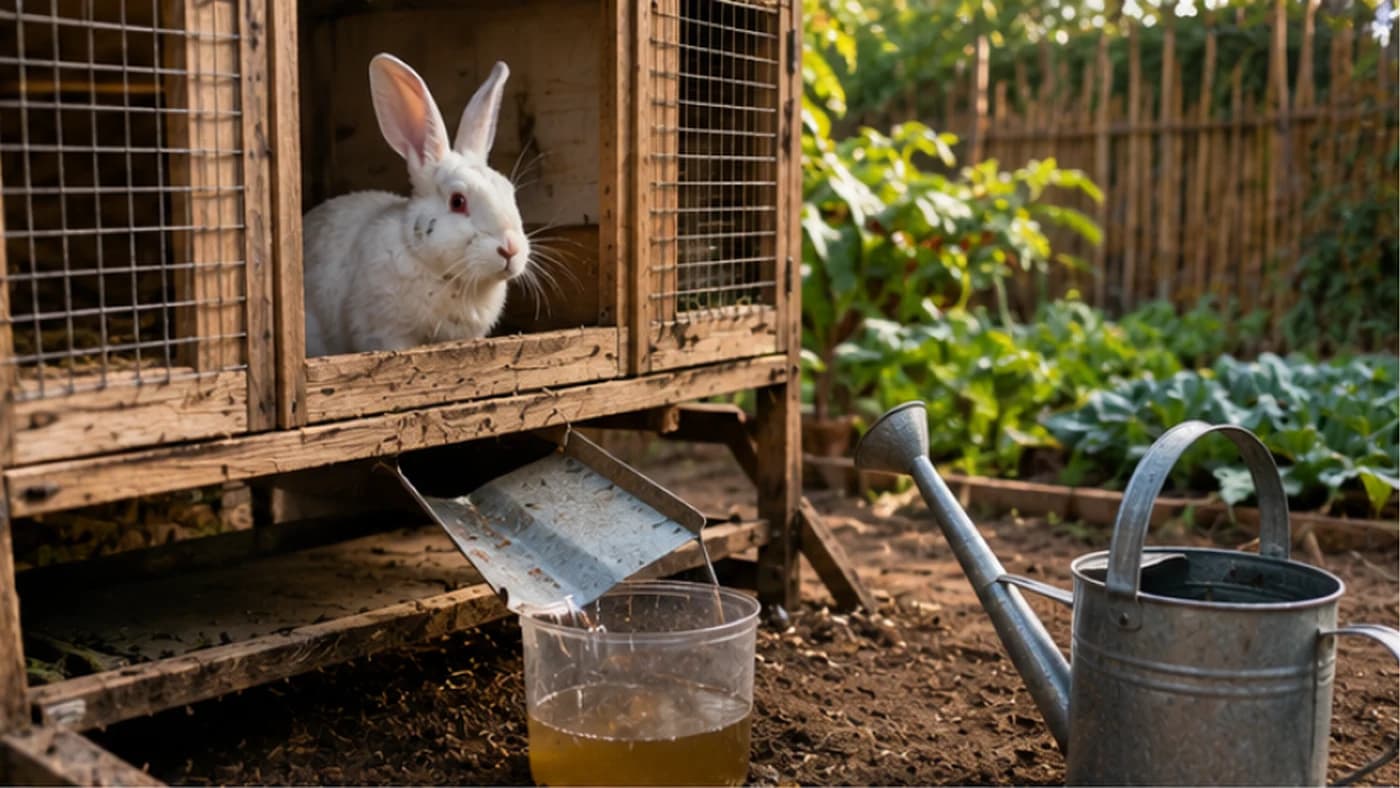
Rabbit Urine as Fertiliser: The Free Liquid Boost Most Rabbit Keepers Waste
Rabbit keepers usually save the manure and let the urine drain away — but the urine carries the fast-acting, water-soluble nitrogen your vegetables need most during their peak growth. Diluted correctly, it works like a free liquid feed.
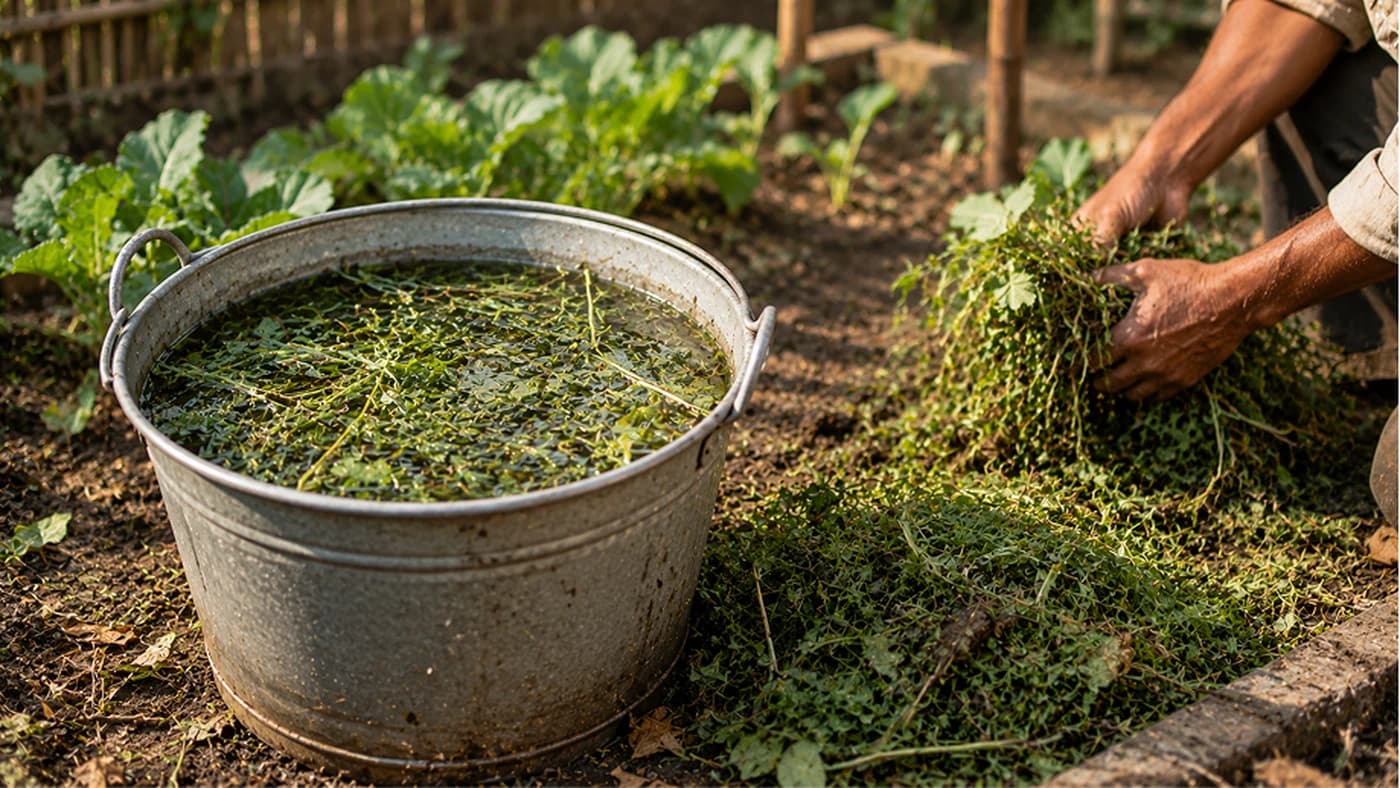
Free Garden Fertiliser From Backyard Weeds (Fermented Plant Juice)
The weeds growing wild along your bund or driveway are nutrient pumps. Korean Natural Farming's Fermented Plant Juice (FPJ) turns them — plus a handful of jaggery — into a potent, nearly free plant tonic.
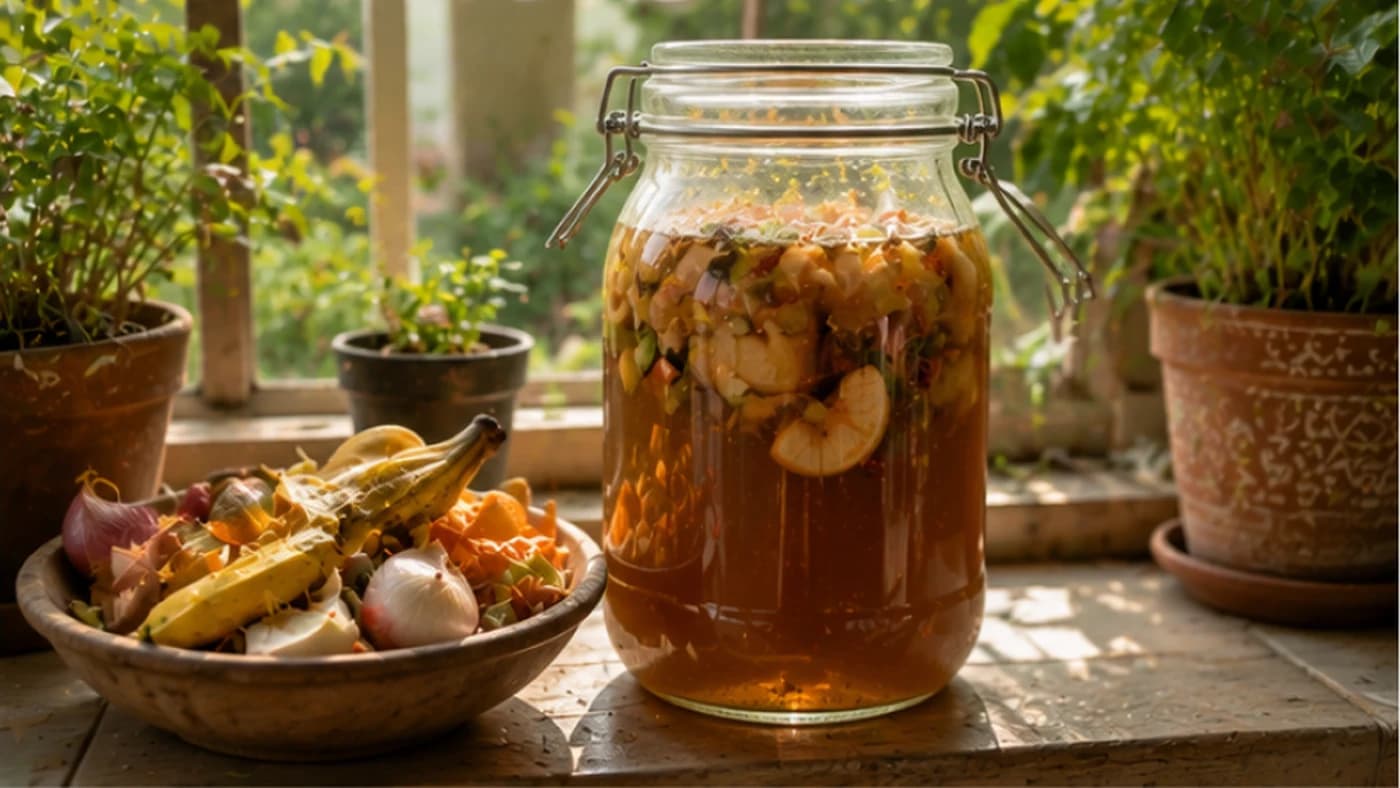
DIY Kitchen Waste Fertiliser: Turn Peels and Scraps Into Plant Food
Banana peels, eggshells, tea leaves and vegetable trimmings are a free source of nitrogen, phosphorus and potassium. Here are three simple, low-cost ways to turn kitchen waste into fertiliser for your garden or fields.