

The Deep Litter Method: Stop Cleaning Your Coop Every Week and Start Composting It Instead
Scooping and hauling manure out of a coop every week is exhausting and throws away free fertiliser. The deep litter method lets bedding and droppings build up and compost in place — less labour, better bird health, and a bucket of garden gold every season.
Quick answer
The deep litter method trades a weekly chore for a slower, more hands-off system that manages itself most of the time: add dry carbon regularly, turn it every few days, watch the moisture, and let the birds do a good share of the mixing. In return you get a drier, less smelly coop, stronger natural disease resistance, and — once or twice a year — a genuinely excellent batch of compost for the garden or field, all from material you would otherwise be hauling away as waste.
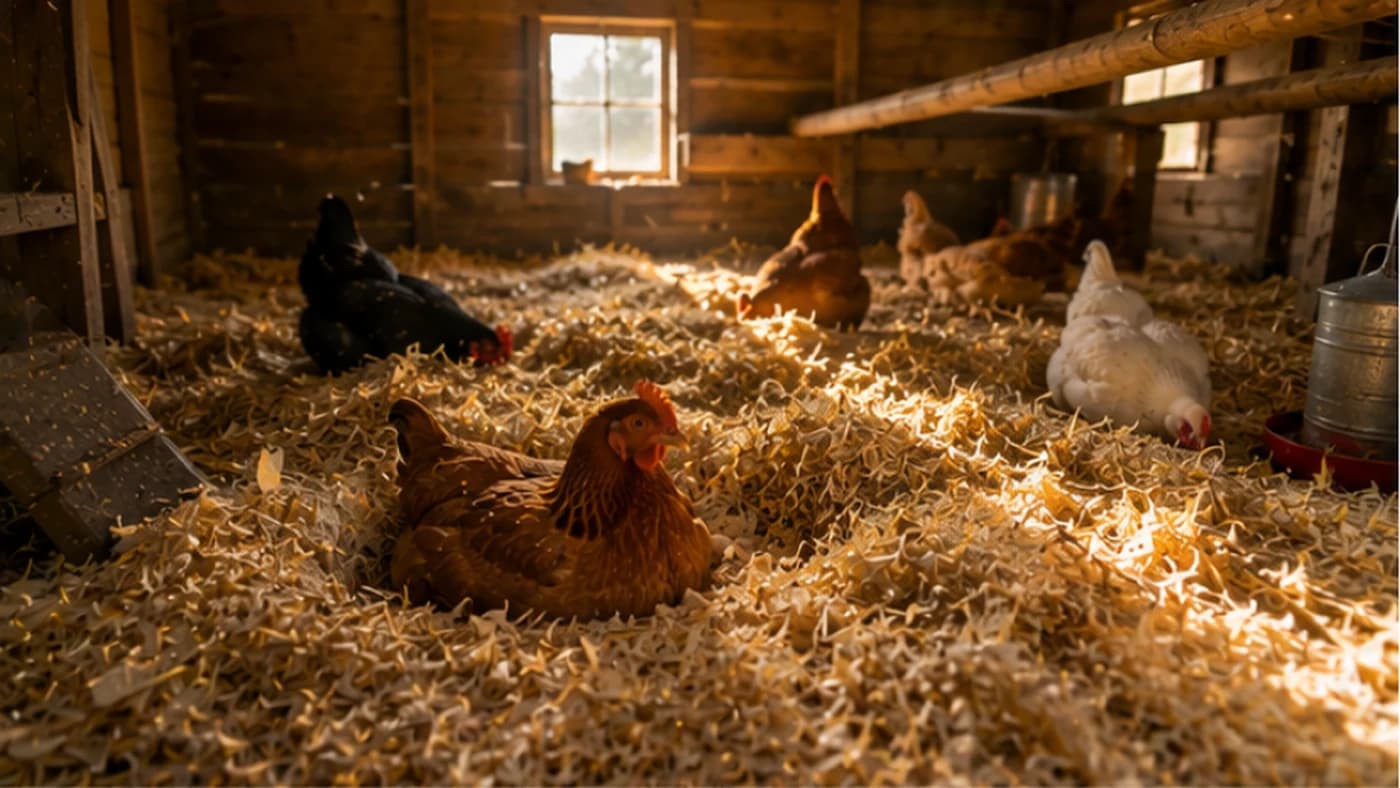
The standard advice for a clean coop has always been the same: scoop, scrub and haul, week after week. The deep litter method throws that cycle out and replaces it with something closer to a compost pile that happens to have chickens living on top of it. Instead of removing droppings as they fall, you build a deep base of carbon-rich bedding that absorbs the nitrogen in manure and lets it break down slowly and safely in place — turning what used to be a weekly chore into a source of free fertility, better bird health, and, in India's humid stretches especially, much better control of smell, flies and dampness than a bare or thinly bedded floor ever gives you.
What deep litter actually is
Think of the coop floor as a small forest floor: in the wild, fallen leaves and droppings are constantly broken down and turned over by scratching birds, and a deep litter system recreates exactly that indoors. Chicken manure is extremely high in nitrogen, while dry bedding like straw, dried leaves or wood shavings is high in carbon — paired correctly, the two feed a slow, controlled composting process, and the beneficial microbes that build up don't just break down the waste, they actively compete with and suppress disease-causing organisms, creating a healthier environment for the flock than a floor that's stripped bare every few days.
How to start and manage it
Start with a clean, dry base — a dirt floor works especially well, since it allows soil microbes and earthworms to migrate up into the litter, though wood or concrete floors work fine too with careful moisture management. Lay down at least 10–15 cm of carbon-rich bedding to begin: dry straw, chopped paddy husk, dried leaves or wood shavings are all suitable, though avoid long, unbroken straw on its own since it mats together and blocks airflow.
As the birds roost and the surface starts to look soiled or damp, add a fresh cap of dry bedding every few days rather than removing anything — the older material underneath keeps composting while the top stays reasonably clean. Oxygen is essential, so keep the litter turned, either with a fork once or twice a week or simply by scattering a little grain so the birds dig and fluff it for you. The litter should feel roughly as damp as a well-wrung cloth — if it's dusty and dry, the microbes can't work; if it's soggy and smells of ammonia, it has gone anaerobic and needs more dry carbon mixed in immediately.
Why it works so well, especially in India's climate
In cooler northern winters, a mature litter bed generates real bio-thermal warmth, taking the edge off cold nights without an electric heater. But across most of India, the bigger year-round win is different: good deep litter management controls odour, keeps flies down, and manages the excess moisture that monsoon humidity brings far better than a bare or thinly bedded floor, since the carbon layer actively absorbs and processes moisture instead of letting it sit and turn foul.
A mature litter bed also builds a genuine microbial shield — beneficial bacteria and fungi crowd out many common poultry pathogens, including those behind coccidiosis, and birds raised on an established litter floor often develop stronger natural immunity from routine, low-level exposure. After six months to a year, the bottom layer turns into dark, crumbly, nearly finished compost — rich in nitrogen, phosphorus and potassium — so instead of hauling waste away, you are harvesting some of the best fertiliser your garden or field will ever see.
Common mistakes to avoid
The most common beginner mistake is treating deep litter as neglect — it is not a set-and-forget system, and if you stop adding carbon or stop keeping it turned, it will fail and start to smell. The moment you notice ammonia, add more dry bedding and turn the litter thoroughly straight away. Poor ventilation is another common trap: because a composting floor releases moisture and some gas, the coop needs good airflow at the top even in cool weather — sealing it up tight to save warmth just traps humidity and ammonia, which causes respiratory problems faster than cold ever will. And keep waterers on a raised stand or outside the main coop where possible, since a single spill in deep litter creates a wet, foul patch fast — if one happens, shovel out that section immediately and replace it with dry material.
Where this method has real limits
A small or cramped coop often can't hold the litter depth this method needs — getting a real composting effect typically calls for 20–30 cm of depth, which some smaller structures simply can't accommodate. Climate plays a role too: in very humid, high-rainfall regions the litter can struggle to stay dry enough to remain aerobic, while in very dry, arid conditions it may just sit as dry manure and shavings without much composting action at all. And if disease breaks out in the flock, deep litter must be suspended immediately — pathogens can hide deep in old bedding, so the only responsible response is to strip the coop to bare floor, disinfect thoroughly, and start completely fresh once the health issue has passed.
Weekly scooping vs. deep litter, compared
Weekly scooping and cleaning: high labour scooping and hauling every week or few days; moderate bedding cost from frequent full replacement; no warmth benefit; raw waste that still needs separate composting; needs constant cleaning to control odour. Deep litter: low labour, just adding layers and occasional turning; low bedding cost added gradually over time; real bio-thermal warmth in cool weather; a rich, garden-ready compost as the end product; natural microbial suppression keeps odour down on its own. One treats manure as a nuisance to eliminate; the other treats it as a resource to manage.
Practical tips for success
Start a new deep litter bed a few weeks before the season you most need it to be working well, since a mature bed performs far better than one started from scratch in the middle of a crisis. Use the simple dust test: kick the litter — if a cloud of fine dust rises, it's too dry and needs a little moisture; if it clumps into a muddy ball, it's too wet and needs more dry bedding. If a friend or neighbour already runs a healthy deep litter system, ask for a bucket of their old material to seed your new floor with an active microbial population, the same way you'd use a starter for curd or a sourdough culture.
Don't overcrowd the space — a rough guide is about 0.35–0.4 square metres of floor space per bird so the carbon can keep up with the nitrogen. And when you do your big annual clean-out, never scrape the floor completely bare — leave an inch or two of the old, dark material behind to seed the next cycle.
Getting the balance right: carbon and nitrogen
Chicken manure is very nitrogen-rich, while dry wood shavings are almost entirely carbon, so the goal is a rough working balance where the litter breaks down steadily without smelling or drying out. If the litter is breaking down too fast and starting to smell, it needs more carbon (add dry bedding); if nothing seems to be happening at all, it may need a touch more nitrogen or moisture. Advanced keepers sometimes use diatomaceous earth for pest control, but sparingly and only on roosts or in dust-bath areas — mixed directly into the floor litter, it can just as easily kill the beneficial mites and microbes that keep the whole system healthy.
A real-world scenario
Picture a 3 x 3 m coop housing about fifteen hens. At the start of the season, 15 cm of dry straw and husk go down, and every week a handful of scratch grain gets tossed in so the birds dig and mix their manure into the bedding. As the weeks pass the litter compacts, so another 5–7 cm of dry leaves or husk gets added on top. Through the peak of the monsoon, the coop stays noticeably drier and less smelly than a bare-floor setup managed the same way, and by the end of the season the keeper scoops out the bottom layer — dark, crumbly and earthy-smelling — straight onto the vegetable patch, completing the cycle.
Terms explained in this guide
Frequently asked
What is the deep litter method?+
A system where carbon-rich bedding and chicken manure are allowed to build up and slowly compost inside the coop, instead of being scooped out and removed every week.
How deep should the litter be?+
Around 20–30 cm is typically needed for good composting action; smaller or shallower coops may struggle to build up enough depth for the method to work fully.
How do I know if the litter is too wet or too dry?+
Kick it: a cloud of dust means it's too dry, while clumping into a muddy ball means it's too wet. It should feel roughly like a well-wrung cloth.
Is deep litter useful in hot, humid parts of India, not just cold climates?+
Yes — while the winter warmth benefit matters most in cooler regions, good deep litter management is often more valuable in humid areas for controlling odour, flies and excess moisture.
When should I stop using deep litter?+
If disease breaks out in the flock. Strip the coop to bare floor immediately, disinfect thoroughly, and start a completely fresh litter bed once the health issue has cleared.
Where to go next
Want this as daily tasks for your farm?
Khetiyaar turns guides like this into a day-by-day plan — in your language, free to start.

Related guides
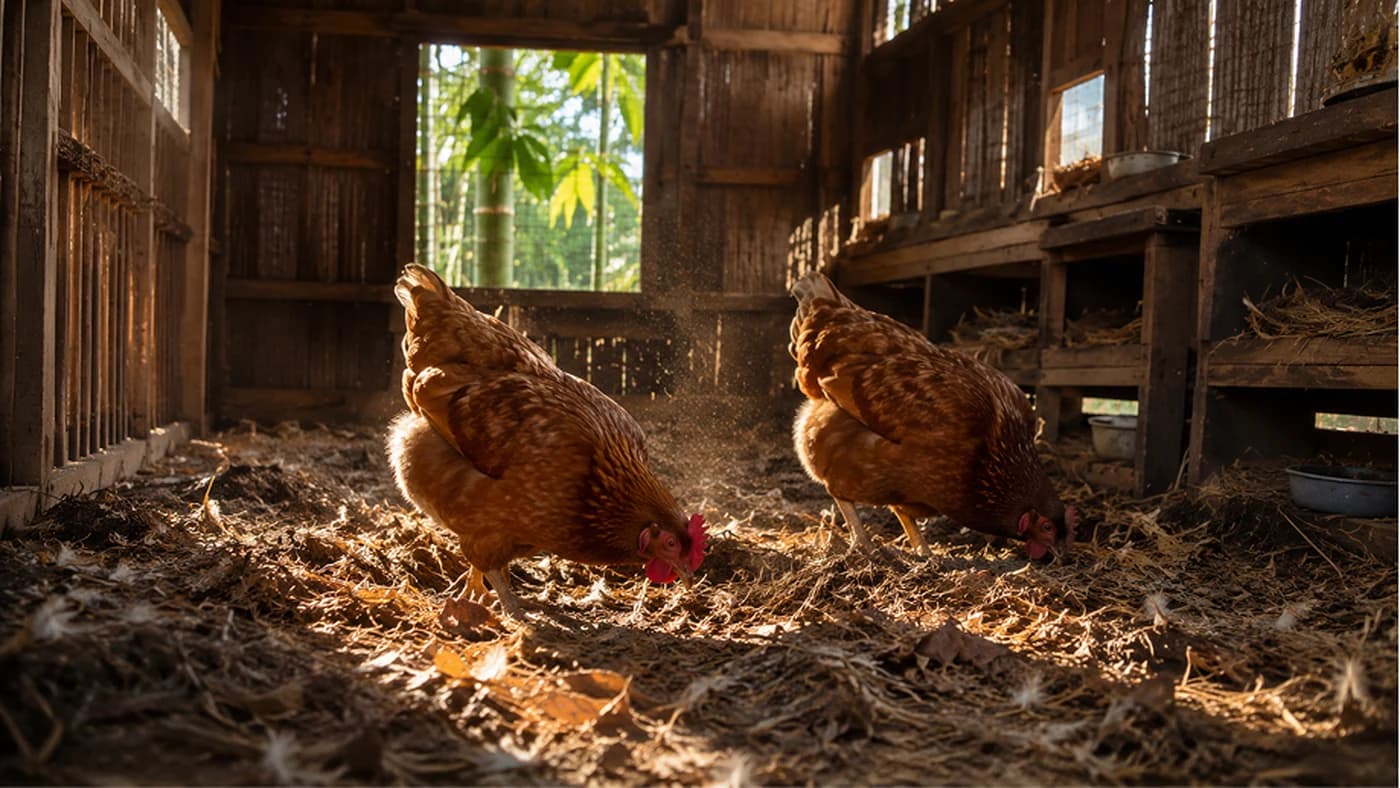
Deep Litter Method: Turn Your Chicken Coop Into a Living Compost System
A scrubbed, bare coop floor is a wasted opportunity. Let a thick carbon bed and billions of microbes do the composting for you — less labour, healthier birds, and free fertiliser for the field.
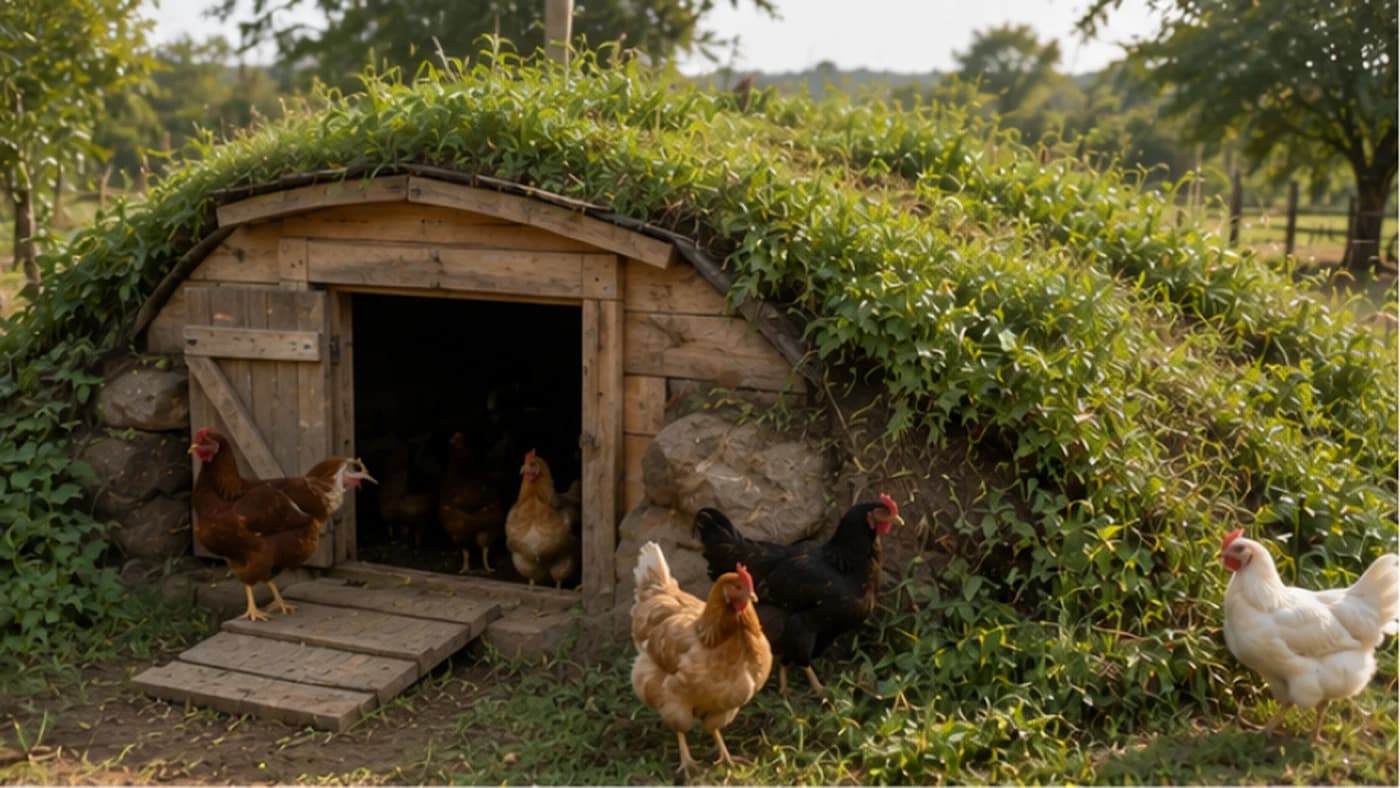
Earth-Sheltered Chicken Coop: Using the Ground to Keep Birds Cool in Summer and Warm in Winter
A coop built partly into the ground barely changes temperature between a 45°C afternoon and a cold winter night. Here's how earth-sheltering works and how to build one for your flock.
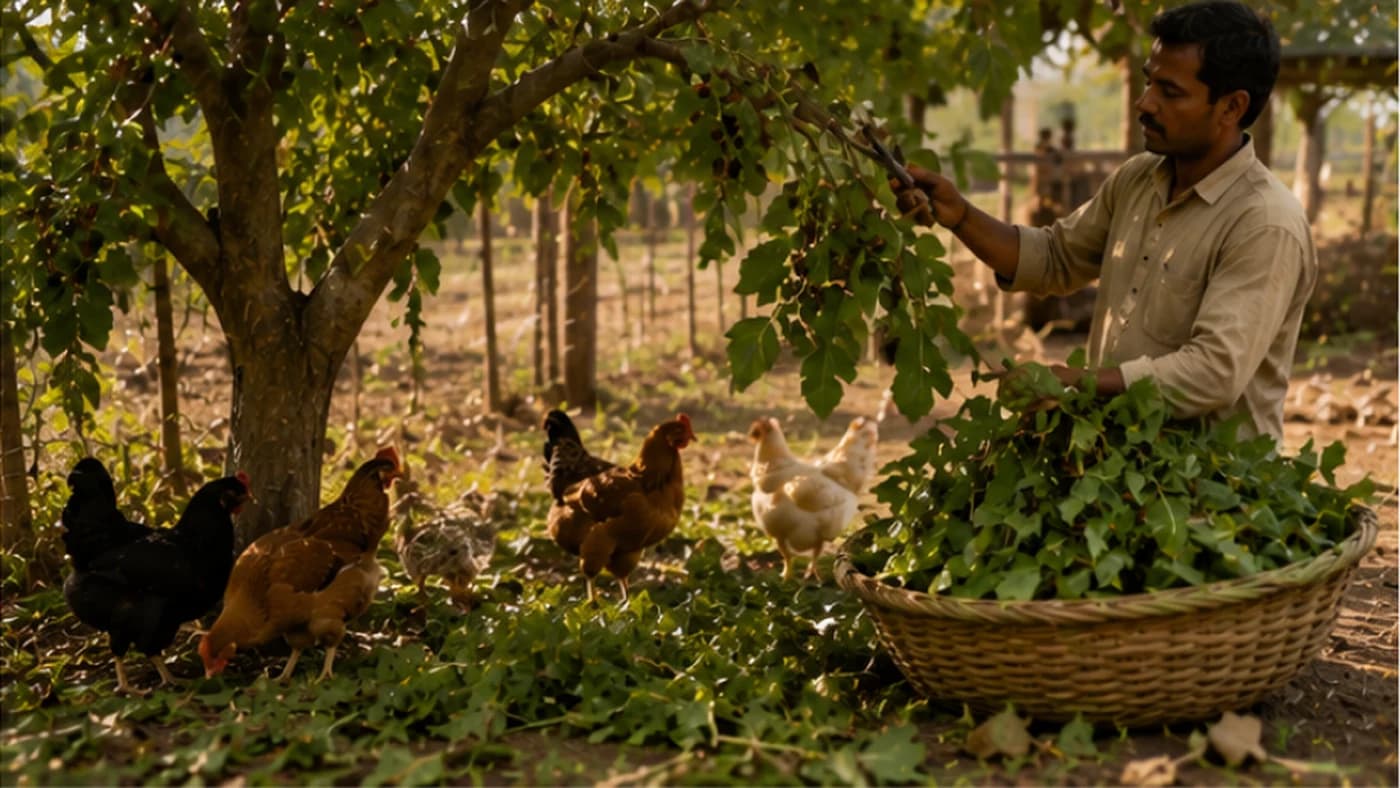
Chicken Fodder From Mulberry Trees: India's Sericulture Trick for Free Protein
Mulberry leaves are as protein-rich as alfalfa, but the real value shows up once silkworms process them — a trick Indian sericulture regions have used for generations, and one any backyard flock keeper can borrow.