

The Ancient Dovecote: Turning Pigeons Into a Free Fertiliser Factory
Old Persian and Indian havelis alike built towers just to house pigeons — not for meat, but for one of the most potent organic fertilisers known. Here's how the system works, and how to build a small version safely.
Quick answer
A dovecote is a genuinely old idea — Persian, and quietly present in Rajasthan's and Gujarat's own havelis — that turns a bird most people ignore into a free, high-nitrogen fertiliser source for a farm or garden. It costs nothing to feed, works passively while the birds forage across your land, and produces one of the most concentrated organic manures available. The only real requirements are patience (guano must cure for months before use) and care in handling the dust and acidity of the raw droppings.
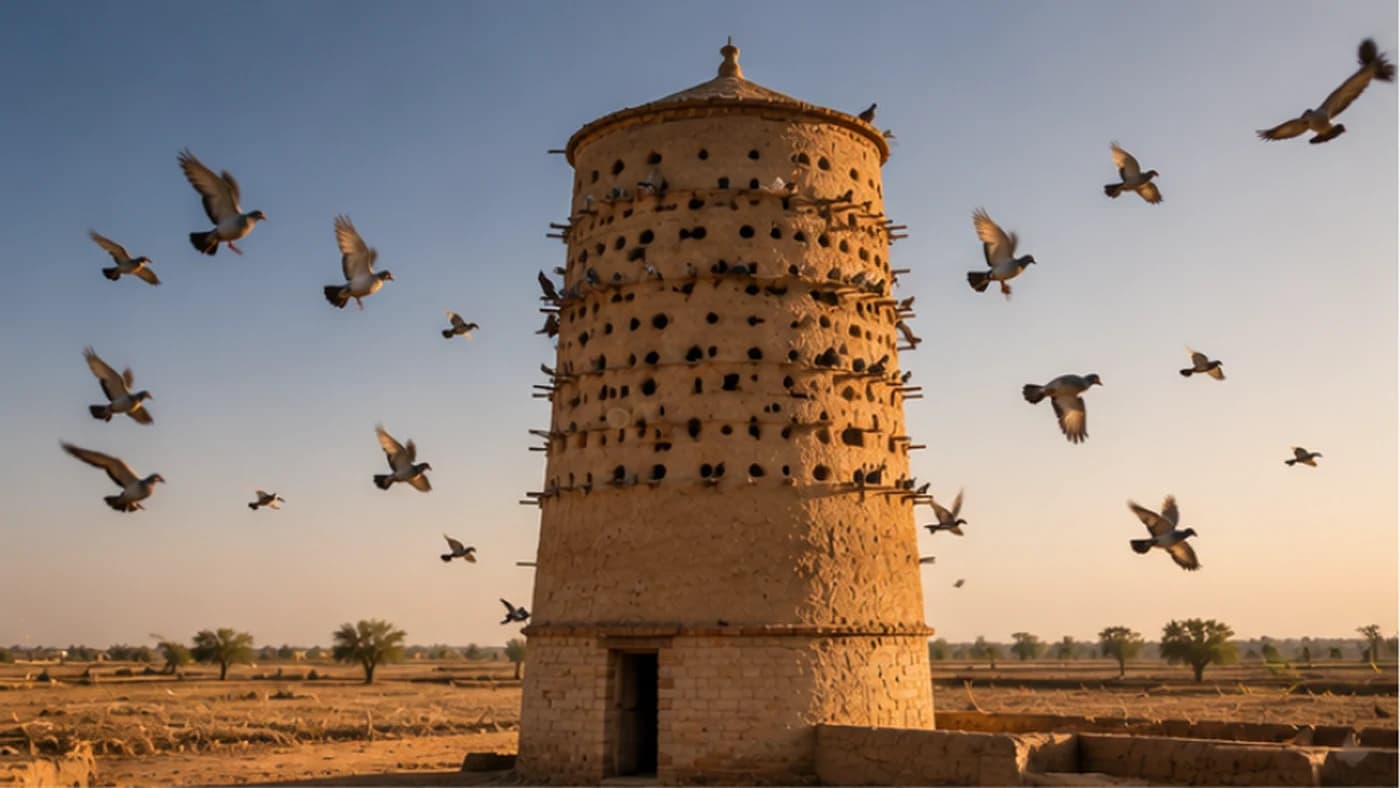
In old Rajasthan and Gujarat havelis, as much as in ancient Persia, you'll still find tall towers and wall niches built purely to house pigeons — not for meat, but for something less obvious: their droppings. Pigeon guano is one of the most nutrient-dense organic fertilisers available, and a dovecote is simply a structure that gives wild pigeons free housing so they roost, forage across the surrounding countryside, and deposit concentrated, nutrient-rich droppings in one place — at zero feed cost to you. This isn't about raising birds for meat; it's about managing a free biological nutrient pump for your fields or garden.
How the classic Persian dovecote was built
Persian dovecote towers (borj-e-kaftar), most famous around Isfahan, were built from sun-dried mud brick and lime plaster into hollow cylinders up to 20 metres tall — height maximised surface area for nesting, not grandeur. Inside, a honeycomb of small nesting niches (roughly 20×20×28 cm) could house thousands of breeding pairs while keeping out larger predators. Thick mud-brick walls kept the interior temperature stable through desert heat and cold, encouraging year-round breeding, while small vents at the top kept air moving to dry droppings quickly and control ammonia buildup.
How the system actually works
Pigeons naturally seek out rocky ledges and high crevices for safety — a dovecote simply mimics this habitat, so birds colonise it on their own without any capturing or training. Crucially, you don't need to feed them daily: pigeons fly out each morning to forage seeds and grain across the surrounding land, gathering nutrients from miles away and concentrating them where they roost at night, since they tend to hold their waste until perched. Harvesting is periodic — once or twice a year, farmers enter through a small base door and shovel out the accumulated, naturally dried droppings.
Why pigeon manure is worth the effort
Pigeon guano is widely considered the most potent organic fertiliser available to a home grower, typically carrying an N-P-K ratio of roughly 4-3-1 (nitrogen sometimes as high as 17% depending on diet) — noticeably higher than cow or horse manure, and rich in phosphorus, which makes it excellent for flowering and fruiting crops. For comparison: chicken manure runs roughly 1–1.5% nitrogen and needs composting; cow manure is around 0.6% nitrogen and is better for building soil structure than for a quick nutrient boost; horse manure is similar to cow manure but carries more weed seed risk. Pigeon guano's foraging-based diet also means a broader mineral spread — magnesium, iron, calcium — than most commercial fertilisers.
Handling it safely — this part matters
Fresh pigeon droppings are highly acidic and concentrated; applied directly at the base of a plant, they can scald roots and stems. Always cure it first. Dust from dried droppings is also a genuine health risk — it can carry fungal spores that cause respiratory illness — so wear a mask and gloves and dampen the manure slightly before shovelling to keep dust down.
To cure it: mix one part dried, cured guano with about five parts carbon-rich material (sawdust, straw, dried leaves) and let it sit in a covered compost heap for at least 3–6 months to neutralise the acidity. For a faster liquid feed, soak roughly 2 kg of cured guano in a sack inside a 200-litre drum of water, ferment for about two weeks stirring occasionally, then dilute to about 1:10 (until it looks like weak tea) before applying at the base of plants every couple of weeks in the growing season. Apply cured manure in early spring or after monsoon, at least 4–6 weeks before planting, and never directly onto leaves — the nitrogen can burn foliage.
Building a small backyard version, and keeping it clean
You don't need a 20-metre tower — a simple wall-mounted nesting box, at least 3 metres off the ground so birds feel secure, is enough to attract pigeons to a rural or peri-urban plot. Keep the interior dry with a layer of sand or wood chips on the floor (moisture causes disease and loses nitrogen to ammonia). Keep entrance holes small (around 6 cm) to exclude larger predatory birds, and finish the base with a smooth band to stop snakes and rats climbing in.
This is best suited to open farmland, orchard edges, or large rural plots with foraging ground nearby — pigeons need diverse, accessible forage across the surrounding land to produce nutrient-rich waste, so it won't work well in a dense urban core with no green space around it. Check local rules before building anything large, as pigeons are treated as a nuisance bird in some municipalities.
Frequently asked
What is a dovecote and why did old farmers build them?+
A dovecote is simply a tower or nesting structure built to house wild pigeons. Farmers built them not for meat, but to collect the birds' droppings — one of the most nutrient-dense organic fertilisers available, produced at no feed cost since pigeons forage on their own.
How nutrient-rich is pigeon manure compared to cow or chicken manure?+
Pigeon guano typically runs about 4% nitrogen and 3% phosphorus (sometimes far higher), compared to roughly 0.6% nitrogen in cow manure and 1–1.5% in chicken manure — often four times more nitrogen than horse manure and eight times more phosphorus than cow manure.
Can I apply fresh pigeon droppings directly to plants?+
No. Fresh droppings are highly acidic and can burn roots and foliage. Cure it for 3–6 months mixed with carbon-rich material like sawdust or straw, or ferment it into a diluted liquid feed, before applying.
Is handling pigeon guano safe?+
It's safe with basic precautions: wear a mask and gloves when shovelling dried droppings, and dampen the material first to keep dust down, since dust from dried droppings can carry fungal spores that irritate the lungs.
Do I need to feed the pigeons for this to work?+
No — that's the main appeal. Pigeons forage on their own across the surrounding land each day and only need a safe place to roost and nest, which the dovecote provides.
Where to go next
Want this as daily tasks for your farm?
Khetiyaar turns guides like this into a day-by-day plan — in your language, free to start.

Related guides
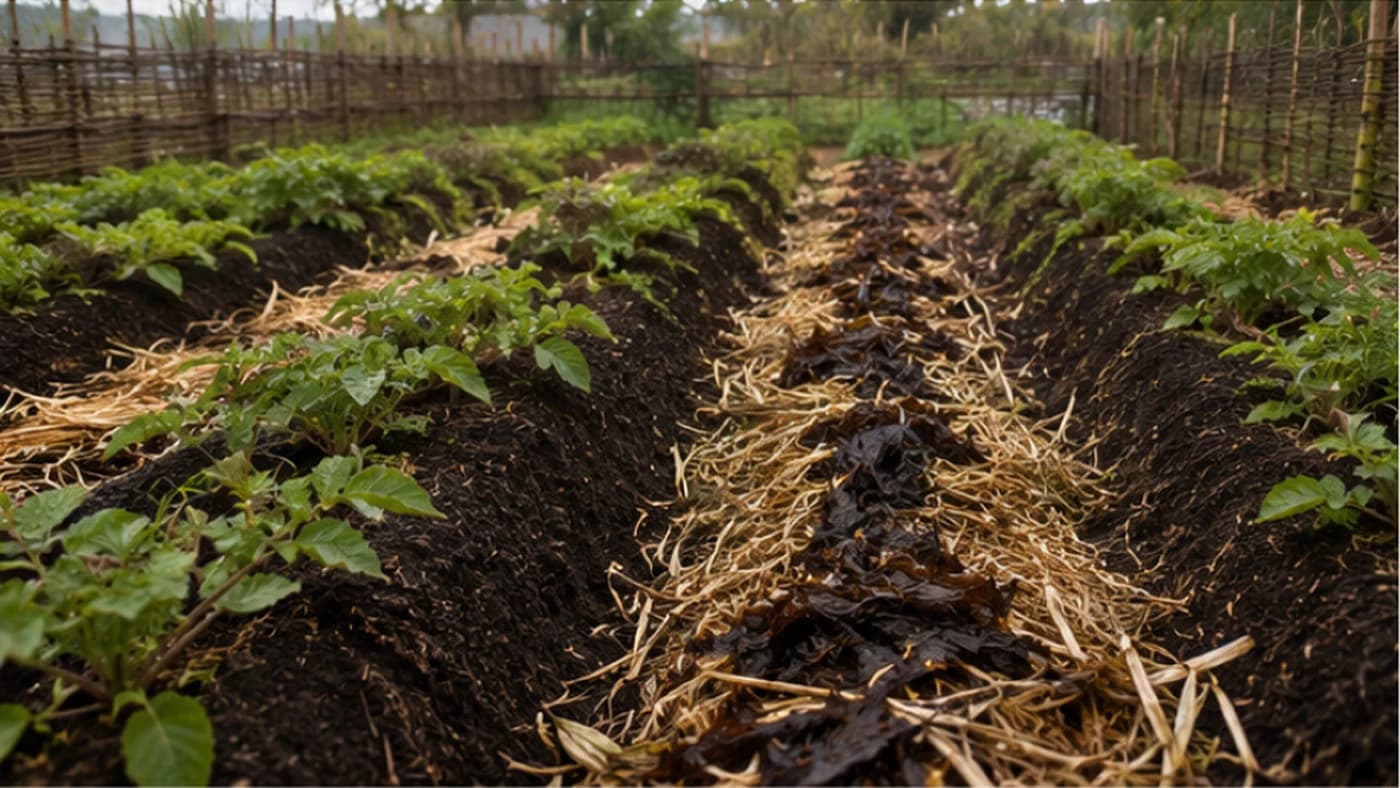
The Lazy Bed Technique: An Ancient Ridge Method for Waterlogged Soil
Centuries before raised beds became fashionable, farmers on Europe's wettest, rockiest land built self-draining ridges from flipped turf alone. It still solves clay and waterlogging problems today — no tools but a spade.
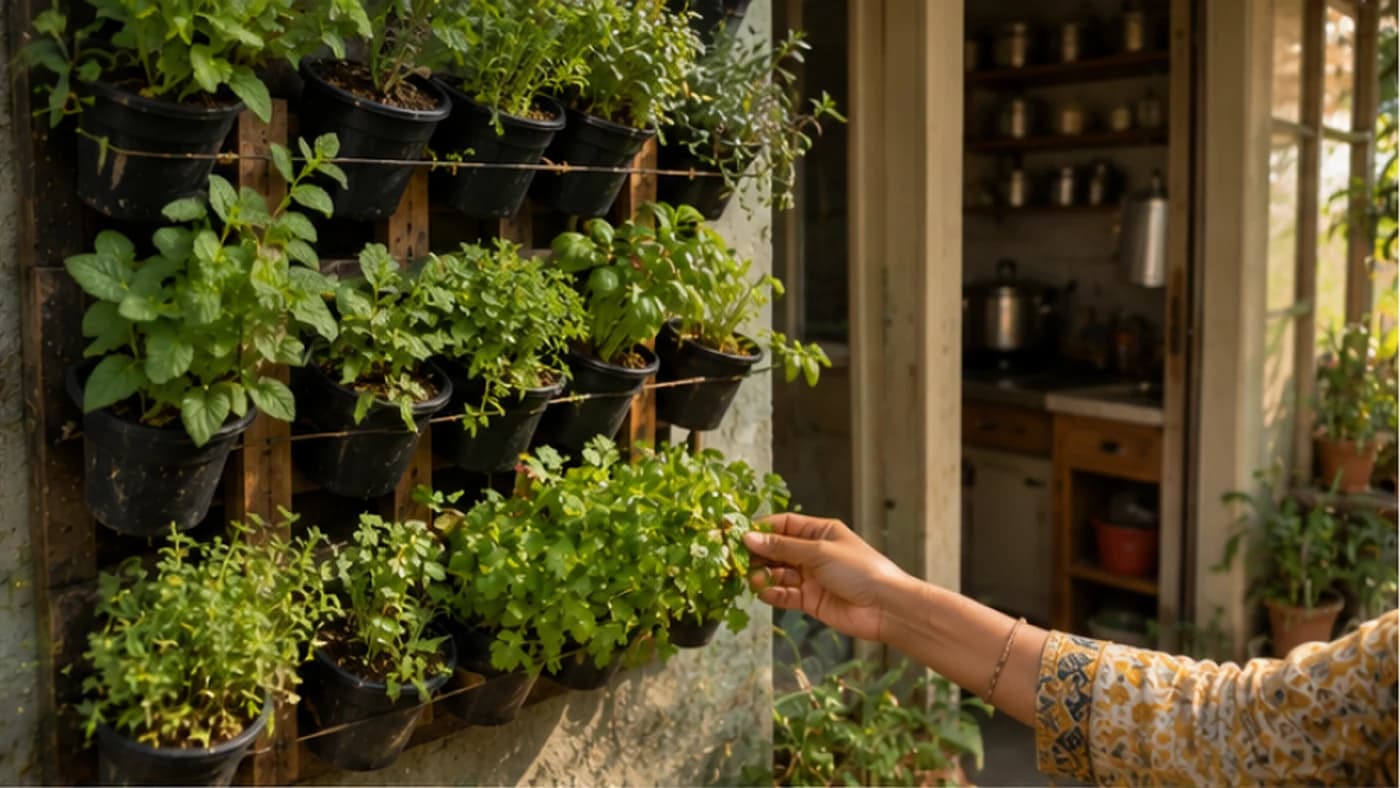
Build a Kitchen Herb Wall: A Living System That Beats Lonely Pots
A row of herbs in separate plastic pots on a windowsill usually struggles and dies within weeks. A connected vertical herb wall — sharing humidity, water, and light — keeps coriander, mint, tulsi, and curry leaf thriving in far less space, with far less daily effort.
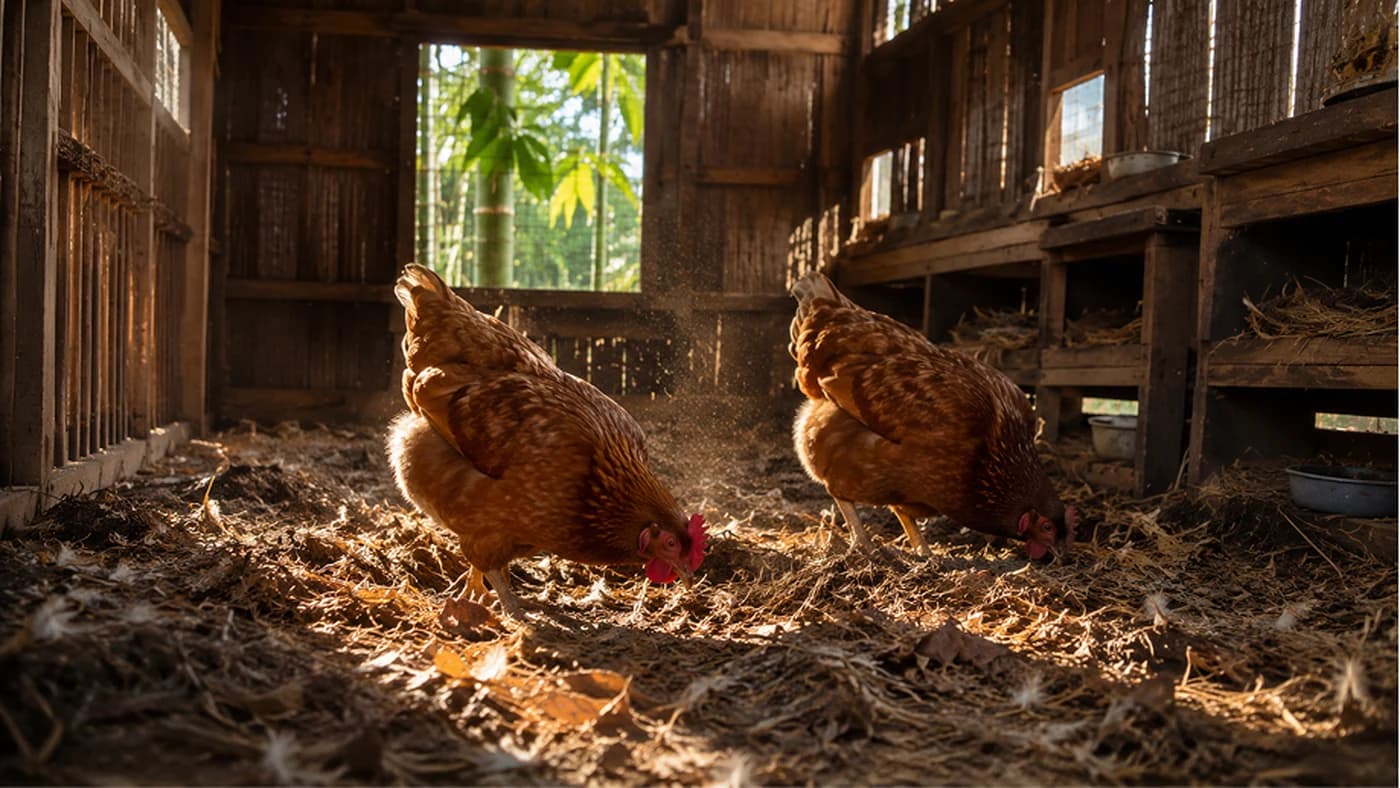
Deep Litter Method: Turn Your Chicken Coop Into a Living Compost System
A scrubbed, bare coop floor is a wasted opportunity. Let a thick carbon bed and billions of microbes do the composting for you — less labour, healthier birds, and free fertiliser for the field.