

Bokashi Composting for Beginners: Turn Kitchen Waste into Fertiliser in a Flat or Small Home
No yard, no compost pile, no problem. Bokashi ferments kitchen scraps — including cooked food, meat and dairy — in a sealed bucket, working in an apartment, a terrace corner, or under a sink.
Quick answer
Bokashi turns the biggest limitation of small-home composting — no outdoor space — into a non-issue: a sealed bucket under a sink can process a household's full kitchen waste, meat and dairy included, with almost no smell. Keep it airtight, drain the tea every few days, don't skip the soil-burial stage, and you'll have both a steady stream of rich compost and a home that sends far less to the bin.
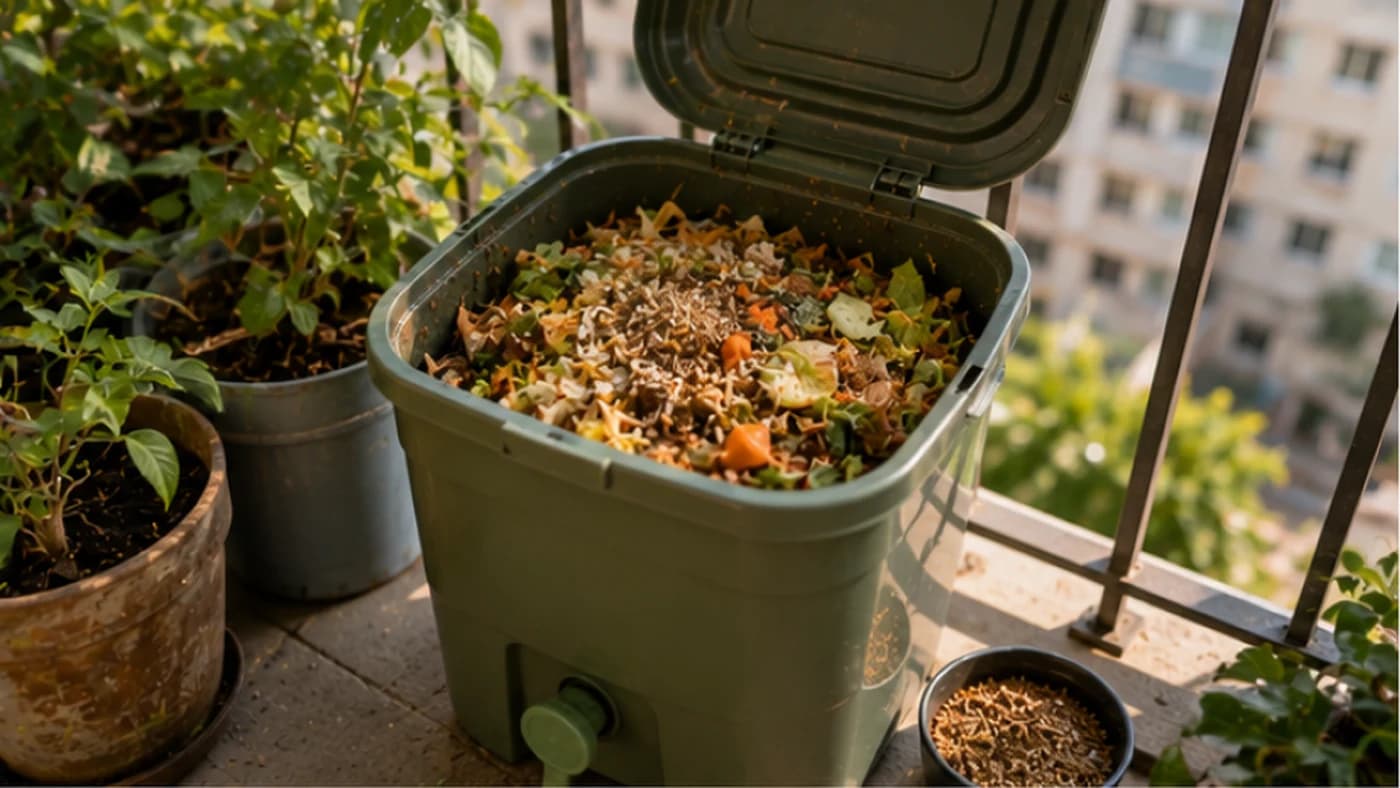
Traditional composting needs space, turning and time most flat-dwellers and small-plot growers simply don't have. Bokashi is different: it's a Japanese method of fermenting kitchen waste in a sealed bucket, more like making pickles than making compost. It handles almost anything from the kitchen — including cooked food, meat and dairy that a normal compost pile would reject — and needs nothing more than a bucket, a bag of inoculated bran, and a small patch of soil or a container to finish the job.
What Bokashi actually is
Bokashi means 'fermented organic matter'. Unlike ordinary composting, which needs oxygen and heat to break material down, Bokashi is an anaerobic (airless) fermentation carried out by a specific culture of microbes — lactic acid bacteria, yeasts and phototrophic bacteria — carried on a bran base (usually wheat or rice bran). When this inoculated bran is sealed in a bucket with your scraps, it pre-digests the waste and prevents the rotting and smell that a sealed bucket of food waste would normally produce.
This makes it ideal exactly where space is tight: a five-gallon bucket under a sink, in a utility corner, or on a balcony can process a small household's entire week of kitchen waste with almost no smell.
The two-stage process, step by step
Use a bucket with an airtight lid and a tap or drain at the bottom — the drain matters, because fermentation produces a liquid ('Bokashi tea') that must be drained off every couple of days or the mix will turn to sludge. Chop scraps into roughly 2–3 cm pieces so the microbes have more surface area to work on, add your daily waste, sprinkle a generous handful of Bokashi bran over the top, and press it down firmly with a plate to push out trapped air. Once the bucket is full, seal it tightly and let it sit undisturbed for at least two weeks — during this time the bran produces lactic acid, dropping the pH to around 3.5, which pickles the waste and kills pathogens.
After two weeks the ferment is still too acidic for plant roots and needs a second stage: bury it directly in garden soil, or mix it into a 'soil factory' — a tub or large pot filled with soil — and leave it another 2–4 weeks. Soil microbes and worms then finish the breakdown into dark, rich humus that's safe to use around plants.
What Bokashi can handle that ordinary composting can't
A standard compost heap rejects meat, dairy, oily food and bones because they rot and attract pests before they can break down properly. Bokashi's microbes have no such limits, so you can divert almost 100% of kitchen waste — cooked rice, dal, vegetable peels, small bones, even a little oil — instead of sending it to a landfill or municipal bin.
Because the system is sealed and anaerobic, nitrogen and other nutrients that would normally escape as gas during hot composting stay locked in the material, so the fermented waste delivers a much more concentrated dose of nutrition once it's buried.
The Bokashi 'tea' — a bonus liquid fertiliser
The liquid drained from the tap every couple of days is a strong microbial concentrate. Diluted about 1:100 with water, it works as a foliar spray or a root drench that supports plant growth and disease resistance. Undiluted, it's strongly acidic and can also be poured down household drains as a natural cleaner — but never pour it undiluted directly onto plant roots.
Common mistakes to avoid
Oxygen is the main enemy — an unsealed lid or frequent opening lets in the wrong bacteria, and the bucket turns rancid instead of smelling sour and slightly alcoholic (which is normal and healthy). Forgetting to drain the liquid every 2–3 days is the second common error — a pool of trapped liquid drowns the microbes and stops fermentation. Under-using the bran is the third: meaty or oily scraps need a heavier sprinkle than plain vegetable peels, so when in doubt, add more bran rather than less. Temperature matters too — the microbes work best between roughly 15°C and 25°C, so keep the bucket out of direct summer sun on a hot terrace and away from a cold, draughty spot in winter in hill regions.
Limitations to know before you start
Bokashi is never a finished fertiliser straight out of the bucket — it's highly acidic and will burn roots if applied directly, so the soil-burial stage is not optional. If you truly have no access to soil at all, you'll need a large tub of soil indoors or a nearby kitchen garden, community plot, or a neighbour willing to take the finished ferment. You'll also need a steady supply of inoculated bran, which is an ongoing (if small) cost unless you make your own, and tough, woody waste like corn cobs or coconut shells will ferment on the surface but still take a long time to break down afterwards — Bokashi is built for soft kitchen scraps, not garden woody waste.
Bokashi vs. traditional composting
Bokashi: works indoors or on a small balcony, finishes in about 4–6 weeks including burial, accepts meat/dairy/oily food, smells sour/pickled rather than rotten, and needs no turning — just draining the tea. Traditional composting: needs outdoor space, takes 3–12 months, stays mostly vegetarian waste, smells earthy when balanced, and needs regular turning. If you have the space and time, traditional composting costs almost nothing; if you have a small home and a busy schedule, Bokashi gets more waste diverted with far less effort.
Practical tips for success
Never leave scraps exposed at the top — always cover fresh waste with a layer of bran immediately, and if you'll be away for a few days, add an extra-thick bran layer and press a plate or plastic sheet down firmly to hold the seal. Run two buckets in rotation: while one is sealed and fermenting for its two weeks, the second collects your daily scraps, so you're never left with nowhere to put waste. A patch of white, fuzzy growth on top when you open the bin is a good sign — beneficial yeast and fungi are winning; green, black or blue mould means air got in, and that batch should be buried deep away from food crops or discarded.
Making your own bran (optional, once you're comfortable)
Commercial Bokashi bran is convenient but is really just a carrier — wheat bran, rice husk or even sawdust — inoculated with EM (effective microorganism) culture and a little jaggery or molasses as a sugar source. Mix the sugar source and EM culture into non-chlorinated water, work it into the bran until it's like damp sand that holds its shape but doesn't drip, then ferment the mix sealed for 2–4 weeks. Once it smells pleasantly sour, spread it out to dry fully in a shaded, ventilated spot, and store the dried bran in an airtight container for up to a year.
Terms explained in this guide
Frequently asked
Can Bokashi handle meat, dairy and oily food?+
Yes — this is its main advantage over ordinary composting, which rejects these because they rot and attract pests. Bokashi's anaerobic fermentation handles them safely.
How long before the compost is ready to use?+
About two weeks of sealed fermentation in the bucket, then another 2–4 weeks buried in soil or mixed into a soil-filled tub, before the finished humus is safe around plant roots.
Why does my Bokashi bucket smell bad?+
A healthy bin smells sour or slightly alcoholic, like pickles. A rotten, rancid smell means air got into the seal — check the lid and drain the liquid more often.
Do I need a garden to do Bokashi?+
You need soil somewhere for the second stage — a large tub or pot of soil indoors works if you have no outdoor space, or ask a nearby kitchen garden or community plot to take your finished ferment.
Can I use the drained liquid directly on plants?+
Only diluted, at roughly 1:100 with water, as a foliar spray or root drench. Undiluted, it's too acidic for roots — though it works well undiluted as a natural drain cleaner.
Where to go next
Want this as daily tasks for your farm?
Khetiyaar turns guides like this into a day-by-day plan — in your language, free to start.

Related guides
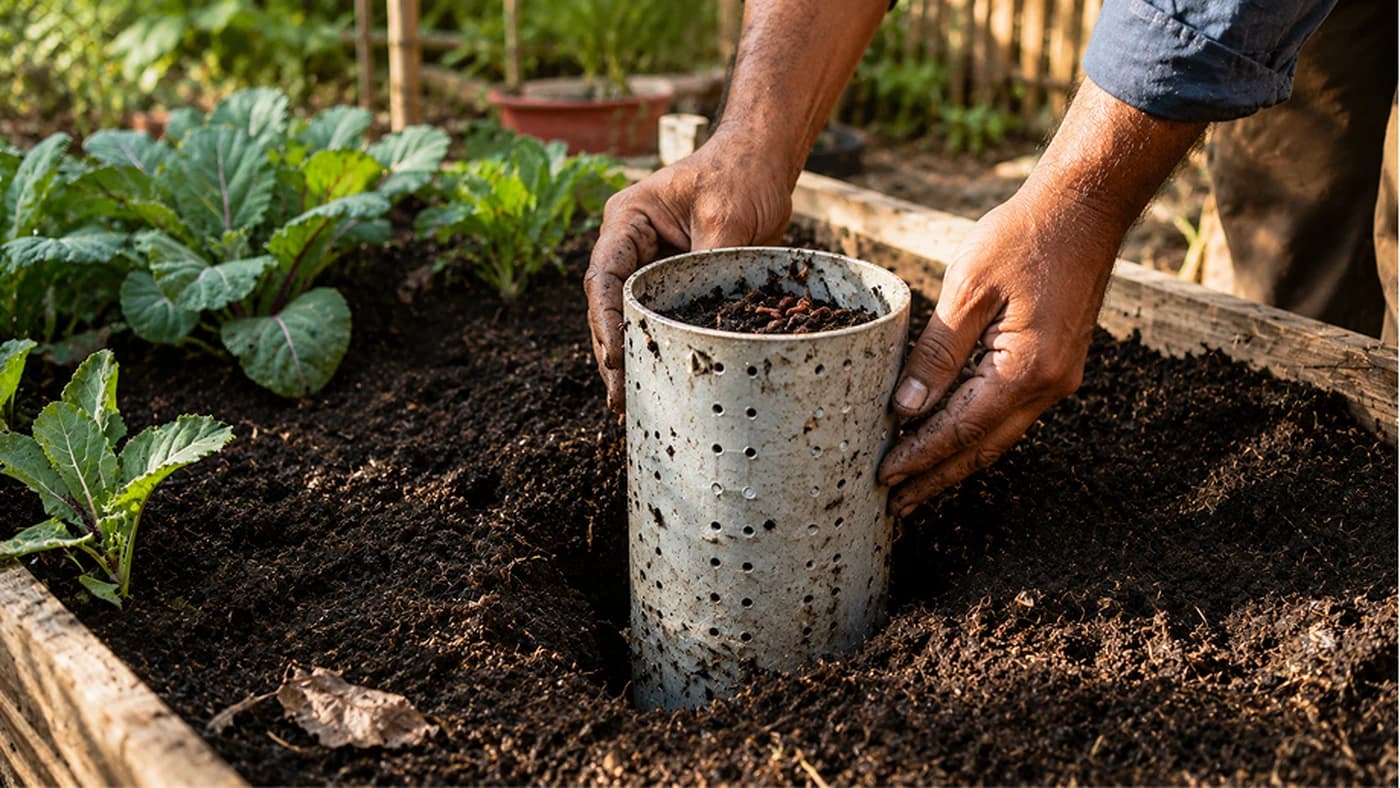
How to Build a Garden Worm Tower for Free, In-Bed Composting
Stop hauling kitchen scraps to a distant bin and hauling compost back months later. A buried worm tower lets worms process waste right where your plants are growing.
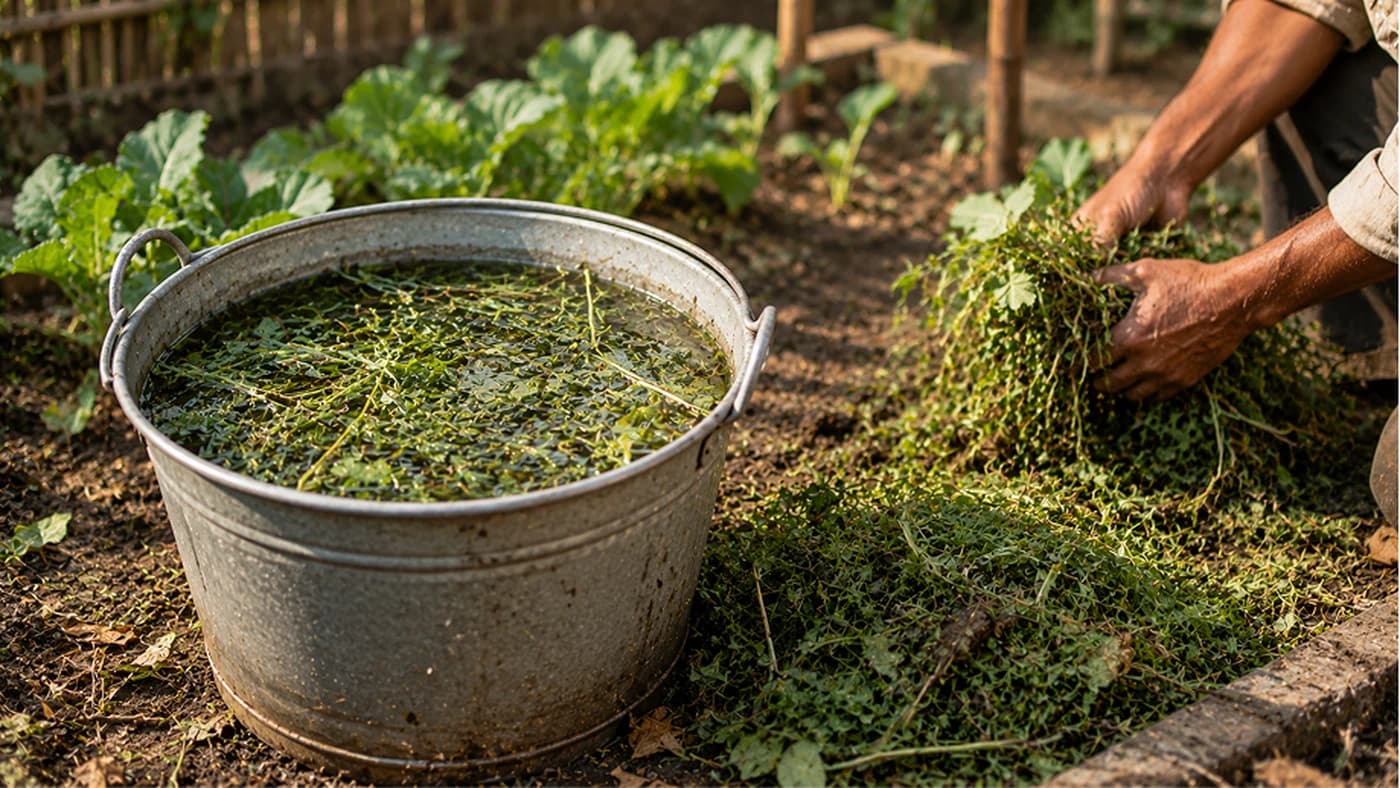
Free Garden Fertiliser From Backyard Weeds (Fermented Plant Juice)
The weeds growing wild along your bund or driveway are nutrient pumps. Korean Natural Farming's Fermented Plant Juice (FPJ) turns them — plus a handful of jaggery — into a potent, nearly free plant tonic.
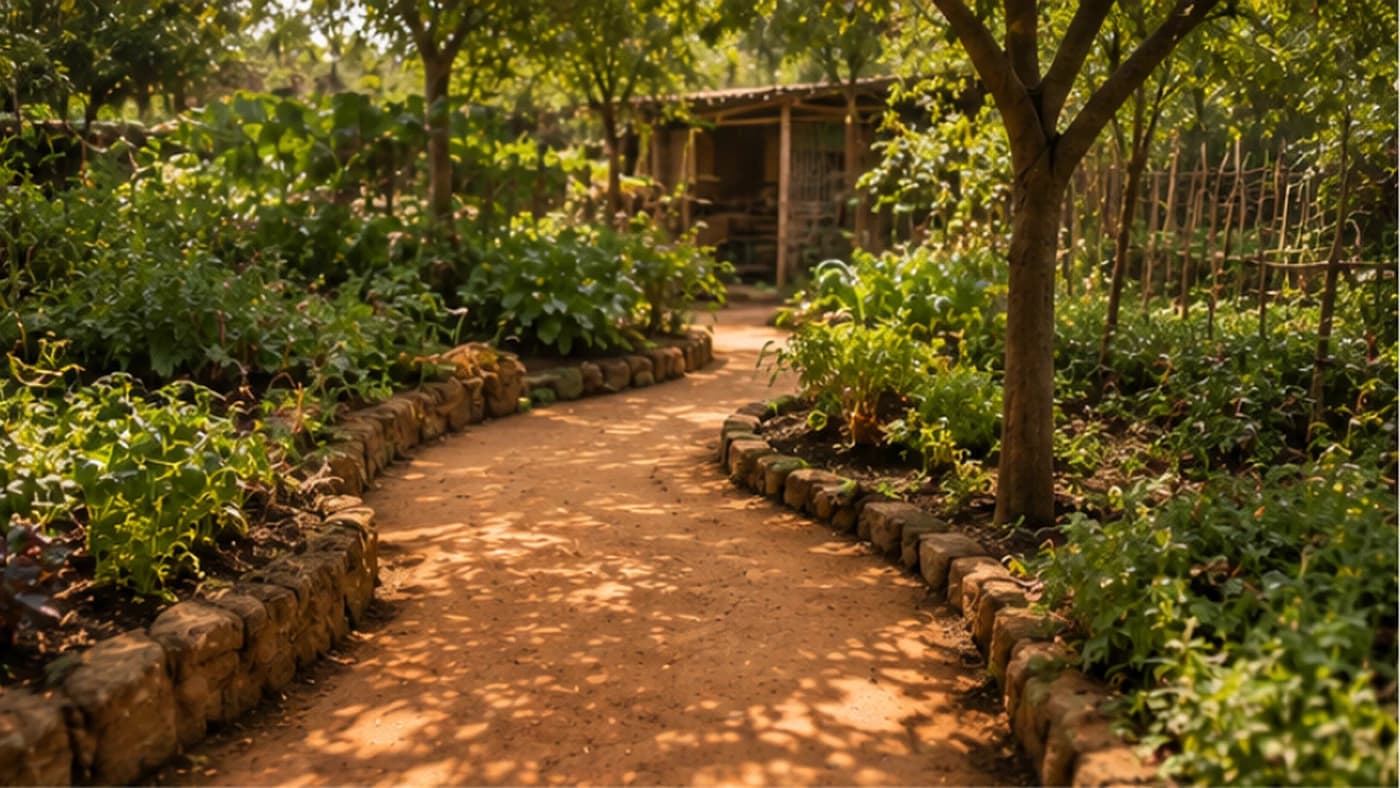
DIY Cob Garden Paths: Free Walkways From the Soil Under Your Feet
Concrete costs money and a huge carbon footprint. Cob — clay-rich subsoil, sand and straw — builds a durable, walkable garden path for almost nothing, using the very soil you dug out for a pond or pit.