

Best Water Sources for Your Farm: Why 'Living Water' Beats Tap Water
Borewell and tap water is treated to be sterile — safe for people, but nearly dead for soil biology. Rainwater, pond water and treated greywater carry warmth, nutrients and microbes your soil actually wants.
Quick answer
Tap and borewell water are fine for drinking, but they are close to biologically dead by the time they reach your soil. Rainwater, pond water, swale-harvested water and treated greywater all carry warmth, nutrients and living microbes that your soil food web actually uses. Start small — a single drum or a rain-fed tank — and you'll likely see faster composting, steadier crops and lower water bills as your soil biology comes back to life.
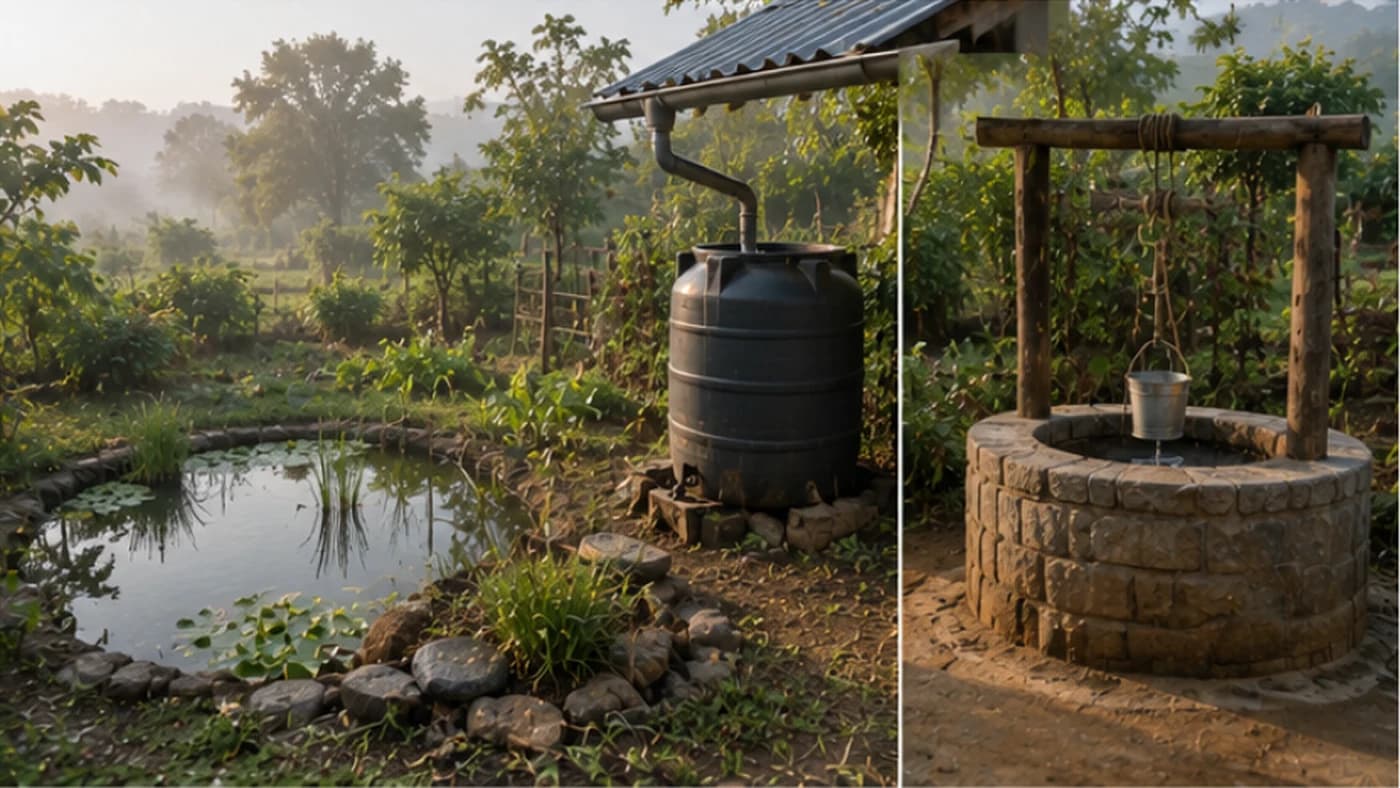
We treat drinking water to kill bacteria, which is exactly right for a glass of water — and exactly wrong for a bucket poured onto living soil. Municipal or borewell water is cold, often chlorinated, and essentially sterile, while your soil is a living web of microbes that thrives on warmth, nutrients and gentle biological activity. Water that has spent time sitting in a pond or rain tank, warmed by the sun and touched by frogs, dragonflies and algae, carries all of that life with it. Shifting even part of your watering from the tap to harvested, 'living' water is one of the simplest ways to feed your soil instead of merely wetting it.
The best sources, in order
Rainwater is the gold standard: naturally soft, free of dissolved salts, and slightly acidic in a way that helps unlock soil nutrients — whether you catch it in a simple drum or a large tank. Ponds and farm dams act as biological batteries: they collect runoff, let sediment settle, warm up in the sun, and slowly fill with beneficial bacteria, frogs and aquatic plants that charge the water with life. Swales and contour trenches — shallow, level-bottomed channels cut along the land's contour — don't store water above ground at all; they slow runoff and force it to sink into the soil, building a underground reserve of moisture that feeds trees and perennials long after the rain has stopped. Treated greywater from sinks, showers and laundry, filtered through a mulch basin or a simple constructed wetland, turns household waste water into a genuine resource for fruit trees and non-edible landscaping.
Why 'living water' actually helps your soil
Temperature matters more than most farmers realise: water that has sat in the sun (in a pond, or a dark storage tank) is warm, while cold water straight from a deep borewell can shock plant roots and slow down soil microbes. Warm water keeps your soil's biology running at full speed. Time spent in an open pond or tank also inoculates the water with beneficial microbes carried in by insects, frogs and even the wind, so what reaches your field isn't just H2O — it's a living broth that helps build soil immunity and nutrient cycling. Finally, moving this water gently — through swales, drip lines or hand-watering rather than high-pressure pumps — protects these same delicate microbial structures, which can be damaged by force.
What this actually buys you
Farmers who shift toward harvested, living water typically see faster breakdown of mulch and compost, better nutrient availability, and crops that resist pests and disease a little better, because a biologically active water supply builds a protective microbial layer around the root zone. Sun-warmed water can also buy you a small buffer against early or late-season cold snaps — a warm watering can genuinely help tender crops like tomato and chilli survive an unseasonal cold night. And harvesting your own water is a direct hedge against tanker costs and erratic borewell supply: a full pond or set of tanks is real security when the grid or the water truck lets you down.
Problems to watch for
Stagnant water is the most common failure — still water with no plant life or movement turns anaerobic, smells foul, and can breed pathogens rather than beneficial microbes, so keep some circulation going, whether through a small solar pump or oxygenating aquatic plants. Standing water is also a mosquito breeding ground; a healthy pond needs frogs, dragonflies or small fish to keep larvae in check, and stored tanks should be tightly screened. Excess nutrients, especially from runoff rich in phosphorus, can trigger thick algal blooms that block sunlight and starve the water of oxygen — a modest population of water lilies or reeds helps keep this balanced.
Realistic limits
Space and topography set a hard ceiling: a small kitchen-garden plot has no room for a farm pond or a network of swales, so focus on smaller, denser storage like drums, IBC totes or a compact rain garden instead. Digging a pond or installing a serious tank system is a real up-front cost in money and labour, even though the long-term savings on water and fertiliser are real. And in many places, rules around groundwater extraction, pond construction, or greywater reuse exist for good reason — check with your local panchayat or agriculture office before any large earthwork.
How to revitalise water you already have
If your tap or borewell water is chlorinated, letting it stand in an open drum for a day allows much of the chlorine to gas off naturally; for water treated with chloramine (which doesn't evaporate the same way), a small amount of good compost or humic acid helps neutralise it. Storing water in a dark or black-painted drum in full sun both warms it and lets UV light break down some chemical residue. And steeping a sack of good-quality compost in a barrel of water for a day or two — a simple 'compost tea' — is one of the fastest ways to turn ordinary water into a genuine liquid fertiliser and soil inoculant.
Going further
Farmers ready to go a step further often integrate fish or ducks into their irrigation ponds — their waste becomes a steady, natural source of nitrogen that makes the water noticeably more potent for the garden. Where the land has enough slope, keyline-style design (identifying the points where slope changes and cutting swales that carry water from wet valleys to dry ridges) can turn an entire farm into a self-watering system using gravity alone. Pumps and solar power still have their place — best used to lift water to its highest useful point, so that gravity can do the final, gentle delivery to your crops.
A small-farm example
Picture a half-acre homestead where the house roof covers about 140 square metres. In a region getting 750 mm of rain a year, that roof alone can harvest close to 100,000 litres annually — instead of letting it run off into the lane, the farmer directs it into two 5,000-litre tanks at the highest point of the plot. Overflow feeds a small clay-lined pond growing water lilies and a few fish, warming to a pleasant temperature on hot days. Twice a week, water scooped from this fish-enriched pond goes onto the heaviest-feeding fruit trees, while the tanks gravity-feed a simple drip line to the vegetable beds — a system that needs almost no outside input and keeps the soil biology thriving straight through a summer dry spell.
Terms explained in this guide
Frequently asked
Is rainwater really better for plants than tap water?+
Generally yes — rainwater is naturally soft, free of the salts and chlorine found in treated water, and slightly acidic in a way that helps release soil nutrients.
How do I stop my stored water from going stagnant?+
Keep it moving or aerated — a small solar pump, aquatic plants, or fish and frogs in a pond all help. Screen tanks tightly to keep mosquitoes out.
Can I use greywater from my kitchen or bathroom on crops?+
Yes for fruit trees and non-food landscaping, after passing it through a mulch basin or simple filter bed — avoid using untreated greywater directly on leafy vegetables or root crops eaten raw.
Does warm water really help my crops?+
Yes — water that has warmed in the sun keeps soil microbes active and can buffer sensitive crops like tomato and chilli against a sudden cold night, unlike cold water straight from a deep borewell.
What is the cheapest way to start harvesting living water?+
A single open drum or barrel under a roof downspout. Let chlorinated water stand for a day to off-gas, keep the water moving or lightly planted, and you already have a small source of biologically active water.
Where to go next
Want this as daily tasks for your farm?
Khetiyaar turns guides like this into a day-by-day plan — in your language, free to start.

Related guides
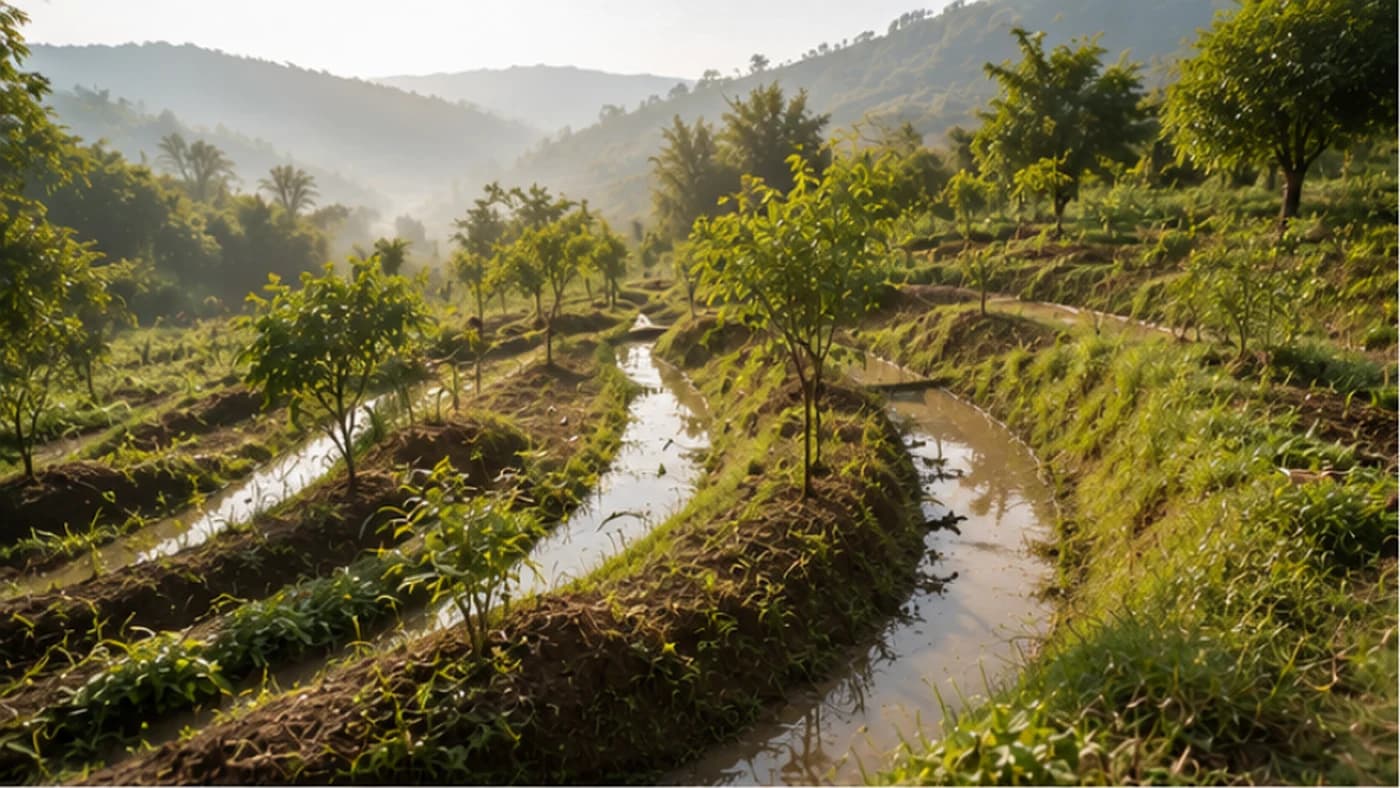
Permaculture Swales: The Level Trench That Banks Rainwater in Your Soil
Most farms are built to throw rainwater away as fast as possible. A swale — a level, on-contour trench with a planted mound beside it — banks that water in the soil instead, so your land stays green long after the rain stops.
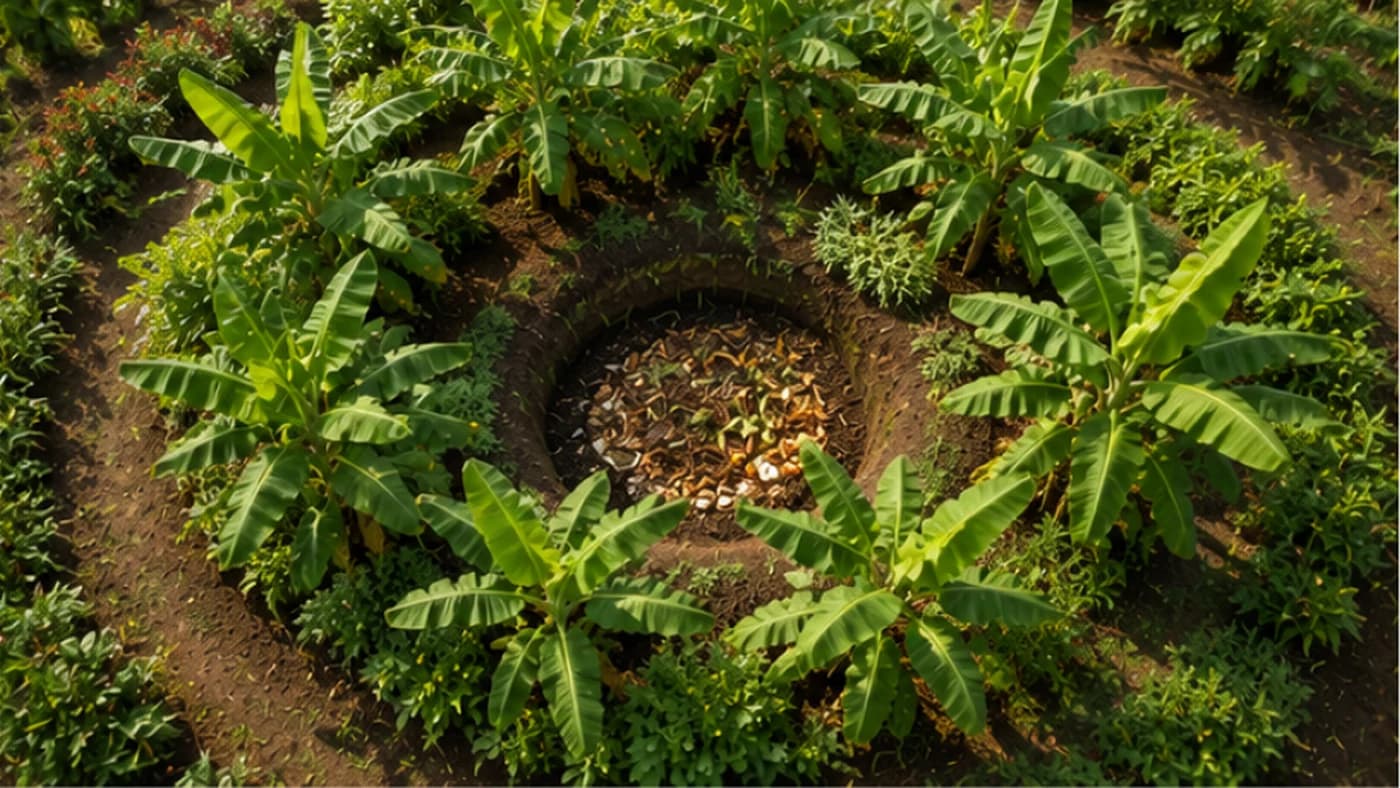
How to Build a Banana Circle: Turn Kitchen Greywater into a Banana Harvest
A banana circle captures your kitchen and bathroom greywater, composts organic waste, and grows a steady harvest of bananas — all in one self-managing pit-and-mound system that suits most of India's climate.
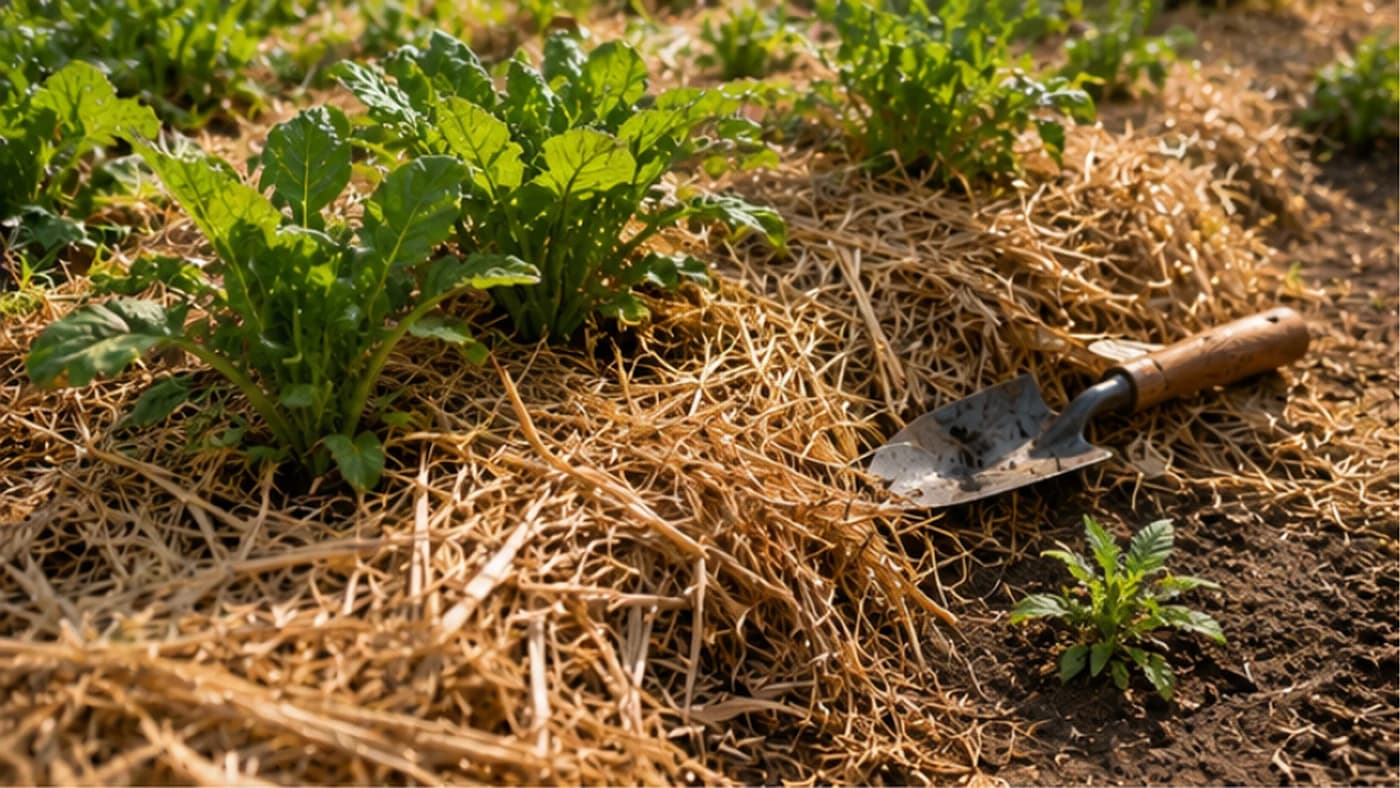
Living Mulch: A Chemical-Free Way to Beat Weeds and Build Soil
Plastic sheeting and bare, hoed soil both fight weeds by starving the ground of life. A living mulch — a low groundcover planted on purpose — suppresses weeds while feeding the soil, cooling it, and bringing in pollinators.