

The Phawra (Azada Hoe): Why One Forged Tool Beats a Shed Full of Gadgets
Long before garden centres sold a different plastic tool for every task, farmers across Asia, Africa, and Southern Europe relied on one heavy, forged hoe to dig, weed, chop, and level. In India it's the phawra or kudal — and used correctly, it saves your back as much as it saves your money.
Quick answer
The phawra or kudal is proof that a single well-made tool, used with the right technique, can outlast and outperform a shed full of specialised gadgets. Its value isn't just in the forged steel — it's in the upright, gravity-led swing that saves your back over a long day's work, a technique worth relearning even if the tool itself is already familiar to you.
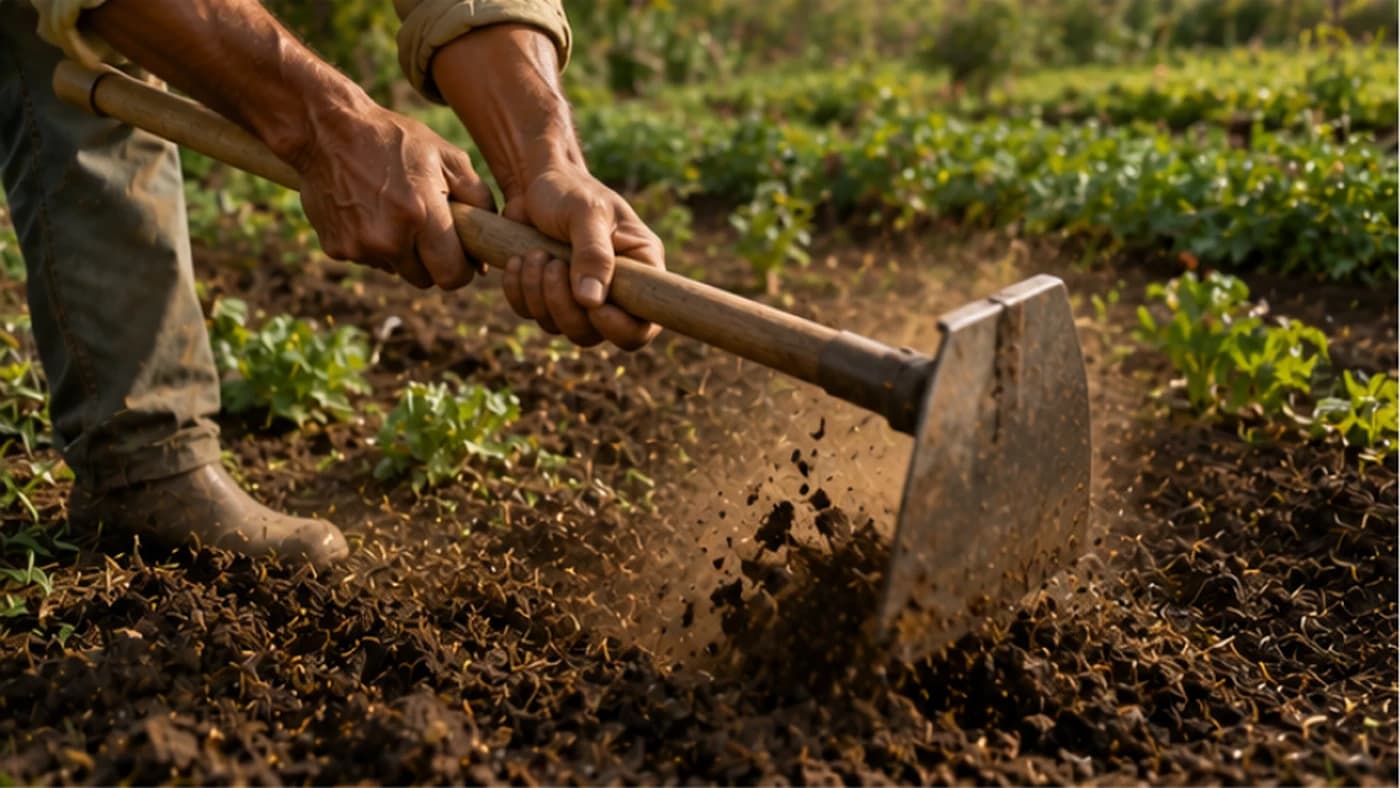
Walk into any modern garden or hardware store and you'll find a different specialised, plastic-handled tool for every single task. But for thousands of years, one heavy, forged digging hoe has done the work of most of them: trenching, weeding, chopping through roots, tilling, and levelling ground, all with the same tool and a simple shift in grip. In Spain it's called an azada, in East Africa a jembe — and across India, it's the phawra, kudal, or mammoty, depending on the region, a tool most Indian farmers already know well. What's less well known is the correct, back-saving technique for using it, and that's where most of its real value lies.
What makes this hoe different from a garden hoe
A phawra or kudal is a heavy-duty digging hoe with a broad blade set at roughly a right angle to the handle, built for moving earth, breaking through sod, and chopping through thick roots in a single swing — a different job entirely from the light surface-scraping a small garden hoe is built for. Its weight, typically 1.2 to 2.2 kg, is exactly what makes it effective: that mass, combined with a swinging chop rather than a stomp-and-lift motion, does the hard work of breaking compacted soil that would make a standard spade simply bounce off.
This is one tool with genuinely global roots — the same core design, a forged steel blade fitted onto a wooden handle, is used from Spain to East Africa to South and Southeast Asia, each region shaping it slightly differently while the underlying principle stays the same.
The technique that saves your back
The most common mistake is swinging the hoe overhead like a pickaxe, which is exhausting and puts real strain on your back and shoulders. The correct technique uses an upright stance and lets the weight of the head do the work: stand with feet shoulder-width apart, one foot slightly ahead, one hand at the end of the handle and the other about midway down the shaft.
Instead of lifting with your back, guide the head upward with your arms and let it drop under its own weight, aiming to strike the ground roughly 30–50 cm in front of your feet. Once the blade is buried, push the handle down slightly to pop the soil loose, then pull it back toward you. Work in a steady rhythm of many small, easy swings rather than a few heavy, exhausting ones — a handle length of around 120–140 cm lets you keep a nearly upright posture throughout, which is the real source of the back-saving benefit.
Why forged steel outlasts a stamped or plastic tool
A genuinely forged head — heated and hammered rather than just stamped from sheet metal — holds a sharp edge for years and gets tougher, not weaker, with use, since the blade actually polishes itself smooth against the soil over time, becoming easier to pull through the earth. The head-to-handle joint is usually a simple friction-fit eye: the handle tapers at one end, the head slides on, and the swinging motion and soil resistance keep it seated tight. When a handle eventually breaks — which can take decades — you simply knock the old head free and fit a new wooden handle, with no plastic collar to crack and no bolts to lose.
Mistakes to avoid
Gripping the handle too tightly is the most common beginner error — a white-knuckle grip sends every impact straight into your wrists and elbows, so hold it firm but relaxed, letting it rotate slightly in your lower hand as you swing.
Trying to move too much soil in one go is the second — burying the whole blade in heavy clay and levering it up like a shovel strains your lower back, since this tool is built to slice and pull, not lift a huge slab at once. Use the corner of the blade for precision, and keep your stance wide enough that if the blade glances off a buried stone, it falls into the space between your feet rather than toward your shin — sturdy, closed footwear is not optional.
Where a lighter tool is the better choice
This is a heavy-work tool, not a precision one — trying to weed between seedlings spaced just a few centimetres apart with a full-size phawra is too blunt an approach; a smaller hand hoe or khurpi does that job far better. It also needs open space to swing, so in a cramped raised bed or a small kitchen garden a compact, one-handed hoe is easier to work with. And if you're used to a spade's stomp-and-push motion, expect an hour or two of feeling clumsy before the swinging rhythm starts to feel natural — most people who push through that hour don't want to go back.
Phawra versus a standard spade
A spade relies on leg power — stomping and lifting — which causes more back strain from frequent bending, is mostly limited to digging and edging, suits soft-to-medium soil, and wears faster as stamped metal. A phawra relies on gravity and swinging momentum, causing far less back strain thanks to the upright posture, handles tilling, weeding, trenching, and levelling with the same head, works well even in stony or compacted ground, and a forged head lasts decades. Both tools can dig a hole — the real difference is the physical cost to your body over a full day's work.
Getting the most from one tool
Check the edge before first use — factory edges are often left deliberately blunt for safe shipping, so sharpen with a flat file until it slices cleanly through a tough root. Keep a bucket of oiled sand nearby when working heavy clay; dipping the blade in it every few minutes stops soil from caking onto the steel. The tool works best when soil is moist but crumbly — bone-dry ground takes far more effort, while working soaking-wet ground can damage soil structure. If the wooden handle feels rough, sand it lightly and rub in a little linseed or any food-safe oil to stop splinters, and never leave the tool lying on bare soil overnight, since moisture rusts the head and swells the handle where it seats.
For anyone maintaining paths between raised beds or a no-dig plot, this tool is genuinely useful for quickly scraping a path clear of encroaching grass without a noisy trimmer. If you manage a larger plot, keeping two interchangeable heads — a broader one for hilling up crops like potatoes, a narrower one for clearing new ground or digging irrigation furrows — on a single handle gives you most of a tool shed's worth of function from one handle and two blades.
A worked example
Picture a roughly 250-square-metre plot left unattended for a few years, now matted with tough grass and weeds — ground a standard spade would take weeks to double-dig, and a rotavator would only chop the grass roots into hundreds of new plants. With a phawra, you chop into the sod at an angle with the blade's corner, slicing just below the root crown, then pull back to flip the sod over and expose the roots to the sun — clearing a metre-wide strip in a matter of minutes once you find the rhythm. The same tool, turned on its side, then draws a straight furrow for your first row of crops, so by the end of a single day you've cleared, loosened, and marked out planting rows with one piece of steel.
Frequently asked
Is the azada the same tool as the Indian phawra or kudal?+
Yes — the same core design (a forged steel blade at roughly a right angle to the handle) appears across the world under different regional names: azada in Spain, jembe in East Africa, and phawra, kudal, or mammoty in different parts of India.
What's the ideal handle length?+
Around 120–140 cm (47–55 inches) lets most users maintain a nearly upright stance while working, which is what actually prevents back strain over a long day.
Why does my hoe feel exhausting to use?+
Most often it's technique, not the tool — swinging overhead like a pickaxe or gripping the handle too tightly transmits every impact into your back, wrists, and elbows. Use an upright stance, a relaxed grip, and let the head's weight do the work.
Is this tool suited to every gardening task?+
No — it's built for heavy work: breaking sod, digging trenches, and clearing compacted or stony ground. For precision weeding between closely spaced seedlings, a smaller hand hoe or khurpi is a better, more precise choice.
How do I keep the blade in good condition?+
Sharpen the edge with a flat file when it dulls, keep the wooden handle oiled to prevent splintering and swelling, and never leave the tool lying in wet soil overnight, since moisture rusts the head and swells the handle where it fits into the eye.
Where to go next
Want this as daily tasks for your farm?
Khetiyaar turns guides like this into a day-by-day plan — in your language, free to start.

Related guides
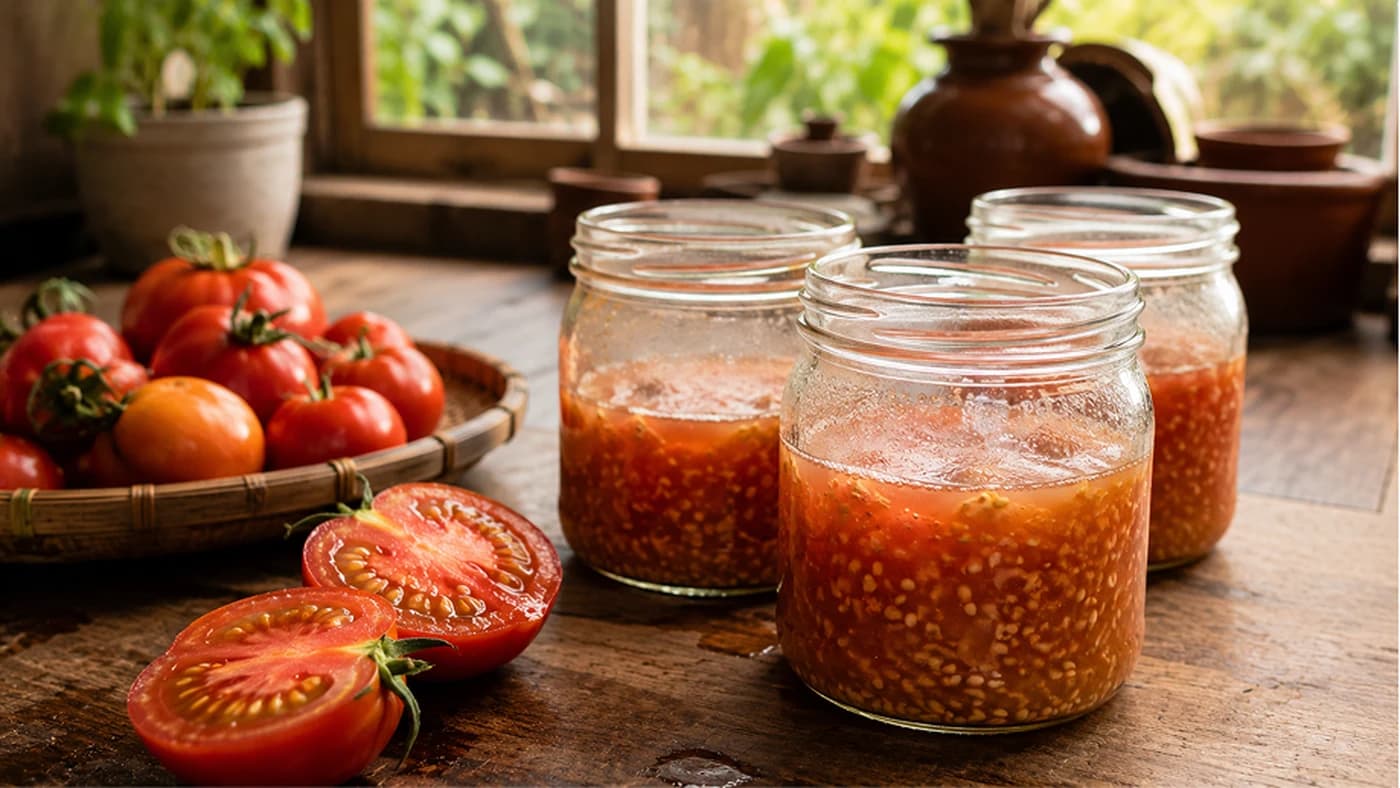
How to Save Tomato Seeds Using Fermentation (95%+ Germination)
Scrubbing tomato seeds by hand still leaves the germination-blocking gel behind. A simple 2-3 day ferment does what scrubbing can't — cleaner seeds, fewer diseases, and far higher germination.
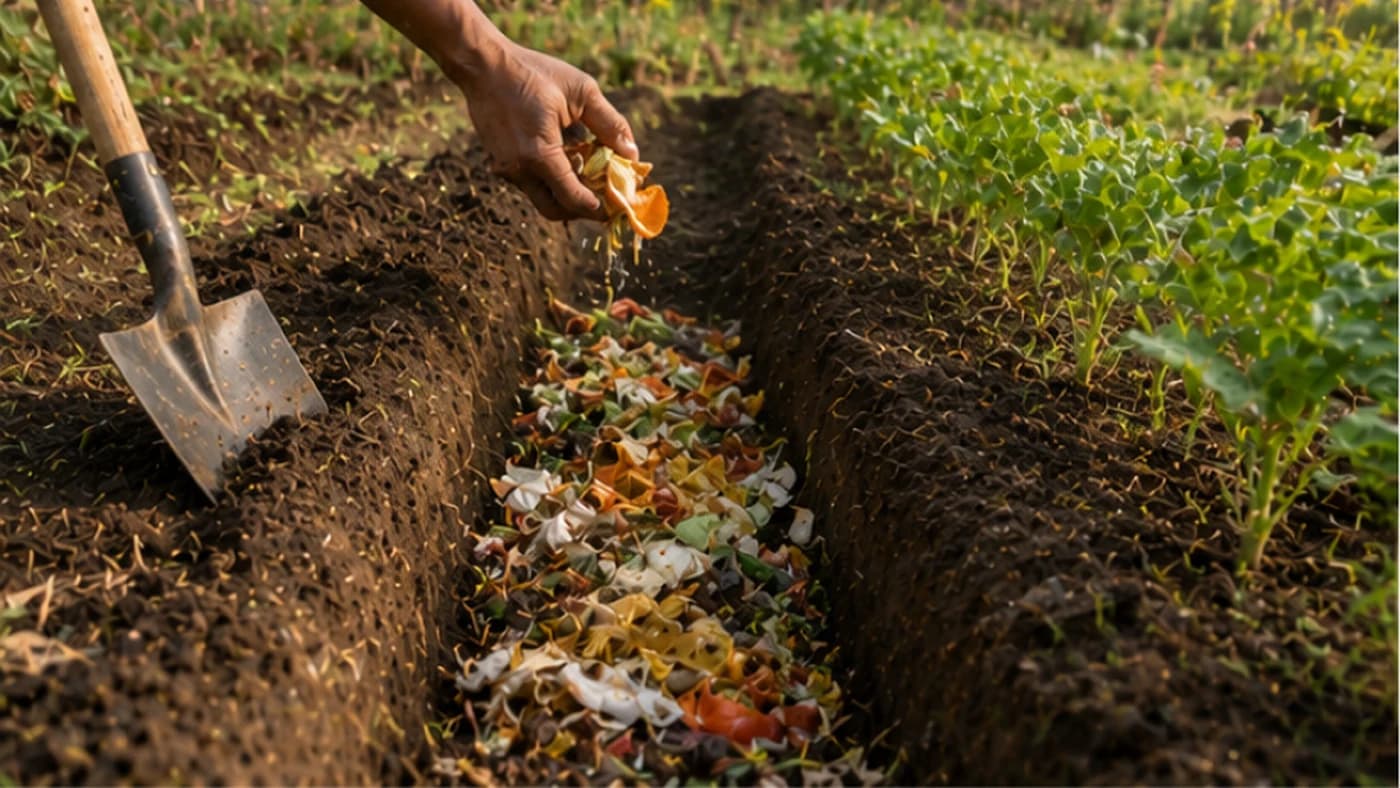
Trench Composting for Beginners: Bury Your Kitchen Waste Straight Into the Bed
Skip the compost pile and the turning altogether. Bury your kitchen scraps directly where your next crop will grow, and let the soil itself do the composting — no smell, no pests, no extra corner of the yard needed.
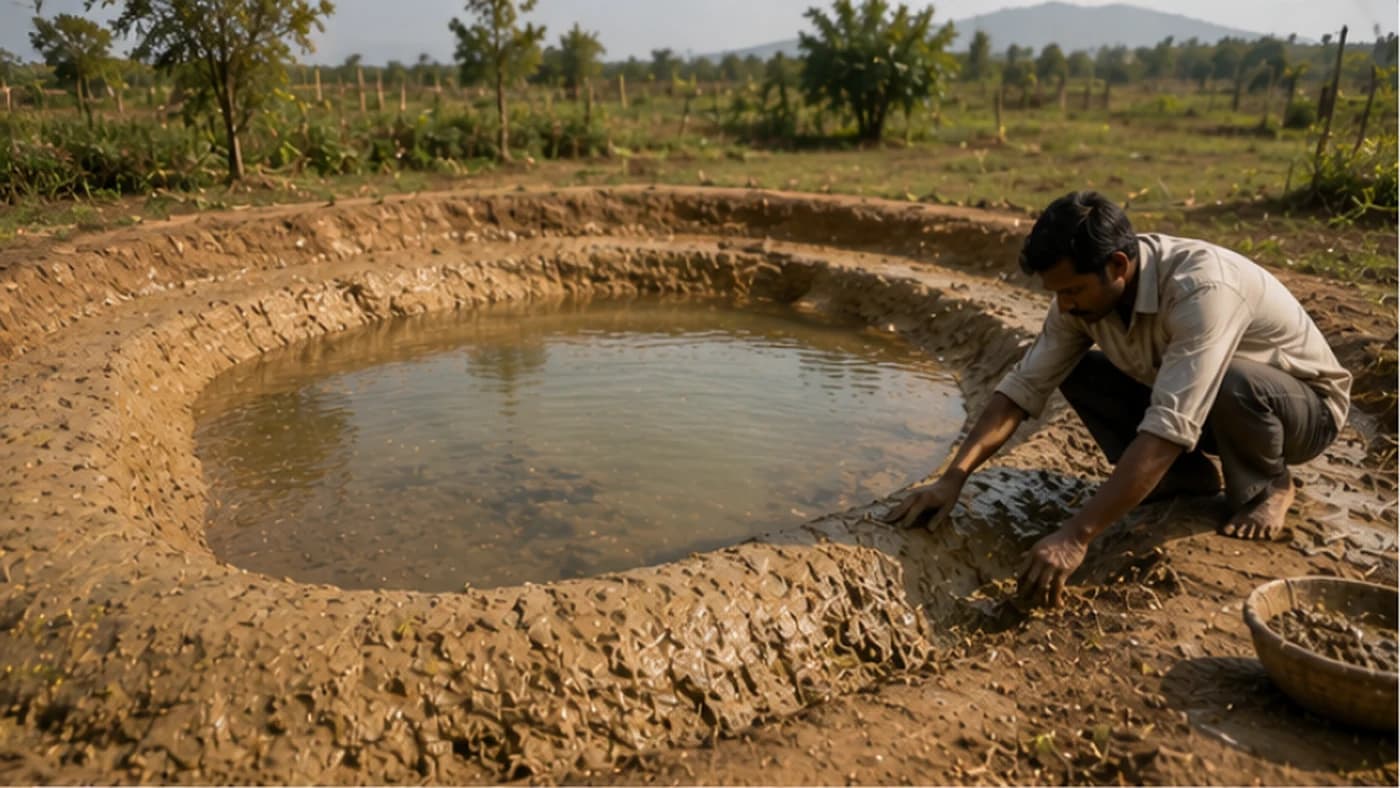
How to Build a Natural Clay Pond That Seals Itself for Decades
Plastic pond liners crack, leach and land in the bin within a couple of decades. A pond sealed with bentonite clay — mined right here in Gujarat and Rajasthan — heals its own cracks and lasts for generations.