

Ancient Dew Pond Construction: Water on High Ground With No Pump
Before electric pumps, farmers on dry, high ground built dew ponds — shallow clay basins that pull moisture straight from the night air. Here's the traditional method, step by step.
Quick answer
A dew pond is a passive water-harvesting system built from clay, straw and stone, using nothing but temperature difference to pull moisture from rain, mist and the night air. It demands serious upfront labour and the right site and soil, but once built and maintained, it needs no power and no plumbing — a genuinely resilient backup water source for livestock on high or dry ground where a pump can't always be relied on.
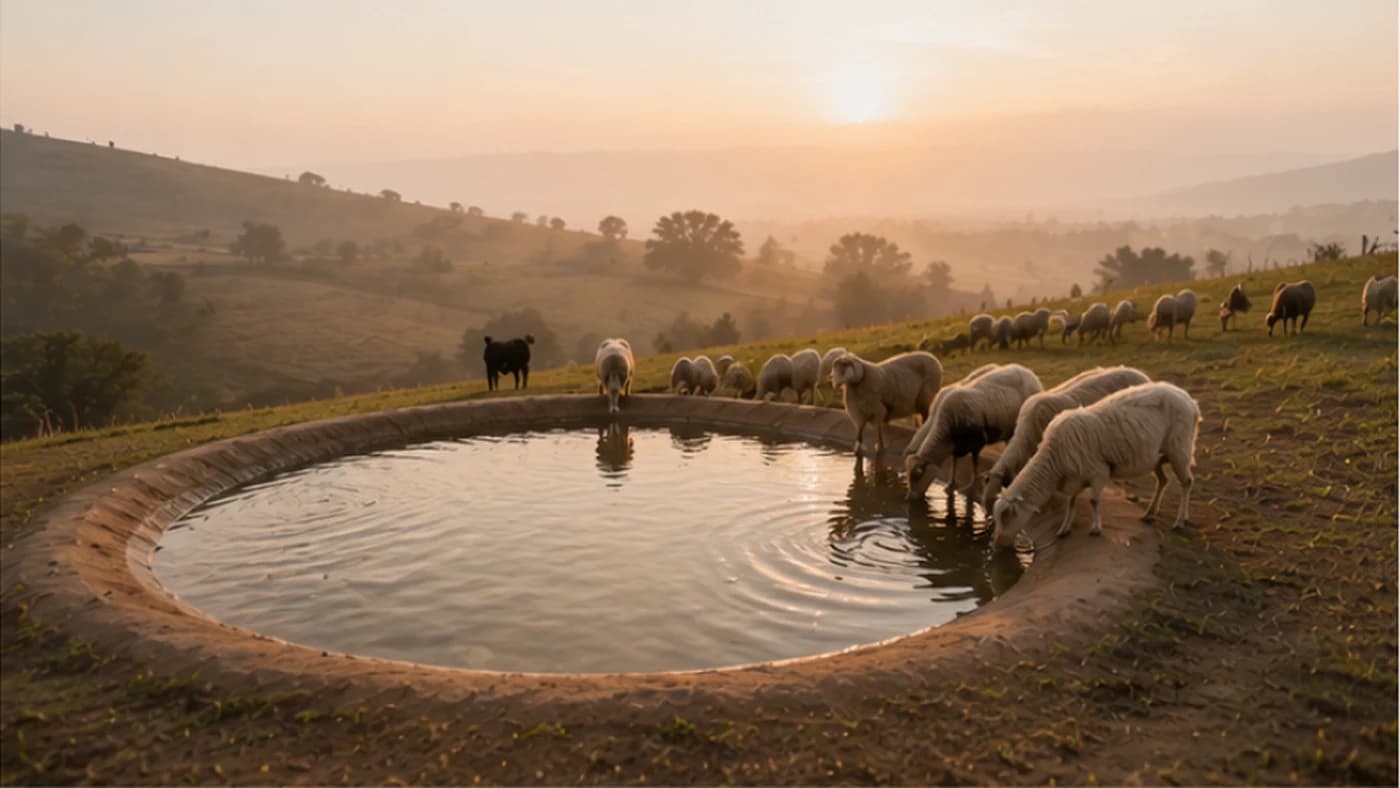
On high ridges with no spring or stream nearby, farmers for centuries kept livestock watered using dew ponds — shallow, saucer-shaped basins built to stay colder than the surrounding earth, so that when warm, moist night air passes over them, moisture condenses out of the air itself. A dew pond is not filled by dew alone — it also catches rainfall and intercepts mist — but the underlying idea, a passive water source with no fuel, wiring, or moving parts, is worth understanding wherever piped or pumped water is unreliable.
The physics behind it
An ordinary hole in the ground eventually matches the temperature of the earth around it, and warm ground encourages evaporation rather than condensation. A dew pond breaks this by using a thick layer of dry straw as a thermal break between the water and the warm earth beneath — much like insulation in a flask. During the day the water cools through evaporation from its surface; at night, as the surrounding hills stay warm from the sun, the pond stays colder, so air in contact with the water drops below its dew point and moisture condenses out. A wide, shallow saucer shape maximises the surface area available for both rainfall and mist capture.
Traditional step-by-step construction
Dig a shallow circular basin 10-15 metres across and no more than 1-1.2 metres deep at the centre, with sides sloping gently at roughly 3:1 so lining materials don't slide toward the middle and animals can enter and exit safely.
Line the excavated soil with a thin layer of slaked lime or ash to deter earthworms, which can burrow upward through clay and create leak channels. Next, lay 15-20 cm of dry wheat straw as the insulating layer — it must stay dry, since wet straw loses its insulating value. Over that, spread roughly 15-20 tonnes of good clay in 15 cm layers, puddling each layer (working it with water and pressure — traditionally by treading with animals or beating with wooden tools) until it becomes a dense, plastic, impermeable mass, aiming for a total puddled thickness of 25-30 cm. Finally, cap the clay with broken stone, gravel or rubble to protect it from sun and hooves.
What you get in return
A dew pond needs no fuel, electricity or technician — it works passively, every day of the year, so a power cut or a failed pump doesn't leave animals without water. Because it's fed mainly by condensation and rainfall rather than groundwater, the water is often unusually soft and clean. In dry country, a pond like this also becomes a magnet for wildlife — amphibians, birds and dragonflies (which help with pest control) — and animals often drink more readily from open, shallow water than from a confined trough.
Where construction goes wrong
The most common failure is a pierced lining — usually because the protective stone layer was too thin, or because heavy animals were allowed onto the clay when the water level ran dangerously low. Trees on the bank are another common mistake: a tree too close sends roots straight into the clay seeking moisture and drains the basin like a straw, though a distant tree can actually help by catching mist that later drips in. Incomplete puddling — spreading clay without properly working and compressing it — is the single biggest reason modern attempts fail, since unworked clay stays porous. And a site exposed to constant strong wind strips away the cool air layer at the surface and raises evaporation, so a slight depression on a ridge, not the most exposed point, is the better spot.
Where this method has real limits
Dew ponds were designed for stable chalk and limestone uplands; in sandy or gravelly soils, or ground prone to frost heave, the lining is much more likely to fail or shift. The technique also needs a temperate, humid climate — in very dry regions, evaporation will usually outpace collection and the pond stays dry most of the year. And volume expectations should stay realistic: even a large pond refills slowly and is meant for livestock and emergency backup, not for running a household's plumbing.
Traditional clay vs. a modern liner
Puddled clay uses cheap, local materials but demands very high labour — often weeks of puddling — and can last 50-100+ years with maintenance, repaired simply by adding more worked clay, with no synthetic material involved. A modern butyl or EPDM liner costs more upfront, needs only moderate labour to lay, but typically lasts just 20-30 years as UV light degrades it, is harder to repair (patches and glue), and leaves you dependent on a supply chain for future fixes. Traditional construction trades labour for long-term self-reliance; a synthetic liner trades speed for a shorter lifespan.
Practical tips and upkeep
Test your clay before committing to a full build: roll a damp piece into a thin cylinder and bend it into a ring — if it doesn't crack, it has the plasticity needed for puddling. Extend the clay lining at least 3 metres beyond the water's edge so the seal stays buried and doesn't dry out at the margins, and if you lack traditional wooden beaters, leading livestock around the freshly laid clay for several days compresses it just as well. Plan to remove built-up silt every 5-10 years with a wide shovel, working carefully so you don't gouge the clay lining underneath.
Where it fits in India
This principle already has a strong Indian parallel in the region's traditional water-harvesting structures — johads and village ponds in Rajasthan, and similar catchment tanks across the Deccan plateau, use the same idea of a shaped, sealed basin capturing rain and runoff on land with no perennial stream. On a hilly or plateau farm without reliable grid-powered pumping, a properly puddled clay basin, sized to local rainfall and clay availability, can supplement a borewell as a low-tech backup for livestock drinking water.
Terms explained in this guide
Frequently asked
Does a dew pond really fill mostly from dew?+
Not entirely — it's a combination of rainfall, mist interception, and true dew condensation. The name reflects the most distinctive part of how it works, not the only source.
What is puddling clay, and why does it matter?+
Puddling is working raw clay with water and pressure — traditionally by treading with animals or beating with tools — until it becomes a dense, impermeable barrier. Unpuddled clay stays porous and simply leaks.
How long does a traditional clay-lined dew pond last?+
With basic maintenance, 50 years or more — clay linings are repaired simply by adding and re-puddling more clay, unlike synthetic liners that need patching or full replacement.
Can trees be planted near a dew pond?+
Only at a distance. A tree too close sends roots into the clay lining seeking moisture and can drain the pond, while a tree further away can actually help by catching mist that drips into the basin.
Does this technique work in a dry Indian climate?+
It works best in temperate, humid conditions where mist and rainfall are reasonably frequent — in very arid regions evaporation usually outpaces collection, so it suits hilly or plateau areas with regular monsoon rain and morning mist rather than true desert.
Where to go next
- AI farming chatbotAsk any farming question in Gujarati, Hindi or English and get an answer in seconds.
- Kheti app for Indian farmersCrop plans, disease diagnosis, weather and mandi rates in one app.
- Agri Bazar marketplaceBuy and sell animals, crops, equipment and dairy near you — and see what buyers want today.
Want this as daily tasks for your farm?
Khetiyaar turns guides like this into a day-by-day plan — in your language, free to start.

Related guides
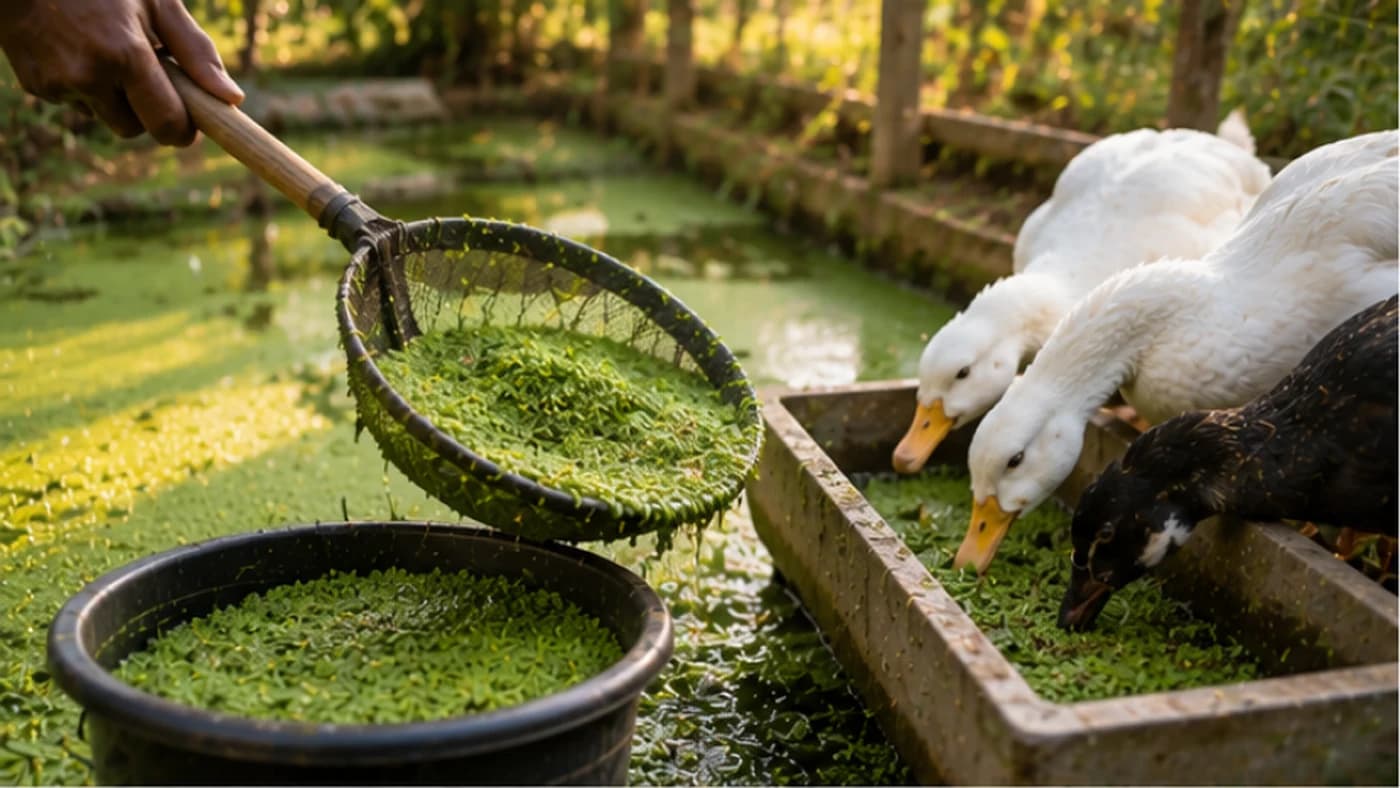
Duckweed as Livestock and Poultry Feed: Free Protein Growing on Your Pond
The green mat covering your farm pond isn't a nuisance — it's up to 40% protein, doubles its own weight in a couple of days, and can replace a real share of your soybean or feed bill for ducks, chickens, fish and even goats.
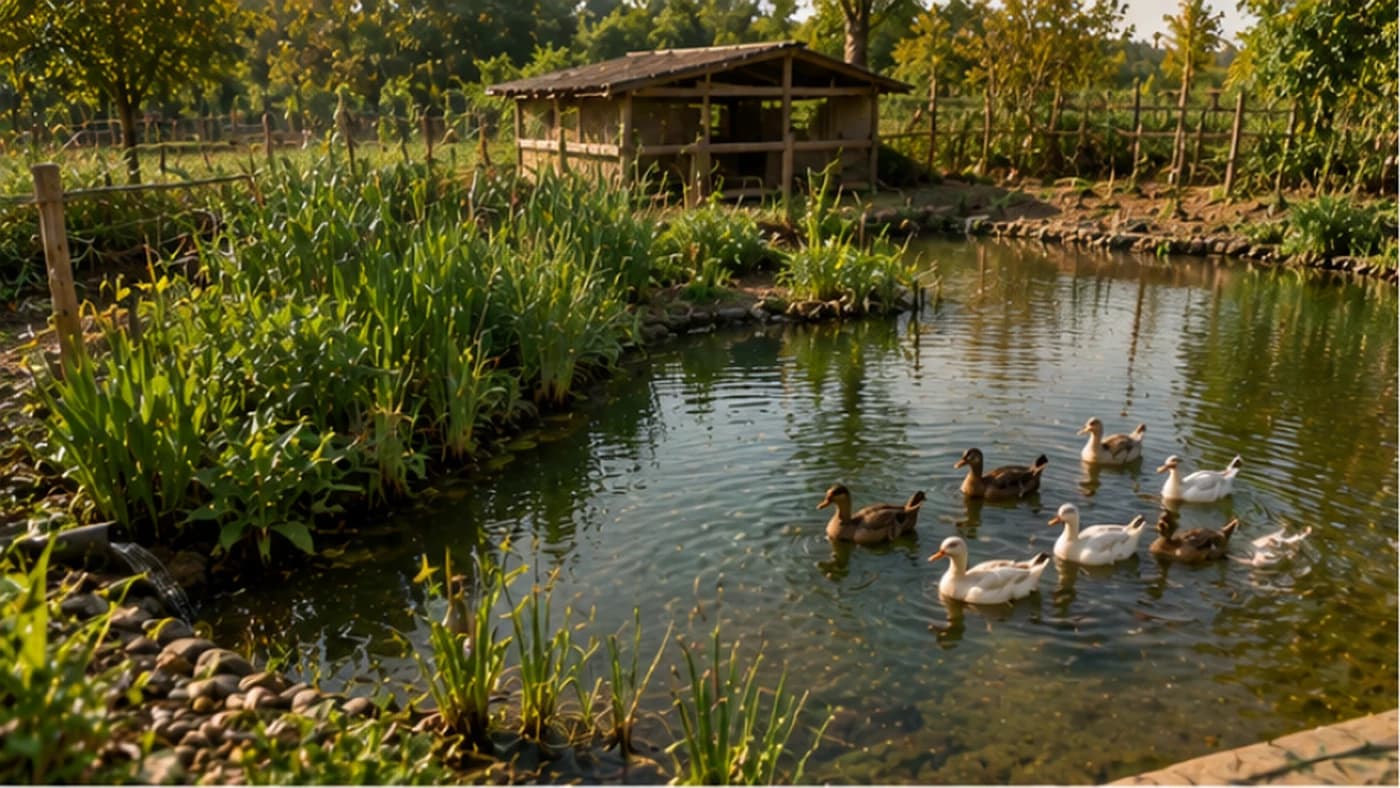
Building a Biofilter for Your Duck Pond
Ducks are messy by nature, but scrubbing a slimy tub every morning shouldn't be the price of keeping them. A gravel-and-plant biofilter turns duck waste into fertiliser and keeps the water clear on its own.
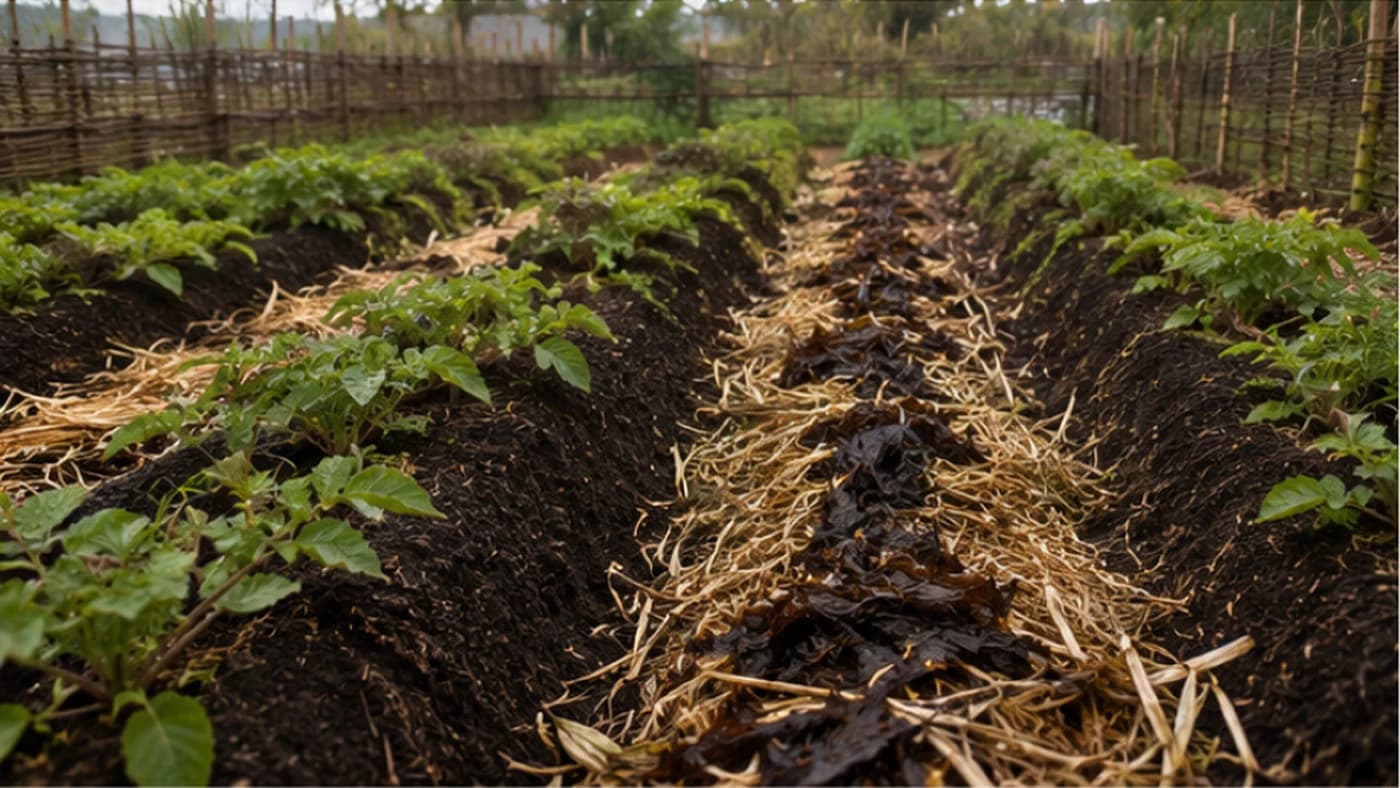
The Lazy Bed Technique: An Ancient Ridge Method for Waterlogged Soil
Centuries before raised beds became fashionable, farmers on Europe's wettest, rockiest land built self-draining ridges from flipped turf alone. It still solves clay and waterlogging problems today — no tools but a spade.