

Building a Biofilter for Your Duck Pond
Ducks are messy by nature, but scrubbing a slimy tub every morning shouldn't be the price of keeping them. A gravel-and-plant biofilter turns duck waste into fertiliser and keeps the water clear on its own.
Quick answer
A duck pond biofilter replaces a daily scrubbing chore with a monthly check-up, and it does this by leaning on the same biology that keeps every healthy river and wetland clean. Size it at 20-30% of your pond's surface, pre-filter feathers and mud before they reach the gravel, keep the pump running around the clock, and the system gets easier to manage every season instead of harder.
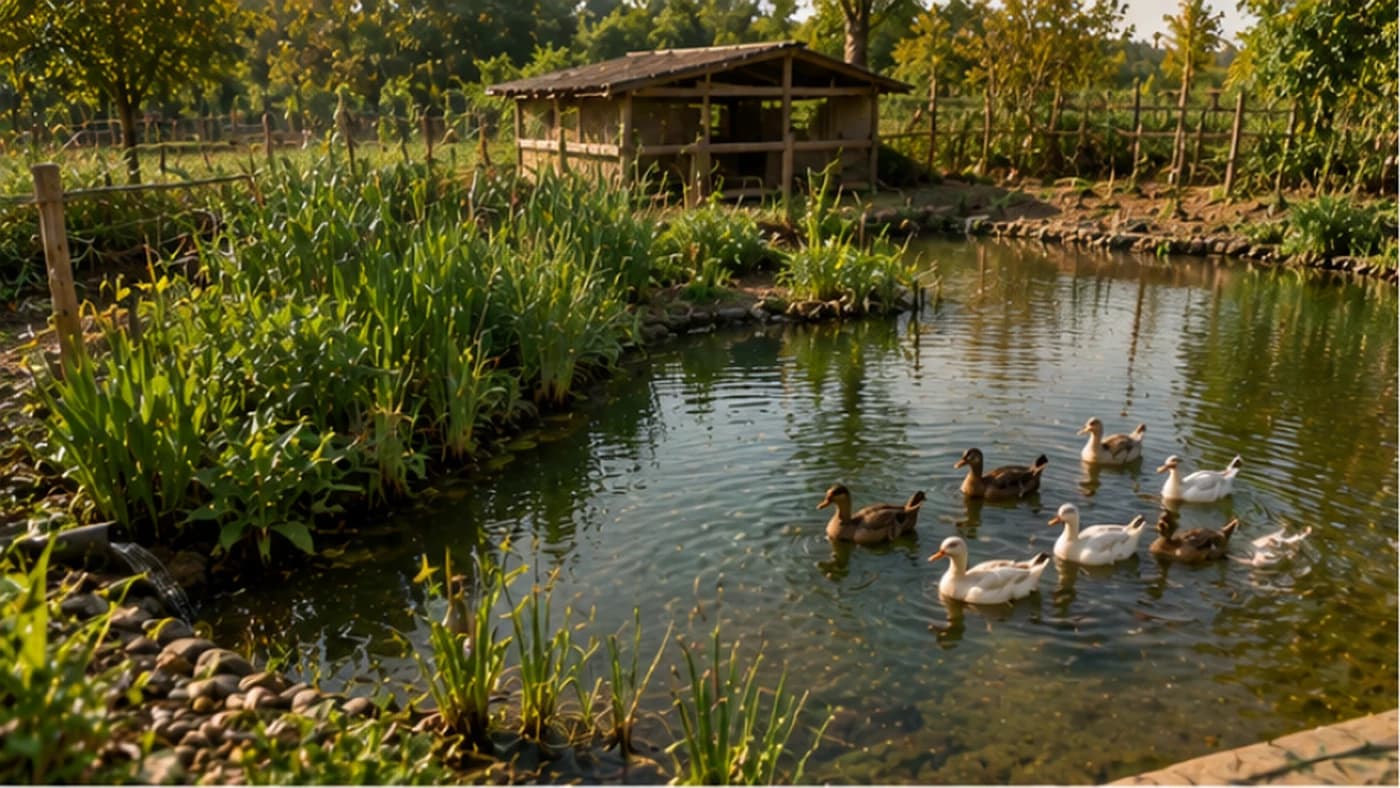
Ducks are waterfowl whose eyes, feathers and bills are built for clean water — but they're also high-nitrogen animals, depositing far more waste than a fish pond of the same size ever would. Instead of the traditional dump-and-scrub cycle every 48 hours, circulating pond water through a gravel bed planted with reeds turns that waste into fertiliser for the greenery and leaves the water clear for your birds, mimicking exactly how a natural wetland purifies water.
What a duck pond biofilter actually is
A biofilter — sometimes called a constructed wetland or bog filter — is a separate basin filled with gravel and water-loving plants that pond water is pumped through. The gravel hosts billions of beneficial bacteria that convert the ammonia in duck droppings into nutrients the plants can absorb. Water enters at the bottom of the basin, rises through the gravel, and spills back into the main pond clean and oxygenated.
The nitrogen cycle that does the work
When ducks swim, they leave ammonia behind, and in a stagnant tub this builds up fast, burning the birds' eyes and breeding pathogens. A biofilter breaks this in two bacterial stages: Nitrosomonas bacteria consume the ammonia and convert it to nitrites; a second group, Nitrobacter, quickly converts those nitrites into nitrates — relatively harmless to ducks and the main food source for your filter plants.
Water must keep moving constantly, because these nitrifying bacteria are aerobic and need oxygen to survive. If the pump stops, oxygen depletes fast, the beneficial bacteria die off, and anaerobic bacteria that produce foul-smelling hydrogen sulphide take over instead.
The four parts you need
A containment vessel — a lined trench, a stock tank, or a secondary pond. Plumbing — PVC pipe with holes drilled in it, laid as a manifold at the bottom of the vessel to spread water evenly. Media — round river gravel of about 19-25 mm (3/4 to 1 inch). And aquatic plants with aggressive root systems to absorb the finished nitrates.
Why it's worth building
Water clarity is the most immediate win — a well-sized biofilter keeps water clear enough to see the bottom, which is nearly impossible with a standard tub. Labour drops sharply too: instead of scrubbing every 48 hours, maintenance becomes a monthly pump check and seasonal plant thinning. The system creates a genuine closed loop, since harvested filter plants can go straight into compost or as supplemental fodder for other animals. And bird health improves, since clean, oxygenated water lowers the risk of bumblefoot, respiratory illness and botulism.
Common mistakes to avoid
Undersizing the filter is the most frequent error — ducks are high-load animals, and a filter sized for a goldfish pond will be overwhelmed within days. As a rule of thumb, your biofilter should be at least 20-30% of your main pond's surface area.
Clogging from feathers and mud is another major hurdle, so always fit a mechanical pre-filter or settlement chamber — even something as simple as a bucket with a coarse sponge — to trap heavy solids before they reach the gravel. Over-cleaning is a subtler mistake: the 'gunk' on the rocks is often the biofilm your bacteria live in, so if you must rinse the media, use pond water, never chlorinated tap water, which kills the colony instantly. And never turn the pump off overnight to save power — bacteria need constant oxygen, so if energy cost is a concern, invest in a high-efficiency DC pump or a solar-powered backup instead.
Where this method has real limits
Stocking density still matters — no amount of gravel will keep water clean if you keep twenty ducks in a pond sized for five. In colder winters, bacterial activity slows sharply even though the water may look clear (since cold also inhibits algae), so you may need to reduce feeding or increase water changes during the coldest months. And space is a genuine trade-off: a proper biofilter needs roughly a third of your pond's footprint, which can feel like a lot on a small plot — though the alternative is the constant smell and labour of a stagnant tub.
Stagnant tub vs dynamic biofilter
Stagnant tub: needs daily or every-other-day cleaning; ammonia spikes and poor water quality; high water-waste cost from constant changes; frequent duck-pen odour; higher infection risk for the birds.
Dynamic biofilter: needs only a monthly check and seasonal pruning; stable, high water quality; low running cost (just the pump's electricity); an earthy, fresh smell instead of odour; noticeably better bird health.
Practical build tips
Size your pump for a turnover rate of at least 2-4 times your total pond volume per hour — a 1,900-litre (500-gallon) pond needs a pump moving roughly 3,800-7,600 litres per hour. Use rounded river stone rather than crushed or sharp gravel, which packs too tightly and creates dead zones where water can't flow. Place tall, aggressive feeders like cattails or canna near the water inlet where nutrient concentration is highest, and lower-growing plants near the outlet. And add a simple vertical clean-out pipe running to the very bottom of the filter bed, so you can vacuum out accumulated silt without digging up the gravel and plants.
Going further
An up-flow design (water pumped in at the bottom, rising to the top) is generally better for duck ponds, since heavy solids settle right at the base of the tank where they're easy to flush out through a bottom drain. A small waterfall at the return point adds meaningful aeration as water tumbles over rocks. And in the autumn, harvest and cut back your filter plants before they die back naturally — leaving dead plant matter to rot in the filter releases the season's absorbed nitrogen straight back into the water.
A worked example
Six Khaki Campbell ducks (a breed already popular and promoted by Indian poultry departments for egg-laying) on a 1,900-litre main pond lined with a durable EPDM liner. A 570-litre biofilter sits in a raised stock tank slightly above pond level, fed by a solids-handling pump moving roughly 9,500-19,000 litres per hour through a skimmer box that keeps feathers out. Twelve inches (30 cm) of river stone is planted heavily with cattails and canna. As water rises through the stone, ammonia converts through the nitrogen cycle, and by the time it spills back into the pond it's clear and odourless — while once a month, a valve at the bottom of the stock tank flushes out a nutrient-rich sludge that goes straight onto the vegetable patch.
Frequently asked
How big should a duck pond biofilter be?+
As a rule of thumb, the biofilter should be at least 20-30% of your main pond's surface area — ducks produce far more waste than fish, so undersizing is the most common mistake.
Can I turn the pump off at night to save electricity?+
No. The nitrifying bacteria that clean the water are aerobic and need constant oxygen. Turning the pump off for even a few hours can set the biological balance back by weeks. Use a high-efficiency DC pump or solar backup if energy cost is a concern.
Should I power-wash the gravel to clean it?+
No. The film on the gravel is the biofilm where your beneficial bacteria live. If you must rinse it, use pond water, not chlorinated tap water, which will kill the bacterial colony instantly.
What plants work well in a duck pond biofilter?+
Aquatic plants with aggressive root systems, such as cattails and canna, placed near the water inlet where nutrient levels are highest, with lower-growing plants near the outlet.
How much pump capacity do I need?+
Aim for a turnover rate of 2-4 times your total pond volume per hour. A 1,900-litre pond needs a pump moving roughly 3,800-7,600 litres per hour.
Where to go next
- AI farming chatbotAsk any farming question in Gujarati, Hindi or English and get an answer in seconds.
- Kheti app for Indian farmersCrop plans, disease diagnosis, weather and mandi rates in one app.
- Agri Bazar marketplaceBuy and sell animals, crops, equipment and dairy near you — and see what buyers want today.
Want this as daily tasks for your farm?
Khetiyaar turns guides like this into a day-by-day plan — in your language, free to start.

Related guides
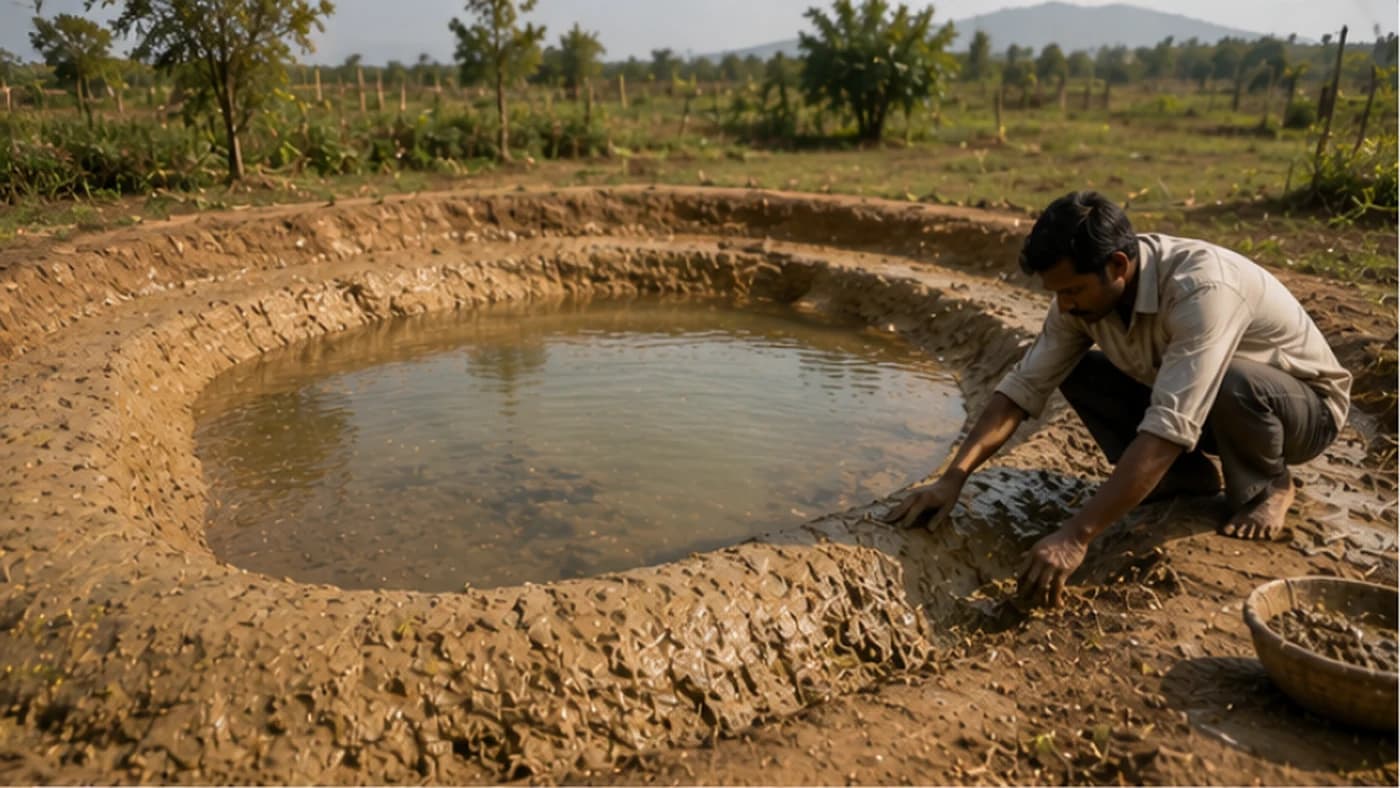
How to Build a Natural Clay Pond That Seals Itself for Decades
Plastic pond liners crack, leach and land in the bin within a couple of decades. A pond sealed with bentonite clay — mined right here in Gujarat and Rajasthan — heals its own cracks and lasts for generations.
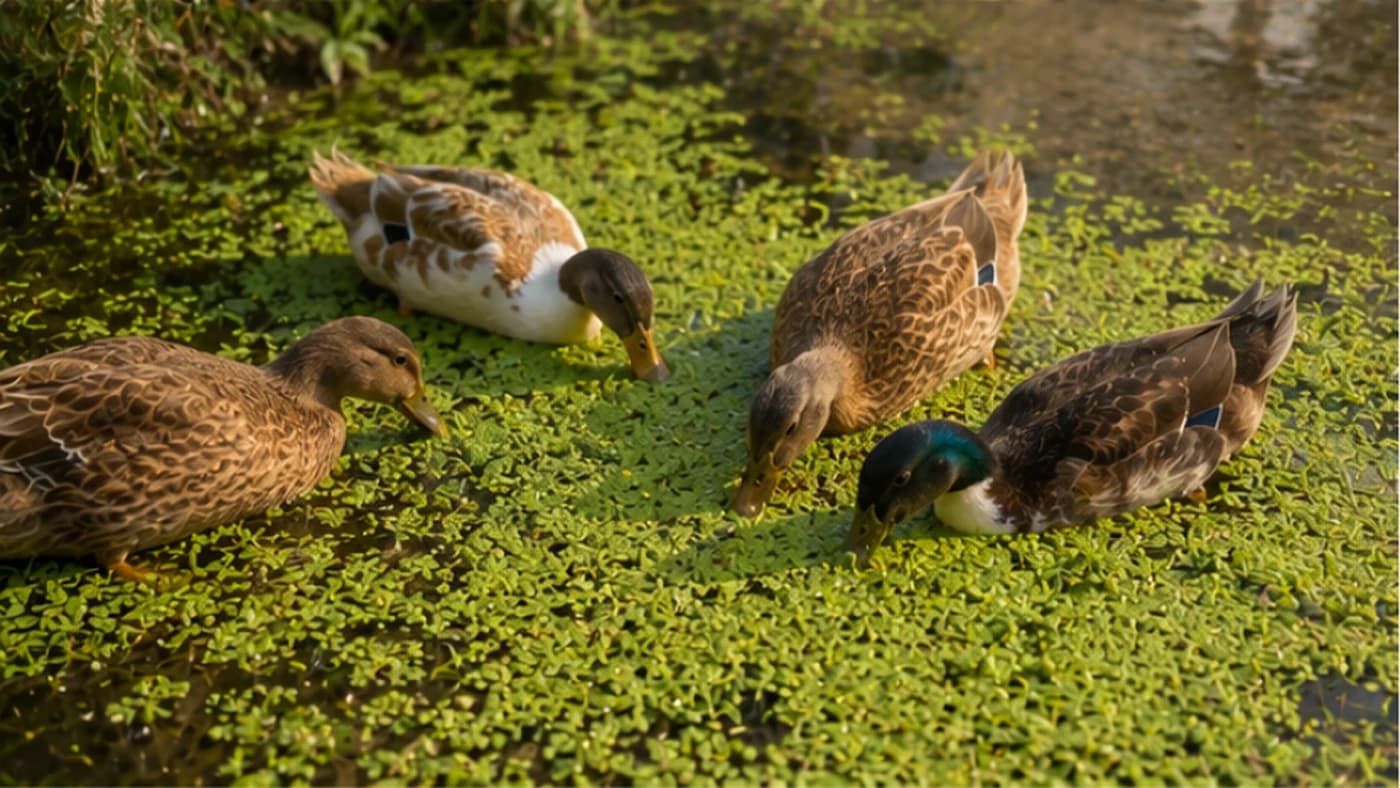
Free High-Protein Duck Feed: Turn Garden Pests Into Eggs
Slugs, snails and beetles are richer in protein than soyabean meal. Learn how duck keepers turn garden pests into free, high-quality feed — and where this trick runs into its limits.
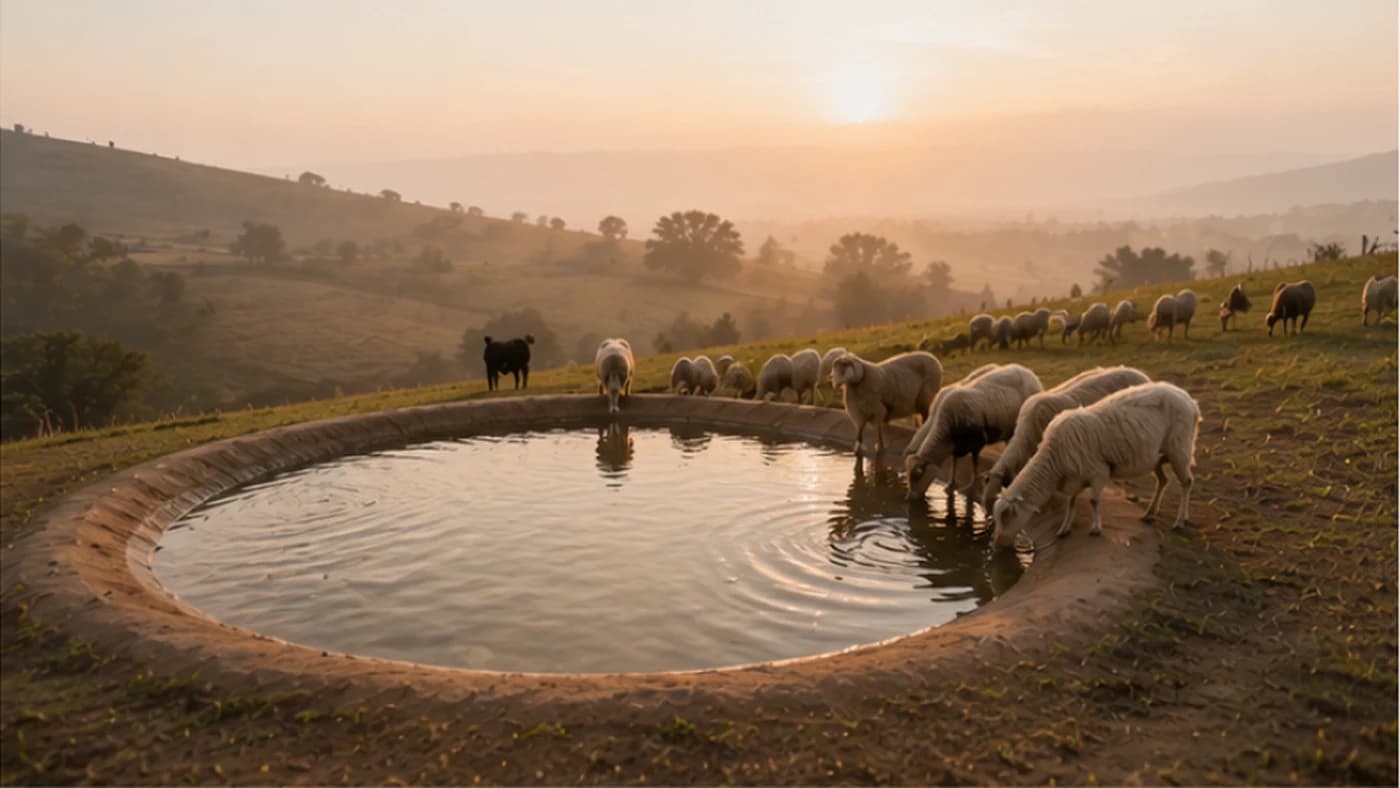
Ancient Dew Pond Construction: Water on High Ground With No Pump
Before electric pumps, farmers on dry, high ground built dew ponds — shallow clay basins that pull moisture straight from the night air. Here's the traditional method, step by step.