

Ancestral Smoke Methods for Pest Control: What's Real and What's Folklore
Long before chemical sprays, farmers used smoke from aromatic wood and herbs to drive pests off prize plants. The science behind it is genuine — the pest-control claims are more traditional practice than proven fact. Here's how to use it honestly and safely.
Quick answer
Ancestral smoke treatment is a real, centuries-old technique with a kernel of genuine science behind it — but it's a mild, short-lived, small-scale tool for protecting a handful of prize plants, not a proven broad-spectrum pesticide, and absolutely not a justification for open-field residue burning, which remains harmful and restricted. Used carefully — cool smoke, clean fuel like neem or tulsi, under a minute per plant — it's a low-cost, chemical-free technique worth adding to a natural pest-management toolkit, alongside neem oil and physical barriers, not instead of them.
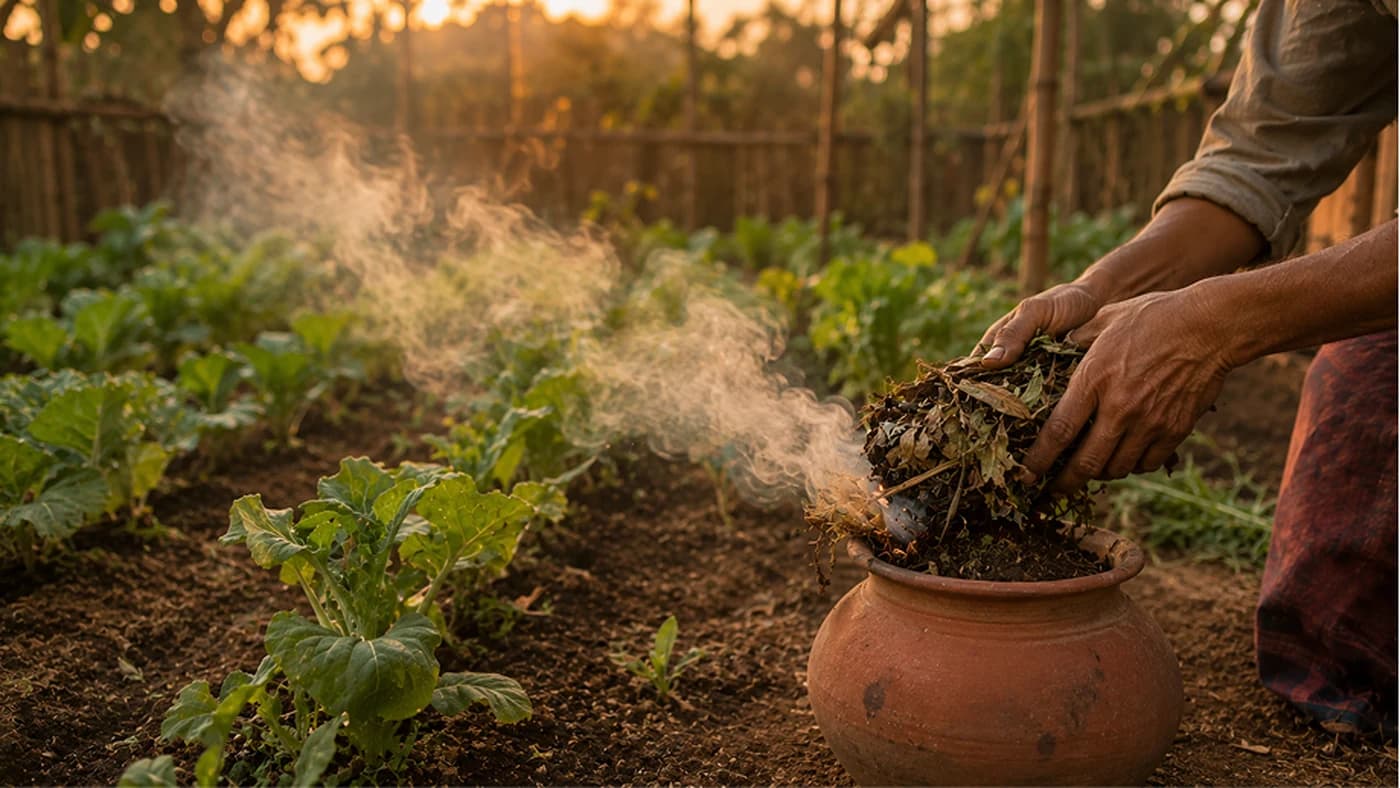
Long before synthetic pesticides existed, farmers across many cultures used smoke as a first line of defence for their most valuable plants — Chinese farmers were using smoke and fire against locusts and beetles as far back as 950 BC, and controlled smouldering of aromatic plants near food stores appears independently in Greek, Roman and various indigenous farming traditions. This is a genuine, centuries-old technique worth understanding — but it's important to be clear about what's established science, what's traditional practice with real but modest effect, and what this technique is not: it is not a substitute for open-field crop-residue burning, which is a separate, environmentally harmful and, in several Indian states, legally restricted practice.
Why smoke affects insects at all
Insects don't breathe through a mouth or nose — they use tiny openings along their body called spiracles, connected to a network of tubes that carry oxygen directly to their tissues, and most cannot voluntarily close these for long. Smoke acts as a physical and chemical irritant to this system: particulate matter clogs gas exchange and creates a strong instinct to flee. Separately, when wood lignin burns, it produces phenolic compounds — guaiacol being one of the most notable — which have a distinct smoky odour that many common pests, including aphids and mites, appear to find repellent.
How to do it safely, on a small scale
The traditional method is a brief, contained smoke treatment under a cloche or dome — a large glass jar, an upturned bucket, or a simple sheet of clear plastic over a frame — placed over an individual plant, leaving 5–10 cm of clearance between foliage and the covering. Light a small amount of appropriate material in a metal tin, old clay diya, or a simple smoker (the kind beekeepers use works well because it controls direction and density), lift one edge of the cloche, puff a small amount of smoke underneath — just enough to make the air look hazy, not opaque — then lower the cloche and let it sit for 30–60 seconds before venting. This is a technique for protecting a few high-value plants (an heirloom tomato, a nursery seedling tray), not a field-scale treatment.
What to burn — and what to avoid
Never burn treated, painted or stained wood — it releases genuinely toxic compounds. Neem wood or dried neem leaves, already a well-established pest-deterrent in Indian farming, work well and are widely available. Dried tulsi, mint or rosemary produce smoke effective against soft-bodied insects and mosquitoes, and are mildly antimicrobial. Dried marigold (genda) flower heads produce a pungent smoke often used against whiteflies. Avoid dense, black smoke — it indicates incomplete combustion and can coat leaves in soot that blocks light and clogs the plant's pores; the smoke should be thin and pale grey to white.
Important: this is not field burning
It's essential to be clear about scale and legality here. This technique involves a small, contained amount of smoke under a cloche for less than a minute — nothing like open burning of crop residue (stubble) in the field, which spreads dense smoke over a wide area, causes serious regional air pollution, and is restricted or banned in several Indian states including Punjab, Haryana and Uttar Pradesh under air-quality regulations (with penalties under the Commission for Air Quality Management rules). Never treat this small-scale ancestral technique as justification for open-field burning — they are entirely different practices with entirely different consequences.
What the evidence actually supports
Be realistic about what smoke-infusion does and doesn't do. There is genuine published science behind karrikins — butenolide compounds found in plant-derived smoke that act as growth stimulants, improving seedling vigour and germination in many species; smoke-water treatments for seed germination are a legitimate, studied technique. The pest-repellent effect, however, is longer on tradition and anecdote than on rigorous field trials — it appears to work as a mild, short-lived deterrent against small, soft-bodied, mobile pests (aphids, thrips, mites), with little to no effect on hard-shelled beetles or established caterpillar infestations. Treat it as one traditional tool worth knowing, not a proven replacement for neem oil, physical barriers, or biological pest control.
Common mistakes
Introducing hot smoke or placing a just-smoked cloche in direct midday sun can effectively steam the plant inside — always do this in the cooler hours of early morning or evening. Thick black soot means your fire isn't getting enough oxygen — fix the fuel or airflow rather than pushing through more smoke. And over-exposure is a common error: a flash treatment under a minute is usually enough; leaving the cloche on longer stresses the plant without adding any extra pest-control benefit.
Frequently asked
Does smoke actually repel garden pests?+
There's a real scientific basis (smoke compounds like guaiacol, and physical irritation of insect breathing systems), and it's a genuine centuries-old practice — but the pest-repellent effect is better supported by tradition than by rigorous modern trials, and works best as a mild, short-term deterrent against small soft-bodied pests.
Is this the same as burning crop stubble in the field?+
No, and this distinction matters. This is a tiny, contained puff of smoke under a jar or cloche for under a minute. Open-field stubble burning is a large-scale practice that causes serious air pollution and is restricted by law in several Indian states — never treat the two as related.
What's safe to burn for this technique?+
Dried neem, tulsi, mint, rosemary or marigold work well and are widely available in India. Never burn painted, treated or chemically finished wood.
What is karrikin, and is that part real?+
Karrikins are compounds found in plant-derived smoke that are genuinely proven to stimulate seed germination and seedling vigour in many species — this part of the smoke story is well-established published science, separate from the pest-repellent claims.
Where to go next
Want this as daily tasks for your farm?
Khetiyaar turns guides like this into a day-by-day plan — in your language, free to start.

Related guides
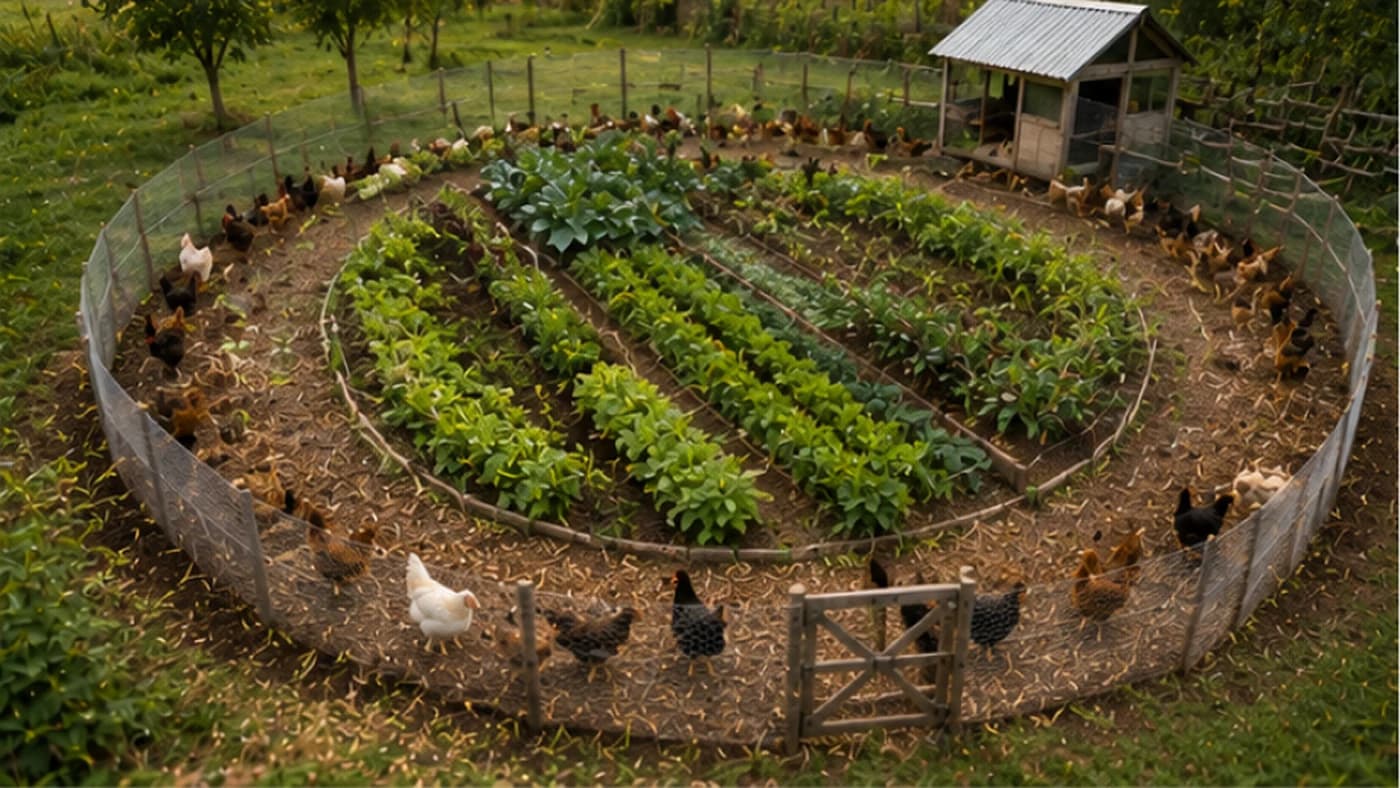
The Chicken Moat: A Double Fence That Hunts Pests for You, 24/7
A normal fence just stands there while insects walk straight through. A chicken moat — a double-fenced ring around your garden — turns your birds into round-the-clock pest patrol, fertiliser spreaders and weed control, all at once.
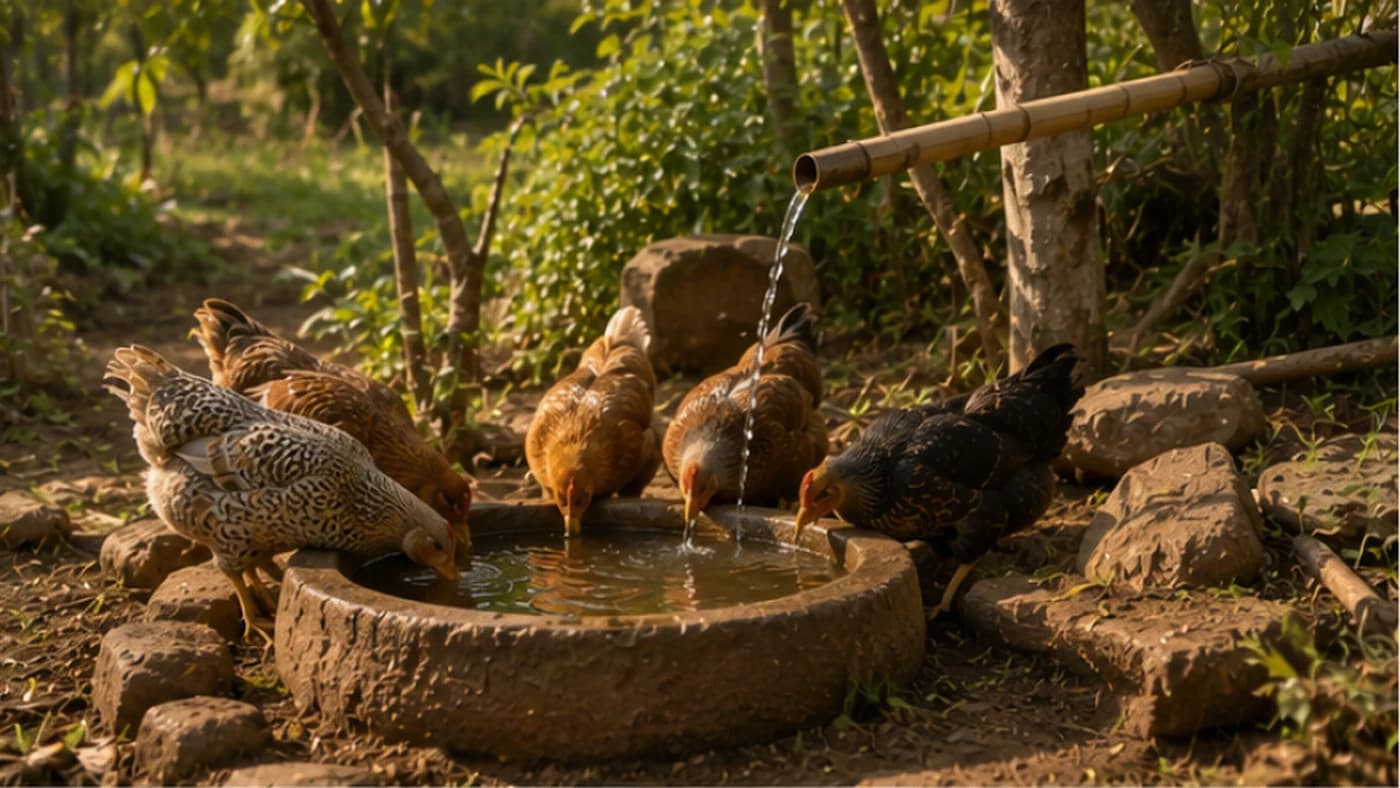
Stone Water Troughs for Poultry: The Ancestral Method That Still Beats Plastic
Plastic waterers crack under summer sun and can leach chemicals into drinking water. A carved stone trough — the same idea behind the village "naand" many Indian farmers already know — keeps water cooler, cleaner and lasts for generations.
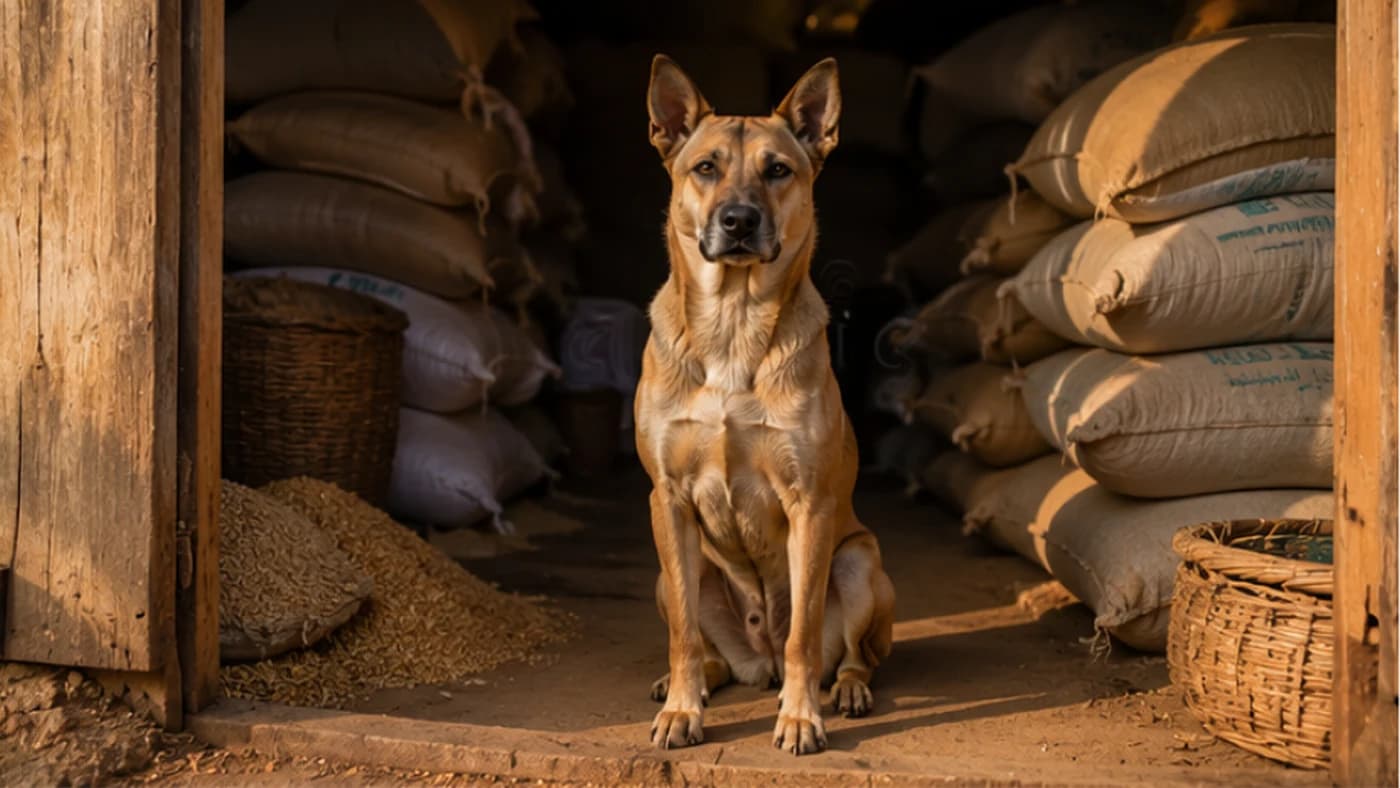
Training a Farm Dog for Rat Control (Without Poison)
Rat poison doesn't just kill rats — it kills the owls, hawks and cats that eat them too, and leaves a toxic carcass to rot in a wall. A trained working dog, even a sharp local pariah dog, is a chemical-free alternative that's been used on farms for centuries.