

Moon Phase Gardening: The Ancestral Planting Calendar, Honestly Explained
Long before soil-test kits, farmers across the world timed sowing to the moon. We explain the four lunar quarters, what farmers claim it does, and what the actual evidence says — so you can try it without confusing tradition for proven science.
Quick answer
Moon-phase gardening is a genuine, centuries-old farming tradition — India has its own version of it through the Panchang — built around a simple four-quarter rhythm: leafy crops early, fruiting crops as the moon fills, root crops and transplanting after the Full Moon, and rest, weeding and storage-harvest in the final quarter. The scientific evidence for a real yield effect is mixed, so treat it as an interesting, low-cost planning layer you can test on one bed, never as a replacement for good soil, water and pest management.
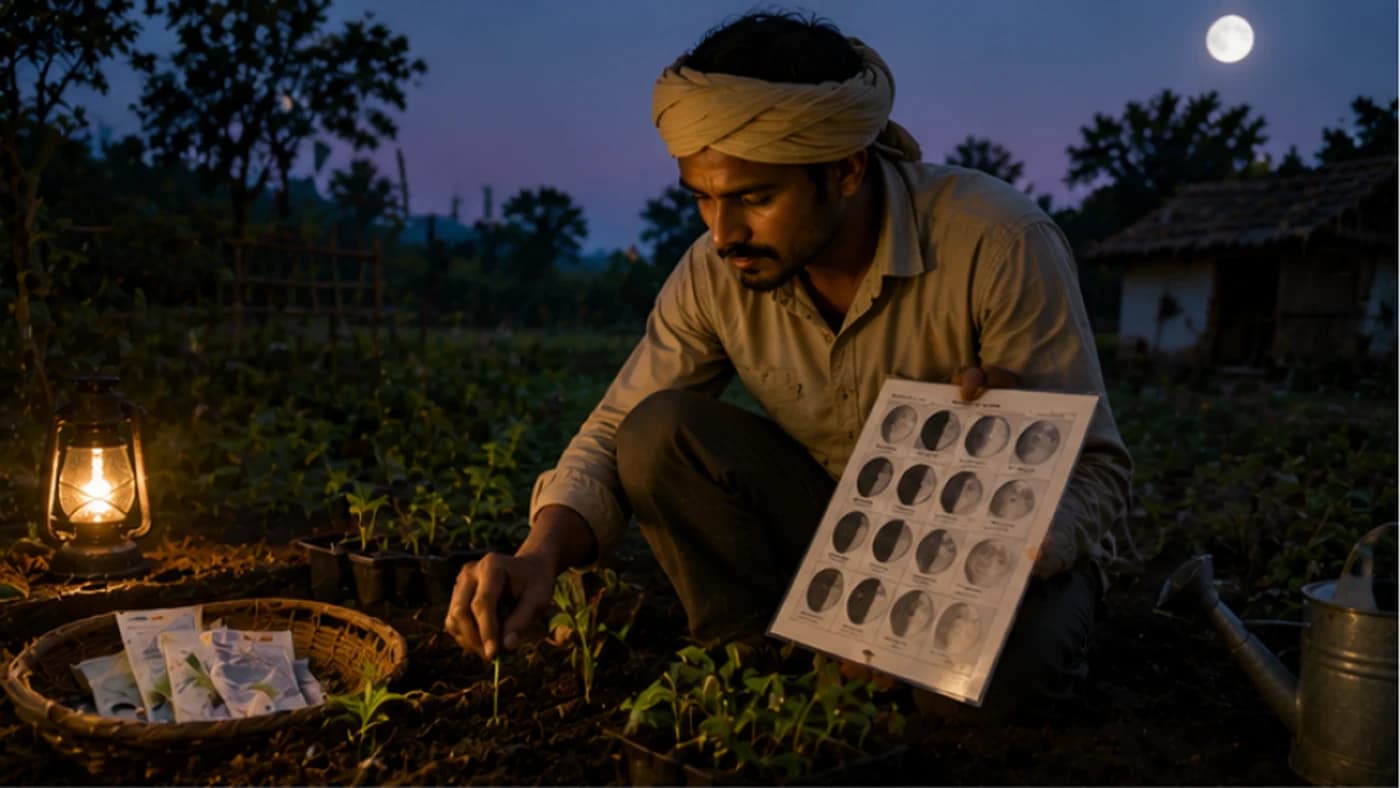
Long before chemical fertilisers and soil-test kits, farmers timed their sowing to the sky. Egypt, the Maya, and many farming communities across India have their own traditions of watching the moon and the Panchang calendar to decide when to sow, transplant or harvest. Today it's often dismissed as superstition, and sometimes overstated as guaranteed science — the honest answer sits in between. This guide explains what lunar gardening actually claims, the four-quarter method farmers have followed for generations, and what real evidence says, so you can experiment with it as an interesting layer on top of sound soil and water management, not a replacement for it.
What is moon-phase gardening?
Moon-phase (lunar) gardening times sowing, transplanting and harvesting to the roughly 29.5-day lunar cycle. The idea rests on a real, observable fact — the moon's gravity pulls ocean tides — extended into a claim that the same pull also moves moisture in soil and sap in plants. Civilisations from ancient Egypt to the Maya followed lunar planting calendars, and India has its own long-standing tradition of timing farm tasks to the Panchang, the lunar-solar calendar still consulted by many rural households for sowing dates, festivals and auspicious days.
The cycle is divided into four quarters, and traditional practice assigns each quarter a different job: some quarters are said to favour leafy, above-ground growth, others favour root development. Think of it as a recurring monthly rhythm that gives you a simple planning framework, whatever you make of the underlying science.
The four lunar quarters and what to sow in each
First quarter (New Moon to Half Moon): traditionally considered the best window for leafy crops — spinach, lettuce, coriander, methi and other greens that we grow for their leaves and stems.
Second quarter (Half Moon to Full Moon): favoured for above-ground fruiting crops that carry their seed inside the fruit — tomato, brinjal, chilli, beans, peas, gourds, and cereals.
Third quarter (just after Full Moon to Half Moon): the traditional window for root crops — carrot, radish, onion, potato, groundnut — and for transplanting seedlings, since the plant is said to focus on establishing roots rather than leaves, which can reduce transplant shock.
Fourth quarter (Half Moon back to New Moon): a rest phase. Traditional guidance discourages fresh sowing here and instead reserves it for weeding, tilling, composting, and harvesting produce meant for long storage — the idea being that produce picked now holds less moisture and keeps better.
The claimed mechanism — and what evidence actually shows
The traditional explanation has three parts: gravity pulling soil moisture upward around the New and Full Moon (helping seeds swell and germinate faster), changing moonlight through the month subtly influencing leaf and stem growth, and the moon's pull affecting geotropism — the way roots grow down and shoots grow up.
Be clear-eyed about the evidence here: rigorous, controlled scientific trials on lunar planting have produced mixed and often conflicting results, and there is no settled agronomic proof that sowing by the moon reliably raises yield. What is well documented is that many experienced farmers report better organisation, more consistent germination, and closer attention to their fields when they follow a planting calendar of any kind — some of that benefit may come simply from having a disciplined schedule, not the moon itself. Treat lunar gardening as a traditional craft and a planning tool, not a substitute for soil testing, correct irrigation timing, or recommended sowing windows for your crop and region.
How to try it without harming your season
If you want to experiment, pick one small bed or one crop and follow the four-quarter calendar for two to three seasons, comparing it against your usual practice on the rest of the field. Use a reliable Panchang or a printed lunar planting calendar rather than guessing the phase by eye — with modern lighting it is genuinely hard to tell a waxing from a waning moon just by looking up.
Never let the lunar calendar override your local conditions. If the calendar says sow today but your soil is waterlogged, a heatwave is forecast, or frost is due, follow the weather and the soil — the moon is a guide, not a dictator. And remember that lunar timing cannot fix bad soil: if your field is compacted or low in organic matter, no amount of correct timing will move moisture the way the tradition describes, so soil health always comes first.
Common mistakes
The most common error is rigidity — treating a missed three-day planting window as a disaster. It is far better to sow a little off-phase than to delay your whole season waiting for a 'perfect' date. The second is skipping soil preparation and expecting the calendar alone to fix poor germination. The third is confusing this with a scientific guarantee and abandoning proven basics like soil testing, timely irrigation, and pest scouting in favour of moon-watching alone.
Frequently asked
Does moon-phase gardening actually increase yield?+
The scientific evidence is mixed — some farmers report better germination and organisation, but controlled trials have not produced consistent proof. It's best treated as a traditional planning tool, not a guaranteed yield booster.
What are the four lunar quarters in simple terms?+
First quarter: leafy crops. Second quarter (moon growing to full): fruiting crops and grains. Third quarter (just after Full Moon): root crops and transplanting. Fourth quarter: rest, weeding, tilling and harvesting for storage.
Does India have its own version of this tradition?+
Yes — many rural households consult the Panchang, India's lunar-solar calendar, for sowing dates and auspicious timings, a parallel tradition to lunar gardening followed elsewhere in the world.
Should I follow the moon calendar over the weather?+
No. Local conditions always come first — waterlogging, heat, or frost should override the lunar calendar. Treat the moon as a guide, not a rule.
How do I try this without risking my crop?+
Test it on one small bed or crop for two to three seasons and compare the results to your normal practice elsewhere on the field, rather than converting your whole farm at once.
Where to go next
Want this as daily tasks for your farm?
Khetiyaar turns guides like this into a day-by-day plan — in your language, free to start.

Related guides
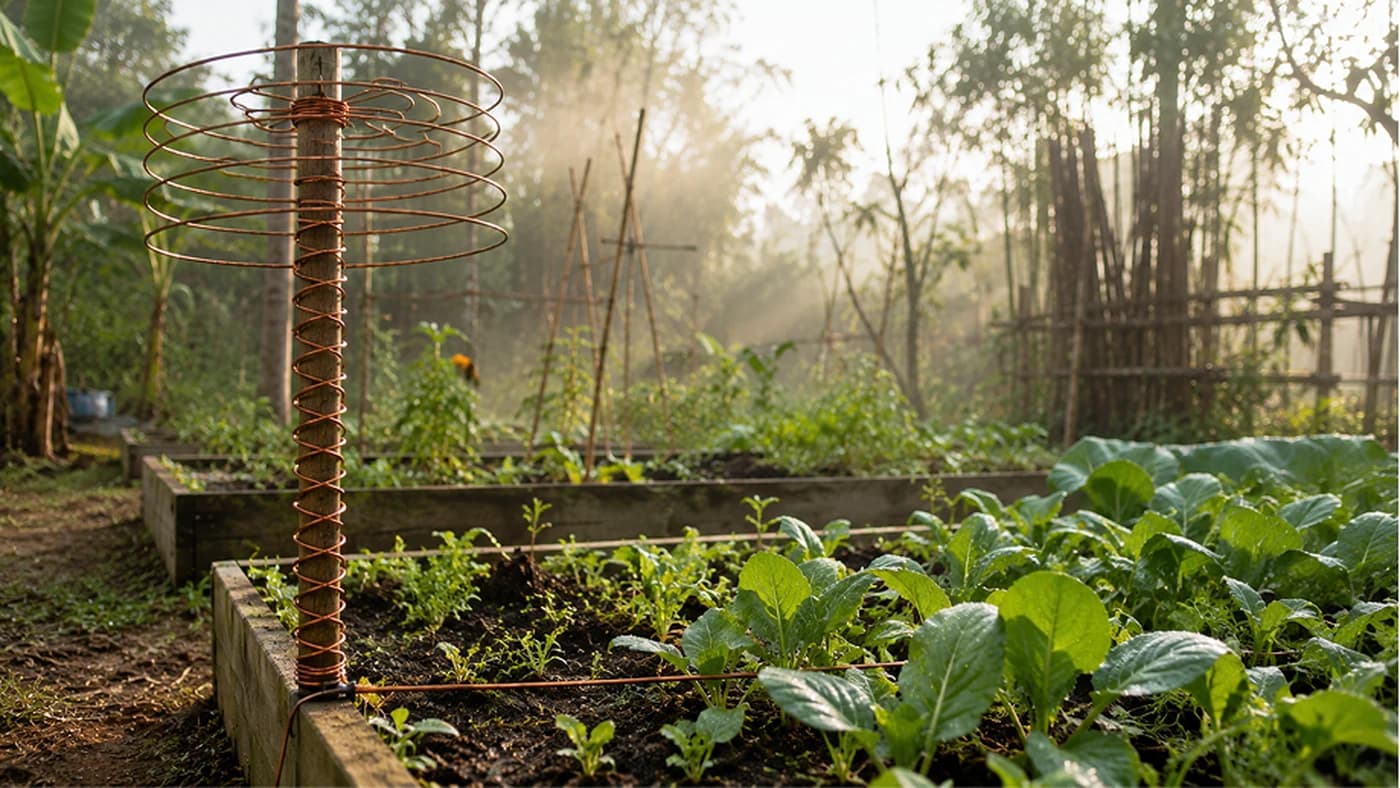
Electroculture Gardening: What It Is, and What the Evidence Actually Says
Copper antenna gardening promises faster growth and lower water use for almost no cost. It's a genuinely old folk technique — but the claims run well ahead of the science. Here's what it involves and how to think about it honestly.
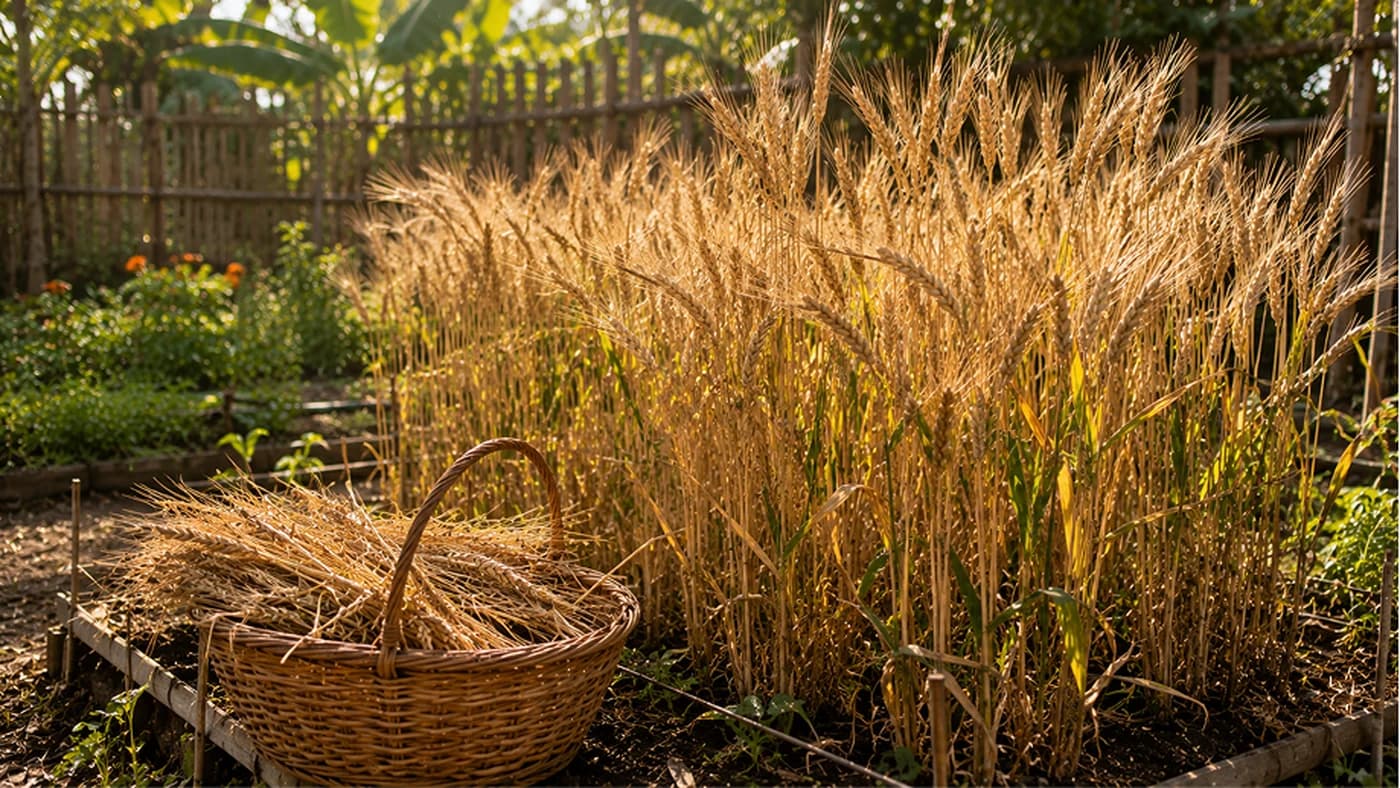
Perennial Grains Explained: The Future of Low-Till Grain Growing
Imagine a grain crop you plant once and harvest for years, with roots deep enough to shrug off drought. Perennial grains are still an emerging frontier — but the soil-building principles behind them are usable on any Indian farm today.
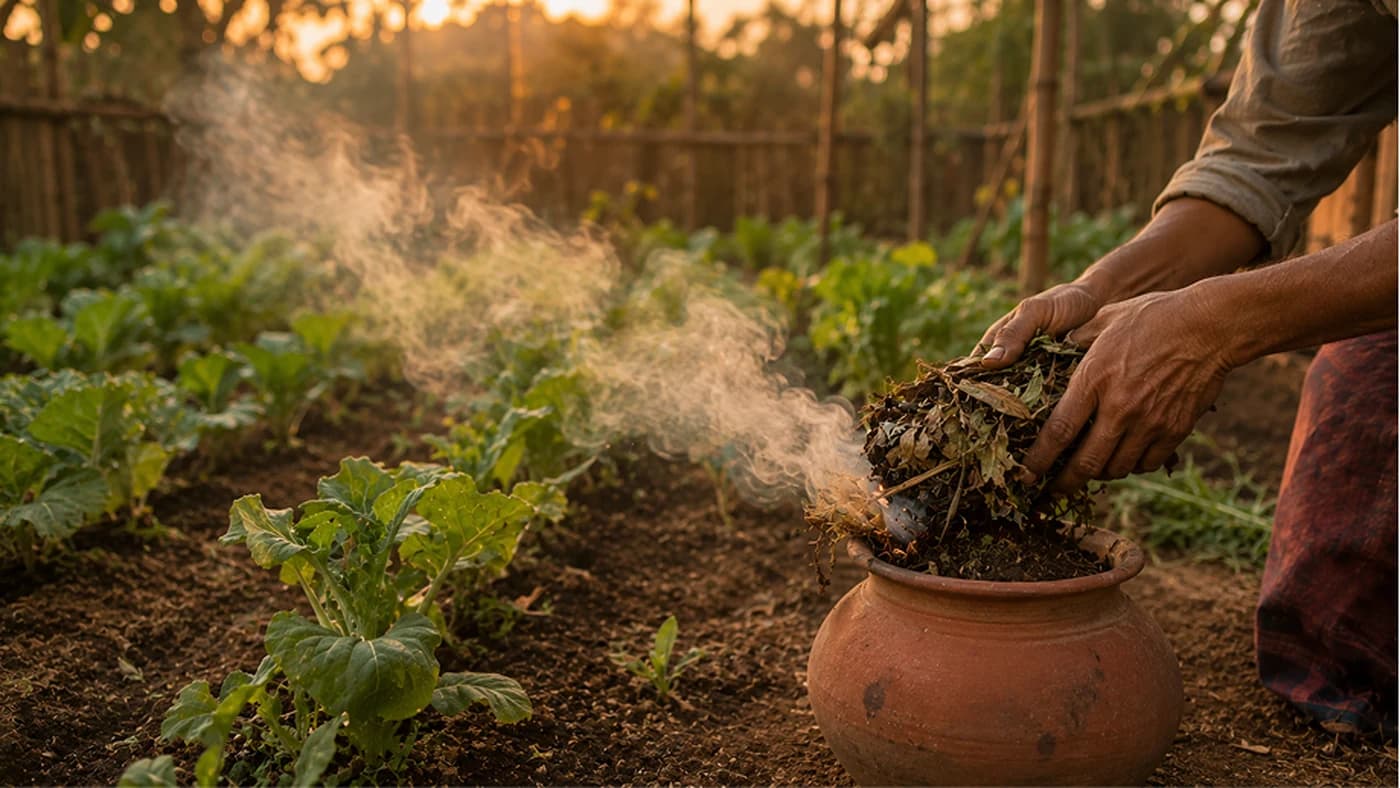
Ancestral Smoke Methods for Pest Control: What's Real and What's Folklore
Long before chemical sprays, farmers used smoke from aromatic wood and herbs to drive pests off prize plants. The science behind it is genuine — the pest-control claims are more traditional practice than proven fact. Here's how to use it honestly and safely.