

Biodrainage: Using Trees Instead of Pipes to Dry Out Waterlogged Land
Waterlogging quietly ruins more fields than most farmers realise — in canal command areas of Punjab and Haryana alone it affects lakhs of hectares. Trees that pump water out through their leaves can do the job of an expensive drainage system, for a fraction of the cost.
Quick answer
Waterlogging is one of the more fixable problems in Indian agriculture, and biodrainage — planting the right water-hungry tree species in the wettest part of a field — can do a genuinely comparable job to a buried pipe drain at a fraction of the cost, while also yielding timber, fuelwood or craft material. Match the species to your climate: eucalyptus for most of the plains, willow specifically in the Kashmir valley and similar cool hill regions. Keep roots away from underground pipes and foundations, plant a proper line or belt rather than a scattering of trees, and expect the full drainage effect to build over two to three years as the trees mature.
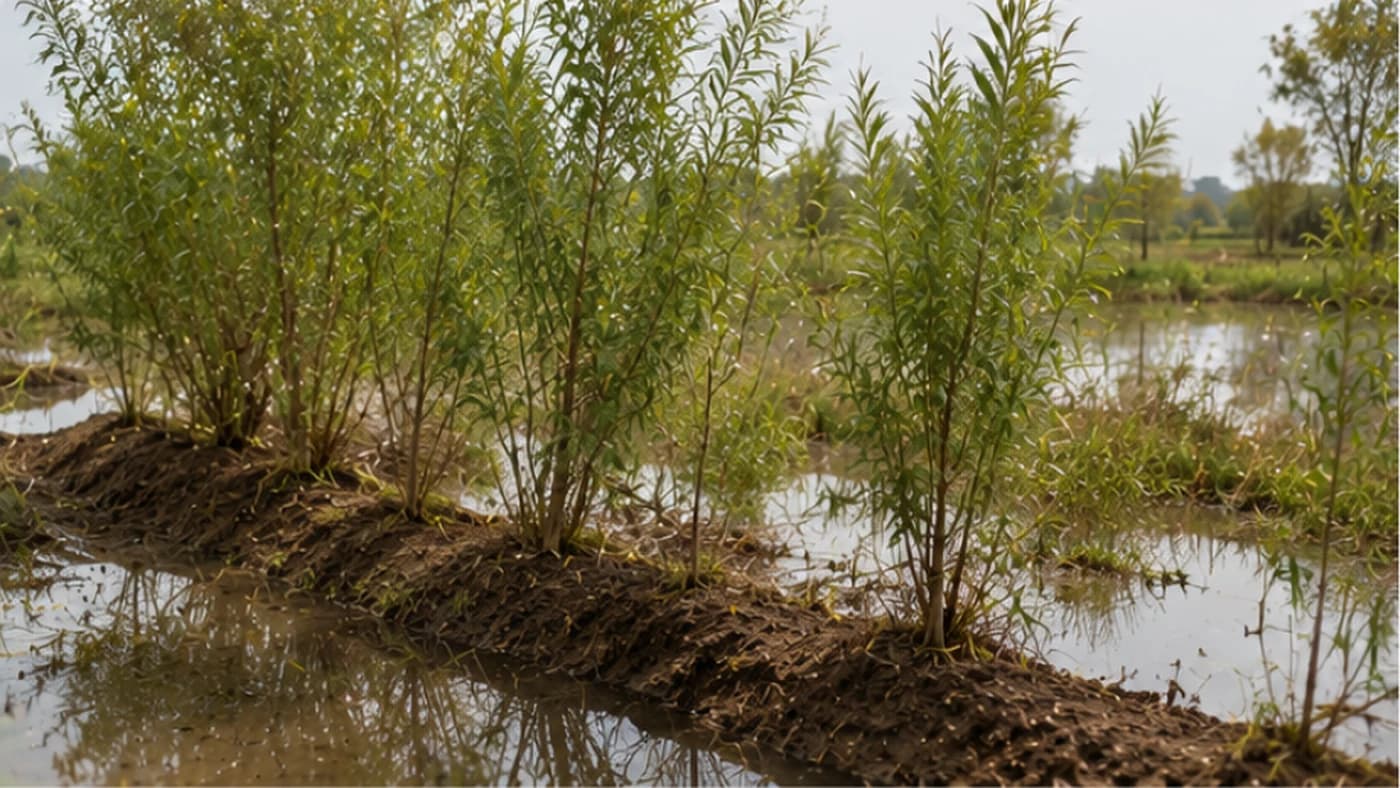
Waterlogging is one of Indian agriculture's quiet, expensive problems — canal-irrigated tracts of Punjab, Haryana and parts of Gujarat and Maharashtra have lost real productivity to soils that stay saturated long after the water should have drained away. The usual fix, buried pipe drains, works but costs real money and needs upkeep. Biodrainage is a different approach: certain trees act as living pumps, pulling huge volumes of water up from saturated soil and releasing it into the air through their leaves — draining the land for the price of planting a tree instead of digging a trench.
What biodrainage actually is
Certain trees are phreatophytes — deep-rooted species evolved to draw water directly from a high water table, and adapted to grow with wet, oxygen-poor roots that would rot most other trees. A mature tree of the right species can pull dozens to well over a hundred litres of water a day out of the ground and release it into the air as vapour, through a process called transpiration — in effect, a silent, solar-powered pump with no moving parts and no electricity bill. In India, this is a real, documented technique: research institutes and state agriculture departments have used eucalyptus plantations for exactly this purpose in the canal command areas of Punjab and Haryana, where waterlogging and the salinity that often comes with it have damaged large areas of cropland.
Choosing the right tree for your region
The species matters, and using the right one for your climate matters more than the fact that a tree is a phreatophyte at all. Eucalyptus is the most widely documented biodrainage tree across the Indian plains — fast-growing, deep-rooted, and shown in field trials to lower a shallow water table meaningfully over a few years when planted in belts around the wettest parts of a field. Willow (Salix), the classic biodrainage tree used across cooler temperate regions worldwide, does genuinely well in India too — but mainly in the Kashmir valley and similar cool hill climates, where it's already a long-established local industry: Kashmiri willow supplies both cricket-bat willow and the material for traditional wicker basket weaving. Outside cooler hill regions, willow generally struggles in Indian heat, so eucalyptus (or, on a smaller scale, bamboo and casuarina, both also useful in wet, sandy or coastal ground) are the more realistic choice for most of the country.
How the biological pump actually works
The mechanism is straightforward: water evaporates from the tiny pores on a leaf's surface, and that loss creates a pull that draws more water up through the trunk from the roots, in turn pulling more water up from the saturated soil below — the more leaf area a tree has, the stronger this pull. Roots do a second job too: as they push through wet ground searching for water and oxygen, they open up channels that improve soil porosity, letting air reach deeper into the soil and improving structure over time. Where nutrient runoff (excess nitrogen and phosphorus, often from fertiliser washing into low-lying, waterlogged corners of a field) is part of the waterlogging problem, tree roots can also take up and lock away some of that excess, easing the pollution load on nearby water bodies.
Why this beats a mechanical drain, cost for cost
A buried pipe drainage system is a serious capital cost, and needs regular clearing as silt, roots or debris clog the pipes over the years — a real, recurring maintenance bill that doesn't go away. A biodrainage planting costs the price of saplings and a few years of establishment care, and instead of degrading over time, it becomes more effective as the trees mature, largely maintaining itself once established. Beyond drainage, the trees themselves are a yield: fuelwood, timber, fodder or craft material (basket-weaving willow being the clearest local example), and shelter for birds and pollinators along a field edge that would otherwise be bare, wet ground.
Where biodrainage goes wrong
The most common mistake is planting deep-rooted, water-seeking trees too close to underground pipes, septic systems, or building foundations — roots are drawn toward the moisture around even a small crack, and can cause real damage over years, so keep a proper buffer distance from any buried infrastructure. Species choice is the second common error: planting willow far from a cool hill climate, or planting a heavy water-user in a field that isn't actually waterlogged (where it will simply out-compete crops for water instead of solving a drainage problem), wastes the investment. And biodrainage trees are living things with a real lifespan — most of the useful species last a few decades of strong performance, not forever, so treat a biodrainage belt as infrastructure that needs eventual replanting, not a permanent, one-time fix.
The genuine limits of the technique
Biodrainage needs full sun to work well — most of these trees are poor pumps in heavy shade. It also slows down or stops in winter dormancy or during long overcast, humid spells, when transpiration drops sharply, so in a climate with a distinct cool or monsoon season, expect the drainage effect to ease off for part of the year rather than working at full strength year-round. And it's a belt or block planting, not a single tree — a handful of trees scattered around a field will barely dent a serious waterlogging problem; meaningful drainage needs a planned line or block of trees sized to the area of wet ground you're actually trying to dry out, which usually means consulting a state agriculture department or krishi vigyan kendra for the right planting density for your soil and water table.
Mechanical drain vs. biodrainage, side by side
- Mechanical pipe drain: high upfront cost; regular maintenance to clear silt and clogs; typically needs replacement after 20-30 years; no secondary benefit beyond drainage; heavy construction and trenching to install.
- Biodrainage planting: low upfront cost (mainly saplings and establishment care); light, periodic maintenance; useful lifespan of several decades with replanting; secondary yield of timber, fuelwood, fodder or craft material plus habitat; simple to establish, though it takes a few years to reach full effect.
Getting a planting established
Plant during the dormant or cool season so trees focus early energy on root establishment rather than leaf growth. Space trees in a proper line or belt along the wettest edge of the field or the direction water tends to collect from, rather than scattering them randomly. Water-loving species generally transplant and establish easily from nursery stock or, for willow specifically, from simple live cuttings pushed directly into moist ground during the dormant season. Expect a real drainage effect to build over two to three years as root systems mature, not overnight.
Ongoing management
Many biodrainage species, including both eucalyptus and willow, respond well to periodic coppicing — cutting the tree back hard every few years, which keeps the root system vigorously active (and still pumping) while producing a regular harvest of poles, fuelwood or craft material rather than one large tree taking up permanent space. This also keeps trees smaller and more manageable near field edges, and extends the useful working life of the planting considerably.
A worked example
Consider a field corner of about a tenth of a hectare that stays visibly wet for two to three days after any significant rain or canal release, with heavy clay soil and poor natural drainage. Instead of a costly buried-pipe project, a farmer plants a tight row of fast-growing eucalyptus along the lowest edge of that corner, spaced a few metres apart. By the second or third year, as the root systems mature, standing water after a rain event clears within a matter of hours rather than days, and by the fifth year the ground is firm enough to bring back into normal cultivation at the edges, with the tree line itself providing a steady, low-effort supply of fuelwood or poles from periodic coppicing.
Terms explained in this guide
Frequently asked
What is biodrainage?+
Using deep-rooted, water-loving trees to pull excess water out of saturated soil and release it into the air through their leaves (transpiration), draining waterlogged land without buried pipes.
Which tree should I use for biodrainage in India?+
Eucalyptus is the most widely used and documented choice across the Indian plains, including in canal command areas of Punjab and Haryana. Willow works well specifically in the Kashmir valley and similar cool hill climates, where it's also a source of cricket-bat willow and basket-weaving material.
Is biodrainage really cheaper than a pipe drain?+
Yes for upfront cost — it's mainly the price of saplings and a few years of establishment care, versus the significant capital cost of trenching and laying pipe. A pipe drain also needs recurring maintenance to clear silt and clogs, while a mature biodrainage planting is largely self-maintaining and also yields timber or fuelwood.
Can tree roots damage nearby structures?+
Yes, if planted too close — deep, water-seeking roots are drawn toward moisture around underground pipes, septic lines or foundations, so keep a proper buffer distance from any buried infrastructure.
How long before I see the drainage effect?+
Expect it to build over two to three years as the root systems mature, not overnight, and to ease off somewhat during winter dormancy or long humid, overcast spells when transpiration naturally slows.
Where to go next
Want this as daily tasks for your farm?
Khetiyaar turns guides like this into a day-by-day plan — in your language, free to start.

Related guides
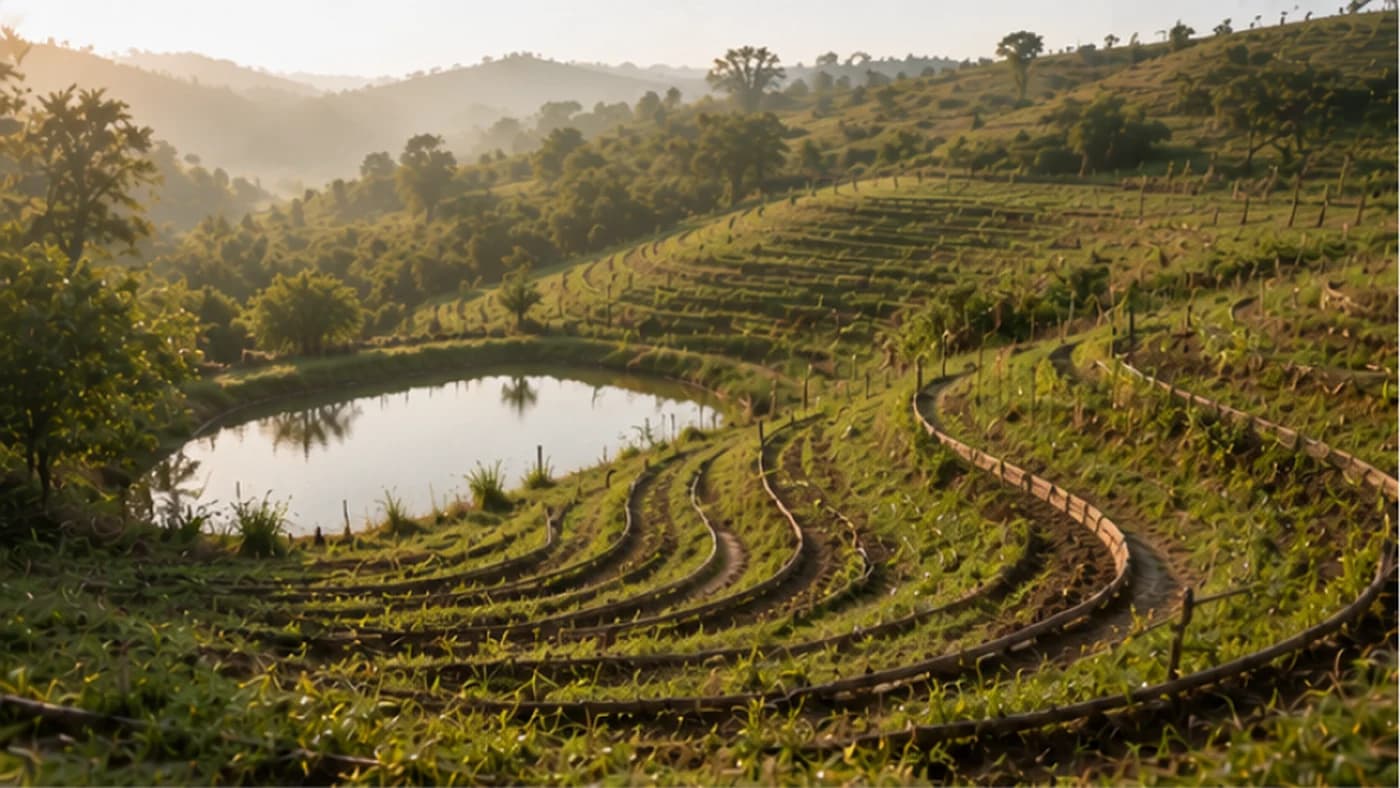
Keyline Design: Turn Every Monsoon Flood into Stored Water
Keyline design reshapes how water moves across sloped land — pulling it out of waterlogged valleys and spreading it onto thirsty ridges. It builds topsoil, drought-proofs pasture, and softens flash floods.
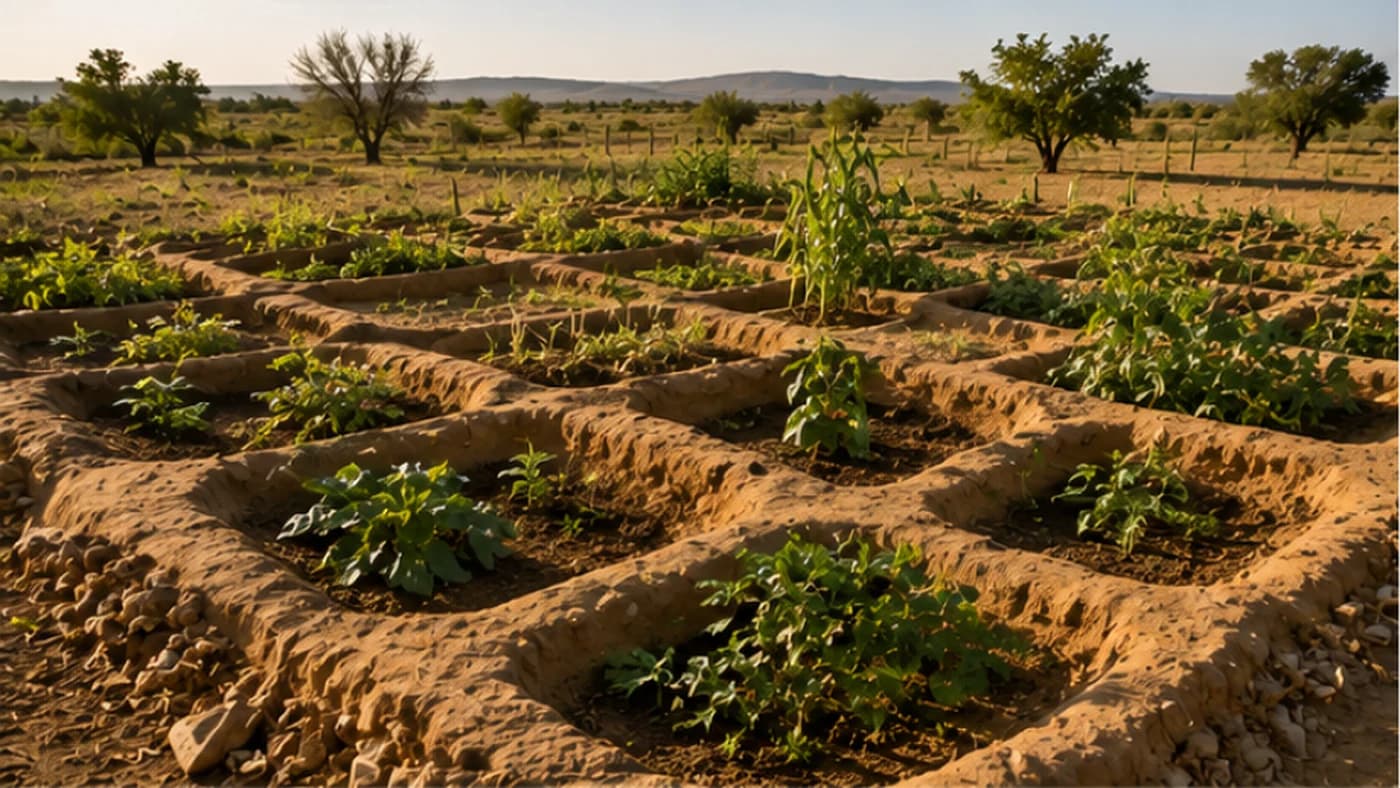
The Zuni Waffle Garden: An Ancient Dryland Method for Water-Scarce Farms
Ordinary sprinklers lose much of their water to wind and evaporation. This centuries-old sunken-bed technique from the American Southwest desert traps every drop close to the roots — and it adapts easily to India's driest tracts.
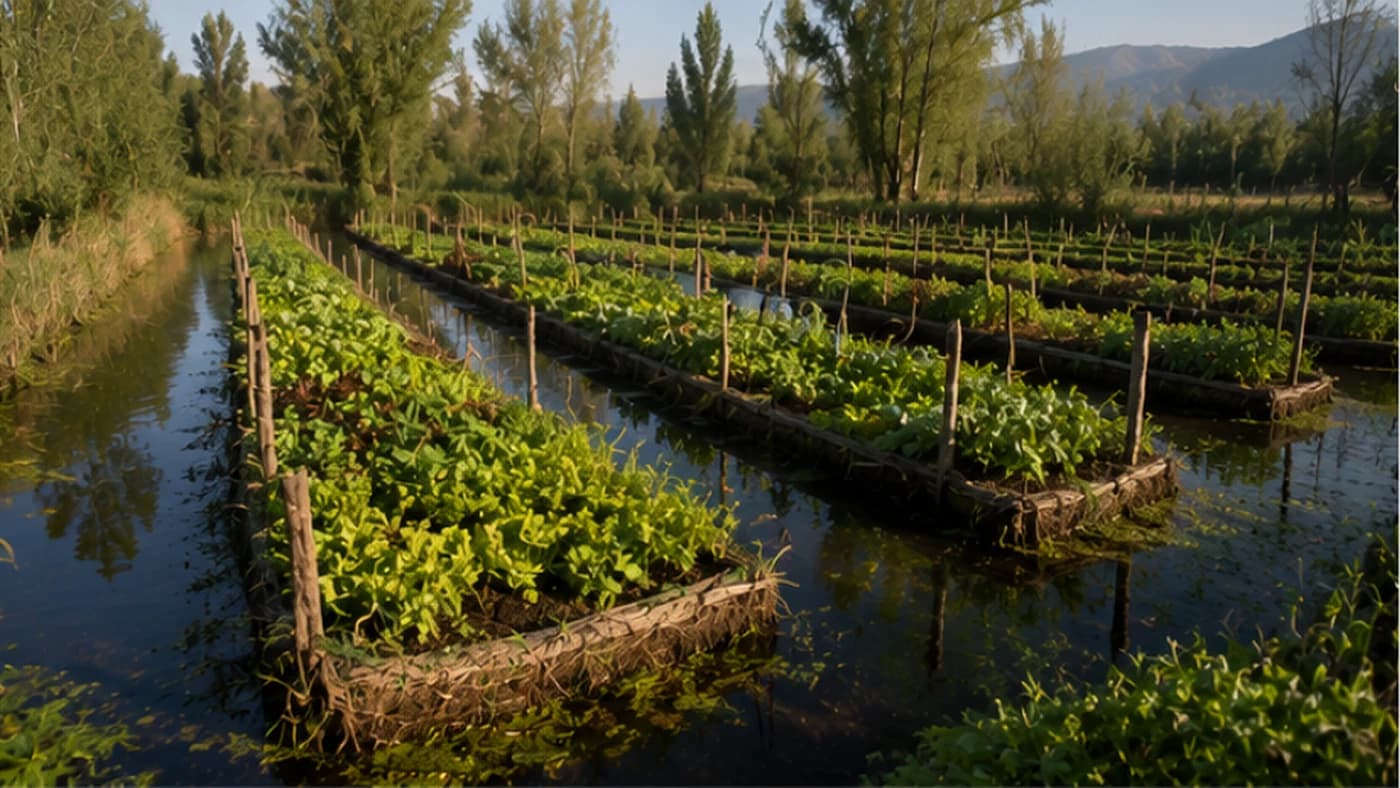
How Chinampas Work: The 700-Year-Old Floating Garden That Never Needed Fertiliser
The Aztecs grew up to seven harvests a year from raised beds built inside a lake, feeding themselves without synthetic fertiliser or piped irrigation. The same closed-loop principle can be scaled down to a pond edge or a wicking bed on an Indian farm.