

How Chinampas Work: The 700-Year-Old Floating Garden That Never Needed Fertiliser
The Aztecs grew up to seven harvests a year from raised beds built inside a lake, feeding themselves without synthetic fertiliser or piped irrigation. The same closed-loop principle can be scaled down to a pond edge or a wicking bed on an Indian farm.
Quick answer
The chinampa's real lesson isn't the exact island-building method — it's the mindset of treating water, mud, and soil as one connected system instead of three separate problems to manage with pumps and bags of fertiliser. Any Indian farmer with a pond, tank, canal, or low-lying wet patch can borrow the principle at a small scale: build slightly raised, well-anchored beds at the water's edge, use the silt and aquatic weed growth as free fertiliser, and keep the bed permanently planted. It's a 700-year-old answer to two very current problems — water scarcity and fertiliser cost.
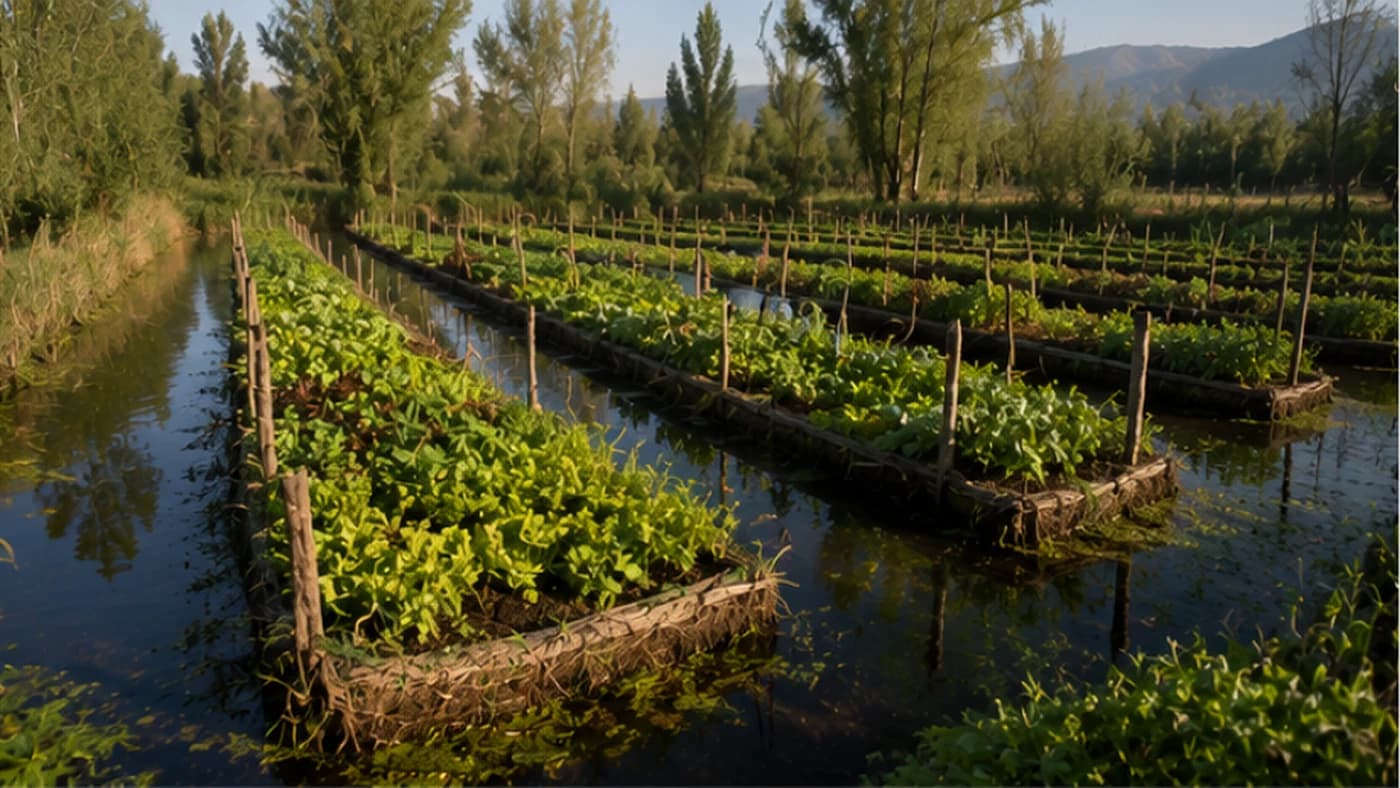
Long before synthetic fertiliser or diesel pumps existed, farmers around the Valley of Mexico fed a city of hundreds of thousands using a system called the chinampa — a raised planting bed built inside a shallow lake. It wasn't a floating garden in the literal sense; it was anchored to the lake bed, and it worked because the water did two jobs at once: it irrigated the bed constantly through capillary action, and it delivered nutrients every time the farmer dredged nutrient-rich mud from the surrounding canal. The result was up to seven harvests a year, for centuries, without exhausting the soil. For any farmer near a pond, canal, tank, or low-lying waterlogged field in India, the underlying principle — let water and mud do the irrigating and fertilising for you — is directly usable.
The basic idea: a garden built inside the water, not next to it
A chinampa is a long, narrow raised bed — typically 2 to 10 metres wide and up to 90 metres long — built up inside a shallow freshwater lake or marsh, no more than 1 to 2 metres deep. The narrow shape means every part of the bed sits close to the surrounding water table. Because the soil is porous and only a short distance above the water level, moisture is drawn upward by capillary action, keeping the root zone consistently damp regardless of rainfall.
The canals around each bed are not just for access — they are the system's engine. Fish, waterfowl, and aquatic plants generate a steady stream of organic waste in the water, and as the canal silts up, the farmer dredges that nutrient-rich mud and spreads it back onto the bed. Every cycle of dredging renews the soil's fertility, instead of depleting it the way continuous cropping normally does.
How a chinampa is actually built
Builders stake out a rectangular area with wooden posts driven into the lake bed and weave a fence of reeds, vines, or branches between them to hold the fill material in place. Inside this enclosure, they layer heavy aquatic vegetation and reeds first, then mud and sediment dredged from the lake bottom, and finally rich topsoil and decaying organic matter on top.
To stop the new island eroding back into the water, willow trees (the Aztecs used a species called ahuejote) were planted along the edges and corners. Their deep, fibrous roots knit the bed to the lake floor while also providing shade and windbreak. In an Indian setting, any fast-rooting, water-tolerant tree or shrub planted at a pond or canal edge can serve the same anchoring role.
Why it produced up to seven harvests a year
Because the surrounding water buffers temperature, chinampa beds stayed warmer in cool weather and cooler in hot weather, effectively extending the growing season. Farmers ran continuous succession planting — starting the next crop in a nursery bed while the current one was still maturing — so there was no downtime between harvests.
Nutrients came from four sources on a constant cycle: nitrogen-rich canal mud from fish waste and decomposed plants; fast-growing aquatic plants like azolla or duckweed used as green mulch; composted waste; and crop residues fed back into the soil or water. The more the system was used, the more fertile it became — the opposite of how continuously cropped dry land normally behaves.
What this technique actually delivers
Yield density is exceptional — a well-managed hectare of chinampas is estimated to have been able to feed 15 to 20 people, well beyond what most non-chemical methods achieve. Drought resilience is built in, since the bed draws moisture up from a permanent water source rather than depending on rainfall.
The canal edges also create an ecotone — the zone where land meets water — that draws birds, dragonflies, and predatory insects that help control pests naturally; studies of the surviving chinampas in Xochimilco, Mexico, have found them supporting a remarkable concentration of biodiversity for their size. The thermal mass of the surrounding water also buffers light frost, letting more sensitive crops survive cold snaps that would damage plants on dry land nearby.
Mistakes that break the system
The most common failure is neglecting the edges — if the anchoring trees die or the reed fencing rots without being replaced, the bank slumps back into the water. Water quality is just as critical: because the bed draws water upward by capillary action, any contamination — heavy metals, industrial runoff, or sewage — will end up in the crop, so always know what is in your water source before relying on sub-irrigation from it.
Building the bed too low is another frequent error — soil that sits too close to the water stays permanently soggy rather than moist, causing root rot. A productive chinampa-style bed should sit roughly 20–50 cm above the water line for most vegetables.
Where this does and doesn't work
You need a permanent source of clean, still or slow-moving fresh water — saline or brackish water will kill crops through salt buildup as it evaporates from the bed surface. The land also needs to be flat and low-lying; a sloped site or a fast-flowing stream defeats the principle. And it is inherently a hand-built, hand-maintained system — dredging mud and tending anchor trees does not lend itself to machinery, which makes it far better suited to a homestead, community plot, or pond edge than a large mechanised farm.
Adapting the principle without building a full chinampa
If you don't have a lake, a wicking bed does the same job in miniature: a raised bed with a gravel-and-water reservoir at the base, topped with soil, mimics sub-irrigation and needs far less watering attention. If you have a farm pond or canal, building small soil mounds or peninsulas into the water's edge, held in place with stones or water-tolerant plants, turns the most productive zone on your land — the edge — into growing space.
Growing duckweed or azolla in a water barrel or the edge of your pond gives you a fast-growing, nitrogen-rich green mulch you can scoop out and spread around vegetables exactly like the Aztecs did with canal muck. And whatever version you build, never leave a bed empty — have the next seedling ready before you clear the last harvest, since the moisture-rich soil can support near-continuous cropping.
Terms explained in this guide
Frequently asked
Do chinampas actually float?+
No — despite being called floating gardens, they are stationary beds anchored to the lake bed with wooden posts, woven fencing, and deep-rooted trees at the edges.
How deep should the water be to try this?+
Traditionally 1 to 2 metres. The bed itself should sit about 20–50 cm above the water line so the soil stays moist, not waterlogged.
Can I try this on a farm pond instead of a lake?+
Yes — building small raised mounds or peninsulas at the edge of a farm pond or canal, anchored with stones or water-loving plants, captures the same sub-irrigation and free-fertiliser benefit on a much smaller scale.
What if I don't have a pond at all?+
A wicking bed — a raised bed with a water-and-gravel reservoir underneath the soil — reproduces the sub-irrigation effect without needing open water nearby.
Is polluted water a problem for this method?+
Yes, seriously. Because the bed draws water upward into the root zone, any heavy metals, industrial waste, or untreated sewage in the water source will end up in your crop. Always check your water source before relying on it for sub-irrigation.
Where to go next
Want this as daily tasks for your farm?
Khetiyaar turns guides like this into a day-by-day plan — in your language, free to start.

Related guides
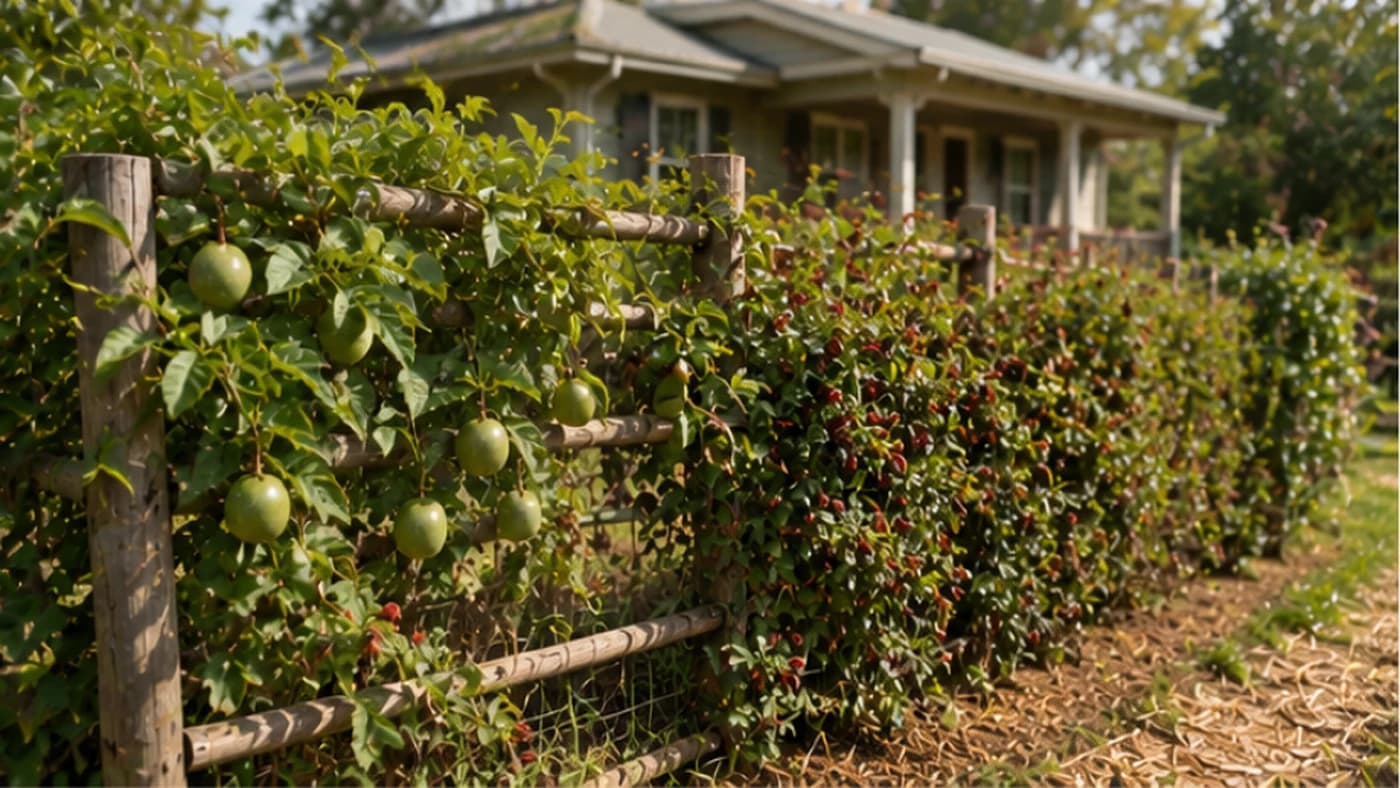
Gravity-Fed Water Systems: Reliable Water Supply Without a Pump
If your farm or hill homestead has any real slope, gravity can deliver pressurised water to your home, livestock trough, or field — with no electricity bill, no pump to fail, and no water stoppage the moment the power goes out.
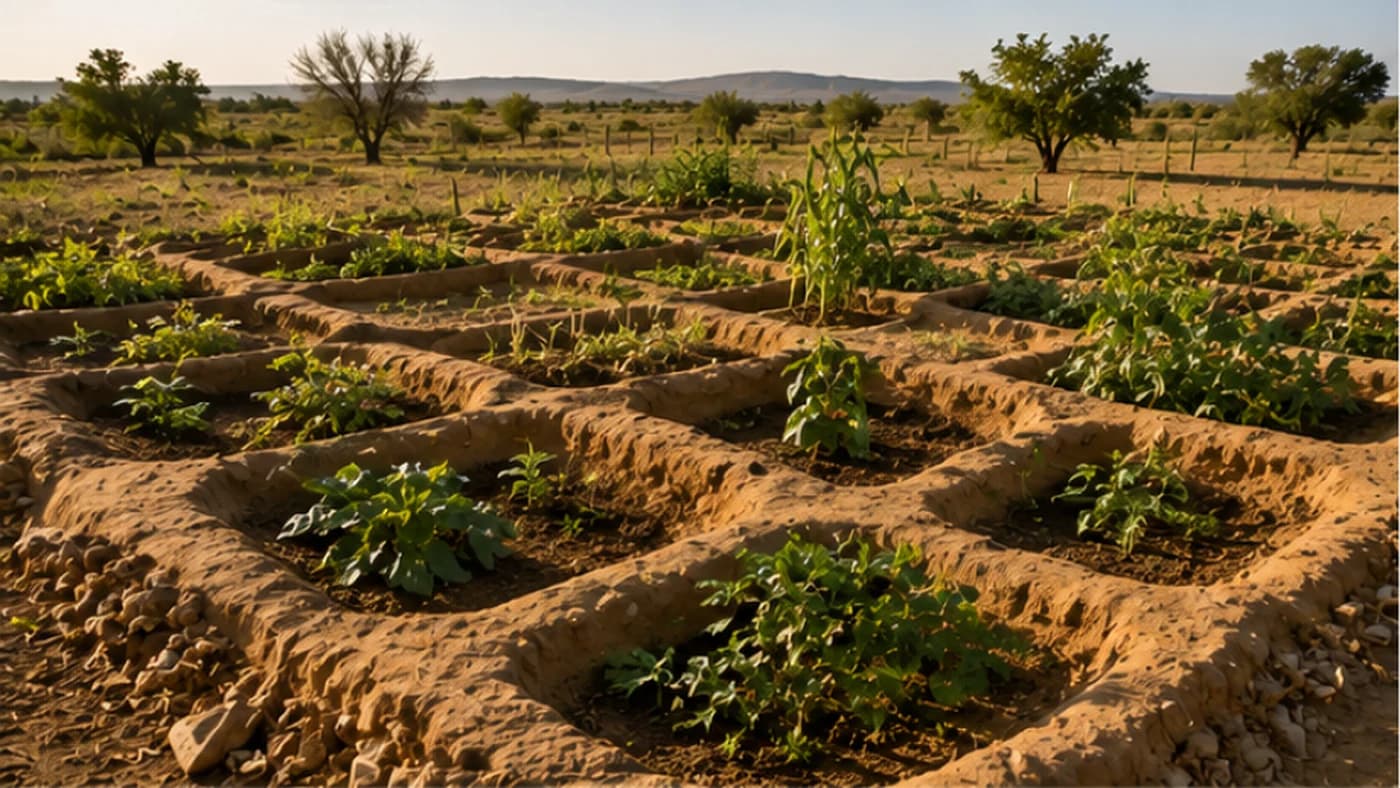
The Zuni Waffle Garden: An Ancient Dryland Method for Water-Scarce Farms
Ordinary sprinklers lose much of their water to wind and evaporation. This centuries-old sunken-bed technique from the American Southwest desert traps every drop close to the roots — and it adapts easily to India's driest tracts.
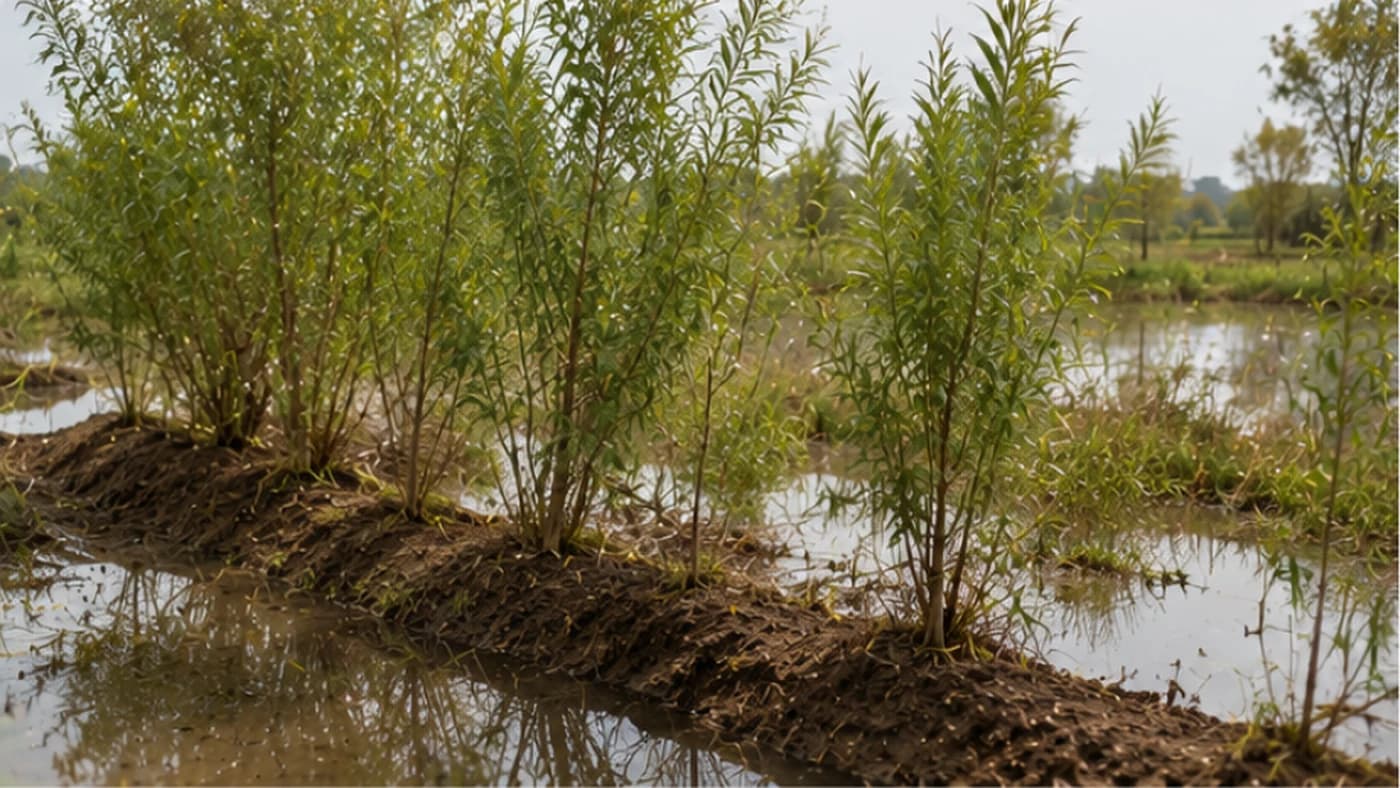
Biodrainage: Using Trees Instead of Pipes to Dry Out Waterlogged Land
Waterlogging quietly ruins more fields than most farmers realise — in canal command areas of Punjab and Haryana alone it affects lakhs of hectares. Trees that pump water out through their leaves can do the job of an expensive drainage system, for a fraction of the cost.