

Your Marshy Corner Isn't Wasted Land — It's a Permaculture Asset
Almost every farm has one: a low, waterlogged patch where nothing seems to grow well. Instead of fighting it, a wetland corner can filter your water, feed your food forest, and pull in the pollinators and pest-eaters your farm relies on.
Quick answer
A marshy corner isn't a problem to drain — it's free water filtration, flood buffering, biodiversity, and in many cases a genuine food crop, all bundled into land you were probably writing off. Manage the water flow so it doesn't stagnate, plant it with species that actually want wet feet, and that unpromising patch becomes one of the most self-sufficient parts of your farm.
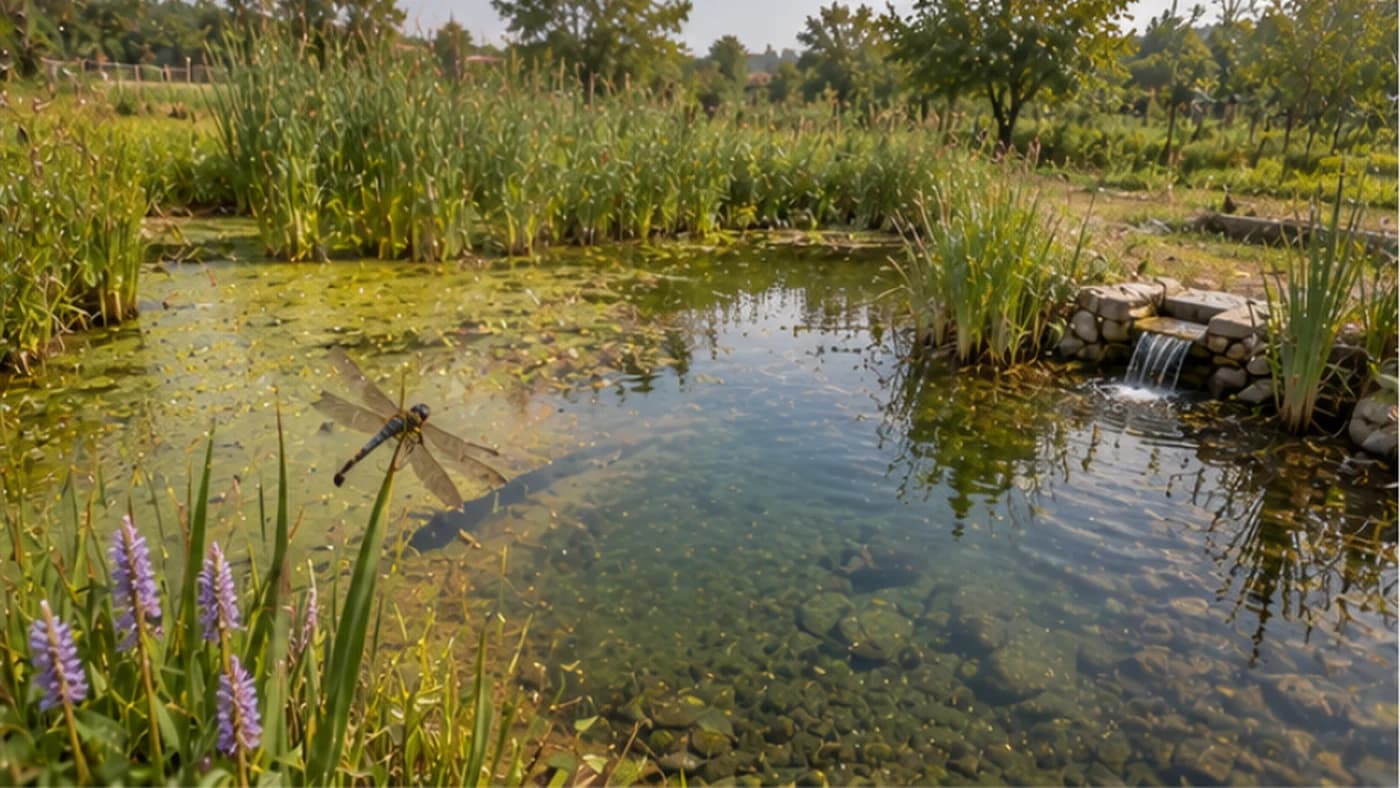
Nearly every farm or homestead has a spot that stays wet and marshy through much of the year — a low corner, a place where the monsoon collects, or the edge of a bund that never quite dries out. It's tempting to see this as wasted or difficult land. In permaculture terms, it's the opposite: wetlands are some of the most productive ecosystems on earth, and a marshy corner, worked with rather than against, becomes one of the hardest-working parts of your plot.
Why wetlands matter so much
Wetlands earn their reputation for a handful of concrete reasons. They filter water naturally — plants and microbes trap and break down pollutants, sediment and excess nutrients, so water leaving a wetland is cleaner than water entering it. They control flooding by absorbing excess rain, which matters enormously during a heavy monsoon. They're biodiversity hotspots, supporting frogs, dragonflies and birds that in turn help with pollination and pest control. And they sequester carbon, storing it in soil and vegetation like a natural carbon sponge.
Let the wet corner irrigate the rest of your land
If one part of your land tends to stay wet, position garden beds or fruit trees to take advantage of water seeping out from it, and dig shallow channels or swales to guide that moisture exactly where it's needed — passive irrigation with no pump or hose involved.
Turn boggy ground into a food-producing corner
Plenty of useful plants actually prefer wet feet. Watercress grows well in consistently moist or slow-flowing water. Lotus (kamal) and makhana (fox nut) thrive in shallow standing water and are established, valuable Indian wetland crops in their own right — makhana in particular is a major crop of Bihar's wetlands. Water chestnut (singhara) and taro (arbi/colocasia) both do well in waterlogged soil and are widely grown across India already.
On the drier fringe of a wet patch, bamboo and moisture-loving fodder trees can take the place that willows or alders play in cooler climates — fast-growing, useful for building material or livestock fodder, and tolerant of consistently damp roots.
Use the wetland to bring in biodiversity
A wet corner is a magnet for frogs, which quietly control your garden's insect population without a single spray. Nectar-rich, pollen-heavy plants around the margin will draw bees and butterflies. Reeds and floating plants attract dragonflies, which in turn draw birds and bats hunting insects at dusk — so before draining a marshy patch, consider what it's already doing for the rest of your farm's pest management.
Filter your household greywater through it
You can divert kitchen or bathroom greywater through the wetland edge, letting the plants and soil filter out impurities before the water rejoins the rest of your land — enriching the soil as it goes rather than being wasted down a drain. Cattails (found across India, often called 'pater' or 'elephant grass' regionally), bulrushes, and sedges are especially good at this kind of cleanup; the more diverse the planting, the better the filtration.
Move water with swales, and give trees dry footing with mounds
Shallow, contour-following swales can carry water from the wetland to other parts of the garden that need it. Where you want to grow trees or crops that dislike constantly wet roots, build small raised islands or mounds within the wet area itself, so they get the benefit of nearby moisture without sitting in standing water.
Consider expanding into a fish pond
If the wet area is already substantial, a shallow pond can add fish and aquaculture to the mix — this is exactly the logic behind India's well-established paddy-cum-fish culture in states like West Bengal, Odisha and Assam. A well-integrated pond is largely self-sustaining once established, and fish waste becomes another nutrient input for the surrounding land.
Avoiding stagnant water and mosquitoes
The most common worry with any wet patch is mosquitoes breeding in stagnant water. Keep water moving with small, shallow channels wherever it starts pooling in one place. Introduce natural mosquito control — frogs, fish, or mosquito-eating insects — and use fast-growing plants that keep water filtered and in motion, which discourages breeding far more reliably than any spray.
Balancing water through the seasons
During dry spells, a bit of supplemental water keeps the wetland functional — let it dry out completely and you risk losing the biodiversity that makes it valuable. During heavy monsoon rain, make sure there are clear overflow points or spillways so excess water has somewhere safe to go, rather than flooding the rest of your land.
Frequently asked
What can I actually grow in a waterlogged corner of my farm?+
Watercress, lotus (kamal), makhana (fox nut), water chestnut (singhara), and taro (arbi) all thrive in wet or waterlogged soil and are established Indian crops, alongside cattails and sedges for filtering and biodiversity.
Won't a wet corner just breed mosquitoes?+
Only if the water sits stagnant. Keep it moving with shallow channels, introduce frogs or fish, and plant fast-growing species that filter and circulate the water — this discourages mosquito breeding far more effectively than draining the land.
Can I use my wetland to treat household greywater?+
Yes. Diverting kitchen or bathroom greywater through a planting of cattails, bulrushes or sedges lets the wetland filter impurities naturally before the water rejoins your land, adding nutrients rather than wasting the water.
Should I turn a marshy patch into a fish pond?+
If the wet area is large enough, yes — this is the same principle behind India's established paddy-cum-fish farming in states like West Bengal and Odisha. A well-set-up pond needs very little input once established.
How do I stop a wetland corner from flooding the rest of my land?+
Build clear overflow points or spillways for heavy monsoon rain, and use swales to direct excess water deliberately to where it's useful rather than letting it spread unpredictably.
Where to go next
Want this as daily tasks for your farm?
Khetiyaar turns guides like this into a day-by-day plan — in your language, free to start.

Related guides
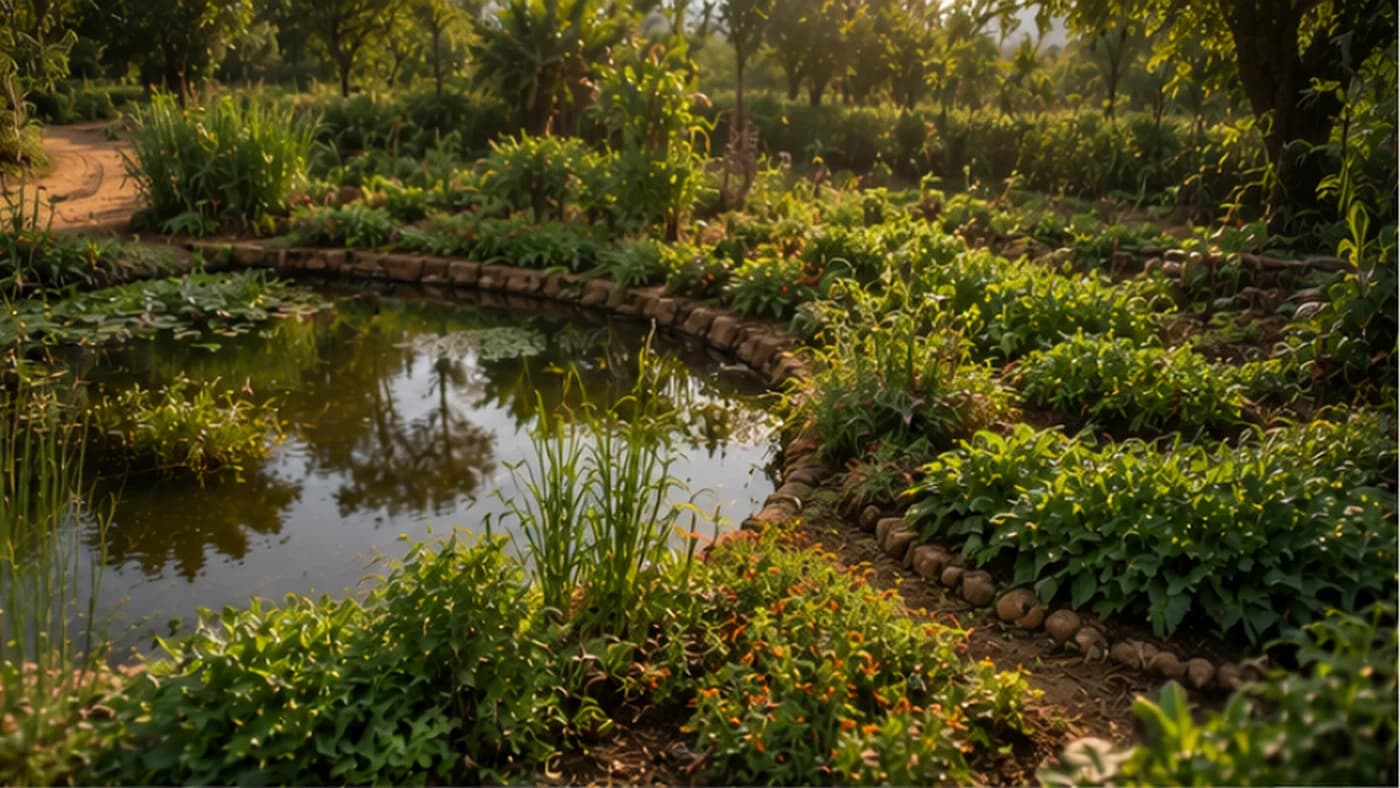
The Edge Effect: Why a Wavy Garden Border Outproduces a Straight One
Nature never draws a straight line. Turning a straight bed edge into a gently curved one can triple the usable planting length in the same footprint, while drawing in far more beneficial insects — with zero extra land.
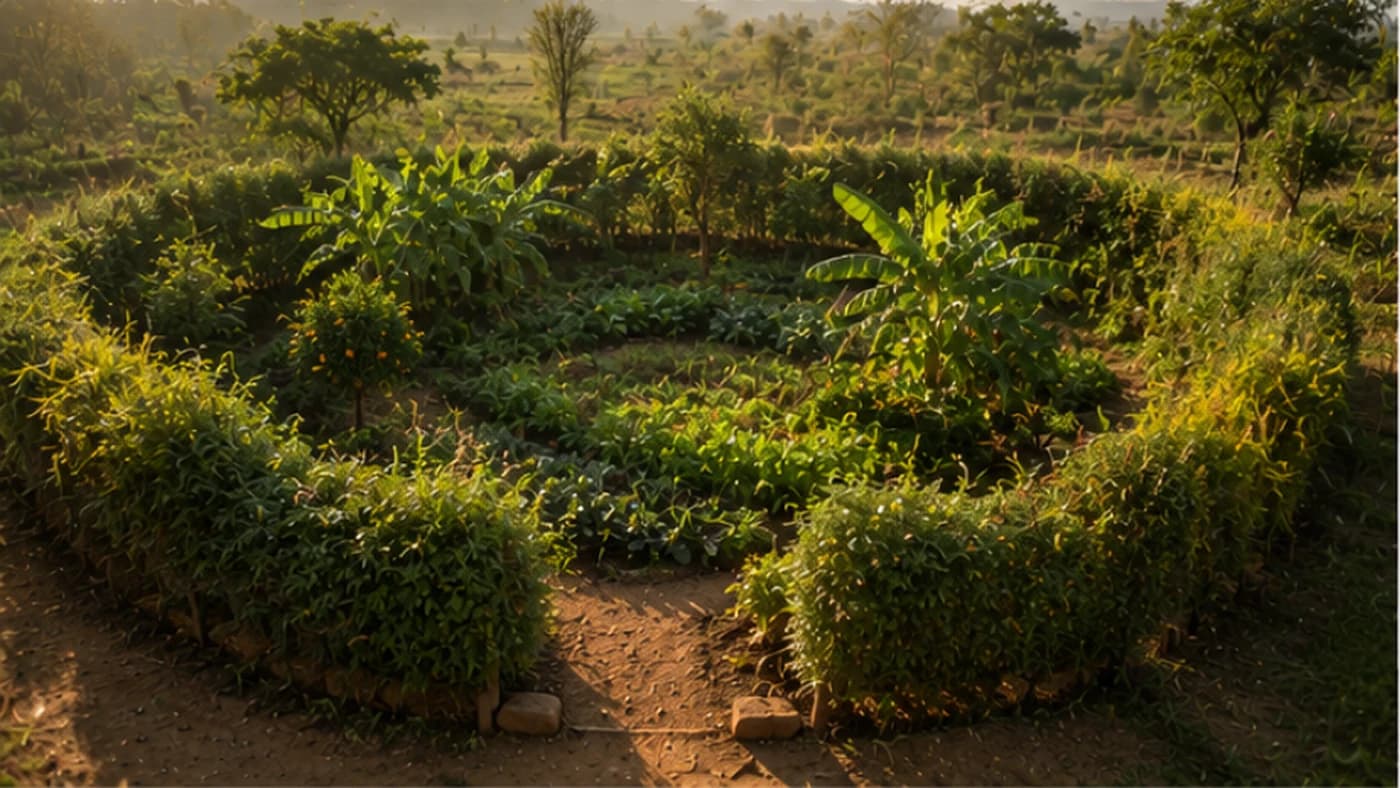
How to Build a Sun Trap: Grow Warm-Season Crops Through a Cold Snap
A U-shaped wall of stone, brick or hedge can make a patch of ground 5-10°C warmer than the open field beside it — enough to grow chillies, tomatoes and marigolds weeks earlier in the hills, or push a crop safely past an unseasonal cold spell.
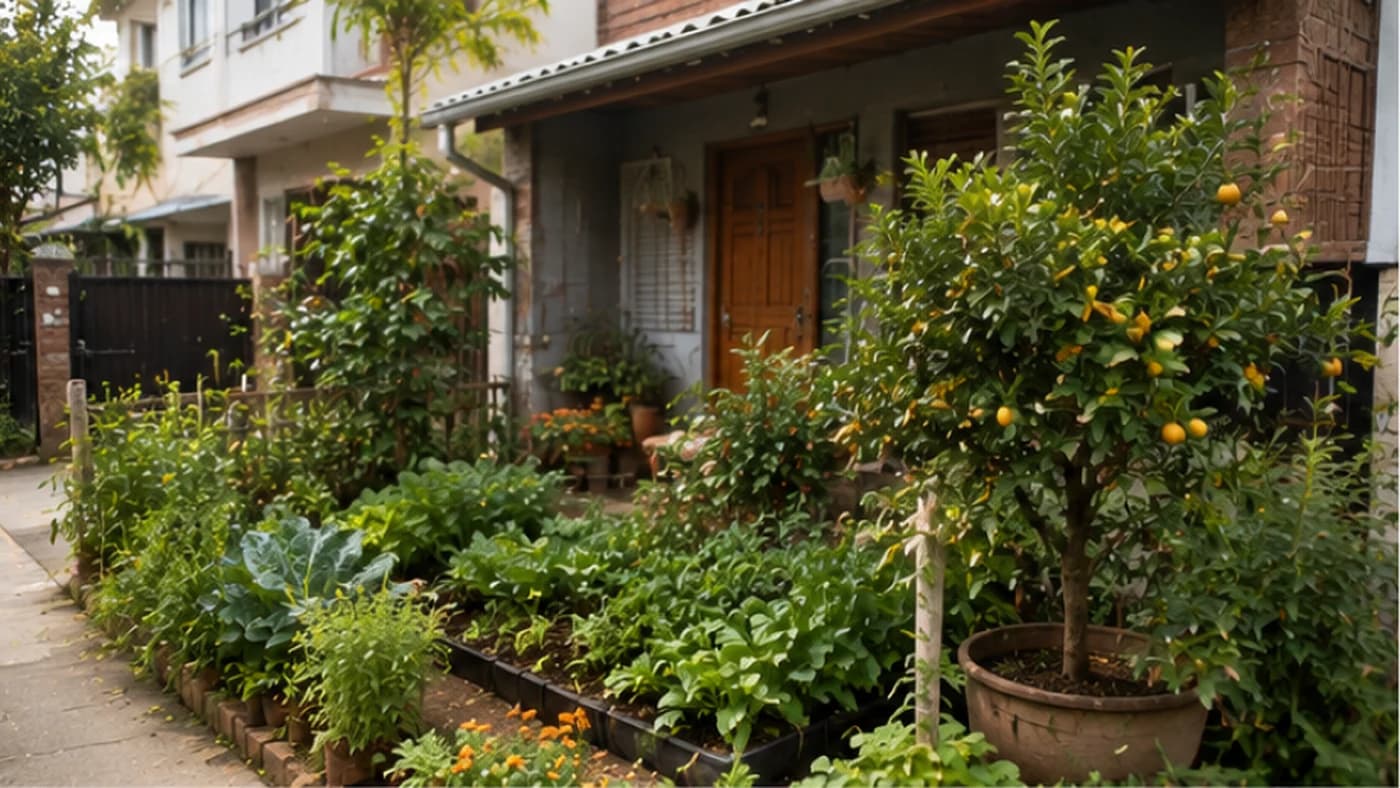
Urban Edible Landscaping: Turn a Terrace, Balcony or Yard Into Food
A city plot doesn't have to choose between looking nice and feeding you. Layered fruit trees, herbs and vegetables can turn a small terrace, balcony or front yard into a steady, low-maintenance source of food.