

The Edge Effect: Why a Wavy Garden Border Outproduces a Straight One
Nature never draws a straight line. Turning a straight bed edge into a gently curved one can triple the usable planting length in the same footprint, while drawing in far more beneficial insects — with zero extra land.
Quick answer
The edge effect costs nothing but a change of shape: the same soil, the same seeds, but arranged along a longer, more varied boundary instead of a straight one. Before expanding a plot or buying more land, it's worth asking whether reshaping the edges of what you already have could get you most of the way there. Start with a single bed, wave the front edge with a garden hose, and watch what happens to both your harvest and the insect life around it over one season.
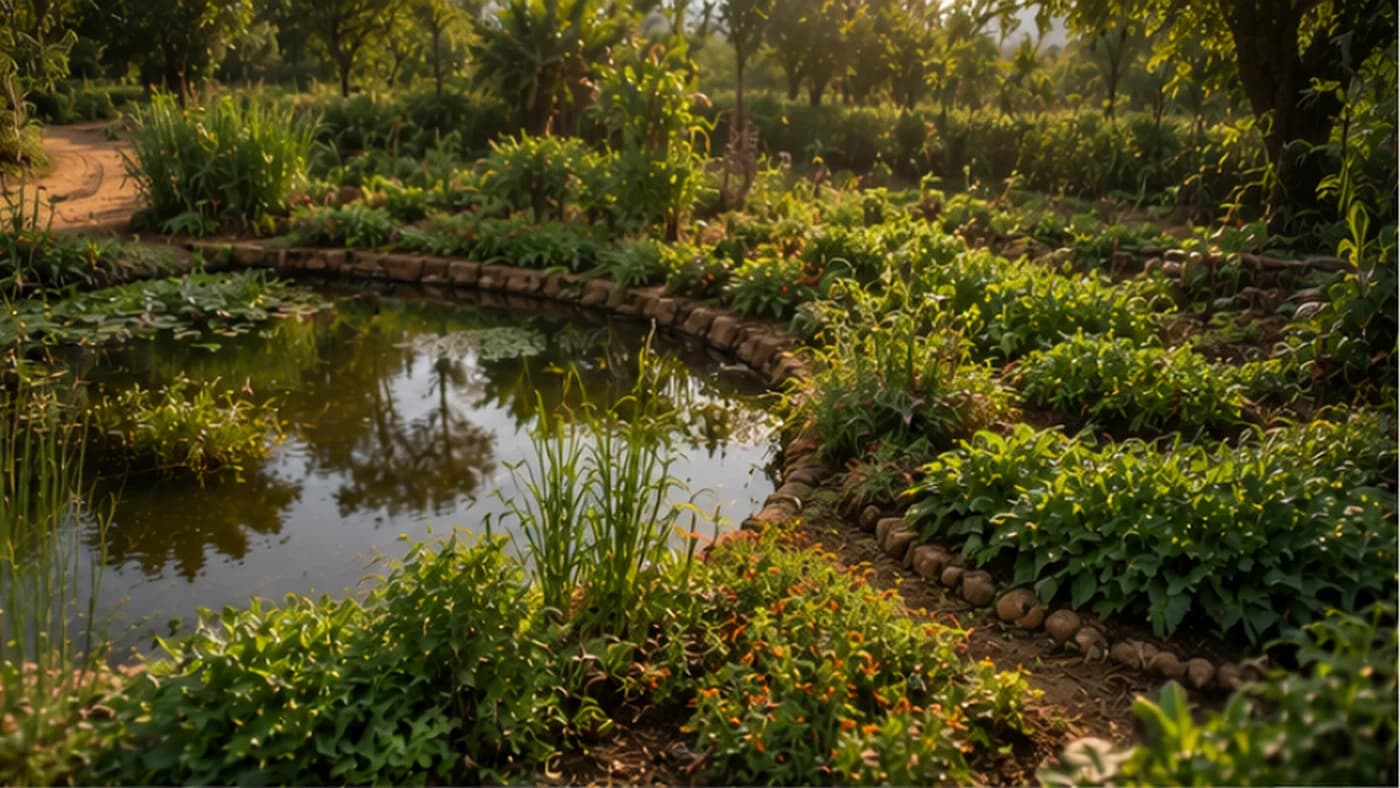
In nature, the richest, most crowded life is never in the dead centre of a uniform field or forest — it's at the boundary, where one habitat meets another: forest meets meadow, or pond meets shore. Ecologists call this transition zone an ecotone, and in permaculture it's known as the edge effect. A straight garden border is the shortest possible distance between two points, giving you the least amount of boundary for your land. Replace it with a wavy or crenelated line and you increase that boundary length dramatically without adding a single square metre of land — turning a plain 3-metre straight edge into 9 metres or more of usable, productive boundary within the same plot.
Why edges are more productive than open ground
At the point where two different environments meet, species from both sides overlap — a bird that nests in dense cover but forages in the open, for instance — and biological productivity rises above what either environment achieves alone. In a garden, the 'edge' is simply the line where your cultivated soil meets a path, a bund, or a pond. A straight edge gives the shortest, and therefore smallest, interface between the two; a wavy or toothed edge increases that interface substantially even though the total area enclosed stays the same.
This extra edge acts like a net for wind, water, sunlight and moving creatures — all of it hits a complex boundary and slows down, so wind-blown leaves and debris get trapped in the curves as natural mulch, and beneficial insects use the folded edge as both a highway and a hunting ground. This is the same underlying principle behind keyhole beds, mandala gardens, and swale systems.
The simple geometry behind the trick
A square bed 1.2 m by 1.2 m has 1.5 sq. m of growing area and about 4.8 m of edge. Stretch that same area into a long, thin rectangle and the edge length roughly doubles for no extra land. Permaculture design takes this further with crenelation — a pattern of deep waves or teeth that also creates distinct microclimates: the inward curves (insies) become sheltered sun traps that hold more heat, while the outward points (outsies) are more exposed and better suited to hardy, airflow-loving plants.
To lay one out, skip the measuring tape — use a garden hose or a length of rope to trace deep, sinuous curves by eye, aiming for keyhole shapes: a circular bed with a narrow path leading to its centre, so you can reach every plant in a 360-degree radius without ever stepping on the growing soil (compaction damages the fungal network below). Once you're happy with the curve, cut a trench roughly 15 cm deep at a 45-degree angle along the line — this both defines a crisp edge against grass runners and doubles as a mini-swale that holds moisture.
What a crenelated edge actually gets you
The most direct gain is planting density — the edge itself effectively becomes the whole bed, so you can line the entire winding boundary with intensive border crops like coriander, marigold or strawberries, while taller crops like brinjal or chilli occupy the deeper pockets of each curve. Natural pest control follows close behind: beneficial insects such as ladybirds, lacewings and parasitic wasps prefer varied, sheltered environments, and a wavy edge with mixed plant heights becomes a corridor that keeps aphid numbers down without spraying.
The curves also trap warm, humid air, keeping the pockets a few degrees warmer through winter nights and extending the growing season by a few weeks at either end. And because keyhole and wavy layouts put every plant within arm's reach, you spend less time on wide access paths and more of your plot actually growing food.
Common mistakes
Making the curves too shallow is the most frequent one — waves only a few centimetres deep don't add enough edge length to matter biologically; aim for indentations of at least 30–45 cm to create genuinely distinct microclimates. Maintenance is a real consideration too, since cutting grass along a wavy bed by hand is harder than following a straight line — many growers leave a mulch or gravel buffer strip between lawn and bed, or replace the surrounding grass with a low, no-mow groundcover instead.
Soil has a natural angle of repose, so deep curves and mounds can wash out in heavy rain unless the edge is physically reinforced — a cut trench, flexible edging, or a woven stick fence holds the shape. And because you suddenly have far more edge to plant, it's easy to overcrowd it — root space below ground is still shared even along a long, thin curve, so give edge plants real room.
Where straight lines are still the better choice
In a very small plot — a narrow balcony bed or side strip — the dead space created by a complex curve can outweigh the benefit; a straight or gently curved edge may be more efficient there. Large mechanised fields also don't suit this approach, since tractor-pulled tillers and seed drills need straight rows (contour farming exists but needs specialised, costlier equipment). Drip irrigation tape is another practical constraint — rigid tape doesn't bend easily around a tight keyhole, so a flexible soaker hose or individual point emitters work better on a curved layout.
How to try it without redoing your whole plot
Start with one bed rather than the whole farm — scallop the inside of an existing rectangular bed, or add bump-outs to its outer edge using stones or logs, and compare it to a straight bed over one season before committing further. A garden hose is the easiest way to trace a natural-looking curve, since it's heavy enough to hold its shape but flexible enough to bend organically — always check you can physically reach the centre of any keyhole from its access path.
Don't forget the vertical edge either: a trellis, fence, or a tall row of pigeon pea or sunflower creates a boundary where the 'sky' habitat meets the ground habitat, adding a second dimension of edge without using any extra ground area. If you have water on the plot, a sinuous pond border is the single most productive edge of all, since it creates the ecotone with the greatest biodiversity on Earth — land meeting water — and allows crops like watercress or taro that thrive in that in-between zone.
A worked example
Take a standard straight bed 6 m long and 1.2 m wide running along a boundary fence, with about 14.6 m of edge, planted with a single row down the middle. Reshaping just the front edge into three deep keyholes that reach halfway into the bed turns that 6 m straight line into roughly 16.7 m of sinuous path — pushing total edge from 14.6 m to about 25 m, a rise of over 70%. That extra edge alone is enough to fit around 30% more crop into the same footprint, using the sheltered inner curves for moisture-loving leafy greens and the exposed outer points for hardier herbs — and within a season, the beneficial-insect population in that bed typically rises noticeably.
Terms explained in this guide
Frequently asked
What exactly is the permaculture edge effect?+
The observation that where two different environments meet — like a curved garden border and open path — biological productivity and species diversity rise above what either environment achieves alone. A wavy or crenelated bed border increases this 'edge' length within the same land area.
How deep should the curves be to make a real difference?+
At least 30–45 cm of indentation. Shallower waves don't add enough edge length to create genuinely distinct microclimates or meaningfully increase planting space.
Does a wavy edge make maintenance harder?+
Cutting grass or mowing along a curved bed by hand is more work than a straight line, which is why many growers use a mulch or gravel buffer, or a low no-mow groundcover, between the bed and surrounding grass.
Can I use this on a large mechanised field?+
Not easily — tractor-pulled equipment needs straight rows, so the edge effect suits hand-tended plots, kitchen gardens, and field boundaries far better than large mechanised cropland.
What's an easy way to lay out a curved bed?+
Use a garden hose or length of rope to trace the curve by eye before digging — it's heavy enough to hold a shape but flexible enough to bend naturally, and you can adjust it as many times as you like before committing.
Where to go next
Want this as daily tasks for your farm?
Khetiyaar turns guides like this into a day-by-day plan — in your language, free to start.

Related guides
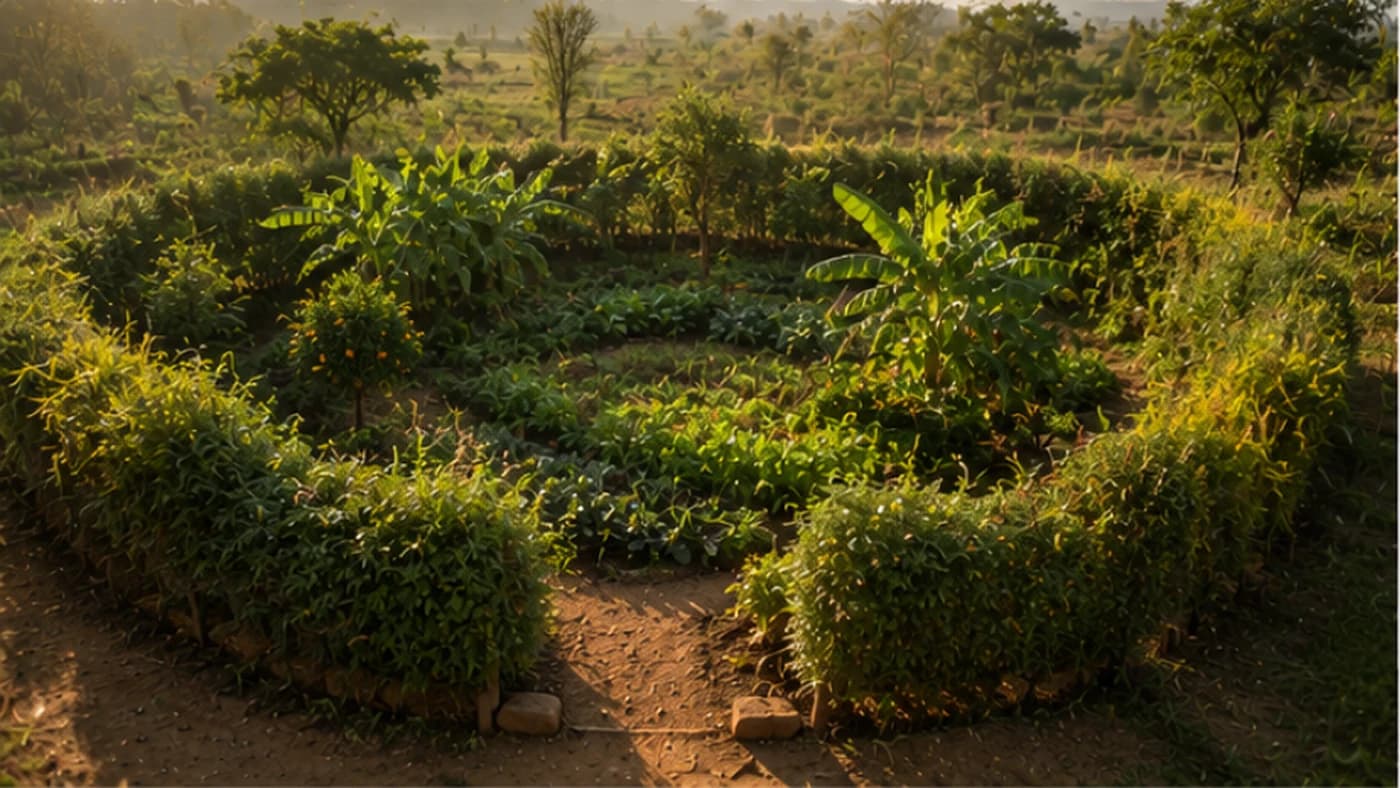
How to Build a Sun Trap: Grow Warm-Season Crops Through a Cold Snap
A U-shaped wall of stone, brick or hedge can make a patch of ground 5-10°C warmer than the open field beside it — enough to grow chillies, tomatoes and marigolds weeks earlier in the hills, or push a crop safely past an unseasonal cold spell.
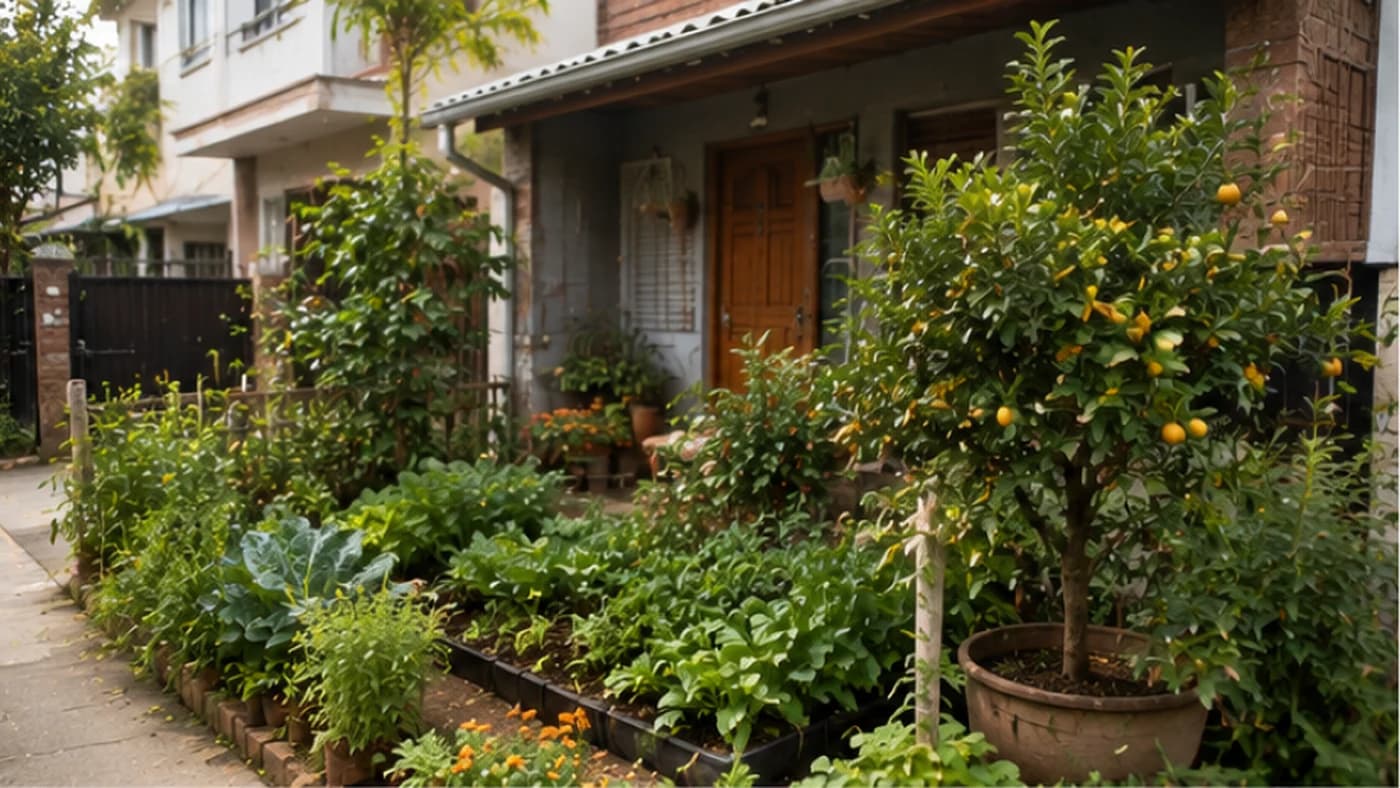
Urban Edible Landscaping: Turn a Terrace, Balcony or Yard Into Food
A city plot doesn't have to choose between looking nice and feeding you. Layered fruit trees, herbs and vegetables can turn a small terrace, balcony or front yard into a steady, low-maintenance source of food.
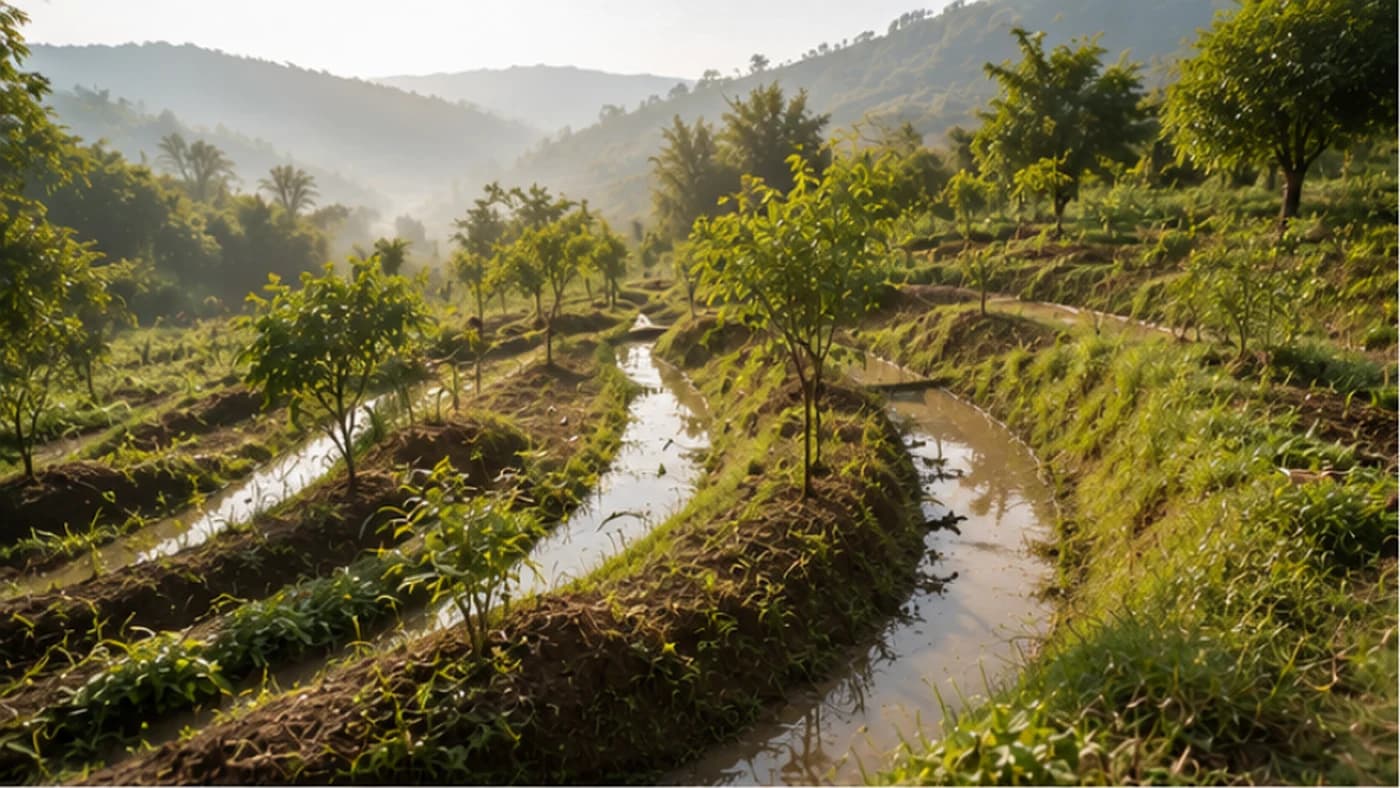
Permaculture Swales: The Level Trench That Banks Rainwater in Your Soil
Most farms are built to throw rainwater away as fast as possible. A swale — a level, on-contour trench with a planted mound beside it — banks that water in the soil instead, so your land stays green long after the rain stops.