

Urban Edible Landscaping: Turn a Terrace, Balcony or Yard Into Food
A city plot doesn't have to choose between looking nice and feeding you. Layered fruit trees, herbs and vegetables can turn a small terrace, balcony or front yard into a steady, low-maintenance source of food.
Quick answer
Urban edible landscaping doesn't need a farm — it needs layers: a small tree, a shrub beneath it, a herb or groundcover under that, mulch instead of bare soil, and a guild of companion plants rather than a single crop alone. Start with observation, build soil with sheet mulching instead of tilling, test soil before planting near old buildings or busy roads, and begin with one small patch rather than the whole plot. Even a single balcony pot of herbs is a genuine, if small, version of the same idea — a plot that works for the household instead of just looking tidy.
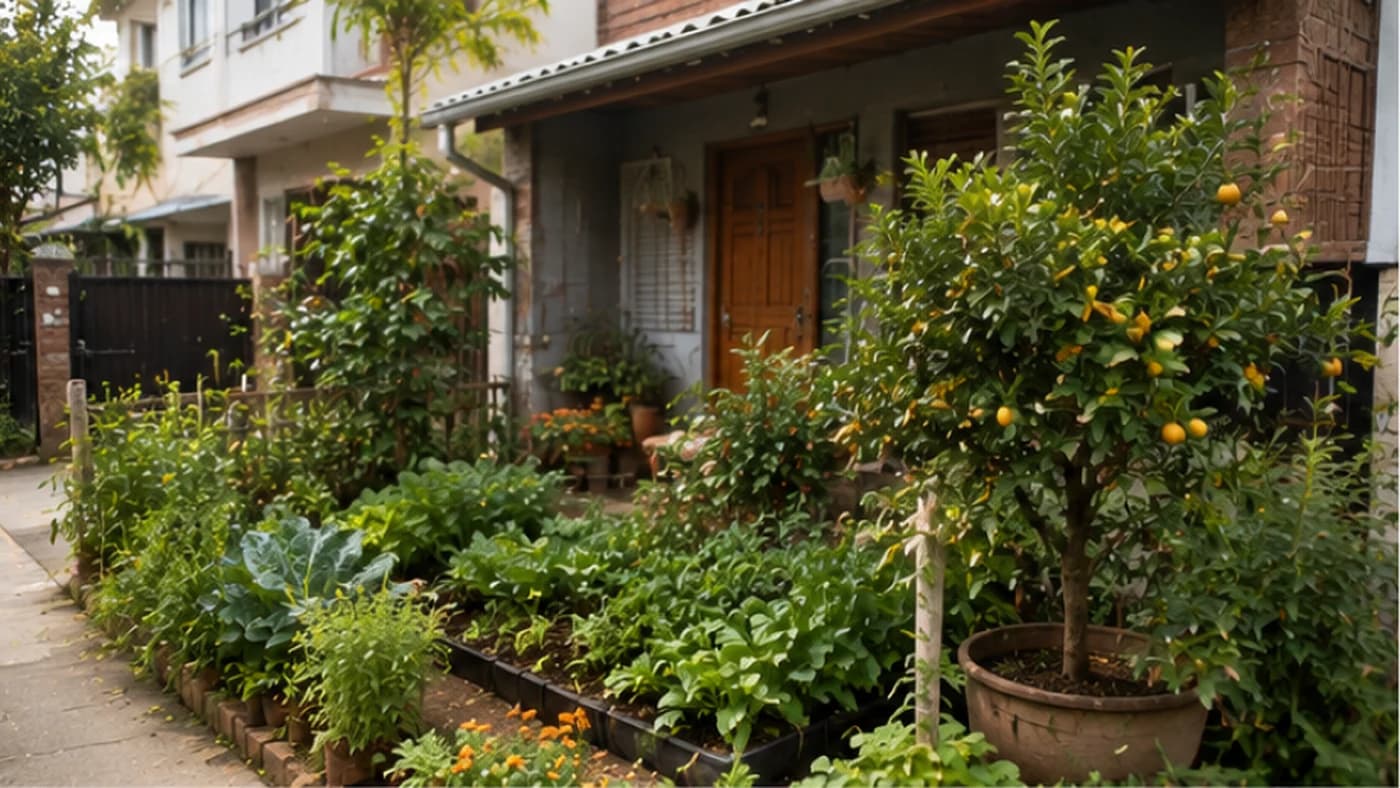
Most city plots and terraces grow nothing but ornamental plants and bare paving — space that could just as easily be feeding the household. Urban edible landscaping is the practice of replacing purely decorative planting with fruit trees, vegetables and herbs stacked in layers, so a small balcony, terrace or front yard produces real food with less water and less daily effort than a typical ornamental garden or lawn. It doesn't require a farm's worth of land — a single dwarf fruit tree, a shrub layer beneath it, and a groundcover of herbs or greens can turn even a modest space into a meaningful part of a household's vegetable and fruit supply.
The idea: stacking layers instead of a flat garden
A forest doesn't grow in one flat layer — it stacks a canopy, a shrub layer, groundcover and climbers, all sharing the same footprint of land. Urban edible landscaping copies that structure at a small scale: a dwarf fruit tree (guava, lemon, pomegranate) forms the canopy, a currant or berry bush sits in dappled shade beneath it, strawberries or a low herb spread as groundcover, and a bean or gourd vine climbs the tree trunk itself. Done well, a plot that used to hold only grass or bare paving can produce a genuinely useful amount of food across the year from the same square metres.
Planning before planting
Spend a few weeks simply observing your space before digging anything: watch where the sun falls through the day and across seasons, where wind is strongest, and where water pools after rain — this prevents the common mistake of planting a sun-loving tree in a spot that turns out to be shaded most of the day. Think in zones by how often you'll visit each spot: the area right outside your door is where labour-intensive plants like leafy greens and everyday cooking herbs belong, since you'll tend them daily; a slightly further spot suits fruiting shrubs and perennial vegetables that need less frequent attention; and any leftover corner can be left a little wild to attract pollinators and beneficial insects.
Building the soil from the top down
Avoid digging or tilling wherever you can — it destroys the fungal networks that keep soil healthy. Sheet mulching does the same job without disturbing the soil: lay plain cardboard directly over grass or bare ground to smother weeds, add a 15 cm layer of compost on top, and finish with a 10 cm layer of dried leaves, straw or wood chips. Left alone, this breaks down into rich, workable soil within a season, ready for planting directly into.
Planting in guilds, not alone
Never plant a fruit tree by itself — surround it with a small support team instead. A nitrogen-fixing plant nearby (a pulse like moong or a green-manure legume) feeds the soil for free; a deep-rooted plant such as drumstick (moringa) or vetiver pulls nutrients up from lower soil layers where the tree's own roots can reach them; and aromatic herbs like tulsi, mint or curry leaf confuse pests and draw in pollinators. This kind of mixed planting, called a guild, does more work with less input than a tree planted alone in bare soil.
What you actually gain
Water use drops noticeably once mulch and deep-rooted perennials are established, since bare soil and lawns lose far more water to evaporation than a mulched, layered planting. A diverse planting also attracts natural pest control — ladybirds, lacewings and other predatory insects that keep aphids and similar pests in check without spraying. The extra greenery cools the immediate area by releasing moisture through leaves and providing shade, genuinely lowering the temperature around a home compared with bare concrete or a mowed lawn. And beyond the practical savings, tending a productive planting is real, satisfying work with a harvest at the end of it — a different kind of return than an ornamental garden gives.
Mistakes that show up in year one
Over-planting is the most common: it's easy to put in far more trees and shrubs than a small plot can actually support, and they end up competing for light, water and nutrients, with poor yields all round — check a plant's mature spread before planting, not just its size at purchase. A working edible landscape can also look a little untidy compared with a manicured lawn, particularly to neighbours, so keep the edges neat, paths mulched and tidy, and consider a small sign or border if you're worried about how a shared or front-facing space reads to others. And in an apartment complex or gated layout, check your society's rules before making permanent changes to shared or front-facing ground — some have restrictions on what can be planted in common areas.
Real limits in a city setting
Shade from surrounding buildings is the most common constraint in dense urban areas — deep shade prevents fruiting plants from ripening properly, so in a shaded plot, lean on shade-tolerant leafy greens rather than forcing a sun-loving fruit tree to struggle. Soil contamination is a real and often overlooked issue too, especially in older urban plots near heavy traffic or old painted structures, where lead and other residues can accumulate in topsoil — if you're planting directly into ground soil near a road or an old building, it's worth testing it first, and if results come back poor, switch to raised beds with a clean fill rather than planting straight into contaminated ground.
Lawn vs. edible planting, side by side
- Lawn: needs regular watering, mowing and sometimes chemical fertiliser; supports almost no pollinators; produces only grass clippings to dispose of; struggles and browns quickly in a dry spell.
- Edible layered planting: needs mulch, compost and harvested rainwater, with care easing off as it establishes; supports birds, bees and soil life; produces fruit, vegetables and herbs; holds moisture and copes with dry spells far better once roots are established.
Starting small and realistically
You don't need to redo an entire plot in one weekend. On an apartment balcony, a few pots of hardy, drought-tolerant herbs in a sunny spot is a genuine start — low effort, real daily use in the kitchen. With a yard, pick a single 2x2 metre patch, sheet-mulch it, and plant one small guild — a dwarf fruit tree with a shrub and a groundcover herb beneath it — rather than attempting the whole plot at once. Favour plants that do more than one job: a plant that gives you fruit, flowers for pollinators and good autumn colour is worth more per square metre than one that only does one of those things.
A worked example: a small city backyard
Picture a modest 6x6 metre backyard with patchy grass and a boundary fence. Along the sunniest fence line, three dwarf fruit trees (guava or lemon work well) spaced about 1.5 metres apart, underplanted with a low groundcover herb. In the centre, two raised beds you can reach from every side, planted with perennial greens and other low-maintenance vegetables that keep producing for years with little replanting. In a corner where water naturally collects, a moisture-loving fruiting shrub, fed by a rainwater drum connected to a roof downspout for simple gravity-fed watering. A layout like this can realistically produce a noticeable amount of household fruit and vegetables each year, for well under an hour of upkeep most weeks once it's established.
Terms explained in this guide
Frequently asked
Can I do this on just a balcony, without a yard?+
Yes — a few pots of hardy, drought-tolerant herbs in a sunny spot is a real, low-effort version of the same idea, and gives daily kitchen use even without any ground to dig into.
What is sheet mulching and why use it instead of digging?+
It's layering cardboard, then compost, then dried leaves or wood chips directly over grass or bare ground to smother weeds and build soil, without tilling — tilling destroys the fungal networks that keep soil healthy.
Is it safe to plant vegetables directly in the ground in a city plot?+
Not always — older urban soil near heavy traffic or old painted structures can carry lead or other residues. Test the soil first if you're planting near a road or old building, and use raised beds with clean fill if the test comes back poor.
What is a planting guild?+
A small group of plants around one central tree or crop that each do a different job — a nitrogen-fixer to feed the soil, a deep-rooted plant to pull up nutrients, and aromatic herbs to confuse pests and draw pollinators — so the tree needs less outside input.
How do I stop an edible garden from looking messy to neighbours?+
Keep the edges neat, keep paths mulched and clearly defined, and avoid over-planting a small space with more trees and shrubs than it can actually support.
Where to go next
Want this as daily tasks for your farm?
Khetiyaar turns guides like this into a day-by-day plan — in your language, free to start.

Related guides
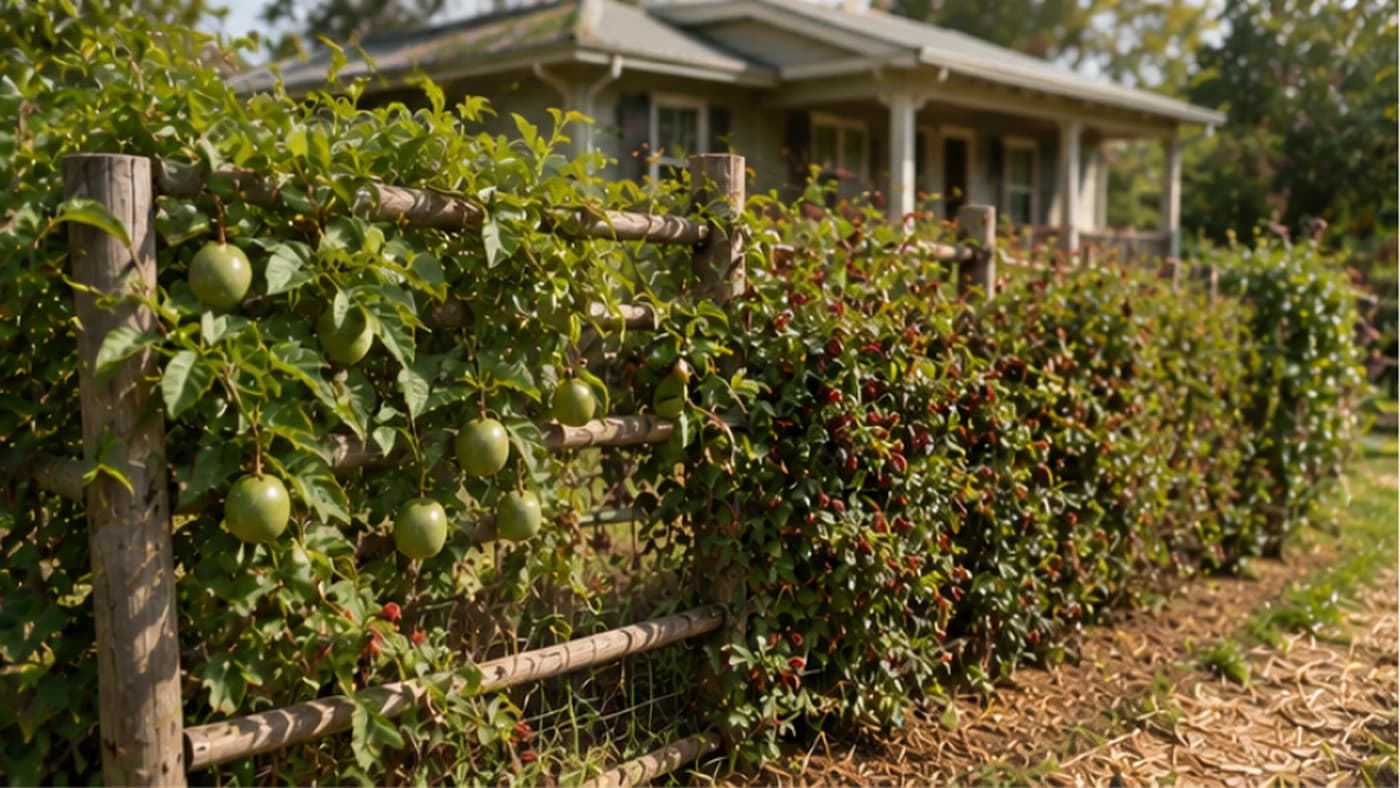
Edible Living Fences: Turn Your Field Boundary Into a Harvest
A plain fence gives you nothing back but upkeep. A living, edible boundary — karonda, moringa, pomegranate, or a classic gliricidia fence — gives you privacy, windbreak, pollinator habitat, and a real harvest, all from the same strip of land you already have.
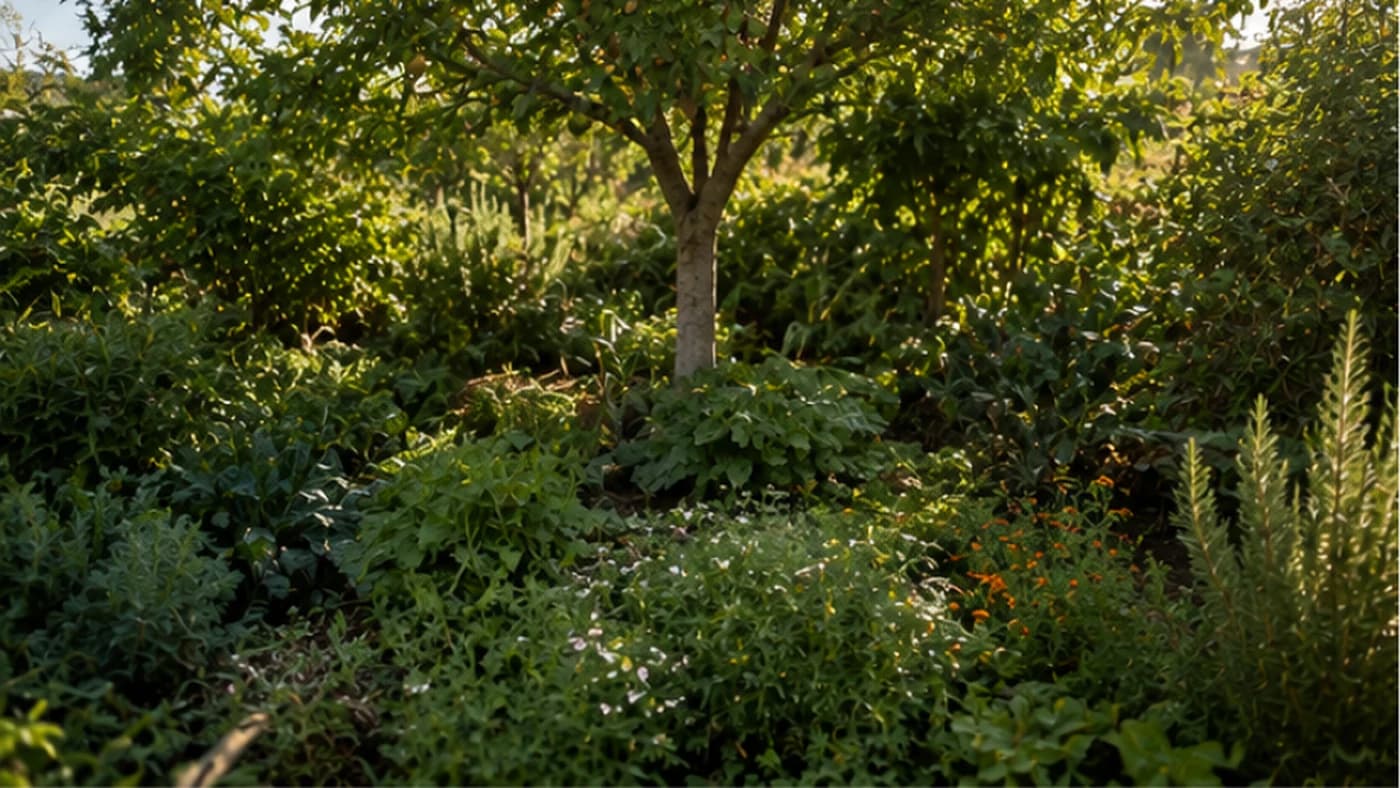
Multi-Layer Food Forest Design: Growing Seven Crops in the Space of One
A natural forest needs no fertiliser or hose, because every layer of it — from tall trees to root crops — fills a different niche. Stacking those same layers in your backyard or farm boundary can multiply what one plot of land produces.
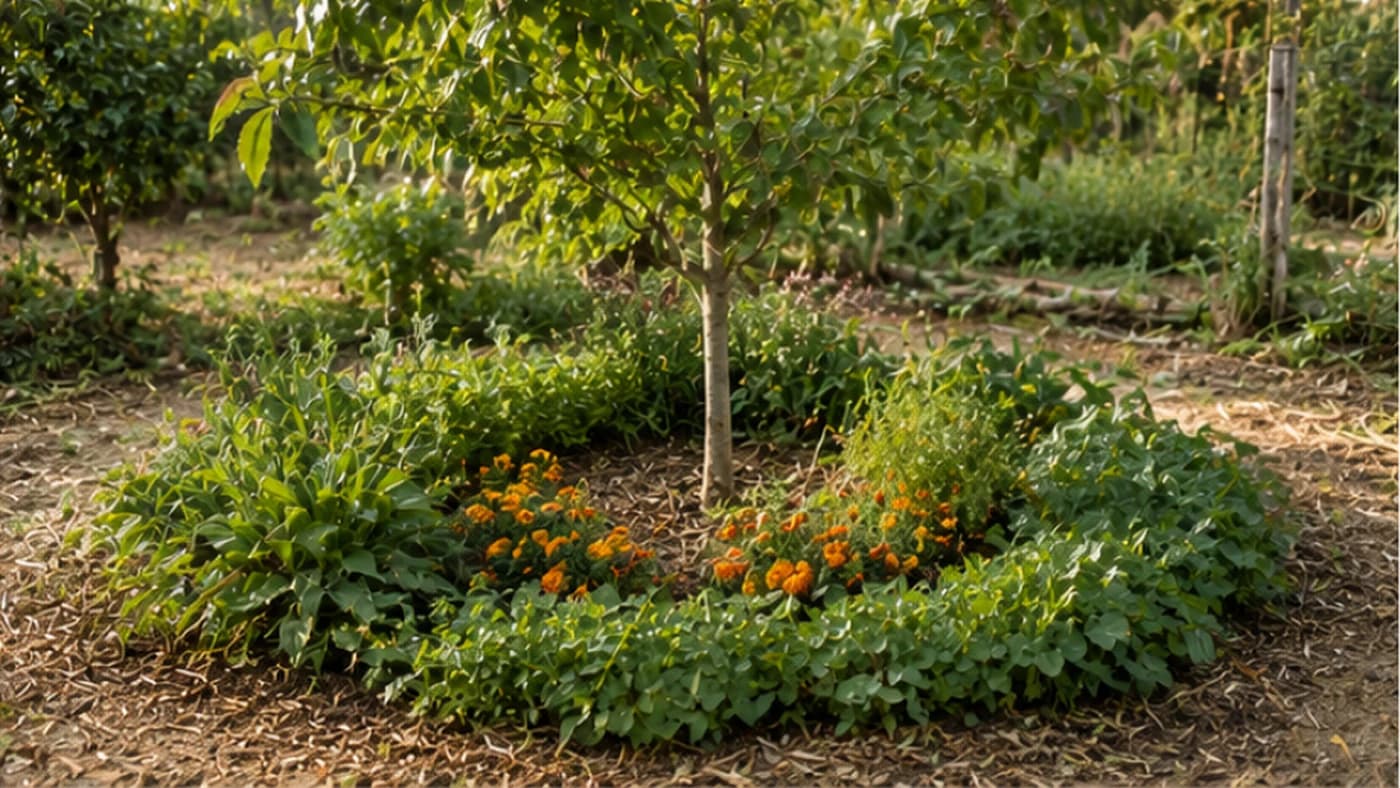
Fruit Tree Guild Design for Beginners: Give Your Tree a Support Crew
A lone fruit tree surrounded by bare soil or lawn spends its whole life fighting for water and nutrients. Surround it instead with a small team of companion plants — each with its own job — and the tree largely takes care of itself.