

How to Build a Sun Trap: Grow Warm-Season Crops Through a Cold Snap
A U-shaped wall of stone, brick or hedge can make a patch of ground 5-10°C warmer than the open field beside it — enough to grow chillies, tomatoes and marigolds weeks earlier in the hills, or push a crop safely past an unseasonal cold spell.
Quick answer
A sun trap is landscape shaping, not gadgetry: a U-shaped wall or hedge that blocks cold wind and stores the sun's heat can run 5-10°C warmer than open ground and add a month or more to your growing season. It earns its keep in genuinely cold spots — the hills, the Northeast, or a frosty plains morning — where it can protect chillies, tomatoes and nursery seedlings through a cold snap. But in India's hot, humid stretches it can work against you by trapping fungal-friendly damp air, so build it with a way to open up once the cold season passes, and get the orientation, wall height and drainage gap right before you invest in stone or cob.
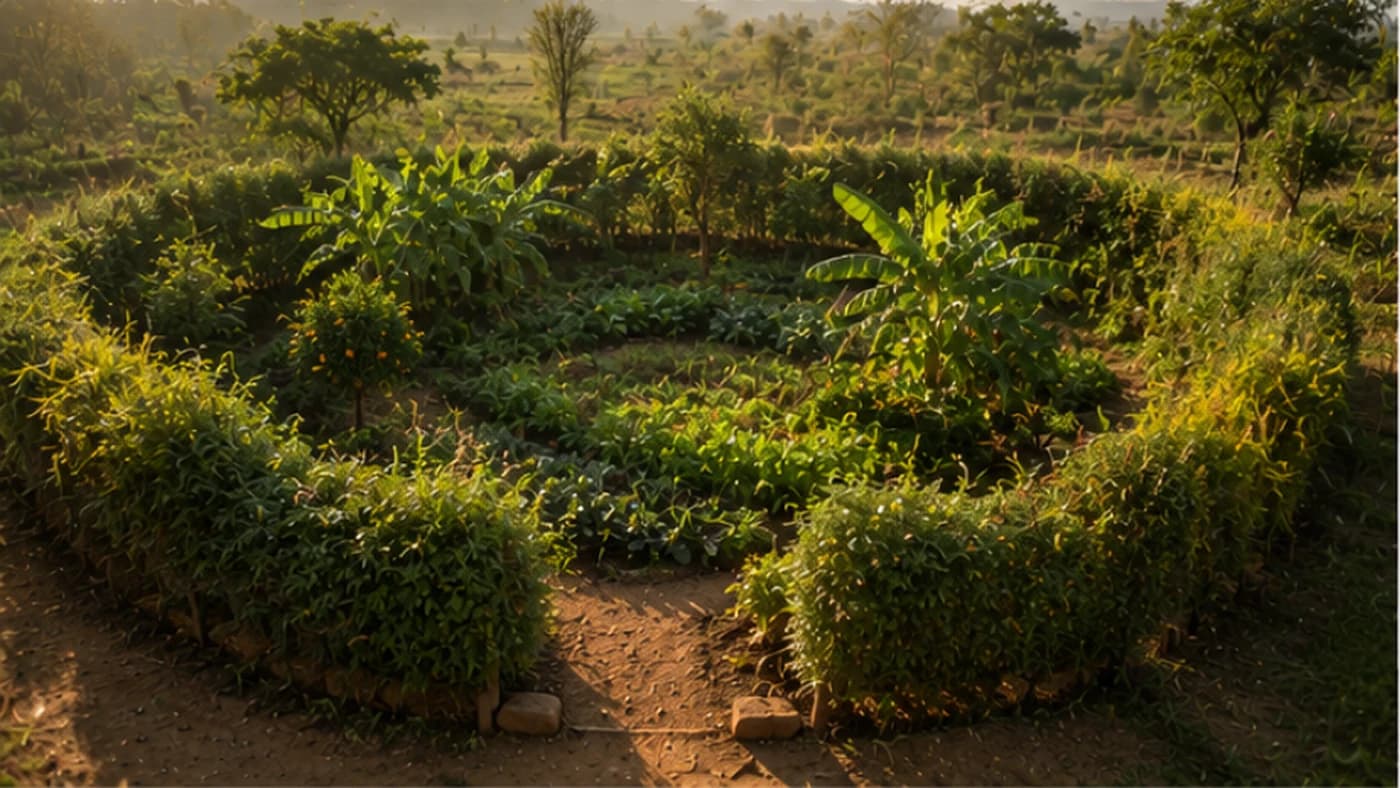
In the hills of Himachal, Uttarakhand and the Northeast, and on cold winter mornings across the northern plains, a few degrees of frost protection is often the difference between a full harvest and a ruined one. A sun trap is a simple piece of land shaping — no glass, no electricity — that captures the sun's heat and blocks the wind that strips it away, creating a warm pocket that can run 5 to 10°C above the surrounding open ground. Farmers have used the idea for centuries, from stone-terraced hill gardens to walled orchards, and a well-built one can add a month or more to your growing season or let you nurse a warm-season crop through an unexpected chill.
What a sun trap actually is
A sun trap is a horseshoe or U-shaped wall, hedge or bank that does two jobs at once: shelter and storage. The two arms of the U block the prevailing cold wind, stopping the constant airflow that pulls heat out of plant leaves. The back and sides act as a thermal battery — stone, brick, earth or dense hedge absorb the sun's heat through the day and slowly release it back into the growing pocket as the air cools at night. Think of it like sitting with your back to the wind and your face to a fire: the plants inside the U are cradled in still, warmed air instead of being fully exposed.
How the warmth is actually created
Three things are happening together. Direct sunlight falls on the growing area for more hours because the opening of the U faces the sun's path — in India (Northern Hemisphere) that means opening the trap to the south, with the tallest wall on the north side blocking cold northerly winds. Reflected light bounces off light-coloured or stone walls back onto the plants, which matters most in the low winter sun. And stored heat — absorbed by the walls during the day — keeps radiating into the space overnight, holding the air above the frost point. Wind is the part people underestimate: a gentle 15 km/h breeze can make air that is actually 12°C feel closer to 8°C to a plant, because moving air strips away the thin warm layer clinging to every leaf. Block the wind and you stop that invisible cooling.
Where to put it: siting and orientation
Getting the placement wrong is the single most common failure — it turns a sun trap into a shade trap or a frost pocket instead. In India, open the U to the south with the tallest back wall on the north side. Watch your slope: cold air is heavier than warm air and flows downhill like water, so a solid-walled U built at the bottom of a slope will collect and hold a pool of cold air overnight — leave a small gap of 30-50 cm at the base of the downhill wall, or build on a gentle mid-slope so cold air can drain past rather than pool inside. Also check for shade-casters: as a rule of thumb, keep the trap at least twice as far from a tree or building to its south as that object is tall — a 10-metre tree needs the trap at least 20 metres away, or its shadow will rob you of exactly the morning and evening light you're trying to capture.
Living walls or masonry — which to build
A living sun trap uses trees and shrubs — tall, hardy species at the back as the main windbreak, nitrogen-fixing shrubs in front of that, and low herbs or fruiting bushes finishing the arms of the U. It gives you habitat, mulch and a harvest of its own, but takes a few years to mature and competes with your crop for water in the early stages. A masonry trap — stone, brick or cob (a mix of clay, sand and straw, shaped by hand) — gives you full protection immediately and blocks 100% of the wind, where a hedge might still let 20-50% through; the trade-off is the upfront cost and labour of building it. Many farmers do both: a masonry back wall for instant thermal mass, with a living hedge finishing the arms.
Choosing your thermal mass
- Water — the best heat battery by far, holding roughly 4x as much heat as dry soil and 2x as much as concrete; a pond or a row of dark-painted water drums at the sunward opening is the single most effective upgrade you can add.
- Stone/granite — very dense, holds heat a long time, and is the traditional choice for a back wall (aim for 1.8-2.5 m height, which shelters roughly twice its own height of ground in front of it).
- Brick — close behind stone in performance, and easier to build with in most parts of India.
- Cob (clay + sand + straw) — cheap, needs no special materials, and can be hand-shaped into curved, wind-hugging walls; the traditional choice for a DIY back wall.
- Concrete — good and widely available, but has the highest embodied energy (carbon cost) to produce of the options here.
What you actually get: benefits
The clearest, most measurable gain is season length: soil inside a sun trap warms up weeks earlier in spring and holds off the first light frost in autumn, typically adding 4 to 8 weeks to your growing window. Most heat-loving vegetables simply stop growing below about 15°C — keeping the pocket above that threshold for longer means more fruit set and sweeter produce (higher sugar content). You also effectively shift your local climate zone: a sun trap can let you push a marginal crop, or grow it a month either side of its normal window, in a spot that would otherwise be too cold or too exposed. And the still, warm microclimate tends to draw in beneficial insects — pollinators and predatory wasps concentrate in the warmest, most sheltered corner of a property.
Where a sun trap works against you
This is the part many guides skip, and it matters a great deal in India: in hot, humid or tropical conditions, a still, warm, enclosed pocket is exactly the environment that breeds fungal disease — powdery mildew and blight thrive in trapped, humid air with poor circulation. Across most of the Indian plains through the monsoon and summer, you generally want the opposite of a sun trap: open airflow and shade. Reserve this technique for winter frost protection in genuinely cold locations — the hills, the Northeast, or northern-plains winter mornings — not as a year-round structure, and design in a removable panel or gap so you can open the trap up once the cold season ends. A sun trap is also a small-scale, backyard or kitchen-garden feature; it doesn't scale to open field cropping, where a standard windbreak/shelterbelt of trees is the practical equivalent. And on heavy, waterlogged clay, a full masonry wall needs a proper foundation or it will crack and subside.
Avoiding the frost pocket and other mistakes
The most common error is accidentally building a cold-air sink: a solid U at the bottom of a slope traps the cold air draining downhill instead of the warm air you wanted. Leave that 30-50 cm drainage gap at the base of the wall on the downhill side. The second mistake is building the wall too high and shading out the very sun you're trying to capture — always check the sun's angle at the winter solstice (the lowest point of the year) before finalising wall height. And in peak summer, a fully sealed trap can overheat past 40°C, causing blossom drop in tomatoes and chillies — build in a removable shade panel, a light bean trellis, or simply leave the trap open once the frost risk has passed for the season.
Seasonal care through the year
- Before winter/spring: clear any mulch or straw off stone/cob walls so the sun can charge the thermal mass directly.
- Through hot weeks: watch for wilting even in moist soil — that means the trap is overperforming; add temporary shade (tall sunflowers, a bean trellis) during the hottest afternoon hours.
- End of season: leave heat-loving crops to fully ripen inside the trap while the open field around you is already past its season.
- Off-season: prune living hedges back to the U shape, and check stone or cob walls for cracks, repairing with a clay or lime mortar.
Two upgrades worth trying
A small pond or a row of water containers at the open (sunward) side does double duty: it reflects low winter sun deeper into the trap, and water is the best thermal battery of all. And you can train a fruit tree flat against the sun-facing back wall (a technique called espalier) so it gets both direct sun and heat radiating off the wall — this is how orchardists in cold climates grow fruit that would otherwise never survive the winter, and the same principle works for a citrus or guava trained against a warm south wall in a cold hill garden. Fill the trap with a mixed planting rather than one crop alone — a deep-rooted green-manure plant below, a nitrogen-fixer like moong or dhaincha as living mulch, and your heat-loving vegetable on top — so the space works on more than one level at once.
Terms explained in this guide
Frequently asked
How much warmer does a sun trap actually make the soil and air?+
Typically 5 to 10°C warmer than the open, exposed ground right beside it, mainly because it blocks wind-driven heat loss and stores solar heat in its walls.
Which way should I orient a sun trap in India?+
Open the U to the south, with the tallest wall on the north side to block cold northerly winds — the opposite orientation is used south of the equator.
Is a sun trap useful in hot, humid parts of India?+
Generally no, and it can backfire — trapped warm, humid air encourages fungal disease. It's most useful for winter frost protection in cold regions like the hills or the Northeast, or to get through an unseasonal cold snap on the plains.
What's the cheapest way to build one?+
A cob wall (clay, sand and straw, hand-shaped) needs no bought materials beyond straw, or you can start with a tiered living hedge of hardy shrubs, which costs little but takes a couple of seasons to mature into full protection.
How do I avoid creating a frost pocket instead of a warm pocket?+
Never build a solid-walled U at the bottom of a slope with no way out — cold air pools there like water. Leave a 30-50 cm gap at the base of the downhill wall, or site the trap on a gentle mid-slope so cold air keeps draining past it.
Where to go next
Want this as daily tasks for your farm?
Khetiyaar turns guides like this into a day-by-day plan — in your language, free to start.

Related guides
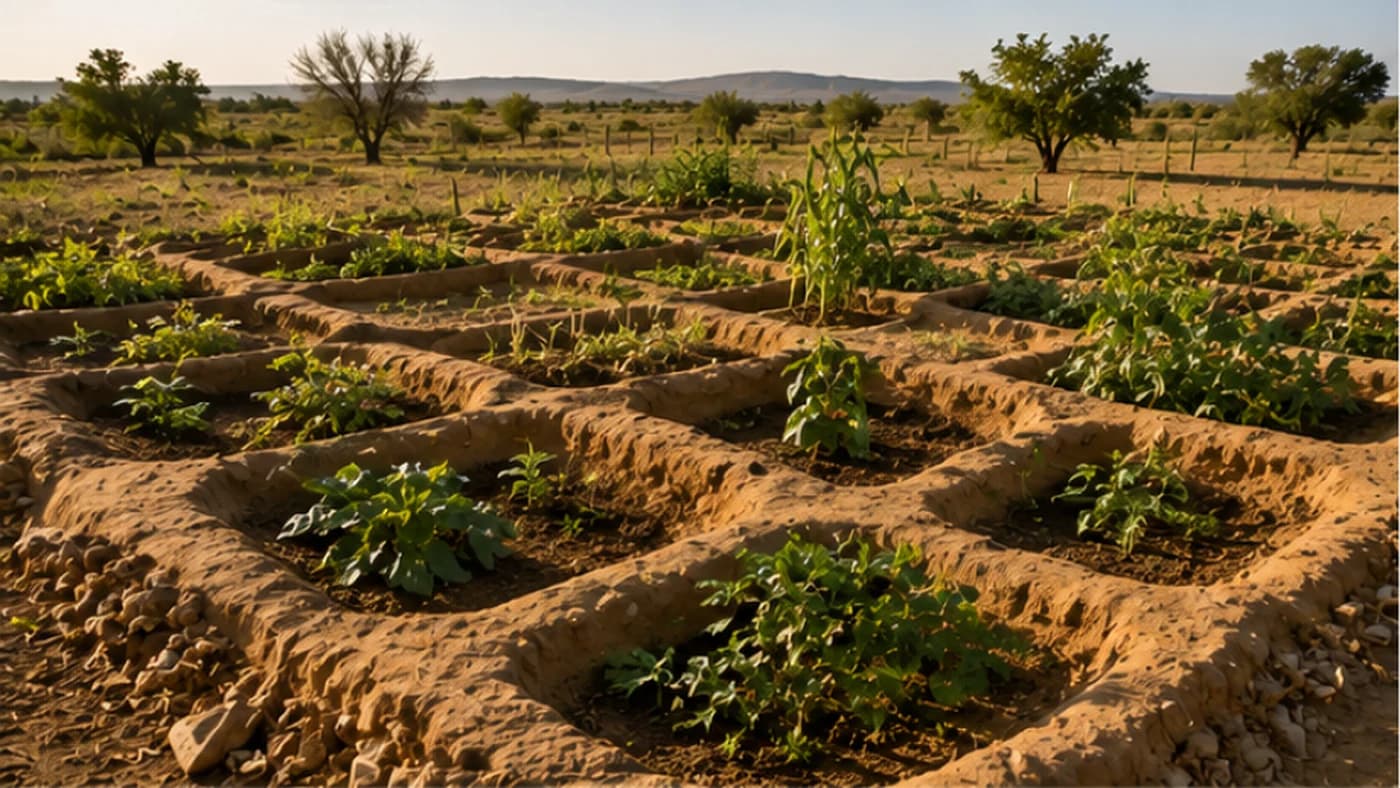
The Zuni Waffle Garden: An Ancient Dryland Method for Water-Scarce Farms
Ordinary sprinklers lose much of their water to wind and evaporation. This centuries-old sunken-bed technique from the American Southwest desert traps every drop close to the roots — and it adapts easily to India's driest tracts.
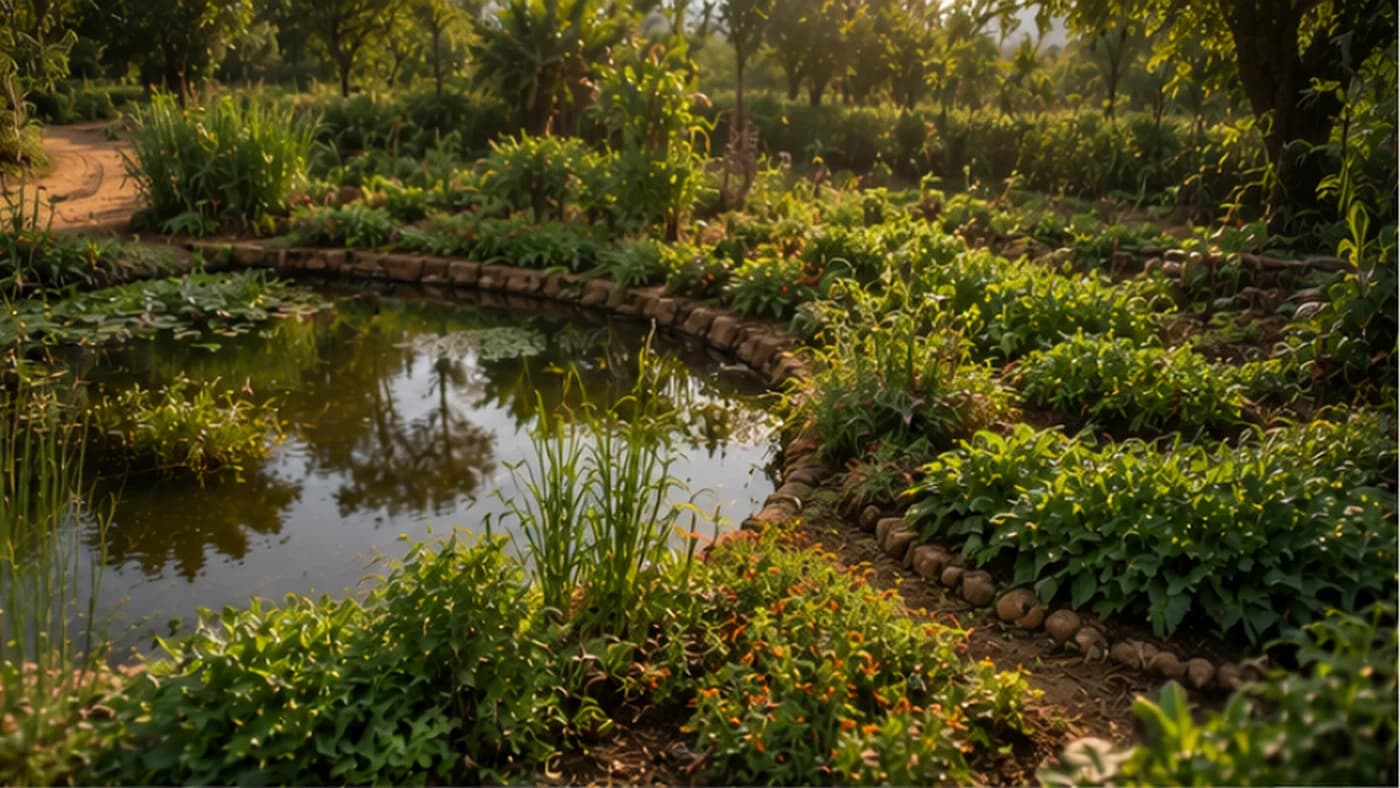
The Edge Effect: Why a Wavy Garden Border Outproduces a Straight One
Nature never draws a straight line. Turning a straight bed edge into a gently curved one can triple the usable planting length in the same footprint, while drawing in far more beneficial insects — with zero extra land.
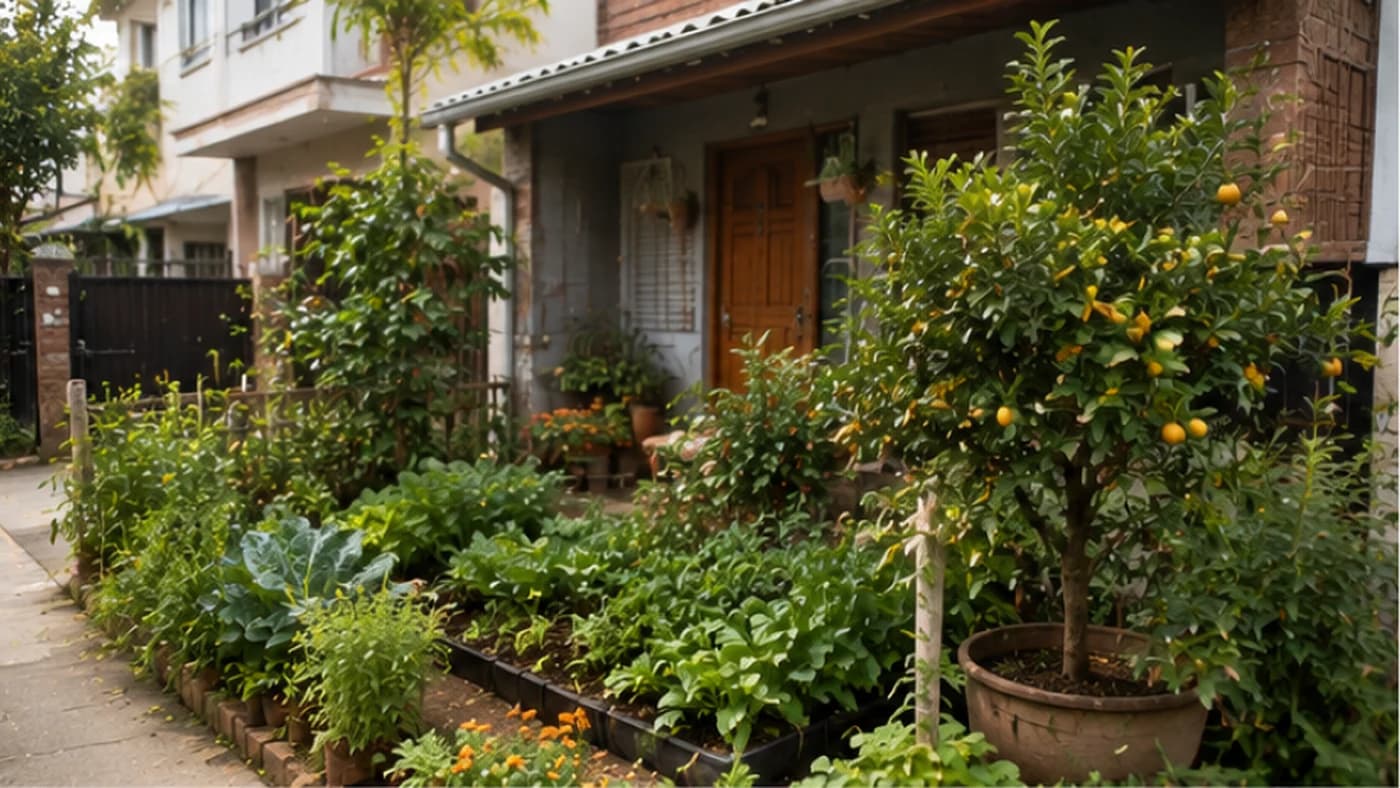
Urban Edible Landscaping: Turn a Terrace, Balcony or Yard Into Food
A city plot doesn't have to choose between looking nice and feeding you. Layered fruit trees, herbs and vegetables can turn a small terrace, balcony or front yard into a steady, low-maintenance source of food.