

Edible Living Fences: Turn Your Field Boundary Into a Harvest
A plain fence gives you nothing back but upkeep. A living, edible boundary — karonda, moringa, pomegranate, or a classic gliricidia fence — gives you privacy, windbreak, pollinator habitat, and a real harvest, all from the same strip of land you already have.
Quick answer
A field boundary doesn't have to be dead weight in your farm's economics. A mixed, well-chosen living fence — karonda or bougainvillea for a thorny barrier, moringa or gliricidia for fast growth and fodder, pomegranate or guava for a real cash crop along the edge — turns the same land you're already maintaining into a genuine source of food, fodder, and income, while doing everything a plain fence does and lasting far longer.
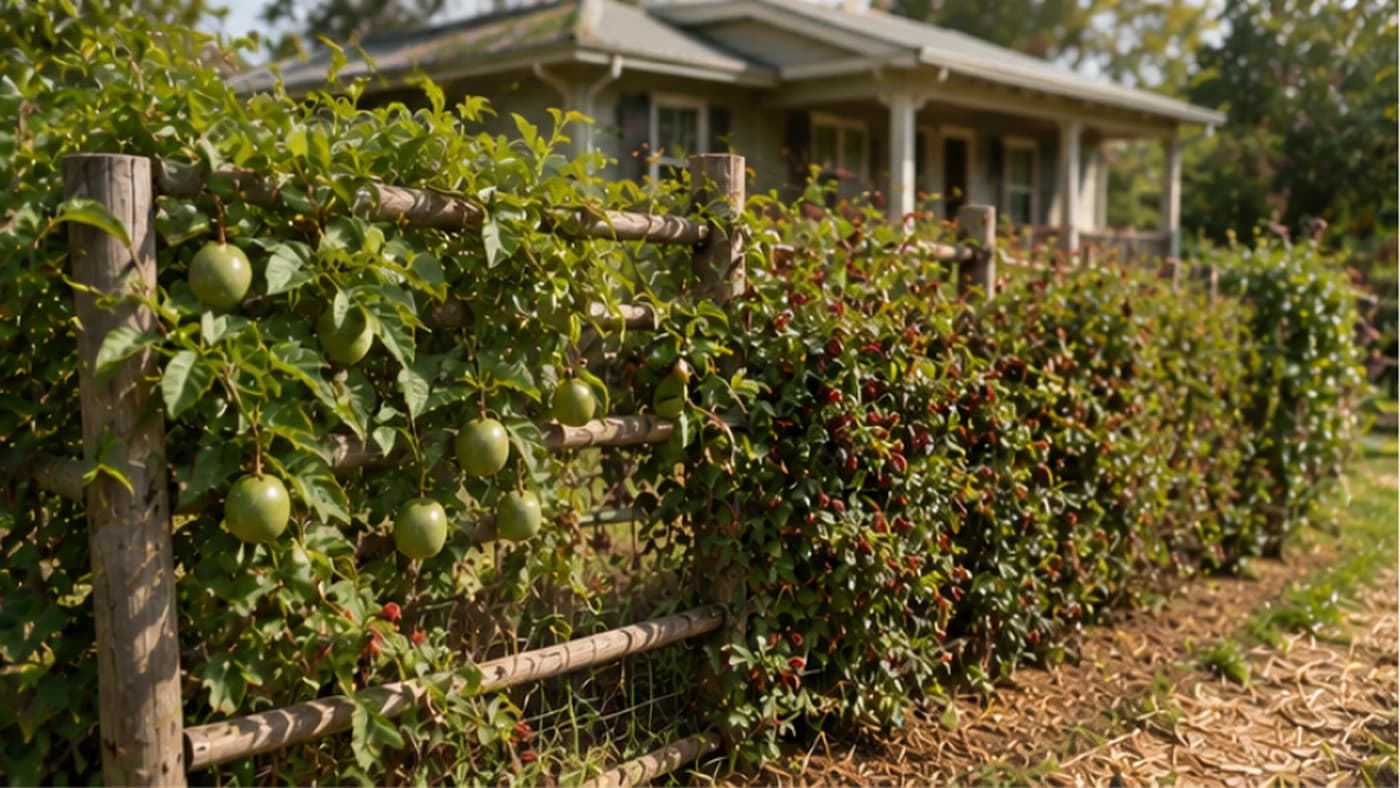
A boundary is space you're already paying for in land and labour — mowing, trimming, or simply walking past it every day. A living, edible fence turns that same strip into a source of fruit, fodder, or firewood while still doing the job of a fence: marking the line, blocking wind, and keeping animals in or out. Farmers across India already do a version of this with karonda hedges, gliricidia fencing, or a row of moringa along a field edge — the idea below just makes the design more deliberate.
What an edible living fence actually is
An edible living fence (sometimes called a fedge) is a boundary built from food-, fodder-, or fuel-producing plants instead of dead wood or wire, designed to give you privacy and protection while also producing a recurring harvest — every plant in it is expected to earn its place by doing at least two jobs at once. This works because of the edge effect: the boundary between two zones is often the most productive strip on a piece of land, so concentrating useful plants along your fence line makes good use of ground that would otherwise just be mowed or ignored.
In India this already shows up in familiar forms — a thorny karonda (Carissa carandas) hedge around a homestead that also yields tart berries for pickle and chutney, a living gliricidia or subabul fence that doubles as green fodder and mulch, or a boundary row of moringa that grows fast enough to fence a field within a season while producing pods and leaves almost immediately.
How to design and plant one
Start by observing the site: note how much direct sun the boundary gets through the day and across seasons, and how wind moves along it, since most fruiting and fencing species need at least 6 hours of sun — in heavy shade, pick shade-tolerant options instead.
Prepare a strip at least a metre wide rather than planting into hard, undisturbed ground: work in well-rotted farmyard manure or compost, and mulch heavily right after planting to hold moisture and suppress weeds.
Space according to the mature size of the species — a dense, animal-proof hedge (karonda, gliricidia, or bougainvillea for a thorny barrier) can go in as close as 60–90 cm apart, while larger fruiting trees like pomegranate or guava need proper spacing and, ideally, a simple wire or bamboo support in the early years.
Protect young plants for the first two to three years with a temporary barrier of thorny branches or light wire mesh — this is the single biggest reason new living fences fail, since livestock and stray animals will happily graze a young hedge to the ground before it's established.
What you actually gain
The most obvious gain is the harvest itself — instead of spending time trimming a fence that gives nothing back, you're picking karonda for pickle, moringa leaves for the kitchen, or pomegranates and guavas to sell or eat. A living fence also works as a genuine windbreak: unlike a solid wall, which creates turbulence on the sheltered side, a hedge filters the wind, reducing the harsh drying effect on nearby crops and creating a calmer, slightly warmer microclimate.
Biodiversity improves noticeably too — flowering hedge species draw bees and butterflies, and birds nesting in a dense hedge help control insect pests in the surrounding field. And a well-chosen living fence simply lasts longer than built fencing: a wooden or bamboo fence needs regular replacement, while an established hedge of a long-lived species can serve for decades with only annual pruning.
Common mistakes
Planting only one species is the biggest one — a monoculture hedge is vulnerable to a single pest or disease wiping out the entire boundary at once, so mix two or three compatible species rather than relying on just one.
Underestimating harvest timing is another — many fruiting hedge species ripen in a short window, so if you plant a long stretch of one fruiting species, be ready to harvest and use the crop quickly, or it rots and attracts pests.
Neglecting pruning is the third — a fedge is genuinely low-maintenance once established, but not zero-maintenance. Skipping annual pruning turns a tidy hedge into a tangled, thorny mess that's harder to manage and less productive than one pruned lightly every year.
Where this approach has real limits
Space is the main constraint — a wild, unpruned hedgerow can spread 2–3 metres wide over time, which is too much on a small plot boundary; trained or regularly pruned species, or vining crops on a simple trellis, suit tight spaces far better.
Climate and region matter a great deal, too: karonda, moringa, gliricidia, pomegranate, and bougainvillea all suit the hot plains, but a farmer in a cooler hill district (Himachal, Uttarakhand, parts of the Northeast) can instead grow the exact temperate fruiting hedges common elsewhere in the world — currants, hardy berries, or espaliered apple along a wire trellis — since the climate genuinely supports them there.
Living fence versus built fence
A built fence of wood, bamboo, or wire has a moderate upfront cost, typically lasts 10–15 years before rot or wear sets in, needs occasional repair, and gives you privacy and a boundary line as its only real yield. A living edible fence costs less upfront (mainly plants and soil prep), can last 50+ years since it renews itself, needs annual pruning and harvesting rather than repair, and gives you food, fodder, windbreak, and habitat on top of the boundary itself. If you need an instant, hard boundary this season, build first and plant alongside it; if you can wait a year or two for it to establish, the living fence pays back far more over time.
Practical tips
Mulch heavily and consistently — a thick layer of straw or wood chips saves enormous weeding effort over the life of the fence while slowly feeding the soil as it breaks down.
Water deeply but infrequently while plants establish, so roots are encouraged to grow deep rather than staying shallow and drought-prone from light daily sprinkling.
Layer your planting for density: taller fruiting or fencing trees in the centre, lower shrubs flanking them, and low groundcover or herbs along the very edge, building a thick, multi-height barrier rather than a single thin row.
A worked example
Consider a farmer with 20 metres of field boundary that's currently just barbed wire on posts. They plant a mixed line: karonda every 75 cm for a dense, thorny, animal-proof barrier that also yields fruit for pickle, with moringa trees spaced every 4–5 metres along the same line for fast growth, pods, and leaves, and a low border of lemongrass at the base, which also discourages animals from pushing through at ground level. Within two to three years the karonda has grown into a genuinely stock-proof hedge, the moringa is already yielding regularly, and the same boundary that used to need only wire repair now also produces pickle-grade fruit, a steady supply of moringa leaves, and lemongrass for tea — at a fraction of the cost of maintaining a wire fence alone.
Frequently asked
Which plants make a good edible fence in most of India?+
Karonda (thorny, animal-proof, edible fruit), moringa (fast-growing, edible pods and leaves), gliricidia or subabul (fodder and green mulch), pomegranate and guava (cash fruit crops), and bougainvillea (thorny ornamental barrier) are all well-suited to the hot plains and easy to source locally.
What about cooler hill regions like Himachal or Uttarakhand?+
Farmers there can grow the same temperate fruiting hedge species common in cooler climates worldwide — currants, hardy berry bushes, or trellis-trained apple — since the climate genuinely supports them, unlike most of the Indian plains.
How long before a living fence actually keeps animals out?+
A fast-growing, dense species like karonda or gliricidia typically becomes a genuinely stock-proof barrier within 2–3 years of planting, provided young plants are protected from grazing in the first year or two.
Won't a mixed hedge look untidy compared to a straight wire fence?+
Not if it's pruned annually — light, regular pruning keeps a living fence neat and productive; it's skipping pruning for several years that turns it into a tangled thicket.
Is it worth the cost compared to just buying more wire fencing?+
Over a single season, wire is cheaper and faster. Over 10+ years, a living fence usually costs less overall since it doesn't need periodic full replacement, and it produces a harvest the whole time — the trade-off is patience during the first year or two of establishment.
Where to go next
Want this as daily tasks for your farm?
Khetiyaar turns guides like this into a day-by-day plan — in your language, free to start.

Related guides
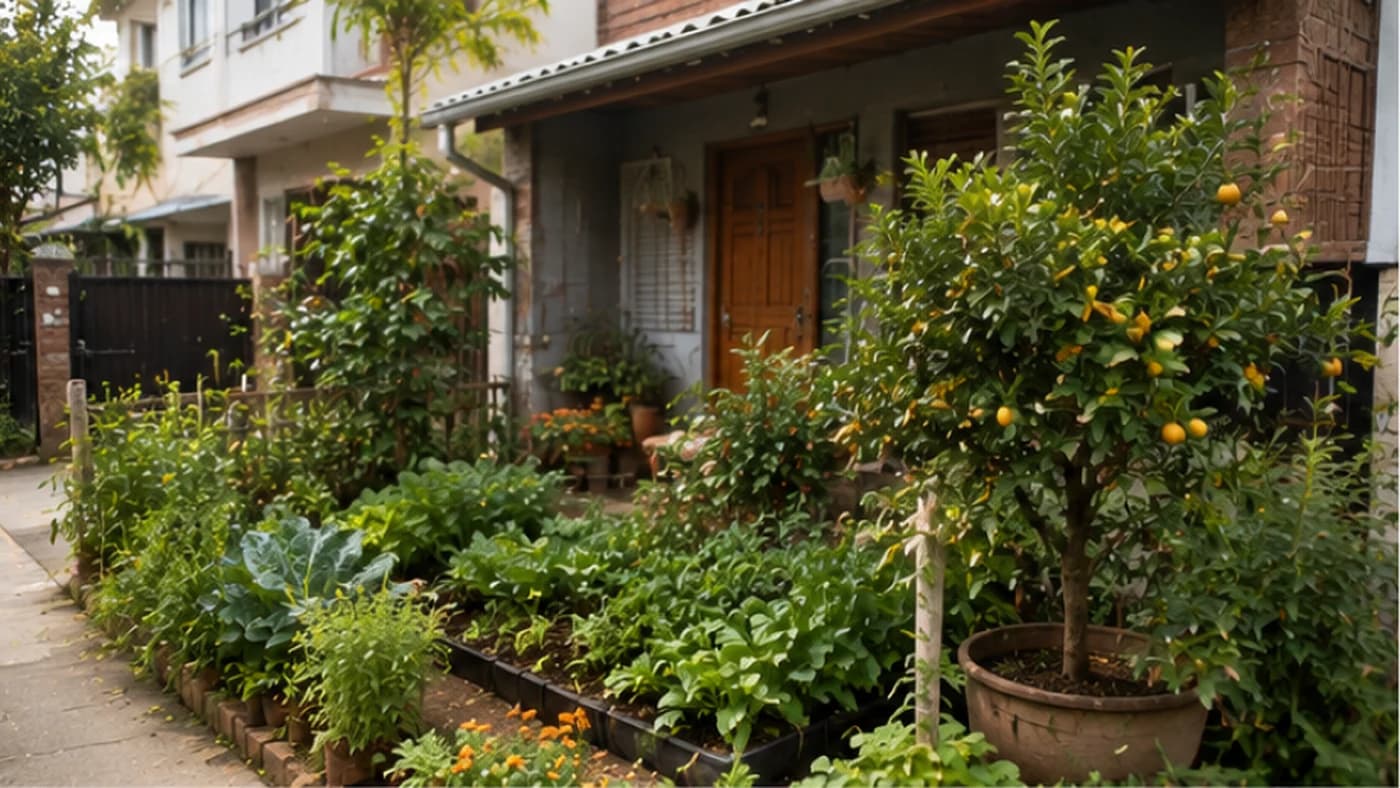
Urban Edible Landscaping: Turn a Terrace, Balcony or Yard Into Food
A city plot doesn't have to choose between looking nice and feeding you. Layered fruit trees, herbs and vegetables can turn a small terrace, balcony or front yard into a steady, low-maintenance source of food.
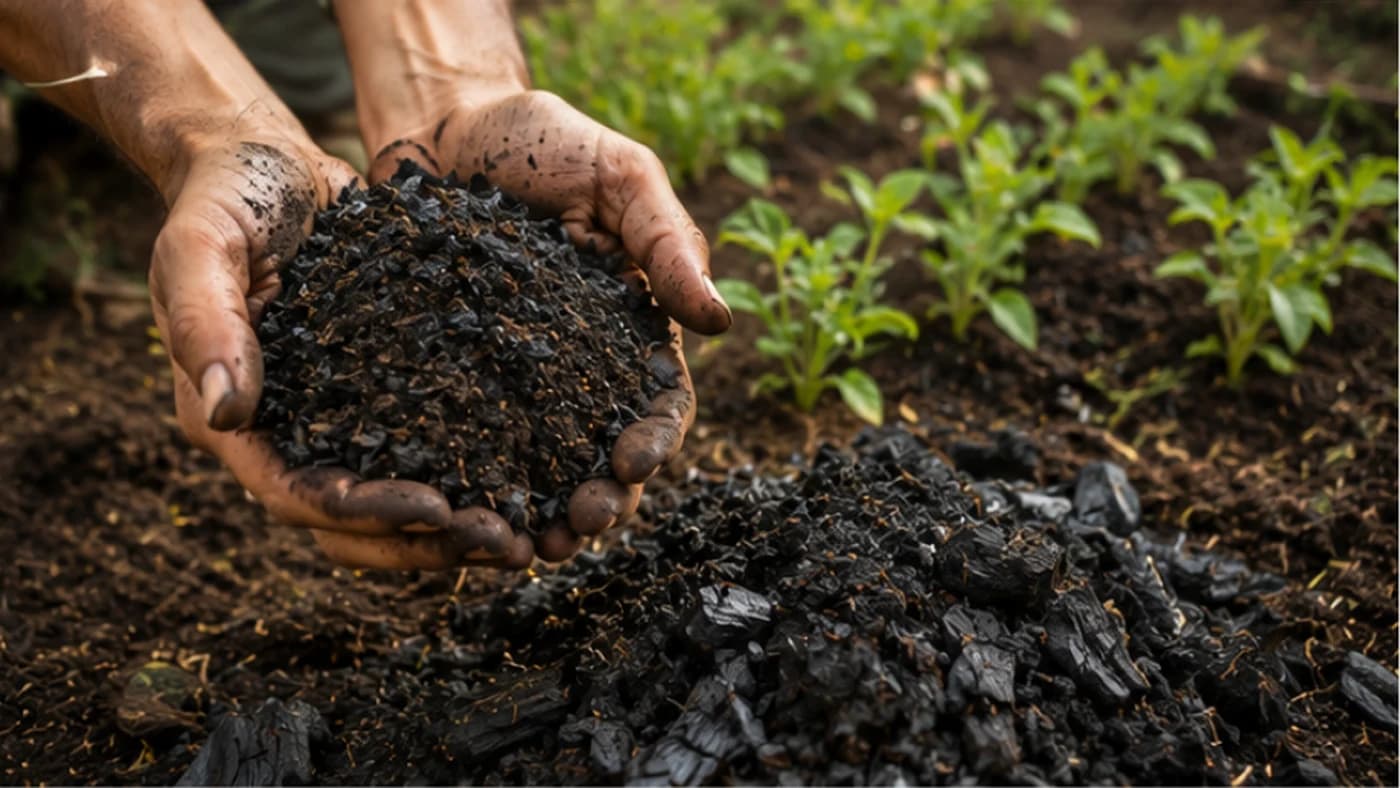
Terra Preta: The 2,000-Year-Old Soil That Gets More Fertile With Age
Ancient Amazonian farmers built soil that is still 10x more fertile than the surrounding land 2,000 years later — using biochar, organic waste and minerals. Here's how to build a modern version in your own field.
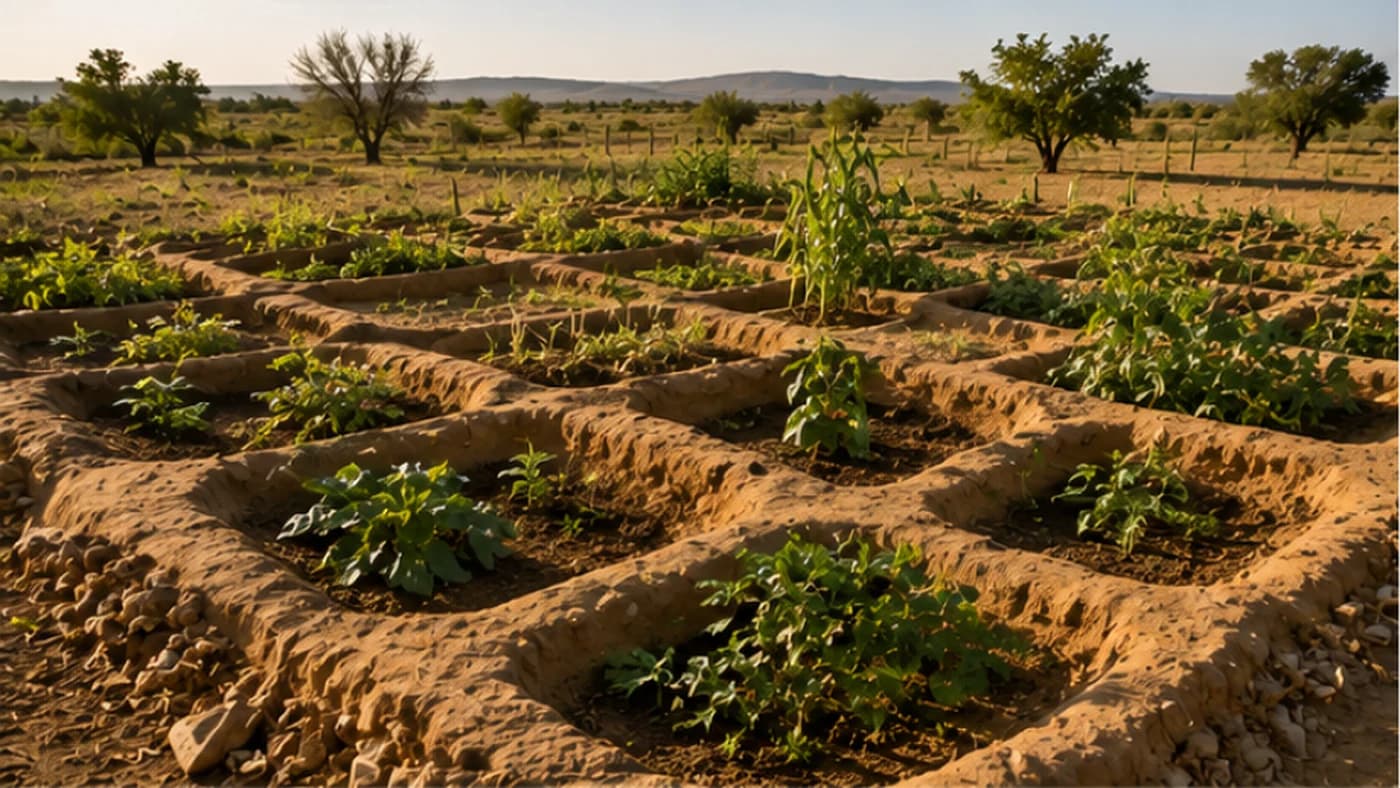
The Zuni Waffle Garden: An Ancient Dryland Method for Water-Scarce Farms
Ordinary sprinklers lose much of their water to wind and evaporation. This centuries-old sunken-bed technique from the American Southwest desert traps every drop close to the roots — and it adapts easily to India's driest tracts.