

Tur (Arhar) Dal Cultivation: A Practical Guide to a Better Pulse Crop
Tur is one of the most forgiving crops a farmer can grow — and one of the best for soil health — but pod borer and wilt can still take a serious bite out of yield if you're not watching for them. Here's how to grow it well from sowing to harvest.
Quick answer
Tur is a genuinely forgiving, soil-improving crop when you get the basics right: sow at the correct time for your variety's duration, use the wider spacing the plant's branching habit needs, scout for pod borer early and often rather than waiting for visible pod damage, choose a wilt-resistant variety for fields with any history of the disease, and harvest promptly once most pods have browned rather than waiting for every pod to finish, to avoid giving shattering losses a chance to eat into your yield.
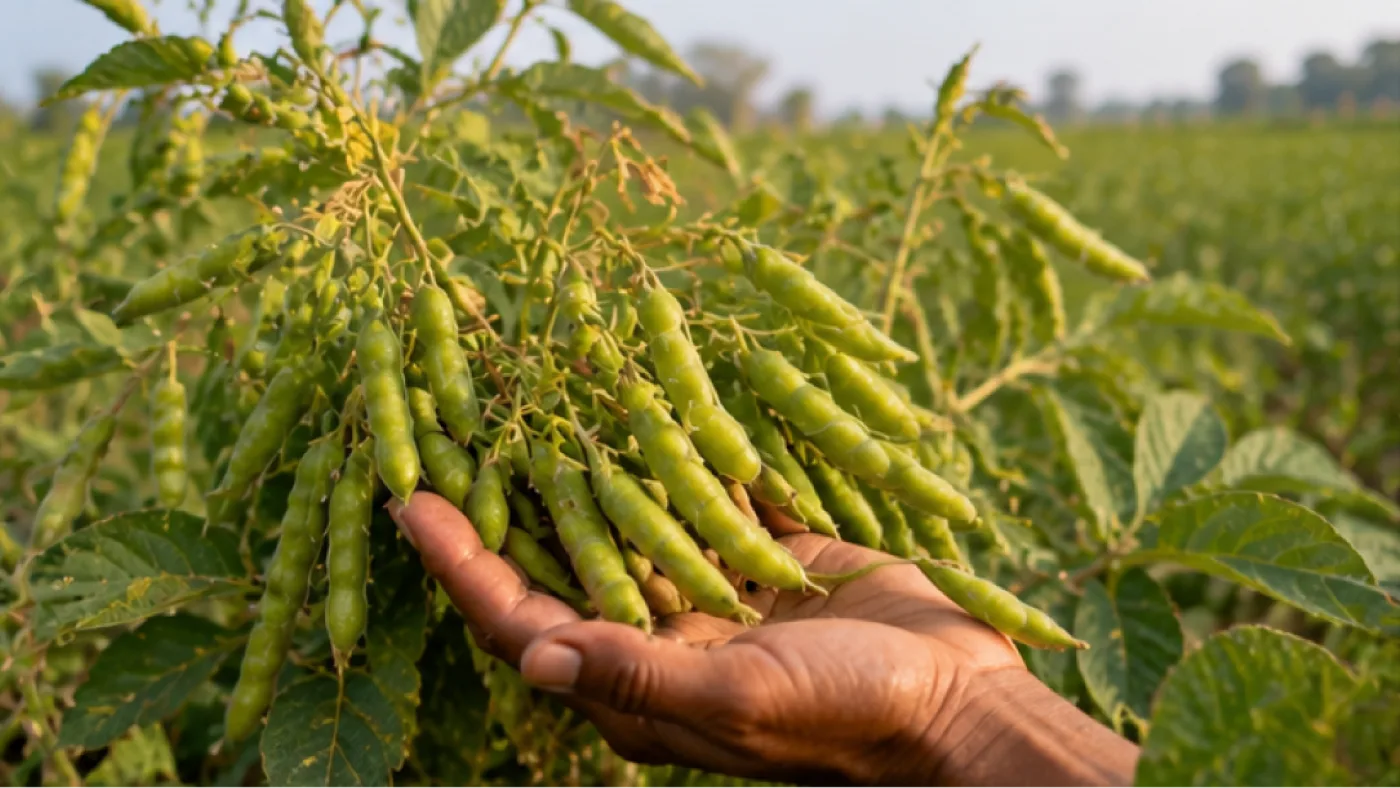
Tur, also called arhar or pigeon pea, is one of India's most widely grown pulses and a genuinely valuable crop to have in rotation — not just for the dal it produces, but for what it leaves behind in the soil. It is also a relatively hardy, drought-tolerant crop that smallholder farmers across much of the country rely on. Getting a good tur crop mostly comes down to sound basics at sowing and staying ahead of two problems — pod borer and wilt — that account for most of the yield lost in an average season.
Why tur belongs in your rotation
As a legume, tur fixes atmospheric nitrogen through Rhizobium bacteria in its root nodules, meaning it needs comparatively little nitrogen fertilizer itself and leaves behind a measurable nitrogen benefit for whatever crop follows it. This makes tur a genuinely useful rotation partner with cereal crops like sorghum, maize, or cotton, helping break pest and disease cycles that build up under continuous cereal cropping while improving the soil's nitrogen status for the next crop.
Tur is also relatively deep-rooted and drought-tolerant once established, making it a sensible choice for rainfed areas and lighter soils where more water-demanding crops struggle.
Sowing time and seed rate
Tur is typically sown as a kharif crop with the onset of the monsoon, timed so the crop can establish on early monsoon moisture while still flowering and podding in conditions that suit the variety's duration (tur varieties range from short-duration to long-duration types, each with somewhat different optimal sowing windows — follow the recommendation for your specific variety). Sowing too late shortens the growing period available before winter cold sets in, in regions where that matters, and can push flowering into less favourable conditions.
Seed rate is comparatively low for tur compared to cereal crops, since the crop branches out and fills space as it grows — over-thick sowing wastes seed and increases competition without improving yield. As a standard reference point, sole-cropped tur is typically sown at around 6-8 kg of seed per acre; when intercropped with a shorter-duration companion crop, the tur seed rate drops well below that, since a smaller share of the field's rows are given to tur.
Spacing that suits tur's growth habit
Tur is typically sown with wider spacing than most cereal or pulse crops, since it grows into a substantial, branching, semi-woody plant that needs room to develop — spacing recommendations vary by variety duration, with longer-duration, more spreading varieties needing wider spacing than short-duration, more compact ones. As a practical starting point, short-duration varieties generally do well at around 60-75 cm between rows and 15-20 cm between plants, while medium- and long-duration, more spreading varieties need considerably more room, typically 90-120 cm between rows — always check the recommendation for your specific variety, since the range within tur is wide. Intercropping tur with a shorter-duration crop (a common and often profitable practice) takes advantage of the wide spacing and tur's slower early growth, letting a companion crop occupy the space between rows in the early part of the season.
Pod borer: the biggest threat to tur yield
Pod borer (Helicoverpa armigera, the same polyphagous caterpillar that damages cotton bolls and tomato fruit) is the single most damaging pest of tur, boring into developing pods and feeding on the seeds inside — damage that is largely invisible from outside the pod until it's too late to prevent the loss. Scout regularly for adult moth activity (pheromone traps help detect and track this), look for small entry holes in pods, and act early rather than waiting to see obvious damage, since by the time pod damage is visually apparent, a meaningful share of the yield in that area is often already lost.
Encourage natural egg parasitoids like Trichogramma wasps, which are widely used as biological control for pod borer in Indian cotton, sugarcane, and pulse crops, and rotate any chemical control between different modes of action, since Helicoverpa armigera develops insecticide resistance quickly when the same product is used repeatedly. (See our full identification guide, Good Insects vs Bad Insects, for a photo and detailed description of this pest — the same Helicoverpa armigera caterpillar covered there as bollworm.)
Choosing wilt-resistant varieties
Fusarium wilt is a serious soil-borne disease of tur that causes yellowing and wilting of the plant, often starting on one side, with a distinct browning of the vascular tissue visible when the stem is cut open — and once a plant is infected, there is no cure. Because the fungus persists in field soil for years, the most effective protection is choosing wilt-resistant or wilt-tolerant varieties recommended for your region rather than relying on in-season treatment, along with crop rotation with non-host crops in fields with a known history of wilt.
Harvest timing: avoiding shattering losses
Tur pods dry and mature somewhat unevenly across a plant and across a field, which makes harvest timing a genuine balancing act: harvesting too early leaves a share of pods immature with poor seed fill, while waiting too long risks pod shattering — dry pods splitting open and dropping seed on the ground, especially in windy conditions or after a stray rain — which can cost a real share of the harvest, particularly in longer-duration varieties that pod over an extended period.
A practical approach many farmers use is to harvest when the majority of pods on the plant have dried and turned brown, accepting a small share of slightly immature pods, rather than waiting for every last pod to fully mature and risking shattering losses on the pods that matured first.
Terms explained in this guide
Frequently asked
Why is tur good for crop rotation?+
As a legume, tur fixes its own nitrogen through root nodules, needing little nitrogen fertilizer itself while leaving a nitrogen benefit for the next crop, and it helps break pest and disease cycles that build up under continuous cereal cropping.
What is the biggest pest threat to tur?+
Pod borer (Helicoverpa armigera), which bores into developing pods and feeds on the seeds inside, largely invisible from outside until significant yield is already lost. Early scouting and pheromone traps help catch it before damage is visible.
How can I protect my tur crop from wilt?+
Choose wilt-resistant or wilt-tolerant varieties recommended for your region, since Fusarium wilt has no cure once a plant is infected and the fungus persists in soil for years. Rotate away from tur in fields with a known history of wilt.
When should I harvest tur to avoid losing yield to shattering?+
Once the majority of pods on the plant have dried and turned brown, even if a small share are still slightly immature — waiting for every last pod to mature risks shattering losses on the pods that matured earliest.
Can tur be intercropped with other crops?+
Yes — tur's wide spacing and slower early growth make it a common and often profitable intercropping partner with a shorter-duration companion crop planted between the tur rows early in the season.
Where to go next
Want this as daily tasks for your farm?
Khetiyaar turns guides like this into a day-by-day plan — in your language, free to start.

Related guides
Chana Farming: Growing Chickpea on Residual Moisture
India's biggest pulse crop is also the one most often ruined by kindness — too much water, too much nitrogen. What chana actually needs, how to beat wilt and pod borer, and desi versus kabuli.
Cumin Farming: Growing Jeera When the Weather Decides Everything
Cumin is among the highest-value crops a Gujarat farmer can grow and among the easiest to lose. Two cloudy weeks at flowering can take the whole field. Here is how to give it the best odds.
Isabgol Farming: Growing Psyllium for the Husk, Not the Seed
North Gujarat supplies much of the world's psyllium husk from light land and almost no water. The crop is easy until harvest — and at harvest one shower can take the value out of it.