

Soybean Farming in India: A Practical Guide to Better Yield
Soybean rewards good basics more than almost any other kharif crop — the right seed treatment, sowing window, and spacing routinely make a bigger difference than anything sprayed on afterward. Here's what actually moves the yield needle.
Quick answer
Soybean's yield is decided early: treat the seed with rhizobium and PSB culture before it ever goes in the ground, sow into a genuine soaking monsoon rain rather than a light shower, keep spacing at the recommended density for your variety, scout for girdle beetle and stem fly from emergence, control whitefly early to limit yellow mosaic virus spread, weed hard in the first month, and harvest once pods are properly brown and dry rather than early or late. None of this is expensive — it's mostly about timing and attention, which is exactly why the gap between an average soybean yield and a genuinely good one is so often avoidable.
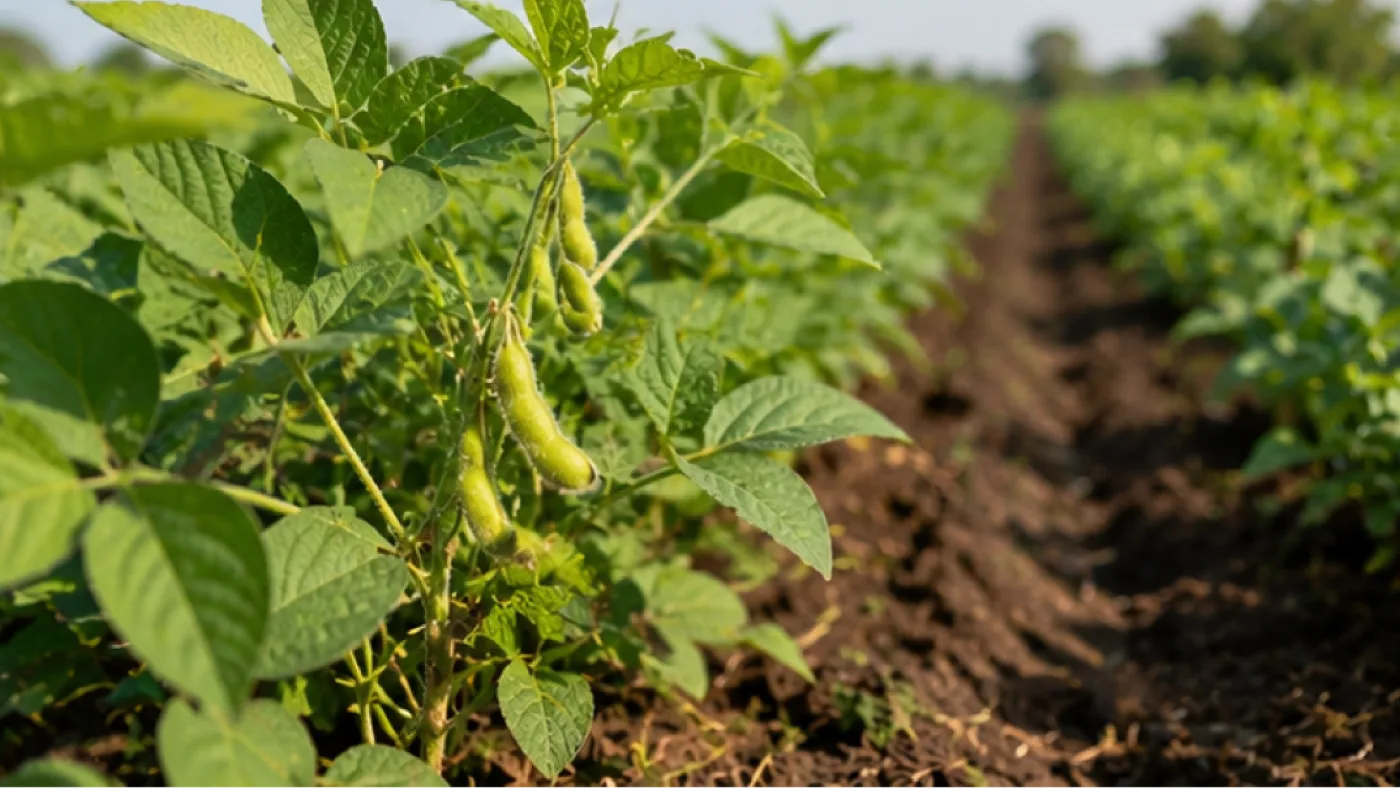
Soybean is one of India's most important oilseed crops, grown overwhelmingly as a rainfed kharif crop across the Madhya Pradesh and Maharashtra belt (with meaningful area in Rajasthan and parts of the south too). It is also a crop where the biggest yield gains come from getting the fundamentals right at sowing — seed treatment, timing, and spacing — rather than from anything applied mid-season. Get those three right, and the crop does most of the rest itself.
Where soybean is grown, and why it matters for planning
Madhya Pradesh and Maharashtra together account for the large majority of India's soybean area, which is why most agronomic recommendations (sowing windows, variety releases, pest pressure patterns) are built around these belts' monsoon rainfall patterns. If you farm outside this core belt, adjust the sowing window guidance below to your own region's monsoon onset, but the underlying principles — seed treatment, spacing, and pest scouting — apply everywhere soybean is grown in India.
Seed treatment: rhizobium and PSB culture
Soybean is a legume, and like other legumes it can fix its own atmospheric nitrogen through a partnership with Rhizobium bacteria living in root nodules — but only if the right rhizobium strain is present in the soil or introduced through seed treatment. Treating seed with a soybean-specific Rhizobium japonicum culture, along with a phosphate-solubilising bacteria (PSB) culture, before sowing is one of the cheapest, highest-return steps in the whole crop cycle: it improves nodulation, reduces the nitrogen fertiliser the crop needs, and often visibly improves early vigour.
Mix the cultures with the seed using a little water or a starch-based binder just before sowing (treated seed shouldn't sit around for days before going in the ground), keep treated seed out of direct sun, and never mix rhizobium culture with chemical seed treatments or fungicides in the same batch unless the product label specifically confirms compatibility — many fungicides kill the very bacteria you're trying to introduce.
Getting the sowing window right
Soybean is sown with the onset of the monsoon in most of its core growing area — sowing too early into insufficient soil moisture gives poor, patchy germination, while sowing too late shortens the crop's effective growing period and can push flowering and pod-fill into less favourable late-season conditions. Watch for a reliable, soaking rain (not just a light shower) before sowing, and avoid sowing into a field with standing water or waterlogging risk, since soybean is notably intolerant of waterlogged conditions, especially at germination.
Row spacing and plant population
Row spacing of roughly 30-45 cm between rows is common for soybean, with within-row spacing adjusted to give a healthy, uniform plant population without overcrowding — overly dense stands increase disease pressure and lodging risk, while overly sparse stands waste land and let weeds establish more easily in the open row space. Use the seed rate and spacing recommended for your specific variety, since seed size and plant habit vary meaningfully between soybean varieties.
Watching for girdle beetle and stem fly
Girdle beetle is a distinctive soybean pest: the adult beetle girdles (rings) the stem or petiole, causing the portion above the girdle to wilt and eventually break off, while the larva then bores down inside the stem. Look for the tell-tale ring-shaped groove on stems and branches, and for wilting above that point — affected plants should be removed and destroyed to reduce the pest's buildup for the rest of the season.
Stem fly attacks young seedlings, with the maggot boring into the stem near the base, causing wilting and sometimes plant death in badly affected seedlings. Early-stage crops should be scouted closely in the first 3-4 weeks after emergence, since stem fly damage is far more serious on young plants than on an established crop.
Yellow mosaic virus: manage the whitefly, not just the symptom
Yellow mosaic virus shows as irregular yellow and green mottled patches on the leaves, often with stunted growth and reduced pod formation on badly affected plants. Like many mosaic viruses, it is transmitted by whitefly rather than spreading directly plant-to-plant, so effective management focuses on controlling the whitefly population early in the season — yellow sticky traps for monitoring, removing and destroying badly infected plants before they become a virus reservoir for the rest of the field, and choosing tolerant varieties where they're available for your region.
Weed control in the first 30-40 days
Soybean is not a strongly competitive crop against weeds in its early stages, so the first 30-40 days after sowing are the period where weed competition costs the most yield if left unmanaged. A combination of a clean, weed-free field at sowing, timely early weeding (hand or mechanical) at around 20-25 days, and a canopy that closes reasonably quickly at the recommended spacing keeps weed pressure under control without excessive reliance on herbicide.
Harvest timing and safe storage moisture
Soybean is ready for harvest when the majority of pods have turned brown and dry, and the leaves have largely yellowed and dropped — harvesting too early, while pods are still green, gives poor seed quality and incomplete oil development; harvesting too late risks pod shattering, especially after rain or in windy conditions, which directly loses seed on the ground.
Bring harvested seed down to around 10-12% moisture before storage — soybean is more prone than many grains to storage mould and quality loss if bagged too wet, and oil quality in particular suffers from poor drying. Dry on a clean floor or with mechanical drying rather than storing straight from the field.
Terms explained in this guide
Frequently asked
Why should I treat soybean seed with rhizobium?+
Rhizobium bacteria help soybean fix its own nitrogen through root nodules, improving nodulation and early vigour while reducing how much nitrogen fertiliser the crop needs. It is one of the cheapest, highest-return steps in the whole crop.
What is the best time to sow soybean?+
With the genuine onset of the monsoon — a reliable soaking rain, not a light shower — in most of the core growing belt. Sowing too early into insufficient moisture or too late into a shortened season both hurt yield.
How do I identify girdle beetle damage in soybean?+
Look for a distinctive ring-shaped groove girdling the stem or petiole, with the portion above it wilting and eventually breaking off. The larva bores down inside the stem after the adult girdles it.
How is yellow mosaic virus spread in soybean, and how do I control it?+
It's spread by whitefly, not directly between plants, so control focuses on managing the whitefly population early — yellow sticky traps, removing badly infected plants promptly, and using tolerant varieties where available.
What moisture level is safe for storing harvested soybean?+
Around 10-12%. Soybean stored wetter than this is prone to mould and quality loss, including reduced oil quality, so proper drying before bagging matters more than for many other grains.
Where to go next
Want this as daily tasks for your farm?
Khetiyaar turns guides like this into a day-by-day plan — in your language, free to start.

Related guides
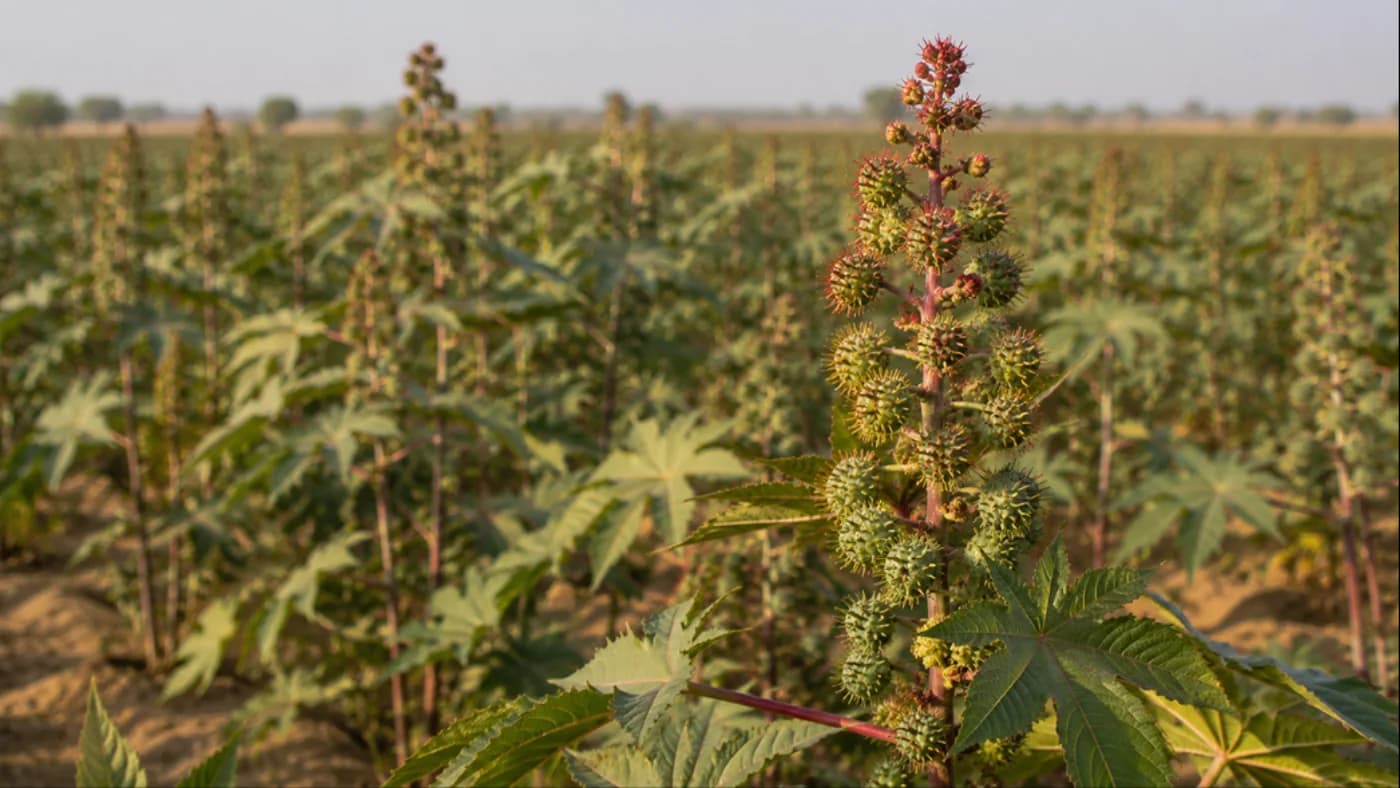
Castor Farming in Gujarat: Erandi from Sowing to the Last Picking
Gujarat grows most of India's castor, and India supplies most of the world's. A deep-rooted crop for light land that pays across several pickings — and one you must never treat as food or fodder.
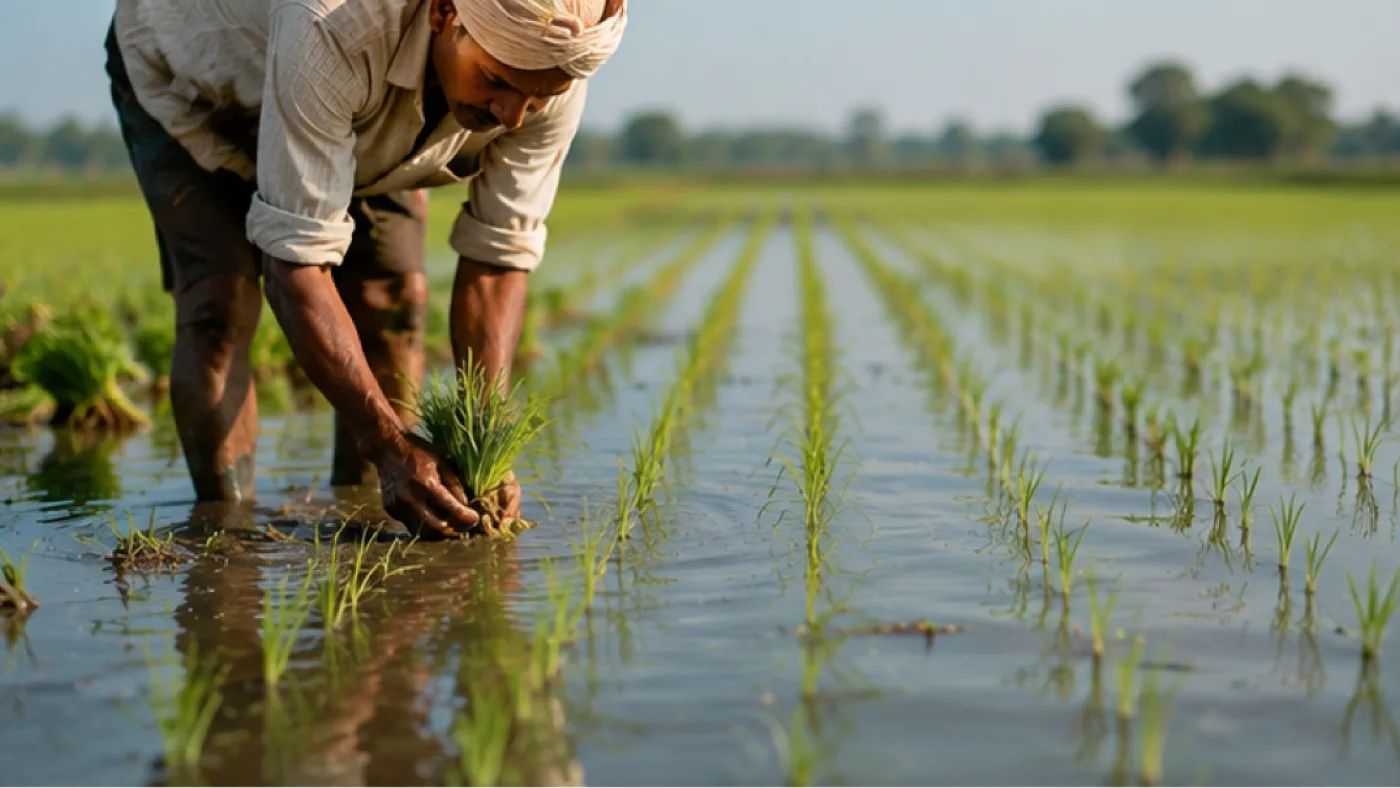
Rice (Paddy) Cultivation: The Complete Guide From Nursery to Harvest
From raising a healthy nursery to knowing exactly when to drain the field before harvest, this is a full season-by-season guide to growing paddy well — with the water-saving trick that can cut your irrigation bill without cutting your yield.
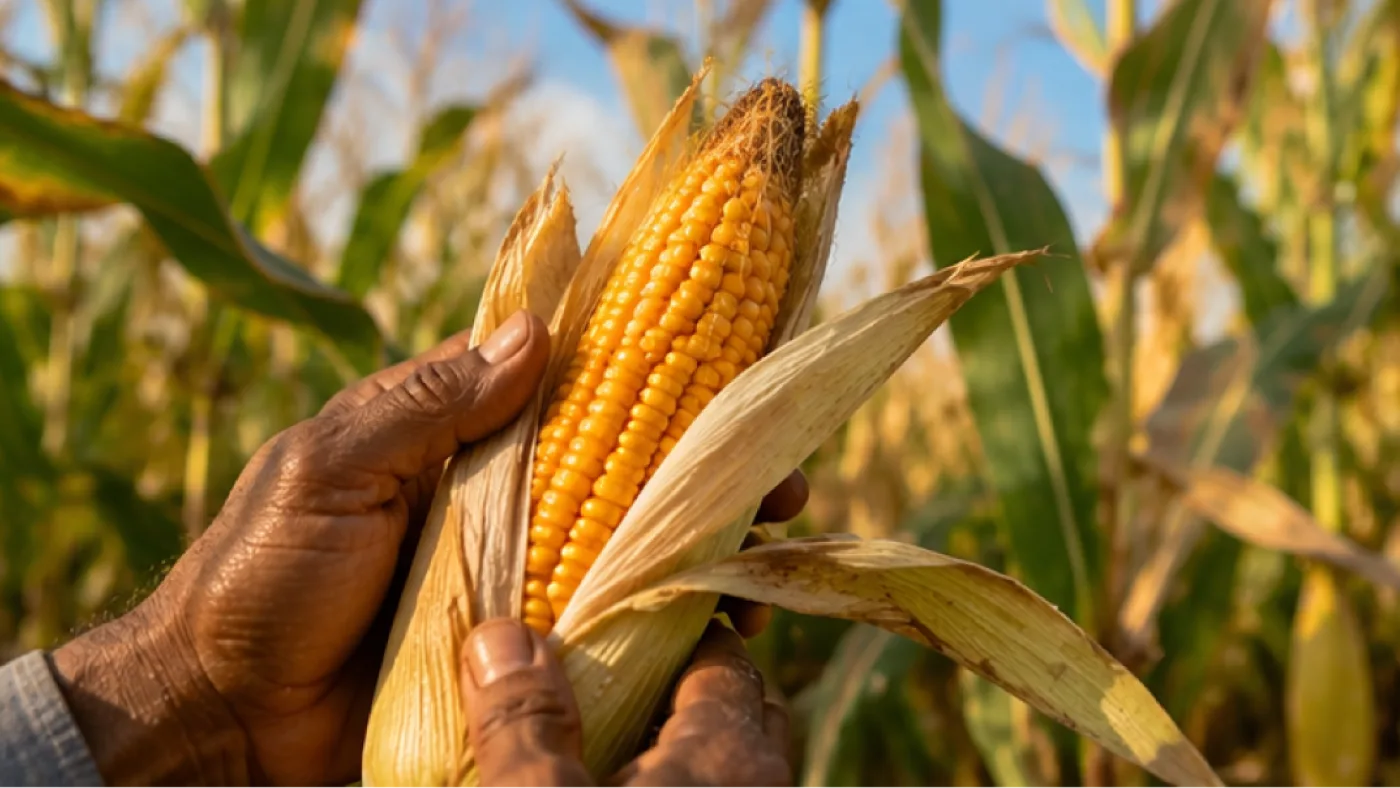
Maize (Makka) Farming Guide: Kharif and Rabi, Grain and Feed
Maize is grown almost year-round in India, as both a kharif rainfed crop and a rabi irrigated one — and the two seasons ask for genuinely different decisions. Here's a practical guide to both, plus what to watch for now that fall armyworm has become a serious threat.