

Soil Testing for Farmers: Why It Matters and How to Do It
Guessing fertiliser doses wastes a large part of one of your biggest costs. A soil test tells you exactly what your land has and what it lacks.
Quick answer
A soil test is one of the cheapest, highest-return decisions a farmer can make. It stops you from wasting money on unneeded fertiliser, corrects hidden problems like wrong pH, and points you toward a healthier soil. Take a proper sample, read the report, apply what is actually needed, and retest every few years.
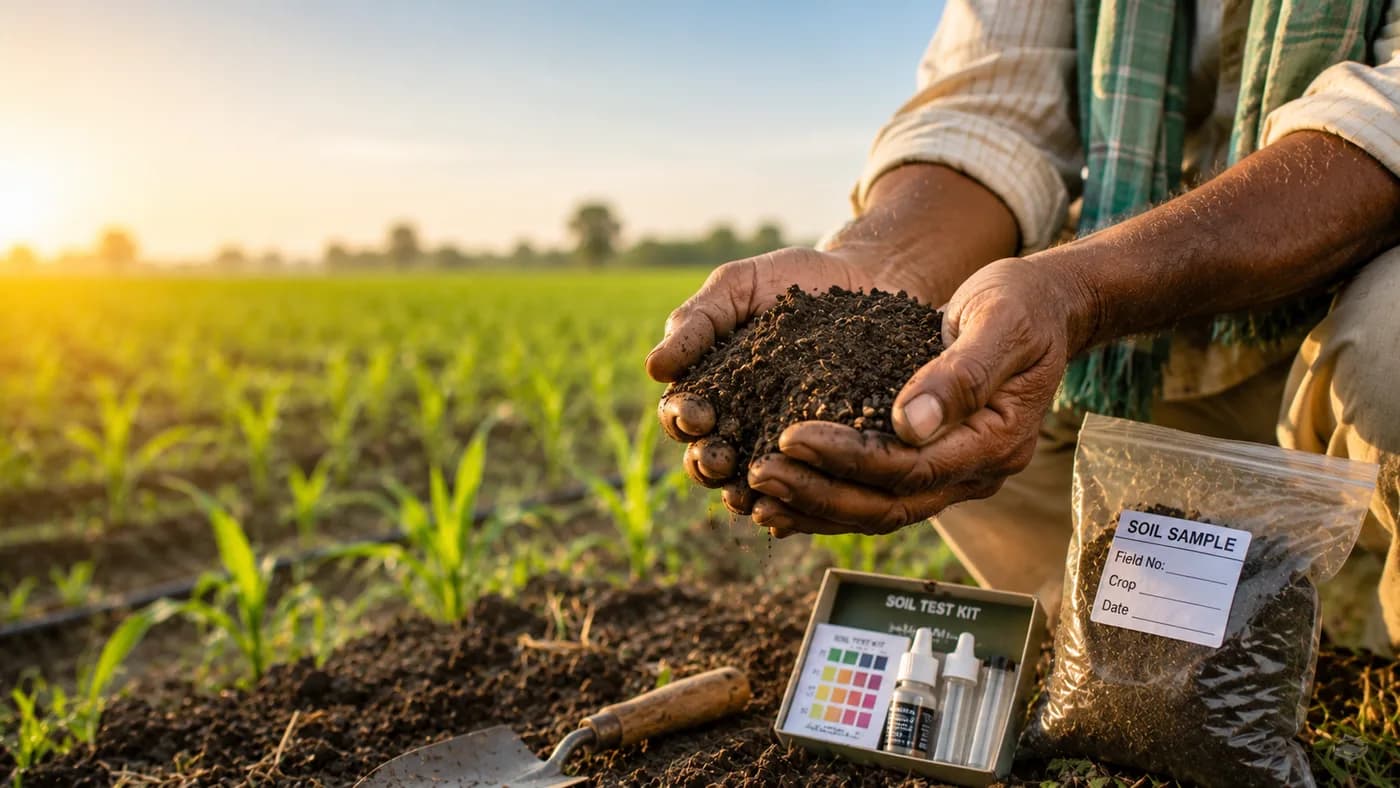
Fertiliser is one of the biggest costs in farming, and guessing how much to apply wastes a large part of it. A soil test removes the guesswork. It tells you exactly what your land has and what it lacks, so you spend less on inputs and grow a healthier, higher-yielding crop.
What a soil test tells you
A basic soil test reveals your soil's pH — whether it is acidic or alkaline — which decides how well plants can absorb nutrients. It measures the levels of nitrogen, phosphorus and potassium, the three main nutrients crops need. It also shows organic carbon, a key indicator of overall soil health, and sometimes important micronutrients like zinc and sulphur. Together these numbers paint a clear picture of what your soil needs.
How to collect a good sample
The test is only as good as the sample. Walk a zig-zag path across the field and dig eight to ten small holes to root depth. Take a handful of soil from each hole, mix them all together in a clean bucket, and remove stones and roots. From this mixture, take about half a kilogram, label it with your field details, and send it to a soil-testing lab. Many farmers can use the government Soil Health Card scheme, which provides free testing and recommendations.
How to use the results
Once you have the report, apply only what is missing rather than a standard dose for everything. If the pH is off, correct it on expert advice — lime for acidic soils, gypsum or other amendments for alkaline ones. If organic carbon is low, add compost or farmyard manure to rebuild soil life. This targeted approach saves money and often improves yield at the same time.
Test every two to three years
Soil changes with cropping, so a single test does not last forever. Retest every two to three years, or sooner if your yields start to fall or you switch to a very different crop, to keep your fertiliser decisions accurate.
Terms explained in this guide
Frequently asked
How often should farmers test soil?+
Every two to three years, or when yields drop or you change crops.
What is a Soil Health Card?+
A government scheme that gives farmers a report of their soil's nutrient status and fertiliser recommendations.
Why is soil pH important?+
pH controls how well plants can absorb nutrients; the wrong pH wastes fertiliser even when it is present.
Where to go next
- Agri Bazar marketplaceBuy and sell animals, crops, equipment and dairy near you — and see what buyers want today.
- Farming cost & profit calculatorWork out cost per acre, break-even yield and expected profit before you sow.
- Kheti app for Indian farmersCrop plans, disease diagnosis, weather and mandi rates in one app.
Want this as daily tasks for your farm?
Khetiyaar turns guides like this into a day-by-day plan — in your language, free to start.

Related guides
Why Soil Testing Is Important: The Smartest Decision a Farmer Can Make
Soil quietly sets the ceiling on your yield every season. Testing it is one of the cheapest decisions on the farm — and one of the highest-returning.
How to Read Your Soil Health Card: All 12 Parameters Explained in Plain Language
Most farmers receive a soil health card, glance at it, and file it away. It is the cheapest agronomic advice you will ever get — twelve numbers that tell you exactly what your land is short of and what you are wasting money on. Here is how to read every one.

Urea vs DAP vs NPK Fertiliser: Which One Does Your Field Actually Need?
Three bags sit against the wall of every fertiliser shop, and most farmers buy on habit rather than on what their soil is actually short of. Here is what urea, DAP and NPK complex each really supply — and how to let your soil test, not the shop counter, make the call.