

Urea vs DAP vs NPK Fertiliser: Which One Does Your Field Actually Need?
Three bags sit against the wall of every fertiliser shop, and most farmers buy on habit rather than on what their soil is actually short of. Here is what urea, DAP and NPK complex each really supply — and how to let your soil test, not the shop counter, make the call.
Quick answer
Urea, DAP and NPK complex are not competitors — they are three different tools, and the only thing that reliably tells you which to pick up is a soil test. Urea supplies nitrogen alone and is the top-dressing workhorse; DAP supplies phosphorus with starter nitrogen and belongs in the ground at sowing, placed near the seed; a complex supplies all three in one granule and is worth buying when its ratio genuinely matches your shortfall. Compare cost per kilogram of nutrient rather than per bag, resist the urge to add one more bag of urea to a crop that already looks dark green, and let your own soil test result set the dose rather than any figure from an article or a shop counter.

Walk into any fertiliser shop in India and the same three things are stacked against the wall: urea, DAP, and a row of NPK complex grades. Most farmers already know which one they buy every season — usually the one their father bought, or the one the shopkeeper pushes hardest. But urea vs DAP vs NPK fertiliser is not really a question of which product is better, because they are not substitutes for one another at all. Each supplies a different set of nutrients, and buying the wrong one means paying full price for something your soil already has plenty of, while the nutrient you are genuinely short of stays short. This guide explains what is inside each bag, how to read the label, when each one is the right buy, and the overuse mistakes that quietly cost yield every season.
What is actually inside each bag
Urea is a straight nitrogen fertiliser and nothing else. It carries about 46% nitrogen by weight — the highest concentration of any solid nitrogen fertiliser in common use, which is exactly why it dominates Indian fertiliser consumption, since you carry less weight to the field for the same nitrogen. It supplies no phosphorus, no potassium, no sulphur and no micronutrients. If your crop's problem is anything other than nitrogen hunger, urea will not fix it, no matter how much of it you apply.
DAP — di-ammonium phosphate — is mainly a phosphorus fertiliser with a useful side of nitrogen. The standard grade carries about 18% nitrogen and about 46% phosphorus (printed on the bag as P₂O₅), which makes it the most common basal or 'at-sowing' fertiliser in India. The nitrogen in DAP is real and it matters at sowing, when a young root system needs a starter dose, but there is nowhere near enough of it to carry a crop through its whole season's nitrogen demand. DAP supplies no potassium and no sulphur.
NPK complex fertilisers are a different animal: nitrogen, phosphorus and potassium chemically combined into a single granule at a labelled ratio. India sells many grades — 10:26:26, 12:32:16, 20:20:0:13, 15:15:15, 19:19:19 and others — and those numbers are the percentage of each nutrient by weight, always in the order N : P₂O₅ : K₂O, with sulphur as a fourth number when the grade carries it. Because every single granule contains all three nutrients, a complex spreads far more uniformly across a field than the same nutrients would if you physically mixed separate bags of straight fertilisers together.
Reading the label: the arithmetic that actually matters
The number that matters is not the weight of the bag, it is the weight of nutrient inside it. The arithmetic is simple: kilograms of material × nutrient percentage ÷ 100 = kilograms of that nutrient. A 45 kg bag of urea (India's standard urea bag size, though it has changed over the years, so check the weight printed on the bag you are actually buying) at 46% nitrogen carries roughly 21 kg of actual nitrogen. A 50 kg bag of DAP carries about 9 kg of nitrogen and about 23 kg of P₂O₅. A 50 kg bag of 10:26:26 carries 5 kg of nitrogen, 13 kg of P₂O₅ and 13 kg of K₂O. Once you can run that calculation standing at the shop counter, you stop comparing bags and start comparing nutrients — which is the only comparison that means anything.
One more label quirk trips up a great many farmers: fertiliser bags state phosphorus as P₂O₅ and potassium as K₂O, not as elemental P and K. These are not the same numbers — for the same actual quantity of nutrient, the oxide figure is the larger one. So when you hold your soil test report up next to a fertiliser bag, check which form the report is using before you compare the two, or you will over-buy or under-buy without ever realising why.
Urea vs DAP vs NPK complex, side by side
- Urea (about 46% N): supplies nitrogen only. Choose it when your crop needs nitrogen and nothing else — most often as a top-dressing on a standing cereal, cotton or vegetable crop after the basal dose has already gone in. Watch for: nitrogen escaping to the air if you broadcast it onto a dry surface without incorporating it or irrigating it in, and for the overuse damage described further down. It gives you no phosphorus, no potassium, no sulphur and no micronutrients whatsoever.
- DAP (about 18% N, 46% P₂O₅): supplies phosphorus plus starter nitrogen. Choose it at sowing or planting, placed in a band near the seed row rather than broadcast, when your soil test shows phosphorus is genuinely low — phosphorus barely moves in soil, so the roots have to be put next to it. Watch for: applying it as a top-dressing later in the season, which largely wastes the phosphorus; letting granules sit in direct contact with the seed, which can injure germinating seedlings; and the fact that it carries no potassium and no sulphur at all.
- NPK complexes (all three, at the labelled ratio): supply nitrogen, phosphorus and potassium in one granule, so nutrient distribution across the field is far more uniform than with hand-mixed straights. Choose one when your soil test shows you are short of more than one nutrient and some available grade roughly matches that shortfall, or as the least-bad basal choice on a field you have never tested. Watch for: the fixed ratio — if your soil is high in phosphorus but low in potassium, no complex will match that, and buying one anyway means paying for phosphorus you do not need. Also read the third number carefully: a grade like 20:20:0:13 contains no potash at all.
The choice belongs to your soil test, not the shop counter
Every one of the choices above turns on a single piece of information that most farmers simply do not have: what their soil is actually short of. A field that has received DAP at sowing every season for fifteen years is quite often sitting on a phosphorus surplus, and one more bag of DAP on that field is money burnt. A field that has never seen potash may be quietly capping its own yield no matter how much urea goes onto it. You cannot see any of this by looking at the soil, and you cannot infer it from what your neighbour is doing on land half a kilometre away.
A soil test is the cheapest input on the farm relative to what it saves, and it turns fertiliser buying from a guess into a calculation. Our guides Why Soil Testing Is Important: The Smartest Decision a Farmer Can Make and Soil Testing for Farmers: Why It Matters and How to Do It cover how to draw a proper sample, where to get it tested, and how to read the report that comes back. Get that report first, and the urea-versus-DAP-versus-complex question largely answers itself.
Government support for soil testing does exist, in the form of the Soil Health Card programme. But the sampling cycle, the fee where any applies, and the laboratories involved are administered at the state level and revised from time to time, so ask at your local Krishi Vigyan Kendra or district agriculture office for the current arrangement in your own area rather than relying on any figure quoted online, including in this article.
When each one is genuinely the right buy
At sowing, the crop needs phosphorus already in place before the roots go looking for it, plus a modest amount of nitrogen to get started. That is the classic case for DAP or a phosphorus-carrying complex as a basal dose, banded a few centimetres to the side of and below the seed. Broadcasting phosphorus across the surface and mixing it into the top layer is far less efficient, because phosphorus binds tightly to soil particles and stays roughly where it lands — in alkaline calcareous soils it gets locked up as calcium phosphates, and in acid soils by iron and aluminium oxides. Placement is not a refinement here; it is most of the value you are paying for.
Once the crop is standing and growing, nitrogen is what it burns through fastest, and urea is the cheapest and most concentrated way to deliver it. Split top-dressings are almost always better than one large dose, because nitrogen applied all at once either leaches down past the root zone or pushes a growth flush the plant cannot support. Apply urea before an irrigation or into moist soil, and incorporate it where you can, so the nitrogen moves down into the soil instead of escaping to the air as ammonia gas.
Where the crop is sulphur-hungry — mustard, groundnut, soybean and most pulses are — DAP is a poor phosphorus choice, because it carries no sulphur whatsoever. Single super phosphate (SSP), at about 16% P₂O₅ plus roughly 11% sulphur and a useful amount of calcium, or a sulphur-bearing complex such as 20:20:0:13, often serves those crops better even though the phosphorus concentration is lower and you carry more bags. Similarly, if the one thing your soil test flags is potassium, neither urea nor DAP touches it — muriate of potash (MOP, about 60% K₂O) is the straight fertiliser for that job.
The overuse mistakes that cost the most
Excess urea is the single most common and most expensive fertiliser mistake in Indian farming, and it does not look like a mistake while it is happening — the crop goes dark green, grows fast and tall, and looks magnificent. What is actually happening is that the plant is building soft, water-filled tissue with thin cell walls on long, weak stems. In wheat and paddy that means lodging: the crop flattens under wind or heavy rain at exactly the point when the grain is filling, and a flattened crop is hard to harvest and loses yield outright. In cotton it means rank vegetative growth and delayed boll setting.
That same soft, nitrogen-rich tissue is also precisely what sucking pests and fungal diseases prefer. Heavy nitrogen reliably raises pressure from aphids, jassids and whitefly, from brown planthopper in paddy, and from fungal diseases including rice blast and powdery mildew — and a dense, over-fed canopy traps humidity, which compounds the problem further. So an over-application of urea often shows up a few weeks later as a pesticide bill and a fungicide bill, not merely as a lodged crop.
The second big mistake is imbalance. Because nitrogen from urea has long been the cheapest nutrient per kilogram in India, national nitrogen use has for decades run ahead of phosphorus and potassium use. A widely cited broad reference for balanced N : P₂O₅ : K₂O use is around 4:2:1, and all-India consumption has generally been more nitrogen-heavy than that, with the exact ratio shifting from year to year as prices and policy change. The practical consequence on a single farm is straightforward: once nitrogen stops being the limiting nutrient, more urea adds cost and risk without adding yield, because something else — phosphorus, potassium, sulphur, zinc — has become the ceiling.
Two smaller but easily avoided errors round out the list: broadcasting urea onto a dry soil surface or into standing water and simply leaving it there, which loses a meaningful share of the nitrogen to the air as ammonia; and applying DAP as a late top-dressing, where the phosphorus has almost no chance of reaching the roots that actually needed it back at sowing.
Cost: compare per kilogram of nutrient, not per bag
A bag of urea and a bag of DAP are not comparable purchases, so comparing their prices tells you nothing useful. The figure to work out is cost per kilogram of the nutrient you are actually buying: bag price ÷ kilograms of that nutrient in the bag. Do this at your own shop with today's prices, for each of the two or three ways you could supply a given nutrient — phosphorus from DAP versus phosphorus from SSP versus phosphorus from a complex, for example — and the cheapest route quite often turns out not to be the one you assumed.
Fertiliser pricing in India is also not a free market, and that matters for this comparison. Urea's retail price is government-controlled, and different fertilisers attract different levels of subsidy support, which is precisely why nitrogen has historically been the cheapest nutrient at the counter and why over-application of urea became so widespread. We are intentionally not quoting any prices or subsidy figures here, because controlled prices, nutrient-based subsidy rates and their applicability are set and revised from time to time by government notification. Check today's actual rates at your own dealer before doing the arithmetic.
What none of these three will give you
Between them, urea, DAP and standard NPK complexes cover nitrogen, phosphorus and potassium, and that is genuinely most of what a crop removes from the soil. But they leave real gaps. Sulphur is absent from urea, from DAP, and from many complex grades, and sulphur deficiency is common in oilseeds and pulses. Micronutrients are absent from all of them unless you specifically buy a fortified grade — zinc deficiency in particular is widespread in the rice-wheat belt, showing up as stunted plants with pale bands along the leaves, and no quantity of NPK will correct it.
The biggest gap of all is organic matter. None of these fertilisers adds a single gram of organic carbon to your soil, and organic carbon is what holds water, feeds soil life, keeps the soil loose enough for roots to work through, and stops the nutrients you have paid for from washing straight out of the root zone. Chemical fertiliser tops up nutrients precisely; organic matter builds the soil that makes those nutrients usable in the first place. Our guide Organic Manure vs Chemical Fertiliser: What's Best for Your Farm covers how to run the two together instead of choosing between them.
Putting it together
The short version: get a soil test, then read labels instead of brand names. Use a phosphorus source — DAP, SSP or a matching complex — as a basal dose placed near the seed at sowing, chosen according to whether your crop also needs sulphur. Use urea as split top-dressings through the season to cover the crop's nitrogen demand, applied into moist soil rather than broadcast onto a dry surface. Use a complex when more than one nutrient is short and some grade roughly matches the shortfall, and straights when you need to dial one nutrient in precisely. Add potash separately if the test asks for it, sulphur and zinc if the crop or soil asks for them, and organic matter every season regardless.
And treat every quantity in this article as general guidance only. This post is about which fertiliser supplies what, and when each is the sensible buy — it is deliberately not a dosage chart. The actual dose for your field is whatever your own soil test result and your local agriculture department or Krishi Vigyan Kendra recommend, for your crop, on your soil, in your district. No article can know that, and any article that hands you a confident number without seeing your soil test is guessing on your behalf.
Terms explained in this guide
Frequently asked
Which is better for my crop, urea or DAP?+
Neither, because they are not alternatives — urea supplies only nitrogen, while DAP mainly supplies phosphorus with a little starter nitrogen. Most crops need both, at different times: a phosphorus source such as DAP at sowing, placed near the seed, and urea as split top-dressings once the crop is standing. Which one you are actually short of is a question for a soil test, not a preference.
How much actual nitrogen is in one bag of urea?+
Urea is about 46% nitrogen, so multiply the bag weight by 0.46. A 45 kg bag therefore carries roughly 21 kg of actual nitrogen. Check the weight printed on the bag you buy, since urea bag sizes in India have changed over the years.
What do numbers like 10:26:26 on an NPK bag mean?+
They are the percentage by weight of nitrogen, phosphorus (as P₂O₅) and potassium (as K₂O), always in that order — so a 50 kg bag of 10:26:26 contains 5 kg N, 13 kg P₂O₅ and 13 kg K₂O. A fourth number, as in 20:20:0:13, is sulphur. A zero means the grade contains none of that nutrient at all, so read the numbers before you buy.
Can I just use an NPK complex and skip urea and DAP?+
Sometimes, if a grade happens to match what your soil is short of. But a complex comes in a fixed ratio, and most crops need far more nitrogen across the season than any complex delivers at a sensible basal rate — so in practice a complex or DAP goes in at sowing and urea covers the nitrogen top-dressings later. If your soil test shows only one nutrient short, a straight fertiliser is cheaper and more precise than a complex.
Why is too much urea bad if the crop looks greener?+
Because that dark green flush is soft, thin-walled tissue on long weak stems. It lodges in wind or rain at grain filling, and it attracts sucking pests such as aphids, jassids, whitefly and brown planthopper, along with fungal diseases like blast and powdery mildew. Excess urea also does nothing at all once nitrogen has stopped being the limiting nutrient — at that point the extra spend buys risk, not yield.
Where to go next
- Agri Bazar marketplaceBuy and sell animals, crops, equipment and dairy near you — and see what buyers want today.
- Farming cost & profit calculatorWork out cost per acre, break-even yield and expected profit before you sow.
- Kheti app for Indian farmersCrop plans, disease diagnosis, weather and mandi rates in one app.
Want this as daily tasks for your farm?
Khetiyaar turns guides like this into a day-by-day plan — in your language, free to start.

Related guides
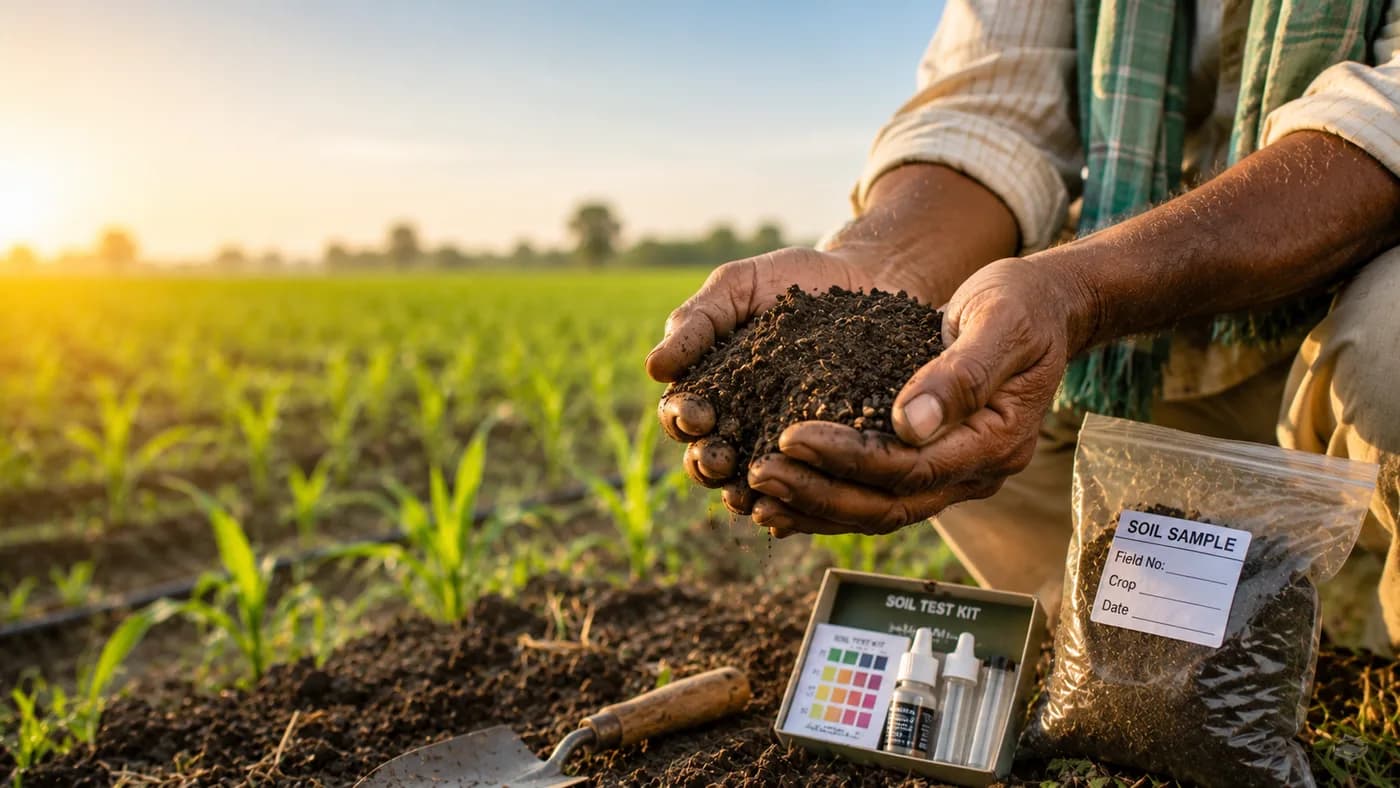
Soil Testing for Farmers: Why It Matters and How to Do It
Guessing fertiliser doses wastes a large part of one of your biggest costs. A soil test tells you exactly what your land has and what it lacks.
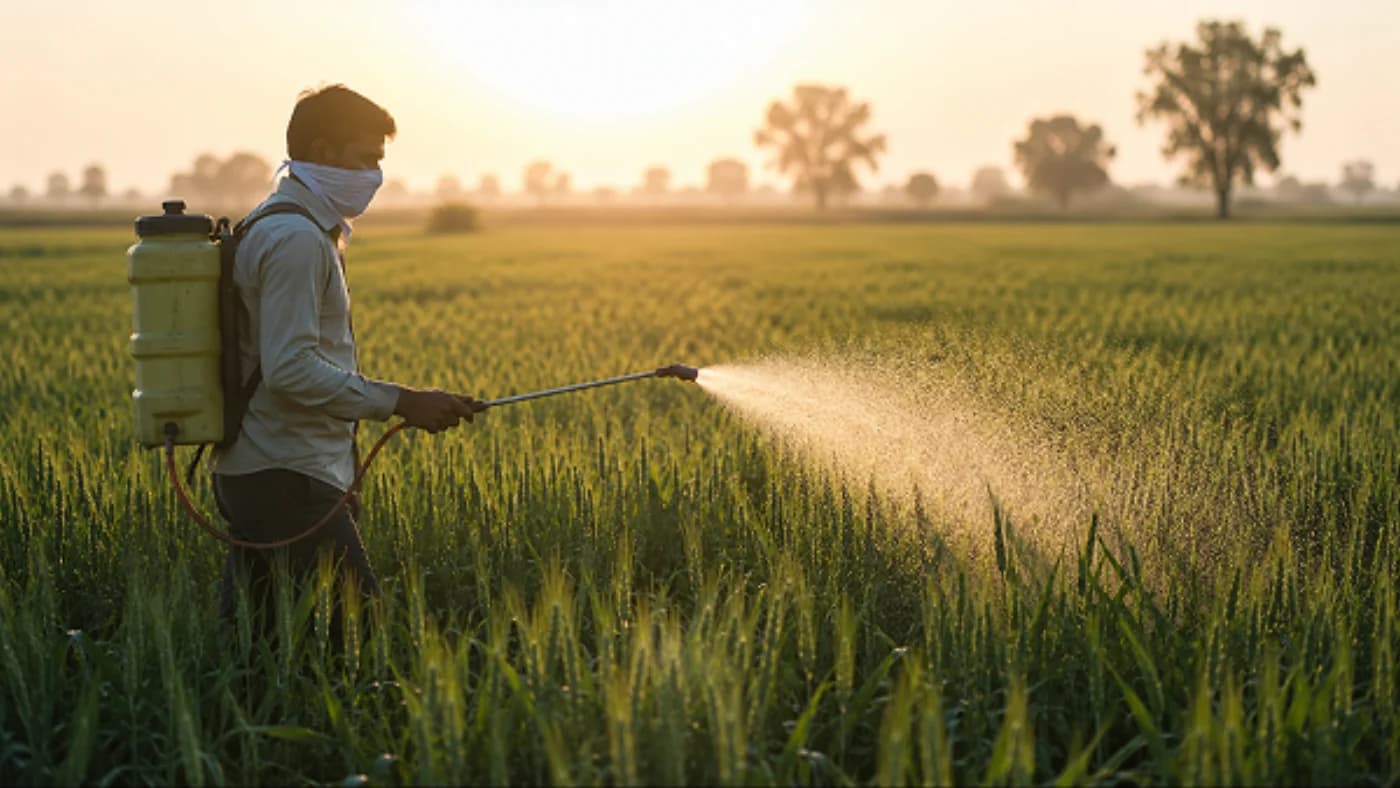
Nano Urea: What It Is, What the Evidence Says, and How to Test It Yourself
Nano urea is promoted hard and criticised hard, and both sides quote studies. Here is what it actually is, why a bottle cannot replace a bag, and how to run a fair test on your own field instead of trusting either camp.
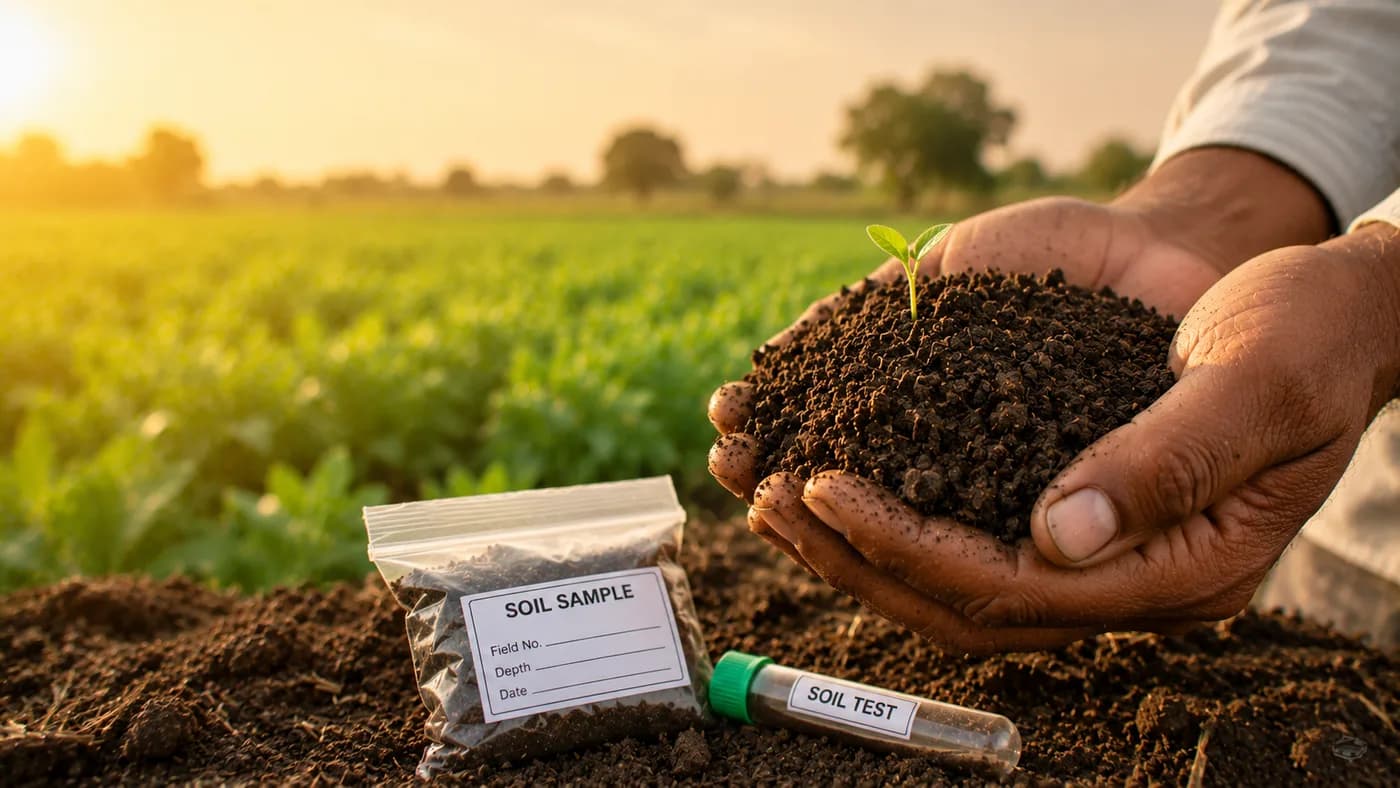
Why Soil Testing Is Important: The Smartest Decision a Farmer Can Make
Soil quietly sets the ceiling on your yield every season. Testing it is one of the cheapest decisions on the farm — and one of the highest-returning.