

How to Attract Dung Beetles to Your Pasture (and Why Your Dewormer Might Be Killing Them)
Most farmers see a manure pat as a chore. The smart ones see a biological engine — dung beetles that bury parasites, aerate the soil, and cut fly populations, for free, if you stop poisoning them with routine deworming.
Quick answer
A pasture full of dung beetles isn't luck — it's the result of deworming only when an animal actually needs it, rotating grazing tightly enough to give beetles a steady, undisturbed supply of manure, and being patient while the population rebuilds. In return you get fewer internal parasites, fewer flies, better water infiltration, and a pasture that keeps improving instead of slowly degrading under a chemical routine.
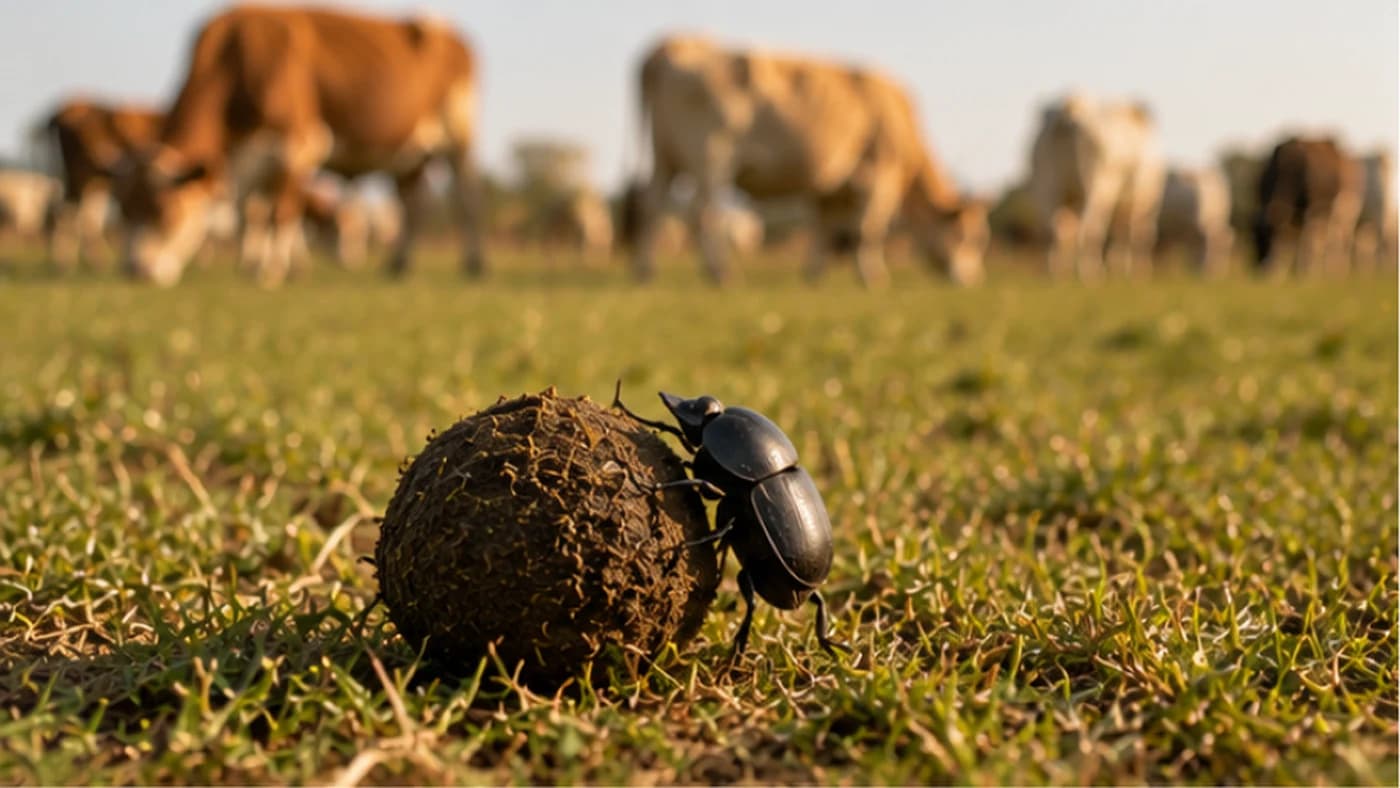
Underneath every cow or buffalo pat, a hidden workforce is waiting to get to work. Dung beetles are often dismissed as just bugs, but on a working pasture they're the frontline against soil compaction, dung-breeding flies, and internal parasites. For decades, the standard advice for livestock has been to deworm on a rigid schedule regardless of need — and that habit, more than anything else, is what wipes out the very insects that would otherwise be doing pest control for you.
It's less about attracting them, more about not killing them
Dung beetles are remarkably mobile — some species can detect and reach fresh manure from several kilometres away within seconds of it landing, using sensitive antennae tuned to the scent. The real barrier isn't attracting them; it's that many common dewormers, especially those in the macrocyclic lactone group like ivermectin, pass through the animal and leave residues in the dung that are lethal to beetle larvae for two to four weeks after treatment. Adult beetles may still land on a treated pat, but their eggs won't survive, and over repeated treatment cycles the local population collapses.
The second lever is your grazing rotation. Dung beetles thrive on a steady, concentrated pulse of manure — high-density, short-duration grazing (a version of what's sometimes called paddock or rotational grazing) concentrates dung in a small area, giving beetles a strong signal, followed by a quiet window of three to four weeks or more to complete their life cycle undisturbed. A pasture with varied vegetation and organic matter also gives them the loose, diggable soil they need — many species tunnel and bury dung up to 60 cm deep.
Three types of beetle, three jobs
Rollers carve a ball of manure and roll it away from the pat to bury it elsewhere as a nursery for their eggs, spreading nutrients across the pasture as they go. Tunnellers dig straight down beneath the pat and haul dung into brood chambers below — the most valuable group for soil health, since this instantly aerates the ground and places nitrogen and carbon directly in the root zone, while burying parasite larvae too deep to ever reach the surface again. Dwellers live inside the pat itself and don't tunnel, but they break the pat down fast, which dries it out and kills fly eggs and larvae that need a moist environment to survive.
What routine deworming actually does to your pasture
Ivermectin residues in manure stay toxic to beetle larvae for two to four weeks after treatment. An adult beetle may survive contact with a treated pat, but the eggs it lays there hatch into larvae that die almost immediately — turning what should support life into a trap, and eventually collapsing the local beetle population. Without beetles to break it down, manure can sit on the pasture for months as a hard, dried crust, and up to 80% of its nitrogen is simply lost to the air instead of feeding the soil. Worse, an intact, moist pat is an ideal incubator for flies and parasites — a single untreated pat can produce thousands of flies, while active beetle populations can cut fly emergence by up to 95% simply by out-competing fly larvae for the same resource.
What a healthy beetle population gives you
By burying or rapidly drying manure, dung beetles break the life cycle of gut parasites, and studies show active beetle populations can cut the number of infective larvae on pasture by 50–90% depending on species and climate. Their tunnelling creates countless tiny channels in the soil that improve water infiltration, letting the ground soak up heavy rain instead of shedding it as runoff — genuinely useful during India's monsoon downpours. The nitrogen and carbon they move underground acts as a natural fertiliser, and beyond parasites, they're also a major check on horn flies and other dung-breeding pests, meaning less stress on your animals and less need for insecticidal sprays or ear tags.
Common mistakes
Stopping all deworming cold-turkey without monitoring your herd is risky — if a heavily infected herd goes untreated while the beetle population is still recovering, you can face a real health crisis. The better approach is targeted treatment: use a Fecal Egg Count test (available through veterinary labs and many Krishi Vigyan Kendras) to identify which animals actually carry a high parasite load, and treat only those, leaving the rest of the herd's manure beetle-safe.
The other common error is poor grazing management — leaving animals in one paddock too long means beetles can't keep pace with the manure load and the soil compacts under constant hoof traffic, while too short a rest period between grazing can disturb beetles mid-nesting. Finding the right rotation length for your stocking rate and climate takes some observation.
Where this approach has limits
Beetle activity depends heavily on temperature and moisture — in cooler months activity slows, and in very dry conditions manure can crust over faster than even beetles can process it. Different livestock attract different beetle species, so a farm running only one type of animal supports a narrower range of beetles than one running mixed cattle, buffalo, sheep or goats. Soil type matters too: heavy clay can be tough for smaller species to tunnel through, while very sandy soil may not hold tunnel structure well, so burial speed will vary by field.
Chemical reliance vs a living pasture engine
Routine chemical deworming gives a short-term parasite kill that breeds resistance over time, carries an ongoing cost for inputs, leaves manure mummified on the surface, and needs periodic high labour for mustering and treating the whole herd. Working with dung beetles instead gives a long-term reduction in parasite pressure by breaking the biological cycle, costs little beyond observation and management, keeps soil actively aerated and fed, and builds a pasture that holds water and organic matter better through both droughts and heavy rain.
Practical steps to take now
Stop blanket deworming on a calendar; treat only animals showing real signs of parasite load — poor coat, weight loss, anaemia — or those flagged by a Fecal Egg Count. If you must deworm, ask your vet about beetle-safer options; moxidectin, for instance, is generally considered less toxic to dung beetles than ivermectin or doramectin. Shorten your grazing periods, aiming for animals in a paddock for one to three days before moving them on for at least three to four weeks. A day or two after animals move off a paddock, kick over a few pats: holes and beetle activity mean your management is working, while an intact, undisturbed pat means there's more work to do. In cooler regions or seasons, leave a patch of taller grass as winter cover for overwintering beetles.
How the transition plays out
On a typical mixed dairy or cattle farm, year one usually starts with Fecal Egg Counts revealing that a small share of the herd carries most of the parasite load — treat only those animals, and by the end of the first season you'll likely spot the first beetle-riddled, Swiss-cheese pats. In year two, a tighter daily or near-daily rotation concentrates manure enough to draw in a real tunnelling population, and water that used to pool after heavy rain starts draining within minutes. By year three, pats are often fully buried within two to three days, pastures stay greener through dry spells, and the money once spent on routine chemicals and fertiliser can go toward better fencing or water infrastructure instead.
Terms explained in this guide
Frequently asked
Why don't I have dung beetles in my pasture?+
Most often it's routine chemical deworming — ivermectin and similar drugs leave residues in manure that are toxic to beetle larvae for two to four weeks, which collapses the local population over time.
Is it safe to stop deworming completely?+
No — stopping cold-turkey without monitoring can let parasite loads build up dangerously. Use a Fecal Egg Count to treat only the animals that actually need it, and choose beetle-safer dewormers like moxidectin when treatment is necessary.
How do dung beetles help pasture soil?+
Tunnelling species aerate the soil, bury nitrogen and carbon directly into the root zone, and improve water infiltration, while all three types together speed up manure breakdown and reduce fly and parasite breeding.
How can I tell if my beetle population is recovering?+
A day or two after livestock move off a paddock, check a few manure pats. Holes and visible beetle activity mean the population is active; a solid, undisturbed pat means there's still work to do.
Does grazing rotation matter for dung beetles?+
Yes — concentrated, short-duration grazing followed by a rest period of three to four weeks or more gives beetles a strong manure signal and enough undisturbed time to complete their life cycle.
Where to go next
- AI farming chatbotAsk any farming question in Gujarati, Hindi or English and get an answer in seconds.
- Kheti app for Indian farmersCrop plans, disease diagnosis, weather and mandi rates in one app.
- Agri Bazar marketplaceBuy and sell animals, crops, equipment and dairy near you — and see what buyers want today.
Want this as daily tasks for your farm?
Khetiyaar turns guides like this into a day-by-day plan — in your language, free to start.

Related guides
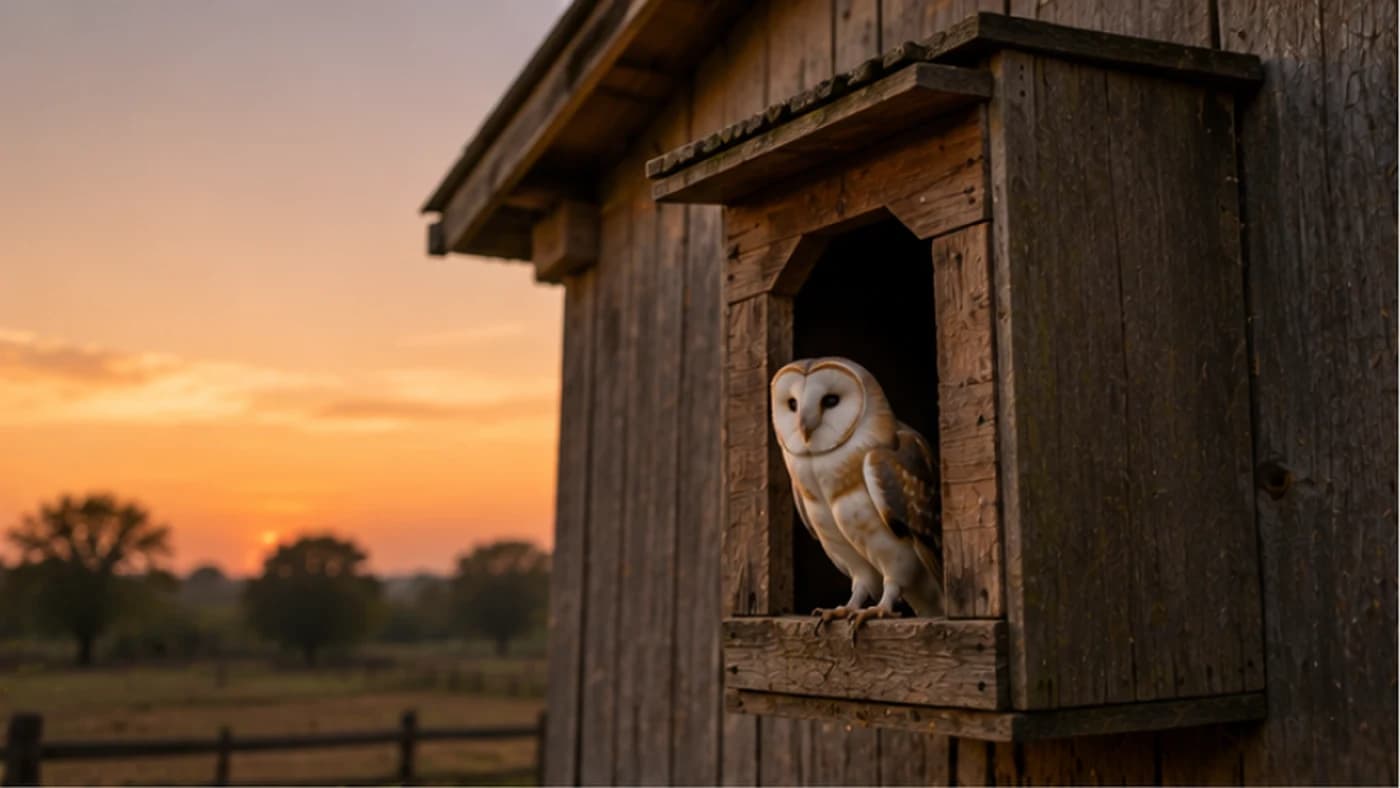
How to Attract Barn Owls to Your Farm for Free Rodent Control
One pair of barn owls can hunt over a thousand rodents in a single season — but only if you give them a properly designed, dark, predator-proof box. Barn owls (Tyto alba) already live across most of India; here's how to bring them onto your farm.
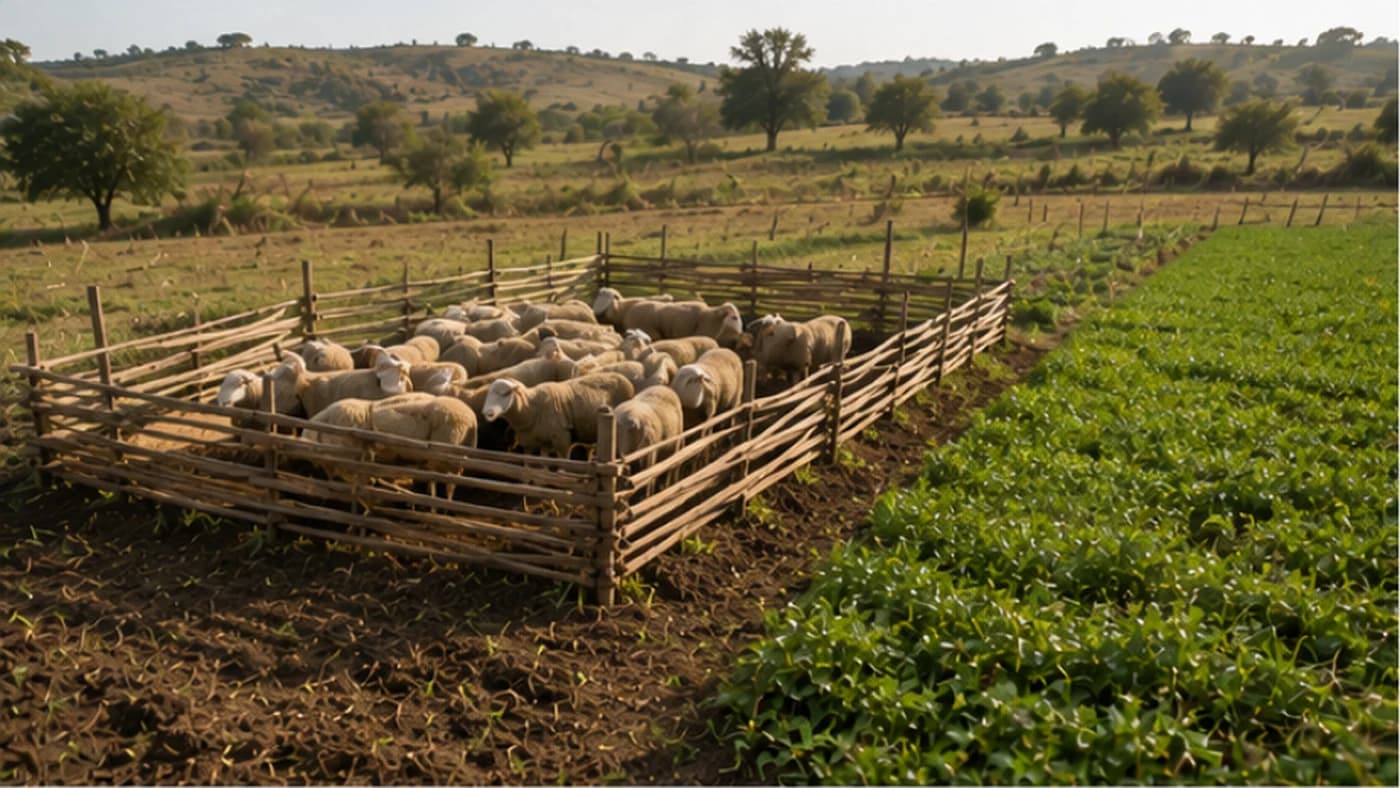
The Medieval Folding Technique: Using Sheep and Goats to Fertilise Your Field Overnight
One night of penned sheep on a patch of land delivers more usable nitrogen than months of hauled, stored manure. Here's how the old European folding system works — and why Indian farmers already know a version of it.
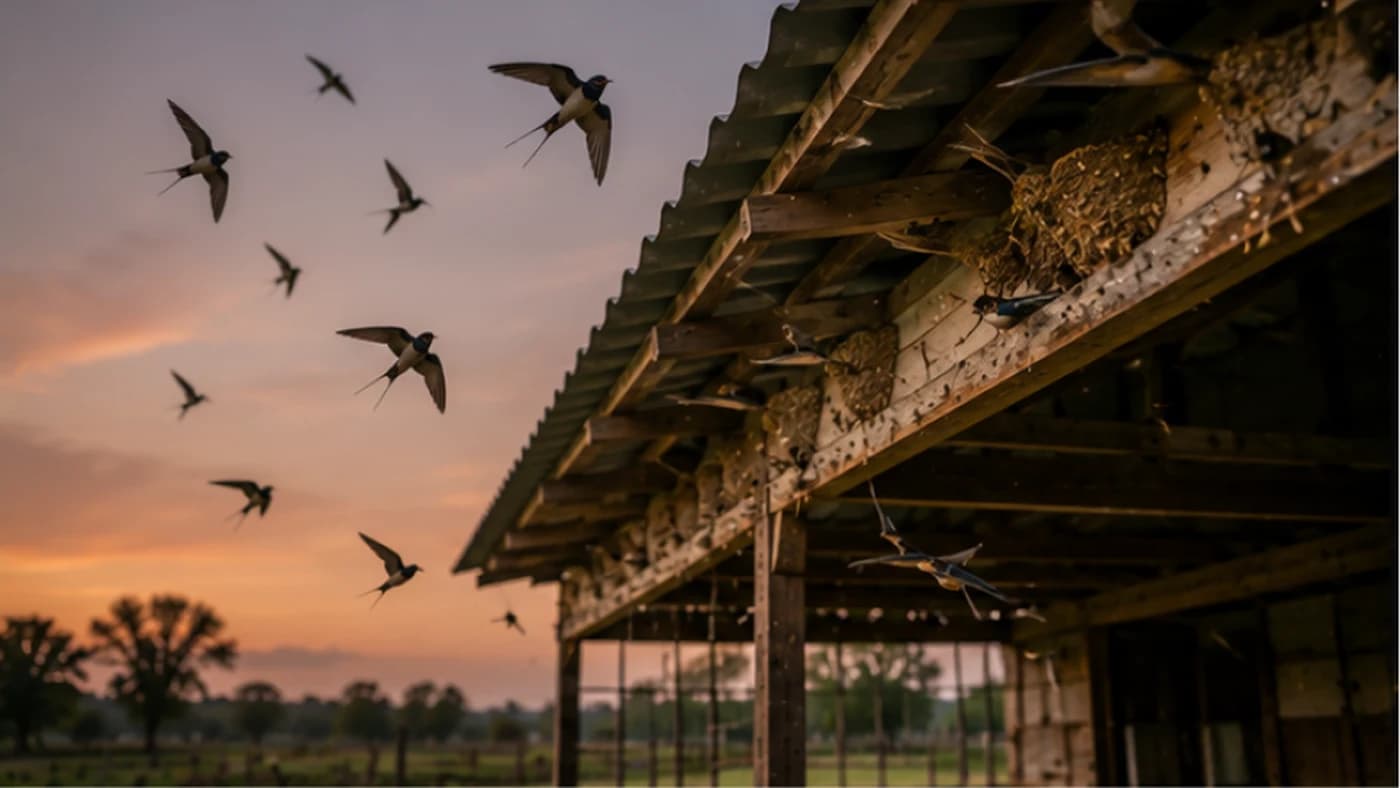
Attract Barn Swallows to Your Farm for Free, Natural Fly Control
A single pair of swallows can eat close to a thousand flies and mosquitoes a day. A few rough wooden ledges under your shed roof can turn your barn into a self-running pest-control unit that never needs refilling.