

Protecting Your Crops from Extreme Weather: Heat, Heavy Rain, Drought and Cold
Heat waves, sudden downpours, dry spells and cold snaps are all hitting harder and less predictably across India. Here are the real, low-cost jugaad techniques farmers already use to protect a standing crop in each of these four situations — not theory, the actual same-day and same-season actions.
Quick answer
Four different threats need four different first moves, and mixing them up costs you: mulch and shift irrigation timing for heat; drain the field fast and check for nitrogen loss after waterlogging; mulch, weed and prioritise flowering-stage irrigation in a drought; and irrigate (not skip irrigation) plus cover young plants before a frost night. The single move that pays off against three of the four — heat, drought and cold-wind chill — is a shelterbelt or windbreak established well before the season turns. And the cheapest protection of all against every threat here is simply acting on the district agromet advisory two or three days before the weather arrives, instead of reacting on the day itself.
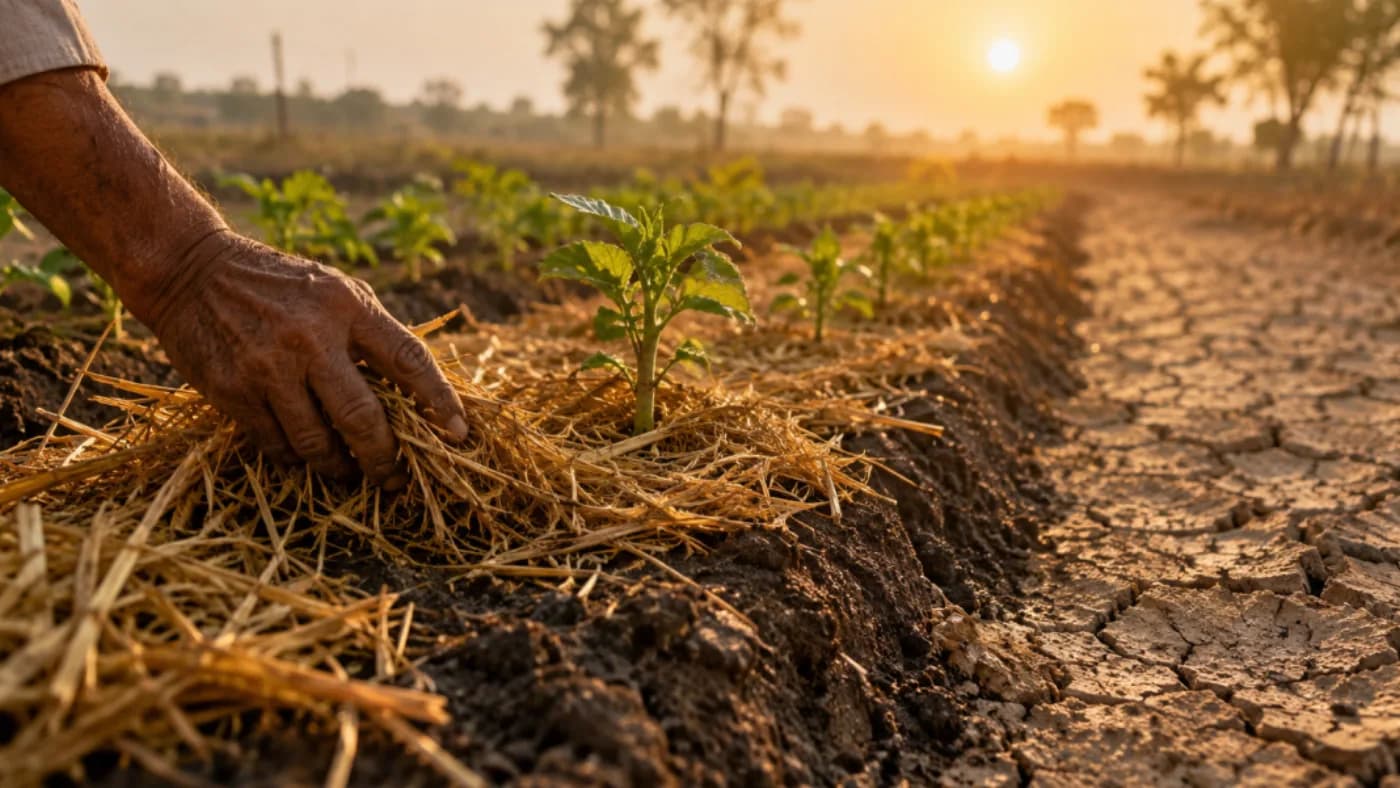
Every season now brings a version of the same complaint: too much heat when the crop needs cool nights, too much rain in three days when the field needed it spread over three weeks, or no rain at all when the crop is flowering, and then a cold snap nobody saw coming. This pattern is not unique to any one district or even one country — it is showing up across most of India's farming belts and in many other countries too. What is unique to each farm is how fast you can react, and reacting fast is mostly a matter of knowing which cheap, low-tech move actually works for which threat. This guide covers four situations separately — heat, excess rain, drought, and cold — because the right jugaad for one can be exactly the wrong move for another (irrigating before a frost night is a good example, and it surprises most people).
Start with the warning, not the calendar
The single cheapest protection against every threat in this guide costs nothing and takes two minutes a day: knowing the weather is coming before it arrives. India's Meteorological Department issues district-level agromet advisories twice a week through its network of Agromet Field Units, covering exactly this — expected heat spikes, heavy-rainfall warnings, dry spells and cold-wave alerts, along with crop-specific advice for your district. The Kisan Call Centre (1800-180-1551, toll-free) will read out the current advisory for your district over the phone in your own language, and most state agriculture department and KVK websites and WhatsApp groups relay the same warnings. None of the jugaad below works as well on the day of the emergency as it does when you had two or three days' notice to act on.
Everything that follows assumes you got that notice. Treat the advisory as the trigger, not general knowledge — a normal August is not the same as an August with a heavy-rainfall warning for your district in the next 48 hours, and the correct response is different in each case.
Heat wave: keep the soil covered and the crop cool
Heat damages a crop two ways at once — it pulls moisture out of the leaves faster than the roots can replace it, and it can outright kill flowers and pollen on the hottest days, which is why heat during flowering (not just heat in general) is usually the real yield-killer. Both of these have cheap countermeasures.
Mulching is the single most useful thing you can do before a heat spike arrives. A layer of straw, crop residue, dry leaves or even weeded-out grass laid over the soil around the plant base cuts soil temperature and slows evaporation, so the same irrigation water lasts longer and the root zone stays cooler. This is not a heat-wave-only technique — it pays off in every water-stress situation in this guide.
For orchards, a simple lime wash (a thin coat of lime, sometimes mixed with cow dung slurry, painted on the lower trunk) reflects heat and protects the bark from sun-scald on the hottest days — a jugaad orchard owners across India have used for generations, cheap enough to redo every season.
Irrigation timing matters as much as irrigation quantity in a heat wave: water early morning or after sunset, never at midday, because midday watering wets leaves that then scorch in direct sun and wastes more water to evaporation before it reaches the root zone. A light, more frequent irrigation schedule during a heat spike works better than the usual heavier, less frequent one.
A windbreak of trees or even a temporary screen on the side the hot, dry wind (loo) comes from reduces how fast a crop loses moisture on the worst days — this is the same principle covered in more depth in our shelterbelt planting guide, and it is worth having in place before the hot season, not after.
- If a heat-wave warning names your district: mulch what you can today, shift all irrigation to early morning or evening starting tonight, and hold off on any nitrogen top-dressing until the spike passes — pushing new leafy growth into a heat spike increases water demand at the worst possible time.
- Watch flowering-stage crops most closely — a few days of extreme heat during flowering can cut yield far more than the same heat at any other growth stage.
Heavy rain and waterlogging: get the water off the field fast
Most crops don't die from the rain itself — they die from the standing water afterward, because waterlogged roots are starved of oxygen. The jugaad here is almost entirely about speed: the first 24-48 hours after the water stops falling decide how much damage is permanent.
As soon as it's safe to walk the field, cut or clear a drainage channel toward the lowest point or nearest natural drain — even a rough spade-dug channel gets standing water moving and shortens the number of hours roots sit submerged. Don't wait for the field to drain on its own if you can help it along.
Once the field has drained and the surface is walkable (not sticky-wet), a light hoeing breaks the crust that heavy rain forms on the surface and lets air back into the root zone — this single step measurably speeds recovery in most crops.
Expect yellowing in the days after waterlogging even in a crop that survives — standing water leaches nitrogen out of the root zone fast, and that yellowing is usually a nitrogen deficiency, not disease. Don't guess the correction; get a quick soil check or talk to your local agriculture office before topdressing, since how much nitrogen the field actually lost depends on how long it stayed flooded and your soil type.
For fields that flood most years, ridge-and-furrow or raised-bed planting for the next season keeps the root zone above the water line even if the furrows fill up — this is a next-season decision, not a same-day fix, but it's the single biggest change you can make if the same field floods repeatedly.
In some rice-growing states, flood-tolerant paddy varieties bred to survive full submergence for over a week are available through the state seed corporation or agriculture department — ask locally whether one is recommended and available for your area and season, since variety availability and suitability genuinely differ by state and are not something to guess at from a general article.
- Same-day: dig or clear a drainage path the moment it's safe.
- Within 2-3 days of the field draining: light hoeing to re-aerate the root zone.
- Within a week: check for nitrogen-deficiency yellowing and get local advice before topdressing — don't apply on a guess.
- Before next season, if this field floods often: plan raised beds or ridge-furrow layout, and ask about flood-tolerant varieties suited to your state.
Drought and low rainfall: hold on to every drop you get
Drought jugaad is mostly about reducing water loss, not finding more water — because in a genuine dry spell, there usually isn't more water to find. Every technique below buys time on the water you already have.
Mulching again does the heaviest lifting here: a straw or residue mulch cuts evaporation from bare soil dramatically, which means the same irrigation or the same rainfall lasts noticeably longer. If you only do one thing from this whole guide before a forecast dry spell, this is it.
Weeding matters more in a drought than in a normal season, not less — every weed in the field is pulling soil moisture that your crop needs, and a field left unweeded during a dry spell loses water to weeds faster than it loses water to the crop itself.
If you must irrigate on limited water, prioritise the crop's most water-sensitive growth stages — usually flowering and early grain/fruit fill — over stages like early vegetative growth that tolerate some water stress without much yield loss. A full irrigation at the wrong stage can matter less than a partial irrigation at the right one.
Contour bunds or small conservation furrows across a sloped field slow rainfall runoff and let more of it soak in rather than run off, which effectively banks a bit more of every rain event you do get.
For a kitchen garden or small vegetable patch specifically (not a full field crop, where this doesn't scale well), an old, cheap jugaad still used across dry parts of India is pitcher or olla irrigation — burying an unglazed clay pot filled with water next to the root zone, so water seeps out slowly through the porous clay directly where roots can use it, losing very little to evaporation. It is genuinely effective at small scale and genuinely impractical for a large cereal field, so use it where it fits.
If you're investing in a longer-term drought answer rather than same-season jugaad, drip irrigation is the single biggest structural improvement available, and Indian farmers can access a genuine subsidy for it under PMKSY's micro-irrigation component — see our dedicated guides on drip irrigation's water savings and on the PMKSY subsidy application process for the details, since subsidy percentages and application steps vary by state and change over time.
- If a dry-spell warning applies to you: mulch immediately, weed now rather than later, and plan any limited irrigation around flowering and grain/fruit-fill stages first.
- For kitchen gardens: consider olla/pitcher irrigation for the highest water-efficiency per plant.
- For next season: contour bunding on sloped land, and look into the PMKSY drip-irrigation subsidy if you haven't already.
Cold wave and frost: the trick most farmers get backwards
Here is the one piece of advice in this whole guide that goes against instinct: irrigating a field the evening before an expected frost night genuinely helps, it does not hurt. Moist soil holds more heat during the day and releases it more steadily overnight than dry soil does, so an irrigated field is measurably warmer near the ground on a frost night than a dry one. Skipping irrigation because it's cold, which feels like the safer choice, is usually the wrong one when frost is specifically forecast.
For nurseries, seedbeds and young transplants, physically covering the plants overnight with dry straw, old cloth, gunny sacks or a plastic sheet — removed again in the morning once the sun is up — is simple, cheap, and effective at trapping enough heat to prevent frost damage on tender growth. This does not scale to a full field crop, but it is exactly right for the vulnerable early stage of a crop's life.
Smoke generation — burning damp straw or crop residue in small heaps around the edges of a field or orchard in the coldest pre-dawn hours — creates a layer that reduces how much heat the ground radiates away into a clear night sky, which is when frost damage is worst. Be honest with yourself about scale here: this genuinely helps a small plot, nursery or orchard corner where you can maintain several fires through the night; it is not a realistic answer for a large open field, and clear-eyed farmers use it where it actually fits rather than everywhere.
A windbreak or shelterbelt on the side cold wind arrives from reduces wind-chill damage in the same way it reduces heat-wave desiccation — it is one of the few structures that pays off against more than one threat in this guide.
State agricultural universities and KVKs commonly recommend a foliar spray (often a dilute sulfur or thiourea solution) before a forecast cold wave to help crops like mustard, potato and wheat tolerate frost better. Get the exact product and concentration from your local KVK or agriculture department rather than guessing — the right formulation and strength depends on the crop and growth stage, and this is exactly the kind of detail that changes by season and location and should not be taken as a fixed number from any article, including this one.
Frost-sensitive crops — banana, papaya, and young vegetable transplants among them — deserve the most attention on a forecast cold night; hardier rabi crops like wheat tolerate a cold snap far better except right around flowering, which is their own vulnerable window.
- The evening before a forecast frost: irrigate if you can — do not skip it out of instinct.
- For nurseries and young transplants: cover overnight, uncover by mid-morning.
- For a small plot or orchard corner only: smoke generation through the coldest hours.
- Always in place: a windbreak on the side the cold wind comes from.
- Before the cold season: ask your KVK about a foliar spray for frost-hardening your specific crop.
Build resilience before the season turns against you
Everything above is a reaction to a specific warning. The farms that come through extreme weather with the least damage are usually the ones that did a few cheap things months earlier: they kept soil organic matter up through compost and crop residue, which improves both water-holding in a drought and drainage in a flood at the same time; they had a shelterbelt or windbreak already established rather than trying to put one up in three days' notice; and they didn't plant a single crop and variety across the whole holding, so a heat spike or cold snap that hits one crop hard doesn't take the whole season's income with it. None of this replaces reacting fast to this week's warning — it just means next time there's less damage to react to.
Frequently asked
Should I water my field before an expected frost or cold wave, or hold off?+
Water it, if you can, the evening before. Moist soil holds and releases heat more steadily overnight than dry soil, so an irrigated field is measurably warmer near the ground on a frost night. Skipping irrigation because it feels safer in the cold is the common mistake — it usually makes frost damage worse, not better.
What is the single cheapest thing I can do before a heat wave or dry spell hits?+
Mulch the soil around your plants with straw, crop residue or dry leaves. It cuts evaporation and keeps the root zone cooler in a heat wave, and it makes the same irrigation or rainfall last longer in a drought — it's the one technique that pays off in both situations.
My field flooded and the crop survived, but the leaves are turning yellow — what does that mean?+
Standing water leaches nitrogen out of the root zone quickly, and that yellowing after waterlogging is usually nitrogen deficiency rather than disease. Don't guess the correction — get a quick soil check or talk to your local agriculture office, since how much nitrogen was actually lost depends on how long the field stayed flooded and your soil type.
Does pitcher or olla irrigation actually work, or is it just an old-fashioned idea?+
It genuinely works, but only at small scale — a kitchen garden or vegetable patch, not a full field crop. Burying an unglazed clay pot full of water next to the root zone lets water seep out slowly and directly where roots can use it, with very little lost to evaporation. It doesn't scale to large-acreage cereal crops, so use it where it actually fits.
How do I find out about heat waves, heavy rain or cold waves before they hit my district?+
India's Meteorological Department issues district-level agromet advisories twice a week through its Agromet Field Units, covering exactly these warnings along with crop-specific advice. You can also call the Kisan Call Centre toll-free on 1800-180-1551 to have your district's current advisory read out in your own language, or check with your local KVK.
Where to go next
Want this as daily tasks for your farm?
Khetiyaar turns guides like this into a day-by-day plan — in your language, free to start.

Related guides
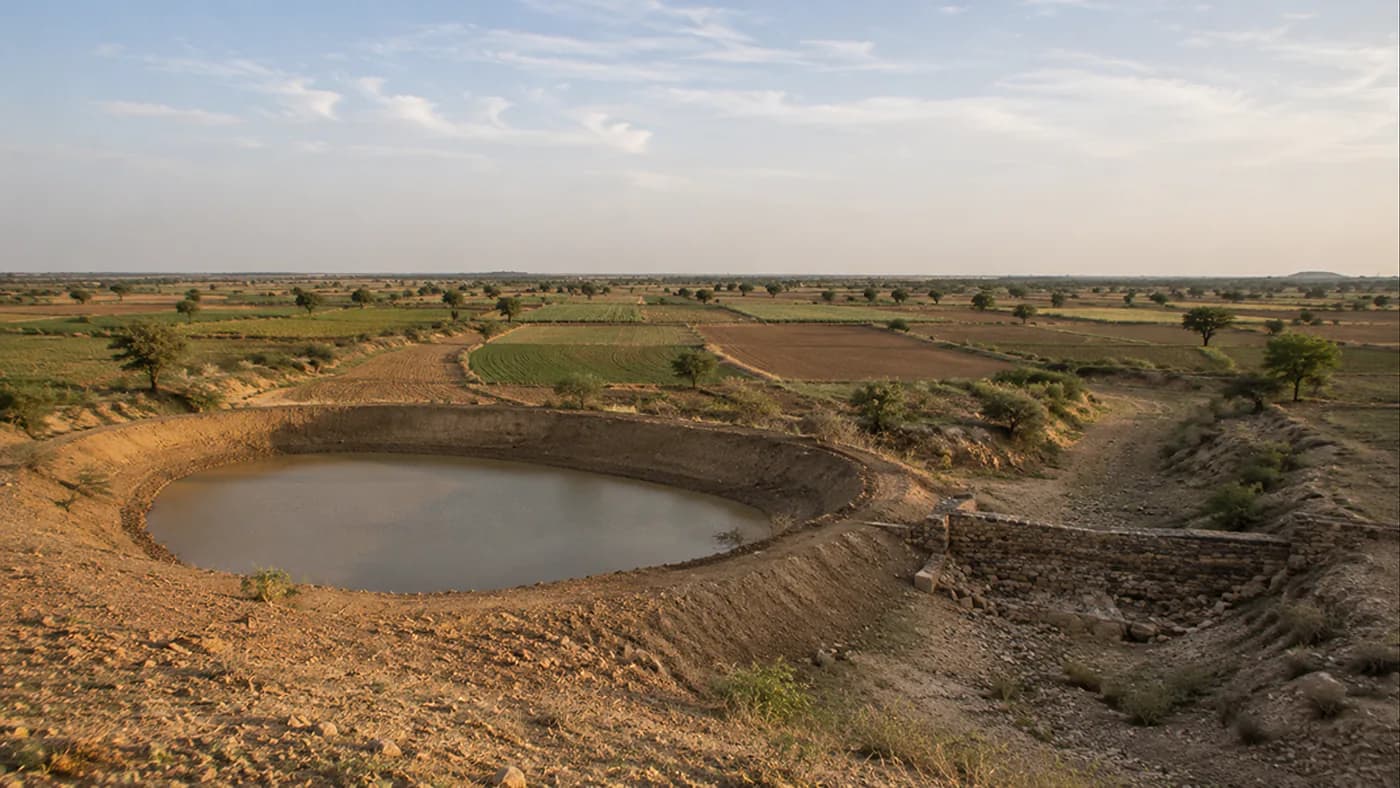
The Same Monsoon, Different Problems: Rainfall Risk by Region
Advice written for Punjab is close to useless in Marathwada. The monsoon is one system but it fails differently in each part of India, and the coping strategy has to match the failure.
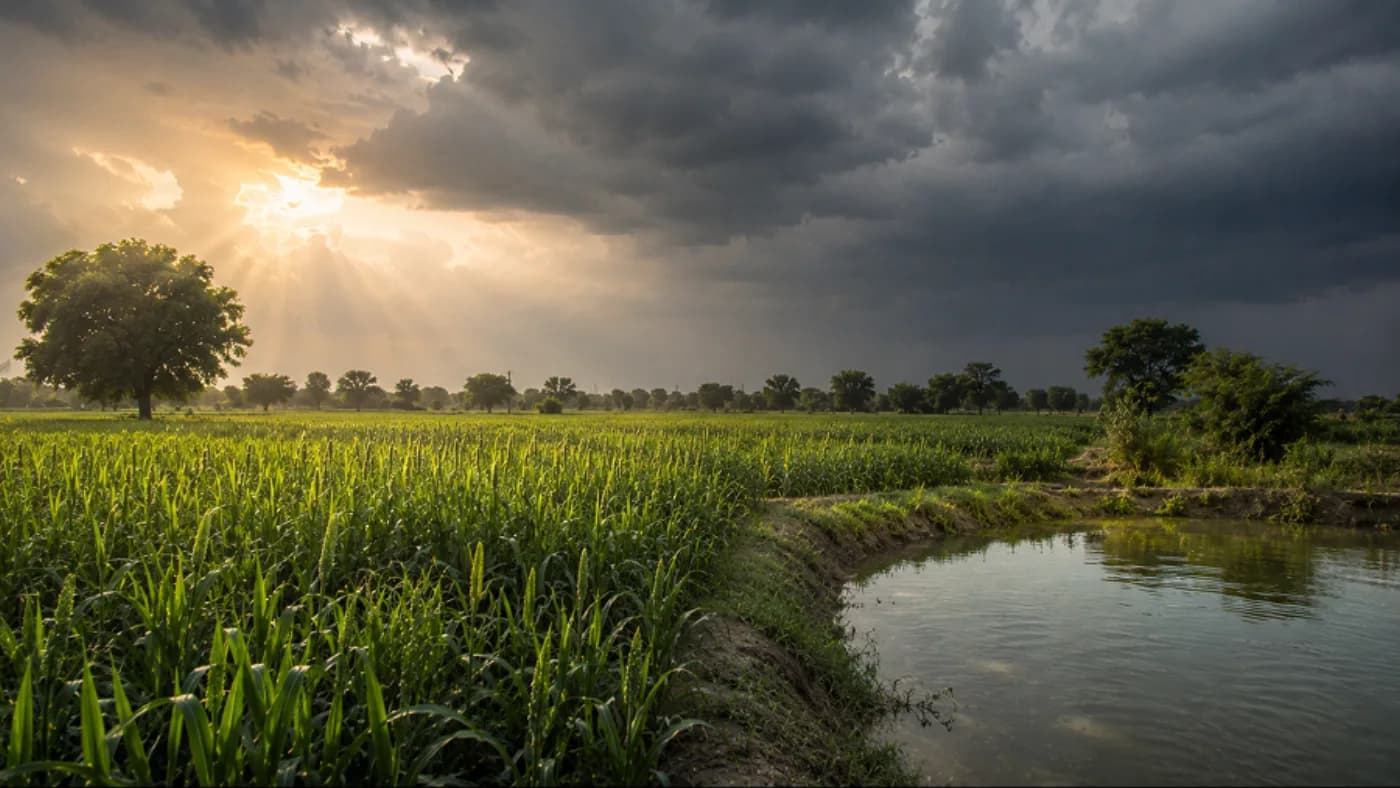
Climate-Resilient Farming in India: What to Change Before the 2027 Seasons
The monsoon has not become weaker; it has become less predictable. Fewer rainy days, heavier bursts, longer dry spells inside the season and heat spikes at flowering. Resilience is no longer a research topic — it is a set of concrete decisions for the next sowing.
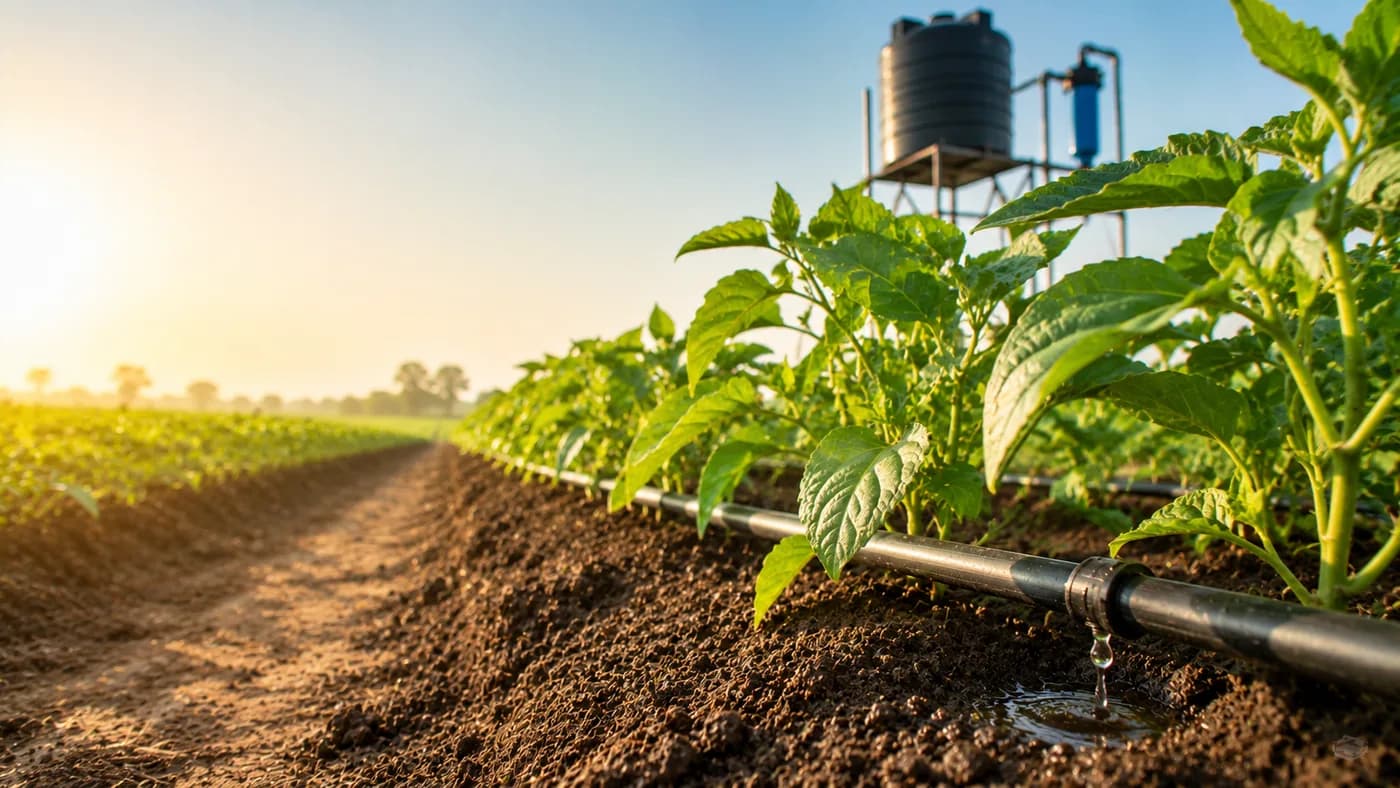
Drip Irrigation: Save Water and Increase Yield
Drip delivers water directly to the roots, drop by drop — saving a large share of your water while lifting yield and cutting weeds.