

PM-KISAN Explained: Eligibility, Installments and How to Check Your Status
PM-KISAN puts direct income support into the bank accounts of landholding farmer families across India, three installments a year. Here's exactly who qualifies, how the money reaches you, and what to check if a payment doesn't arrive.
Quick answer
PM-KISAN pays an income-support instalment to eligible landholding farmer families three times a year. You register once with accurate Aadhaar, bank and land details, keep e-KYC current, and payments arrive automatically. Most non-payment cases trace back to a failed e-KYC, a name mismatch between Aadhaar and the bank account, or land records not updated.
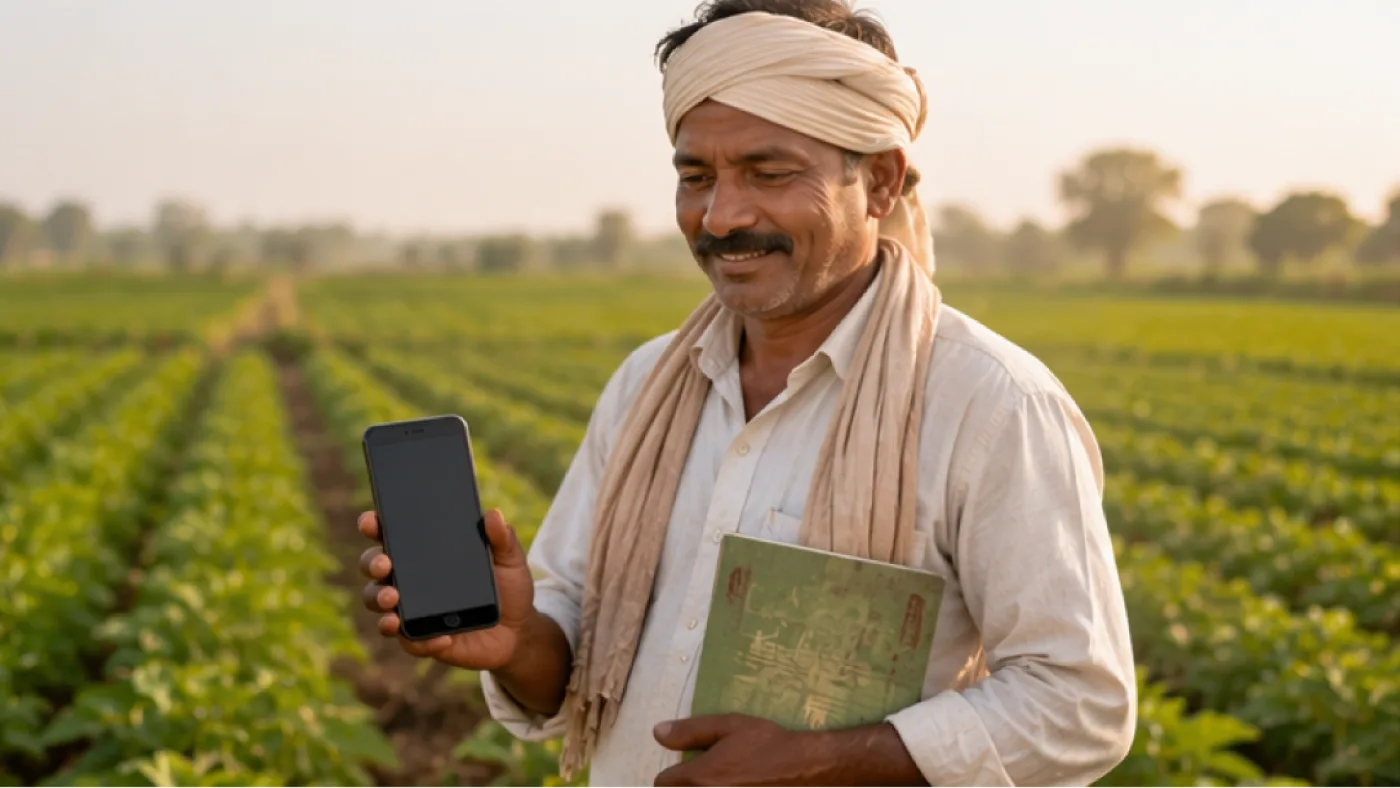
PM-KISAN — the Pradhan Mantri Kisan Samman Nidhi — is one of the largest direct income-support programmes for farmers anywhere in the world, and one of the simplest to understand once you know how it actually works. Money goes straight from the government to a farmer family's bank account, split across three installments a year, with no crop, no bank loan and no middleman involved. The scheme has helped a huge number of families, but every season a share of farmers find their installment delayed or missing — almost always for a handful of fixable reasons. This guide walks through eligibility, how the payments work, how to apply or check status, and exactly what to check when money doesn't show up.
What PM-KISAN actually gives you
PM-KISAN provides income support paid directly into the bank account of an eligible farmer family, split into three equal installments across the year rather than one lump sum. The idea is simple: give farmers a small, predictable, no-strings-attached cash cushion at the start of each cropping season to help with seed, input costs, or whatever the family needs most at that moment.
The exact amount per installment and the payment calendar are set by the central government and have changed since the scheme launched — always check the current amount and the current installment schedule on the official pmkisan.gov.in portal rather than relying on an old figure, since both can be revised.
Who is eligible
The scheme is built around landholding farmer families — the unit of eligibility is the family (husband, wife and minor children), not an individual, and it is tied to cultivable land records in the family's name.
A defined set of categories is excluded from the scheme regardless of landholding, and this list has been refined over time. Broadly, it has included institutional landholders, families where a member holds or has held a constitutional post, serving or retired government employees above a certain level, current or former holders of specified public offices, income-tax payers in the relevant assessment year, and registered professionals such as doctors, engineers, chartered accountants and architects practising professionally. Because this exclusion list is precisely defined in government notifications and can be updated, treat any list you read (including this one) as a starting point — verify your own eligibility against the current official criteria on the PM-KISAN portal rather than assuming from a general description.
How to apply or register
New farmers can register through the official PM-KISAN portal directly, or by visiting a Common Service Centre (CSC), where an operator can complete the registration on the farmer's behalf using land records and Aadhaar details. State agriculture department offices and local revenue officials (patwari/talati) can also often assist, since land record verification is usually done at the state level before a registration is confirmed.
Registration requires accurate land records in the applicant's name, a valid Aadhaar number, and a bank account — ideally one already linked to Aadhaar, since payments are made through Direct Benefit Transfer (DBT). Double-check that your name is spelled identically across your Aadhaar, bank account and land records before submitting; small mismatches are one of the most common reasons an otherwise-eligible farmer's application gets stuck.
How installments are paid, and how to check your status
Once registered and verified, installments are credited directly to the farmer's Aadhaar-linked bank account via Direct Benefit Transfer — there is no cheque, no cash disbursal at an office, and no need for a bank visit if everything is in order.
You can check your beneficiary status, installment history and any pending action anytime on the official PM-KISAN portal using your registration number, Aadhaar number, or mobile number, and the same portal shows whether your e-KYC is complete, whether your bank account is correctly seeded with Aadhaar, and whether your land seeding/verification is done. CSCs can perform the same status check for farmers who don't have easy internet access.
Why a payment gets delayed or stuck
The overwhelming majority of missed or delayed installments trace back to one of a small number of data issues rather than genuine ineligibility. Aadhaar-bank seeding mismatch is the most common — if the bank account isn't correctly linked to Aadhaar, or the name on the bank account doesn't match Aadhaar exactly, the transfer fails silently.
Land record mismatch is the second major cause — if the land records used at registration don't match the current official land records (for example after inheritance, sale, or a records update at the local revenue office), verification can fail and hold the payment. Incomplete e-KYC (a mandatory identity re-verification step, usually done via OTP on the portal, biometric authentication at a CSC, or the face-authentication feature in the PM-KISAN mobile app) is another frequent cause — an installment can be withheld until e-KYC is completed, even for an otherwise fully eligible farmer.
If a payment is missing, the fastest path is usually: log in to the PM-KISAN portal (or visit a CSC) and check the specific status flag against your name — it will typically tell you exactly which of these three things (Aadhaar-bank seeding, land seeding, e-KYC) is pending, rather than leaving you guessing.
What to do if you believe you were wrongly excluded
If you believe you meet the eligibility criteria but your application was rejected or your name doesn't appear in the beneficiary list, the portal provides a grievance/status-check mechanism, and your local agriculture department office or the CSC that helped with registration can usually tell you the specific reason for rejection so you know exactly what to correct and resubmit, rather than reapplying blind.
Terms explained in this guide
Frequently asked
How much does PM-KISAN pay and how often?+
Payments are made in three installments a year directly to the farmer family's bank account. The exact amount per installment is fixed by the government and can change, so check the current figure and payment calendar on the official pmkisan.gov.in portal rather than an old source.
Who is not eligible for PM-KISAN?+
A defined set of exclusions applies regardless of landholding — broadly including institutional landholders, certain government employees and pensioners above specified levels, income-tax payers, and registered professionals like doctors and engineers. The exact exclusion list is set in official notifications and can be updated, so verify your own case against the current criteria on the portal.
Why hasn't my installment arrived?+
The most common reasons are an Aadhaar-bank seeding mismatch, a land record mismatch, or incomplete e-KYC. Check your status on the PM-KISAN portal or at a Common Service Centre — it will usually show exactly which of these is pending.
How do I register for PM-KISAN?+
Register on the official PM-KISAN portal yourself, or visit a Common Service Centre for help. You'll need accurate land records in your name, a valid Aadhaar number, and a bank account, ideally already Aadhaar-linked.
What is e-KYC and why is it mandatory?+
e-KYC is a mandatory identity re-verification step, usually completed via OTP on the portal, biometric authentication at a CSC, or face authentication in the PM-KISAN app. An installment can be withheld until it's completed, even for an otherwise eligible farmer.
Where to go next
- Farming cost & profit calculatorWork out cost per acre, break-even yield and expected profit before you sow.
- Today's mandi bhavOfficial AGMARKNET rates for your crop, nearby mandis compared, and the net price after travel.
- Agri Bazar marketplaceBuy and sell animals, crops, equipment and dairy near you — and see what buyers want today.
Want this as daily tasks for your farm?
Khetiyaar turns guides like this into a day-by-day plan — in your language, free to start.

Related guides
PM-KISAN in 2026: Instalment Dates, e-KYC, Beneficiary Status and Why Payments Get Stuck
PM-KISAN has been extended to 2030-31 with a ₹3.15 lakh crore outlay. But every cycle, lakhs of farmers find the money has not arrived. Almost always it is one of four fixable problems. Here is how to check your status and fix each one.
PMFBY Crop Insurance: What It Covers and How to File a Claim
A hailstorm, a failed monsoon, or a pest outbreak can wipe out a season's income overnight. PMFBY exists to cushion exactly that risk — here's what it actually covers, how enrollment works, and the exact steps to file a claim after damage.
Kisan Credit Card (KCC): How to Apply and How the Interest Subsidy Works
A Kisan Credit Card gives you a ready line of credit for the season instead of scrambling for cash at sowing time. Here's who qualifies, what documents you actually need, and how the interest subsidy for on-time repayment works.