

Tree Fodder for Livestock: The Free Mineral Feed Growing on Your Farm
Neem, mulberry, subabul and banyan leaves aren't just shade trees — they're a protein- and mineral-rich feed that costs nothing but a pair of loppers. Here's how to harvest, dry and use tree fodder to feed goats and cattle through lean months.
Quick answer
The trees already growing on or near most Indian farms — mulberry, subabul, neem, banyan, moringa — are a free, mineral-rich feed source that grass alone cannot match. Identify what you already have, harvest correctly at leaf maturity, dry with good airflow, and feed it alongside (not instead of) grass hay. Done right, this old practice can noticeably cut your feed costs and steady your herd's health through the leanest months.
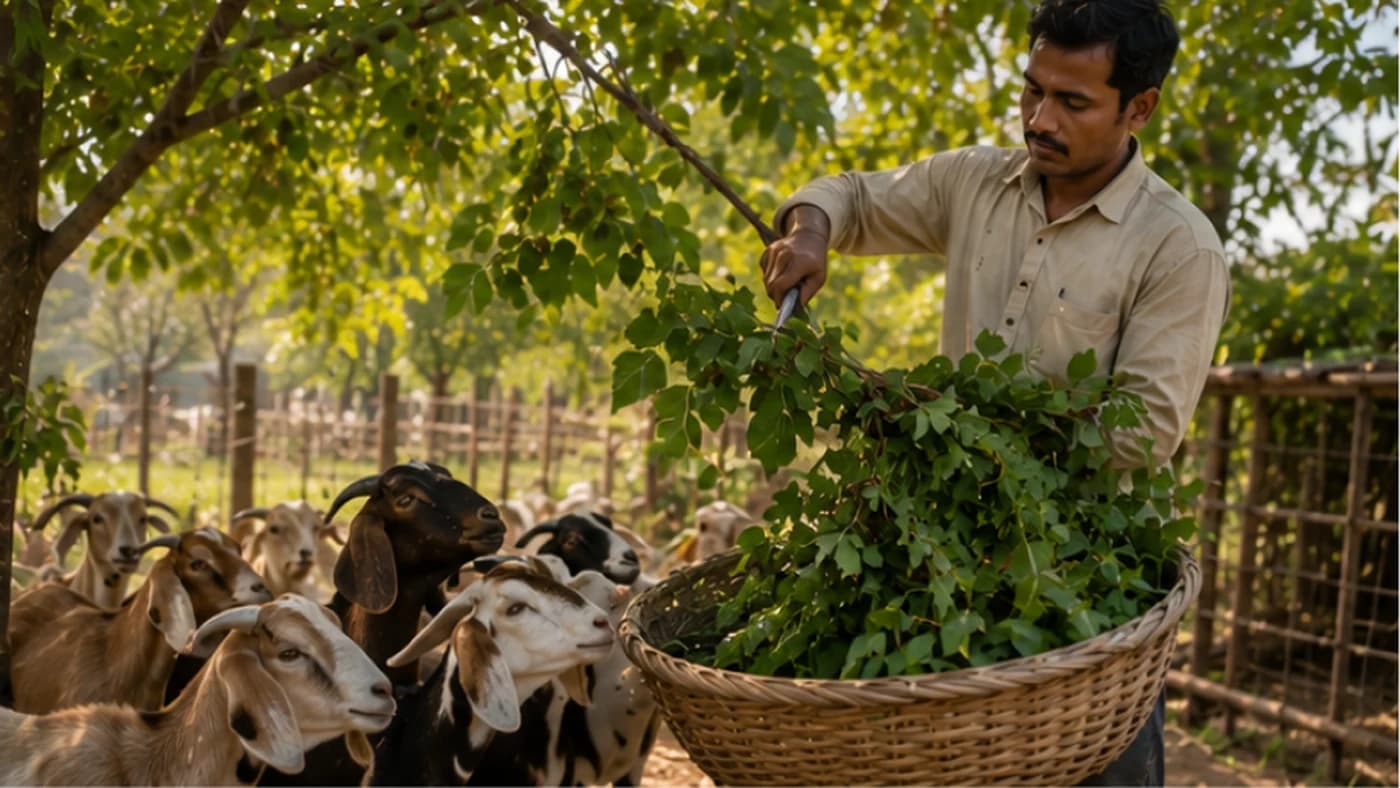
Long before commercial cattle feed and mineral mixtures, Indian farmers already knew the answer was standing in their own fields: trees. Grass roots reach only a few centimetres into the soil, but a mulberry, neem or banyan tree sends roots deep into the subsoil, pulling up minerals that grass can never reach. Tree leaves, twigs and bark — what farmers call tree fodder — carry more protein and minerals per kilo than most grass hay, and they stay green through the dry months when pasture has already turned brown. This is not a new idea for India — mixing tree leaves into cattle and goat feed has always been part of good animal husbandry here — but it deserves a fresh, deliberate look, because done right it can meaningfully cut your feed bill and improve your animals' health.
What makes tree fodder nutritionally different
Grass is high in fibre and simple sugars, but tree leaves are usually denser in protein and trace minerals, because a tree's deep root system pulls up zinc, selenium, copper, cobalt, manganese and iron that grass rooted only in the topsoil simply cannot access. Leaves from good fodder trees like mulberry, subabul (Leucaena), neem, banyan, pipal and moringa (drumstick) commonly test at 15-25% crude protein on a dry-matter basis — rivalling or beating a good-quality alfalfa or lucerne hay. Beyond raw protein, tree leaves carry tannins and other compounds: in modest amounts, these tannins help disrupt the life cycle of internal parasites in goats and sheep, and help the rumen use protein more efficiently, which shows up as better weight gain and steadier milk yield.
Trees to look for on an Indian farm
You don't need to plant anything exotic — most Indian farms already have good fodder trees nearby. Mulberry is an easy, high-protein option, especially useful in the sericulture belts of Karnataka, Tamil Nadu, Andhra Pradesh and West Bengal where it's already grown at scale. Subabul (Leucaena leucocephala) is widely planted as a fast-growing fodder tree across India and is a genuine protein powerhouse, though it should be fed in moderation and mixed with other feed, since very high, exclusive intake over a long period has been linked to health issues in some animals. Neem, banyan and pipal leaves are traditional additions in many regions and offer their own mineral and medicinal value. Moringa (drumstick) leaves are exceptionally nutrient-dense and already a known feed and food crop in many parts of India. Working with a mix of two or three of these gives your animals a broader nutrient spread than relying on just one.
When and how to harvest
Harvest leaves when they are fully grown but before a tree begins shedding for its dormant period — for most of India, this generally means cutting well before winter dormancy sets in, since cutting at peak leaf maturity locks in the most nutrients; leaves cut too early, while still very young, carry more water and less structure. Cut branches roughly the thickness of your thumb or thinner — small branches are the most valuable, since animals can eat the bark and soft wood along with the leaves, not just the leaf blade. Gather cut branches into bundles about a metre to a metre-and-a-half long, tied about a third of the way down from the cut end with twine or rope.
Drying and storing tree hay correctly
Airflow is the single biggest factor in good tree hay. Unlike grass hay, which is dried flat on the ground, tree fodder bundles should be hung vertically from rafters or stacked loosely on a raised platform, in a shaded, well-ventilated shed — never packed tightly, and never left in direct sun, since strong UV bleaches out the nutrients and colour. Properly dried tree hay keeps a good green colour; if the centre of a bundle feels damp or smells musty, it isn't dry enough to store safely and risks mould, which can cause respiratory problems or worse in your animals.
Real, measurable benefits
Natural parasite support: the tannins in leaves like neem and subabul can help reduce the worm burden in goats and sheep, easing dependence on chemical dewormers, which are losing effectiveness in many herds due to resistance. Drought resilience: when grass turns brown and dies back in a dry spell, deep-rooted trees often stay green, giving you a feed source exactly when pasture fails you. Land efficiency: with pollarding or coppicing (cutting back the canopy in a controlled way), a single well-managed tree can produce a substantial amount of fodder every year from almost no extra land — a real advantage for smallholders with limited grazing area. Some fodder trees also carry medicinal value — neem, for instance, has long-recognised antimicrobial properties valued in traditional animal care.
Mistakes and safety checks
Correct identification matters more than anything else here — not every tree is safe fodder, and some ornamental or wild species can be toxic to livestock, so always confirm a tree's safety for your specific animals with a local veterinarian or agriculture extension worker before introducing a new species, especially if you're not already familiar with it. Poor airflow during drying is the most common storage mistake — bundles packed too tight will develop mould even if they looked dry when stacked, so keep a constant cross-breeze through your storage area. And don't over-harvest a single tree year after year: trees need their leaves to store energy for regrowth, so rotate your harvest across a group of trees, resting each one for a season or two between cuttings.
The practical limits
Making tree hay is more manual labour than buying a bag of feed — cutting, bundling and hanging branches takes real time, so for a very large commercial dairy operation it may only ever be a supplement rather than a primary feed. You also need established trees: if your land has none, you'll need to plant fodder trees and wait a couple of years before a first real harvest — a genuine long-term investment worth starting now rather than later. And tree hay works best alongside grass hay rather than replacing it outright — grass gives the bulk and roughage a rumen needs, while tree fodder tops it up with concentrated protein and minerals.
A simple rule of thumb and a real example
Only harvest branches roughly the width of your thumb or thinner, so nothing goes to waste — animals eat the whole thing. Label bundles by species (different coloured twine works well) so you know, for instance, to feed neem during a health scare and mulberry to your milking animals. Consider a small dairy with five goats: in a lean winter, adding roughly 150 bundles of mixed mulberry and subabul fodder harvested in late summer can cut grass-hay needs noticeably while keeping milk yield steadier through the coldest weeks — a small effort in August that pays off through winter.
Terms explained in this guide
Frequently asked
Which trees make the best fodder in India?+
Mulberry, subabul (Leucaena), neem, banyan, pipal and moringa are all widely used and nutritious. Mixing two or three gives a broader spread of protein and minerals than relying on just one.
How much protein does tree fodder actually provide?+
Good fodder tree leaves commonly test at 15-25% crude protein on a dry-matter basis, rivalling or beating a quality alfalfa/lucerne hay, compared to roughly 7-12% for standard grass hay.
Can tree fodder fully replace grass hay?+
No — it works best as a protein- and mineral-rich supplement alongside grass hay, which still provides the bulk fibre a rumen needs. Use tree fodder to top up nutrition, not to replace roughage entirely.
Is it safe to feed any tree's leaves to livestock?+
No. Some trees are toxic to certain animals. Always confirm a species is safe for your specific livestock with a local vet or agriculture extension worker before introducing it, especially if you aren't already familiar with it.
When is the best time to harvest tree fodder?+
Harvest when leaves are fully grown but before the tree begins shedding for dormancy — this locks in the most nutrients. Cutting too early, when leaves are still young, gives you more water and less nutritional value.
Where to go next
- AI farming chatbotAsk any farming question in Gujarati, Hindi or English and get an answer in seconds.
- Kheti app for Indian farmersCrop plans, disease diagnosis, weather and mandi rates in one app.
- Agri Bazar marketplaceBuy and sell animals, crops, equipment and dairy near you — and see what buyers want today.
Want this as daily tasks for your farm?
Khetiyaar turns guides like this into a day-by-day plan — in your language, free to start.

Related guides
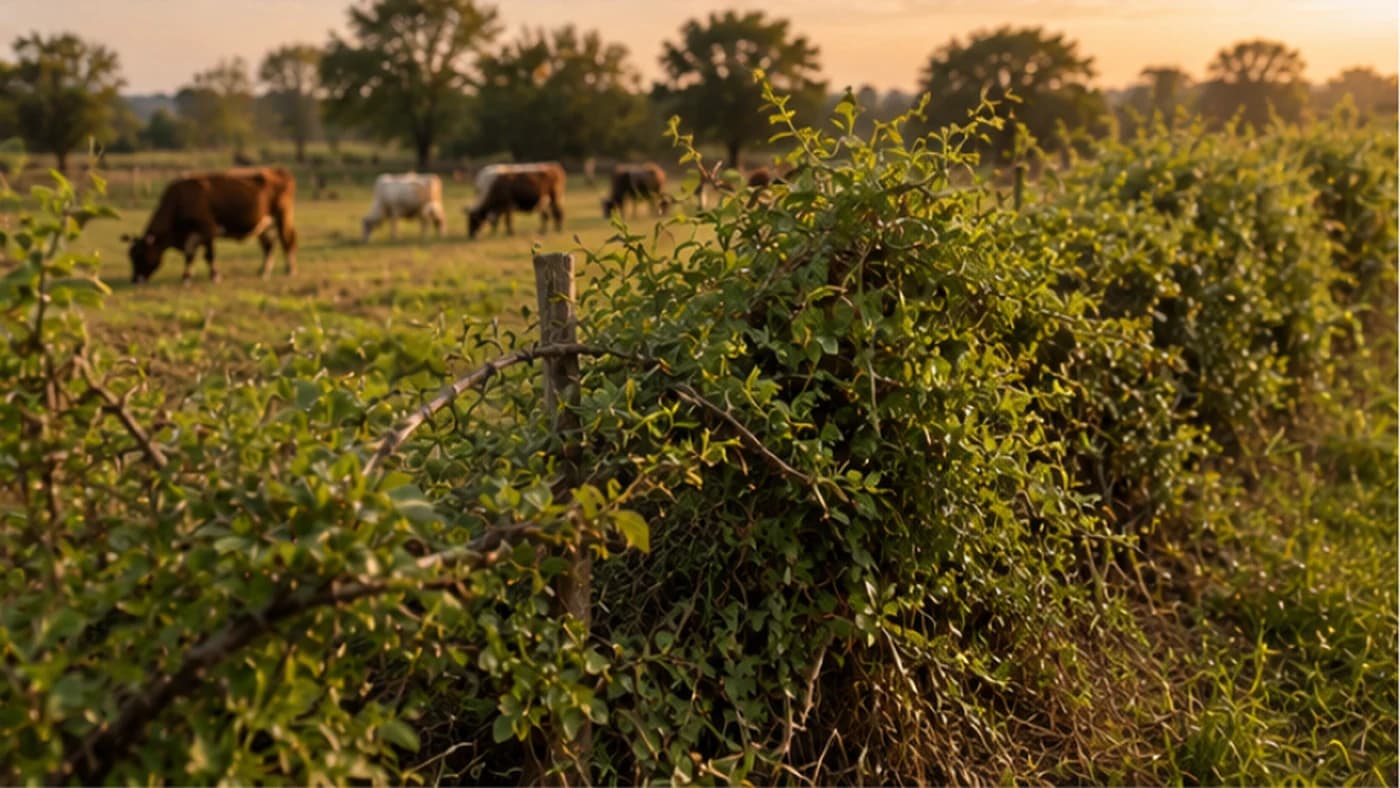
Living Fences for Livestock: Grow a Boundary That Never Needs Replacing
A wire fence rusts and sags within 20–30 years. A well-managed living fence of thorny trees and shrubs gets stronger every winter, blocks wind, feeds your animals, and can outlast the farm itself.
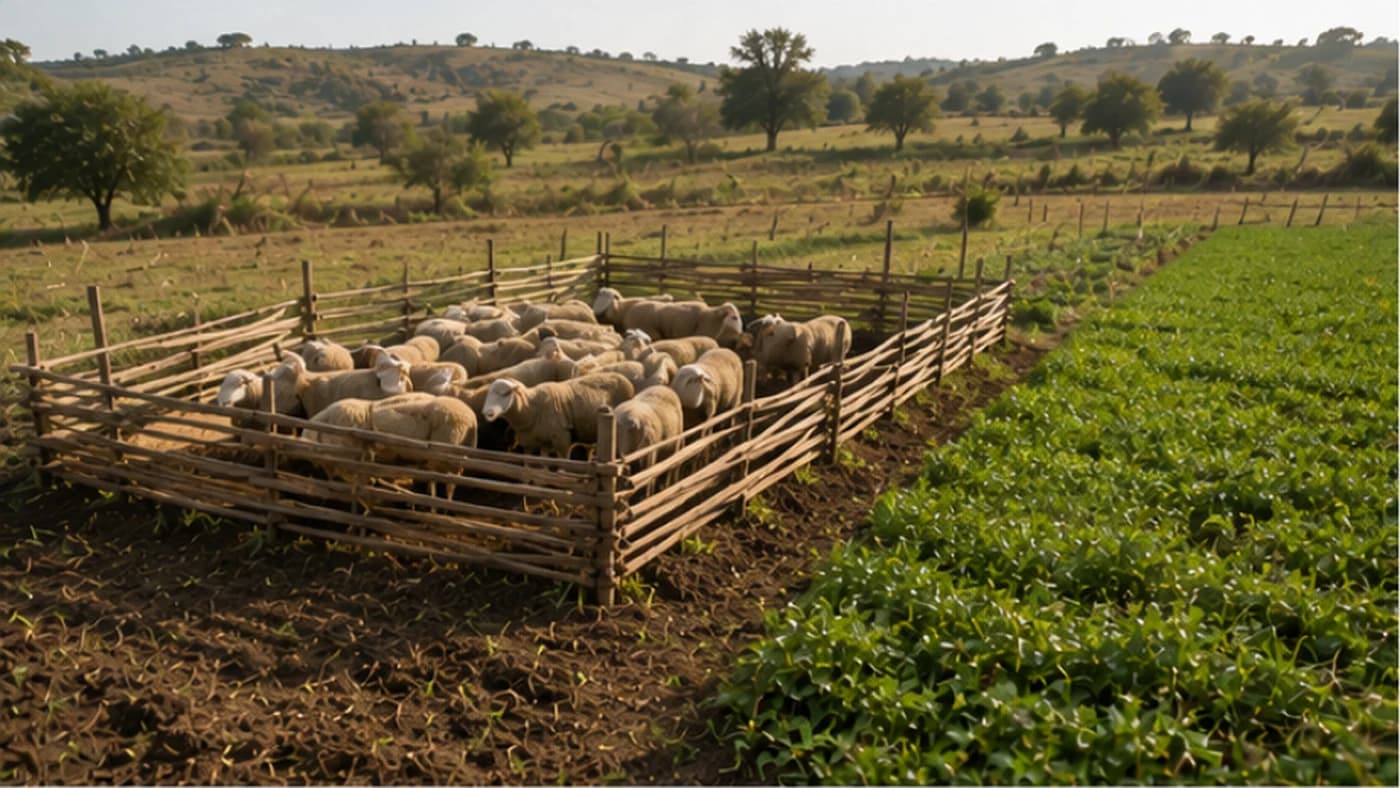
The Medieval Folding Technique: Using Sheep and Goats to Fertilise Your Field Overnight
One night of penned sheep on a patch of land delivers more usable nitrogen than months of hauled, stored manure. Here's how the old European folding system works — and why Indian farmers already know a version of it.
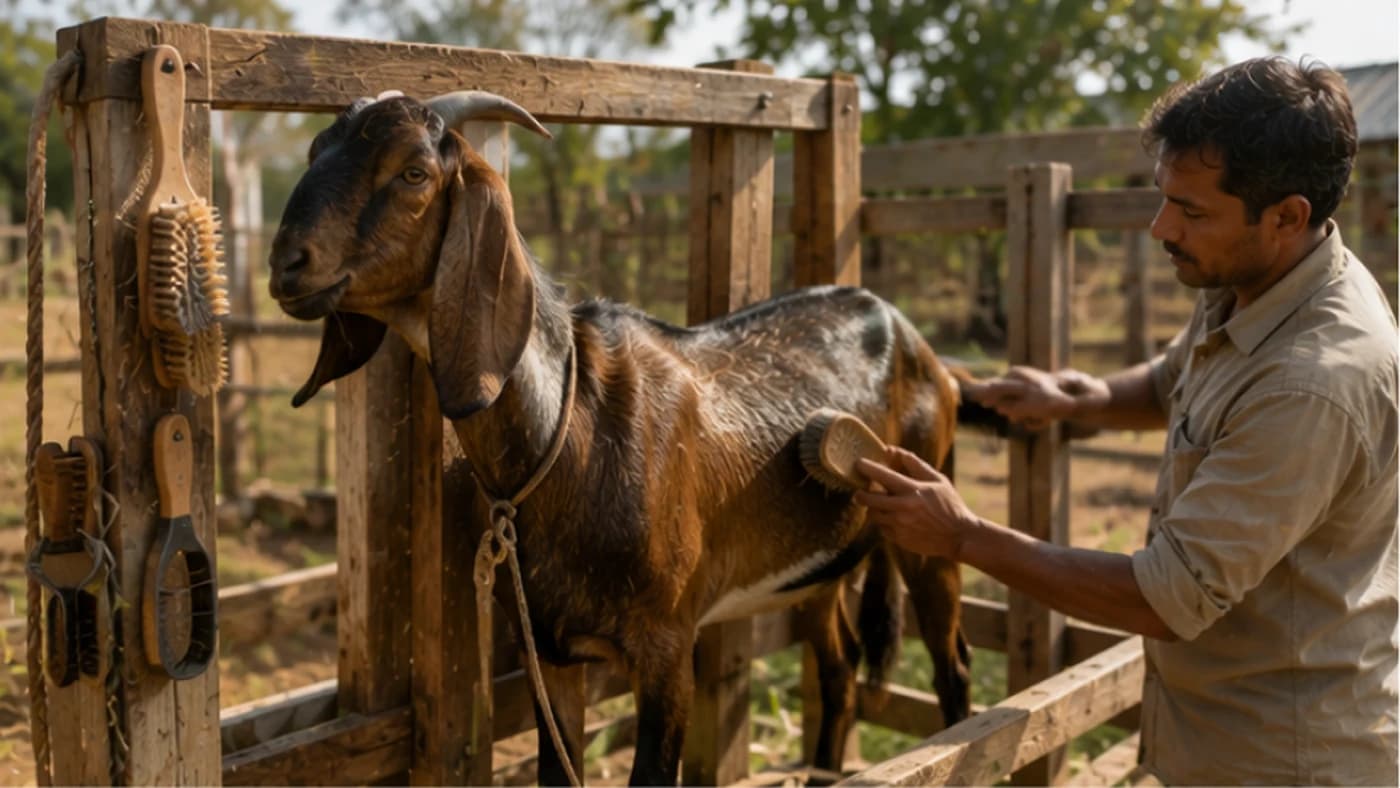
DIY Livestock Grooming Stations: Let Your Animals Scratch Themselves Instead of Your Fence
Cattle, goats and buffaloes will find something to scratch against — usually your fence or shed wall. Give them a sturdy, purpose-built scratching post instead, and you save your infrastructure while improving their skin health and even milk yield.