

Natural Goat Hoof Care: The Rocky Path Method
Stop wrestling your goats onto a stand every six weeks. A stone path between the shed, feeder and water trough files their hooves for you, every single day, for free.
Quick answer
The Rocky Path Method turns a daily chore into something your goats do for themselves. Dig a well-drained trench along the routes your herd already walks, line it with geotextile fabric, base it with compacted road-base, and top it with 5 cm of sharp crushed granite or similar stone — placed at the shed entrance and around the water trough for maximum effect. It won't replace regular foot inspection, and heavy monsoon rain, poor genetics, or a grain-heavy diet can still cause problems no stone can fix — but for most herds it turns hoof trimming from a monthly wrestling match into an occasional five-minute touch-up, while keeping feet drier, healthier, and far less prone to rot.
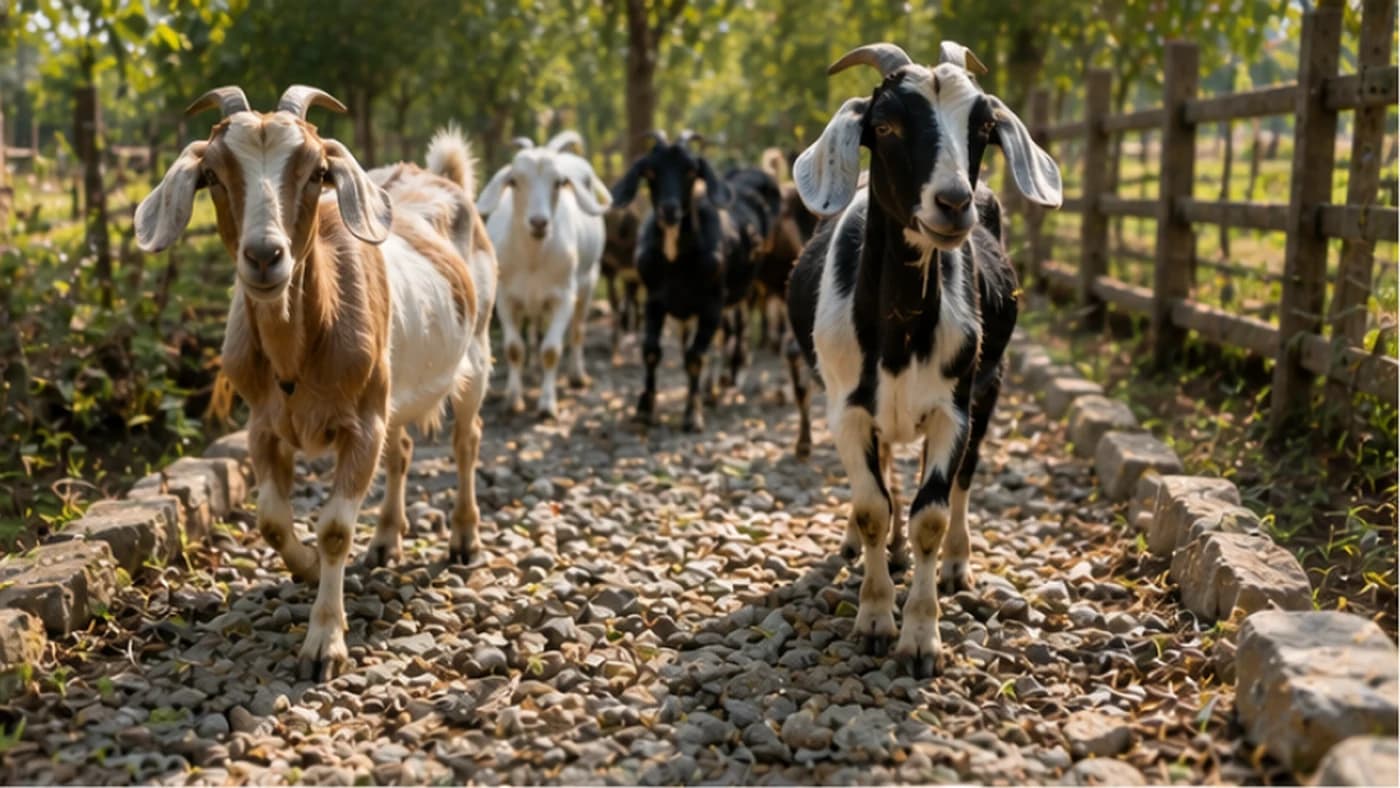
Anyone who keeps goats knows the dread of hoof-trimming day — cornering an animal, flipping it onto its back or a milking stand, and working through overgrown, curled hooves with a knife while it struggles. Wild goats never face this problem. Scrambling over rocky hillsides and stony riverbeds all day keeps their hooves worn down naturally. Put the same goat on soft pasture or in a straw-bedded shed, and that natural wear disappears — the hoof wall keeps growing, curls under the sole, traps moisture and manure, and invites infection. The Rocky Path Method fixes this by rebuilding a small piece of that rocky mountain environment inside your own goat yard: a stone walkway placed exactly where your goats already walk every day, so they file their own hooves without you lifting a knife.
Why hooves overgrow on soft ground — the science of it
A goat's hoof is made of keratin, the same protein as your own hair and nails. The hard outer wall (the horn) bears the animal's weight, while the softer sole inside it is slightly concave for grip. On soft grass or mud, weight is spread across the whole foot but there is no friction to slow the horn's growth, so it keeps growing past the sole and folds over, creating a hidden pocket where manure and moisture collect. That pocket is exactly where Fusobacterium necrophorum and Dichelobacter nodosus — the bacteria behind foot scald and hoof rot — thrive.
An abrasive surface wears the outer wall at roughly the same rate it grows, so the wall stays flush with the sole and never gets the chance to overgrow. Climate changes how urgently this matters: in humid, high-rainfall regions — much of coastal and monsoon-belt India — hooves absorb moisture, soften, and grow faster, which means they need more abrasion, not less. In hot, dry tracts the horn is naturally denser and harder and needs a rougher surface to wear down at all.
Placing the path where it will actually be used
A pile of stone dumped in a corner of the field will be ignored — goats always take the path of least resistance. Success depends entirely on placement. Walk your goat yard and look for the bare, worn dirt tracks your herd has already made; these desire lines usually connect three hubs — the shed, the water trough, and the feeding area. Lay your stone exactly along these tracks and every goat will cross it several times a day without you having to force anything.
A simple, high-value setup is a 3-metre abrasive zone around the water trough — every goat drinks, so every goat gets filed. Another is the entrance to the shed itself: if goats must cross 1.5 metres of crushed stone or concrete pavers to reach their sleeping area, they file their hooves morning and evening automatically. Make the path 1.2 to 1.8 metres wide so dominant goats can't block weaker ones from crossing it, and remember that a longer path means more steps, and more steps mean more filing.
Choosing the right stone
The type of stone matters as much as the placement. Smooth river rock looks tidy but files almost nothing — its rounded surface has no bite, and it can even shift underfoot like marbles, risking injury. Fractured, angular stone is what actually works: crushed granite or basalt (roughly 19–25 mm, sold as jelly/aggregate at most stone quarries and building material suppliers across India) is the gold standard, packing down into a stable surface while leaving sharp edges exposed to file the hoof wall.
Limestone or sandstone flagstone is softer and wears down faster than granite, but it's comfortable underfoot and useful as flat platforms around feeders; limestone's alkalinity can also make the surface less hospitable to some hoof-rot bacteria. Cured concrete pavers or cinder blocks (placed cap-side up) are highly abrasive and inexpensive, and work well built into shed entrances or as small climbing steps. As a quick reference: crushed granite gives high abrasion and high stability — best for main walkways and gates; limestone flagstone gives medium abrasion and very high stability — best for feeding platforms; river rock gives low abrasion and low stability — fine only for drainage areas; concrete pavers give high abrasion and high stability — best at shed entrances.
Building the path, step by step
1. Excavate 10–15 cm of soil along your chosen route, removing topsoil and organic matter so the stones don't slowly sink into the ground. Slope the base about 2% so water drains away rather than pooling.
2. Lay a heavy-duty non-woven geotextile fabric along the trench. This lets water pass through while stopping the stone from mixing into the mud below — it is the single biggest factor in how long the path stays effective.
3. Add a 7 cm base layer of road base / crusher-run (a mix of small stone and stone dust) and compact it firmly with a plate compactor or a heavy hand tamper, so the path doesn't shift or develop potholes later.
4. Spread a 5 cm top layer of your chosen crushed granite or fractured stone. Don't compact this final layer too hard — you want some stones sitting slightly loose so their edges can work into the hoof wall as goats walk over them.
5. Edge the path with larger stones or timber so the aggregate stays contained and doesn't scatter into surrounding grass or crop land.
What you gain from a self-filing system
The biggest win is labour: a herd of even 20–30 goats can take an entire day to trim by hand, and a well-placed rocky path cuts that need from once every six weeks to perhaps two light touch-ups a year. Hooves also stay healthier — manual trimming risks quicking the goat (cutting into live tissue), while gradual daily wear never causes that sudden shock to the foot, which supports better joint health and fewer cases of lameness.
It's also far less stressful for the animals. Most goats hate being restrained on a stand or flipped over, and that stress can measurably reduce milk yield in milking does or even trigger problems in pregnant ones if handled roughly — the rocky path needs no restraint at all, since the goats file their own hooves during their normal daily movement. Finally, a well-drained stone surface actively wicks moisture away from hooves each time an animal crosses it, which is a real, practical defence against scald and rot during the monsoon and in wet, low-lying pens.
Common mistakes to avoid
Using the wrong stone size is the most frequent error: pea gravel (3–10 mm) is too fine to file properly and gets lodged painfully between the cleft of the hoof, while large rip-rap stones (over 10 cm) are unstable underfoot and can twist a pastern or bruise a sole. Poor drainage is just as damaging — a path sited at the bottom of a slope collects standing water and turns into a bacterial soup, and once mud and manure fill the gaps between stones, the abrasive edges are buried and stop working, so regular clearing is essential, not optional.
Goats will also actively avoid a path if it feels too sharp or unstable, so if you see them detouring around it, fence the route so there's no way to bypass it. And a rocky path is not a substitute for inspection — it wears the hoof wall, but it will not catch an abscess or existing rot, so keep checking feet by hand on a regular schedule regardless of how well the path is working.
Where this method has real limits
In regions with intense, sustained rainfall — much of India's monsoon season — even a well-built path can silt up and lose its abrasive edge, needing a periodic hose-down or a fresh top-dressing of stone to stay effective. Genetics and diet matter too: some goats simply have weaker hoof structure or unusually fast horn growth that no amount of stone will fully correct, and a diet too rich in grain can trigger founder or laminitis, making the hoof grow abnormally fast — a nutrition and vet issue, not a path-design one.
Very young kids can be over-abraded by sharp new granite before their hooves have hardened, and older or arthritic goats may find a rough path painful to cross — watch the most vulnerable animals in your herd and soften the surface near their usual routes if needed. And the path doesn't reach the dewclaws (the small vestigial hooves higher on the leg), since these rarely touch the ground — check and trim these by hand occasionally if they grow long.
Manual trimming vs. the stone path: what it actually costs
Manual clipping needs almost no upfront money — a basic pair of hoof shears and a rasp are a small, one-time cost — but the ongoing price is your own labour and physical strain every six to eight weeks, plus real skill: an improper cut can cause lameness that takes months to heal. The rocky path asks for a real upfront investment in stone, fabric and labour — depending on the length of path and how far you are from a stone quarry, this can range from a modest few thousand rupees for a small entrance strip to a considerably larger sum for a long, wide walkway — but once built, its running cost is close to zero and it needs almost no skill to maintain.
In short: manual trimming is cheap to start and expensive in time, stress and skill every single month; the rocky path is a bigger one-time cost that pays for itself in saved labour and healthier feet over just a year or two, especially for anyone keeping more than a handful of animals.
Practical tips for getting it right
Start small: lay a test section with a couple of bags of your chosen stone and watch how your particular goats and their hooves respond before committing to a full installation, since breeds like Sirohi, Jamunapari, Barbari or Osmanabadi can differ noticeably in hoof hardness. Sweep the path clean of hay and manure with a stiff broom weekly, and give it a proper wash once or twice a year to expose fresh abrasive grit again. Placing a mineral lick station on a stone or flagstone pad is a simple trick — goats linger and shift their weight while licking, which adds extra filing time for free. And don't forget the dewclaws, which the path can't reach — check and trim these by hand when needed.
Going further: the hillside method and other advanced ideas
On sloped land, a switchback stone path forces goats to angle their hooves differently on the way up and down, wearing heels and toes more evenly. A useful trick is 'feed high, water low' — placing the hay feeder at the top of a rocky slope and the water trough at the bottom — which turns every meal and every drink into a hoof-filing climb, with the side benefit of noticeably better muscle tone and fitness in the herd. Keep in mind that limestone paths can slowly leach calcium into the soil and, if goats lick the stone directly, into their own mineral balance — always keep a proper free-choice mineral supplement available so animals aren't trying to satisfy a deficiency by licking their own walkway. Even the hardest granite eventually smooths down after a few years of use, so plan to top-dress the path with fresh stone periodically to keep it working.
Frequently asked
What stone works best for a goat hoof-filing path?+
Fractured, angular stone like crushed granite or basalt (about 19–25 mm) works best — it packs into a stable surface while leaving sharp edges exposed. Avoid smooth river rock (too little friction, shifts underfoot) and both very fine gravel and very large rip-rap (either lodges in the hoof or is unstable to walk on).
Where should I place the rocky path in my goat yard?+
Along the routes your goats already walk daily — the desire lines connecting the shed, the water trough, and the feeding area. A stone zone around the water trough or at the shed entrance works especially well because every goat crosses it multiple times a day without needing to be forced.
Does a rocky path completely replace manual hoof trimming?+
For most goats it sharply reduces how often you need to trim by hand — often from every six to eight weeks down to a couple of light touch-ups a year — but it doesn't replace regular foot inspection for abscesses or existing rot, and won't fully correct hooves affected by poor genetics or a grain-heavy diet.
Is this method still useful during the monsoon?+
It's especially useful then, since wet ground softens hooves and speeds up horn growth. But heavy, sustained rain can also silt up the path and bury its abrasive edges in mud, so during the monsoon you'll need to clear and rinse the stones more often to keep them working.
How wide and long should the path be?+
Aim for 1.2 to 1.8 metres wide so dominant goats can't block weaker ones from using it, and long enough to give several steps of contact — a 3-metre zone around a water trough or a 1.5-metre stretch at a shed entrance are both effective starting points.
Where to go next
- AI farming chatbotAsk any farming question in Gujarati, Hindi or English and get an answer in seconds.
- Kheti app for Indian farmersCrop plans, disease diagnosis, weather and mandi rates in one app.
- Agri Bazar marketplaceBuy and sell animals, crops, equipment and dairy near you — and see what buyers want today.
Want this as daily tasks for your farm?
Khetiyaar turns guides like this into a day-by-day plan — in your language, free to start.

Related guides
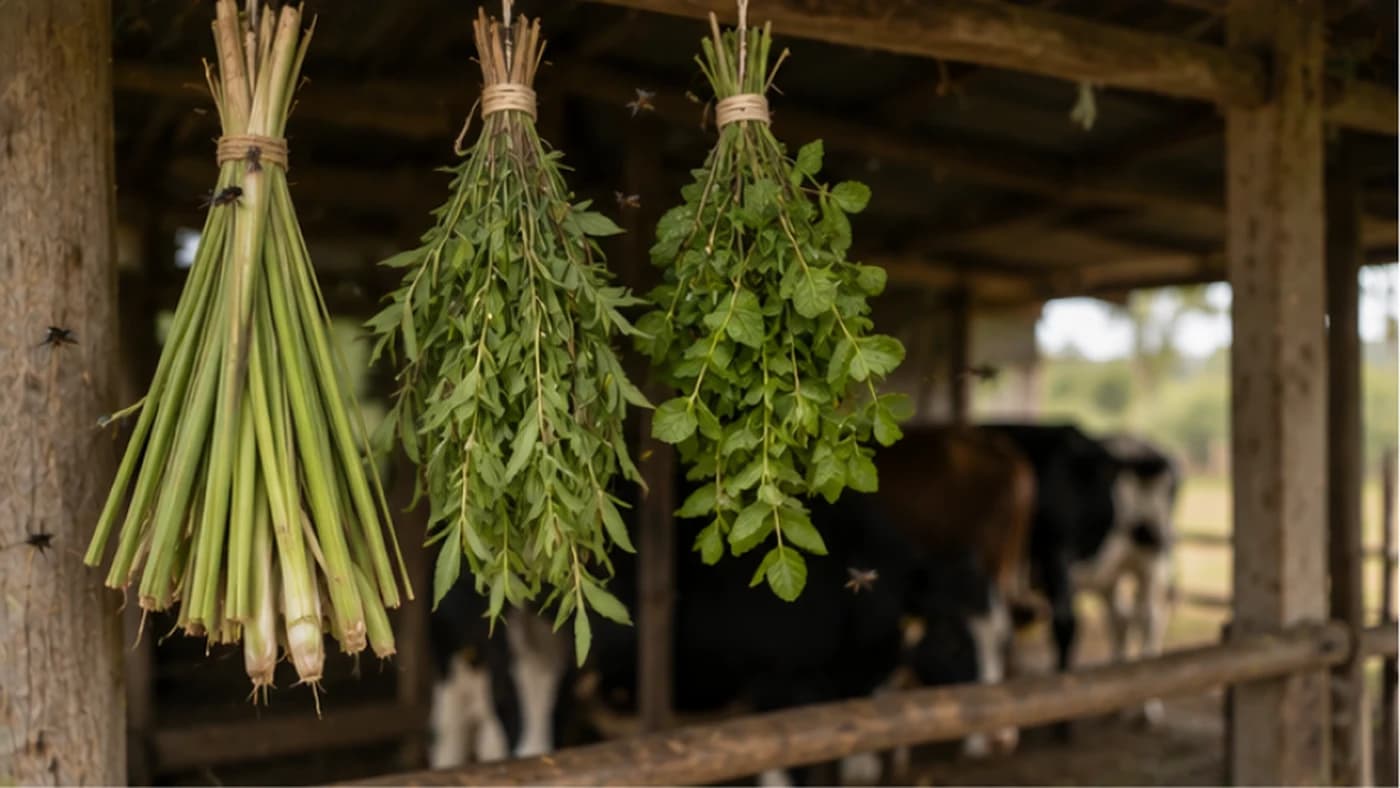
Natural Fly Control for Animal Shelters: Building a Living Barrier Instead of Spraying Chemicals
Flies can cut cattle weight gain by 10-25% and spread over 65 diseases. Instead of a fresh can of spray every week, a planted barrier of repellent trees and shrubs can keep them out permanently — here's how, using plants that actually grow in India.
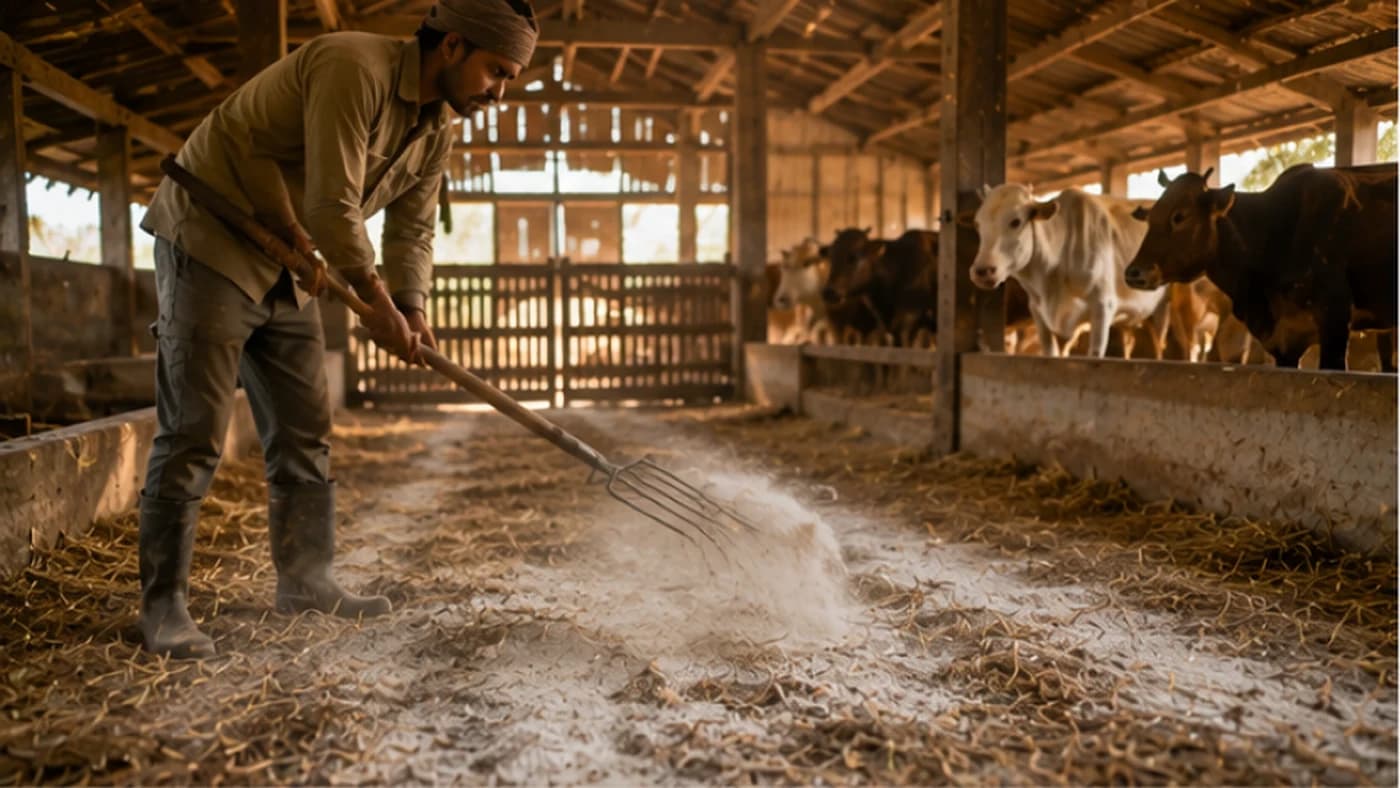
Natural Barn Sanitation and Odour Control With Effective Microorganisms
A barn that smells like bleach has killed the good bacteria that actually keep disease away. Effective Microorganisms (EM) digest ammonia at the source instead of masking it — here's how to use them safely.

Let Chickens Till Your Garden: Free Weeding, Pest Control and Fertiliser
A rototiller shreds soil structure and kills fungal networks; a chicken's scratch clears weeds, eats overwintering pests, and leaves fertiliser exactly where it's needed. Here's how to put your flock to work.