

Natural DIY Drain Cleaner: Make Eco-Enzyme From Kitchen Waste
Skip the harsh acid-based drain cleaner. A simple ferment of citrus peels, jaggery and water — popularised in Thailand and now used across Indian homes — breaks down grease safely, freshens septic tanks, and costs almost nothing.
Quick answer
Eco-enzyme turns citrus peels, jaggery and water into a genuinely effective, safe drain and septic-tank cleaner — no fumes, no pipe damage, and almost no cost. It won't clear a fully blocked drain instantly, so keep a mechanical option on hand for emergencies, but for weekly maintenance and grease control it beats chemical cleaners on safety, cost and what it does for your plumbing over the long run.
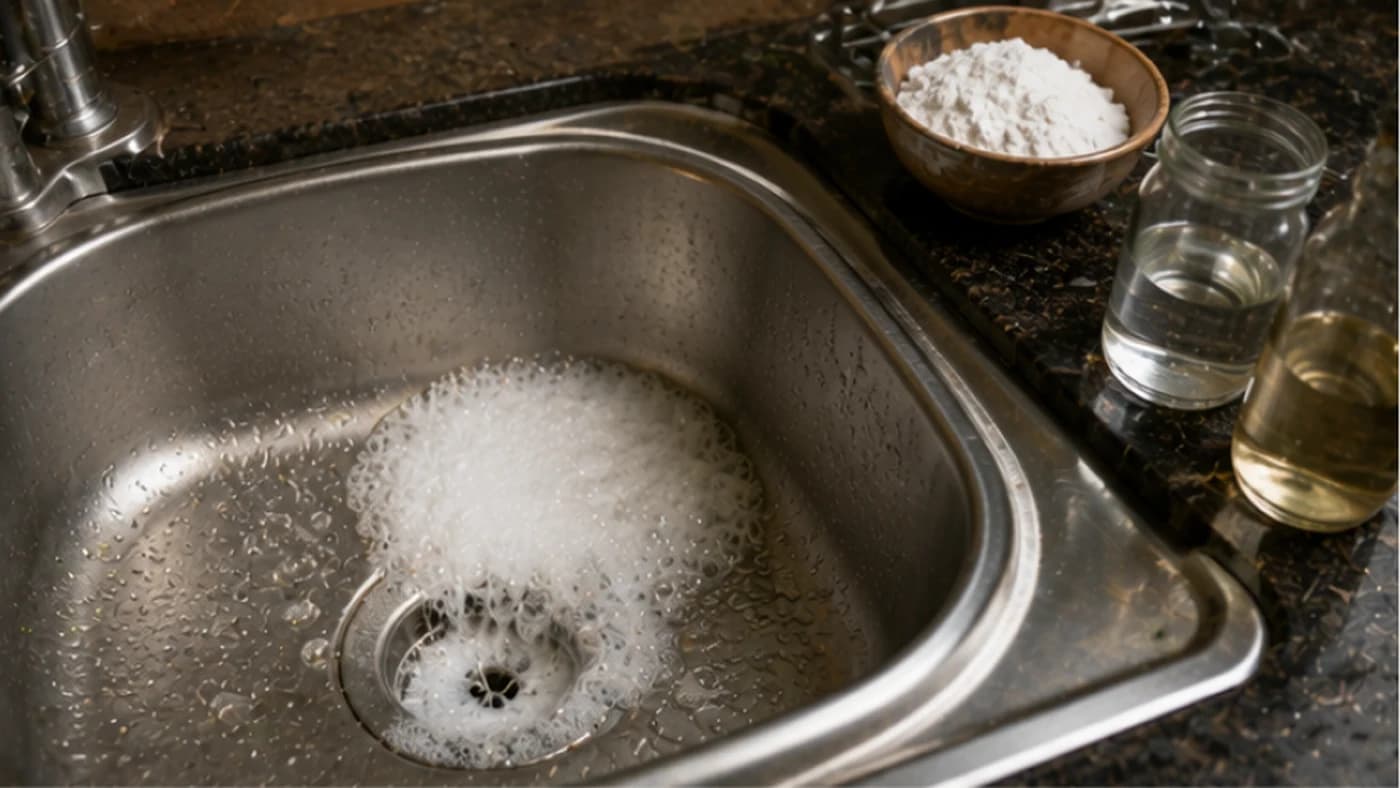
Chemical drain openers clear a clog today and quietly damage your pipes, your septic tank, and the water table over years. Eco-enzyme (also called 'garbage enzyme') is a living alternative — a simple three-month ferment of kitchen fruit waste, jaggery and water, popularised by Thai researcher Dr Rosukon Poompanvong and now brewed in homes across India as a genuinely useful zero-cost cleaner. It will not unclog a completely blocked pipe overnight, but used regularly it keeps drains, septic tanks and grease traps clean without a single harsh chemical.
What eco-enzyme is and the 1:3:10 recipe
Eco-enzyme is a fermented liquid made from fresh fruit or vegetable peels, an unrefined sugar, and water. The ratio to remember is 1:3:10 — one part jaggery (gur) or unrefined brown sugar, three parts citrus peels, and ten parts water. Unrefined jaggery works better than white sugar because its minerals help the fermenting microbes grow.
Citrus peels — orange, mausambi, lemon, or pineapple skins — are ideal because they contain d-limonene, a natural degreaser that adds real cleaning power. You'll also need a plastic bottle or container with a screw lid (plastic is safer than glass, since it can flex slightly as gas builds up); use filtered or non-chlorinated water if possible, since heavy chlorination can slow the fermenting bacteria.
How to brew it, step by step
Step 1 — Prepare: chop the citrus peels into small pieces (roughly 1-1.5 cm) for more surface area, which speeds fermentation. Dissolve the jaggery fully in the water inside your container first.
Step 2 — Combine: add the peels to the sugar-water and leave about 10-15% of the container empty as headspace — fermentation releases carbon dioxide, and without room for gas to build the bottle can crack or burst.
Step 3 — The first month (burping phase): for the first 30 days, open the lid slightly once a day to release built-up gas — you'll hear a hiss, a sign the microbes are working. After a month, gas production slows and you can seal it tightly for the remaining two months.
Step 4 — Harvest: after roughly 90 days, the liquid should be dark brown with a sharp, vinegary citrus smell (a rotten-egg smell means something went wrong). Strain it through a fine cloth and store it in a cool, dark place. The leftover pulp makes good compost or garden fertiliser.
How it works — enzymes instead of caustic burn
Chemical drain cleaners work through a violent, heat-generating reaction that melts through grease but also eats away at PVC joints and pits metal pipes over time. Eco-enzyme works differently: over the three-month ferment, yeast and lactic-acid bacteria produce lipase (which breaks down fats, oils and grease), protease (which breaks down protein waste like skin cells), and amylase (which targets starches). These enzymes act like biological scissors, cutting fat and protein chains into small, water-soluble pieces that wash away easily.
The finished liquid is also acidic (around pH 3.5), which helps dissolve the mineral bonds holding soap scum together, and some of the beneficial bacteria remain in the pipe's biofilm afterward, continuing to work on organic waste long after you've poured it.
Why it's worth the wait
It's safe on every kind of pipe — PVC, old cast iron, or lead-jointed — because it doesn't generate the heat or corrosion that chemical cleaners do. It's genuinely good for septic tanks: chemical cleaners kill the beneficial bacteria a septic tank depends on (leading to sludge build-up and expensive pump-outs), whereas eco-enzyme adds more good bacteria and speeds up waste breakdown in the tank.
It removes bad odours at the source instead of masking them with perfume, and it turns waste — citrus peels and a little jaggery — into a cleaning product at almost no cost, cutting down both kitchen waste and the plastic bottles that chemical cleaners come in.
Common mistakes to avoid
Use only raw fruit and vegetable peels — citrus, pineapple, or apple work well — and avoid oily cooked food or meat scraps, which rot and smell bad instead of fermenting cleanly. A healthy ferment develops a thin white film on top (harmless Kahm yeast); if you see fuzzy black or green mould, or the batch smells rotten, discard it and start again with a properly sealed, fully submerged batch.
The most common beginner mistake is forgetting to 'burp' the bottle in the first two weeks — the gas pressure can build enough to crack the container or blow the lid, so use a loose-fitting lid or a home-brewing airlock if you're worried about forgetting.
When this won't help
Eco-enzyme is a slow, maintenance solution, not an emergency fix. If a sink is completely blocked and water isn't moving at all, clear it mechanically first (a plunger or a drain snake) — enzymes need contact time with the clog to work, so pouring them onto standing water does little.
They're also slower against hair clogs, since enzymes are far better at digesting grease and food than the keratin protein in hair — pair regular enzyme use with an occasional mechanical drain-cleaning tool for hair. And enzymes obviously can't help with non-organic blockages like a dropped object or hard mineral scale from very hard water — those need mechanical removal or a de-scaling approach.
Practical tips for best results
Warm the pipe first by running warm (not boiling) water for about a minute — enzymes are most active in warm conditions, but temperatures above roughly 49°C can kill the beneficial bacteria. Pour your dose right before bed or before leaving for the day, so it has 8-10 hours of undisturbed contact time in the trap, rather than getting washed away by the next load of dishes.
For maintenance rather than cure, pour about half a cup of undiluted eco-enzyme down each drain once a week — this keeps the biofilm from building up thick enough to slow your drains in the first place.
Frequently asked
What is the eco-enzyme recipe ratio?+
1 part jaggery (or unrefined sugar), 3 parts citrus peels, 10 parts water, fermented in a loosely sealed plastic container for about 90 days.
Is eco-enzyme safe for all pipes and septic tanks?+
Yes — it doesn't generate heat or corrosion like chemical cleaners, and it actually adds beneficial bacteria to septic tanks instead of killing them.
How long does eco-enzyme take to work on a clog?+
It works over hours to days as a maintenance and grease-digesting solution, not an instant fix — for a fully blocked drain, clear it mechanically first, then use enzyme for ongoing upkeep.
Why does my batch smell bad or have black mould?+
That means oxygen got in or the ratio was off — a healthy batch has a harmless white film (Kahm yeast) and a sharp vinegary smell. Black or green fuzzy mould means the batch failed; discard and start a fresh one, keeping peels fully submerged and the lid properly sealed.
Can eco-enzyme unclog hair blockages?+
Not well on its own — enzymes digest grease and food much faster than the keratin in hair. Use a mechanical drain tool for hair clogs and eco-enzyme for ongoing grease and odour maintenance.
Where to go next
Want this as daily tasks for your farm?
Khetiyaar turns guides like this into a day-by-day plan — in your language, free to start.

Related guides
Natural Fly Control for Animal Shelters: Building a Living Barrier Instead of Spraying Chemicals
Flies can cut cattle weight gain by 10-25% and spread over 65 diseases. Instead of a fresh can of spray every week, a planted barrier of repellent trees and shrubs can keep them out permanently — here's how, using plants that actually grow in India.
Natural Barn Sanitation and Odour Control With Effective Microorganisms
A barn that smells like bleach has killed the good bacteria that actually keep disease away. Effective Microorganisms (EM) digest ammonia at the source instead of masking it — here's how to use them safely.

Let Chickens Till Your Garden: Free Weeding, Pest Control and Fertiliser
A rototiller shreds soil structure and kills fungal networks; a chicken's scratch clears weeds, eats overwintering pests, and leaves fertiliser exactly where it's needed. Here's how to put your flock to work.